

Reformed Books Online
392 posts

Reformed Books Online
@RefBooksOnline
https://t.co/79HhCyJMCn has the best, free, Biblical, reformed books and articles online. Try it out!
Katılım Ekim 2021
187 Takip Edilen507 Takipçiler

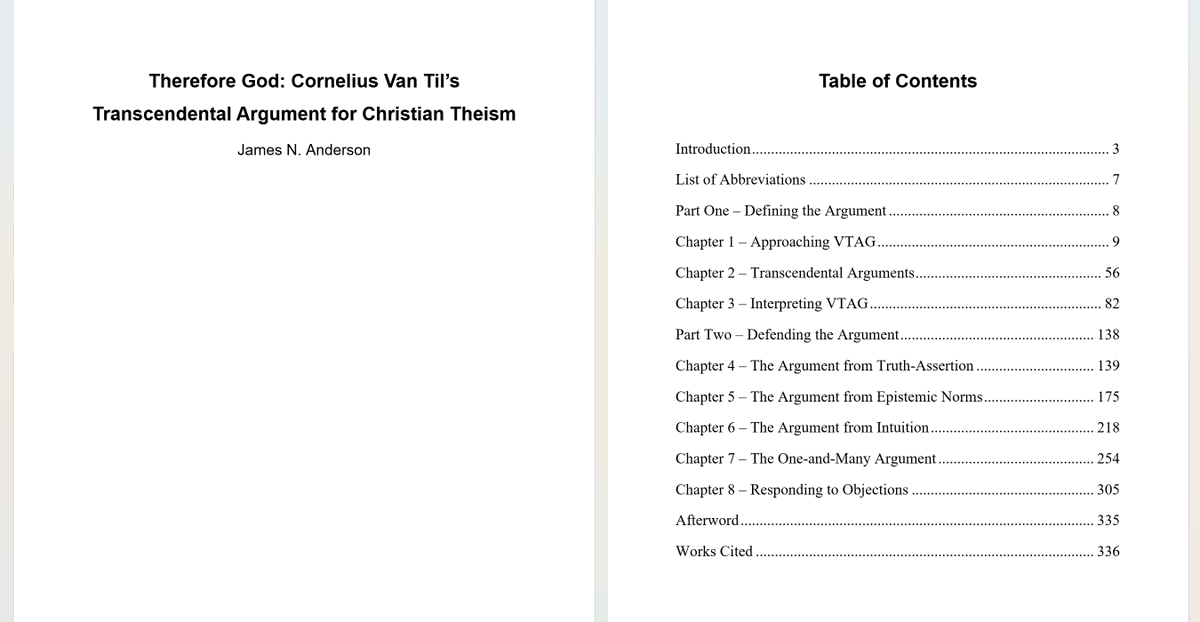
@JonMcK1647 This is helpful, thanks. I put the quote on this page:
reformedbooksonline.com/on-a-twofold-j…
English

Richard Baxter's exposition on the 11th Article of the 39 Articles: Of the Justification of Man.
"Art. 11. We are accounted righteous before God only for the Merit of our Lord and Saviour Iesus Christ, and not for our own works or deservings: wherefore that we are justified by Faith only, is a most wholesom Doctrine, &c.]
Expos. Tho' he that doth righteousness is righteous, and the Scripture throughout and frequently mentioneth an inherent personal Righteousness necessary to Salvation, yet this is no Universal Righteousness, nor such as will justifie us according to the Law of Innocency or Works; but is meerly subordinate to the Merit and Efficacy of the Sacrifice and Righteousness of Christ, which only meriteth for us as a Price, our Faith being only the requisite (yet given) moral qualification for the reception of the free gift of Pardon, Justification and Adoption, and hath not the least part of the Office or Honour of Christ; yet are Christ's words true, That by mens words they shall be justified or condemned: And all men shall be judged according to their works: And James truly saith, that by works a men is justified, and not by faith only: Not by works of perfection or of Moses Law, nor any that as a price or commutation do make the reward to be of Debt, and not of Grace; but by a practical Faith or Christianity: such Acts as Faith it self is, and prove our Belief to be such as Christ hath promised Justification and Salvation to; such as by justifying Belief to be sincere, do justifie the person against the Charge of Infidelity, Hypocrisie, Impenitence and Ungodliness, Christianity is that Faith which Paul opposeth to Works." (R. Baxter's sence of the subscribed articles of religion, pg. 7-8.)

English

In 2019, the same people who condemn Piper also went after Kevin DeYoung for teaching that good works are necessary for salvation as a means.
I defended DeYoung in this article: placefortruth.org/in-defense-of-…
English
Owen: "God in his immense essence is... incomprehensible unto our minds. For nothing can perfectly comprehend that which is infinite, but what is itself infinite." (Works, 1.292)
English
Credo Magazine is promoting Ortlund's quote: "Calvin, Owen, and Turretin all agreed with Aquinas that we will see the essence of God!"
This is false. See Owen (1.292) and Turretin (3.611) deny it. I highly doubt Calvin ever said such a thing. See Voet
reformedbooksonline.com/wp-content/upl…
English
Turretin: "that seems to us the more probable opinion which asserts that the essence of God cannot be immediately attained by the saints so as to be seen just as it is, on account of the inifinite disproportion and distance between the finite and the infinite." (Institutes 3.611)
English
@Bibliculture There is much in Scotus that is not repugnant to reformed theology, or, that is to say, is consistent with it, as many reformed theologians so appropriated him.
English

Duns Scotus's main work, the Ordinatio, has been professionally translated into English and is fully online, here:
reformedbooksonline.com/the-works-of-j…
English

Works on the reception of John Duns Scotus through Church history:
reformedbooksonline.com/on-the-recepti…
English
@reformedtexan AI translation of Baron, if you mean his Handmaiden:
reformedbooksonline.com/wp-content/upl…
English

(Updated) Works I most want translated.
1. Becanus' Sum of Scholastic Theology
2. Baron, Metaphysica
3. Le Blanc's Disputations
4. Voetius' Select Disputations
5. Strang(ius)' on God's Will and Actions re: sin
6. Ruiz de Montoya on the Trinity
7. Baxter's Methodus
Michael J. Lynch@reformedtexan
Works I most want translated. 1. Becanus' Sum of Scholastic Theology 2. Forbes' Historical Theology 3. Le Blanc's Disputations 4. Voetius' Select Disputations 5. Strang(ius)' on God's Will and Actions re: Sin 6. Ruiz de Montoya on the Trinity 7. Du Moulin's Philosophical Works
English
@reformedtexan AI translation of Le Blanc:
reformedbooksonline.com/1100-pages-of-…
Français
@navarro_chaz There is a lot of good stuff on that page. Paul Barth may have more material.
English

Any Reformed treatments on demonic exorcism? Not necessarily refutations of Papist exorcisms, but “positive” Reformed treatments.
English
@_TheoMed @WesternCatholik I am not an antagonist to you Tony, whatever you think of me, which is, as you have shown, very inaccurate. Your message about the issues above, respecting personal and non-personal matters, is very black and white, contrary to the very complexity you know exists in the issues.
English

Years ago, when Ponter and I showed you what was in Preston’s own writings, the content of Thomas Ball’s overview of the discussion between Preston and White, the data in Beeke and Pederson’s 2006 “Meet the Puritans,” and also the arguments in Jonathan D. Moore’s 2007 version of his Cambridge doctoral dissertation on Preston and HU, there was already enough overwhelming evidence then for you to see it. It seemed to me and Ponter at the time that you just did not 𝘸𝘢𝘯𝘵 to see it, not that there was a lack of evidence. It seemed rather to be another case of what Irving Kristol said: “When we lack the will to see things as they really are, there is nothing so mystifying as the obvious.” Nothing new has since arisen about Preston. Nevertheless, I am glad you now see that Preston was HU.
It seems to me that it is also time for people to admit that there is something going on in Hodge’s theology that does not comport with the stricter view of the extent of Christ’s death. Clearly there are things said that are incompatible with an Owenic limited imputation perspective. Certainly C. Hodge believed that Christ’s death is applied to all whom God has predestined to be saved, and that Christ secured that certainty in the death He died, but it is also the case that in Hodge’s theology Christ suffered the penalty that all men had incurred, not merely the penalty for the sin of the elect alone. I understand that it is complicated to call Hodge, Shedd, or Dabney “Hypothetical Universalists” since they disassociate their views from Amyraldism, but the fact of the matter is that the same essential component of an unlimited imputation (or a “universal atonement” in Shedd, or an “unlimited expiation” in Dabney) is in their system. This is the historical point several of us are trying to present to people, yet we keep running in to those who “lack the will to see things as they really are” because they don’t want it to be true, not because there is a lack of sufficient evidence.
If Hodge, Shedd, or Dabney held the Owenic view, that would be fine with me. I have no vested interest in trying to get them to say the same things I believe to be true. I just think an objective and reasonable mind, given the historical facts, can’t help but see their unlimited imputation views staring them in the face. They just don’t want it to be true that three of the outstanding Reformed theologians in the 19th century were holding a position that has the same essential component in it that the the HU view maintains. That simply cannot be allowed. That is what is going on in Mark’s mind, not that he is striving for historical objectivity, hence the increasing frustration with him. In one conversation, he even refused to define what an “offer” is, lest he be forced to concede that an indiscriminate and sincere “offer” obviously involves the offerer possessing 𝘴𝘰𝘮𝘦𝘵𝘩𝘪𝘯𝘨 𝘵𝘰 𝘨𝘪𝘷𝘦 to all the offered. When pinned down, or when put on the horns of a dilemma, he runs for the tall grass to hide and dodges about in the excluded middle. Mark engages in axe-grinding historiography, since he views HU as betraying Reformed orthodoxy. He fits into the kind of thing Moore described here
“Volumes of nominally historical theology are actually covert justifications for the grinding of modern theological axes. This becomes clear when instead of speaking of ‘development’ the word ‘betrayal’ slips in; when differences are construed as ‘unfaithfulness’ and ‘distortion’. We need to be brave enough to face what is there: a complex interaction between continuities and discontinuities within a wide spectrum of diversity and development in the Reformed tradition, a tradition committed to Scripture alone.” Jonathan D. Moore, “Calvin Versus the Calvinists? The Case of John Preston (1587–1628),” 𝘙𝘦𝘧𝘰𝘳𝘮𝘢𝘵𝘪𝘰𝘯 𝘢𝘯𝘥 𝘙𝘦𝘯𝘢𝘪𝘴𝘴𝘢𝘯𝘤𝘦 𝘙𝘦𝘷𝘪𝘦𝘸 6.3 (2004): 348.
English

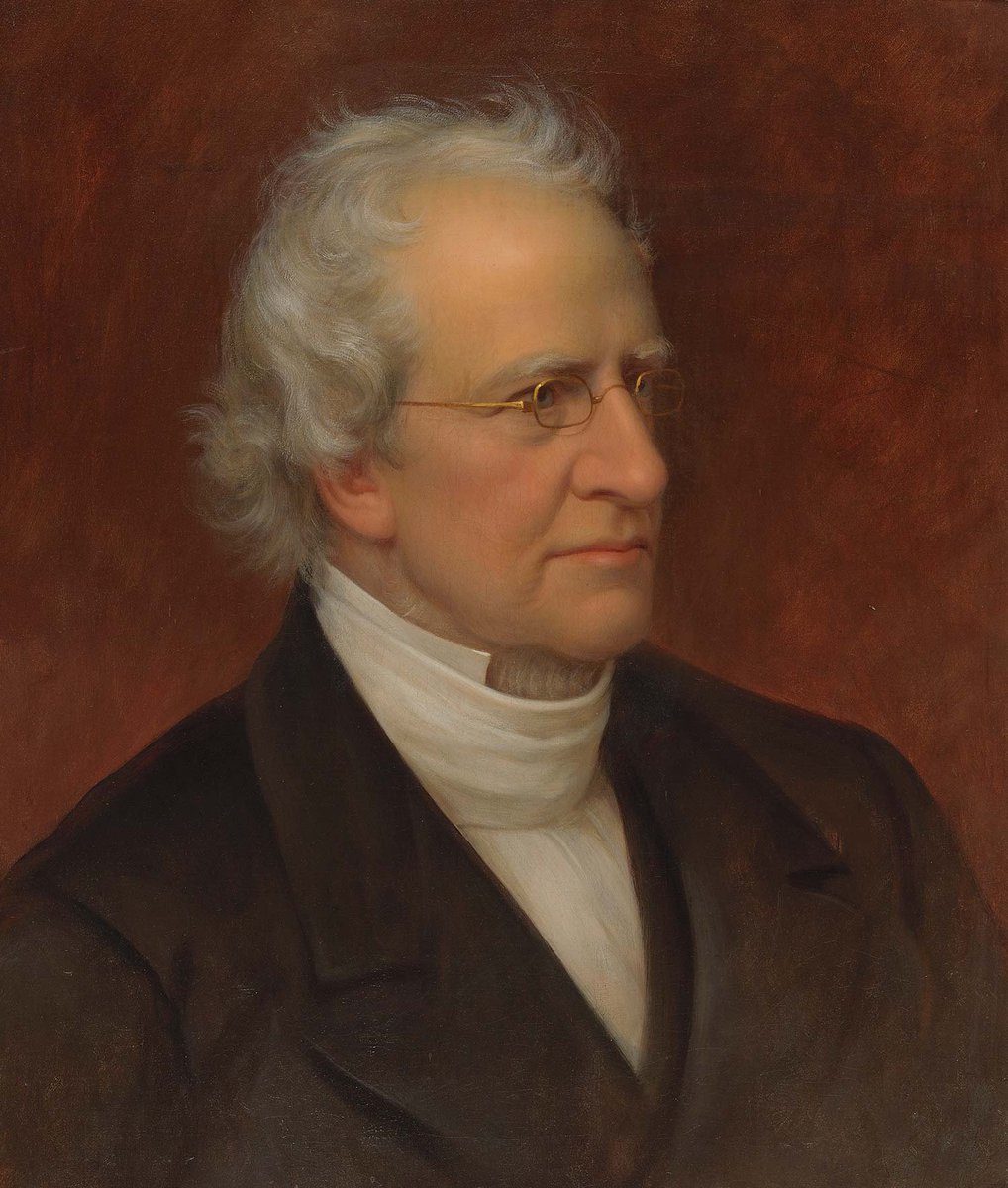
"[John 3:16], as well as elsewhere taught, that it was the design of God to render the salvation of all men possible, by the gift of his Son. There was nothing in the nature, or the value, or the design of his work to render it available for any one class of men only." C.Hodge
English
@_TheoMed @WesternCatholik If I remember correctly Hodge taught that the CoG was with everyone, which is much more clear to the point, and definitive, than your quote above.
English
So? As I said, the limitarians view Christ’s death as only having a penal relationship to the elect, whereas Hodge said Christ “suffered the penalty which all had incurred.” You won’t find that in Rutherford. That Christ shares a human nature related to all is irrelevant if his death does not bear a penal relationship to all he shares a nature with. In Hodge, Christ 𝘥𝘪𝘥 suffer the penalty all had incurred, not just that his death was of such infinite value that it 𝘤𝘰𝘶𝘭𝘥 𝘩𝘢𝘷𝘦 sufficed as a penalty-bearing sacrifice for all.
But if you can’t even grant that John Preston held to a universal imputation view (which was your view years ago, and probably still is now), it is no wonder that you don’t see an unlimited imputation view in Hodge either.
English
A proof for God from the undeniable existence of change, after the pattern of John Duns Scotus. Up your level in metaphysics. Intro by Fentiman. Nature is objective; God can be proved.
reformedbooksonline.com/allan-wolters-…
English
@_TheoMed @WesternCatholik Even Rutherford affirms, amongst other LA guys, that Christ bore the human nature of all, and Adam's original sin, on the cross, yet with respect for the elect.
English
These lines by Hodge clearly show an unlimited imputation of sin to Christ that no reasonable mind can escape. Those who think he held to LA ignore this part in his Systematic Theology:
“In the third place, the question does not concern the suitableness of the atonement. What was suitable for one was suitable for all. The righteousness of Christ, the merit of his obedience and death, is needed for justification by each individual of our race, and therefore is needed by all. It is no more appropriate to one man than to another. 𝐂𝐡𝐫𝐢𝐬𝐭 𝐟𝐮𝐥𝐟𝐢𝐥𝐥𝐞𝐝 𝐭𝐡𝐞 𝐜𝐨𝐧𝐝𝐢𝐭𝐢𝐨𝐧𝐬 𝐨𝐟 𝐭𝐡𝐞 𝐜𝐨𝐯𝐞𝐧𝐚𝐧𝐭 𝐮𝐧𝐝𝐞𝐫 𝐰𝐡𝐢𝐜𝐡 𝐚𝐥𝐥 𝐦𝐞𝐧 𝐰𝐞𝐫𝐞 𝐩𝐥𝐚𝐜𝐞𝐝. 𝐇𝐞 𝐫𝐞𝐧𝐝𝐞𝐫𝐞𝐝 𝐭𝐡𝐞 𝐨𝐛𝐞𝐝𝐢𝐞𝐧𝐜𝐞 𝐫𝐞𝐪𝐮𝐢𝐫𝐞𝐝 𝐨𝐟 𝐚𝐥𝐥, 𝐚𝐧𝐝 𝐬𝐮𝐟𝐟𝐞𝐫𝐞𝐝 𝐭𝐡𝐞 𝐩𝐞𝐧𝐚𝐥𝐭𝐲 𝐰𝐡𝐢𝐜𝐡 𝐚𝐥𝐥 𝐡𝐚𝐝 𝐢𝐧𝐜𝐮𝐫𝐫𝐞𝐝; and therefore his work is equally suited to all.”—Charles. Hodge, 𝘚𝘺𝘴𝘵𝘦𝘮𝘢𝘵𝘪𝘤 𝘛𝘩𝘦𝘰𝘭𝘰𝘨𝘺, 2:545.
English
@_TheoMed @WesternCatholik I don't think its that clear: the Covenant is the CoW. That obedience was required of all. All, without exception, had incurred that penalty. The question is if he bore that penalty as pertaining to the elect or to all and every.
English