Mary Mulvihill Association

1.1K posts

Mary Mulvihill Association banner
Mary Mulvihill Association

Mary Mulvihill Association

@RememberingMary

Commemorating the life and work of pioneering science writer and broadcaster Mary Mulvihill by supporting science journalism, communication and heritage

Ireland Katılım Eylül 2016
544 Takip Edilen500 Takipçiler
Sabitlenmiş Tweet
Mary Mulvihill Association
Mary Mulvihill Association@RememberingMary·
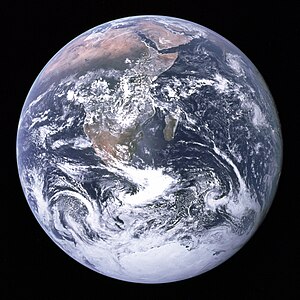
We are delighted to announce that the theme for this year's Mary Mulvihill award will be 'Life'.🌎 The award is open to undergraduate and postgraduate students enrolled in an Irish higher education institute at the time of submission. See below for details⬇️ 🧵1/2
Mary Mulvihill Association tweet media
English
1
4
6
491
Mary Mulvihill Association
Mary Mulvihill Association@RememberingMary·
Perhaps current and past generations have not taken the action which we should have. The question now is, will the children of today and perhaps their children have the courage, political leadership and foresight to change the direction we seem to be going? Lets hope so.🙏🧵30/31
English
1
0
0
36
Mary Mulvihill Association
Mary Mulvihill Association@RememberingMary·
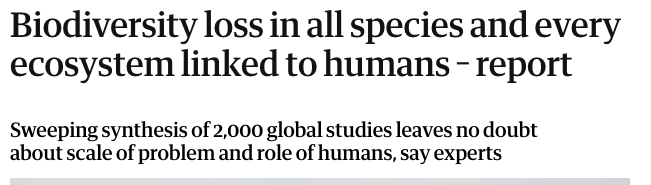
Despite the advances made in renewable technology, it may be too late for much of the life on this planet. A recent paper published in Nature analysed over 2000 different studies and found human action to be driving biodiversity loss among all species across the planet. 🧵22/31
Mary Mulvihill Association tweet media
English
1
0
1
71
Mary Mulvihill Association
Mary Mulvihill Association@RememberingMary·
But since the onset of the industrial revolution, we have seen a 50% increase the levels of CO2 now present in the atmosphere. The burning of fossil fuels such as coal, oil and gas account for 75% of global greenhouse emissions and 90% of carbon dioxide emissions. 🧵21/31
English
1
0
0
30
Mary Mulvihill Association
Mary Mulvihill Association@RememberingMary·
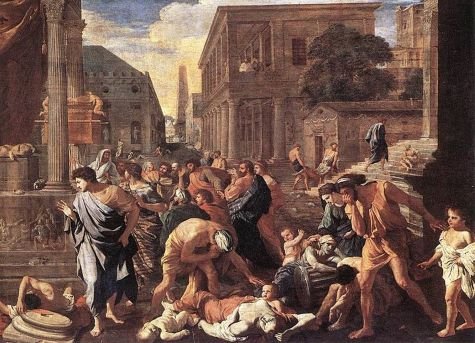
Plagues and other infectious diseases have no doubtfully threatened humans for as long as we have lived with animals, but the first documented epidemic is believed to have occurred in Athens in the year 430BC, killing up to 75, 000 people or 25% of the population. 🧵13/31
Mary Mulvihill Association tweet media
English
1
0
0
44
Mary Mulvihill Association
Mary Mulvihill Association@RememberingMary·
Climate simulations suggest that the extinction of the megafauna may have led to a slight increase in global warming, but the growth of agriculture which would later follow could have led to a slight global cooling. Thus the net change being small. 🧵20/31
Mary Mulvihill Association tweet media
English
1
0
0
35
Mary Mulvihill Association
Mary Mulvihill Association@RememberingMary·
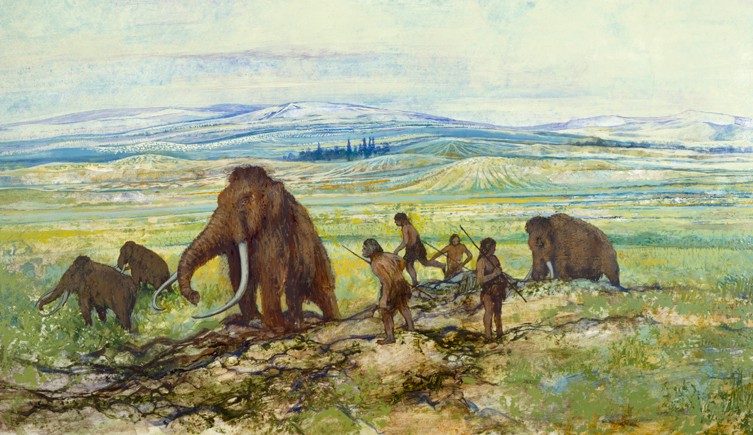
In the millenia before the industrial revolution, mankind was having an impact on the global environment. The use of fire, spread of agriculture and the extinction of the megafauna are clear examples. 🧵19/31
Mary Mulvihill Association tweet media
English
1
0
0
30
Mary Mulvihill Association
Mary Mulvihill Association@RememberingMary·
But all these advances have come at a cost. Up to the beginning of the 1800s, carbon emissions had remained relatively stable. However, since the arrival of the industrial revolution this has changed. 🧵18/31
Mary Mulvihill Association tweet media
English
1
0
0
23
Mary Mulvihill Association
Mary Mulvihill Association@RememberingMary·
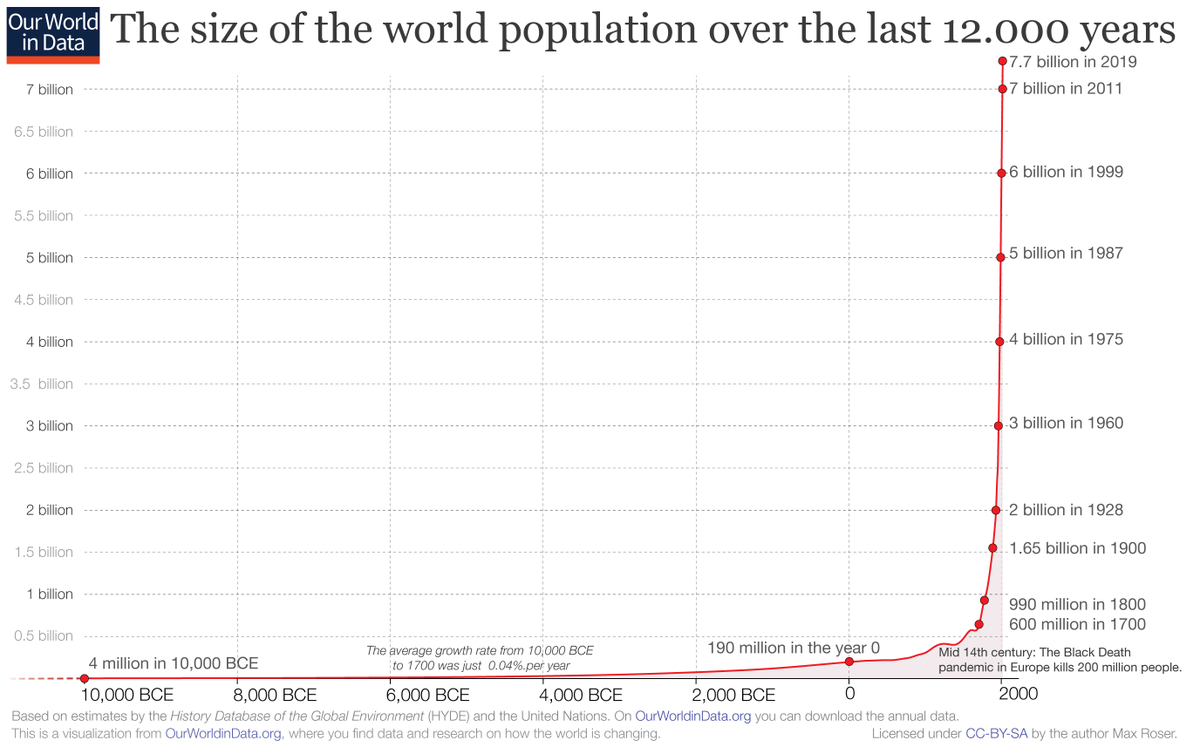
In the two centuries since we passed the 1 billion people mark, we have seen human population reach 8 billion. Current projections suggest that we will reach 10 billion by the end of the century, before leveling out. 🧵17/31
English
1
0
0
19
Mary Mulvihill Association
Mary Mulvihill Association@RememberingMary·
By AD1, human population is thought to have reached as high 170 million. Excluding a couple of short exceptions, this figure would continue to steadily grow over the next 1700 years reaching 1 billion by the start of the 19th century. 🧵16/31
Mary Mulvihill Association tweet media
English
1
0
0
19
Mary Mulvihill Association
Mary Mulvihill Association@RememberingMary·
For most of human history the overall population is believed to have remained low. Possibly even as low as 1 million people, but with the advent of farming, rapid growth began to occur. 🧵15/31
English
1
0
0
17
Mary Mulvihill Association
Mary Mulvihill Association@RememberingMary·
From the Plague of Justinian (541-549 AD, ~ 50 million deaths), to the Black Death (1334-1353 AD,~ 200 million deaths) up to the 100 million people who lost their lives to the Spanish Flu (1918). As we developed, so too did microorganisms. 🧵14/31
Mary Mulvihill Association tweet media
English
1
0
0
22
Mary Mulvihill Association
Mary Mulvihill Association@RememberingMary·
Humans had always lived with the threat of disease from microbes, but they now became much more exposed to disease previously only found in animals. Zoonotic diseases, those that jump from animals to humans are now the most common cause of infectious diseases in humans.🧵12/31
English
1
0
0
18
Mary Mulvihill Association
Mary Mulvihill Association@RememberingMary·
Recent research has indicated that an archaic population of a human ancestor contributed between 2 and 19% of the genetic ancestry found in people now living in Western Africa. 🧵5/31
English
1
0
0
15
Mary Mulvihill Association
Mary Mulvihill Association@RememberingMary·
As humans shifted away from hunting and gathering, and became more dependent on agriculture as well as the domestication of animals, it changed the course of infectious diseases. 🧵11/31
Mary Mulvihill Association tweet media
English
1
0
0
16