

SerenaB
1.4K posts

SerenaB
@RetVet99
I position businesses to enter the federal government contracting market. Co-founder @Serellium w/ @LillyBertz.
Washington, DC Katılım Temmuz 2022
604 Takip Edilen1.3K Takipçiler

@RetVet99 I mean they’re not cooler but sure there’s more cash flow presently
English
Autonomous underwater vehicles are cool. But way cooler are maintenance of dredging facilities ($2.4B spent in federal contracts over past 3 yrs).
Or maintenance and repair of ships, small craft, and floating docks ($1.38B).
Or repair of ship construction and repair facilities ($938M).
English

@RetVet99 We’re seeing these emerge as there’s a few startups in Rhode Island, @regentcraft @vatnsystems @FluxMarine that are AUVs etc
English


@RetVet99 we need more resilient coastal infrastructure, definitely something there
English

Request for Startups: autonomous dredging / sediment reuse for coastal infrastructure and land reclamation
SerenaB@RetVet99
Autonomous underwater vehicles are cool. But way cooler are maintenance of dredging facilities ($2.4B spent in federal contracts over past 3 yrs). Or maintenance and repair of ships, small craft, and floating docks ($1.38B). Or repair of ship construction and repair facilities ($938M).
English
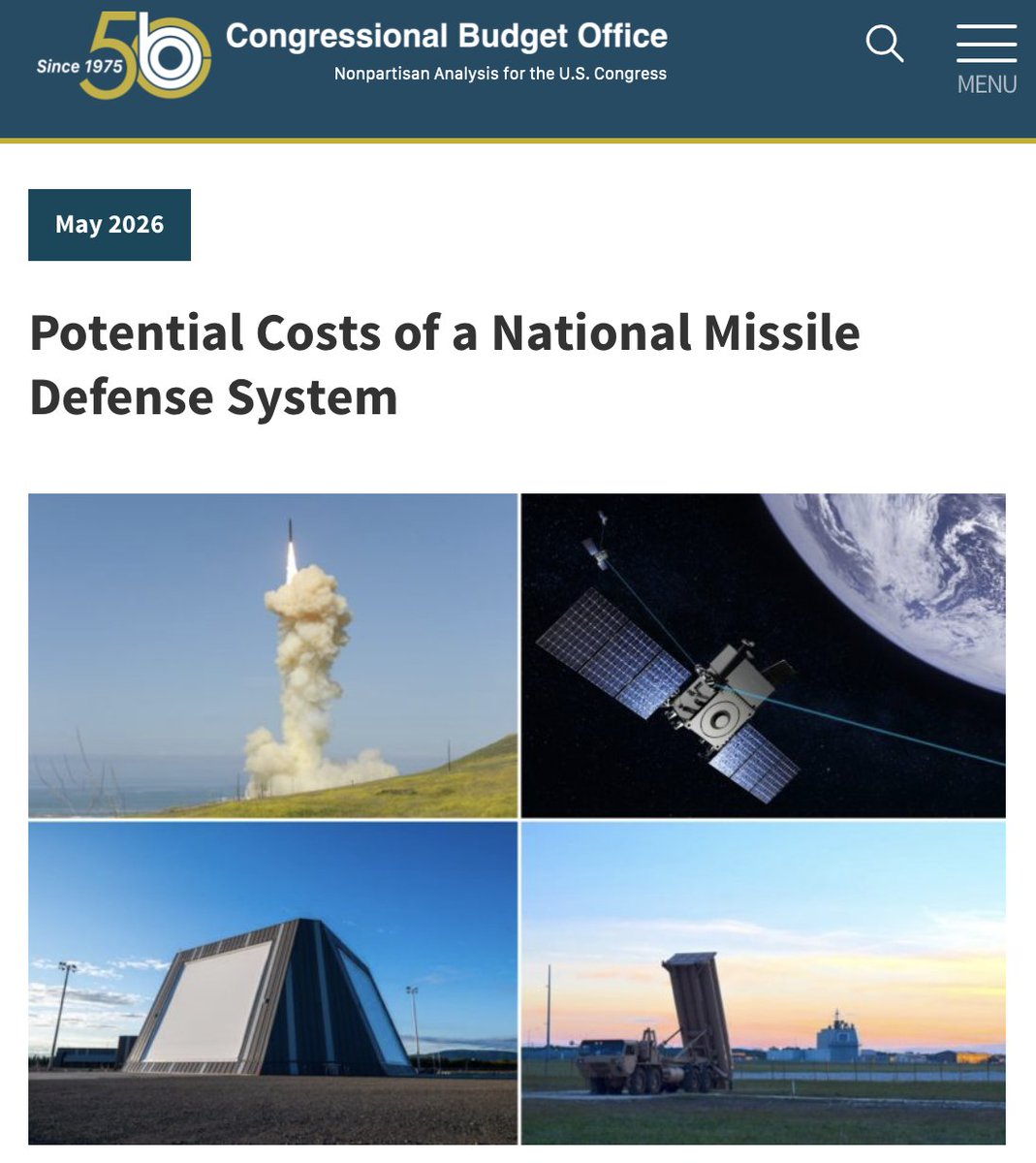
Golden Dome is the big hype. The Congressional Budget Office released their estimate of the Golden Dome last week: $1.2 trillion over the next 20 yrs. Here's a quick map of the companies in highest demand.
The Golden Dome is a massive, multi-decade build to create a layered homeland missile defense infrastructure spanning space, software, manufacturing, sensors, AI, energy, communications, and advanced materials.
Last week, CBO cross-walked last year's White House Executive Order "The Iron Dome of America" objectives, mapping out a notional cost based on the capabilities outlined in the EO.
Quick rundown of who should be paying attention and why.
1. Space & Satellite Manufacturing Companies
Golden Dome will need ~7800 space-based interceptor satellites, additional missile tracking constellations in LEO/MEO, continuous replenishment every 5 yrs, and launch demand & support of existing orbital infrastructure.
Companies that should care:
- Launch providers
- Satellite bus manufacturers
- Space-based sensor companies
- Space domain awareness companies
- Optical/infrared payload developers
- Electronics manufacturers
- On-orbit networking and communications
2. Missile Defense & Interceptor Manufacturers
Golden Dome will need ground-based interceptors, THAAD, SM-3, SM-6, Patriot MSE, glide-phase interceptors, and space-based interceptors.
Companies that should care:
- Missile manufacturers
- Propulsion companies
- Guidance/navigation companies
- Hypersonic defense developers
- Kill vehicle manufacturers
- Booster suppliers
- Higher demand for precision machining, composite manufacturing, microelectronics
3. AI, Software Companies
Golden Dome will need real-time sensor fusion, predictive tracking, resilient communications, multi-layer coordination, autonomous tracking, decision support systems, and command and control integration.
Companies that should care:
- Defense AI firms
- Edge computing
- Data fusion platforms
- Geospatial analytics firms
- Command-and-control software developers
- Cloud infrastructure providers
- Cybersecurity firms
4. Advanced Manufacturing & Defense Industrial Base Companies
Golden dome will need to overcome production bottlenecks, radar / infrastructure manufacturing constraints, and skilled labor shortages.
Companies that should care:
- Domestic manufacturing firms
- Precision fabrication
- Electronics manufacturers
- Semiconductor packaging
- Advanced materials
- Composite structures
- Additive manufacturing
- Industrial automation
5. Radar, Sensor, and ISR Companies
Golden Dome will need hypersonic tracking, long-range radars, space-based sensing, persistent missile warning, and multi-domain tracking systems.
Companies that should care:
- RF sensing companies
- Sensor developers
- Radar manufacturers
- SIGINT firms
- ISR platform providers
- Tracking software companies
6. Energy, Power, and Critical Infrastructure Companies
Golden Dome is building capabilities to protect the U.S. homeland & critical infrastructure.
Companies that should care:
- Grid resilience firms
- Nuclear infrastructure companies
- Microgrid developers
- Backup power providers
- Hardened infrastructure engineering firms
- Critical infrastructure cybersecurity
7. Construction & Engineering Firms
Golden Dome will cause likely future demand for new interceptor sites, radar facilities, utilities, and supporting infrastructure.
Companies that should care:
- Construction, design-build firms
- Civil engineering firms
- Secure facility builders
- Utilities/infrastructure integrators
8. Telecom & Secure Communications Providers
Golden Dome requires high demand for resilient communications, distributed command, and rapid data transmission.
Companies that should care:
- Secure networking firms
- SATCOM providers
- Tactical communications companies
- Fiber infrastructure providers
- Defense telecom integrators
English

@RetVet99 How do I contact you in a professional setting , email ?
English
What is the federal government actually buying right now? Quick look at FY25-present federal contract obligations, here's the top 10:
- Fixed-wing aircraft: $52.7B
- Managed healthcare: $49.7B
- Combat ships & landing vessels: $44.7B
- Engineering & technical support: $43.4B
- Drugs & biologicals: $39.6B
- Professional support services: $38.8B
- Facility operations: $35.4B
- IT & telecom support services: $31.6B
- Guided missiles: $24.5B
- Construction: $23.3B
English
@GoalsBDunn A range -- component kits, autonomous systems, ISR platforms, AI-enabled battlefield capabilities, higher capacity + lower cost manufacturing, etc
English

@RetVet99 What are you seeing most?
Full up new integrated systems?
Air vehicles already in service scale up production?
Services (CoCo or GoCo)?
English
Drones are so hot right now. Govt is actively seeking new manufacturers, new technologies, new suppliers, new operational capabilities. And it needs this capability faster than the traditional defense industrial base can deliver it.
Nearly 15% of federal contracts for drones last year went to small businesses. That's roughly $358M in obligations from FY25-26.
English
What inevitably trips up founders in defense is their focus on building the absolute best capability possible. That’s just not enough. Like it or not, the defense sector requires extreme rigor in both capability and go to market strategy.
SerenaB@RetVet99
I’m seeing generally founders new to the defense sector only get 1-2 of these right (or at least started). Most effective traction in landing fed contracts requires all 8: 1. Govt aligned messaging of capability — directly solving end user pain point 2. Rigorous RFI/SSN responses 3. Active dialogue with target govt agencies. Emphasis on target. Cannot boil ocean 4. Disciplined forecast and proactive shaping strategy, informing requirement well before RFP drops 5. Exploitation of SB set-asides 6. Teaming w aligned capabilities 7. Teaming w adjacent & complementary capabilities 8. Extensive knowledge of target market, vehicles, geographical hotspots, buyers, competitors, teaming partners, areas of market saturation based on regular federal market research
English
I’m seeing generally founders new to the defense sector only get 1-2 of these right (or at least started). Most effective traction in landing fed contracts requires all 8:
1. Govt aligned messaging of capability — directly solving end user pain point
2. Rigorous RFI/SSN responses
3. Active dialogue with target govt agencies. Emphasis on target. Cannot boil ocean
4. Disciplined forecast and proactive shaping strategy, informing requirement well before RFP drops
5. Exploitation of SB set-asides
6. Teaming w aligned capabilities
7. Teaming w adjacent & complementary capabilities
8. Extensive knowledge of target market, vehicles, geographical hotspots, buyers, competitors, teaming partners, areas of market saturation based on regular federal market research
English
SerenaB retweetledi
My team has been diving into federal contract data for the highest accelerating market segments in national security.
We're looking at national security industries that face hockey stick growth in govt demand signals:
- shipbuilding
- space
- aircraft manufacturing
- critical infrastructure
- energy production
- nuclear
- critical munitions
- radar detectors
- semiconductor manufacturing
Some areas are massively undersaturated in terms of private sector participation. More on this in the coming weeks as we release our findings.
But the problem I'm sitting with is this obvious need:
If we actually want to strengthen national security, we need to fix how govt engages with industry.
For decades, the defense contracting system favored incumbency, compliance, low prices, and process over outcomes.
But the threats we're facing today are evolving faster than the system itself.
The best solutions aren't always getting in. They're not even getting to the periphery of the market. Especially the small businesses, non-traditional vendors, and innovative firms without federal experience.
If we're serious about defense readiness, supply chain resilience, and modernization, then we need to reduce the friction to entry.
We need to make it in-your-face obvious that the opportunity is there, that the opportunity is astronomical, and that the opportunity brings a multitude of benefits from both the business and govt perspectives.
The capability in't the issue. Access is.
English

But what's way crazier is that almost 100 transaction awards for drones last year were both competed and received 1 offer.
SerenaB@RetVet99
Drones are so hot right now. Govt is actively seeking new manufacturers, new technologies, new suppliers, new operational capabilities. And it needs this capability faster than the traditional defense industrial base can deliver it. Nearly 15% of federal contracts for drones last year went to small businesses. That's roughly $358M in obligations from FY25-26.
English

Nuclear is happening, and it's only the beginning. Last year, at least 12 EOs directed specific calls to action for nuclear. The companies building against these requirements are going to win:
Speed up nuclear reactor licensing. Reduce regulatory risk. Add 300 gw of new nuclear capacity by 2050. Improve supply chains. 10 new large reactors with complete designs under construction by 2030. Faster reactor testing with goal to build 3 pilot reactors by July 4. Deploy reactors for AI and military bases. Reinvigorate fuel recycling and reprocessing. Build the U.S. supply chain to reduce dependence on foreign sources. Increase mining, enrichment, conversion, and reconversion. Strengthen the nuclear workforce. Revamp spent nuclear fuel management. Expand nuclear energy exports. Compete for commercial civil nuclear projects worldwide.
Executive Orders with calls to action specific to nuclear:
- Unleashing American Energy (Jan 2025)
- Declaring a National Energy Emergency (Jan 2025)
- Establishing the National Energy Dominance Council (Feb 2025)
- Zero-Based Regulatory Budgeting to Unleash American Energy (April 2025)
- Protecting American Energy from State Overreach (April 2025)
- Deploying Advanced Nuclear Reactor Technologies for National Security (May 2025)
- Ordering the Reform of the Nuclear Regulatory Commission (May 2025)
- Reforming Nuclear Reactor Testing at the Dept of Energy (May 2025)
- Reinvigorating the Nuclear Industrial Base (May 2025)
- Accelerating Federal Permitting of Data Center Infrastructure (July 2025)
- Launching the Genesis Mission (Nov 2025)
- Ensuring American Space Superiority (Dec 2025)
U.S. Department of Energy@ENERGY
English