Gordon Burton Hill, M.Div.

18.2K posts

Gordon Burton Hill, M.Div. banner
Gordon Burton Hill, M.Div.

Gordon Burton Hill, M.Div.

@RevHomoQueer

Rooted to blossom among "Quakers"; Ecumenical Minister; Chaplain; Clinical Pastoral Counsellor; Lifelong seeker to be truthful to myself, about myself

Canada Katılım Kasım 2024
1.9K Takip Edilen374 Takipçiler
Sabitlenmiş Tweet
Gordon Burton Hill, M.Div.
Gordon Burton Hill, M.Div.@RevHomoQueer·
"Until we learn that other lives are equally grievable and have an equal demand on us to be grieved - especially the ones that we've helped to eliminate - I'm not sure we'll really be on the way to overcoming the problem of dehumanization." ~ Judith Butler ->2
Gordon Burton Hill, M.Div. tweet media
English
3
4
11
368
Gordon Burton Hill, M.Div. retweetledi
Ro Khanna
Ro Khanna@RoKhanna·
Thank you to all those who reached out asking about my safety. I am home. But I cannot get the stories of the indignities Palestinian face out or my head. I am still processing it and wanted to share some of what I saw.
English
10.5K
10.2K
40.8K
1.4M
Joey Bennet
Joey Bennet@JoeyNimkii·
@DebbieIronbow Climate change is real. All you have to do is observe the settlers at a Pow Wow for 20 minutes.
Joey Bennet tweet media
English
3
0
6
49
🇨🇦
🇨🇦@GrayMarker99·
Let me tell you, the view from siting in those seats are better than any front row seat at the best of all movies. It’s called, Nature. ❤️❤️
🇨🇦 tweet media
English
35
74
1K
7.2K
Gordon Burton Hill, M.Div. retweetledi
Raghu Venugopal MD
Raghu Venugopal MD@raghu_venugopal·
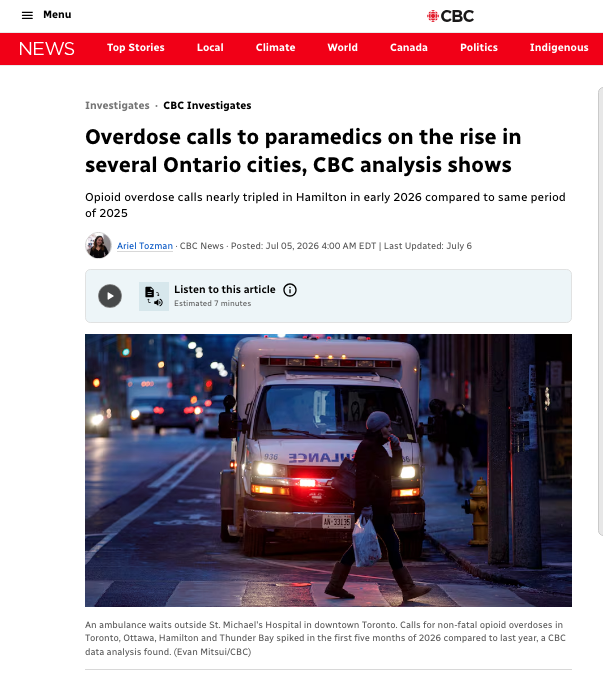
Ontario goes in the wrong direction on addictions policy. 👇👇👇 -It's about shelter and housing. Many of the EMS calls will be for unsheltered people, and Ontario's lack of affordable and no barrier housing doesn't give people a chance to stabilize their lives and seek abstinence. -We need safe consumption sites, and more. SCS do more than monitor drug users. They provide a broad access to community support that allows people to stabilize their lives and a path to recovery. -SCS should support not just IV drug use but all forms of use, like inhalation, oral and sniffing. We're missing a big chunk of people that are using drugs - before they were shut down, we were only taking care of the highest risk users. -We're pushing drug users to public places. We shut down the SCS, they can't go in the transit system, we chased them out of parks. Where are they left to use? In public and on the street. The policy landscape in Ontario is grim. EMS calls are up, and they will stay up. Because SCS are closed, everywhere is a consumption site. No real change in the situation is going to happen until we have an Ontario government that supports treatment, law enforcement, prevention - and harm reduction (which is what doctors do everyday for a wide array of human ailments). cbc.ca/news/investiga…
Raghu Venugopal MD tweet media
English
4
22
77
1.2K
Gordon Burton Hill, M.Div. retweetledi
Avi Lewis
Avi Lewis@avilewis·
The federal government’s proposed “Defence, Security and Resilience Bank” sounds technocratic and reassuring. It’s not. This is an international war bank that: - Doubles down on militarizing our economy - Sidesteps transparency and public scrutiny - Requires massive cuts to the public services that actually keep us safe Canada needs a modern and well-equipped military. But we do not need a war bank that will further enrich weapons contractors, especially American ones, that profit from death, destruction, and global instability. See my full statement here: ndp.ca/news/reaction-…
English
54
185
672
29.6K
Palestine Culture
Palestine Culture@PalestineCultu1·
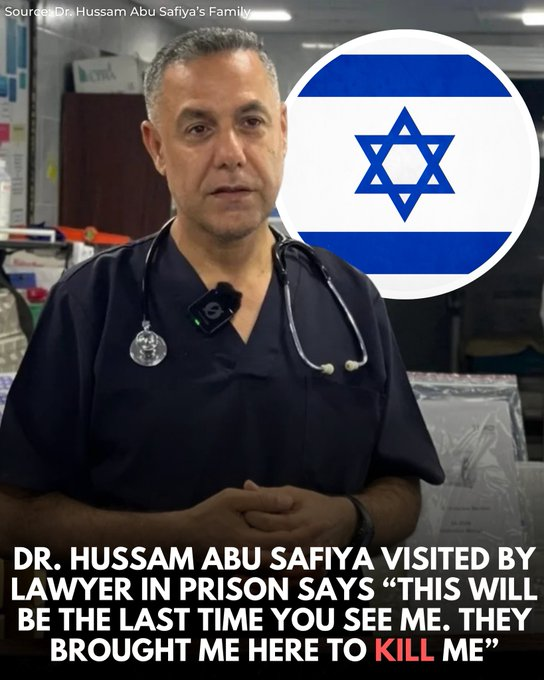
URGENT CALL: Join the "One Million Voices for the Free of Hussam Abu Safieh" campaign. Reply with 🇵🇸 or even a dot.
Palestine Culture tweet media
English
2.9K
8.8K
15.5K
127K
Gordon Burton Hill, M.Div. retweetledi
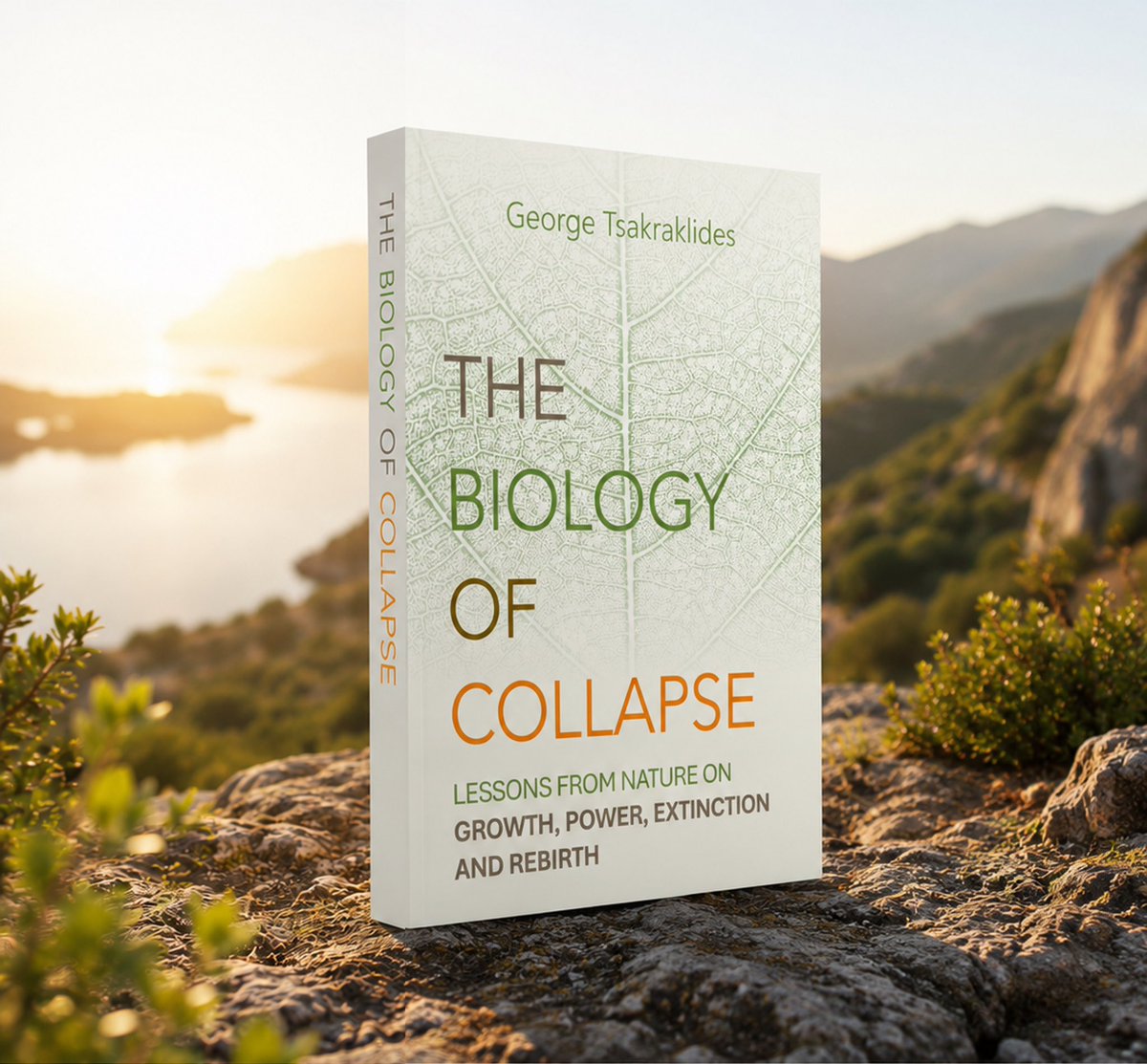
George Tsakraklides
George Tsakraklides@99blackbaloons·
“The de facto definition of a successful business today is to be a virus: to create more of itself as fast as possible, at any cost and detriment to people and planet”
George Tsakraklides tweet media
English
4
16
30
844
Gordon Burton Hill, M.Div. retweetledi
Voice of Rabbis
Voice of Rabbis@voiceofrabbis·
Audio recording of Rabbi Avigdor Miller (1908-2001): “The Israeli flag is a symbol of Zionism and you should burn it” Our Rabbis Throughout the Generations—Long Before Zionism Established a State, warned of the dangers the Zionist movement posed to Judaism and Jewish religious life. Zionists pretended to be Jews and tried to justify their G-dless political movement. Being against Zionism and Israel is not Antisemitism, its Judaism
English
20
408
625
10.2K
Gordon Burton Hill, M.Div. retweetledi
Brandi Morin
Brandi Morin@Songstress28·
So Alberta Premier Danielle Smith wants to audit First Nations chiefs, pushing proproganda championed by the separatist movement. Well, if you wanna talk about money, let’s talk about who’s been freeloading for the last 100 years. I have receipts. Stoodis. open.substack.com/pub/indigenous…
English
706
281
726
51.2K
Gordon Burton Hill, M.Div. retweetledi
Institute of Art and Ideas
AI is erasing the line between civilian and military life. The same systems that power translation, logistics, and digital assistants can just as easily be used for weapons or surveillance. When the Pentagon branded Anthropic CEO Dario Amodei "a liar with a god complex," it exposed just how blurred this boundary has become. Thomas Christian Bächle and Jascha Bareis argue that today's AI is not simply "dual use" — it is inherently violent in design, and increasingly fuses daily life with geopolitics. Tap here to read the full article. iai.tv/articles/ai-is…
Institute of Art and Ideas tweet media
English
5
14
21
1.4K
Gordon Burton Hill, M.Div. retweetledi
Yves Engler
Yves Engler@EnglerYves·
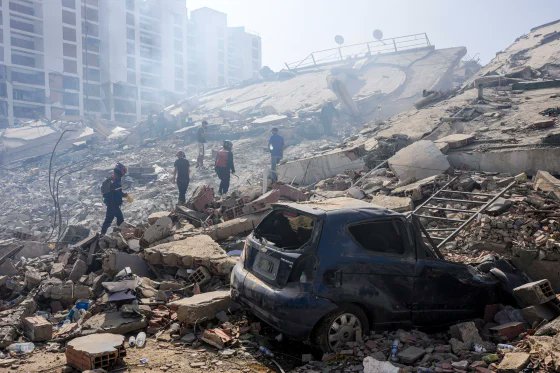
The devastation in Venezuela is horrific. Canada should offer disaster and reconstruction assistance but also change its policy towards that country by removing Canada’s sanctions and normalizing diplomatic relations. On Wednesday Venezuela was hit by two devastating back-to-back earthquakes. Over 1,400 have been confirmed dead in the magnitude 7.5 and 7.2 quakes, which were centered in the country’s northern coast 160 kilometres from the capital of Caracas. Several thousand have also been injured. Tens of thousands remain unaccounted for and more are without housing. The scope of property destruction is massive with the UN estimating USD $6.7 billion in damage. Ottawa has been slow to offer disaster relief in Venezuela. It should offer the government at least $100 million in direct financial assistance for the reconstruction. More fundamentally, Ottawa should remove its sanctions and normalise diplomatic relations with Venezuela. As part of shifting policy, there should also be a formal look at Canada’s support for the US kidnapping of Nicolas Maduro and previous efforts to overthrow the government. Between 2017 and 2020 the Justin Trudeau government engaged in a brazen effort to overthrow Venezuela’s government. In a bid to elicit “regime change”, Ottawa worked to isolate Caracas, imposed illegal sanctions, took that government to the International Criminal Court, financed an often-unsavoury opposition and decided a marginal opposition politician was the legitimate president. Over a two-year period, Ottawa severed diplomatic relations with Caracas. In December 2017 Venezuela declared Canada’s chargé d’affaires in Caracas, Craib Kowalik, persona non grata. In making the announcement, the president of the National Constituent Assembly, Delcy Rodriguez, denounced Kowalik’s “permanent and insistent, rude and vulgar interference in the internal affairs of Venezuela.” Ottawa declared Venezuela’s top diplomat persona non grata in response. In June 2019 Canada’s resident embassy in Caracas was closed. Alongside severing diplomatic relations, Ottawa imposed a half dozen rounds of sanctions on Venezuelan officials. In September 2017, the elected president, vice president, head of the electoral board, and 37 other officials had their assets in Canada frozen and Canadians were barred from having financial relations with these individuals. Forty-three individuals were added to a list of 70 leaders Canada had already sanctioned in April 2019, including judges and lower-ranking police officials. In 2025 Ottawa instituted two new rounds of sanctions targeting about two dozen more Venezuelan officials. While ostensibly targeted at individuals, Canadian sanctions deterred companies from doing business in Venezuela. In contravention of the UN charter, the sanctions also helped legitimate more devastating US actions. A Center for Economic and Policy Research report written by Jeffrey Sachs and Mark Weisbrot concluded that 40,000 Venezuelans may have died in 2017 and 2018 because of US sanctions. The sanctions were part of a regime change bid that included Canada and Peru setting up the Lima Group of countries seeking to oust Venezuela’s government. The Lima Group backed marginal opposition politician Juan Guaidó declaring himself president in January 2019. The Lima Group/Guaidó/sanctions/severing diplomatic ties helped lay the ground for Donald Trump’s crass imperial aggression at the start of this year. Mark Carney justified US forces kidnapping President Nicolas Maduro in a night-time raid that left 83 dead. The prime minister called it “welcome news”. As part of changing Canadian policy, there should be a formal assessment of the legality and morality of seeking to oust Venezuela’s government. More immediately, Canada should offer the government in Caracas support with disaster relief and reconstruction. An important part of any assistance to Venezuela should be to immediately remove sanctions and normalise diplomatic relations.
Yves Engler tweet media
English
15
78
229
5.9K
Gordon Burton Hill, M.Div. retweetledi
Massimo
Massimo@Rainmaker1973·
Erin Brockovich is now tracking more than 5,000 community concerns about AI data centers across the United States. The renowned environmental activist has created a nationwide map that tracks AI data centers that are operating, under construction, proposed, or facing local opposition. Reports have surged in recent weeks. On June 2, the tracker showed just over 3,000 community submissions. By June 9, that number had climbed past 5,000. The worries are very real. Residents are raising alarms about skyrocketing electricity demand, massive water consumption, constant noise, strain on local infrastructure, electronic waste, flooding risks, and the overall burden these industrial-scale facilities place on small towns and rural areas. Data centers serve as the physical foundation of artificial intelligence, powering everything from chatbots and image generators to cloud services and video models. But keeping the servers running 24/7 requires enormous resources. A single large data center can consume up to 5 million gallons of water per day, equivalent to the daily water usage of a town of 10,000 to 50,000 people. They also used about 4.4% of total U.S. electricity in 2023, a figure the Department of Energy projects could rise to 6.7–12% by 2028. This rapid growth has sparked growing local backlash. Several cities and counties have already imposed moratoriums or restrictions on new data centers to assess their impact on water supplies, power grids, and household utility bills. Seattle, for example, approved a one-year pause, with similar measures taken in parts of Kentucky, California, and Georgia.
Massimo tweet media
English
64
780
1.3K
64.5K
Gordon Burton Hill, M.Div. retweetledi
Samira Mohyeddin سمیرا
Samira Mohyeddin سمیرا@SMohyeddin·
Keep in mind that everyone criticizing the Nakba exhibit @CMHR_News has not even seen it. The inclusion of Palestinian voices, and the story of their past and present forced displacement, is a part of the Canadian story. The Nakba exhibit is up till 2028. Go see it!
English
85
524
1.3K
17.7K
Gordon Burton Hill, M.Div. retweetledi
Brandi Morin
Brandi Morin@Songstress28·
My latest is out via Indigenous Insider, link below: This land was never surrendered. It was shared. Before God. With God watching. Smith, the separatists, and their leaders can appeal every court ruling. They can fast-track every referendum. They can invoke the Alberta Sovereignty Act and the Critical Infrastructure Defence Act and threaten to arrest every Chief who stands on treaty ground in defense of their people. But there is an authority they have not yet answered to. On the river flats at Blackfoot Crossing, in 1877, the Creator witnessed a covenant. At Fort Pitt, in 1876, the Creator heard the promises made — including the ones the Crown’s scribes quietly left out of the written document. At Lesser Slave Lake, in 1899, the Creator heard the word share, even as the English text wrote cede. A breakdown of what really happened- read/share now. open.substack.com/pub/indigenous…
Brandi Morin tweet media
English
45
97
183
6.6K
Gordon Burton Hill, M.Div.
Gordon Burton Hill, M.Div.@RevHomoQueer·
May I mention again: Israelis sing & dance & rejoice over mutilated & mangled, dead Palestinians & those imprisoned & tortured by the most obscene indecencies possible - what is their aversion to having their glorious accomplishments displayed - shamelessly?
Yves Engler@EnglerYves

The Zionist meltdown over the Canadian Museum for Human Rights’ Palestine Uprooted: Nakba Past and Present exhibit offers a remarkable window into their anti-Palestinian racism. They don’t consider Palestinians important enough to even have their voices heard. In the second email to their list on the matter in days, the Centre for Israel and Jewish Affairs messaged its supporters Thursday: “This weekend, the publicly funded Canadian Museum for Human Rights will open an extremely controversial ‘Nakba’ exhibit that risks fanning the flames of Jew hatred. That’s right: a museum founded by the vision and generosity of Jewish community leaders is now being weaponized against us to serve a dangerous, one-sided political agenda…. The situation has been so grossly mishandled that just yesterday the museum’s only Jewish board member, Mark Berlin, felt compelled to resign. “Prime Minister Carney recently acknowledged that Canada is failing Jewish Canadians and warned against importing overseas conflicts into Canadian society. Yet your taxpayer dollars are now supporting an exhibit at a national museum that does exactly that — at a time when our community faces unprecedented threats, including acts of terror. “The Minister of Canadian Heritage must ensure accountability. Join us in urging the government to hold the museum’s CEO Isha Khan and its leadership accountable for this failure of governance, transparency, and public trust.” Alongside CIJA calling on people to email the minister to demand he reprimand or fire the museum's CEO, Irwin Cotler, Mark Berlin and Alan H. Kessel published a column in Thursday’s Globe and Mail headlined “The Canadian Museum for Human Rights has failed its mandate”. In recent days the Globe has also published two negative stories about Palestine Uprooted based on wealthy activist Gail Asper criticizing the exhibit and museum board member Mark Berlin resigning over the matter. There have also been articles focused on the Zionist panic over the exhibit in the National Post, Winnipeg Free Press, Canadian Jewish News, Toronto Sun and others. Amidst the genocidal Jewish supremacist meltdown about Palestine Uprooted, there’s been little discussion about a matter the exhibit likely downplays or ignores. While it has yet to open, Palestine Uprooted probably downplays the important role Canada played in the Palestinian catastrophe. Hundreds of Canadian World War II veterans fought to ethnically cleanse Palestine. During the 1948 war Israel’s small air force was almost entirely foreign. At least 53 Canadians were part of it including Montreal’s Sydney Shulemson who is considered the “father of the Israeli Air Force”. Additionally, Canadian capitalist Samuel Bronfman helped arm Zionist paramilitaries prior to Israel’s founding. In its 1971 obituary the New York Times reported that Samuel made “a secret purchase of Canadian weapons for troops of the Haganah.” More substantially, Canadian diplomats made a sizeable contribution to the unjust UN Partition Plan, which called for the division of Palestine into ethnically segregated states and gave most of the land to the newly arrived minority. The partition plan legitimated the Zionists’ planned ethnic cleansing and, as Canadian diplomats warned privately in 1947, would lead to decades of conflict. Under growing Zionist military pressure after the Second World War, Britain prepared to hand its mandate over Palestine to the newly created UN. In response, the U.S.-dominated international body formed the First Committee on Palestine, which was charged with developing the terms of reference for a committee that would find a solution for the British mandate. Canada’s Undersecretary of External Affairs Lester Pearson, who had previously made his sympathy for Zionism clear, chaired the First Committee that established the United Nations Special Committee on Palestine (UNSCOP). At the First Committee, Pearson rejected Arab calls for an immediate end to the British mandate and the establishment of an independent democratic country. He also backed Washington’s push to admit a Jewish Agency representative to First Committee discussions (ultimately both a Jewish Agency and Palestinian representative were admitted). Pearson tried to define UNSCOP largely to facilitate Zionist aspirations. The Arab Higher Committee wanted the issue of World War II European Jewish refugees excluded from UNSCOP but the Canadian diplomat worked to give the body a mandate “to investigate all questions and issues relevant to the problem of Palestine.” A U.S. State Department memo noted that Pearson “proved to be an outstanding chairman for [the First] Committee.” The Canadian Arab Friendship League, on the other hand, complained that the First Committee plan for UNSCOP was “practically irresponsible and an invitation to…acts of terror on the part of Zionism.” Canada’s delegate on the UNSCOP mission to Palestine pushed for the largest possible Zionist state and is considered the lead author of the majority report in support of partitioning Palestine into ethnically segregated states. Supreme Court justice Ivan C. Rand opposed proposals for a Jewish-Arab unitary state and made key interventions in the decision-making process in support of partition. “Rand worked hard,” notes his biographer, “to ensure the maximum geographical area possible for the new Jewish state.” At one point, Rand and another UNSCOP member, supported giving the Zionists a larger piece of land than they officially asked for. At the end of their mission, the UNSCOP majority and minority reports were sent to the special UN Ad Hoc Committee on the Palestinian Question. At the Ad Hoc Committee Pearson rejected the Arab countries push to have the International Court of Justice decide whether the UN was allowed to partition Palestine. (Under U.S. pressure, the Ad Hoc Committee voted 21 to 20 — with 16 abstentions – against allowing the International Court to adjudicate the matter.) The Ad Hoc Committee was split into two subcommittees with one focusing on the partition plan and the other on a bi-national state. At the Ad Hoc Committee’s Special Committee 1, Pearson worked feverishly to broker a partition agreement acceptable to Washington and Moscow. Preoccupied with the great powers, the indigenous inhabitants’ concerns did not trouble Pearson. He dismissed solutions that didn’t involve partition, which effectively meant supporting a Jewish state on Palestinian land. Pearson played a central role in Special Committee 1’s partition plan. Both the New York Times and Manchester Guardianran articles about his role in the final stage of negotiations. By supporting partition Canada opposed the indigenous population’s moral and political claims to sovereignty over their territory. Down from 90 per cent at the start of the British mandate, by the end of 1947 Arabs still made up two-thirds of Palestine’s population. Despite making up only a third of the population, under the UN partition plan Jews received most of the territory. Canada pushed a plan that gave the Zionist state 55 per cent of Palestine despite the Jewish population owning less than seven per cent of the land. Privately Canadian Justice Minister J.L. Isley said he was “gravely concerned” the push for partition did not meet the Arabs “very strong moral and political claims.” The only Middle East expert at External Affairs, Elizabeth MacCallum, claimed Ottawa supported partition “because we didn’t give two hoots for democracy.” At the time of the partition vote, notes The Rise and Fall of a Middle Power, “MacCallum scribbled a note and passed it to Mike (Pearson) saying the Middle East was now in for ‘40 years’ of war, due to the lack of consultation with the Arab countries.” She was prescient, even if she underestimated the duration of the conflict. A huge boost to the Zionist movements’ desire for an ethnically based state, the UN partition of British Mandate Palestine contributed to the displacement of at least 700,000 Palestinians. Scholar Walid Khalidi complained that UN (partition) Resolution 181 was “a hasty act of granting half of Palestine to an ideological movement that declared openly already in the 1930s its wish to de-Arabize Palestine.” Perhaps the next exhibit after Palestine Uprooted: Nakba Past and Present should include a discussion of Canada’s important role in the Palestinian catastrophe.

English
0
1
1
15
Gordon Burton Hill, M.Div. retweetledi
Maria Popova
Maria Popova@themarginalian·
"To live, we must die every instant. We must perish again and again in the storms that make life possible." How the great Zen teacher and peace activist Thich Nhat Hanh found himself when he lost his self at the library themarginalian.org/2022/01/23/thi…
English
0
24
73
6.6K
Gordon Burton Hill, M.Div. retweetledi
George Tsakraklides
George Tsakraklides@99blackbaloons·
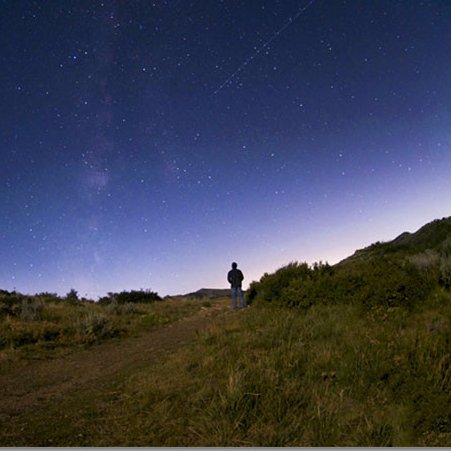
“This planet is a living, breathing system that responds to triggers. Humans only seem to remember this when it suddenly affects them”
George Tsakraklides tweet media
English
5
77
188
2.2K