Reza tanpa brief retweetledi
Reza tanpa brief
44.5K posts

Reza tanpa brief
@RezaUnscripted
Udah akun kelima. Bintang lima, jadi Field Marshall dong. Pericla timidus etiam quae non sunt videt. Solum secundum data et veritas
Katılım Kasım 2008
1.3K Takip Edilen896 Takipçiler
Reza tanpa brief retweetledi

An enormous 11,000-carat ruby has been discovered in Myanmar… and it could be one of the largest gem-quality rubies ever found. 💎🌍
The giant gemstone was uncovered near Mogok — a legendary mining region often called the “Valley of Rubies,” famous for producing some of the rarest and most valuable rubies on Earth.
To understand how massive this find is: Most rubies used in engagement rings or luxury jewelry weigh just 1–5 carats. This one weighs over 11,000 carats.
That’s not just a gemstone — it’s a geological time capsule formed under extreme heat and pressure deep inside Earth’s crust over millions of years.
Rubies get their deep red color from traces of chromium inside the mineral corundum, and the rarest stones can become more valuable than diamonds. ✨
A hidden piece of Earth’s history… finally brought to the surface.

English
Reza tanpa brief retweetledi

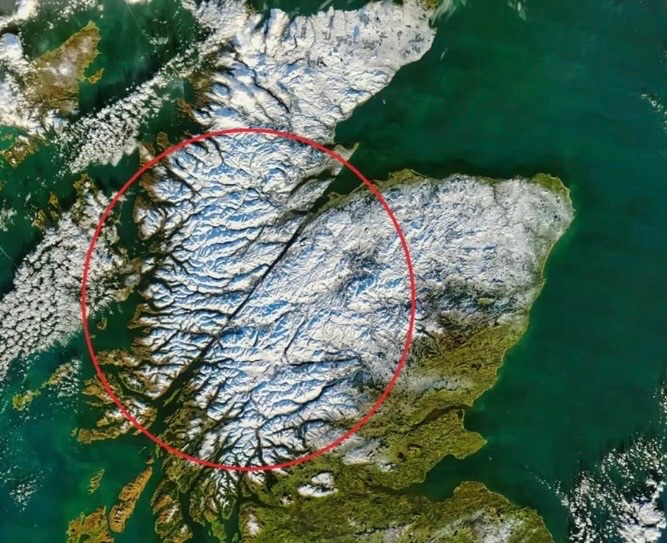
Why does Scotland have a giant line cutting through it? That’s the Great Glen Fault — a massive ancient fracture in the Earth’s crust formed around 400 million years ago during the collision of tectonic plates.
The Great Glen Fault formed during the Caledonian Orogeny, roughly 420 to 390 million years ago, when ancient continents collided as the Iapetus Ocean closed. This immense tectonic collision created a vast mountain range stretching across what is now Scotland and fractured the Earth’s crust into major fault systems.
One of the largest of these was the Great Glen Fault, a massive strike-slip fault where huge blocks of rock shifted past one another. The same mountain-building event also helped create the ancient Appalachian Mountains in North America, which were once connected to the Scottish and Scandinavian Highlands before the Atlantic Ocean existed. Scotland and parts of North America were once part of the same continuous mountain chain.
Later, during the formation and breakup of Pangaea, new tectonic stresses reactivated the fault zone. Although this activity did not form new mountains in Scotland, it kept the structure geologically active and weakened over millions of years.
Erosion eventually exploited this weakened line in the crust, carving out the long, straight valley now known as the Great Glen. The valley contains Loch Ness, Loch Oich, and Loch Lochy, and remains one of the clearest visible reminders of the ancient continental collisions that once linked Scotland to the Appalachian region of North America.

English
Reza tanpa brief retweetledi

Two stone giants sit in the Egyptian desert.
Each was carved from a single block of stone, weighs 720 tons, and was dragged 420 miles from its quarry. They are so large that, three and a half thousand years later, you can still see them from more than 10 miles away...
They are called the Colossi of Memnon, and they were built around 1350 BC by the pharaoh Amenhotep III to guard the entrance of his mortuary temple on the west bank of the Nile, opposite modern-day Luxor.
Each Colossus stands 18 metres (60 ft) tall, including its plinth. They were carved from a stone called quartzite sandstone, quarried at el-Gabal el-Ahmar, the Red Mountain, near modern-day Cairo. The southern statue is a single, unbroken block. The northern was cracked by an earthquake in 27 BC and partially rebuilt in the Roman era.
Quartzite sits at 7 on the Mohs scale of mineral hardness. The Egyptians who built the Colossi were a Bronze Age culture. Their chisels were made of copper and bronze, which register around 3 to 4 on the Mohs scale. They could not have cut the stone directly. The mainstream answer is that they did it by abrasion. According to archaeologists, they used small handheld stones harder than quartzite, mixed with sand and water, and slowly ground the figures out of the block by hand...
Each finished statue weighs 720 tons, roughly the weight of a hundred adult elephants. They were quarried near Cairo and installed near Luxor, 420 miles south. The Nile flows northward, which means a river journey would have required moving the stones against the current. Many experts believe that the stones are too heavy to have been transported upstream on the Nile. Some Egyptologists argue, instead, that the blocks were dragged overland on wooden sleds for the entire 420 miles.
Whatever happened in the desert thirty-four centuries ago, and however it happened, the result is harder to argue with than any explanation. The statues still stand. And I think that is the most astonishing thing of all: they have stood through every empire that has tried to outlive them.
The Colossi were already standing when Tutankhamun was born. They were standing when Alexander entered Egypt. They were standing when Cleopatra met Caesar. They were standing when Roman tourists climbed up to scratch their names into the plinth. And they are still standing today...
If you enjoyed this, I write a weekly newsletter read by over 50,000 people who love rediscovering the beauty of the past. You can join us here:
James-lucas.com/welcome
If you'd like to support my work, a paid subscription is what makes it possible.
English
Reza tanpa brief retweetledi

How Hiroshima happened.
In 1945, during World War II, the United States dropped the first atomic bomb on Hiroshima, Japan. In seconds, the city was destroyed and tens of thousands of lives were lost. Days later, another bomb hit Nagasaki. The tragedy changed the world forever and showed the devastating power of nuclear war.
English
Reza tanpa brief retweetledi

The sad remains of Rotterdam after the destructive German bombardement on 14 May 1940
Voices of WW2@VoicesofWW2
Rotterdam, before and after the 1940 German bombardment of the city
English
Reza tanpa brief retweetledi