Richard Lynes

1.1K posts

Richard Lynes banner
Richard Lynes

Richard Lynes

@RichardLynes

Founder and CTO at GENESIS AiX LLC, Inventor of LifeStack™, SeSAA™, Prompt Protection™, and Sopranus™ frameworks (Patents Pending)| Advancing Quantum AI

Augusta, GA Katılım Ağustos 2014
132 Takip Edilen77 Takipçiler
Richard Lynes
Richard Lynes@RichardLynes·
Google may be validating the next major AI battleground: the digital twin. A persistent AI companion that remembers, interprets, anticipates, connects across apps, and eventually acts for the user is not just another productivity feature. It is a delegated trust relationship. linkedin.com/posts/richard-…
English
0
0
0
25
Richard Lynes
Richard Lynes@RichardLynes·
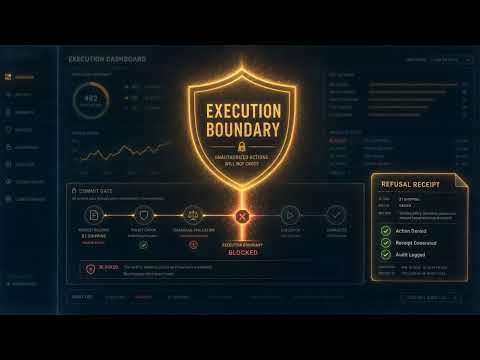
Enterprise AI governance is moving quickly from theory to operations. After watching ServiceNow’s AI Control Tower framing around FedEx-style workflows, I saw an important architectural distinction worth making clear. Control towers are necessary. Enterprises need visibility across agents, workflows, identities, risk, audit trails, remediation, and business value. But visibility and remediation are not the same as execution-bound control. The deeper governance question is: What happens at the exact moment an AI-driven action becomes consequential? If an agent attempts to change pricing, trigger billing, alter fulfillment, commit budget, schedule staffing, or notify customers, governance has to bind before that action mutates enterprise state. That is the layer LifeStack / GPM / GDE is designed to address. This video is not a critique of ServiceNow. It is a complementary architecture note: ServiceNow helps enterprises see, govern, orchestrate, and respond. LifeStack is designed to ensure invalid actions cannot bind. The future enterprise will need both: operational governance above, and execution-bound governance at the commit boundary. youtube.com/watch?v=Trjkl0… #AgenticAI #AIGovernance #EnterpriseAI #AIInfrastructure #ExecutionBoundGovernance #AIAgents #ResponsibleAI #EnterpriseArchitecture #AITrust #WorkflowAutomation #LifeStack #GenesisAiX
YouTube video
YouTube
English
0
0
0
6
Richard Lynes
Richard Lynes@RichardLynes·
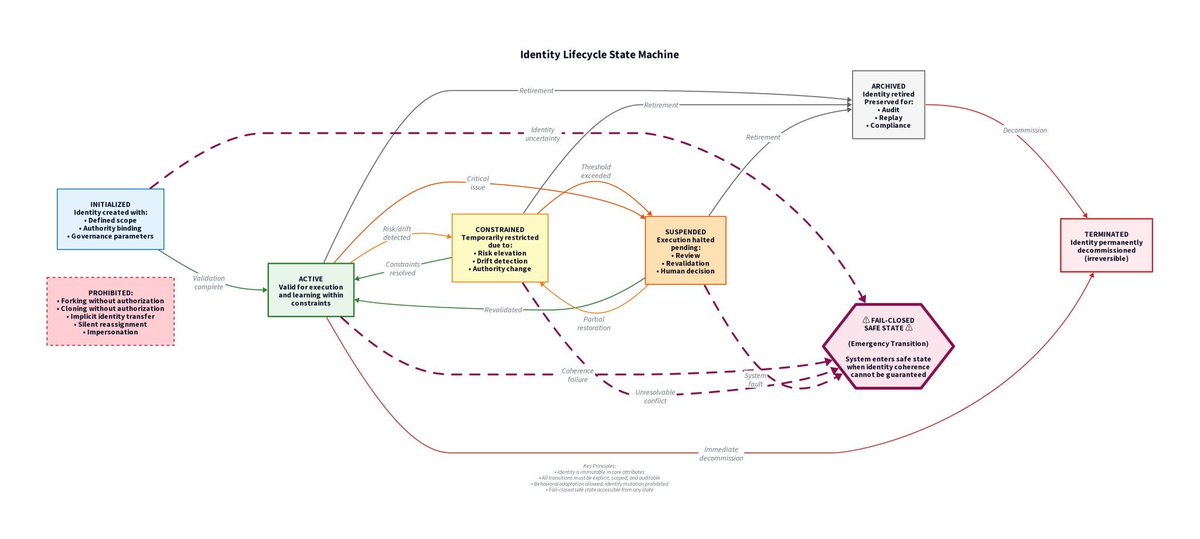
Recall, AI memory, and the question nobody should skip The problem with systems like Microsoft Recall is not only whether snapshots are local. It is not only whether they are encrypted. Those are important protections, but they do not answer the deeper architectural question: Should the operating system create a searchable memory of the user’s screen activity at all? From a user perspective, the stated use case is understandable: “Help me find something I saw earlier.” But from a platform perspective, the implications are much larger. Once screen activity becomes searchable, indexable, and AI-addressable, the desktop itself becomes a context substrate. Every app, website, document, workflow, conversation, and screen can collapse into one interpretive frame. That may be convenient. It is also a major expansion of risk. Encryption protects data at rest. It does not prove that capture was necessary. Local storage does not eliminate compromise risk. Filtering does not guarantee that sensitive material was never captured. User consent does not answer whether the capture surface should exist in the first place. The deeper issue is agency. If an AI system can remember what you saw, summarize what you did, retrieve prior activity, and eventually act against that context, then we are no longer talking only about memory. We are talking about authority. Who controls the frame? Who decides what is retained? Who can query it? Who can act on it? What happens when the machine is compromised, remotely accessed, or governed by enterprise policy? Where does visibility end and control begin? This is the same governance gap appearing across agentic AI: visibility is not control. A searchable record of user activity may help people recover lost context. But it also creates a high-value local evidence store of digital life. The better design question is not: “Can we encrypt it?” The better question is: Should this much ambient context be captured at all — and who has authority to bind actions against it later?
Richard Lynes tweet media
English
0
0
0
9
Richard Lynes
Richard Lynes@RichardLynes·
@SenAdamSchiff Schiff, you are so full of horseshit. The Trump family is doing quite well; they don't need your inferred rhetoric. You are the most corrupt political hack in Washington.
English
0
0
0
100
Adam Schiff
Adam Schiff@SenAdamSchiff·
Trump is trying to steal MORE taxpayer dollars to enrich himself. Here’s how:
English
1.1K
365
809
25.8K
Richard Lynes
Richard Lynes@RichardLynes·
AI is moving from suggestion → execution. That changes the infrastructure question. It is no longer enough to ask whether a model gave a safe answer. For Elon Musk, Gwynne Shotwell, xAI, X, Optimus, Starship, Tesla, SpaceX, and large-scale data centers, the harder question is: Can the system prove authority, scope, admissibility, and control were valid at the exact moment an action committed? That is the wedge behind GPM/GDE: Governed Project Memory + Governed Diligence Engine. Not another chatbot layer. A governance/evidence layer for high-consequence AI workflows: • preserve source-to-claim traceability • bind decisions to current authority • capture allow / hold / refuse evidence • make review paths replayable • prevent audit theater after consequence • support deployment where AI acts, not just advises Compute scales intelligence. But governed memory, admissibility, and executable evidence are what will scale trust. That is the layer every serious agentic infrastructure stack will need. @elonmusk @Gwynne_Shotwell #AI #AIGovernance #AgenticAI #xAI #SpaceX #Tesla #Starship #Optimus #DataCenters #GovernedAI #ExecutionBoundary #GPM #GDE #LifeStack #GenesisAiX
English
0
0
0
24
Richard Lynes
Richard Lynes@RichardLynes·
These polls don’t exist in a vacuum. When the intake filters are biased, the output reflects the bias. People form their opinions based on whatever information ecosystem they’re in — and mainstream outlets lean heavily left. If the data people consume is filtered, framed, or selectively reported, then the opinions they give pollsters aren’t grounded in full context.
English
0
0
2
33
Amber H
Amber H@ThatCheerMomOfX·
I may not be a 10, but at least I’m not a liberal.
Amber H tweet media
English
4.3K
373
22.7K
266.1K
Richard Lynes
Richard Lynes@RichardLynes·
Grok’s comparison helped frame the issue clearly: The question is not whether passive tiles, ablatives, or metallic TPS approaches are “bad.” Each solves part of the problem. The harder question is mission scope. For short-duration reuse, passive tiles can work with inspection and refurbishment. For one-off high-energy entries, ablatives are proven. Metallic systems may improve durability. But crewed Mars-class missions may require more than entry protection: • reusability across many cycles • graceful degradation • MMOD tolerance during transit • field maintainability away from Earth • backup thermal modes • possible ISRU coolant compatibility • reduced inspection burden • structural + thermal integration That is why integrated multi-layer TPS architectures are worth serious study. The future may not be “tiles vs active cooling.” It may be hybrid systems combining passive protection, active redundancy, structural heat management, and backup energy recovery. For human-rated deep-space operations, TPS may need to evolve from surface protection into mission infrastructure.
English
0
0
0
6
Richard Lynes
Richard Lynes@RichardLynes·
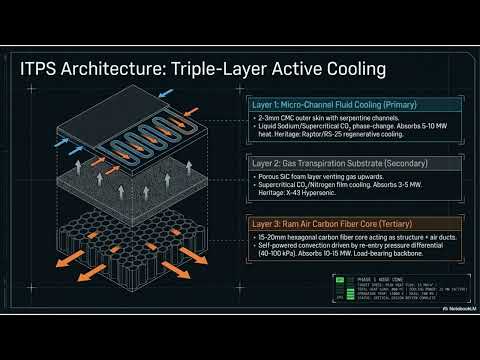
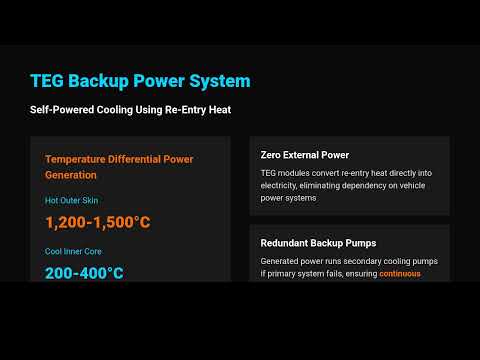
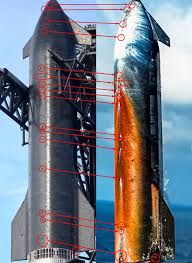
Why Integrated Thermal Protection Matters More for Crewed Starship Than Unmanned Flights The benefits of the Integrated Thermal Protection System (ITPS) for Starship are compelling for unmanned missions—but they become exponentially more critical for crewed flights, where human safety is the absolute priority. Starting from first principles—heat as the enemy, redundancy as the shield, and reusability as the enabler—here’s how ITPS fundamentally changes the safety equation: 1. Redundant Cooling = No Single Point of Failure Traditional tile systems are vulnerable to gaps and attachment failures. ITPS uses multiple, independent cooling mechanisms so that loss of any one subsystem does not endanger the crew. This redundancy buys critical time during off-nominal events and dramatically improves survivability margins. 2. Autonomous Self-Healing During Flight Cracks and micro-damage are unavoidable in high-energy flight regimes. ITPS incorporates passive self-healing mechanisms that activate under heat, closing gaps and restoring structural integrity without crew intervention—precisely the kind of autonomy crewed missions demand. 3. Micrometeoroid Protection for Long-Duration Missions For Mars transit and deep-space operations, micrometeoroid impacts are a life-or-death risk. ITPS integrates internal fragmentation and absorption structures that significantly reduce penetration risk, improving survivability over months-long missions. 4. Faster Refurbishment = Higher Crew Readiness Crews depend on vehicles that can be inspected, validated, and relaunched quickly. ITPS dramatically reduces refurbishment time compared to traditional tiles, increasing vehicle availability and lowering lifecycle risk. From first principles: Safety = Redundancy + Autonomy + Efficiency. ITPS delivers all three—making crewed Starship operations safer, more scalable, and more aligned to accelerate human spaceflight. Non-provisitional filing October 2025 Note: Here are three YouTube videos that explain it in detail. 1. youtu.be/J1uWTMORMmM 2. youtu.be/356Vu4sW6pA 3. youtu.be/KjTSJdBMCAc #AerospaceEngineering #ThermalProtectionSystem #IntegratedThermalProtectionSystem #MicroChannelCooling #SpacecraftThermalManagement #ReentryTechnology #AerospaceInnovation
YouTube video
YouTube
YouTube video
YouTube
YouTube video
YouTube
Richard Lynes tweet media
English
1
0
0
11
Victoria
Victoria@Victoria00025·
Be honest: Yes or No? 👇
Victoria tweet media
English
4.7K
64
278
54.8K
Richard Lynes
Richard Lynes@RichardLynes·
When someone tells another human being they ‘don’t deserve to be alive,’ they reveal exactly why conflict exists in the first place. Wars don’t start because people disagree — they start because people abandon reason, reduce others to enemies, and let the reptilian brain speak for them. That mindset justifies contention, not truth.
English
0
0
0
2
Tokyo
Tokyo@otokyo__·
One word for her...
Tokyo tweet media
English
2.1K
54
459
28.1K
Richard Lynes
Richard Lynes@RichardLynes·
If you're going to hate someone, at least get your facts right. Whether they justify such emotions is another question. During the Trump administration, there were proposals and actions to modify or exempt certain areas from this rule — most notably in Alaska’s Tongass National Forest. Here’s the key distinction: ✔️ What happened factually The administration proposed lifting restrictions on some “roadless” areas. This would have allowed more logging projects if they were approved later. It did not automatically authorize clear‑cutting across 59 million acres. It did not remove protections from all forests nationwide — the number refers to the total acreage covered by the Roadless Rule, not the amount opened to logging. ❌ What did not happen There was no policy that ordered or endorsed “clear‑cutting” millions of acres. There was no blanket plan to log all roadless forests. There was no nationwide removal of protections across all 59 million acres.
English
0
0
0
54
Dark Darling
Dark Darling@Darkdarling00·
As of today, Do you consider Hillary Clinton a trustworthy leader?
Dark Darling tweet media
English
1.3K
155
664
19K
Richard Lynes
Richard Lynes@RichardLynes·
@Ivankatrumpne I am sure if we took a poll, most Americans would feel the same about Jane Fonda. She is trying to be relevant when we forgot she existed.
English
0
0
3
68
Ivanka Trump News 🦅🇺🇸
Ivanka Trump News 🦅🇺🇸@Ivankatrumpne·
Jane Fonda says “ I’m truly Ashamed Of America “ What is your honest response to her ??
Ivanka Trump News 🦅🇺🇸 tweet media
English
3.4K
152
663
53K
Richard Lynes
Richard Lynes@RichardLynes·
Mia, your political views are leading you to misunderstand what is happening in the Middle East. Yes, the loss of innocence is horrible. Where was your concern when over 1200 innocent lives were brutally stolen on Oct 7th, funded by Iranian hate, it must end at any cost, or we will see more death and destruction.
English
5
0
9
235
Mia
Mia@MiaForTrump·
All 168 Iranian schoolgirls would be alive, the Strait of Hormuz would be open, and gas would be $2.85 a gallon If you voted for Kamala, not this pedophile Raise your hand 🤚 if you agree
Mia tweet media
English
1.5K
192
483
20.8K
Richard Lynes
Richard Lynes@RichardLynes·
@CoryBooker You're a fool if you think the American people don't want to see peace in the Middle East after 47 years of death and destruction. Your lies and misdirection are all you understand. You have no idea how to serve this nation.
English
0
0
2
60
Cory Booker
Cory Booker@CoryBooker·
The American people do not want this war. They want a congress that does its job.
English
633
226
841
25.1K
Richard Lynes
Richard Lynes@RichardLynes·
Schiffty-schift, you are the most immoral, unethical man in Washington. Trying to score political points before the midterms by telling Americans they are not smart enough to understand what we are doing in Iran is disgusting. The stupidity on the left is shocking. Go back to elementary school and learn what 2+2 equals.
English
0
0
0
123
Adam Schiff
Adam Schiff@SenAdamSchiff·
Make no mistake, Trump's illegal war on Iran is continuing.
English
1.7K
260
794
60.9K