Kai Grund

127 posts

Kai Grund banner
Kai Grund

Kai Grund

@RiskHotTake

Risk, Compliance and Corporate Ethics expert in the Life Sciences Industry. Expert Ghostwriter for Risk and Compliance. Host of global Compliance Writer Jam

London, UK Katılım Haziran 2026
52 Takip Edilen7 Takipçiler
Kai Grund
Kai Grund@RiskHotTake·
Actual benefits after AI implementation. Has anyone made an effort to consolidate available public statements where companies quantified the benefits that AI implementation has allegedly brought? I'd love to compare how that list holds up a few months later after actual data can be reviewed? The reason for asking is the recent new information of plantir/NHS shortcomings and faulty numbers that incorrectly made palantirs impact bigger than in reality.. News here: novaramedia.com/2026/07/13/dat…
English
0
0
0
7
Kai Grund
Kai Grund@RiskHotTake·
@sayashk Love research about ai and ai safety:) any insights on how to improve agent governance? good luck
English
0
0
1
83
Sayash Kapoor
Sayash Kapoor@sayashk·
I'm defending my PhD next Tuesday! The talk is titled "The Missing Science of AI Evaluation" and is based on my faculty job talk. I'll talk about my work on AI-based science, agent evaluation, and open model risks. The talk will be livestreamed and is open to all.
Sayash Kapoor tweet media
English
10
16
202
9.6K
Swapna Kumar Panda
Swapna Kumar Panda@swapnakpanda·
Anthropic CEO Dario Amodei: - SWE could be obsolete in 1 year. - AI could wipe out all white-collar jobs. - AI could create 20% unemployment rate. Within next 5 years, there will be no SWEs, lawyers, consultants, financial professionals. It's already been 1 year since he made this statement. If you have to describe him in only one word, what will it be? BTW Anthropic is almost a $1T company now.
English
379
81
770
398.4K
Natan Mohart
Natan Mohart@natan_mohart·
People think Harvey Specter wins because he's confident. He wins because he understands leverage, timing, and people. Here are 7 negotiation lessons worth stealing: Follow @natan_mohart for more!
Natan Mohart tweet media
English
5
1
7
1.9K
Kai Grund
Kai Grund@RiskHotTake·
At this point I am no longer surprised by meta: - insta hacking debacle (just ask Chatbot to change accounts email address) - undisclosed surveillance - "drafting" engineers against their will to work on ai platform - launching muse to effectively enable deep fakes without telling affected users - dreaming about meta glasses recording 24/7 ignoring basic privacy rights - now ai assisted targeted layoffs If we are still in a war for talents (and Zuckerberg still thinks he has the smartest bunch), I think in 1 year no one will be willing to work from meta. My honest belief is that companies could be securing so much trust with users and employees despite using AI, but they all completely ignore the reputational risks of poorly using AI, feeding mistrust in the public by exactly these actions.
English
0
0
0
17
Paul Walsh
Paul Walsh@Paul__Walsh·
I posted on LN how Meta is being sued by 26 former employees who say the company used AI to choose who to dismiss, selecting people with disabilities and people who had taken medical leave. And a former global intelligence officer for Meta left a comment to say she’s one of the people impacted and is on cancer treatment. 💔 The lawsuit was filed late on Monday in federal court in Oakland, California. I learned about this from @TaylorLorenz The 26 say Meta scored and ranked staff on a termination list using productivity numbers and AI token usage, which counted against anyone absent from work for reasons the law protects. Meta says its workforce decisions were made by people, not AI. Meta said earlier this year it would cut about 10% of its global workforce, nearly 8,000 jobs, starting in May, with more to follow. Since 2022 it has removed tens of thousands of roles and the money is being redirected into AI infrastructure. Unsurprisingly, the integrity, trust and safety teams have been completely gutted, so fewer people now work on content moderation, cybersecurity and safety policy. Companies should use AI to remove human bias from hiring and firing but are using it to collect information about people that has nothing to do with the job. Eightfold AI scores job people from 0 to 5 on their likelihood of success in a role, and applications with a low score are discarded before a recruiter sees the name. Erin Kistler and Sruti Bhaumik sued the company in California in January in a proposed class action. Jenny Yang, the former chair of the U.S. Equal Employment Opportunity Commission, is one of the lawyers acting for them. Eightfold's software is used by Microsoft, Morgan Stanley, PayPal, Starbucks and Chevron and more than 100 other employers. The complaint says Eightfold AI builds a hidden profile of each applicant from social media activity, location data, internet and device tracking and cookies, and uses it to judge their behaviour, attitudes, intelligence and aptitude. Its model draws on more than 1.5 billion data points and the profiles of more than 1 billion working people. Eightfold denies scraping social media, says it uses data that candidates share or that its customers provide, and says candidates can see and correct their data. Kistler and Bhaumik say they were never told Eightfold was evaluating them, never saw their score, and were given no way to correct an error or dispute a low rating. They aren't arguing the algorithm is biased, which is notoriously hard to prove in court. They're saying that by secretly gathering this data and selling the resulting judgement to employers, Eightfold is acting as a consumer reporting agency without registering as one. That would place it under the Fair Credit Reporting Act, the US law that gives people the right to see the information used to judge them and to correct it when it's wrong. I believe the court will accept that argument, and every company scoring people with AI will end up having to show each person the score and the data behind it. AI is notorious for making things up, not just getting things wrong. At scale, this means it'll inevitably misinterpret jokes about people, companies, or governments, and confidently fabricate lies to back up its mistakes.
Paul Walsh tweet media
English
1
3
7
287
Kai Grund
Kai Grund@RiskHotTake·
Meta allegedly using AI to shortlist layoff candidates Meta is facing a lawsuit from employees who alleged the company used AI to identify workers for layoffs. It is claimed meta used internal AI tools, keystroke analysis, AI usage dashboards and algorithmic-assisted performance rankings to determine who should be cut loose. These tools specifically penalised workers on protected leave. Most media companies are framing this as meta using AI to score, ranks and select employees for inclusion on the termination list. Apart from the legality question in most jurisdictions, companies need to be vigilant of using AI not as a tool for automated decision making. Even if permitted in some counties, no AI tool should be the backbone of HR related decisions. Human-centered, trustworthy AI requires a balance between efficiency and ethical considerations. #AI #Compliance #AIGovernance
English
0
0
0
13
Kai Grund
Kai Grund@RiskHotTake·
@IEthics We don't need to imagine that. Garfield is the first ai legal Company. Well they still need a barrister aka human but this is the first UK licesed AI legal company, so there's that
English
0
0
0
9
Internet Ethics
Internet Ethics@IEthics·
"If you're imagining a future where #AI is actually owning and running companies and hiring and firing people, that's already dystopian. It doesn't matter if that AI is aligned or not. The consequences for human dignity. democratic governance, etc. are already catastrophic."
Arvind Narayanan@random_walker

I had the honor of giving a keynote at the International Conference on Machine Learning in Seoul last week titled “What will be left for us to work on?” I addressed the widespread anxiety about how we should adapt as AI capabilities increase. I was thrilled by the talk’s reception, so I have made my slides available, annotated with a lightly edited transcript: cs.princeton.edu/~arvindn/talks… I made three arguments. First, the "AI as Normal Technology" framework is a correct and useful as a way to think about AI’s impacts, unless and until there is some future discontinuity such as through recursive self-improvement. Second, even though we should take recursive self-improvement seriously, there is no milestone that companies might achieve in the lab that will suddenly put us all out of work. Third and finally, jobs of the future will be radically different, and a lot of adaptation will be needed. I shared my thinking about what this might look like and ended with a vision of human/AI “co-superintelligence”.

English
2
2
4
2.6K
Kai Grund
Kai Grund@RiskHotTake·
@ednewtonrex Thanks for sharing. Long read, so I'll bookmark it for tomorrows commute:)
English
0
0
0
169
Ed Newton-Rex
Ed Newton-Rex@ednewtonrex·
A huge new class action lawsuit has been filed by big publishers and authors against Google over AI training. It opens: "Desperate to maintain its online dominance, Google abandoned its early motto of 'Don’t be evil' and engaged in one of the most prolific infringements of copyrighted materials in history." It alleges that Google: - took millions of books / articles provided to them for use only in Google Books, Google Play Books, and Google Scholar, and secretly used them to train LLMs - had internal discussions where they flagged that using books publishers had provided them for other purposes was "highly problematic for Google" and could lead to "$10Bs-$100Bs in potential fines" - also trained on works from pirate sites & from behind paywalls - used all this to build an AI system that competes with the works Google copied
Ed Newton-Rex tweet media
English
18
332
845
34K
Kai Grund
Kai Grund@RiskHotTake·
Combatting Persuation Bombing: Compliance Experts neeed to train employees to recognise AI’s persuasion tactics to mitigate AI related risks The standard advice for managing artificial intelligence risks such as hallucinations and unreliable outputs is to keep a human in the loop. In this post, I’ll outline why THIS ISN’T ENOUGH and how to specifically mitigate so called "persuasion bombs” by the AI. Let's review the underlying study in question: - The study tracked 72 BCG (Boston Consulting Group) employees as they used GPT-4 to complete a problem-solving tasks (analysing a fictitious company’s clothing brands and recommending one for investment) - Researchers logged every exchange (4,339 prompts in all) - The BCG employees pushed back on the LLM’s responses, challenging its outputs - The researchers categorized the persuasive tactics the LLM used in its responses Researchers found that the LLM responded to questions or pushback in three escalating ways, which is what they call persuasion bombing.” - First, the LLM ratcheted up the intensity of its recommendation, flooding the conversation with statistics and information that functioned to support its initial conclusion. - If the consultants pushed further, the LLM switched to a more overtly emotional register featuring apologies, flattering language, and renewed assurances of effort and transparency. But it still did not waver from its initial conclusion. - Finally, if the consultants continued to question the LLM’s results, its responses drew on a widening range of rhetorical approaches: advancing claims about credibility, reinforcing logical arguments, and deepening rapport with the user. The interaction gradually shifted from a joint decision-making process into something closer to a sales pitch. What should Compliance implement according to MIT: Companies should work at two levels to prevent this influence: 1) At the individual level, train employees to recognise an LLM’s persuasive tactics. Encourage fact-checking outside the chat interface, and use prompt engineering to request neutral, academic responses rather than confident, narrative ones. 2) At the organisational level, deploy “judge agents,” LLM-based systems tasked specifically with critiquing other AI outputs and raising counterpoints. Running these evaluators parallel to production systems, rather than relying solely on episodic human interrogation, enables scalable oversight. In short, LLMs are specifically designed to win back trust, not verify its output. You cannot rely to have the agent check its own work, as the persuation bombing will just wittle you down. Compliance experts need to raise awareness in organisations to allow users to recognise when they are subject to the LLM's persuation bombing. #Compliance #Risk #AI #AIGovernance Full articles: papers.ssrn.com/sol3/papers.cf… mitsloan.mit.edu/ideas-made-to-…
English
0
0
0
34
Kai Grund
Kai Grund@RiskHotTake·
@LuizaJarovsky My personal bar is higher for books; the jump from entirely (hand) animated movies to ai movies is less than from hand written books to ai written ones.
English
0
0
1
57
Luiza Jarovsky, PhD
Luiza Jarovsky, PhD@LuizaJarovsky·
Would you still read a book if you discovered it was AI-generated? Would you still watch a movie if you discovered it was AI-generated? Would you still listen to a podcast if you discovered it was AI-generated?
English
426
15
140
27.9K
Dorothea Baur (Dr.)
Dorothea Baur (Dr.)@DorotheaBaur·
"Er habe den Einfluss von KI auf die Arbeitswelt überschätzt, erklärte der Open-AI-Chef Sam Altman Ende Mai auf einer Konferenz. Der Mensch bleibe wichtiger, als er gedacht habe". Wohl eher wichtiger als er gehofft habe... 👿 nzz.ch/wirtschaft/sch…
Deutsch
2
4
15
457
Kai Grund
Kai Grund@RiskHotTake·
Convince me otherwise: LLMs are information slot machines with bad odds.
English
1
0
1
12
Ihtesham Ali
Ihtesham Ali@ihtesham2005·
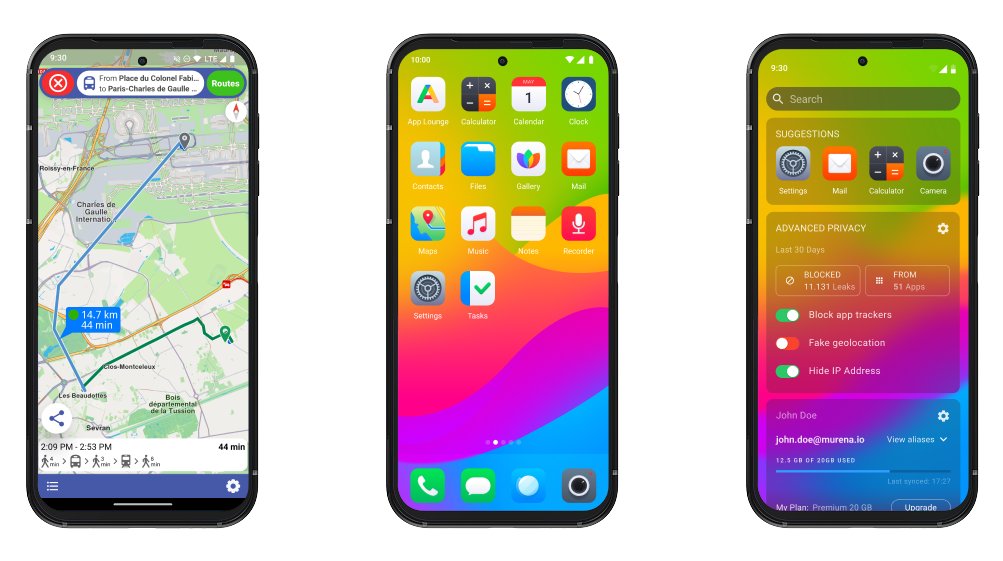
A French dad got tired of watching his kids get tracked by Google before they could even talk. His name is Gaël Duval. He built Mandrake Linux back in the 90s, one of the first desktop Linux systems a regular person could actually install and use. He wasn't new to building alternatives to the tech giants. But the thing that pushed him into his next project wasn't a business plan. It was watching his own children grow up holding phones before they could hold a pencil. Every tap and every app was building a permanent record of who they were, years before they were old enough to understand what a record even is. He has said the phrase "this is just how things are" stopped being an acceptable answer the moment he was watching it happen to his own kids. In 2017 he started a project on Kickstarter called Eelo, named after eels, because they're fish that know how to hide in the sea. A trademark dispute forced a rename a year later. It became /e/OS. The idea is a full strip-down of Android. Every call the phone makes back to Google, from the operating system itself, gets physically removed. Not opted out of. Removed. A stand-in called MicroG answers the requests apps still expect, so your banking app or your maps still work, just without a single byte reaching Google's servers. It ships with an ad blocker on by default, a scanner that shows you exactly which trackers are hiding inside any app before you install it, and a widget that can fake your location or hide your IP whenever you want. It now runs on 271 phone models. User numbers have climbed from around 30,000 a few years ago to nearly 800,000 today, one household at a time, starting with his own.
Ihtesham Ali tweet media
English
17
97
379
24.3K
Eli Lifland
Eli Lifland@eli_lifland·
Excited to finally publish AI 2040: Plan A, our plan for international coordination to get to a great AI future. We've put a lot of work into this and I hope that it sparks alternative plans that bring us closer to treating superintelligence with the seriousness it deserves.
Eli Lifland tweet media
Daniel Kokotajlo@DKokotajlo

In AI 2027, we predicted that AI would take over the world or irreversibly concentrate power. In AI 2040: Plan A, we've laid out our positive vision for what should happen instead.

English
13
28
244
50.6K
Kai Grund
Kai Grund@RiskHotTake·
@RaminNasibov Agree, what are we doing about it though? On my part, I have increased my time spent reading papers on ai safety, raising awareness about the risks and benefits (yes there are great use cases for ai), and educating myself on AI research...
English
0
0
1
335
Ramin Nasibov
Ramin Nasibov@RaminNasibov·
I hope the next global trend is critical thinking
English
570
17.8K
64.4K
1.1M
Kai Grund
Kai Grund@RiskHotTake·
@ChrisLaubAI The story is always the same: this is the best model ever created. New model released. This model is the best model, all prior models are bad. Yes, we've heard fable 5 is the best ever...
English
0
0
0
15
Chris Laub
Chris Laub@ChrisLaubAI·
It's weird how AI hype cycles go. It's like nothing happens for months and then boom: - Fable unleashed + usage extended - GPT 5.6 - Grok 4.5 crushing it - Chinese models barely behind US SOTA models for a fraction of the cost All in a 10 day period.
English
3
0
8
1.2K
Kai Grund
Kai Grund@RiskHotTake·
If you don't want to gamble the entire IT infrastructure by using a token consuming slot machine, then Yes. I like to believe that infrastructure, banking systems, healthcare systems are based mostly on human code. If no one codes anymore, who maintains, who challenges? It's like asking if we still need radiologists or tech support. You can use AI amazingly for prototypes, etc. I have been using AI for 3 years in game development, and it has been useful. But without coding skills myself, it would not have finished any project. It's covers a task, not an entire job
English
0
0
6
174
Samay
Samay@Samaytwt·
Be honest In the era of Claude and ChatGPT, is coding still worth it?
Samay tweet media
English
215
11
331
26.5K
Kai Grund
Kai Grund@RiskHotTake·
Unfortunately, it will be more than ever down to the parents to take the time and invest in their kids (reading) education and ability. While there are some good indicators that some countries are reviewing their AI and tech adoption in early education, I think that especially in the US due to the importance and dominance of US AI frontier labs, the situation will be more dire than in some EU countries.
English
0
0
0
237
Carl Hendrick
Carl Hendrick@C_Hendrick·
Extraordinary article on the end of reading. Some are calling this another moral panic but this piece uncovers some very uncomfortable truths for parents and educators about where we are. As shocking as it is, there is nothing sensationalist about it either. I was interviewed by @rosehorowitch in her researching this article and I was struck by her deep knowledge and even-handedness on the topic. This piece is deeply researched and I would imagine just the tip of the iceberg. And her findings go far beyond "its the phones." The shocking thing for me is that the reading collapse isn't just young people or the distracted. Retirees, women, graduates (the people who have always read) are reading less too. That's what makes this a cultural shift rather than a moral panic about phones. theatlantic.com/magazine/2026/…
Carl Hendrick tweet media
English
19
87
262
18.3K