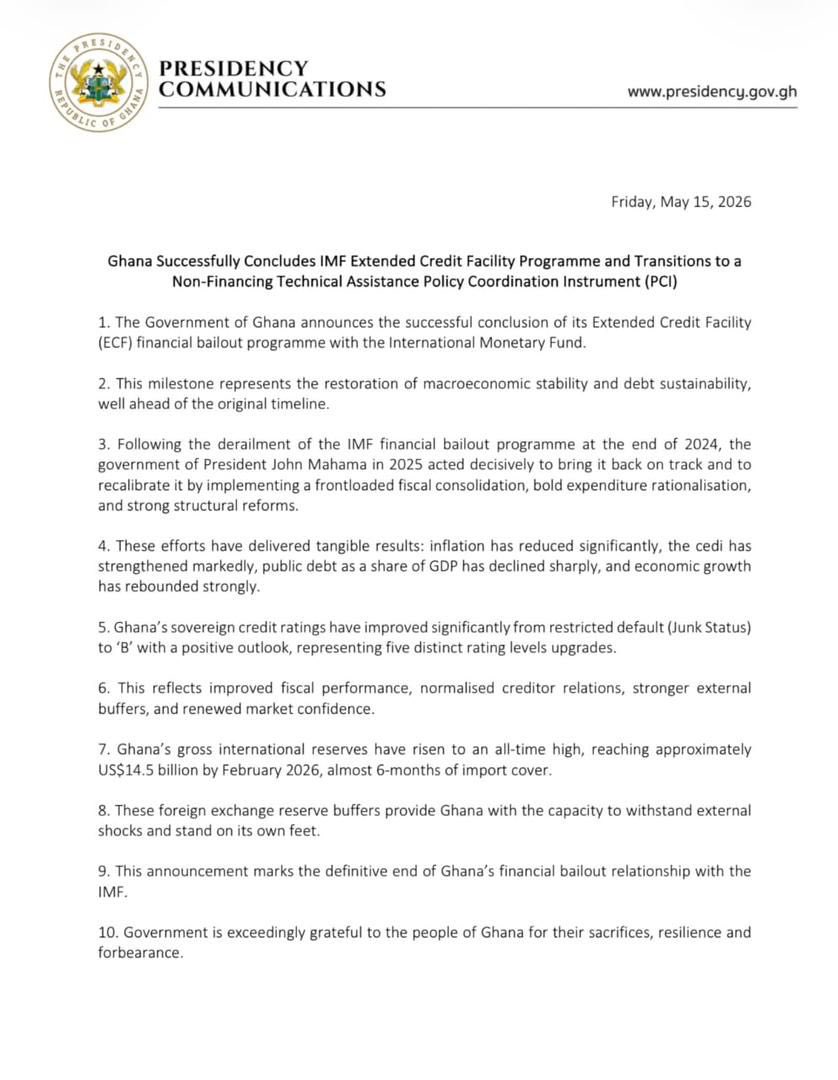
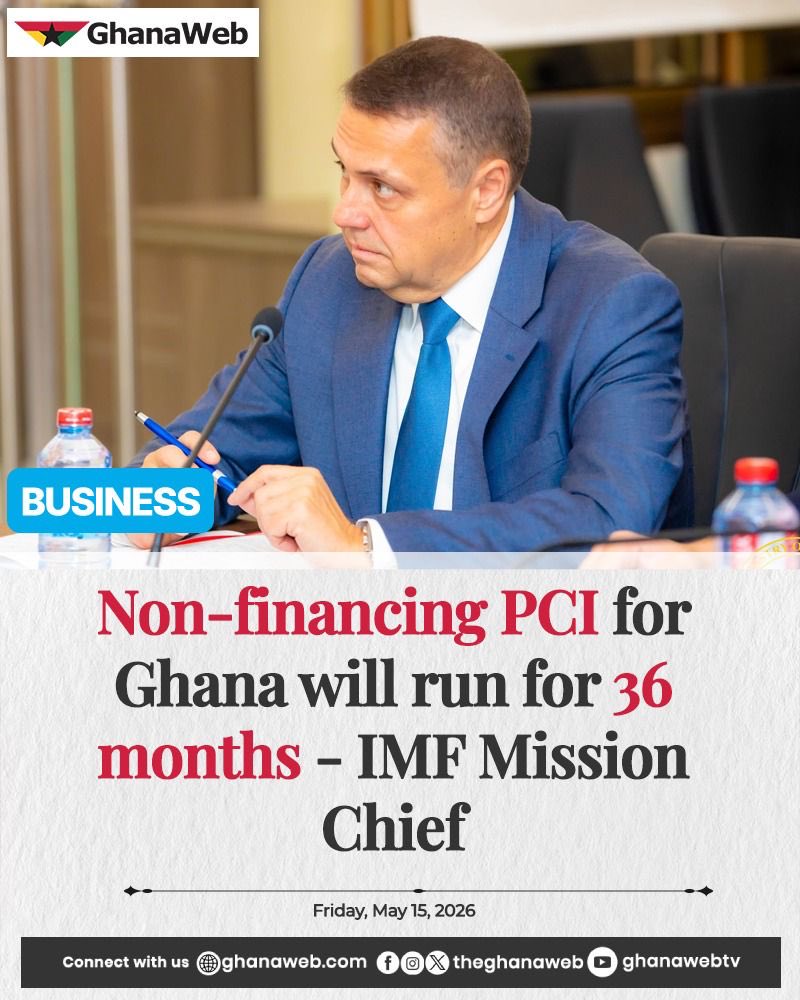
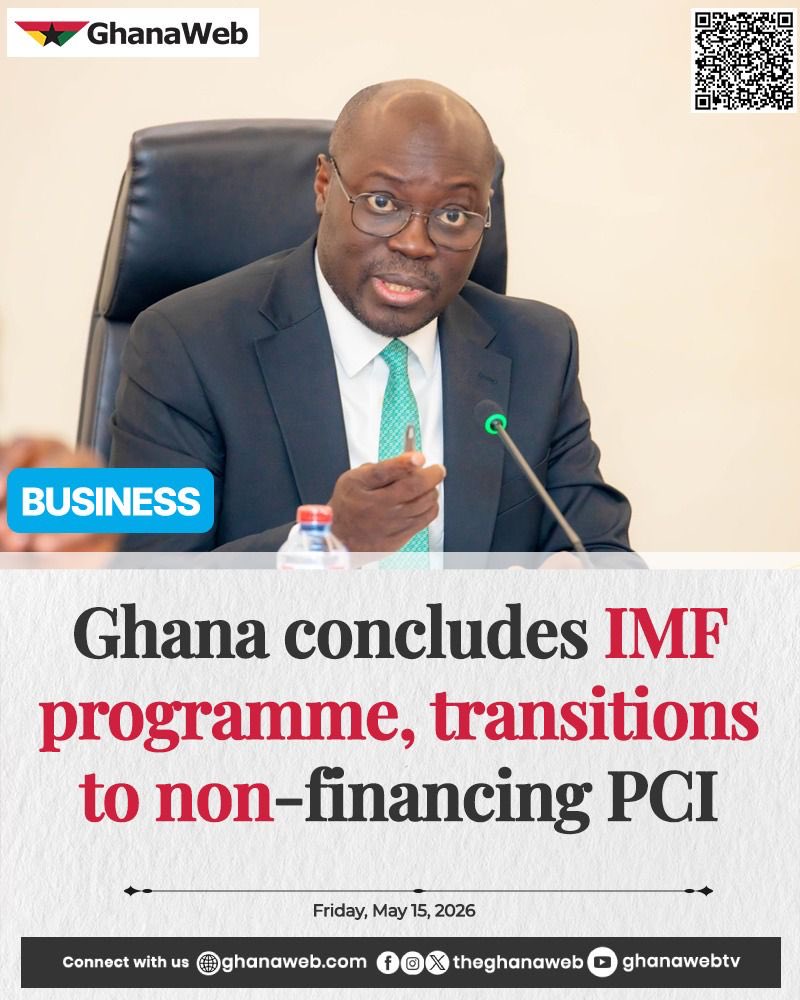
Ghana Successfully Concludes IMF Extended Credit Facility Programme and Transitions to a Non-Financing Technical Assistance Policy Coordination Instrument (PCI)
This milestone represents the restoration of macroeconomic stability and debt sustainability, well ahead of the original timeline.
Following the derailment of the IMF financial bailout programme at the end of 2024, the government of President John Mahama in 2025 acted decisively to bring it back on track and to recalibrate it by implementing a frontloaded fiscal consolidation, bold expenditure rationalisation, and strong structural reforms.
These efforts have delivered tangible results: inflation has reduced significantly, the cedi has strengthened markedly, public debt as a share of GDP has declined sharply, and economic growth has rebounded strongly.
Ghana’s sovereign credit ratings have improved significantly from restricted default (Junk Status) to ‘B’ with a positive outlook, representing five distinct rating levels upgrades.
This reflects improved fiscal performance, normalised creditor relations, stronger external buffers, and renewed market confidence.
Ghana’s gross international reserves have risen to an all-time high, reaching approximately US$14.5 billion by February 2026, almost 6-months of import cover.
These foreign exchange reserve buffers provide Ghana with the capacity to withstand external shocks and stand on its own feet!
Ghana Successfully Concludes IMF Extended Credit Facility Programme and Transitions to a Non-Financing Technical Assistance Policy Coordination Instrument (PCI)
This milestone represents the restoration of macroeconomic stability and debt sustainability, well ahead of the original timeline.
Following the derailment of the IMF financial bailout programme at the end of 2024, the government of President John Mahama in 2025 acted decisively to bring it back on track and to recalibrate it by implementing a frontloaded fiscal consolidation, bold expenditure rationalisation, and strong structural reforms.
These efforts have delivered tangible results: inflation has reduced significantly, the cedi has strengthened markedly, public debt as a share of GDP has declined sharply, and economic growth has rebounded strongly.
Ghana’s sovereign credit ratings have improved significantly from restricted default (Junk Status) to ‘B’ with a positive outlook, representing five distinct rating levels upgrades.
This reflects improved fiscal performance, normalised creditor relations, stronger external buffers, and renewed market confidence.
Ghana’s gross international reserves have risen to an all-time high, reaching approximately US$14.5 billion by February 2026, almost 6-months of import cover.
These foreign exchange reserve buffers provide Ghana with the capacity to withstand external shocks and stand on its own feet!
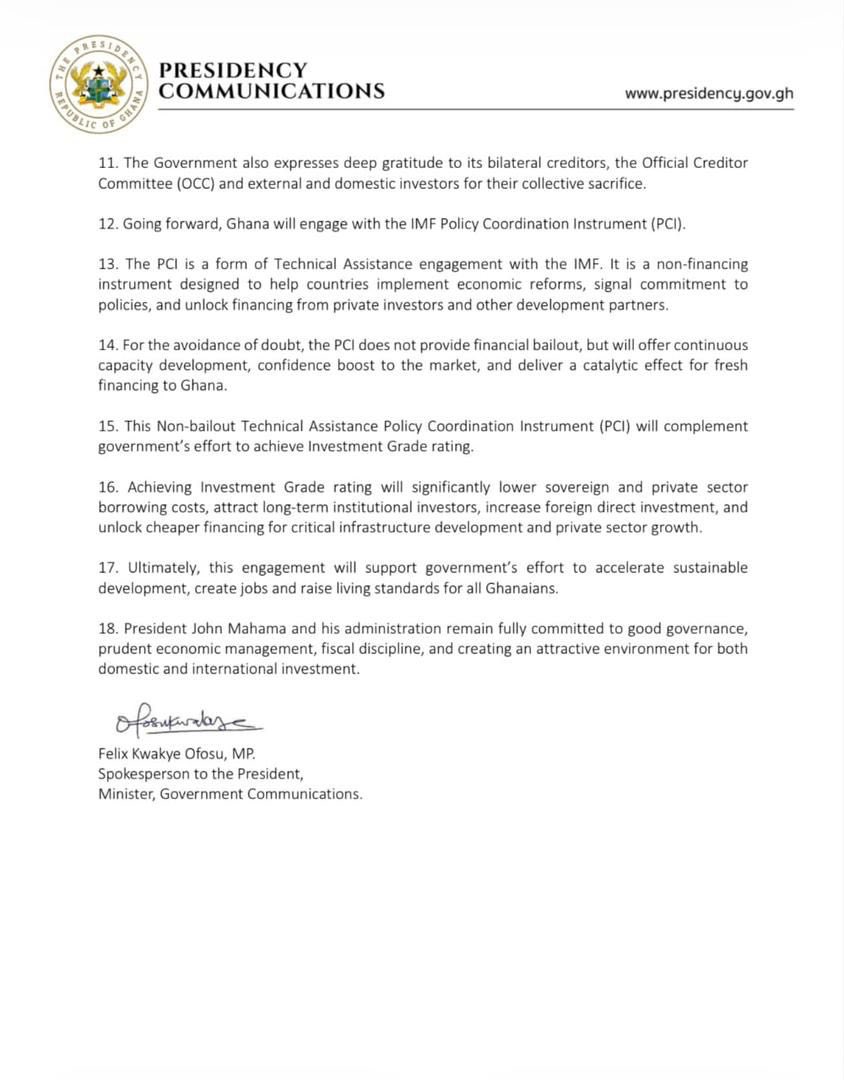
This announcement marks the definitive end of Ghana’s financial bailout relationship with the IMF.
Government is exceedingly grateful to the people of Ghana for their sacrifices, resilience and forbearance.
Ghana Successfully Concludes IMF Extended Credit Facility Programme and Transitions to a Non-Financing Technical Assistance Policy Coordination Instrument (PCI).
Nana Akomea should’ve listened to his FAILED ECONOMIST and AI CHAMPION before stepping to the mic. The warning was simple: “Take a look at the data before you speak. Otherwise, you will end up embarrassing yourself"!
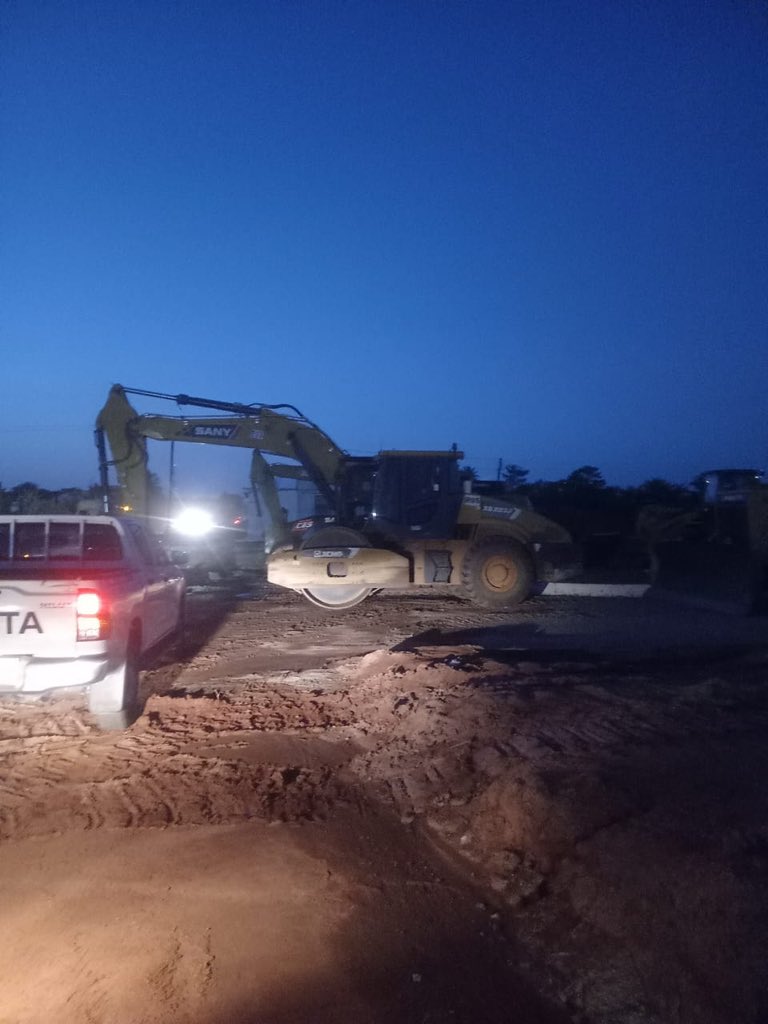
Beyond the asphalt, this project means work for hundreds of Ghanaians. From site engineers to welders, drivers to food vendors - the Big Push is putting money in people’s pockets while building the roads we need.
#BigPushRoadsEverywhere#AbanPapaAba