Rudaw Research Center

804 posts

Rudaw Research Center banner
Rudaw Research Center

Rudaw Research Center

@RudawResearch

Exploring sustainable solutions to the growing challenges facing the Middle East.
Katılım Ağustos 2022
9 Takip Edilen2.2K Takipçiler
Sabitlenmiş Tweet
Rudaw Research Center
Rudaw Research Center@RudawResearch·
سەردانی ماڵپەڕی ناوەندی لێکۆڵینەوەی رووداو بکە بۆ زانینی دوایین شرۆڤەکان و بینینی چالاکییەکان و خوێندنەوەی بڵاوکراوەکان 🔗 rudawrc.net
CKB
1
0
17
4.7K
Rudaw Research Center
Rudaw Research Center@RudawResearch·
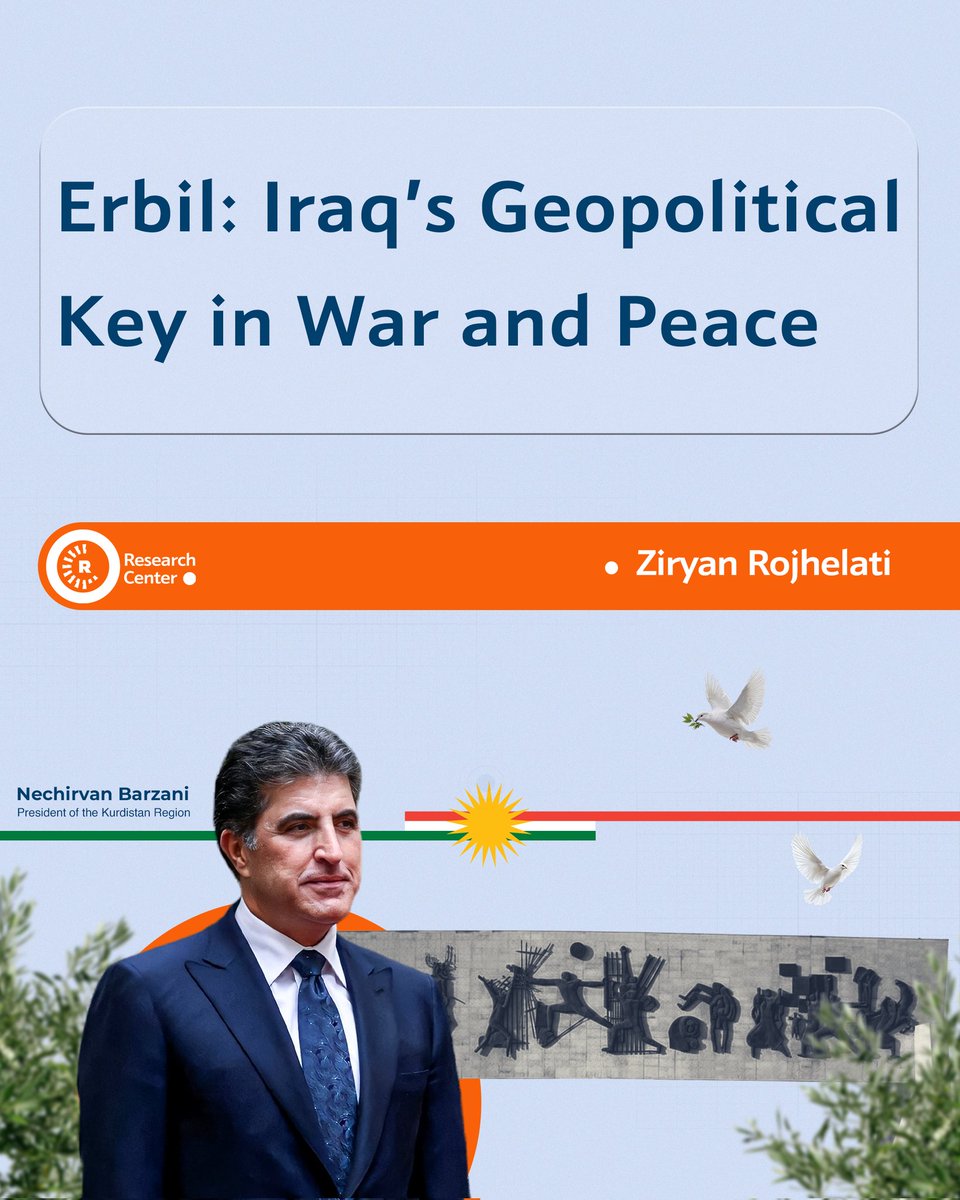
The recent visit of Kurdistan Region President Nechirvan Barzani to Baghdad carries far greater strategic weight than merely being confined in the negotiations to form Iraq's new government. It is, in essence, a reflection of the process of political realignment between Iraq's political forces and the Kurdistan Region in the shadow of the repercussions of the 2026 Iran war — and the sweeping transformations that have reshaped the Kurdish issue and Iraq's political future. Ziryan Rojhelati✍️ rudawrc.net/en/article/erb…
Rudaw Research Center tweet media
English
0
0
1
204
Rudaw Research Center
Rudaw Research Center@RudawResearch·
The 2026 Iran War is one of those events with the potential to reshape the geopolitical landscape of the second quarter of the 21st century in the Middle East, while simultaneously transforming the contours of the Kurdish issue. Although the war has not formally concluded, the United States and Iran remain suspended in a limbo between a "cold peace" and the prospect of a return to military confrontation. Whatever the outcome of this standoff, the forty-day conflict has already left its foundational imprints behind — in such a way that neither a future Iran will revert to its pre-war state, nor will the regional balances remain as they once were. Ziryan Rojhelati✍️ rudawrc.net/en/article/the…
English
0
0
0
83
Rudaw Research Center
Rudaw Research Center@RudawResearch·
McDowall once described the geography of the Kurdistan Region as a line of geopolitical friction situated between three regional power centers: the Mesopotamian plains, the Anatolian highlands, and the Iranian plateau. His argument suggests that whenever these powers come into wars and conflicts, Kurdistan is inevitably drawn into the flames of war. In reality, this pattern is not new; it has characterized earlier historical confrontations, including those between Persia and Rome, as well as Iran and Greece. The Iranian war of 2026 has once again demonstrated that geography can, at times, shape outcomes more decisively than political decision-making alone. Ziryan Rojhelati✍️ rudawrc.net/en/article/the…
English
0
1
1
224
Rudaw Research Center
Rudaw Research Center@RudawResearch·
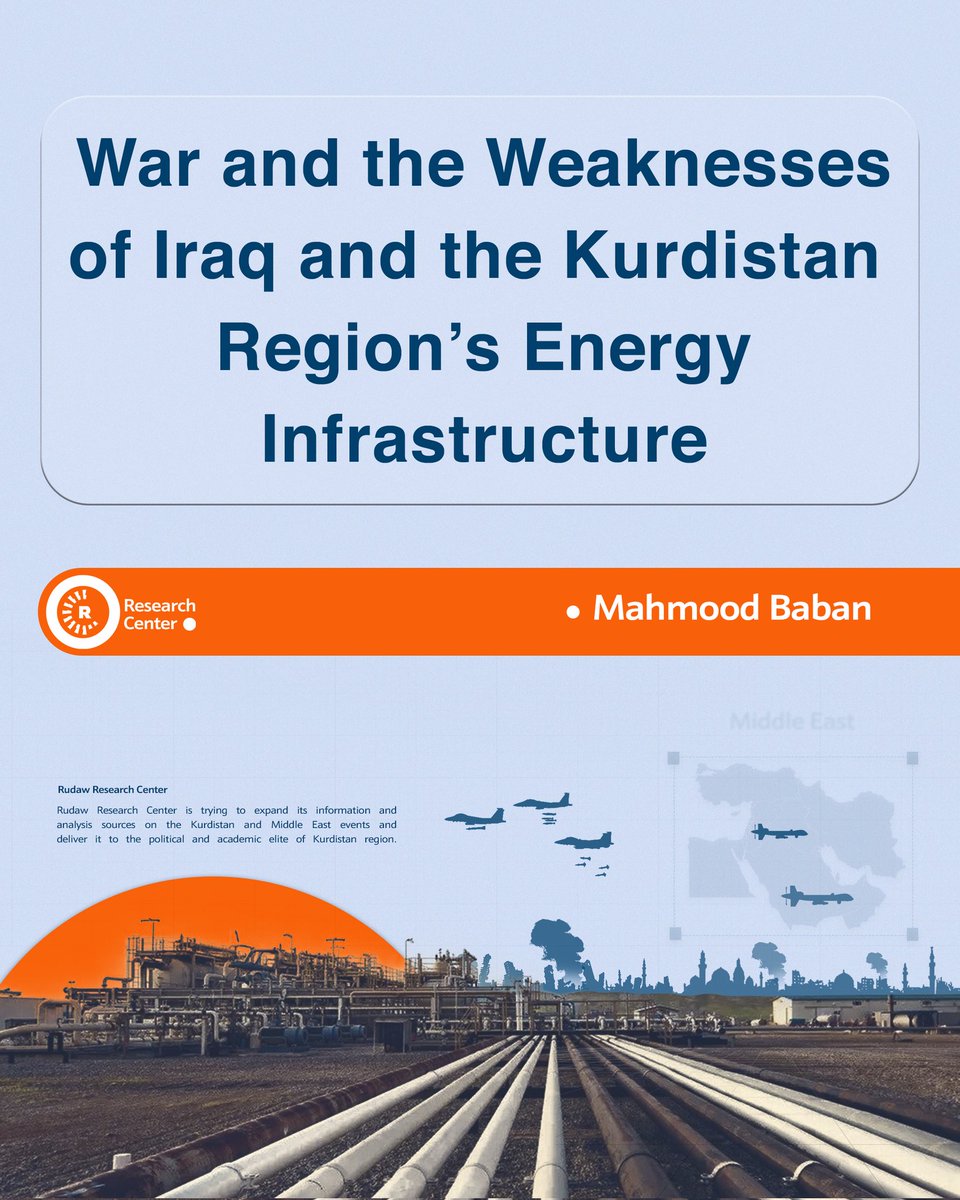
Before the war, Iraq and the Kurdistan Region together produced approximately 4.65 million barrels of crude oil per day. Of this total, the Kurdistan Region accounted for roughly 300,000 barrels per day, while federal Iraq produced around 4.35 million barrels per day. Since the escalation of the conflict, however, production levels have dropped sharply. Current estimates suggest that output in federal Iraq has fallen to just over one million barrels per day, while production in the Kurdistan Region has declined to below 70,000 barrels per day. This dramatic contraction highlights the extent to which the conflict has disrupted upstream production, export logistics, and the broader operational stability of Iraq’s oil sector. Mahmood Baban✍️ rudawrc.net/en/article/war…
Rudaw Research Center tweet media
English
0
1
0
242
Rudaw Research Center
Rudaw Research Center@RudawResearch·
Approximately one-fifth of the world’s total oil exports pass through the Strait of Hormuz each day, underscoring its strategic importance to global energy markets. According to data from S&P Global and Kpler, Iraq ships about 3.32 million barrels per day of crude oil and 310,000 barrels per day of petroleum products through the strait. This places Iraq second only to Saudi Arabia in terms of export volumes routed through Hormuz to international markets. Mahmood Baban✍️ rudawrc.net/en/article/clo…
English
0
0
0
221
Rudaw Research Center
Rudaw Research Center@RudawResearch·
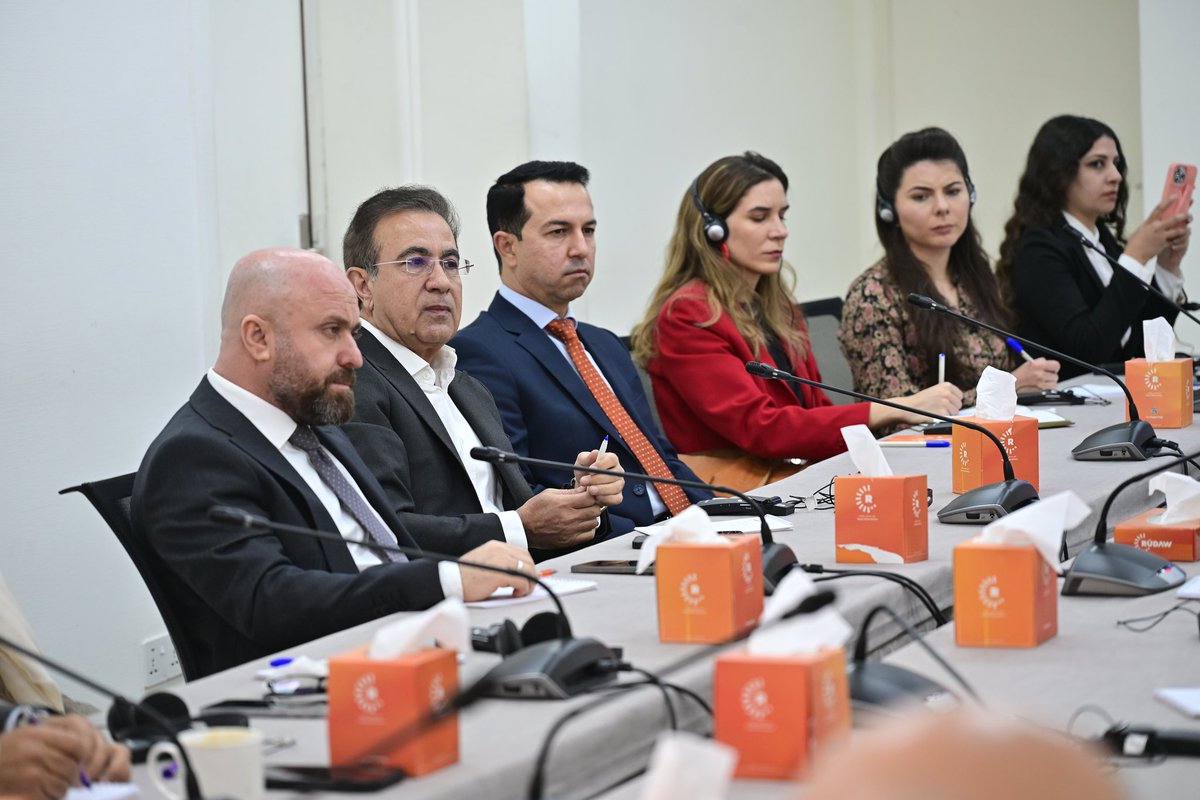
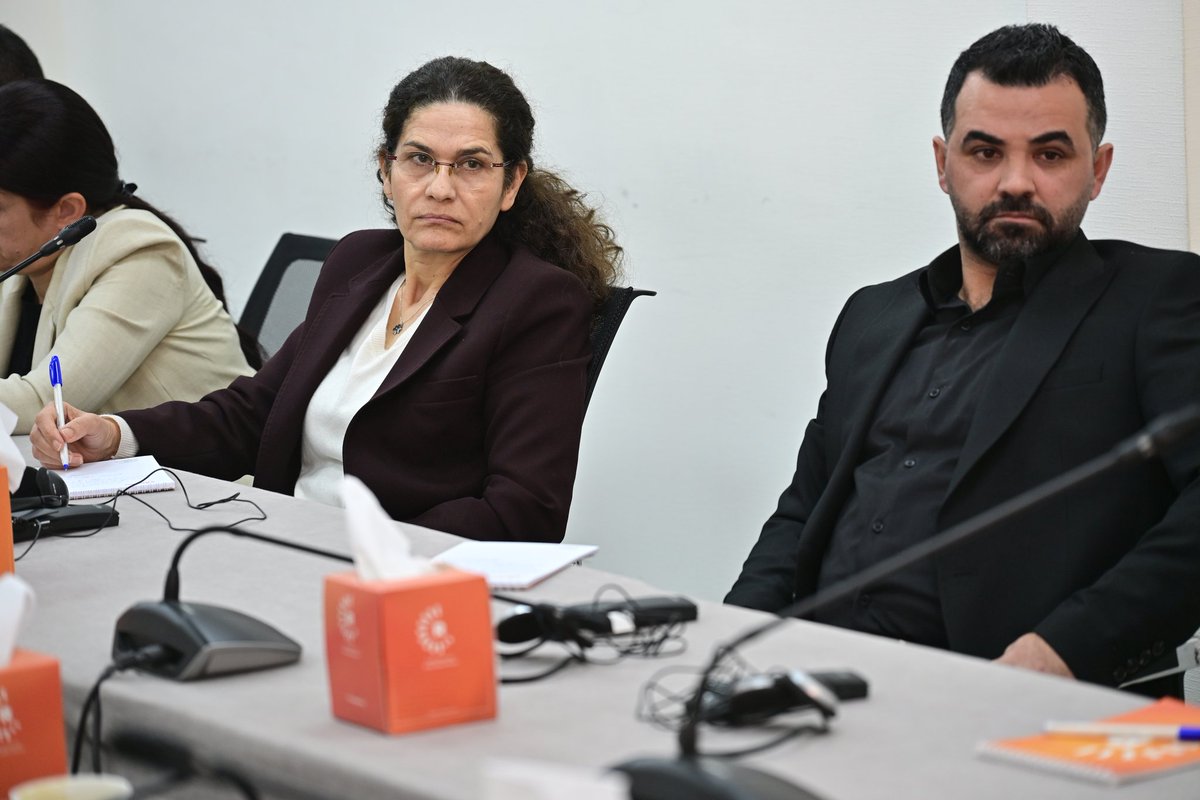
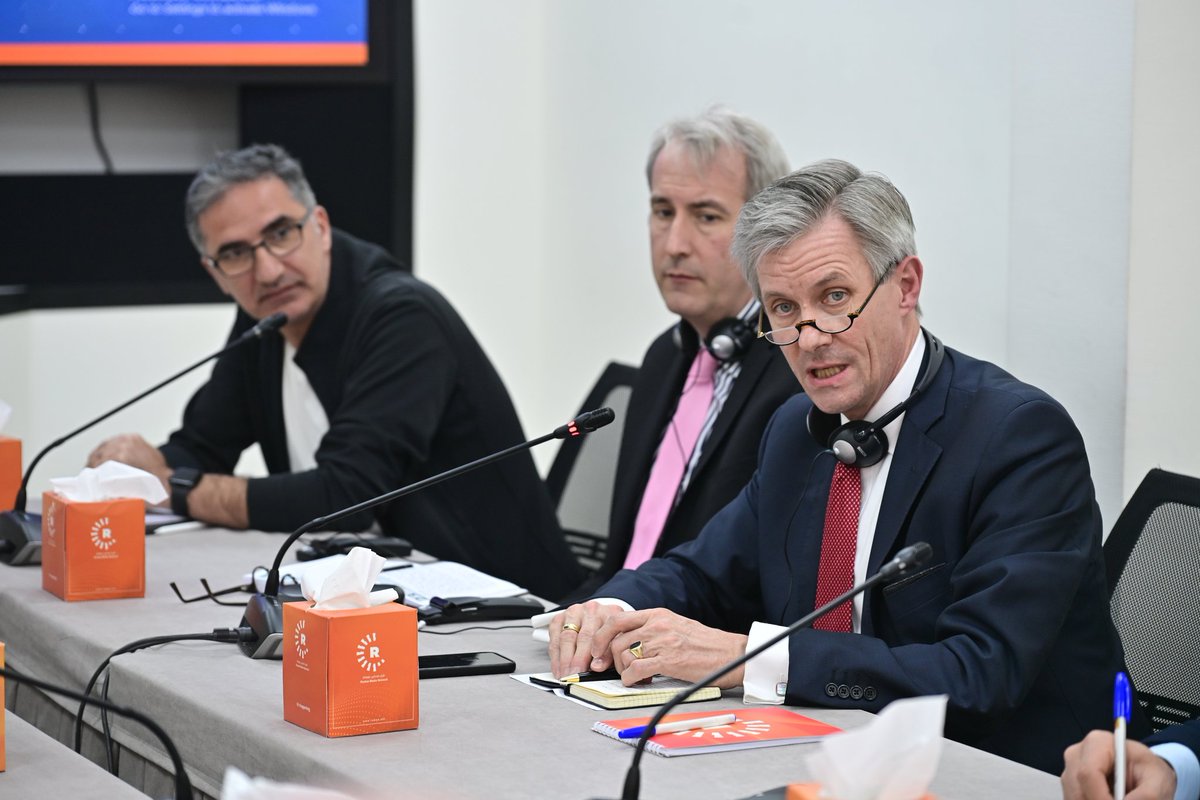
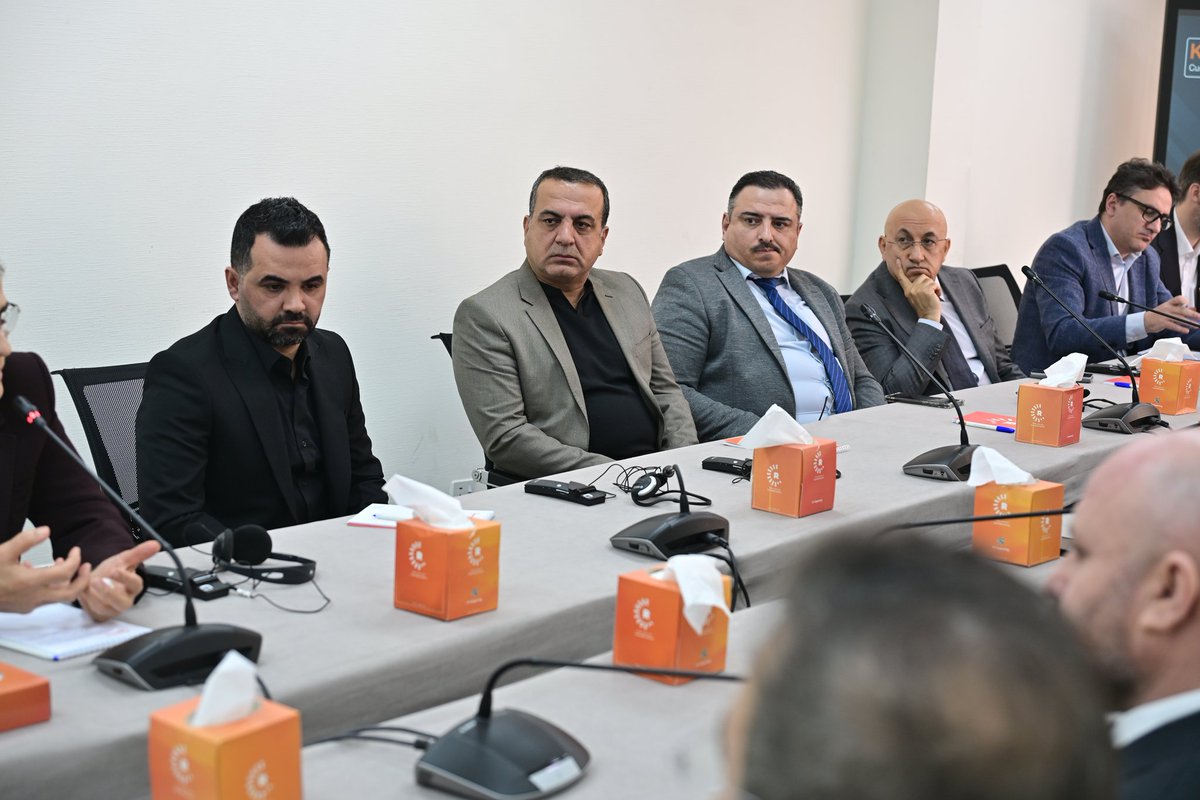
On Monday, 23 February 2026, the Rudaw Research Center convened a roundtable under the Chatham House Rule with Ilham Ahmad, Co-Chair of the Foreign Relations Office of the Autonomous Administration. The session was attended by Rohilat Afrin, commander of the Women’s Protection Units (YPJ); the German Consul General in Erbil; representatives of several other consulates; and a number of political figures, journalists, and academics based in Erbil. Read the full report below👇 rudawrc.net/en/event/kurds…
Rudaw Research Center tweet mediaRudaw Research Center tweet mediaRudaw Research Center tweet mediaRudaw Research Center tweet media
English
0
0
2
280
Rudaw Research Center
Rudaw Research Center@RudawResearch·
Iraq's Ministry of Finance monthly spending data reveal significant disparities across governorates that extend beyond the Kurdistan Region, affecting ministries, services and governorates nationwide. Operational and investment allocations vary widely from southern to central Iraq, while Kurdistan Region governorates and disputed areas such as Kirkuk received no funding from 2015 to 2025. Mahmood Baban✍️ rudawrc.net/en/article/ira…
Rudaw Research Center tweet media
English
1
0
0
252
Rudaw Research Center
Rudaw Research Center@RudawResearch·
Both the ceasefire and the negotiations between the Syrian Democratic Forces (SDF) and the Syrian interim government have remained fragile. However, the most recent agreement between the two sides—reached on the 27th of January, 2026, and announced publicly on the 30th of the month—appears to represent an important turning point. The agreement has taken shape under the combined influence of developments on the ground and the broader political-military dynamics unfolding across the Middle East. In a broader context, it becomes clear that the issue of Northeast Syria (Rojava) is not merely an “internal Syrian problem.” Rather, the situation in northeast Syria lies at the heart of the region’s conflicts and has already generated significant political and security transformations. Ziryan Rojhelati✍️ rudawrc.net/en/article/roj…
Rudaw Research Center tweet media
English
0
0
0
199
Rudaw Research Center
Rudaw Research Center@RudawResearch·
Data published by Iraq’s Ministry of Finance provides an official view of how the country’s economy has been managed over the past decade, with one defining feature standing out clearly: the sustained and rapid expansion of public expenditure. This report is the first installment of a three-part series examining Iraq’s economic trajectory, based on the Rudaw Research Center’s monthly revenue and public expenditure dashboard covering all state institutions from 2015 to 2025. Mahmood Baban✍️ rudawrc.net/en/article/ira…
Rudaw Research Center tweet media
English
0
0
0
131
Rudaw Research Center
Rudaw Research Center@RudawResearch·
On January 18, 2025, a delegation from the Iraqi Group for Foreign Affairs (IGFA), led by Yousif Al-Mohsen, General Coordinator, visited the Rudaw Research Center in Erbil. During the visit, discussions centered on opportunities for collaboration, including the pursuit of joint research initiatives and practical ways to strengthen partnership and enhance future cooperation between both sides. Both sides also highlighted the importance of research centers and their cooperation as a form of Track II diplomacy, noting that coordinated efforts and robust scientific and research outputs can help inform decision-making processes and contribute to stability and development across the region. rudawrc.net/en/event/iraqi…
Rudaw Research Center tweet media
English
0
1
2
367
Rudaw Research Center
Rudaw Research Center@RudawResearch·
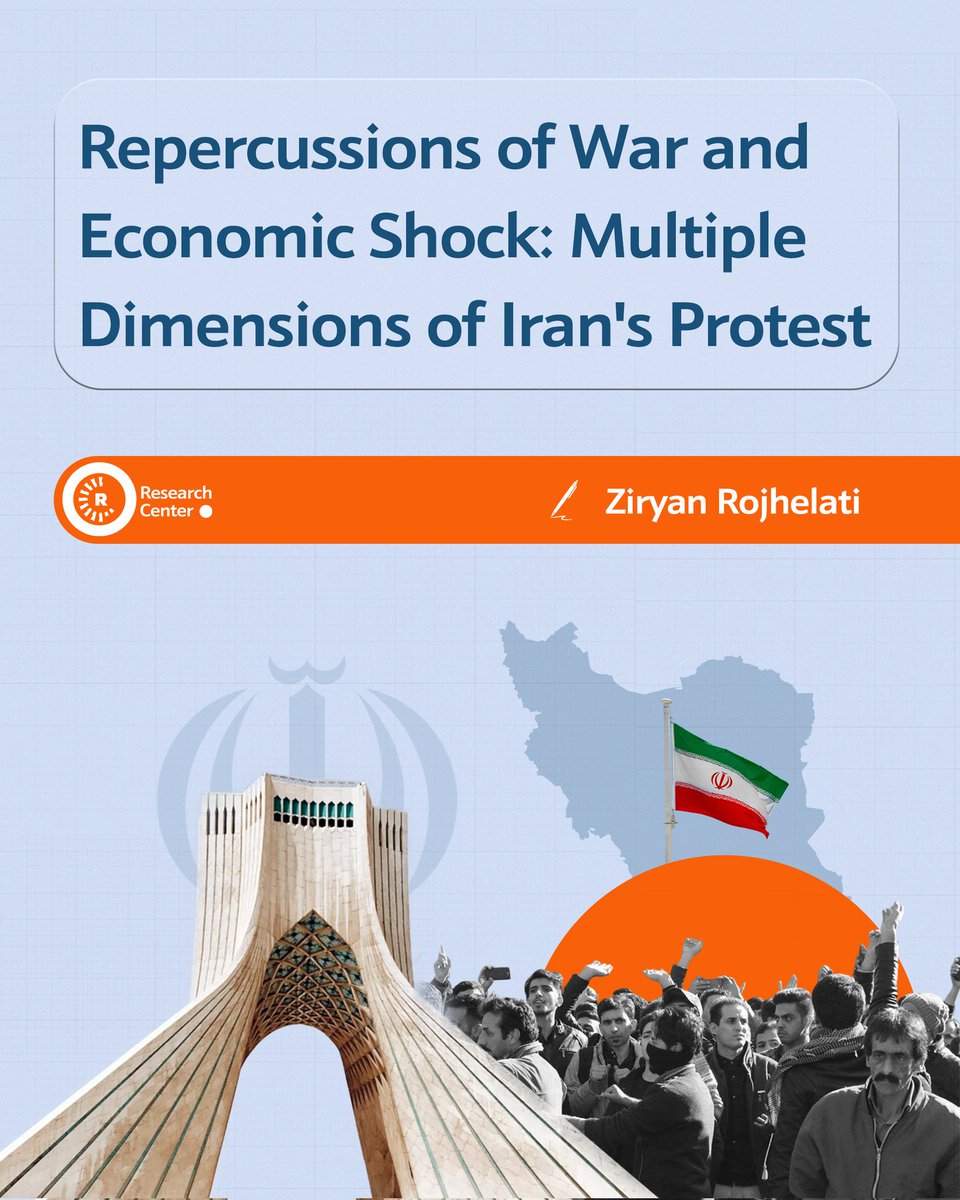
In late 2025 and early 2026, Iran entered one of the most critical phases in its more than 46-year history since the establishment of the Islamic Republic. A new wave of protests has emerged, spreading to approximately 250 locations across 27 provinces. Although the number of participants appears lower than in previous protest movements, the speed and geographic breadth of their spread, combined with the severe economic pressure faced by ordinary citizens, make this wave particularly significant. However, economic hardship alone does not fully explain the current unrest. Broader structural and political factors are also at play, including declining public trust in the political system during what many perceive as a transitional period, as well as the impact of external political and military developments on Iran’s internal dynamics. The reimposition and tightening of international sanctions, statements by  U.S. President Donald Trump regarding the possibility of intervention should protesters be killed, the growing risk of a renewed military confrontation with Israel, and the capture of the Venezuelan President, Nicolás Maduro, have all contributed, directly or indirectly, to shaping the current protest environment. Ziryan Rojhelati✍️ rudawrc.net/en/article/rep…
Rudaw Research Center tweet media
English
1
0
1
296
Rudaw Research Center
Rudaw Research Center@RudawResearch·
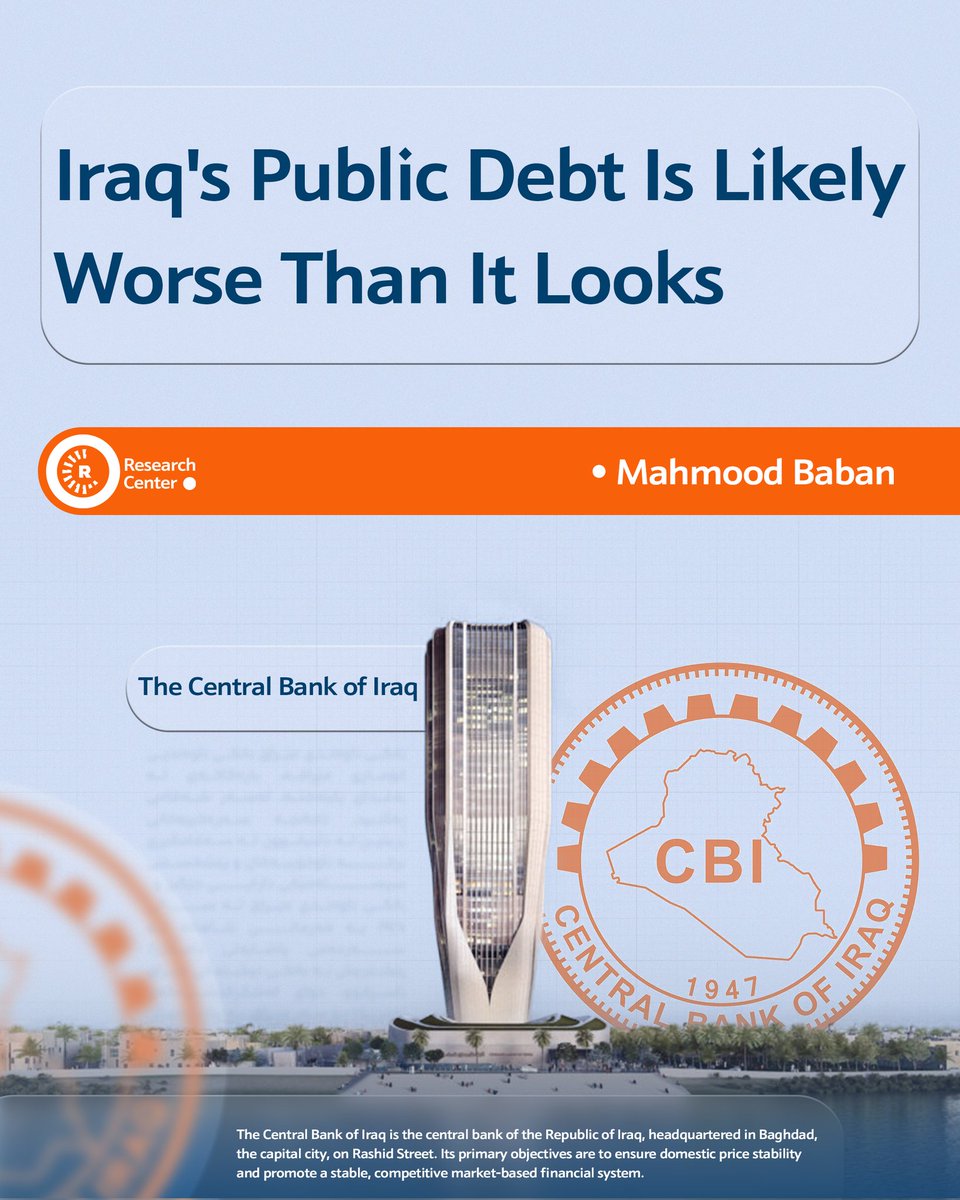
In his most recent interview with the Iraqi News Agency (INA), the Prime Minister of Iraq presented a set of new economic figures that carry significant implications for the country’s financial outlook. However, these figures diverge markedly from the data published in official reports issued by the Ministry of Finance, the Central Bank of Iraq, and various international institutions. According to the Prime Minister, Iraq’s domestic debt amounts to 34 trillion Iraqi dinars, while external debt stands at 13 trillion dinars (approximately USD 10.056 billion), bringing the country’s total debt to 47 trillion dinars. Mahmood Baban✍️ rudawrc.net/en/article/dis…
Rudaw Research Center tweet media
English
1
0
0
172
Rudaw Research Center
Rudaw Research Center@RudawResearch·
In recent days, Iraq's Oil Ministry officially invited U.S. companies to acquire Lukoil's stake in the West Qurna-2 oil field. A halt or disruption in production there — and a resulting suspension of exports amounting to some half a million barrels per day — would be very difficult and potentially disastrous for Iraq. That is especially concerning at a time when global oil prices have declined, and current revenues may no longer be sufficient to cover Iraq's expenditures. Mahmood Baban✍️ rudawrc.net/en/article/the…
Rudaw Research Center tweet media
English
0
0
1
324
Rudaw Research Center
Rudaw Research Center@RudawResearch·
The rocket attack on the Khor Mor gas field on the night of 26 November 2025 caused the explosion of the facility’s newest 65,000-barrel liquefied petroleum gas (LPG) storage tank and brought to a halt the flow of natural gas that generates nearly 80 percent of the Kurdistan Region’s electricity, in addition to supplying 1,200 megawatts of power to Iraq. The damage extends far beyond the millions of dollars lost in the destruction of the facility or the widespread blackout across the Kurdistan Region. This incident will have both immediate and long-term consequences for the oil and gas sectors of the Kurdistan Region and Iraq more broadly. Mahmood Baban✍️ rudawrc.net/en/article/kho…
English
0
0
0
162
Rudaw Research Center
Rudaw Research Center@RudawResearch·
For more than a decade, Syria’s Kurdish regions have faced a series of profound shifts that have reshaped their economic, political, and social foundations. Although the Ba'ath Party’s longstanding policies of marginalization and impoverishment had already left deep structural challenges, the changes that followed the 2011 uprising and the transformation of local governance introduced a new trajectory. These dynamics intensified further at the end of 2024 with the fall of the Syrian regime. Yet instead of ushering in a period of stability and economic recovery, the region entered a new wave of economic collapse and declining living standards. This has placed Kurdish families before a serious test of survival, forcing them to adapt to a volatile environment marked by uncertainty and multiple possible outcomes. Shvan Ibrahim✍️ rudawrc.net/en/article/soc…
Rudaw Research Center tweet media
English
1
0
1
124
Rudaw Research Center
Rudaw Research Center@RudawResearch·
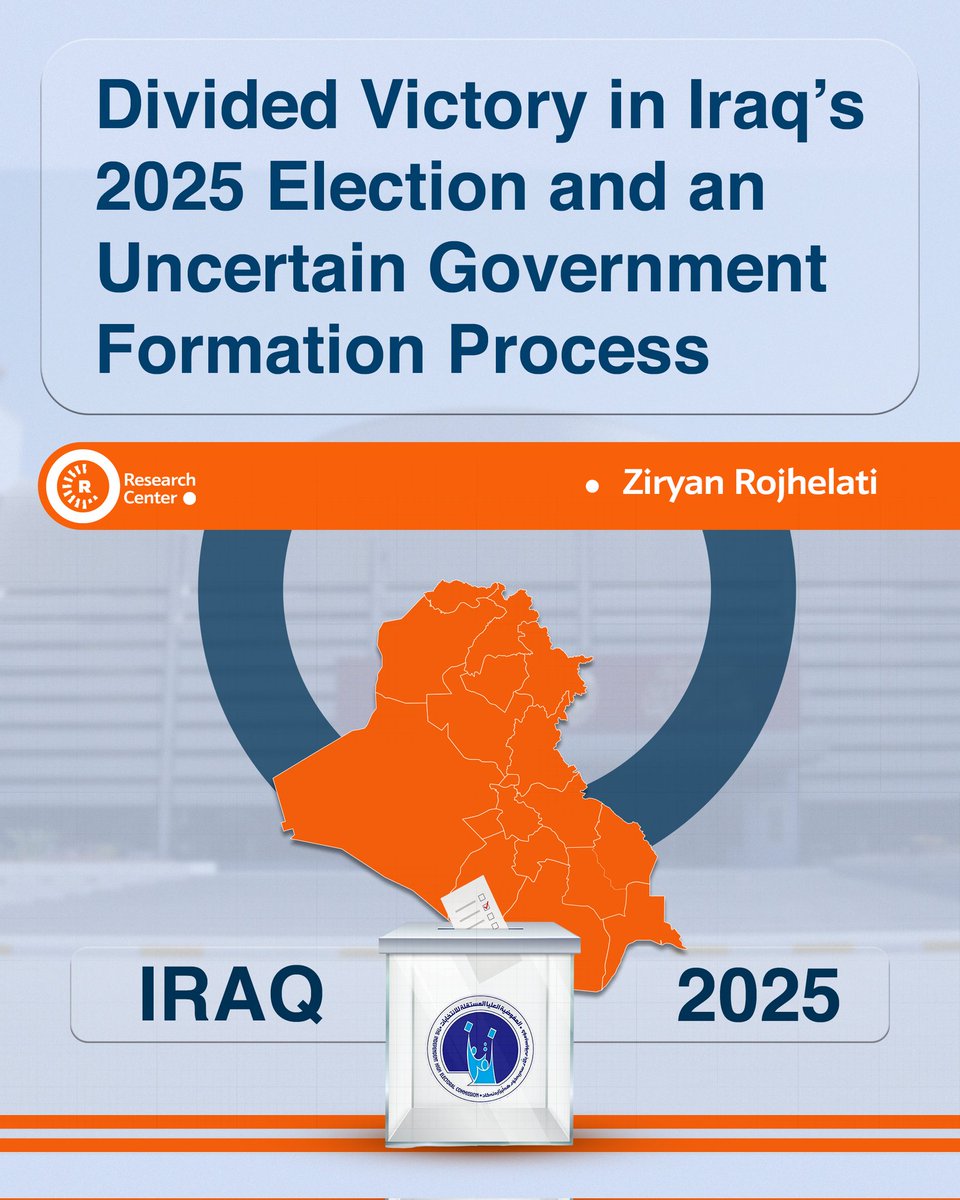
Mohammed Shia' al-Sudani emerged as the numerical winner in the election, with his alliance securing first place among Shiite blocs. However, despite this electoral lead, he remains far from guaranteeing his political future as prime minister. Following the results, he appeared on camera with a face that seemed either exhausted, sleepless, or concerned. He offered his congratulations and stated that his alliance is ready to begin dialogue on forming the next government. This was an indirect signal that he hopes to retain the premiership. Yet Hadi al-Amiri, the head of the Badr Organization and a central figure in the Shiite political landscape, appeared to undercut him in advance by declaring that Sudani had not actually requested a second term. Ziryan Rojhelati✍️ rudawrc.net/en/article/div…
Rudaw Research Center tweet media
English
0
0
0
110
Rudaw Research Center
Rudaw Research Center@RudawResearch·
This project involves two key environmental dimensions. The first focuses on reducing overall electricity demand—that is, minimizing unnecessary energy consumption both by citizens and within the power grid itself. The second concerns changing the source of electricity generation for residents, shifting from diesel and heavy fuel oil (“black oil”) to natural gas. Together, these two measures are expected to have a significant positive impact on the water, air, and soil quality of the Kurdistan Region in the years ahead. In terms of electricity demand, according to the Minister of Electricity, areas connected to the project have experienced a 40% reduction in peak consumption loads at power stations. In practical terms, if a neighborhood previously required 10 megawatts, it now requires only 6 megawatts to meet the same level of demand. This efficiency gain has allowed the electricity supply to meet 24-hour demand without the need to increase total production capacity. Mahmood Baban✍️ rudawrc.net/en/article/how…
Rudaw Research Center tweet media
English
0
0
0
107
Rudaw Research Center
Rudaw Research Center@RudawResearch·
According to data from the State Oil Marketing Company of Iraq (SOMO) for October, the total oil exported from Iraq—including Basra heavy and light crude, as well as Kirkuk oil, which includes Kurdistan Region oil—was 110,650,970 barrels. The oil fields of the Kurdistan Region contributed 5,834,864 barrels to Iraq's total oil exports to global markets, representing approximately 5% of the total exported volume. In terms of export prices, according to the Middle East Economic Survey (MEES), Iraq exports three types of oil at prices both below and above the daily prices of Brent and Texas crude to Asian, European, and U.S. markets. The most commonly exported type of oil is Basra Light Crude, which reached 66 million barrels in the past month. This is followed by Basra Heavy Crude at 38 million barrels and Kurdistan Region oil at 5.8 million barrels. Mahmood Baban✍️ rudawrc.net/en/article/som…
Rudaw Research Center tweet media
English
0
1
2
284
Rudaw Research Center
Rudaw Research Center@RudawResearch·
Over the past fifteen years, Iraq’s total debt has increased by approximately $10 billion. In 2010, the total debt stood at $70.8 billion, but by the end of June 2025, it had risen to $81.65 billion. In reality, based on data from the past fifteen years, despite significant fluctuations in debt levels, two important developments have occurred: first, the overall increase in debt, and second, the reversal between external and domestic debt. In 2010, Iraq’s total external debt amounted to $60.9 billion, whereas by June 2025, it had decreased to $14.45 billion—about $1.5 billion higher than the figure cited by the Prime Minister. In contrast, domestic debt, which was $9.9 billion in 2010, had surged to $67.2 billion by June 2025. Mahmood Baban✍️ rudawrc.net/en/article/ira…
Rudaw Research Center tweet media
English
0
0
0
102