s3xy Tesla fan

21.1K posts

s3xy Tesla fan banner
s3xy Tesla fan

s3xy Tesla fan

@S3XYTSLA

Tesla owner & investor. All in on Elon Musk, Tesla and green energy. This is not investment advice. 🌱☀️🔋⚡️🚘♥️

Katılım Şubat 2020
364 Takip Edilen705 Takipçiler
s3xy Tesla fan retweetledi
Elon Musk
Elon Musk@elonmusk·
@sama We start flying them next year. Maybe you can come see them if your parole officer approves. After stealing an open source AI charity, you then stole all of Apple’s phone technology! Wow. What do you plan for an encore? That’s tough to beat.
English
4.2K
6.8K
96.7K
5.4M
s3xy Tesla fan retweetledi
Ming
Ming@tslaming·
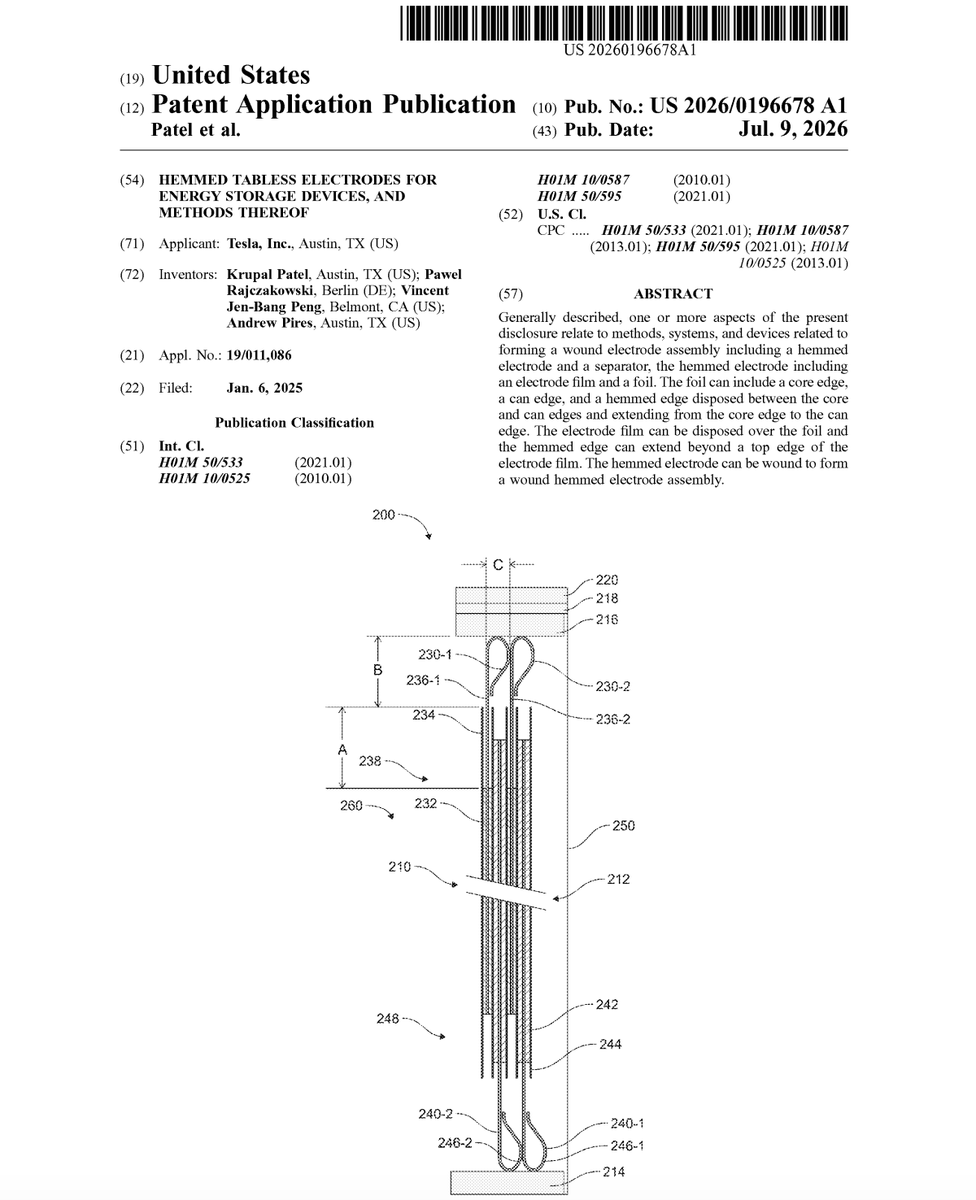
GOOD NEWS 🚨 Tesla has re-engineered the battery edge with metal origami to attack the charging bottleneck ⚡️ Imagine trying to empty a stadium through a handful of narrow gates. That is how a conventional tabbed cylindrical battery collects current. For decades, most cylindrical cells have relied on one or a few metal tabs to carry current out of long strips of tightly wound electrode. Current collected far from those tabs must travel laterally through thin metal foil, concentrating resistance and heat around a small number of exits. Tesla’s original 4680 architecture attacked that bottleneck with distributed edge contact. But forming that quasi-tabless edge can still require cutting the foil into a dense forest of individual fingers or flags, adding laser equipment, debris control, and many potential weak points. Tesla’s newly published patent application US 2026/0196678 A1, released on July 9, 2026, reveals a different approach: do not cut the foil into fingers at all. Fold its uncoated edge into one continuous microscopic hem. As the electrode is wound, each turn of that hem contacts the next. Factory tooling can then flatten the loops into a dense, uniform end-face interface and connect it to a current collector. It is metal origami applied to one of the hardest problems in battery manufacturing. The result could preserve the electrical advantage of full-edge current collection while deleting entire families of tabbing, notching, debris-handling, and exhaust equipment. It is a classic example of Tesla’s preferred engineering philosophy: the best process step is the one the factory no longer needs. To appreciate why this folding technique matters, it helps to look at the severe complications it is designed to replace. ⚖️ The problem: The structural vulnerabilities and bottleneck effects of traditional discrete tabs In a standard battery jellyroll, which is the industry term for the tightly wound cylinder of electrochemical components inside a cell, forming or attaching physical tabs to the electrode sheets is a constant headache for production engineers. These distinct metal tabs add local thickness to the wound assembly, complicating the winding process and risking punctures in the thin separator layers that keep the positive and negative sides from touching. When these protective barriers fail, an internal short can produce rapid heating and, in severe cases, trigger thermal runaway. Beyond the physical space they occupy, tabs create a massive geometric bottleneck for electrical current. Current collected from distant portions of the electrode must travel laterally through the thin foil before reaching the tab. This long transit path significantly raises internal resistance, which is the electrical friction that fights against the flow of current. This friction generates immense, unwanted heat during fast charging. Manufacturing these current-collection structures can also require precision cutting or notching, alongside debris-extraction machinery designed to keep microscopic metal fragments away from the active chemistry. Faced with these compounding physical and mechanical bottlenecks, engineering teams had to rethink the entire architecture of the electrode edge. 💡 Tesla's solution: Continuous edge folding to establish an integrated tabless current path Tesla completely flips this design by rolling or hemming the top and bottom margins of the conductive metal foil sheets before they are wound together. Hemming is the process of folding over a raw metal edge just like the hem on a piece of clothing. Instead of relying on a few sparse tabs, the entire exposed edge of the foil is folded into a continuous loop structure that extends just beyond the active-material coating. The positive and negative electrode foils can each receive a continuous hem, positioned at opposite ends of the jellyroll. As the electrodes are wound, each turn of the hem contacts the turn beside it. Tesla can then flatten or iron the projecting loops to produce a compact, nearly void-free end face. A collector plate is joined across that surface, gathering current from many points around the entire spiral instead of a few isolated tabs. Joining is not limited to laser or ultrasonic welding. The application also lists forced contact, soldering, brazing, and adhesive joining. In some versions, the can or lid itself can double as the current collector, potentially eliminating a separate component. Once the fundamental physics of the folded edge are established, the next challenge is choosing a battery coating method tough enough to handle the mechanical stress. 🧪 Dry-electrode compatibility: Pairing two manufacturing simplifications The hem does not depend on a particular electrode-coating process, but it fits naturally beside Tesla’s dry-electrode program. In a conventional wet process, active powders and binders are mixed with solvent, coated onto foil, and passed through large drying and solvent-recovery systems. In the dry version described by Tesla, dry particles are mixed with a fibrillizable binder that forms a microscopic reinforcing web. The resulting film can support itself before being pressed onto the metal foil. PTFE is one possible fibrillizable binder, although the application lists several alternatives. Binder content may fall between 1 and 10 weight percent, while disclosed active-material content extends as high as 99.9 percent. These technologies simplify different parts of the line. Dry processing attacks mixing, coating, drying, and solvent recovery. The hem attacks tab cutting, notching, debris extraction, and current collection. Their importance lies in how naturally the two factory simplifications can work together. Making this dual factory simplification work in the real world requires managing dimensions down to the micron level. 📐 Geometric tolerances: Microscopic calibration of length, height, and width variables Tesla defines three variables around the fold: separation A, loop height B, and loop width C, which establish broad design windows for the physical shape of the fold. Length A is the uncoated foil distance between the active film and the beginning of the hem. The application describes values from 0 to 2 millimeters and specifically lists 1.14 millimeters as one example. This separation can be important because it can reduce the active material’s thermal exposure during collector joining. Height B represents the total vertical profile of the projecting hem and may range from 0.1 to 3.0 millimeters, defining how far the structure projects into the limited overhead space inside the cell. Width C defines the loop width before compaction, measuring between 0.05 and 0.9 millimeters. These are broad design windows rather than proven optimum limits. Tesla also allows the height, width, and shape to change along the length of the electrode, giving engineers room to tune the interface for winding, flattening, and joining. Controlling these microscopic boundaries allows engineers to experiment with the precise physical profile of the fold itself. 🌀 Fold geometry: Turning a fragile foil edge into a controlled contact surface The simplest embodiment forms the foil into a rounded teardrop loop. Adjacent loops touch as the electrode winds around the core, creating repeated metal-to-metal contact around the spiral. The teardrop is not the only option. Tesla also describes rectangular, triangular, trapezoidal, rounded, and fully collapsed profiles. The engineering objective is therefore broader than creating one exact shape. The goal is to form a continuous edge that survives winding, contacts neighboring turns, and can be flattened into a reliable collector interface. While a single teardrop shape handles basic contact, more complex variations give factory tools alternative mechanical properties to play with. 🔄 Multi-loop configurations: Changing fold direction, contact area, and collapse behavior Tesla also describes double-loop hems. Both curls can bend in the same direction or return in opposite directions, and neighboring windings may contact through either or both loops. These variations give engineers different amounts of metal, contact area, and collapse behavior to work with during flattening, offering different ways to balance mechanical robustness, contact area, and the geometry of the flattened interface. No matter how many loops are folded into the foil, the true magic happens after the winding machinery finishes rolling the cell. 🏭 Post-winding finishing: Ironing both ends into production-ready interfaces After the jellyroll is wound, Tesla can flatten both hemmed ends simultaneously rather than finishing each electrical pole in a separate operation. The application describes pressed plates, sliding or rolling pins, cone- or dome-shaped tools, and a harmonic flattening interface. These tools can apply planar, line, point, or dynamically moving pressure to collapse the loops into flat joining surfaces. Factory equipment can also reshape the central opening after winding, restoring the circularity and cylindricity of the innermost layers. Once the collectors are joined, CT scanning or other non-destructive inspection methods can verify the hidden connections without cutting the finished cell apart. With both ends perfectly flattened and packed with active conductive material, managing the internal electrical boundaries becomes highly critical. 🛑 Short-circuit protection: Strategic wrapping of insulative tape to isolate exposed conductive edges The projecting hems sit close to the conductive cell housing, making electrical isolation essential. Tesla places insulating tape around the end of the jellyroll near the hem. Depending on the configuration, the tape can sit beneath or over the current collector, helping prevent the exposed electrode edge from contacting the can. Even with robust short-circuit insulation in place, these internal connections must still survive the intense mechanical stress of everyday driving. 🛡️ Strain relief: Patterning current collectors to protect rigid connections The current collector discs joined to the hemmed folds can be exposed to significant internal mechanical forces. As battery cells undergo rapid charging and discharging, the internal materials physically swell and contract. This continuous breathing can place axial and torsional stress on the collector interface, gradually fatiguing a completely rigid joint. The collector may be a solid metal disc. In other embodiments, Tesla removes triangular, circular, square, rectangular, or other geometric regions from the plate. These openings introduce flexibility and help decouple axial or torsional stress from the welded interface. Instead of forcing every internal movement directly into a rigid joint, the patterned plate can flex while preserving the electrical connection. Tesla goes one step further in some configurations by allowing the lid or can itself to serve as the collector. Giving the cell layout this kind of structural flexibility means the underlying architecture can easily support a massive variety of battery ingredients. 🔋 Chemical-agnostic architecture The hem is a current-collection and manufacturing architecture rather than a new chemistry. Tesla describes it across lithium iron phosphate, lithium manganese iron phosphate, lithium nickel manganese cobalt oxide, and lithium nickel cobalt aluminum oxide cathodes. It also covers graphite, graphene, and silicon-based anodes, multiple conductive additives, and both wet- and dry-processed electrode films. That breadth matters because the folded edge is not tied to one specific 4680 formulation. It could follow the cell through future changes in cathode chemistry, silicon content, electrolyte composition, and active-material loading. Because this structural framework is highly adaptable to different cell chemistries, its true value is realized in how it reshapes the factory floor. 🛠️ Leaner production lines: Driving down factory footprint by abandoning high-speed cutting modules One of the biggest wins from this technology is the radical simplification of the battery assembly line. A hemmed-electrode line may no longer need separate tabbing, slitting, notching, flag-interleaving, or foil-debris handling equipment. Removing those operations can reduce equipment complexity, floor space, energy consumption, scrap, and labor while improving web speed, tension control, and geometric precision. The absence of slits provides another advantage. The continuous foil edge is less vulnerable to bending and tearing under tensile loads during high-speed web handling. Tesla also identifies improved electrolyte fill time as a potential benefit, because the simplified end structure can leave more accessible internal overhead volume. Slashing machinery complexity and factory floor space is a massive win for manufacturing, but the ultimate test is how these changes alter the actual performance of the cell. 📉 Performance and safety advantages: Lowering internal resistance and accelerating gas egress By making the entire edge of the foil an active electrical terminal, which serves as the massive contact zone where electricity enters or exits the cell, Tesla shortens the distance current must travel down to a fraction of a millimeter. This design removes the electrical bottlenecks responsible for sluggish power delivery and localized overheating. Lower internal resistance, meaning the inherent electrical friction that slows down moving electrons, ensures the cell stays cool even under intense loads. This thermal stability, the ability of the system to maintain a safe operating temperature without overheating, unlocks much faster supercharging rates and allows the vehicle to draw massive bursts of power for high-performance driving without triggering thermal throttling, a built-in safety measure that forces the battery to automatically restrict power output to prevent heat damage. Beyond day-to-day electrical efficiency, this compact architecture significantly alters the interior layout to improve cell safety during extreme failure events. Tesla identifies runaway-gas egress and free internal overhead volume as key advantages of the folded edge. Conventional tabs, flags, and bulky joining structures physically crowd the ends of the jellyroll, trapping gases if a cell begins to fail and build up pressure. In contrast, the uniform and streamlined hemmed interface leaves gases a much clearer, unobstructed route toward the cell’s designed safety vent. While this layout change does not prevent thermal runaway by itself, allowing faster pressure relief can dramatically reduce the dangerous buildup of gas inside a failing cell. Balancing all of these immediate electrical, thermal, and manufacturing upgrades reveals the grand scale of where this technology is heading next. 🚀 How this patent application could contribute to Tesla’s present and future This hemmed architecture could become another piece of Tesla’s effort to simplify the 4680 production line. The original tabless design shortened the electrical path by replacing a few isolated tabs with distributed edge contact. This application pushes the idea further by replacing a laser-cut forest of individual foil fingers with one continuous, slit-free folded edge. That change attacks several expensive manufacturing steps at once. The application says a hemmed-electrode line may no longer require dedicated tabbing, notching, flag-interleaving, debris-handling, and associated exhaust equipment. It also eliminates the slits that weaken the foil under production-line tension. The hem fits naturally beside Tesla’s dry-electrode program, even though either technology can operate without the other. Tesla’s 2020 Battery Day roadmap projected a 10-fold reduction in energy use and footprint for the dry-electrode coating step and attributed an 18% reduction in battery cost per kilowatt-hour to its overall cell-factory innovations. Tesla later estimated that dry-electrode manufacturing could reduce energy consumption across the cell-manufacturing phase by more than 70%. The hemmed edge adds another layer of simplification by shrinking the cutting, cleaning, and current-collection portions of that factory. The material calculation is also reasonable when presented as a representative formulation. If an electrode contains 1 to 2% binder and roughly 1% conductive additive, the active material can account for approximately 97 to 98% of the film by weight. The folded edge does not create that formulation, but a slit-free current collector can support the same broader push toward simpler, heavily loaded electrodes. Electrically, the continuous edge gives current many short routes out of the jellyroll instead of forcing it through a few narrow tabs. Lower resistance means less heat for the same power, a valuable advantage as Tesla pushes pack charging beyond 250 kW. That territory is already real. Model Y supports up to 250 kW, while Cybertruck can accept up to 325 kW at compatible V4 Superchargers. The hem’s potential contribution is not merely reaching those peak numbers, but sustaining high power with more uniform current flow and less internal heating. Looking further ahead, moving from estimated cell-level values of 244 to 260 Wh/kg to 340 Wh/kg would represent an increase of approximately 31 to 39%. Reaching that level would require a combination of higher-energy cathodes, more silicon in the anode, greater active-material loading, less inactive material, and better thermal control. The hemmed architecture could support that trajectory by reducing resistance, simplifying current collection, and freeing internal overhead volume that does not store energy. In other words, the hem is not the new chemistry. It is the manufacturing and electrical architecture that could help Tesla package more advanced chemistry into a large cylindrical cell without recreating the cutting complexity and thermal bottlenecks it was trying to escape.
Ming tweet mediaMing tweet media
English
52
110
850
71.4K
s3xy Tesla fan retweetledi
Ming
Ming@tslaming·
GOOD NEWS 🇦🇺 Tesla Australia is teaming up with local leasing company Driva to roll out a new kind of loan that locks in your car's "guaranteed future value" 💥 The main goal here is to completely remove the guesswork and stress around how much your EV will depreciate over time 🆒 By securing that resale value upfront, a large chunk of the car's cost is pushed to the end of the loan. This drastically lowers monthly payments, making a new Tesla much more affordable for families and businesses 💰 It works like a standard loan with a balloon payment, but with a massive safety net. If you stick to the agreed mileage and keep the car in good condition, Driva guarantees your Tesla will fully cover that final payment—so you are never left out of pocket 🔥 This setup makes it incredibly easy to just trade in and upgrade to the newest Tesla when your loan ends. Plus, the two companies are also launching a special finance option designed specifically for rideshare drivers 😍 These flexible options build on the popular LeaseMyTesla program at the perfect time. Tesla is currently crushing it in Australia with a record 8,740 monthly deliveries, led by the Model Y—now the country's best-selling car overall 🏆
Ming tweet mediaMing tweet media
English
9
10
86
4.8K
s3xy Tesla fan retweetledi
Elon Musk
Elon Musk@elonmusk·
Bamf
English
2.2K
4.3K
42.4K
4.1M
s3xy Tesla fan retweetledi
Tesla Robotaxi
Tesla Robotaxi@robotaxi·
Cool news from Giga Texas
English
487
1.5K
12.1K
4.1M
s3xy Tesla fan retweetledi
NL F$D Inside
NL F$D Inside@TSLA_inside_·
🚨 BREAKING: Italy confirms Tesla FSD application is under review 🇮🇹 According to a response from a senior official at Italy’s Ministry of Infrastructure and Transport, Tesla recently submitted a request for Italy to recognize the Dutch (RDW) approval for FSD Supervised. The application is currently under review, taking EU guidance into account. If confirmed, this marks another important step toward expanding **Tesla FSD Supervised across Europe. 👀🇪🇺
NL F$D Inside tweet mediaNL F$D Inside tweet media
Mirko Montagna@MirkoMontagna0

NOTIZIE DALL’ITALIA PER TESLA FSD 🇮🇹 Servedio Gaetano direttore generale presso il Ministero delle Infrastrutture e dei Trasporti Italiano, dopo averlo contatto su LinkedIn e averlo interrogato sulla questione Tesla FSD mi ha risposto. In sintesi sembrerebbe che Tesla abbia inviato la documentazione e la richiesta di omologazione FSD in Italia solo qualche giorno fa. Il Sig. Servedio dichiara che la documentazione è in gestione presso il proprio ufficio e che sono in fase di analisi. Finalmente! Sono sicuro che tutto andrà per il meglio! Se la conversazione continua, vi aggiorno! @teslaeurope @Teslarati #FSD @matteosalvinimi @mitgov_it @Teslahubs


English
10
97
538
35.3K
s3xy Tesla fan retweetledi
Tesla Megapack
Tesla Megapack@Tesla_Megapack·
10 GWh of our industrial energy storage products are now operating across Australia! That's equivalent to 160,000 Model Ys. And we're just getting started
English
150
1K
4.6K
566.9K
s3xy Tesla fan retweetledi
Tesla Manufacturing
Tesla Manufacturing@gigafactories·
End of an era: Decommissioning the original Model S & X assembly line in just 46 days
English
1.1K
2.6K
21.9K
6.1M
cinesthetic.
cinesthetic.@TheCinesthetic·
THE WITCHES (1990) has one of the most terrifying scenes ever put in a family film. That transformation still feels like nightmare fuel.
English
148
883
9.8K
2.9M
s3xy Tesla fan retweetledi
Rusty
Rusty@RealRusty·
2025 BMW X3 👀
English
19
3
79
15.9K
s3xy Tesla fan retweetledi
Ming
Ming@tslaming·
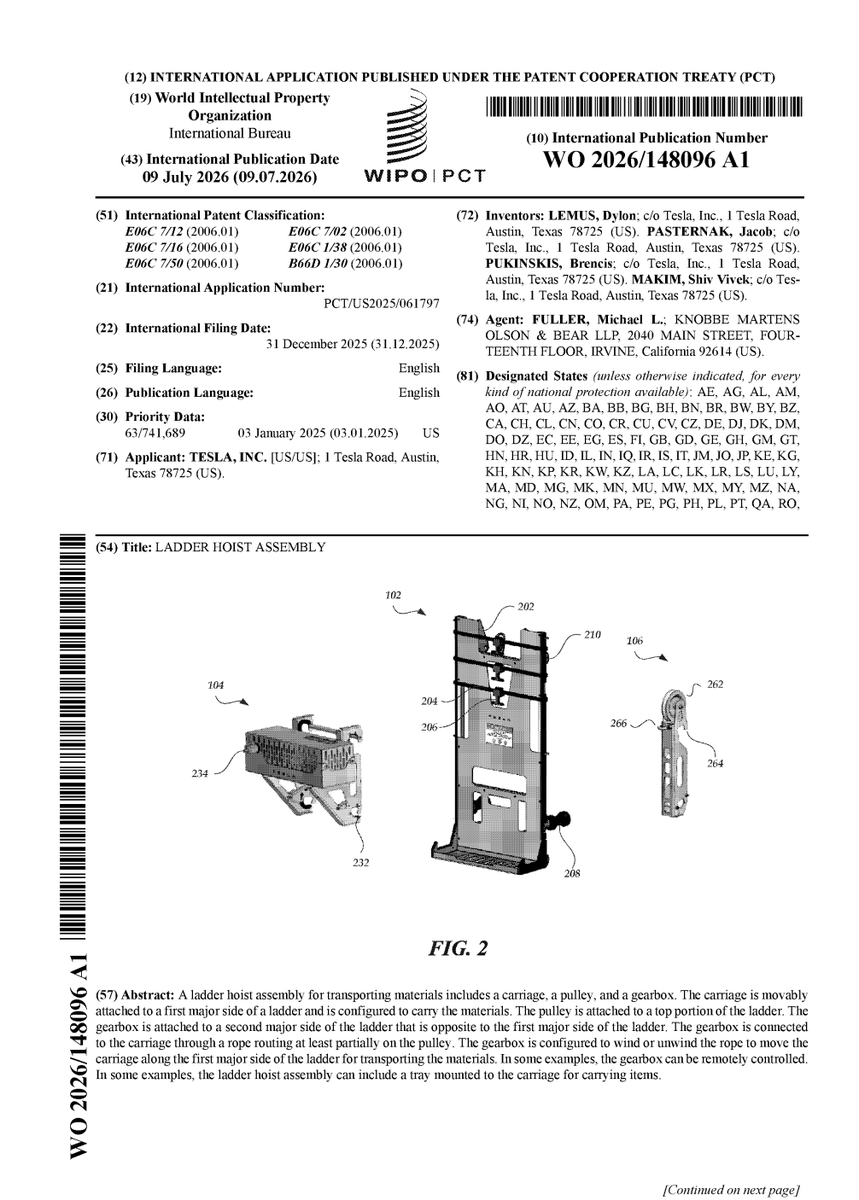
GOOD NEWS 🚨 Tesla has designed a modular ladder hoist that hacks ordinary work truck tools into an ultra fast automated material lift 🛗 The most elegant engineering solutions usually happen when someone figures out how to make two completely unrelated, everyday tools work together to solve a multi-billion dollar problem. In the residential solar industry, that problem is gravity. Dragging awkwardly shaped, fragile solar modules up onto a roof is slow, dangerous, and a constant logistical headache for deployment crews. Instead of designing an expensive, heavy new machine that requires its own specialized batteries and motors, Tesla has taken a brilliant detour. In a fascinating international patent application designated as WO 2026/148096 A1, the company details a featherweight retrofit kit that physically clamps onto standard extension ladders in seconds. By channeling the raw rotational torque of a commercial hand drill through a highly optimized worm-driven gearbox, the system creates immense mechanical advantage, effortlessly gliding a loaded transport carriage up to the roofline. This document provides our first public look at a modular hardware breakthrough that allows Tesla to orchestrate safer, ultra-rapid solar rooftop material transport without adding a single piece of heavy machinery to their trucks. But to truly appreciate how this simple hardware hack changes everything, we first have to look at the deeply frustrating bottleneck it was built to solve. ⚖️ The problem: Over engineering the fight against gravity Older, traditional ladder hoists have existed in the construction industry for decades, but they have historically struggled with immense bulk, long setup cycles, and poor portability. Modern industrial solutions trying to improve on this are plagued by serious over-engineering. Companies typically rely on massive, custom lifting machinery, proprietary motor systems, which are expensive, brand-specific motors that cannot work with any other tools on the truck, or specialized battery packs that take forever to haul to a residential site and calibrate. This tedious process of fine-tuning and aligning heavy machinery to fit the specific angles of a house eats up valuable time. These complicated rigs routinely waste over half an hour of field time just for assembly and setup before any real solar work can even begin. When installation teams choose to avoid these frustratingly complex setups, they are forced to swing to the opposite extreme of primitive manual labor. Workers end up tying ropes around fragile photovoltaic panels, the specialized modules engineered to convert sunlight directly into electricity, and physically hauling them up shaky ladders by hand. This manual method creates a massive liability on the job site. It dramatically increases the risk of serious workplace injuries, property damage, and the accidental destruction of costly solar hardware. Faced with a toxic choice between clunky, over-engineered machinery and grueling physical labor, Tesla's team looked for a smarter, zero-compromise middle ground. 💡 Tesla's solution: Hacking existing truck tools for instant automation Tesla bypassed the trap of creating a complex new power tool by designing an elegant mechanical hack that utilizes assets field crews already carry. The breakthrough is a modular hoisting kit, meaning a portable set of interchangeable parts that pack flat and snap together on-site, that temporarily converts standard extension ladders into a drill-powered freight elevator. This conversion works seamlessly on many off-the-shelf extension ladders that can be bought at any hardware store. The entire layout can be securely deployed on a residential job site in under 5 minutes without requiring a single assembly tool. The true genius of the system lies in its power source. By utilizing a standard commercial hand drill instead of a heavy built-in electric motor, the design remains incredibly light and cost-effective. The drill docks into a clever rear-mounted gearbox, which is an enclosed housing of matching gears that transforms the high-speed spinning of the drill into a slower, immense pulling force. This mechanism drives a high-torque rope and pulley system, leveraging heavy rotational twisting force to easily lift large payloads, that effortlessly glides a specialized cargo carriage up and down the front of the ladder. Making this automation concept work in the field meant designing a rugged platform capable of riding the ladder rails safely, which is where the custom vehicle frame comes into play. 🛒 The carriage: Clever geometry for rock solid stability The transport carriage functions as the primary material flatbed and slides directly along the front major side of the extension ladder, which is the wide front face where a person would normally climb. To keep the movement smooth and efficient under heavy loads, it uses specialized sliding rollers that hug the ladder rails to neutralize friction. These rollers essentially act like miniature heavy-duty wheels that prevent the moving parts from rubbing or binding against the frame. To hold the cargo secure, the carriage integrates heavy-duty elastic cords and a rugged plastic bracket system that easily conforms to different sizes of solar panels, locking them tightly down against shifting winds. For structural security, the carriage relies on side rollers that clamp around the thin minor sides of the ladder, which are the narrow outer edges of the frame, sharply reducing side-to-side sway or tipping. In keeping with the theme of ultimate job-site practicality, these side roller arms are entirely foldable. When the carriage is removed from the ladder, the arms tuck flush against the frame, meaning they fold completely flat against the main body of the unit. This allows the device to slide into narrow storage slots on a service truck without taking up valuable cargo room. While keeping the flatbed steady is one thing, ensuring it can smoothly traverse the uneven, unpredictable surface of a standard work ladder required a brilliant bit of structural troubleshooting. 🛹 The sliding plates: Gliding over structural bumps with built-in ramps Because this system is designed to work on completely standard extension ladders, it has to overcome the inherent architectural imperfections of those ladders. Any normal extension ladder relies on overlapping a base section, which is the heavy segment that stays anchored on the ground, and a fly section, which is the adjustable upper segment that slides skyward to extend the ladder's reach. This overlapping configuration creates a pronounced, uneven transition step right where the segments meet. A typical wheeled trolley would instantly jam or violently jar its cargo upon hitting this lip. Tesla engineered around this issue by integrating custom sliding plates on the undercarriage, which is the belly or bottom frame of the moving vehicle, that function as smooth, built-in ramps. As the carriage climbs past the ladder overlap, these angled plates glide right over the metal step without introducing any sudden resistance or mechanical lag, which is a momentary hesitation or jarring slowdown in movement. This ensures a continuous, uninterrupted ascent from the ground straight to the roofline. Smooth movement up the ladder doesn't mean much without a high-torque mechanical muscle system to drive it, and that pulling power comes entirely from a clever mechanical engine mounted on the reverse side. ⚙️ The worm driven gearbox: Translating drill speed into massive lifting power The mechanical muscle of the hoist is a compact, worm-driven gearbox, which is a specialized gear setup using a spiral screw, that mounts directly to the backside of the ladder. Rather than depending on a complex internal brake, this specific configuration naturally multiplies torque and resists back-driving, meaning it creates heavy mechanical resistance against slipping backward, which helps resist unwanted backward motion during pauses. To preserve the toolless, ultra-fast setup time, the gearbox uses a custom quick-release bracket equipped with a spring-loaded mechanism. This snaps tightly around the ladder rungs in seconds, mechanically anchoring the gearbox so it cannot slide upward under the immense tension of a heavy lift. Inside the housing, the system uses precise gear reduction ratios of 5:1, 10:1, or 15:1 to multiply torque, which means it trades the high spinning speed of the drill to create a heavily multiplied rotational twisting force. With a 10:1 ratio, 10 rapid spins of the hand drill turn the internal rope spool exactly 1 time, giving a standard power tool the muscle to lift massive loads. Power is funneled through an intuitive drill adapter that perfectly adapts a standard 1/2-inch drill chuck, the adjustable clamping jaws at the front tip of a power drill, to the 7/8-inch input shaft of the gearbox. This input shaft is the main spinning rod that feeds external power into the gears, creating a slip-free mechanical connection. Channeling that drill torque into raw lifting power is only half the battle, because the entire tensioned line still needs an ultra-secure routing point at the very peak of the climb. 🏗️ The top mounted pulley: Fail safe routing and over travel safety At the very apex of the ladder structure, which is the highest peak or top point of the frame, sits a rugged pulley assembly that guides the heavy-duty hoisting rope. The pulley houses a precision wheel with a deep, grooved rim that forces the rope to stay perfectly aligned and reduces the chance of derailment, meaning the line is far less likely to slip off its track during operation. The entire assembly hooks onto a top rung using a main bracket and clamps securely onto a lower rung to distribute structural stresses evenly. This spreads the weight and mechanical pulling strains safely across multiple points on the ladder. For maximum safety, the pulley incorporates a robust U-bolt, which is a U-shaped metal loop commonly used to tightly clamp components together, that serves a critical double purpose. It acts as a physical stopper to block the carriage from moving past the top of the ladder, while also acting as a mechanical cage for the cable. The rope routes directly through the eyelet of this U-bolt, which is the open loop or ring formed by the bolt's shape. This unique path keeps the rope captive and makes derailment far less likely if slack develops due to severe winds or sudden shifts in the load. This completely mechanical baseline forms an incredibly efficient setup, but Tesla also mapped out a premium variation for crews looking for high-tech job site automation. 🎮 The remote control assembly: An automated upgrade for remote controlled operation While using a standard hand drill provides ultimate mechanical simplicity, Tesla also mapped out an upgraded configuration focused on remote-controlled operation, which means managing the functionality from a distance without constant physical handling of a tool. This advanced layout swaps the manual drill connection for a self-powered hoist motor integrated right into the rear gearbox assembly, meaning an independent electric motor built directly into the device to generate its own driving force. This motor is linked to a wireless remote control unit, which is a handheld transmitter that sends radio signals through the air rather than relying on a physical tethering cord, allowing workers to command the hoist using simple up and down buttons from a safe distance. This remote setup elevates job-site safety by keeping the ground operator completely away from the ladder track during an active lift, which is the exact window of time when the heavy carriage is in motion and scaling the track. In addition to supporting a wireless emergency stop function, it gives the installation crew a clear, uncompromised line of sight to monitor the cargo throughout its entire ascent without standing underneath a moving payload, which is the total weight of the live cargo being transported up the system. Upgrading to electronic controls makes the lifting process beautifully hands-free, but an automated hoist is only truly useful if it can securely carry more than just standard flat modules. 📥 The utility tray: Mechanical containment for irregular cargo Recognizing that solar installations require more than just flat panels, the system can be customized with a modular utility tray assembly, which is an interchangeable add-on attachment that snaps into the main system depending on the day's specific cargo needs. This setup stacks a standard cargo box for loose tools right above a specialized lower tray. The lower tray is geometrically shaped to form a precise, built-in pass-through slot designed explicitly to handle long, awkward objects like electrical conduits, which are the protective metal or plastic pipes used to safely route electrical wiring across a building. When a crew member slides an elongated conduit directly through this pass-through slot, the material becomes mechanically captured, meaning it is securely trapped and locked in place by the physical boundaries of the opening itself. It cannot roll, slide laterally, meaning it cannot slip sideways to the left or right, or pivot off-center during transit. This clever geometric lock stabilizes irregular payloads, which are awkwardly shaped structural materials that do not lay flat like a standard solar panel, ensuring everything needed for the install arrives on the roof in a single organized trip. When you look past individual brackets and combine all these subtle mechanical breakthroughs into a single cohesive system, the broader impact on Tesla's energy business comes into sharp focus. 🚀 How this patent contributes to Tesla now and future This patent serves as an immediate operational catalyst for Tesla's energy division right as the company works to rapidly scale its clean energy footprint in 2026. In residential solar deployments, soft costs like labor and setup logistics typically account for a notable slice of the total installation price. The legal foundation of this patent defines the core invention as a complete conversion kit for transforming a standard extension ladder into a roof-material transport system. Tesla is attacking one of rooftop solar’s least glamorous bottlenecks: not making the panel, but getting a fragile rectangle from the driveway to the roof quickly and safely. If a conventional lift setup eats 45 minutes and this kit sets up in under 5, a 3-person crew recovers about 2 labor-hours per roof, or roughly 10 labor-hours across a five-site week. Across a fleet, that is not a tweak. It is a field-operations lever. The long-term commercial genius is that the patent does not describe a one-off internal rig. It describes a kit: carriage, pulley, gearbox, and rope/cable, all using the ladder as the rail. That gives Tesla a path to standardize safer rooftop material handling across its own crews first, and potentially across a much larger installer ecosystem later. To support a future goal of deploying 100 GW of sustainable energy capacity annually, Tesla cannot rely solely on its own workforce. By arming a massive army of external contractors with a cheap, 5-minute automation tool, Tesla could create a powerful hardware moat. This framework standardizes installation safety, cuts breakage risk at the exact moment panels are most vulnerable, and drastically accelerates the global deployment velocity needed to power the sustainable home energy ecosystem.
Ming tweet mediaMing tweet media
English
8
17
139
12.3K
s3xy Tesla fan retweetledi
Sawyer Merritt
Sawyer Merritt@SawyerMerritt·
Dear @AndrewZwicker, By supporting New Jersey bill S. 1677 / A. 3968 you are endorsing anti-competitive favoritism and unnecessarily delaying the deployment of lifesaving autonomous vehicle technology on NJ roads. Last year, nearly 600 people were killed in traffic crashes in NJ, and ~94% of serious crashes involved human error. These are preventable deaths. We already have real-world verifiable data showing that autonomous vehicles drive many times more safely than humans. That includes Tesla's autonomous vehicle technology. Do not give in to union pressure, special interests, lobbyists, etc. Vote against this bill and stand up for what is logical and in the best interests of your constituents. Lives literally depend on it.
Sawyer Merritt@SawyerMerritt

New Jersey Democratic state Senator Andrew Zwicker on a new bill requiring cameras plus two additional sensors (likely LiDAR & radar) for autonomous vehicles, which would effectively ban @Tesla robotaxis in the state if passed: "This is not anti-Tesla. I'm pro-New Jersey safety; At this point, I don't think the evidence is sufficient that a single sensor with software can handle situations that humans can," Zwicker said. Also, Uber argued that the state should continue requiring human drivers for most rides, a very anti-autonomous vehicle stance, despite the fact that data shows humans are worse drivers than autonomous vehicles....

English
141
341
2.3K
107.8K
s3xy Tesla fan retweetledi
Elon Musk
Elon Musk@elonmusk·
I was clearly wrong about Anthropic. They are obviously currently the leader in AI. No company has released a model as good as Mythos/Fable and they will undoubtedly have Mythos 2 ready soon. And I would never cut them off in a way that hurt them badly, even as a competitor. That’s not my style. Tesla open sourced its patents and we made the Supercharger network available to all competitors, even though we could have made it a walled garden. SpaceX launches competing satellite systems with no increase in price or use of unfair terms. Even my worst enemies can attack me on this platform. …
English
2.9K
6.2K
89.1K
4.7M
s3xy Tesla fan retweetledi
Sawyer Merritt
Sawyer Merritt@SawyerMerritt·
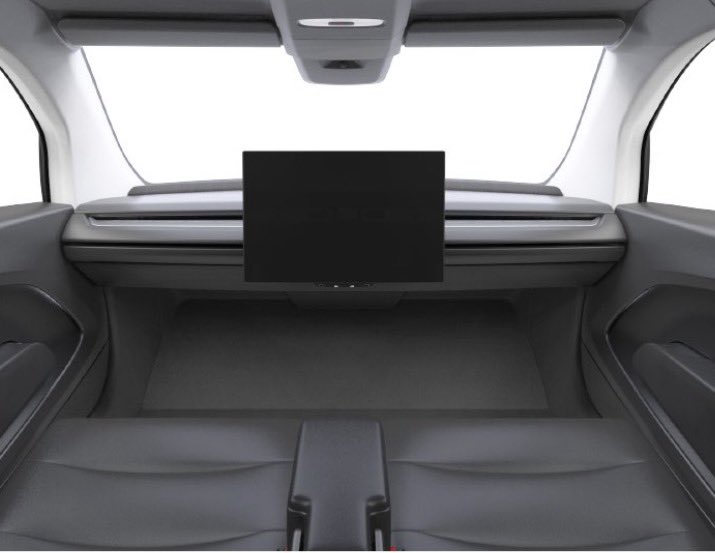
NHTSA will “absolutely” consider ending requirements that driverless cars include steering wheels, says NHTSA head Jonathan Morrison. “If you’re developing a vehicle that is designed never to be driven by a human operator, it doesn’t make any sense to require manual controls.”
Sawyer Merritt tweet media
English
160
398
5.5K
189.3K
s3xy Tesla fan retweetledi
Ming
Ming@tslaming·
GOOD NEWS 🤖 Several sources deep inside the supply chain have indicated that Tesla has finally handed down concrete procurement targets for Optimus components 🔥 These guidelines push suppliers to ramp up production capacity to an incredible 1,000 units a week by September this year, and scale up even further to between 2,000 and 2,500 units a week by the end of the year 🆒 Two insiders close to the suppliers noted that Tesla normally sorts its orders about two months in advance, and they've already spotted specific requests for hundreds of units queued up for August. Looking at these estimates, Tesla's supply chain will soon have the sheer capacity to churn out components for a massive 100,000 Optimus robots a year by the end of December 😍 Word on the street is that before locking in these massive orders, Elon personally reviewed and signed off on the absolute latest build of Optimus during a high-level meeting in late June. This is huge—it means that after more than three years of hardcore R&D, Optimus Gen 3 is finally leaving the lab and stepping right into the mass production phase 💥 Both supply chain sources mentioned that during this meeting, Elon laid down the law, demanding the team hit these end-of-year production targets, or he would completely sack the entire Optimus procurement department. Classic Elon 😤 Honestly, this hardcore ultimatum gives the supply chain, the markets, and the wider robotics industry way more confidence than any safe, standard forecast ever could 👏
Ming tweet mediaMing tweet media
English
79
317
2.2K
222.6K
s3xy Tesla fan
s3xy Tesla fan@S3XYTSLA·
@wholemars I‘m so sick of waiting for the european shop to sell all the stuff Tesla sells in the rest of the world 😞
English
0
0
1
288
Whole Mars Catalog
Whole Mars Catalog@wholemars·
Just got these. Will let you know how they feel.
Whole Mars Catalog tweet media
English
78
12
740
56.3K
s3xy Tesla fan retweetledi
The Tesla Newswire
The Tesla Newswire@TeslaNewswire·
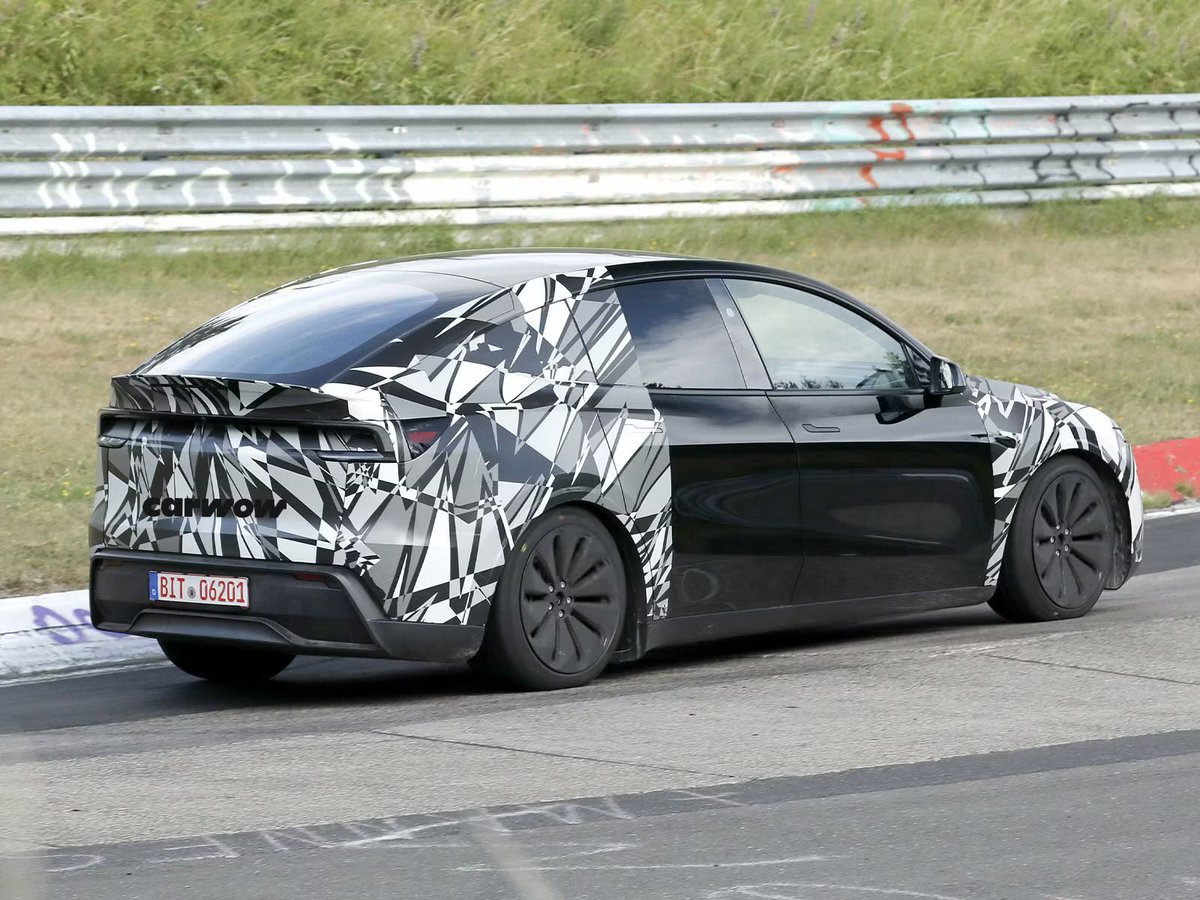
🔥🇪🇺 Partially camouflaged Tesla Model Y L spotted testing in Germany. It features 20” Uberhelix wheels without aero covers. The European launch could happen in the coming weeks or months. (See thread)
The Tesla Newswire tweet mediaThe Tesla Newswire tweet mediaThe Tesla Newswire tweet mediaThe Tesla Newswire tweet media
English
20
31
405
38.3K