

Scott Barry Kaufman ⛵
56.5K posts
Scott Barry Kaufman ⛵
@sbkaufman
Cognitive Scientist | Center for Human Potential | Latest Book: Rise Above |#empowerment #neurodiversity #mentalism #creativity
NYC Katılım Ocak 2011
4.6K Takip Edilen111.6K Takipçiler

The easiest way to end any conversation at a party is to say "I have to go but before I do, can I ask you one more question?" — because that one line makes walking away feel like a compliment.
#CharlesDuhigg #Supercommunicator #CommunicationSkills
English
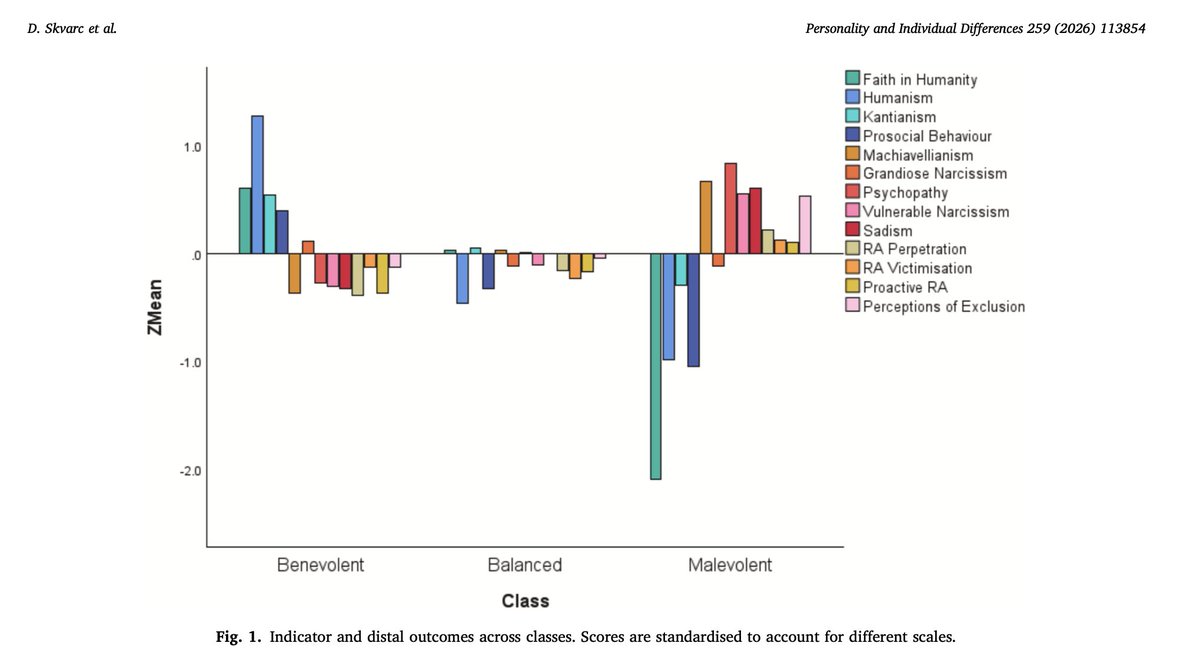
Our new paper is out! "Beyond good and evil: A person-centered analysis of benevolent vs. malevolent interpersonal dispoistional styles" scottbarrykaufman.com/wp-content/upl…

English
@tactipus_ @DrSandipRoy All I did is note the low score on faith in humanity :)
English

@DrSandipRoy @sbkaufman ok fine. i'm dark triad. i just think that's very unfair to demonize people like me based on a chart.
English
Wow look at how low purely malevolent people score in faith in humanity. It's really striking. They are so cynical they can't see any goodness in humans. See our new paper "Beyond good and evil": scottbarrykaufman.com/wp-content/upl…
English

Obsessed w kantianism being a category here
Scott Barry Kaufman ⛵@sbkaufman
Wow look at how low purely malevolent people score in faith in humanity. It's really striking. They are so cynical they can't see any goodness in humans. See our new paper "Beyond good and evil": scottbarrykaufman.com/wp-content/upl…
English
@tactipus_ Huh? I think I'm in a good position to interpret the paper since I'm a co-author on it!
English
@sbkaufman Your post was really sensational, & not an accurate interpretation of the paper.
English

Very interesting study on individuals in terms of affiliative versus aversive interpersonal styles. Great work SBK
Scott Barry Kaufman ⛵@sbkaufman
Our new paper is out! "Beyond good and evil: A person-centered analysis of benevolent vs. malevolent interpersonal dispoistional styles" scottbarrykaufman.com/wp-content/upl…
English
@sbkaufman I’m so disappointed to discover you’d meant to write “dispositional” above! I got so excited by the title that I was slanging dispoistional around like crazy this afternoon at my relatives. It sounded cool! And they were extra confused.
Please do that again
English
"While AI assistance may ease initial learning, it appears to undermine the effortful processes needed for robust learning. These results have important implications of how generative AI tools should be integrated into higher education." sciencedirect.com/science/articl…

English
Scott Barry Kaufman ⛵ retweetledi

Don't miss out on pre-ordering the new book "Leading For Tomorrow" edited by @sbkaufman and @cshipley - a collaboration between @thinkers50 and @SiliconGuild beautifulminds-newsletter.com/p/leading-for-…
English
"The most serious harm created by F.C. [Facilitated Communication] is that it deprives severely cognitively impaired individuals of the limited control they have over their own lives." nytimes.com/2026/05/01/opi…
English
Scott Barry Kaufman ⛵ retweetledi

Scott Barry Kaufman ⛵ retweetledi

"Todo sucede en el momento adecuado, tal como debe ser".
- Lao Tzu
Español

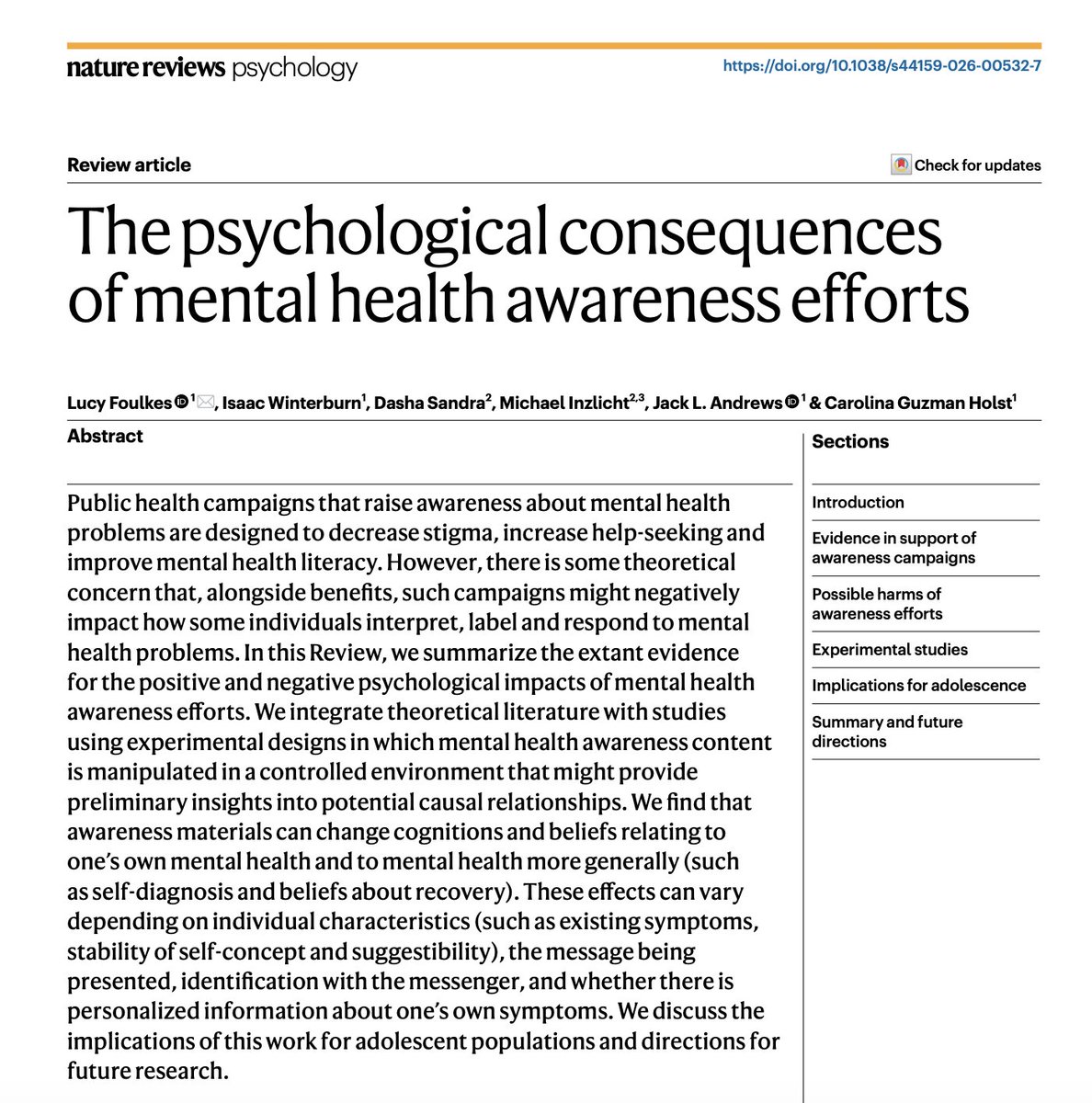
From the paper: "Several high-quality trials have shown that universal mental health interventions based on mindfulness, cognitive behavioural therapy, dialectical behavioural therapy and general mental health awareness can all have negative outcomes, including an increase in internalizing symptoms."
As critics have been arguing all along, individualised, medicalised and decontextualised models & narratives are not only net ineffective, but even contribute to and exacerbate social & psychological issues and distress.
We dont face a crisis of 'mental disorders' in need of medical or cognitive treatment, we face a socio-psychological crisis and a crisis of medicalisation in need of a societal rethink.
English
Scott Barry Kaufman ⛵ retweetledi

The Secret of My Laughter - A student asks His Holiness the Dalai Lama the secret behind his famous childlike laughter. His answer is disarmingly simple: a relaxed mind, no ego, and the understanding that we are all the same human beings. He explains how seeing yourself as "something special" creates stress and anxiety, while honesty, humility, and transparency are the true foundations of inner peace. Video originally recorded on May 31, 2014.
English
Scott Barry Kaufman ⛵ retweetledi


@sbkaufman Hi!Prof. Kaufman your book has been translated to Thai language.Congratulations!! facebook.com/share/p/1NmH8J…
English