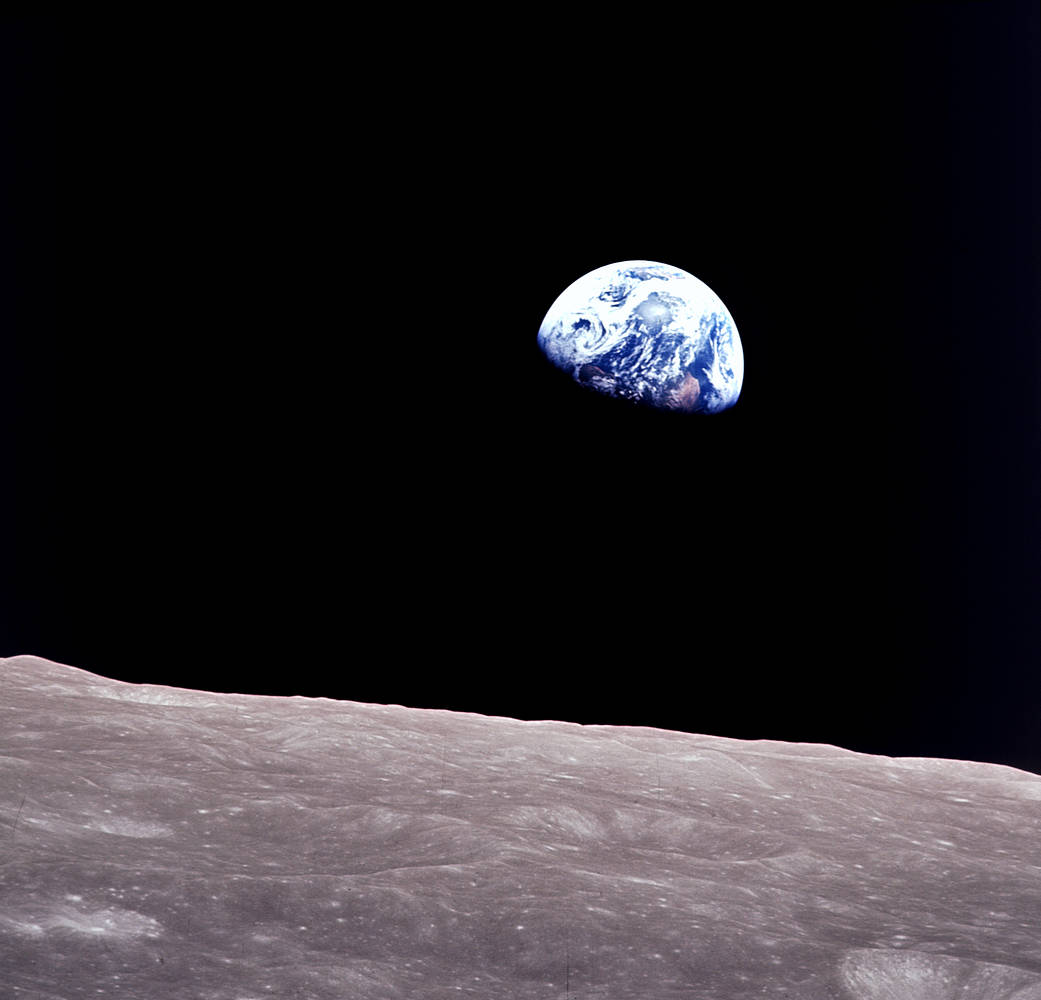
"Merry Christmas, and God bless all of you—all of you on the good Earth"
Astronauts orbited the Moon for the first time in history on Christmas Eve, 1968. On their fourth orbit, they captured the sight of the Earth rising over the Moon's horizon, a photo dubbed "Earthrise."
🚀 Exciting New Research from SFU’s Aerospace Physiology Lab 🚀
The new research explores how humans respond to artificial gravity, providing insights that can improve the quality of life on Earth.
🔗 Read the full article in Frontiers in Physiology: frontiersin.org/journals/physi…
We are thrilled to unveil our brand-new logo for the SFU Aerospace Physiology Laboratory!
Credits to our PhD student, Polly Jarman, for designing the new logo
#2025instagram.com/p/DFJorjsvUWB/…
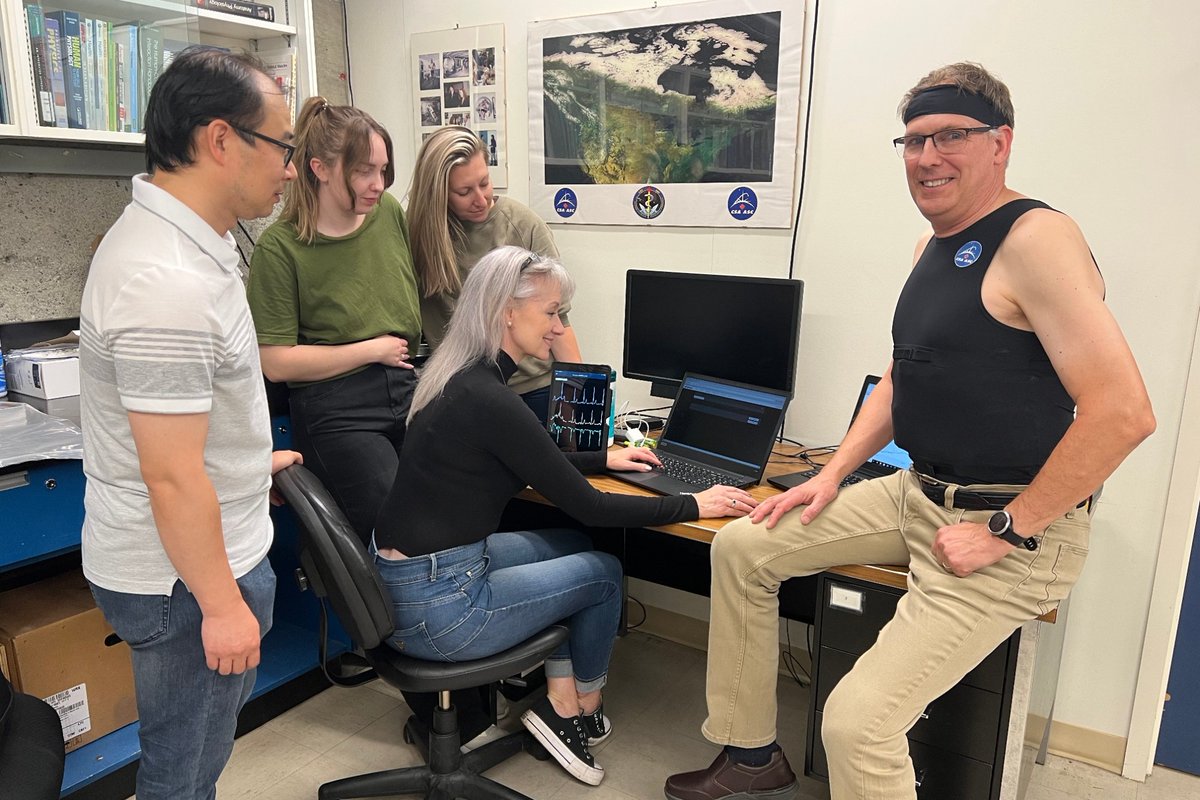
@SFUAPL Aerospace Physiology Laboratory and The University of North Dakota extend special thanks to all students, support personnel, volunteers, and professional Astronauts, such as Astronaut Sultan Al Neyadi (shown), for their contributions to our CARDIOBREATH research.
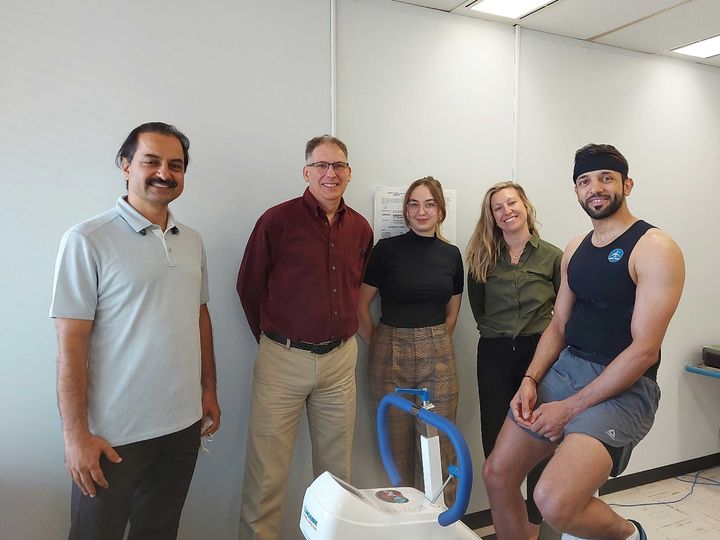
The University of North Dakota’s Dr. Kouhyar Tavakolian flexes his muscles alongside SFU's Aerospace Physiology Laboratory Director Dr. Andrew Blaber with data acquisition support by Tiffany Stead and Katie Samoil during CARDIOBREATH setup!
Way to go, Dr. Tavakolian!
Researchers from SFU Aerospace Physiology Laboratory are heading to Houston, Texas this week to connect with astronauts who have recently returned from the International Space Station. @SFUAPL, @csa_asc3. ow.ly/bJzK50PIyAI21
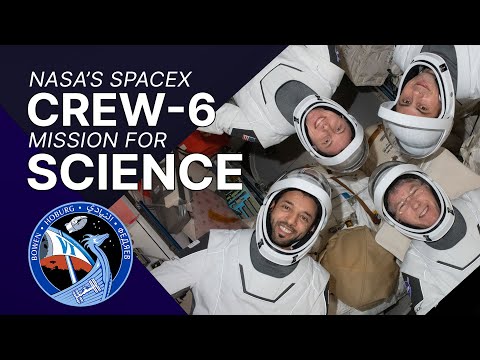
Astronaut Sultan AlNeyadi conducted the Cardiobreatg study aboard the ISS, which examines how cardiovascular and respiratory systems adapt during spaceflight.
#TheLongestArabSpaceMission
SFU APL’s CARDIOBREATH study is an investigation from the Canadian Space Agency (CSA), studies the combined effect of cardiovascular and respiratory changes on blood pressure regulation during spaceflight. Credits: Roscosmos