
Sabitlenmiş Tweet
SHIKIBU in Osaka, Japan🇯🇵, & I'm an iOS app dev.
29.3K posts

SHIKIBU in Osaka, Japan🇯🇵, & I'm an iOS app dev.
@SHIKIBU_Automat
#iPhone アプリ開発者、SHIKIBUの公式ツイッターアカウント。 アプリ開発以外に日本の文化を英語で紹介しています。 #Japan #JapaneseFood #JapaneseCulture #Sushi #Joke #Gag #IndieGame #IndieDev #GameDev #HVAC #iOS
日本 大阪 Osaka, Japan Katılım Aralık 2016
4.4K Takip Edilen3.1K Takipçiler
SHIKIBU in Osaka, Japan🇯🇵, & I'm an iOS app dev. retweetledi
Nishikigoi(Asian Carp) swimming in a small pond at the folk museum in my town.

Higashiosaka-shi, Osaka 🇯🇵 English
SHIKIBU in Osaka, Japan🇯🇵, & I'm an iOS app dev. retweetledi
SUSHI…?😅

Higashiosaka-shi, Osaka 🇯🇵 Filipino
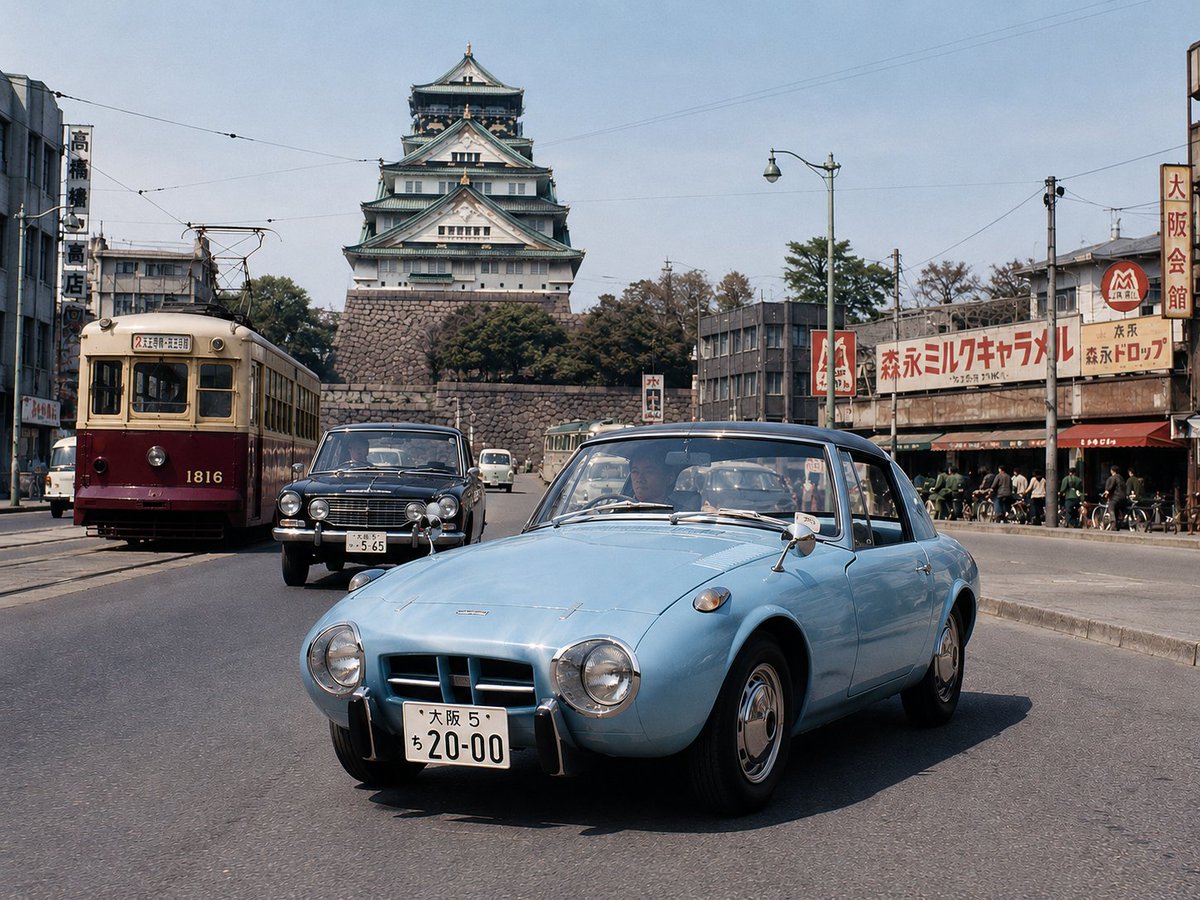
Around 1951, Japanese society was heavily reliant on the railways, but by the 1960s, Japanese car manufacturers had begun to develop their own cars.
One Japanese car developed in the 1960s that I find particularly unique is the ‘Sports 800’, developed by Toyota in 1965. As Japanese car manufacturers at the time were not yet capable of developing high-performance engines, the ‘Sports 800’ had an engine output of just 45 PS (44 HP).
And, the engine displacement was a mere 790 cc.
To compensate for this, the vehicle weight was kept to 580 kg, and the body shape was designed for excellent aerodynamics.
Thanks to these innovations, the top speed reached 155 km/h (96 mph).
Fuel consumption was also very low; it could travel 30 km on a single litre of petrol, which was phenomenal for that era. Converted to American notation, this equates to 70 mpg.
This fuel efficiency was largely due to the aerodynamically superior body shape, and it boasted fuel economy comparable to that of Toyota’s latest hybrid car, the ‘Prius’.
However, the ‘Sports 800’ had no air conditioning, no heating, no power steering and no electric windows; furthermore, the body shape, which prioritised aerodynamics, made the interior very cramped, and there was almost no room for luggage.
#Jqpqn #History #JapaneseCar #TOYOTA #AI
English
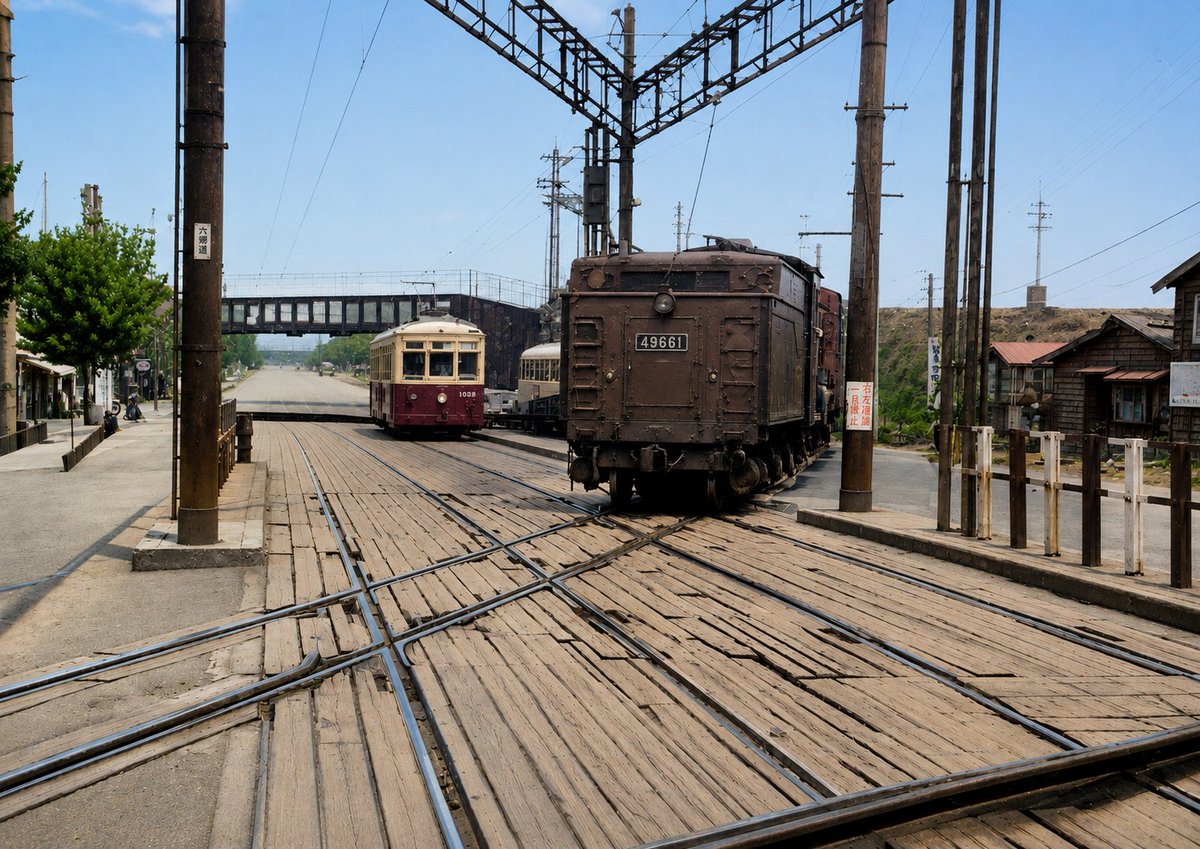
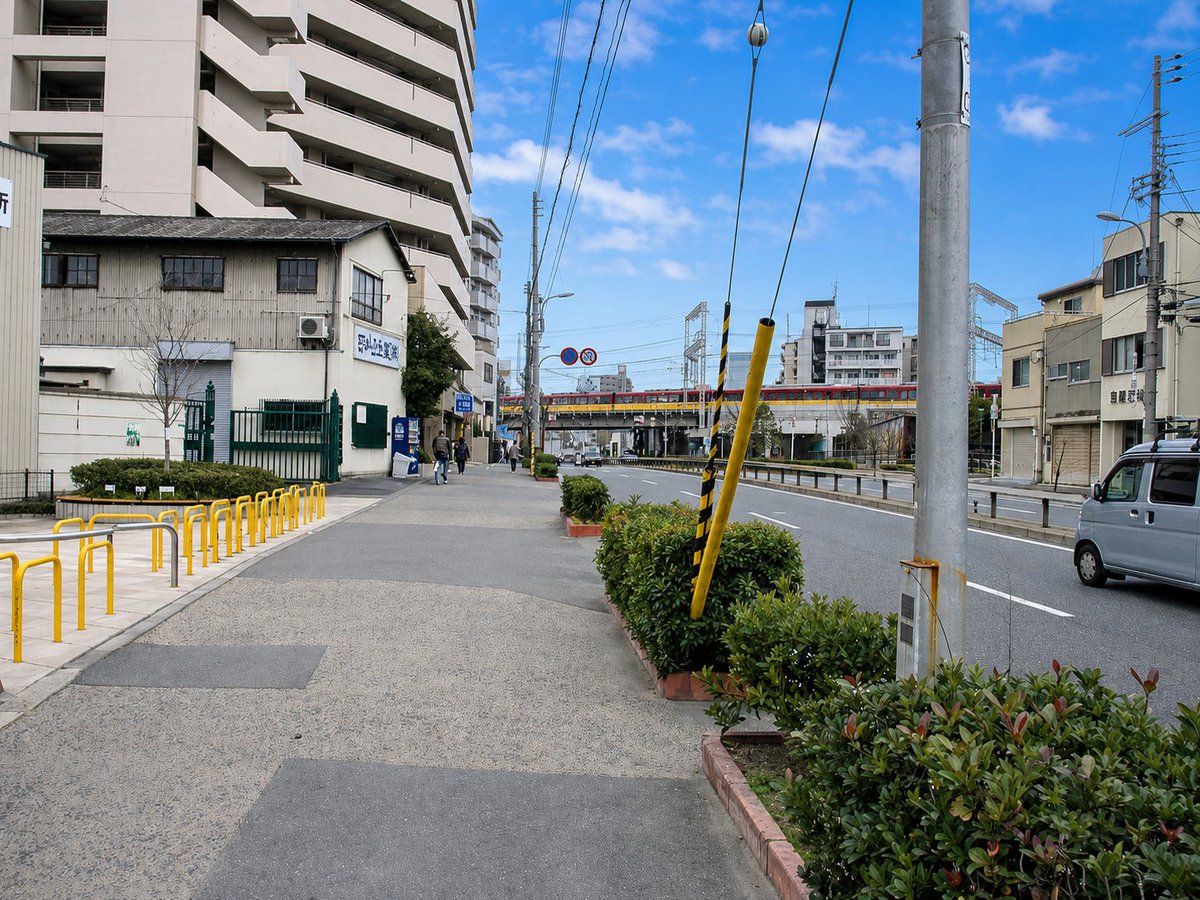
Here are photographs from 1956 and 2013 of Gamou 1-chome in Joto Ward, Osaka City—a place I used to visit frequently by car, bus or bicycle. These two photographs were taken from almost exactly the same spot. The only difference is the year they were taken.
As usual, I have used AI to enhance the clarity of both images. Furthermore, as the 1956 photograph was in black and white, I have used AI to convert it to full colour.
In the 2013 photograph, there are no trams running on the road, and the tracks once used by steam locomotives have disappeared, but in the 1956 photograph, both are still very much in evidence.
In Japan around 1956, car ownership was very low, so there was a very high reliance on railways.
I was very surprised, as I had no idea that trams ran here and that there were tracks for steam locomotives.
The railway vehicle in the 1956 photograph does not look like a steam locomotive at first glance, but what appears to be the front of the railway vehicle is actually a tender coupled to the rear of the steam locomotive.
#Japan #Osaka #History #Tram #SteamLocomotive #AI
English
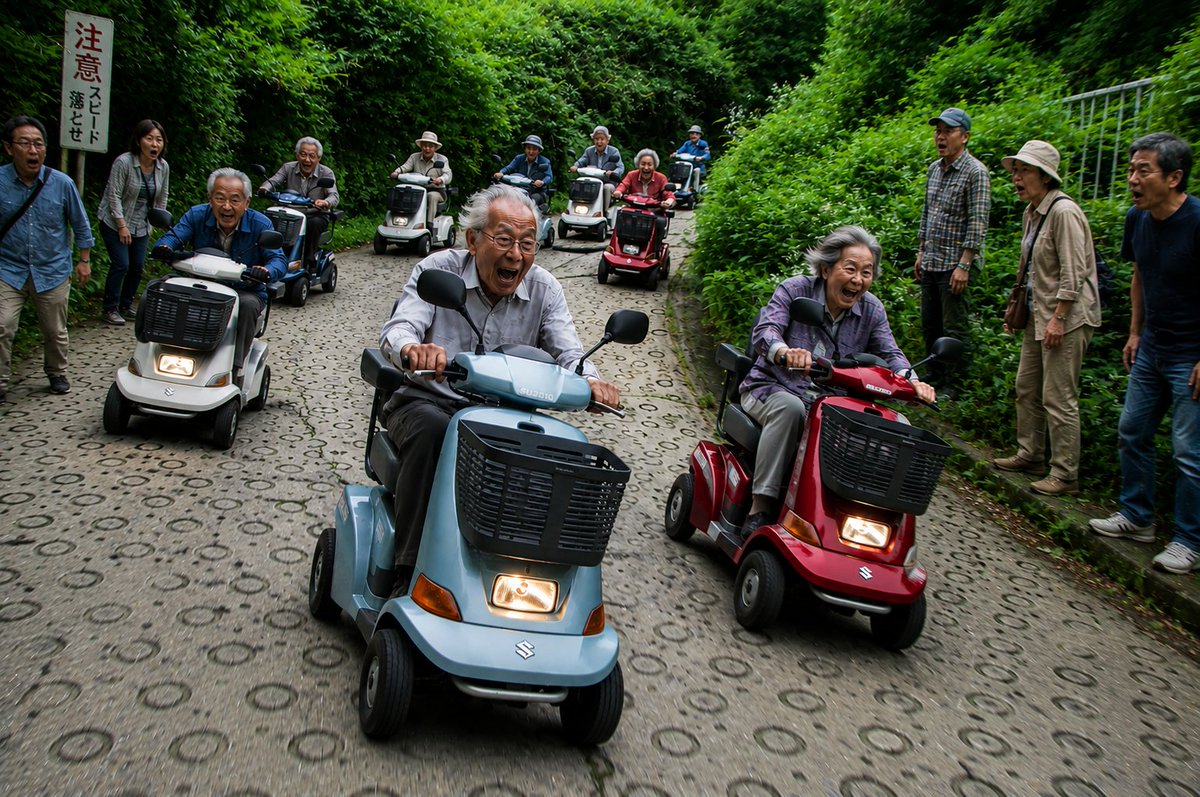
National Route 308 in Japan features ‘Kuragari Pass(暗峠)’, which is the steepest mountain pass designated as a national route in the country.
Today, several elderly residents living at the summit of ‘Kuragari Pass(暗峠)’ are speeding down the steep mountain road in electric mobility scooters designed for seniors, on their way to take part in a game called ‘gateball’ being held at the foot of the pass.
Pedestrians are utterly taken aback by the group of speeding electric carts that suddenly appear from the direction of the summit.
…That said, this is a story I’ve made up, and the image was generated by AI, but as Japan’s population is ageing rapidly, a curious incident like the one in this image might well occur in the not-too-distant future.
#Japan #Osaka #Pass #NationalRoute #暗峠 #国道308 #AI
English
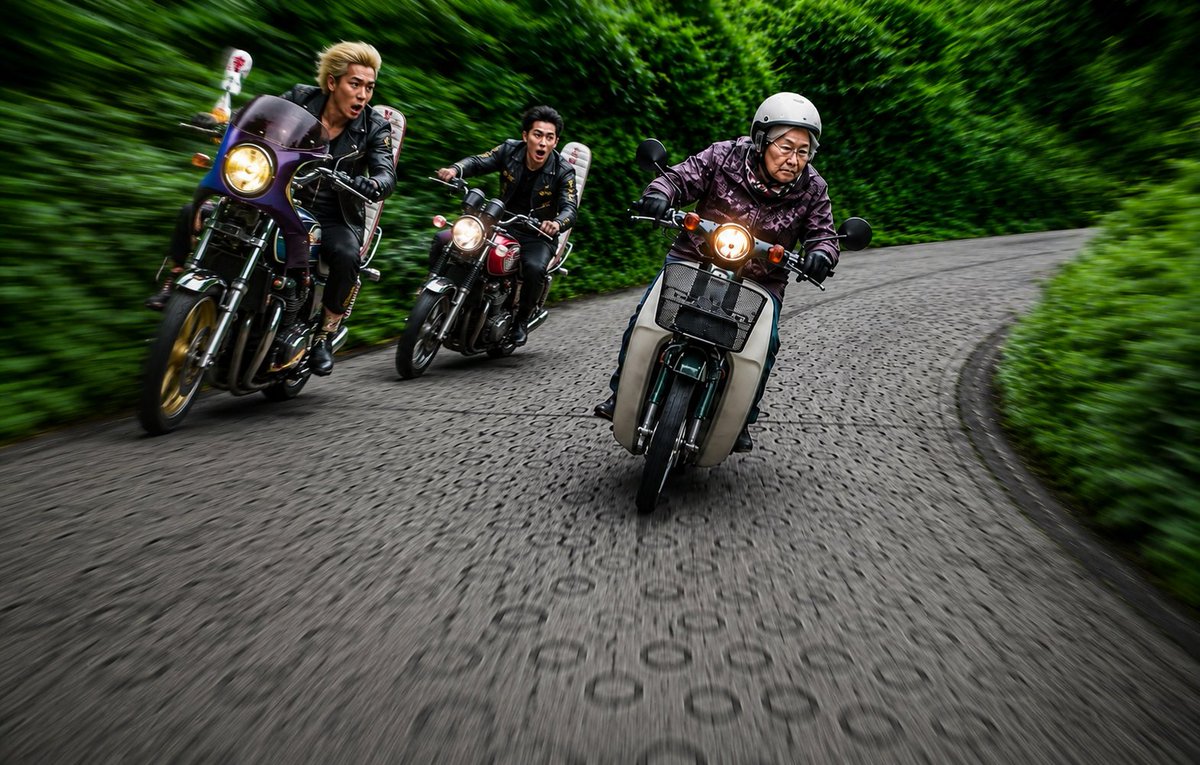
On the downhill slope of 'Kuragari Pass(暗峠)', these Japanese biker gang riders are absolutely stunned after being overtaken by “that elderly lady” riding a 50cc motorbike! 😆
Well, this image was generated by AI, but honestly… people living at the top of 'Kuragari Pass(暗峠)' probably need driving skills like this just to survive there. 😅
#Japan #Osaka #Pass #NationalRoute #暗峠 #国道308 #AI
English
On the eastern edge of the town where I live lies ‘Kuragari Pass(暗峠)’, a section of National Route 308—the road with the steepest gradient in Japan. This is a photograph of an elderly woman climbing the steep slope of ‘Kuragari Pass(暗峠)’ on a 50cc motorbike.
This elderly lady rides her motorbike up and down this dangerous, steep gradient twice a day to go shopping… This is a made-up story and a lie. I’m sorry...😅
It is true that ‘Kuragari Pass(暗峠)’, the steepest section of Japan’s National Route 308, exists; however, this elderly lady was generated by AI, so please do not take her seriously.🙇♀️
#Japan #Osaka #Pass #NationalRoute #暗峠 #国道308 #AI

English
I believe that a Third World War, in which major powers exchange nuclear missiles, could well be triggered by a ‘false alarm’.
In fact, back in 1983—when the United States and the Soviet Union were locked in confrontation, each viewing the other as their ‘greatest enemy’—the Soviet Union’s early warning system issued a ‘false alarm’ that, had things gone just slightly wrong, could easily have led to a Third World War.
On 26 September 1983, shortly after midnight, the Soviet ballistic missile early warning centre ‘Serpukhov-15’ suddenly detected the launch of an intercontinental ballistic missile (ICBM) from the US mainland towards the Soviet Union and sounded the alarm.
1. The launch alert for ‘one missile’
The Soviet early warning satellite ‘Oko’ detected that a single intercontinental ballistic missile (ICBM) had been launched from the US mainland towards the Soviet Union.
2. A succession of alerts
Whilst the officer in charge was verifying the situation, the system issued further warnings that four more missiles—making a total of five—were heading towards the Soviet Union.
3. The Decision Required
Under Soviet military regulations at the time, upon receiving such a warning, it was mandatory to report immediately to higher command (ultimately the General Secretary) and launch an immediate nuclear retaliatory strike.
However, the duty officer on duty that day judged this to be a ‘false alarm’ and did not report it to higher command. And his judgement was correct.
His name was Lieutenant Colonel Stanislav Petrov.
Had he not calmly judged it to be a ‘false alarm’, it is highly likely that the Third World War would have broken out in 1983.
Because he did not report the matter to his superiors immediately, he was treated with cold indifference until the collapse of the Soviet Union; however, after the collapse of the Soviet Union, when this fact came to light, he was hailed as a ‘hero who saved the world’.

English

@SHIKIBU_Automat A common fear amongst humans at this point. I know we've spoken many times about the horrors of nuclear war in the past. As well the weapons meant to stop such a disaster.
English
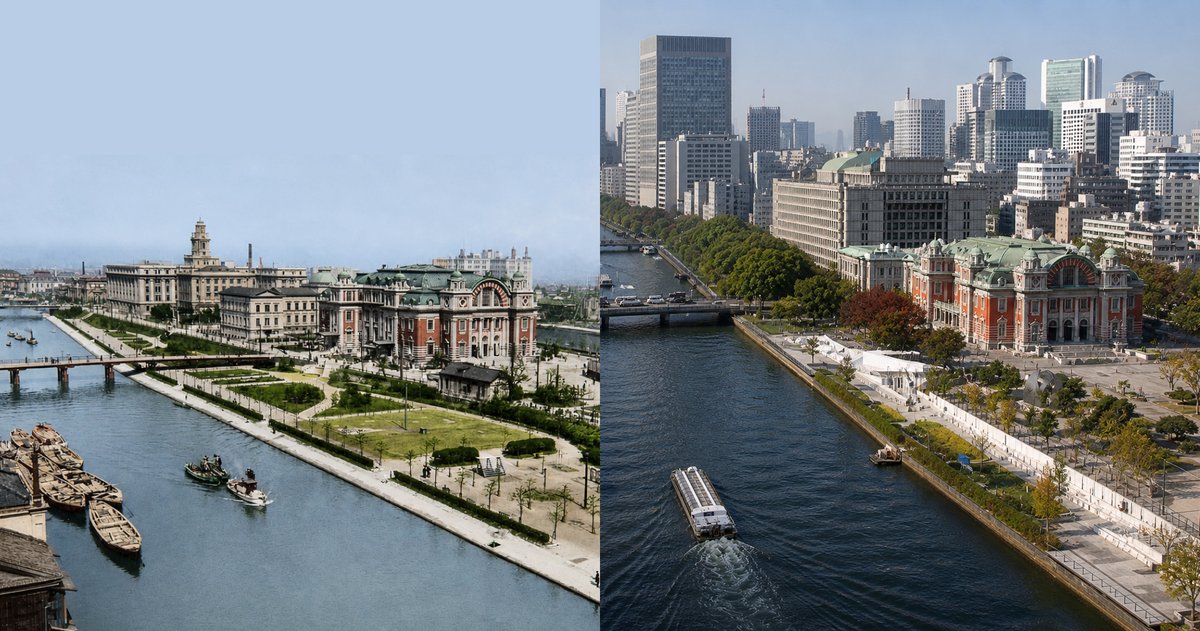
Photographs of Osaka, the city where I live, from 100 years ago (1925) and today.
Everything has changed except for the red-brick Western-style buildings. In particular, behind these red-brick buildings, many high-rise blocks have been constructed over the past century, clearly showing how much the city has transformed in that time.
Incidentally, the 1925 photograph has been colourised using AI based on period images, whilst the present-day photograph was originally taken from a low angle but has been processed using AI to raise the viewpoint.
#Osaka #History #1925 #AI
English
SHIKIBU in Osaka, Japan🇯🇵, & I'm an iOS app dev. retweetledi
I was riding my Italian road bike around my town when I came across a shrine in a strange location.
This shrine is located in a residential area.
I have cycled past this place about five times in the past, but I never noticed that there was a shrine there.
It's such a plain shrine, so it probably enshrines a plain god…😅
Incidentally, the population of Japanese gods is 8 million, so there are some gods who can't get ahead in life and some plain-looking gods.
Let me just say one last thing.
Italian road bikes are the best!🇮🇹🚴♀️


Higashiosaka-shi, Osaka 🇯🇵 English
SHIKIBU in Osaka, Japan🇯🇵, & I'm an iOS app dev. retweetledi

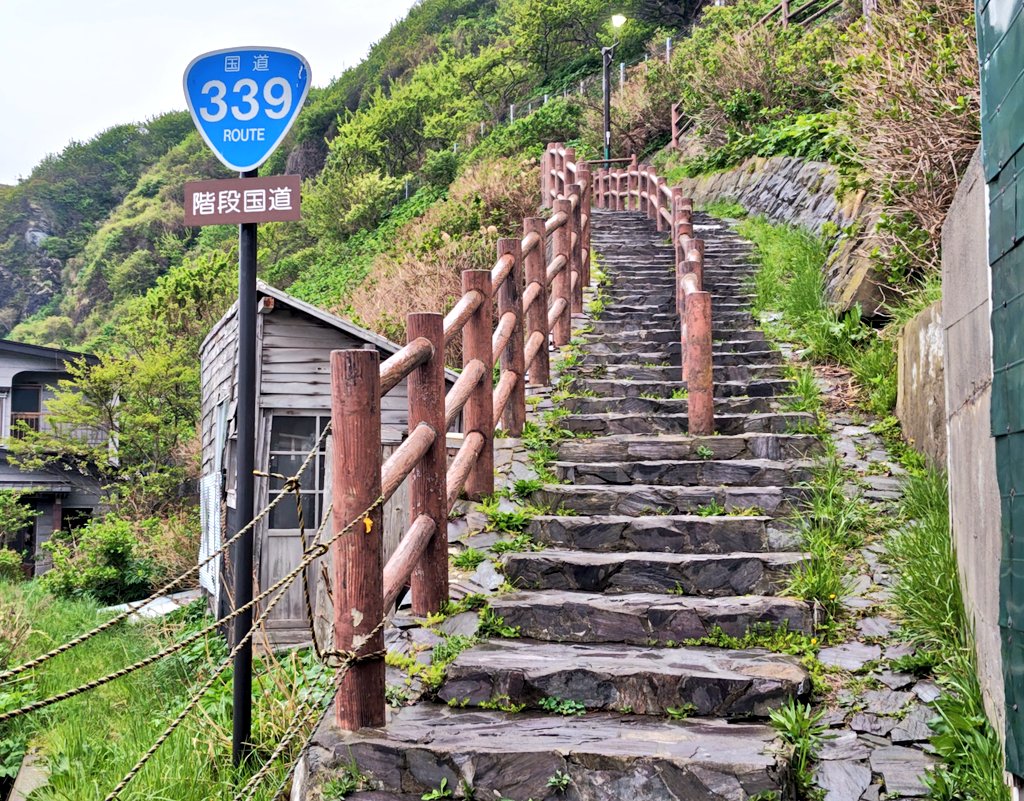
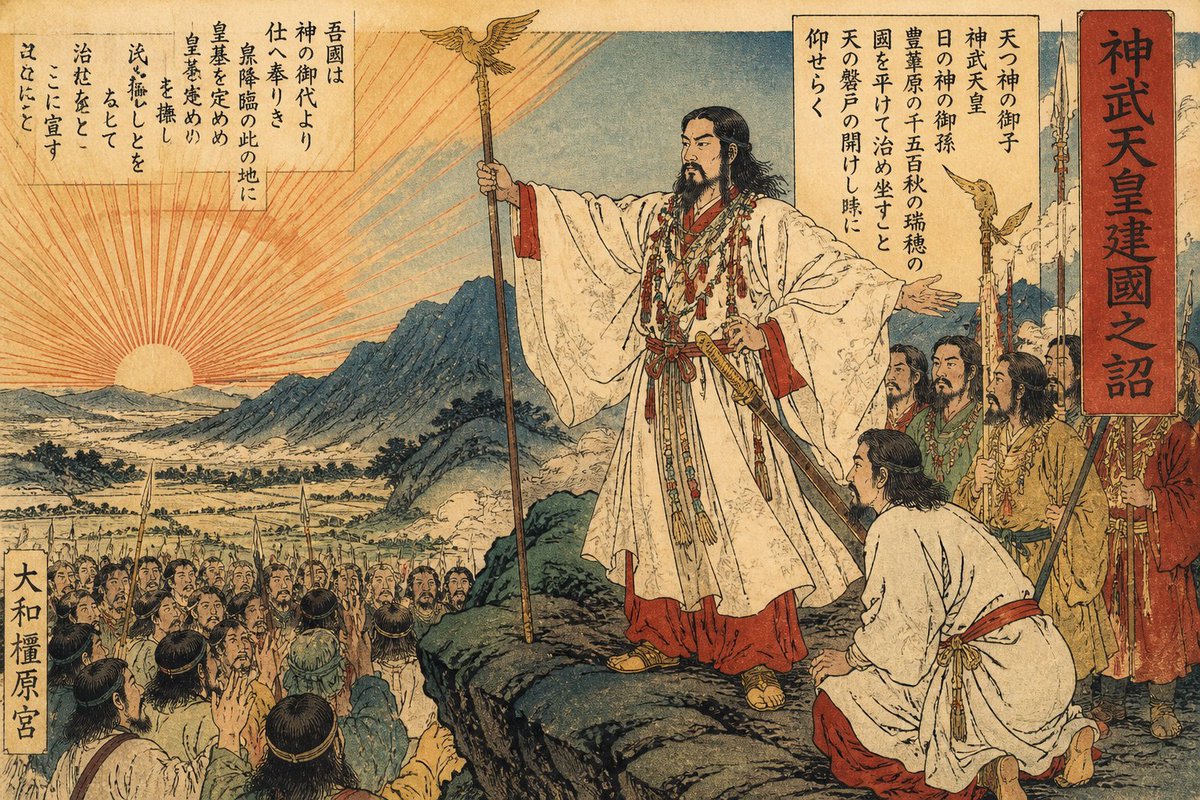
Today isn’t National Foundation Day or anything of the sort, but I’d like to share this ‘Illustration Promoting the Founding of Japan’ created by AI, as it turned out exceptionally well.
The left is the English version and the right is the Japanese version.
This AI-generated artwork is entirely original, whilst drawing inspiration from the styles of famous Japanese painters such as Utagawa Kuniyoshi and Yoshu Shuen; therefore, you can use it on social media without worrying about copyright or other legal issues.
The figure depicted in this painting is the legendary ‘Emperor Jimmu’, said to be Japan’s first emperor, who, according to legend, ascended the throne 2,686 years ago.
However, as there was no written language in Japan at that time, the legend of Emperor Jimmu was passed down orally for centuries before being transcribed into writing by scholars of the Yamato court in the 8th century, and it is this version that has been handed down to the present day.
As for whether Emperor Jimmu actually existed, many scholars hold the view that ‘he probably did not exist’; however, even if he did, it is speculated that, when the details of the legend are compared with the geographical conditions of the time, the story likely dates back to the 1st or 2nd century BC.
According to the legend, Emperor Jimmu is said to have arrived by boat with a large number of retainers and followers at what is now Kusaka-cho in Higashi-Osaka City. However, as Kusaka-cho is a small inland settlement situated 17 km (10.6 miles) from the coastline, this story was long dismissed as a ‘fabrication’.
However, large-scale borehole surveys carried out between the 1970s and 1980s revealed that around the 1st century BC, the sea extended as far inland as Kusaka-cho in Higashi-Osaka City, making it entirely feasible to reach this location by boat.
By the 8th century, when the legend of Emperor Jimmu was first recorded in writing, Kusaka-cho in Higashi-Osaka had already become inland, making it virtually impossible for people of that era to have known that one could reach this area by boat.
Consequently, there is a growing number of scholars who now hold the view that, whilst the likelihood of Emperor Jimmu’s actual existence may be low, the legend of Emperor Jimmu was perhaps created based on events that actually took place.
#Japan #Osaka #Emperor #JapaneseEmperor #History #AI

English
When this building was constructed in 1921, Japan had studied European architecture extensively, so the stone buildings erected during this period bear a striking resemblance to their European counterparts.
Moreover, as the stone bridge in this photograph is also in the European style, looking at the photograph alone, it appears as though it were taken in Vienna or Budapest.
English

SHIKIBU in Osaka, Japan🇯🇵, & I'm an iOS app dev. retweetledi

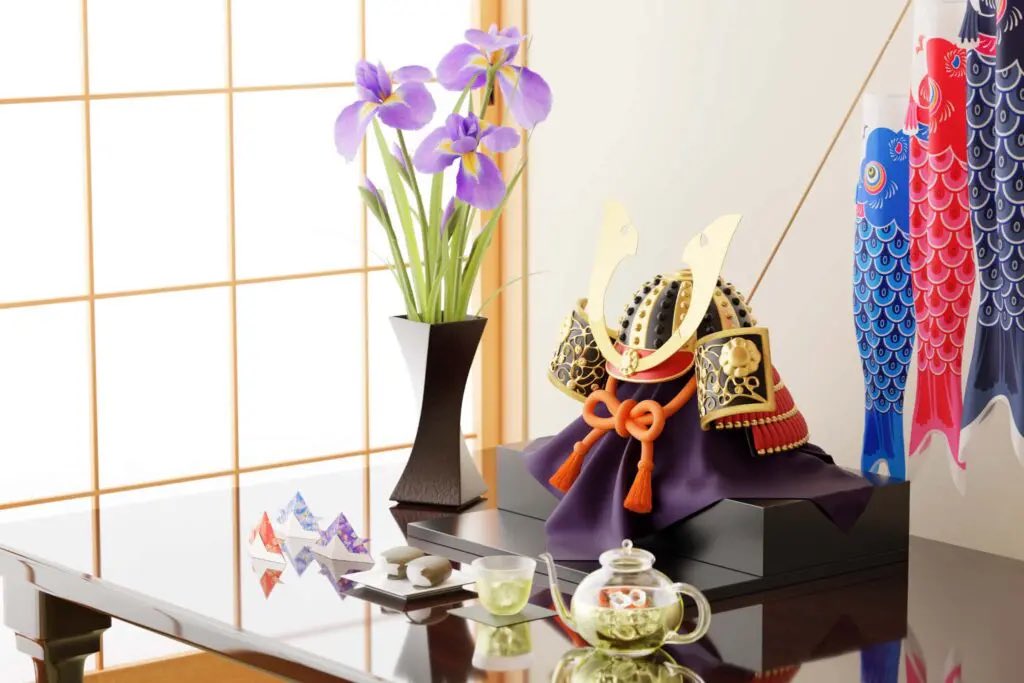
It’s “Tango no Sekku!” (端午の節句) Boys’s Day, Children’s Day being other names, on this day we capture the flag, beat the drums, eat mochi sweets and bathe in Shobu-yu (薔薇の湯) baths. Let your flag fly high and enjoy the festivities!
日本語
@PaigeEtheridge1 I pray that the famous words spoken by Einstein below do not come true a hundred years from now.
“I know not with what weapons World War III will be fought, but World War IV will be fought with sticks and stones.”

English
@SHIKIBU_Automat I wonder what it will look like in a hundred years.
English
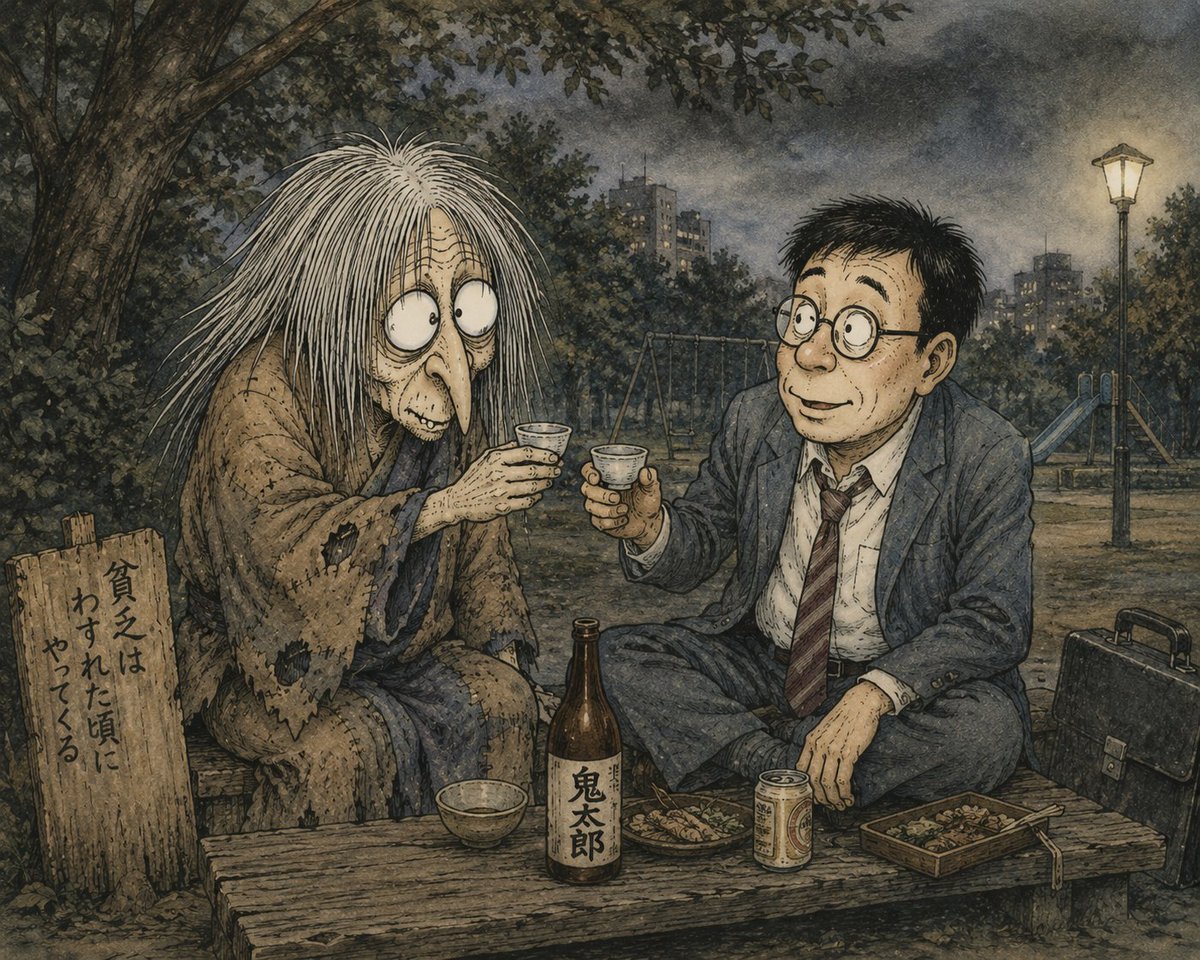
Incidentally, as the ‘God of Poverty’ technically holds Japanese nationality, he is eligible to make use of Japan’s various welfare schemes.
As he can access both the public welfare system and the national health insurance scheme, medical treatment is far cheaper than in the United States...😅

English
@SHIKIBU_Automat Karma is also cause and effect too. But the good and evil side is an easier way to understand it. We do need to choose our friends wisely and that's a form of karma too. 😅
English
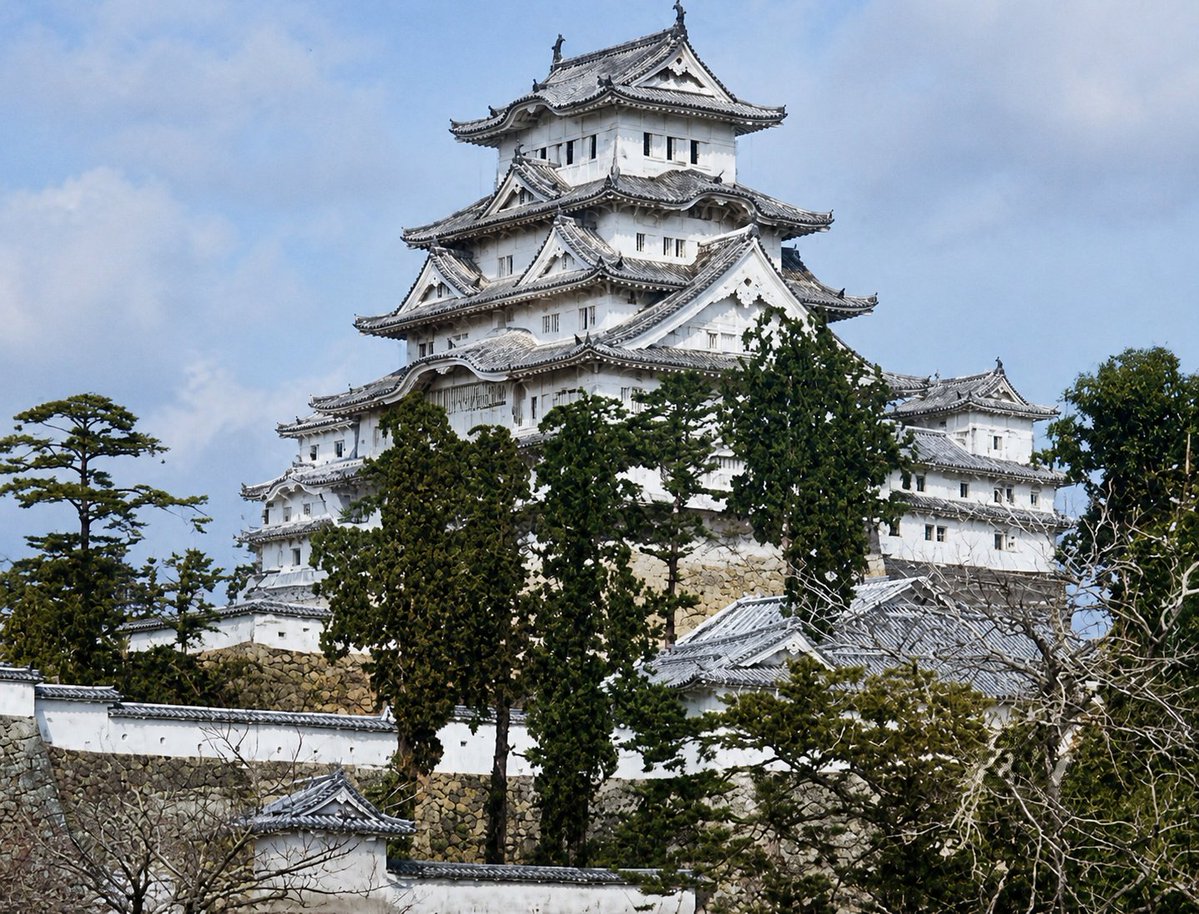
This image has been enhanced using AI. The original photograph is a blurry sepia-toned image of Himeji Castle, believed to have been taken around 1909; this has been sharpened and converted to full colour using AI.
Although Japan originally had many castles, many were demolished during the modernisation of the late 19th century. Today, the numerous ‘castles’ seen across Japan are modern buildings constructed during the period of rapid economic growth following the Second World War, designed to resemble traditional castles.
Given this situation, only 12 ‘authentic castles’—those built by powerful samurai during the 16th and 17th centuries—remain today.
Himeji Castle boasts the largest scale of these precious 12 castles.
Although it is difficult to tell from this image, the castle is slightly tilted.
In 1912, extensive renovation work was carried out on the castle, but due to a lack of funds, it was not possible to fundamentally correct its tilt.
#Japan #Castle #History #Himeji #Samurai
English
From an East Asian perspective, this might be attributed to the concept of ‘karma’.
According to the philosophy of ‘karma’, if someone does good, good things will happen to them, and if someone does bad, bad things will happen to them.
And if that person realises, ‘I have done something wrong’, they can prevent bad things from befalling them by making amends for their wrongdoing.
Well, in my case, as I am a very friendly person, the ‘god of poverty’ might simply be mistaking me for his friend...😅
English
@SHIKIBU_Automat Oh no! This might be a law of attraction issue. Using words and beliefs as powerful magic for good or bad results.
English
Both of these photographs were taken in the same location in my town; the one on the left was taken in 1925, whilst the one on the right is an image created using Google Earth based on current geographical data. As you can see, the town centre in 1925 was filled with traditional Japanese buildings.
As you can immediately see from the 1925 photograph, traditional Japanese buildings were low-rise and had narrow interiors, making them unsuitable for modern commercial activities.
The tall modern building visible in the photograph on the left is the former Mitsukoshi Department Store, which was demolished in 2005. This eight-storey building had sufficient floor space to accommodate modern commercial activities, allowing it to remain in use for 80 years. However, this would have been impossible with traditional Japanese buildings.
Furthermore, after the Second World War, as modern construction methods became commonplace, the number of craftsmen skilled in traditional Japanese building techniques gradually declined and no successors were trained. Consequently, the costs of constructing new traditional buildings, as well as carrying out extensions, alterations and repairs, soared, leading people to increasingly opt for buildings constructed using modern methods.
Furthermore, from a fire safety perspective, the height of timber-framed buildings was restricted by law to 13 metres (42.7 feet), which also contributed to the gradual disappearance of traditional buildings from town centres.

English
@SHIKIBU_Automat Does Architecture need to change overtime? I know we talked recently about fire hazards of old buildings.
English
This is just my opinion, but I believe the reason why the ancient Chinese Three Kingdoms period—commonly known as the ‘Romance of the Three Kingdoms’—is so popular in Japan is that, between the mid-20th century and the end of the 20th century, several Japanese authors wrote highly compelling historical novels based on the ‘Romance of the Three Kingdoms’, and that computer games based on these novels were produced in the 1980s. Sequels to these computer games produced in the 1980s are still being made today, and despite more than 30 years having passed since the first version was created, they continue to enjoy great popularity.
Incidentally, these ‘Romance of the Three Kingdoms’ computer games featured a level of strategic depth that was groundbreaking for their time; players could take on the roles of characters from the ‘Romance of the Three Kingdoms’, developing their own kingdom or invading enemy territories, thereby reliving the history of the ‘Romance of the Three Kingdoms’. In Japan, there are quite a few people who first became acquainted with the ‘Romance of the Three Kingdoms’ through these games.
Furthermore, the reason Greek history is so highly regarded in Japan is that it has been frequently featured in anime and television programmes dealing with ancient civilisations.
In anime, the 1970s saw the immense popularity of ‘Mazinger Z’, a series featuring a giant robot as its protagonist. The plot involved an evil archaeologist unearthing a giant robot—created by the ancient Mycenaeans using advanced science—from the ruins of ancient Mycenae, which was then revived and wreaked havoc in Japan.
Furthermore, during the occult boom in Japan from the 1970s to the 1980s, numerous television programmes were produced explaining the similarities between ‘the mythical continent of Atlantis’ and ancient Greece. Some of these programmes even claimed that ancient Greek scientific capabilities were more advanced than those of the modern era, but that this scientific prowess was lost overnight due to a flood.
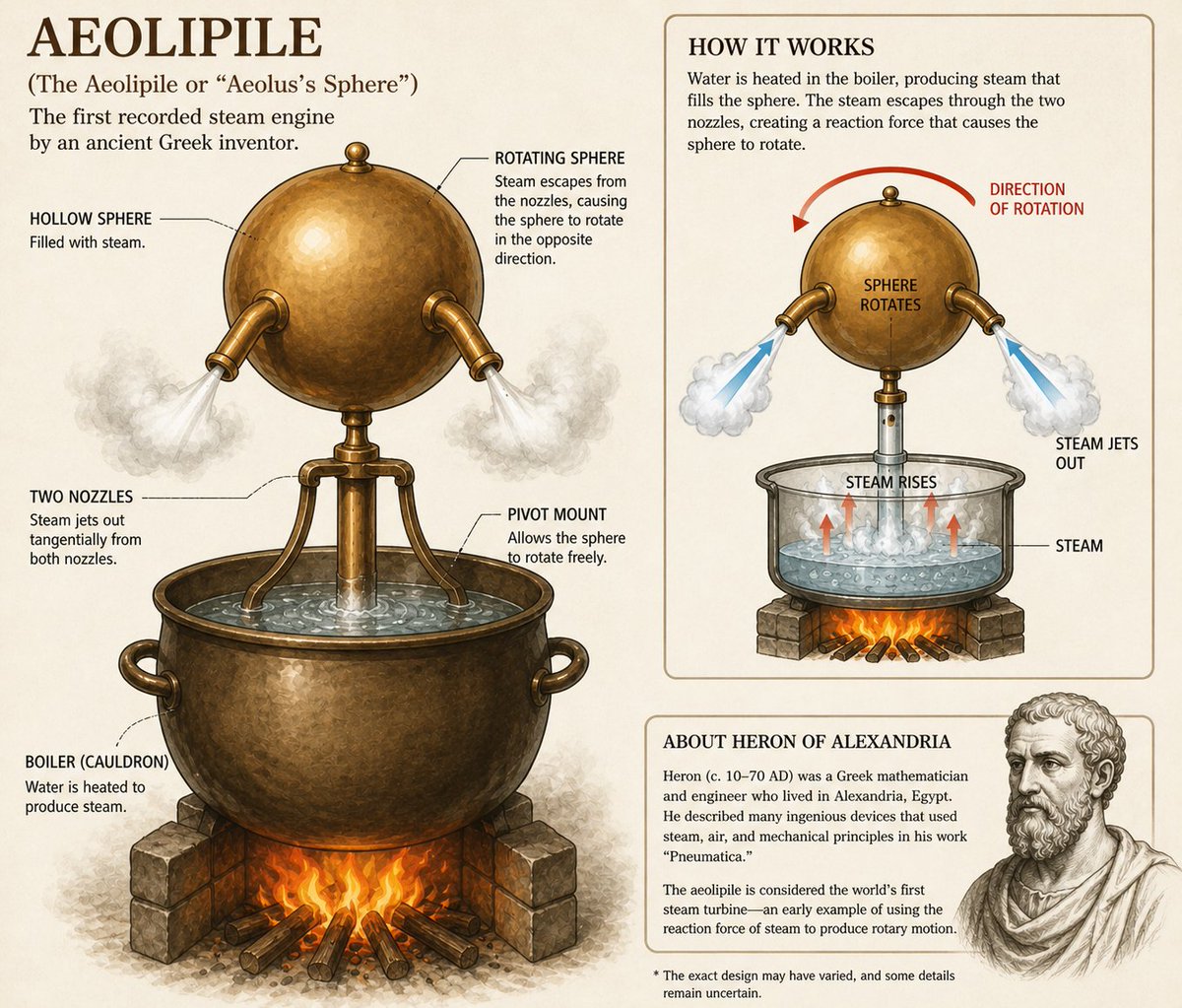
I myself am aware that Ancient Greece invented the steam engine more than 2,000 years before the British Empire, so I have the impression that its engineering and science were considerably more advanced than those of other ancient civilisations.
English
@SHIKIBU_Automat That is funny indeed! What makes the Three Kingdoms period so popular do you think? I take pride in my Greek heritage since it's the root of humanity in so many ways, it's the root of Rome too. It makes sense that the forming of the States would be an interesting time for others.
GIF
English
A ‘Vista Coach’ stopped at a bus stop in Nara Park, as drawn by AI.
Back in the 1960s, when the Vista Coach was still in service, this scene probably really did exist.
I reckon it would be a hit if they ran vintage double-decker buses like this for tourists visiting Nara Park—what do you all think?
#Japan #Nara #NaraPark #History #Deer #AI

English
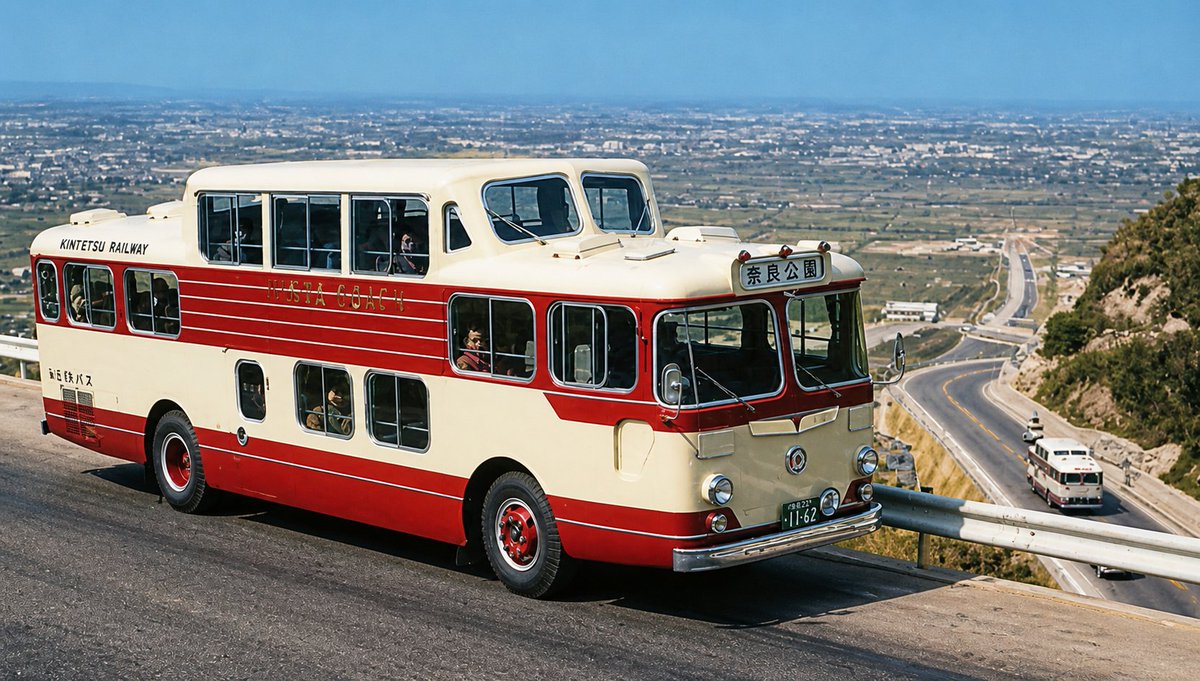
A photograph of the double-decker ‘Vista Coach’ bus, captured whilst en route from Kintetsu Uehonmachi Station in Osaka to Nara Park.
Nara Park is famous even outside Japan for the large population of wild deer that live there.
Although AI has been used to enhance the clarity and convert this original photograph to full colour, it is believed to have been taken between 1961 and 1969.
The photograph was taken on the mountain road leading up Mount Ikoma, situated on the border between Osaka and Nara Prefectures. This ‘Vista Coach’ operated a round-trip route covering over 30 kilometres (18.6 miles) each way.
In Japan, it is rare for a regular bus service—excluding express coaches—to operate on a route exceeding 30 kilometres (18.6 miles) one way; however, as this bus was double-decker and offered excellent views, it was likely operated on this route despite it not being particularly economical.
Even back then, taking the train from Kintetsu Kamihommachi Station to Nara Park was cheaper and more convenient.
#Japan #Osaka #History #Bus #Coach #AI
English
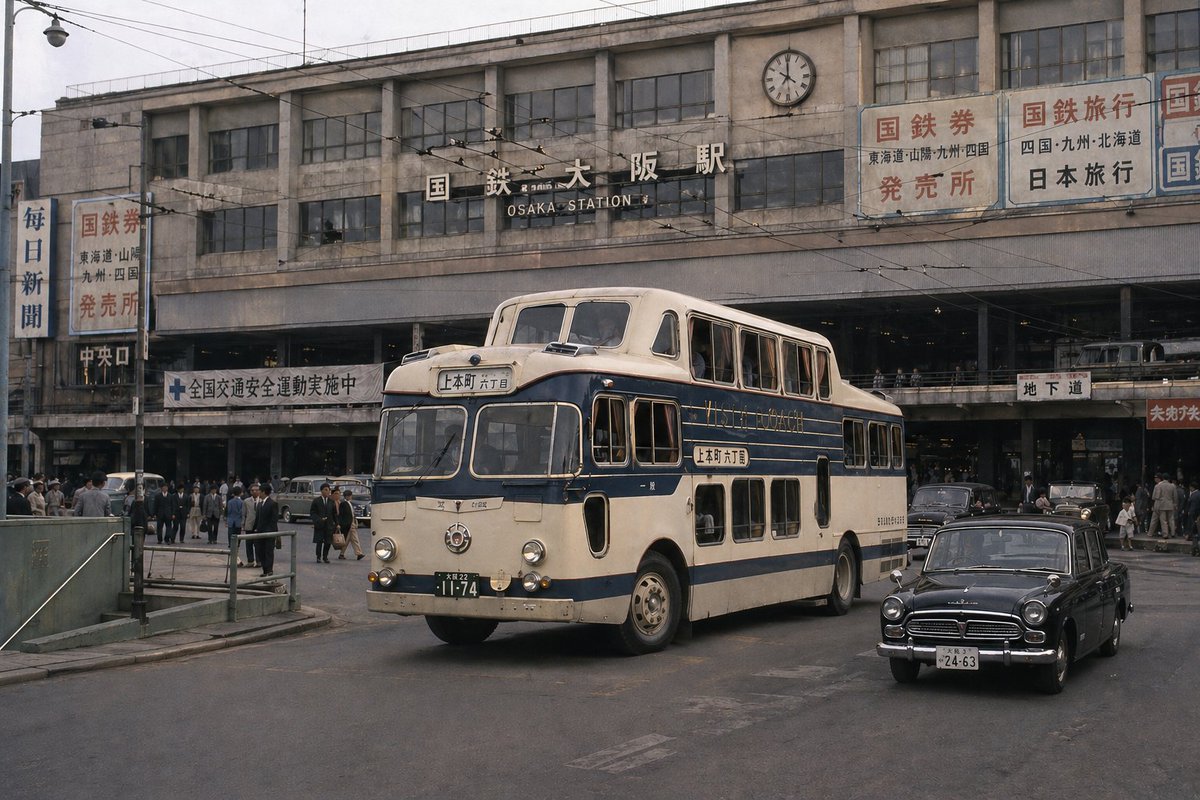
The ‘Vista Coach’, a very distinctive double-decker bus that used to run through my town in the 1960s.
As this image was created using AI, there are some slightly unnatural areas in the background; however, as there were no high-resolution photographs from that era available, I created it using AI.
This double-decker bus was manufactured in 1961 as Japan’s first double-decker bus; eight ‘Vista Coach’ buses were produced and used as regular service buses.
Japanese law requires that two crew members—a driver and a conductor—be on board public service buses; however, as an exception, if a machine can perform the conductor’s duties, it is permitted for a single driver to operate the bus.
However, due to its design, the ‘Vista Coach’ could not have its conductor’s duties performed by a machine, so a conductor was always required on board. By the late 1960s, as rationalisation progressed in the Japanese public transport sector and it became standard practice for machines to take over the conductor’s duties, allowing a single driver to operate the bus, the ‘Vista Coach’—which could not operate without both a driver and a conductor on board—was quietly retired.
Although the ‘Vista Coach’ was in service for less than ten years, its distinctive appearance and the rarity of being Japan’s first double-decker bus made it extremely popular at the time, leading to the production of numerous children’s picture books and toys.
English