Elaine

314 posts

Elaine banner
Elaine

Elaine

@SLTinIMH

Speech & Language Therapist, interested in Infant Mental Health, Early Development & Neurodiversity. Views my own or borrowed from someone clever. She/ her.

Glasgow, Scotland Katılım Haziran 2021
1.1K Takip Edilen283 Takipçiler
Elaine retweetledi
Dan Wuori
Dan Wuori@DanWuori·
Your baby thrives on predictability.  Specifically, yours.  This week I’ve been talking about attachment, which holds long lasting consequences for your child’s mental and physical health (not to mention their cognitive development).  Secure attachments in infancy occur when parents’ interactions with their babies are:  Warm.  Responsive.   Safe.  And consistently so.  I’ve shared lots of important tips in the past. Tips on reading to your child. Tips on play. Tips on language development.  But I want to be clear that attachment has nothing to do with the number of toys or books in your home. Or how well you interact most of the time.  Attachment is a product of your predictability. It’s how you interact EVERY time. It’s what you teach your child to expect from you as their caregiver. Inconsistency in the way adults interact with children - warm and responsive one day and potentially cold and distracted the next - is detrimental to secure attachment. When children don’t know what to expect from day to day, it creates anxiety.  And this activates the body’s stress response systems. Continually.  This is one reason that it’s so important for parents to thoughtfully manage their own stress, exhaustion, safety, and mental health needs.  When you aren’t at your best for yourself, you likely won’t be at your best for your baby.  As an aside, consistency is also why I’ve spoken out about viral social media trends that undermine trust and predictability by inserting chaotic behaviors into the parent-child relationship.  Several months ago - if you can believe it - it was unexpectedly cracking open an egg on your child’s forehead.  This week it seems to be throwing slices of American cheese at/onto your baby’s head/face. (I wish I was making this up.) While it’s easy for us as to dismiss such behaviors as jokes, to young children they are detrimental for precisely the reason some adults may find them funny: they’re unexpected.  But when your otherwise kind and attentive parent randomly acts with callousness - if even for a moment - it breaks a stable pattern.  It provides a new data point that suggests you may be warm and caring… but also may not be dependably. And this is precisely what undermines attachment. (The good news is that an otherwise stable attachment is unlikely to be permanently disrupted by one dumb mistake. We all make them. Still… don’t. Just don’t.)  Be kind, be responsive, and do it predictably.  I’ll never share the kind of videos I described above. In their place, enjoy this warm and secure interaction between storyoferica (IG) and her happy little one.
English
49
395
3.1K
169.5K
Elaine retweetledi
Dan Wuori
Dan Wuori@DanWuori·
Have a new baby - or love someone who does?  You’ll want to keep a special eye on this space, because this week I’m going to talk about infancy’s most critical outcome and how to achieve it.  That outcome: Secure attachment.  The earliest months of life are a busy time developmentally.  Over a period of just weeks, newborns establish important feeding habits, begin to smile and recognize faces, begin developing early forms of receptive and spoken language…the list goes on and on. Each of these developments is hugely consequential. But none holds a candle to attachment.  What is it - and why is it important? Attachment involves the establishment of deep relational trust between parent and child.  It’s more than just feeding.  Or talking. Or playing.  Securely attached babies develop a deep and abiding trust that you are (and will continue to be) available and responsive as a caregiver. That you can be relied on to meet their needs and ensure their safety.  And that trust makes a world of difference for children. Secure attachment is the bedrock of our long-term mental health… a gift you can give your baby with lifelong benefits. How is it formed?  Not surprisingly, through consistency.   Be warm. Be responsive. And be there.  Over.  And over.  And over.  It’s a big job. (But rest assured it doesn’t require perfection. Parenting is hard enough without that pressure.) This week I’ll unpack four different types of attachment, how you can improve the quality of your own attachment, and how the development of secure relationships with a small circle of key caregivers (parents, grandparents, teachers) can set your child on a path that will support them even as adults. This trusting little one was shared to IG by bebegimlemutluyum.
English
75
402
3.8K
256K
Elaine retweetledi
NHS Lanarkshire
NHS Lanarkshire@NHSLanarkshire·
Today NHS Lanarkshire is celebrating the #UNCRC becoming law in Scotland. This is a landmark day for babies, children, young people and all who advocate for them. Watch this short video to learn what it means: youtube.com/watch?v=vlakic…
YouTube video
YouTube
English
0
6
13
1.3K
Elaine retweetledi
Brazelton Centre UK
Brazelton Centre UK@BrazeltonUK·
There's still time to sign up for our free webinar for professionals tomorrow. Be energised and motivated by the amazing opportunity YOU have to make a positive and long-lasting difference to parent-infant relationships. Sign up here: tinyurl.com/3nb59ub5
Brazelton Centre UK tweet media
English
0
14
14
3K
Elaine retweetledi
Brazelton Centre UK
Brazelton Centre UK@BrazeltonUK·
Our third message for #BabyCommunicationWeek24 is one we hope will take away stress and anxiety for new parents. Wanting to do the best for your baby comes from a place of love and care but there's a thing far better (& more realistic) than perfection and that is connection...🩷
Brazelton Centre UK tweet media
English
0
25
38
2.4K
Elaine retweetledi
NES Psychology
NES Psychology@NES_Psychology·
It's infant mental health awareness week! The @SolihullAproach online course 'Understanding your baby' is a fantastic source of information to help get to know your baby, including understanding baby's brain development and baby's feelings. Visit inourplace.co.uk/scotland/ to access
NES Psychology tweet media
English
0
12
15
1.6K
Elaine retweetledi
Together 🧡
Together 🧡@together_sacr·
🎉Tomorrow is #InternationalDayOfPlay We would like to share our latest Membership Spotlight which is @PlayScotland The leading organisation in Scotland dedicated to the development & promotion of play for children & young people Click here: bit.ly/45g2BvP
Together 🧡 tweet media
English
0
7
21
2.6K
Elaine retweetledi
Brazelton Centre UK
Brazelton Centre UK@BrazeltonUK·
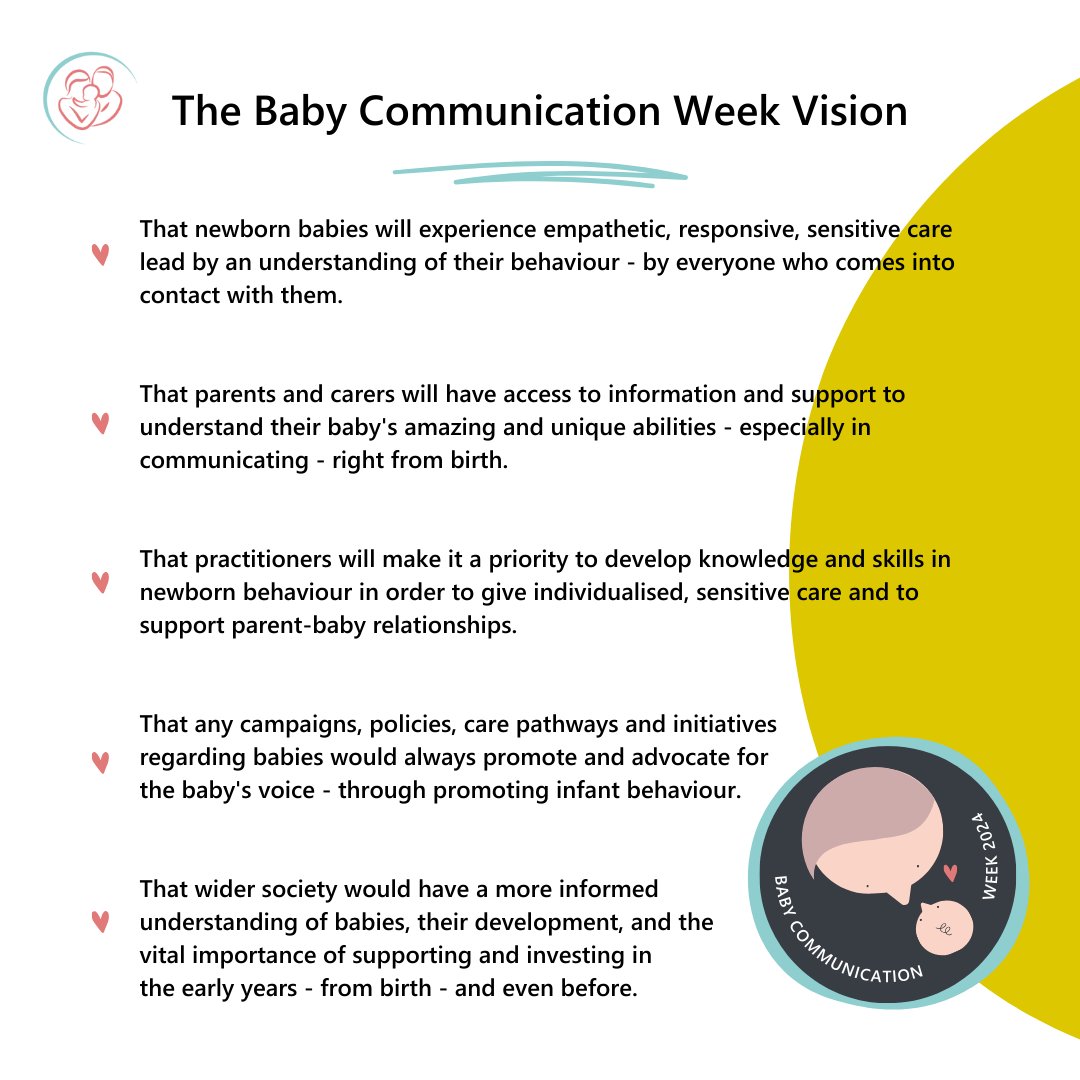
The exciting, ambitious, inspirational & multi-layered VISION of #BabyCommunicationWeek! @BrazeltonUK officially host BCW, setting the dates and theme, but we want this Week to be shared and owned by everyone who can get behind this vision.🤩 Tell us how you'll be celebrating!
Brazelton Centre UK tweet media
English
0
6
13
1.4K