Maria y retweetledi
Maria y
1.4K posts

Maria y retweetledi


中文
中文
@SpurdoKorea_Off @RealHunterMo 小崔我建议你:
1. 找人查查出货的钱包地址,当然你会查最好;
2.他和小浪的微博下面有很多之前河马建设者的留言,嘲讽他们的,你随便找几个问问怎么回事,心里就有数了。
我是核实过,确认过后才说话。
中文
@SpurdoKorea_Off @pingan43308 @RealHunterMo 一边喊社区的人建设,一边假扮v子,给社区人画大饼,让社区人接盘,然后自己反手在卖。
这不就是在骗,
CTO的筹码不全卖砸不到目前这个位置。起码能在一定位置横盘
中文

@pingan43308 @SpurdoKorea_Off @RealHunterMo 既得利益者,边喊单边出货(一边喊大家建设一边在sell)。
还搞个假v子来骗社区,好让更多人接,这就很恶心。
这圈子信人家的大饼就是亏钱的时候
中文



格林狼王从发推到现在 200k变1M,原因还是这个故事的IP实在实在太出圈了,经历更是让所有人感同身受,属实是BSC链屈指可数的真善美IP
0x89e0fd879645c39a3b7d46559d6129c897c44444
橙子🍊(链上判官)@Kris7146
时隔多年,重返狼群再次在抖音继续爆火,故事真的很感动,看完很难不哭,这也是异动的原因 0x89e0fd879645c39a3b7d46559d6129c897c44444
中文


Maria y retweetledi

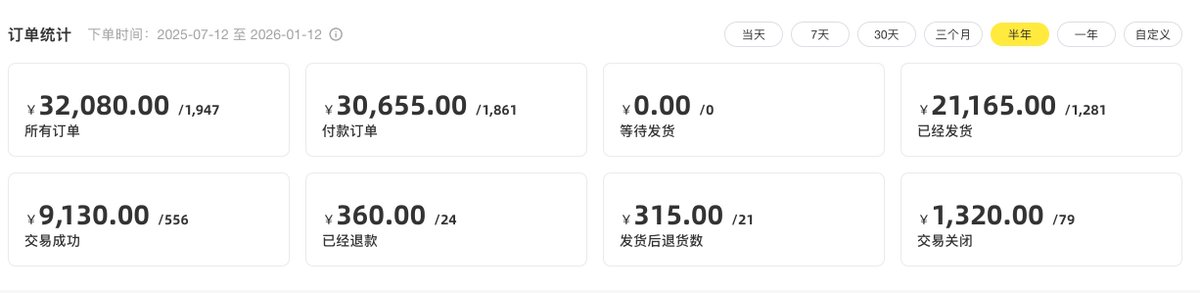
刚刚被开盒了,听到了很多难听的话,甚至收到了死亡威胁,我感觉非常委屈,我只是个穷大学生,做了一个产品,运气很好火了,也没赚到多少钱,看到之前的人生k线跑出来,肯定是很开心,但是币确实和产品没关系,这些币也不是我发的,我在闲鱼卖api key卖了3万人民币,甚至不够覆盖我们gemini 3pro的api的成本(调用了50万次)
人生k线这个产品这是我的第一个产品,就像是我的孩子,我也看到了很多人在炒相关的meme币,我自己之前也玩过meme币,很多涨起来之后我感觉非常自豪。
但是币涨了没我好事,跌了全骂我。
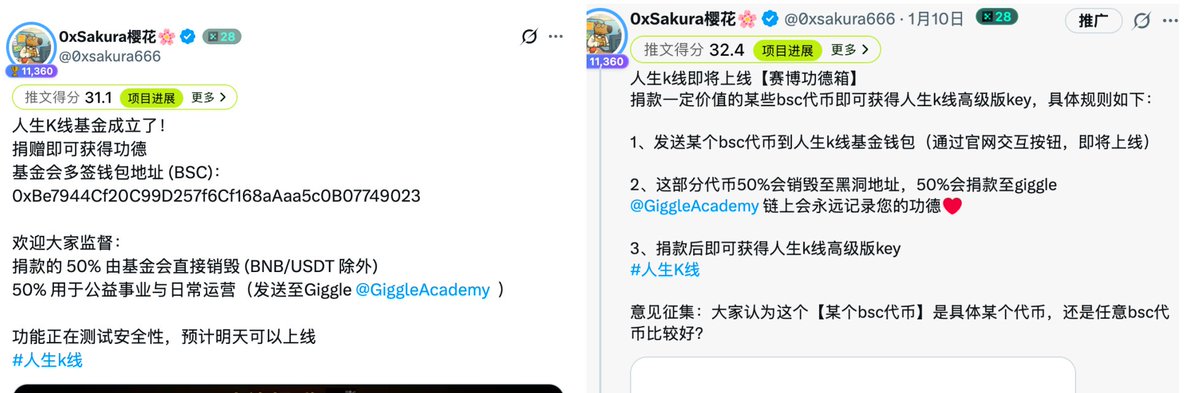
今晚刚发的这条推文我除了公布了官方多签钱包,展示了我已经做出来ui,其他内容和上条推文没有多少区别,我不理解大家讲我为什么分流。
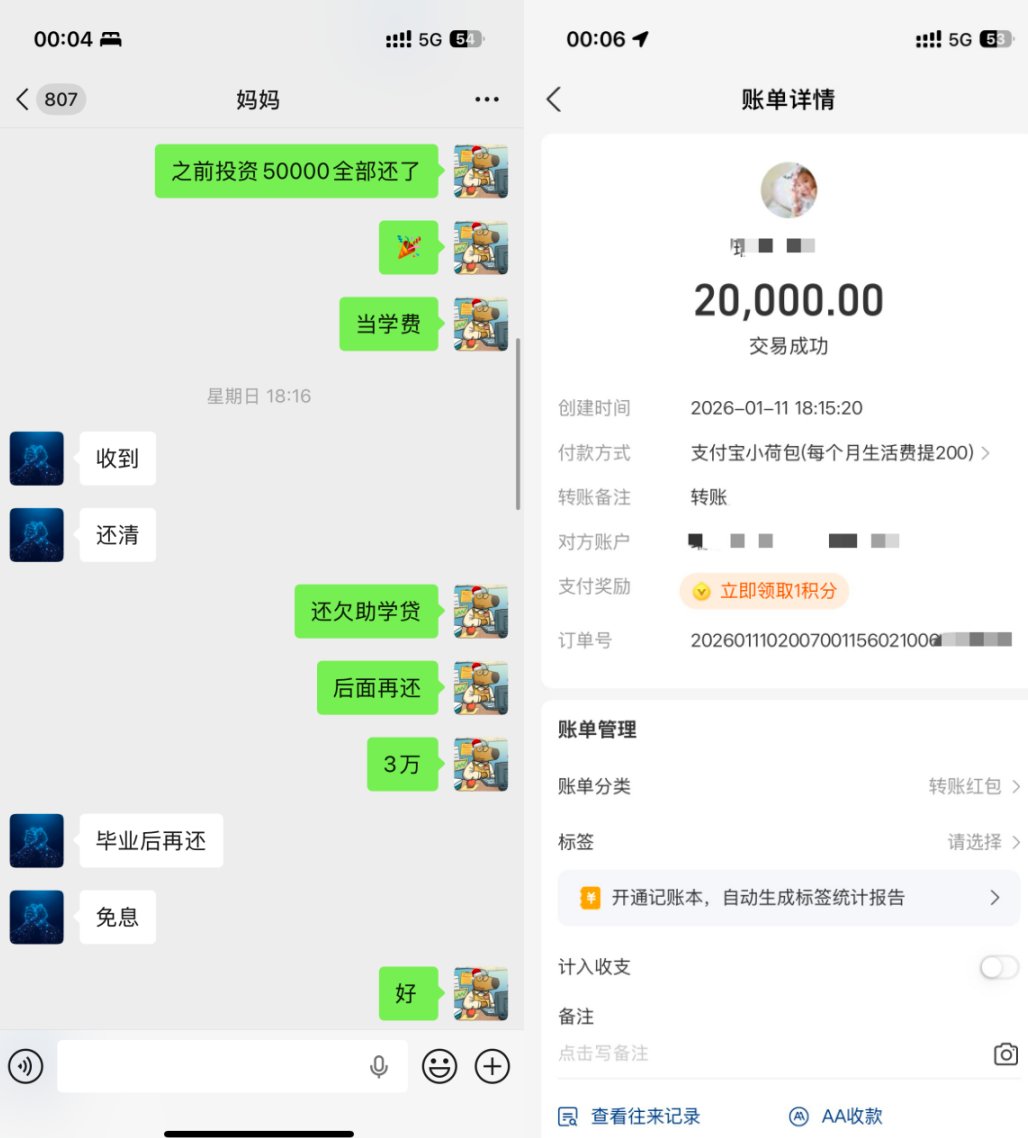
我确实很幸运在人生k线上赚了一些钱,这些都是来自各个meme币给我的捐赠,在此我非常感谢,我只是个穷大学生,我当然也想改善一下生活。我接收到大家的好意我也一定会更好的传递下去。收到的捐赠我都拿来付服务器、api、付运营团队的工资。我个人确实花了一些钱,给妈妈买了礼物,还了之前她给我的5万元天使投资(之前亏得就剩2万),准备还大学的助学贷款,给自己换了台macbook笔记本电脑更方便编程。其余的大部分我没怎么动,原本也是打算捐给新的多签地址。
我的推文都是因灵感自发,一有灵感我就发出来了,今天早上5点我就起来做产品了,一直做到了现在。我理解大家亏钱的心情,我也提醒过大家需要注意风险,我做这个事情只是为了热爱,现在被大家指着鼻子骂我非常委屈。
再回复一下大家关心的几个问题:
1、之前一些代币给我的私人钱包发交易税,想要道德绑架我,因为我没有公开过我的个人地址,当时也没有想要接受过捐助。
不接受捐助的时候大家都想给我捐钱获得回复
现在公开做了多签钱包接受捐助的时候大家都在骂我
多签的意义是因为我觉得很多人真的喜欢我的产品,我也想把这件事情捐赠下去,所以多签是个更负责任的方式。
我对官方的基金会的思考是,收到的捐款50%销毁,50%全部捐到giggle,关于之前那些代币给我的bnb交易税,我没有花多少,我可以全部捐赠到基金会,全部捐到giggle
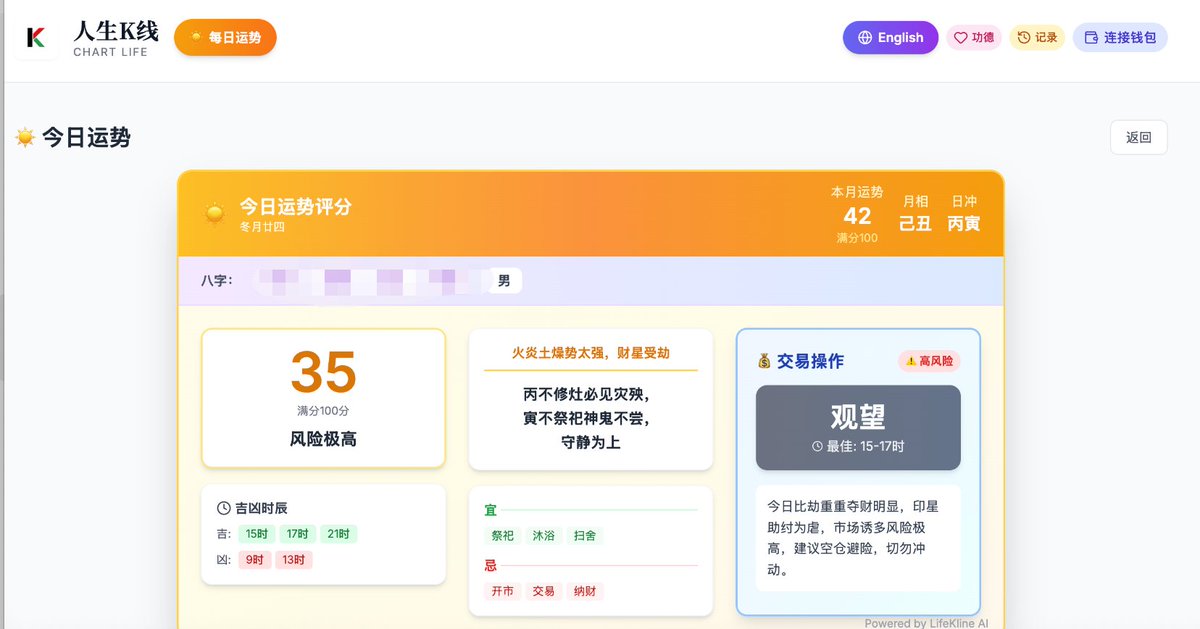
刚刚在做一个新功能(每日运势),我觉得大家可能会想玩,结果被人打电话死亡威胁,真的是心如刀绞。
2、关于捐款接受的代币,我其实是想产品上线再公布。其次还考虑到捐款某些代币到giggle(可能会有高控盘的空气币来不断的刷功德)可能也不妥,只有换成bnb才有实际效益,砸盘卖出对社区也是件坏事。所以我还在斟酌,要么只接受bnb,要么只接受上线alpha/aster的bsc代币,所以今晚并没有公布。
3、关于nft,这是一个好玩的东西,捐款后可以有机会获得,他是一个永久的使用人生k线所有高级版的访问权,象征着你捐款的善意,功德的见证,类似【捐款证书】,并不能转卖,希望大家可能10年后整理钱包的时候还能想起还有这样一个有趣的产品,还为慈善事业做出过一点贡献。
我真的还有很多灵感没有实现,还没有带妈妈出国看看,还想把中国的八字带到西方。虽然非常难过,但我会继续坚持我的想法好好做更好的产品。(至少给自己的朋友玩玩
0xSakura樱花🌸@0xsakura666
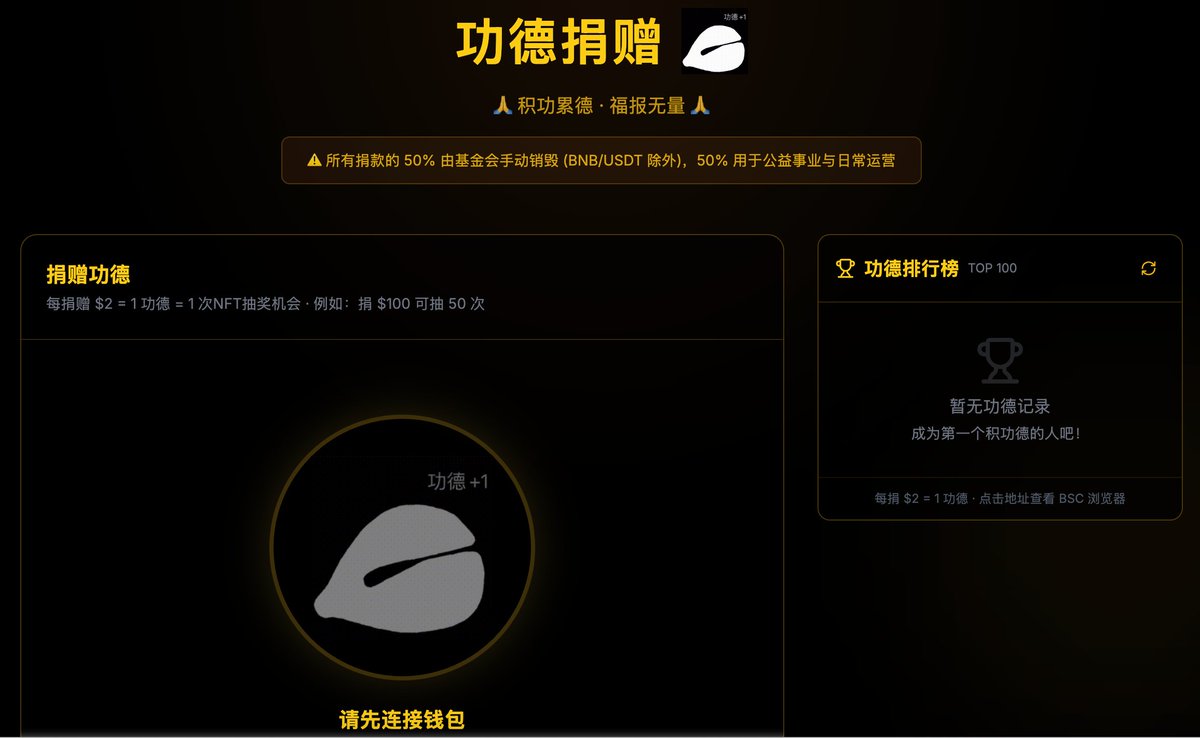
人生K线基金成立了! 捐赠即可获得功德 基金会多签钱包地址 (BSC): 0xBe7944Cf20C99D257f6Cf168aAaa5c0B07749023 欢迎大家监督: 捐款的 50% 由基金会直接销毁 (BNB/USDT 除外) 50% 用于公益事业与日常运营(发送至Giggle @GiggleAcademy ) 功能正在测试安全性,预计明天可以上线 #人生k线
中文
Maria y retweetledi
人生K线基金成立了!
捐赠即可获得功德
基金会多签钱包地址 (BSC):
0xBe7944Cf20C99D257f6Cf168aAaa5c0B07749023
欢迎大家监督:
捐款的 50% 由基金会直接销毁 (BNB/USDT 除外)
50% 用于公益事业与日常运营(发送至Giggle @GiggleAcademy )
功能正在测试安全性,预计明天可以上线
#人生k线
中文


Ethereum is the world heartbeat
return to mainnet
vitalik.eth@VitalikButerin
Increasing bandwidth is safer than reducing latency With PeerDAS and ZKPs, we know how to scale, and potentially we can scale thousands of times compared to the status quo. The numbers become far more favorable than before (eg. see analysis here, pre and post-sharding vitalik.eth.limo/general/2021/0… ). There is no law of physics that prevents combining extreme scale with decentralization. Reducing latency is not like this. We are fundamentally constrained by speed of light, and on top of that we are also constrained by: * Need to support nodes (especially attesters) in rural environments, worldwide, and in home or commercial environments outside of data centers. * Need to support censorship-resistance and anonymity for nodes (especially proposers and attesters). * The fact that running a node in a non-super-concentrated location must be not only possible, but also economically viable. If staking outside NYC drops your revenues by 10%, over time more and more people will stake in NYC. Ethereum itself must pass the walkaway test, and so we cannot build a blockchain that depends on constant social re-juggling to ensure decentralization. Economics cannot handle the entire load, but it must handle most. Now, we can decrease latency quite a bit from the present-day situation without making tradeoffs. In particular: * P2P improvements (esp erasure coding) can decrease message propagation times without requiring individual nodes to have lower bandwidth * An available chain with a smaller node count per slot (eg. 512 instead of 30,000) can remove the need for an aggregation step, allowing the entire hot path to happen in one subnet This plausibly buys us 3-6x. Hence, I think moderate latency decreases, to a 2-4s level, are very much in the realm of possibility. But Ethereum is NOT the world video game server, it is the world heartbeat. If you need to build applications that are faster than the heartbeat, they will need to have offchain components. This is a big part of why L2s will continue to have a role even in a greatly scaled Ethereum (there are other reasons too, around VM customization, and around applications that need _even more scale_). Ultimately, AI will necessitate applications that go faster than the heartbeat no matter what we do. If an AI can think 1000x faster than humans, then to the AI, the "subjective speed of light" is only 300 km/s. Hence, it can talk near-instantly within the scope of a city, but not further. As a result, there will inevitably be AI-focused applications that will need "city chains", potentially even chains localized to a single building. These will have to be L2s. And on the flipside, it would be too much of a cost to make it viable to run a staking node on Mars. Even Bitcoin does not strive for this. Ultimately, Ethereum belongs to Terra, and its L2s will serve both hyper-localized needs in its cities, and hyper-scaled needs planet-wide, and users on other worlds. Milady.
English


Maria y retweetledi

@shahh @Pumpfun 100% agree.
Good communities should win — especially the ones that kept building while everyone laughed.
That’s Spurdo.
Built in the bear, bonded by conviction, aligned with Do Only Good Everyday.
Bagholders didn’t leave.
Builders stayed.
Our time will come. @Spurdoethcto

English
Maria y retweetledi


Maria y retweetledi