上海独立-YinSun孙寅
26.8K posts

上海独立-YinSun孙寅
@SSSY2019
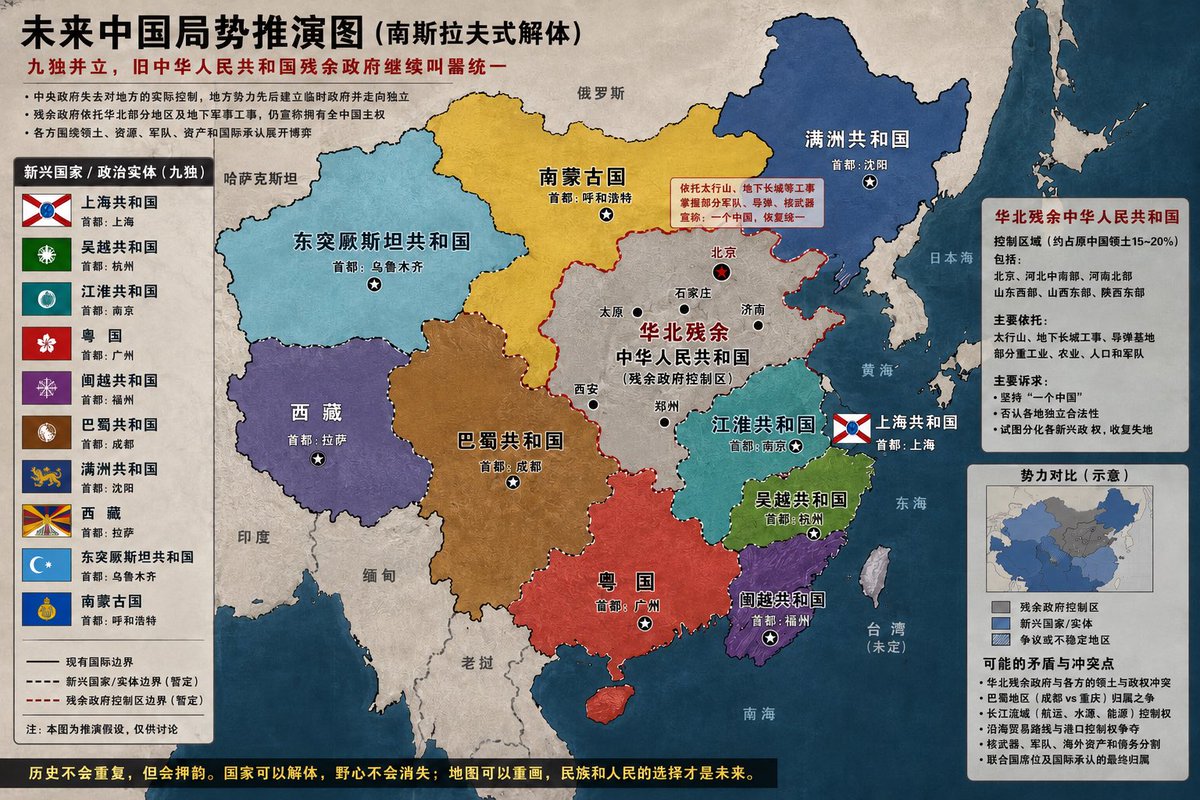
Shanghai Independenc/上海獨立/China Secession/中國分裂——香港警方通缉对象:「九獨」係香港警方喺港區國安法之後公告中嘅講法,指分裂中華人民共和國嘅九種地方獨立思潮,包括上海獨立、南蒙古獨立、西藏獨立、東突厥斯坦獨立、台灣獨立、巴蜀利亞獨立、閩越國獨立、大粵國獨立同埋滿洲國獨立!


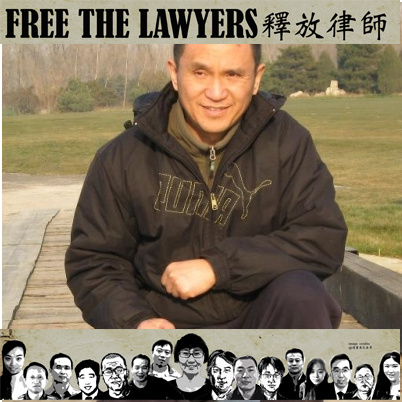
当你有一天认识到,在中国,真正反共的都被关押在监狱里,若不妥协永远出不来,直到最终被中共消失;那么你就应该清楚地知道,所有海外那些自称反共先锋、民主斗士、六四民运、人权律师、民主党派社团等等的所作所为,全是生意。


🚨 The CCP Targeted President Trump, But Its Real Target Was American Democracy The Chinese Communist Party did not merely target a presidential candidate. It allegedly built a coordinated campaign to exploit American voter data, pressure American industries, cultivate influential elites and manipulate the information environment surrounding a U.S. election. President Donald Trump has now dragged that operation into the light. In a nationally televised address, Trump revealed newly declassified intelligence concerning China’s acquisition of approximately 220 million American voter files. The records reportedly included names, addresses, telephone numbers, ages and political affiliations—information capable of mapping the electorate. This was strategic data collection. In the hands of an authoritarian intelligence apparatus, voter information can identify political loyalties, locate vulnerable communities, refine propaganda, facilitate cyberattacks and provide the raw material for influence operations. The most explosive evidence goes beyond the databases. A newly declassified CIA note summarizing sensitive intelligence from 2018 through 2020 reported that CCP policy was to mobilize domestic and foreign forces opposed to Trump, reduce his electoral support, force his resignation or prevent his re-election. The document described a comprehensive pressure campaign. Beijing allegedly studied states and economic sectors that supported Trump, then considered using tariffs to impose financial pain and push affected industries to lobby the White House. Chinese officials reportedly sought to pressure donors in political swing states and use contracts with American companies to turn business leaders against the president. The influence network reached deeper. According to the CIA note, Beijing cultivated think-tank officials, academics and former government employees with speaking engagements, first-class travel and accommodations. The objective was brutally simple: get influential Americans “hooked on China,” then use financial dependence to shape their behavior. Most disturbing was the media strategy. The intelligence reported that Chinese officials sought to identify American journalists who had written negatively about Trump and pay them to produce additional hostile coverage. If substantiated, this was not journalism. It was a foreign authoritarian regime attempting to purchase influence over what Americans read, believed and ultimately decided at the ballot box. Trump’s first administration ended decades of failed accommodation that allowed the CCP to expand its wealth, power and access to Western institutions. He confronted Beijing over trade, technology, espionage and strategic domination. The newly released intelligence offers a chilling explanation for why the Party wanted him politically weakened. The threat points directly to Xi Jinping’s party-state. Whether every operational detail carried Xi’s personal signature is not established publicly, but nothing of this scale exists outside the CCP’s centralized system of control. This is the significance of Trump’s disclosure: China’s campaign was not simply about defeating one man. It was about demonstrating that Beijing could collect American data, exploit American divisions and recruit American influence to advance Communist Party objectives. Congress must investigate every intermediary, financial channel, suspected media connection and compromised institution. Voter databases must be hardened, foreign funding exposed and covert influence networks dismantled. America’s message to Xi Jinping is unmistakable: the CCP will not be permitted to purchase America’s elites, weaponize its data or manipulate its democratic future from the shadows. ACI — Aric Chen | Insights