Jasmy Thailand

1.3K posts

Jasmy Thailand

Jasmy Thailand

@SSethawut

$JASMY Maximalist | 🇯🇵 Web3 Infrastructure Believer “Daily Jasmy / Adoption / Onchain Macro”

กรุงเทพมหานคร, ประเทศไทย Katılım Ocak 2018
417 Takip Edilen985 Takipçiler
Jasmy Thailand
Jasmy Thailand@SSethawut·
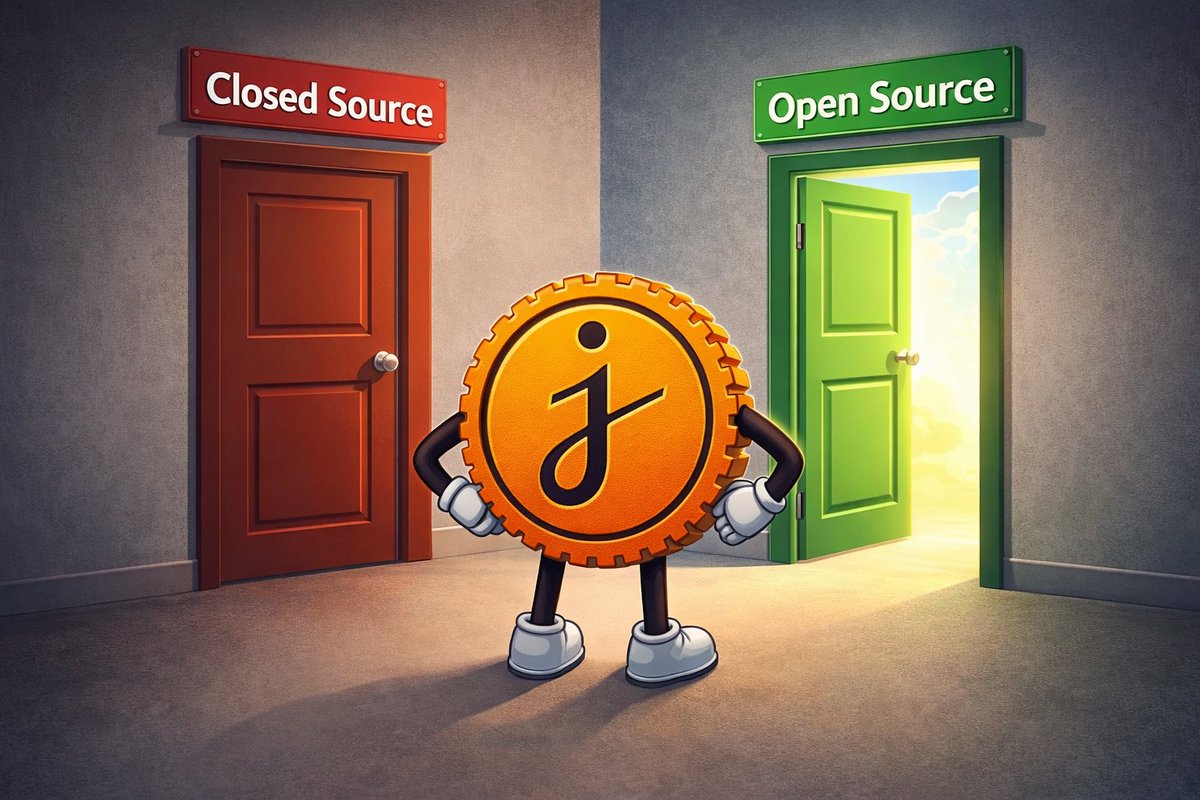
Your point makes sense 👍 But in Web3, closed systems don’t scale. 👉 No devs = no ecosystem 👉 No ecosystem = no usage Jasmy doesn’t need to be fully open — but it can’t stay fully closed either. 👉 Hybrid is the only way: Core tech protected + dev layer open I explained this more in my latest post — go check it out.
English
0
0
1
177
Jasmy
Jasmy@Johnbro34166372·
@SSethawut Jasmy needs to stay closed source, crypto project to protect from copyright. Its the only way to build a global brand. No open source shit!
English
1
0
2
135
Jasmy Thailand
Jasmy Thailand@SSethawut·
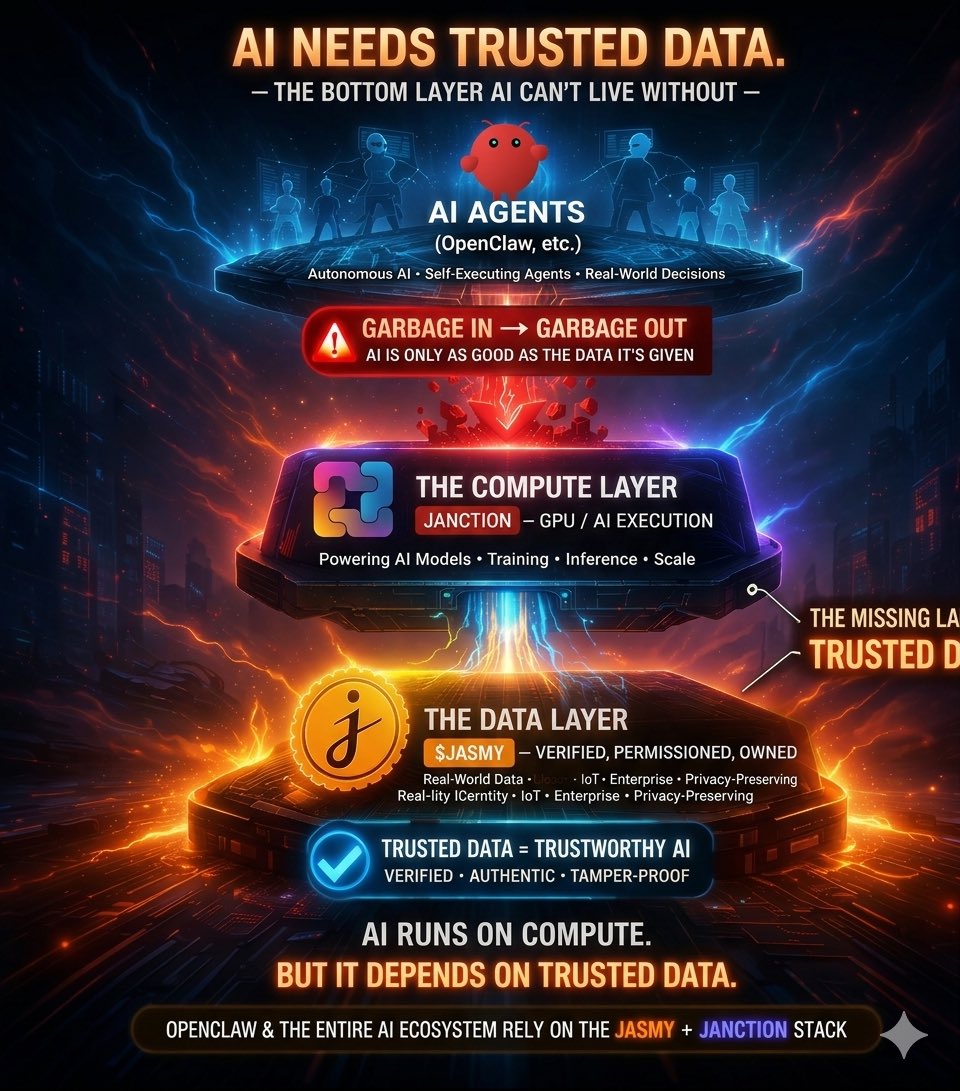
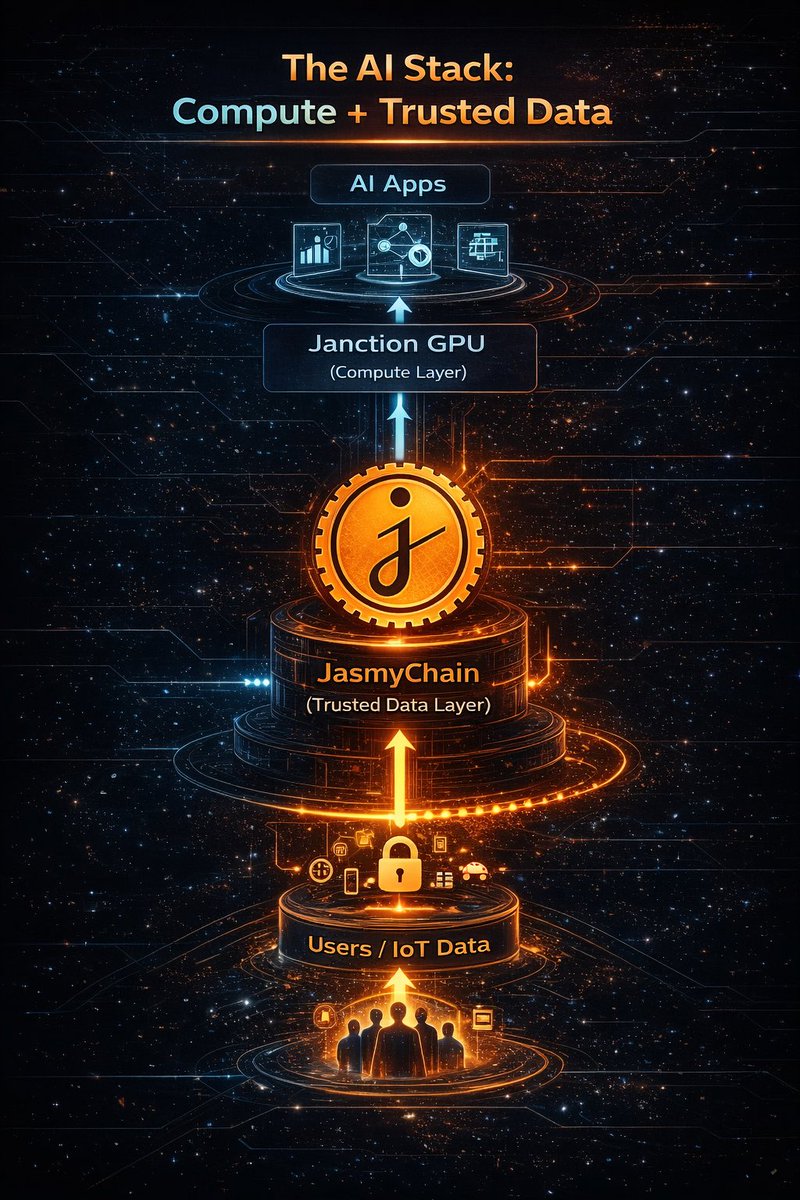
$JASMY is not an AI hype play. It’s the infrastructure AI actually depends on. While the market is focused on OpenClaw, AI agents, and autonomous systems… Jasmy is building the layer most AI projects ignore: trusted data. ⸻ 🧠 AI Agents Are Rising — But There’s a Problem OpenClaw is just one example of where AI is heading. Autonomous agents. Self-executing systems. Real-world decisions. But all of this breaks without one thing: reliable data. AI without trusted data = garbage. ⸻ Agents don’t fail because of compute. They fail because of: • fake data • manipulated inputs • unverifiable sources Garbage in → garbage out. ⸻ ⚙️ The Infrastructure Stack To work at scale, AI needs both layers: • JANCTION → compute layer (GPU / AI execution) • $JASMY → data layer (verified, permissioned, owned) This isn’t about one project using another. It’s about what the entire AI ecosystem requires. ⸻ If AI agents start handling: • payments • identity • contracts • real-world decisions Then data becomes the most critical layer in the stack. Not optional. Foundational. ⸻ 💥 The Real Take Most AI projects are chasing GPUs. OpenClaw shows the direction. $JASMY represents the missing layer: trusted data. ⸻ AI runs on compute. But it depends on data. ⸻ No hype. Just structure. @binance @_RichardTeng #BinanceMonitoring #BinanceTag #JASMY #JCT #JANCTION_Global #Jasmy_Global #Jasmychain #DigitalIdentity #Web3Infrastructure #Compliance #JapanTech @HARA_JasmyCFO
Jasmy Thailand tweet media
English
3
29
105
2K
Jasmy Thailand
Jasmy Thailand@SSethawut·
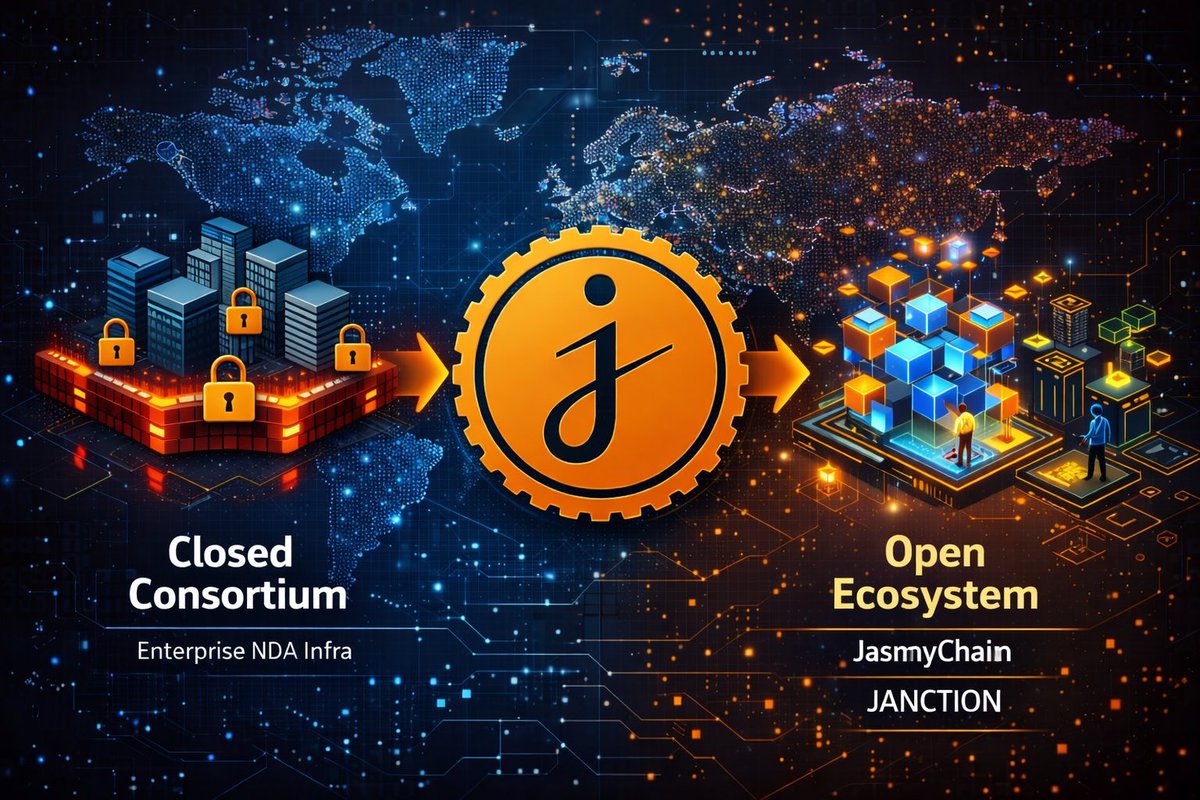
$JASMY — Open vs Closed: Let’s Address This Clearly Someone said: “Jasmy should stay closed source to protect IP and build a global brand.” Let’s break this down 👇 ⸻ 🧠 The Truth Closed systems work in Web2. But in Web3? 👉 No developers = no ecosystem 👉 No ecosystem = no usage 👉 No usage = no token demand Simple. ⸻ ⚠️ What went wrong before $Jasmy wasn’t “failing” It was: • built in a consortium model • limited by NDA • not accessible to developers 👉 Result: No composability. No network effect. ⸻ 🔥 What’s changing now $Jasmy is shifting: • SDK / API access for builders • JasmyChain (L2) for deployment • Janction → GPU / AI execution layer 👉 This is NOT hype This is a structural transition From: Closed enterprise system To: Semi-open infrastructure ⸻ ⚙️ The Only Model That Works Not fully open ❌ Not fully closed ❌ 👉 The answer is Hybrid • Core tech → controlled (enterprise-grade) • Dev layer → open (crypto-native) ⸻ 💣 Why this matters This is not about branding. It’s about: 👉 Developer activity 👉 Real usage 👉 Ecosystem growth Because in crypto: 👉 Exchanges don’t evaluate narratives 👉 They evaluate activity, accessibility, and usage ⸻ 📊 Market reality If $Jasmy stays closed: → It becomes just another IT company If $Jasmy opens correctly: → It becomes a data + AI infrastructure layer ⸻ 🧠 Final thought AI runs on compute. But it depends on trusted data. And trusted data only scales when developers can actually build on top of it. ⸻ No hype. Just structure. @binance @_RichardTeng #BinanceMonitoring #BinanceTag #JASMY #JCT #JANCTION_Global #Jasmy_Global #Jasmychain #DigitalIdentity #Web3Infrastructure #Compliance #JapanTech @HARA_JasmyCFO
Jasmy Thailand tweet media
English
0
19
102
1.9K
Jasmy Thailand
Jasmy Thailand@SSethawut·
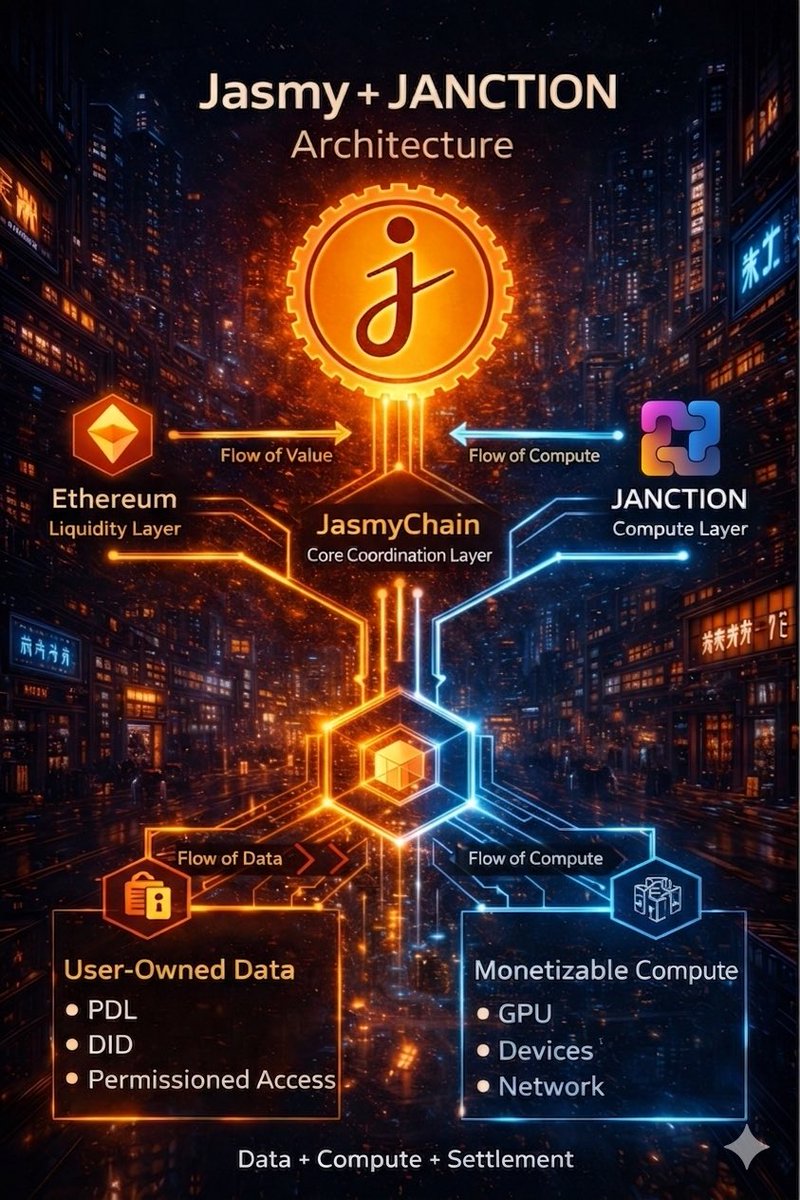
$JASMY × JANCTION — This Is Not Just a Token Anymore Most people still see crypto as apps. But what’s quietly being built here… is infrastructure. ⸻ 🧠 The Architecture (Simple but Powerful) • Ethereum → Liquidity Layer • JasmyChain → Application Layer • JANCTION → Compute Layer → Data + Compute + Blockchain ⸻ 💡 Why This Matters AI needs 2 things: 1.Trusted Data 2.Compute Power Most projects chase GPUs. But ignore data ownership. $JASMY is solving that: → Verified user data (PDL + DID) → Permissioned access → Real-world compliant infrastructure 🇯🇵 Then JANCTION adds: → GPU / compute marketplace → Monetizable device assets (KYM) ⸻ ⚙️ What This Becomes This is no longer: ❌ “just another altcoin” This is becoming: ✅ AI Infrastructure Stack Where: • Data = JASMY • Compute = JANCTION • Settlement / Liquidity = Ethereum ⸻ 📊 Big Picture If this works… JASMY ≠ app JASMY = foundation layer JANCTION ≠ side project JANCTION = execution layer Together = full-stack AI economy ⸻ ⚠️ And that’s the shift people are missing: From “token speculation” → to infrastructure positioning ⸻ Still early. Still misunderstood. Still DCAing. @binance @_RichardTeng #BinanceMonitoring #BinanceTag #JASMY #JCT #JANCTION_Global #Jasmy_Global #Jasmychain #DigitalIdentity #Web3Infrastructure #Compliance #JapanTech @HARA_JasmyCFO
Jasmy Thailand tweet media
English
1
33
108
1.9K
Jasmy Thailand
Jasmy Thailand@SSethawut·
I’ve been following enough to see Zebec is clearly trying to build beyond a simple PayFi narrative. The payroll angle is real through PayBridge, which Zebec says brought in more than $300M in annual payroll volume, and they’ve also expanded into education payments through the Science Card acquisition, which serves 50,000+ students across universities including Cambridge and Aston. On top of that, Zebec has been building a compliance layer through Gatenox for KYC/KYB/AML, and its own site now positions the stack around Payroll, DePIN, cards, and the SuperApp rather than just one product line. So yes, I agree it’s more than “just PayFi.” My only point is that the market still has to see sustained real-world usage and payment flow for the full thesis to be validated. Building the stack is one thing — proving adoption at scale is the next step. Yeah, still DCAing. Just haven’t had much time to reply lately.
English
1
0
1
43
Elmister
Elmister@UmbraAurora·
@SSethawut @CaptainZackZBCN @Zebec_HQ Finally Batman comes out from his batcave! idk how much you been following #Zbcn but their latest announcement has been delivered real business like Lattice partnership & much more. Lastly but not least don't forget about Zbcn is not only PayFi also is a DePin project
English
1
0
1
73
CaptainZackZBCN
CaptainZackZBCN@CaptainZackZBCN·
🏴‍☠️🇺🇸🇯🇵 #ZBCN PIRATES THIS IS MASSIVE FOR $ZBCN @Zebec_HQ is officially tapping into JAPAN. Not just any market… 👉 A $170B+ crypto trading economy (¥25 TRILLION) Introducing Zebekku ゼベック Instant bringing the Japanese Yen on-chain and into real-time payment rails. This isn’t expansion… this is GLOBAL DOMINANCE forming. 💥 Why this is huge: • Japan = 3rd largest economy in the world • One of the most regulated & mature crypto markets • Massive liquidity + adoption ready to plug into PayFi rails ⚡ What Zebec is doing: → Turning Yen into real-time, programmable money → Streaming payments in one of the most powerful economies on Earth → Bridging traditional finance ↔ on-chain infrastructure 🧠 Let that sink in… While others are chasing narratives, Zebec is integrating NATIONAL CURRENCIES into real-time rails. 🌊 From USD… to Yen… to GLOBAL FLOW. ZBCN isn’t just a token. It’s the financial rail layer for the world. 🏴‍☠️⚡
CaptainZackZBCN tweet media
日本語
4
52
178
3.9K
Jasmy Thailand
Jasmy Thailand@SSethawut·
Japan is definitely one of the most important crypto markets globally. The regulatory clarity from the Financial Services Agency (FSA) has made Japan one of the most mature and compliant environments for crypto adoption. So if Zebec is truly building payment infrastructure that connects the Japanese yen with real-time on-chain payment rails, that’s an interesting direction. But the real question will be execution. Announcements and integrations are one thing, but what ultimately matters is whether this leads to real transaction flow — things like merchant adoption, payroll integrations, and actual payment volume using the system. If Zebec can turn Japan into a real PayFi use case rather than just another market entry announcement, then this could become much more meaningful. For now it’s a positive signal, but the real validation will come from real usage. Also, sorry if I haven’t been replying much lately — work has been pretty busy these days.
English
1
1
1
108
Jasmy Thailand
Jasmy Thailand@SSethawut·
🇺🇸 SEC Crypto Taxonomy — Where Does $JASMY Fit? The recent interpretation from the U.S. Securities and Exchange Commission introduced a clearer taxonomy for crypto assets. The framework broadly separates crypto into: • Digital commodities • Digital collectibles • Digital tools • Stablecoins • Digital securities And most importantly: Most crypto assets are not themselves securities. This shifts the conversation from “Is the token a security?” to “What role does the token play in the system?” ⸻ 🧠 The Key Question To classify a token properly, regulators now focus on function. Does the token represent: • ownership in a company? • a financial claim? • or access to a network / infrastructure? This distinction matters. ⸻ ⚙️ Where $JASMY Likely Fits From a structural perspective, $JASMY aligns most closely with the “Digital Tool” category. Why? Because the token functions primarily as network utility rather than financial ownership. In the Jasmy ecosystem, the token enables: • data access permissions • data marketplace activity • ecosystem services • network-level interactions The token acts as a tool inside the infrastructure, not a claim on company equity. ⸻ 🧩 The Infrastructure Angle JASMY’s architecture focuses on something many crypto projects overlook: trusted data infrastructure. Through mechanisms such as: • Personal Data Locker (PDL) • permissioned data sharing • trusted data environments the ecosystem aims to build a secure data layer for digital services and AI systems. In that context, the token behaves similarly to: • a network usage token • an access mechanism for data services • a coordination tool within the ecosystem This is consistent with the digital tool / utility token concept described in the SEC taxonomy. ⸻ 📊 Why This Matters The new regulatory interpretation helps separate: assets used inside networks from assets that represent securities. If markets increasingly evaluate tokens based on real infrastructure utility, projects with functional roles inside ecosystems may benefit from clearer regulatory positioning. For tokens designed as network tools rather than financial contracts, this distinction is significant. ⸻ 🧭 The Bigger Shift Crypto regulation is gradually moving toward a function-based framework. Instead of labeling the entire asset class as securities, regulators are beginning to ask: What does the token actually do? Infrastructure tokens, data-layer tokens, and network utility assets are now being viewed through a different lens than traditional securities. If this shift continues, tokens that operate as infrastructure tools may be evaluated very differently from purely speculative assets. @binance @_RichardTeng #BinanceMonitoring #BinanceTag #JASMY #JCT #JANCTION_Global #Jasmy_Global #Jasmychain #DigitalIdentity #SEC #Web3Infrastructure #Compliance #JapanTech @HARA_JasmyCFO
Jasmy Thailand tweet media
English
0
19
90
2.1K
Jasmy Thailand
Jasmy Thailand@SSethawut·
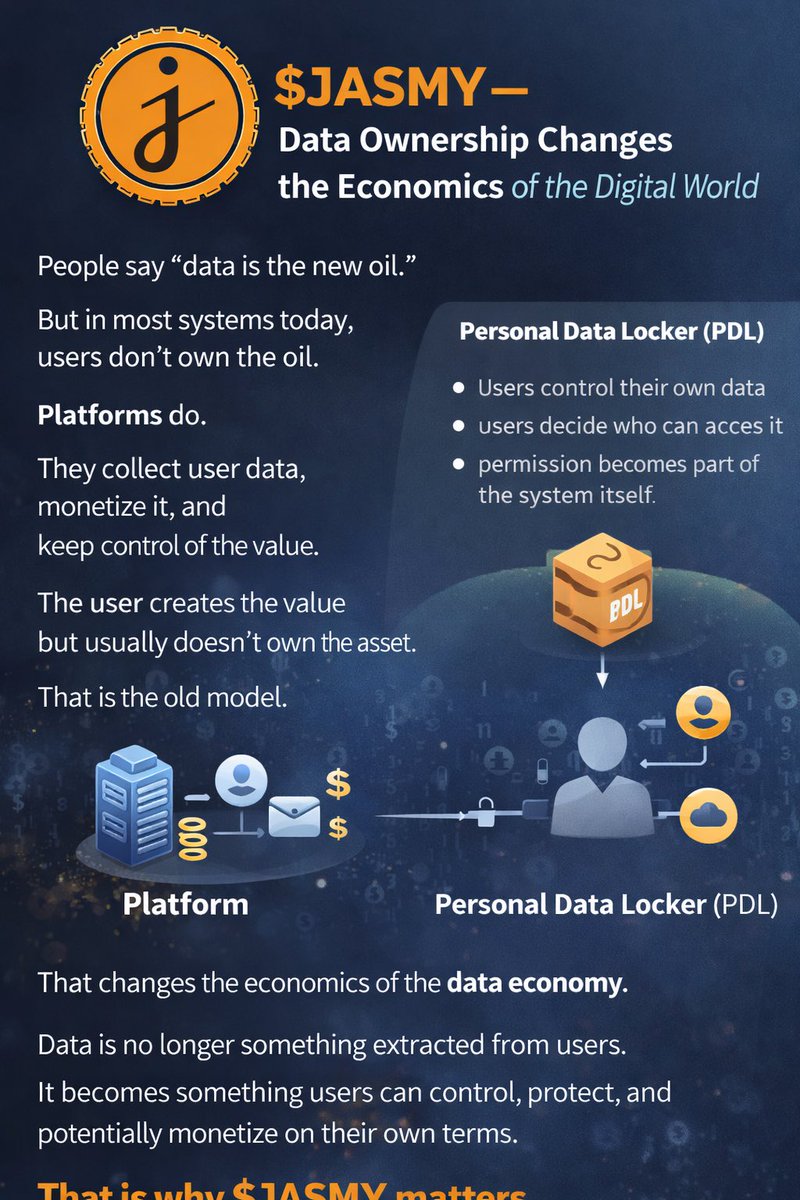
$JASMY — Data Ownership Changes the Economics of the Digital World People say “data is the new oil.” But in most systems today, users don’t own the oil. Platforms do. They collect user data, monetize it, and keep control of the value. The user creates the value but usually doesn’t own the asset. That is the old model. Personal Data Locker (PDL) changes that. Instead of platforms owning the data: • users control their own data • users decide who can access it • permission becomes part of the system itself That changes the economics of the data economy. Data is no longer something extracted from users. It becomes something users can control, protect, and potentially monetize on their own terms. That is why $JASMY matters. It is not just about storing data. It is about building infrastructure for a future where data ownership returns to the user. In the AI era, this matters even more. Because the most valuable data will not just be big data. It will be trusted, permissioned, user-controlled data. @binance @_RichardTeng #BinanceMonitoring #BinanceTag #JASMY #JCT #JANCTION_Global #Jasmy_Global #Jasmychain #DigitalIdentity #Web3Infrastructure #Compliance #JapanTech @HARA_JasmyCFO
Jasmy Thailand tweet media
English
1
18
100
1.6K
Jasmy Thailand
Jasmy Thailand@SSethawut·
@HARA_JasmyCFO @RicardoCortin20 Games create users. Users generate data. Data trains AI. The real issue isn’t collection. It’s ownership. Who controls the data generated by billions of users? That’s where $JASMY becomes interesting.
English
0
0
2
96
Jasmy Thailand
Jasmy Thailand@SSethawut·
$JASMY — AI Needs More Than Just GPUs Everyone talks about AI compute ⚡ GPUs, clusters, massive training power. But almost nobody talks about the other half of AI. Data. AI models are only as good as the data they learn from. If the data is unreliable, stolen, or unverifiable, the AI becomes unreliable too. This is the missing layer many AI projects ignore. Trusted data infrastructure. This is where $JASMY’s Personal Data Locker (PDL) becomes interesting 🔐 It introduces a different model for the data economy: • 👤 users control their own data • 🔑 access is permissioned • ✅ datasets can be verified Instead of scraping anonymous internet data, AI systems could train on trusted, consent-based data sources. And this is where the $JASMY ecosystem comes in. When applications, AI services, and data usage run through this infrastructure: • 📊 data access • 🌐 ecosystem activity • ⚙️ network usage all increase demand for the underlying network and token economy. In simple terms: ⚡ Janction → AI compute layer 🔐 Jasmy → trusted data infrastructure Compute powers the AI. But trusted data powers the intelligence. If AI continues evolving toward trusted data systems, the data layer may become one of the most valuable parts of the AI stack. And that’s the layer $JASMY is building. @binance @_RichardTeng #BinanceMonitoring #BinanceTag #JASMY #JCT #JANCTION_Global #Jasmy_Global #Jasmychain #DigitalIdentity #AI #Web3Infrastructure #Compliance #JapanTech @HARA_JasmyCFO
Jasmy Thailand tweet media
English
1
29
125
2K
Jasmy Thailand
Jasmy Thailand@SSethawut·
🔥 $JASMY — Survivor Thesis Maybe the next cycle won’t be a real bull run. Maybe it’ll be a purge. Not a market where everything pumps. A market where most alts get filtered out. Because the next phase may not reward noise. It may reward survival. So the real question is not: “Which coin can pump the hardest?” The real question is: If 80% of alts disappear, which 20% remain? That is the filter. And when you look through that lens, the story changes. Suddenly, the flashy narratives matter less. The loud communities matter less. The temporary hype matters less. What starts to matter is: •Does it have a real reason to exist? •Does it have infrastructure value? •Can it survive long enough to become useful? •Will it still be here after the purge? That’s why $JASMY is interesting. Not because it is the loudest. Not because it moves the fastest. Not because retail can easily understand it overnight. But because it looks like one of those projects that is: boring… but alive. And in a market built on survival, “boring but alive” can outperform “exciting but temporary.” $JASMY sits in areas that may still matter after the hype dies: •identity •data infrastructure •compliant digital architecture •AI + compute coordination •Japan-linked real infrastructure direction It doesn’t need to be the noisiest asset in the room. It just needs to still be standing when the room is empty. That’s the thesis. The next cycle may not reward everything. It may reward the survivors. And survivors are usually underestimated before they are repriced. #JASMY #JCT #JANCTION_Global #Jasmy_Global #Jasmychain #DigitalIdentity #Web3Infrastructure #Compliance #JapanTech @HARA_JasmyCFO
Jasmy Thailand tweet media
English
1
18
104
1.9K
Jasmy Thailand
Jasmy Thailand@SSethawut·
🇯🇵 Japan Tech Sovereignty — Why This Matters for $JASMY Japan is not a hype-driven country. Japan builds infrastructure slowly… but when it does, it builds it for decades. Right now, Japan is quietly constructing something much bigger than a crypto narrative. A national digital stack 🏗️ ⸻ 1️⃣ Digital Identity Is Becoming National Infrastructure 🪪 Japan is expanding the MyNumber system into a full digital identity platform. This identity layer is expected to connect: • public services 🏛️ • financial services 💳 • healthcare 🏥 • regional economies 🏙️ • digital payments 💴 Identity + authentication will become the foundation of digital society. ⸻ 2️⃣ Data Control Is Now a Strategic Priority 🔐 Japan’s digital policy is increasingly focused on: • data ownership 📊 • secure data sharing 🔒 • trusted digital services 🌐 The government’s Data Collaboration Infrastructure initiative is designed to allow data to move between sectors while remaining secure and permissioned. This is not just tech policy. It’s digital sovereignty 🇯🇵 ⸻ 3️⃣ Infrastructure Requires Trusted Data Layers 🧩 For systems like this to function, you need: • verified identity • permissioned data access • secure data storage • compliant infrastructure This is exactly where Personal Data Locker (PDL) architecture becomes relevant. User-controlled data is not just a Web3 concept. It is becoming part of national digital architecture. ⸻ 4️⃣ Where $JASMY Fits ⚙️ $JASMY has been building around this concept for years: • Personal Data Locker (PDL) • decentralized identity frameworks • secure data exchange infrastructure In other words: Not a meme token. A data infrastructure layer. ⸻ 5️⃣ Japan’s Digital Future Is Infrastructure-Driven 🏗️ Japan rarely moves first. But when it commits to a technological direction, it tends to build: • deeply regulated systems • long-term infrastructure • industrial-grade platforms The convergence of: • digital identity 🪪 • data governance 📊 • AI infrastructure 🤖 • secure data markets 🔐 could become one of the most important technological shifts in the country. And this is the environment where projects like $JASMY are positioning themselves. ⸻ Japan is not chasing hype. Japan is building sovereign digital infrastructure 🇯🇵 And the world is only starting to notice. @binance @_RichardTeng #BinanceMonitoring #BinanceTag #JASMY #JCT #JANCTION_Global #Jasmy_Global #Jasmychain #DigitalIdentity #Web3Infrastructure #Compliance #JapanTech @HARA_JasmyCFO
Jasmy Thailand tweet media
English
1
23
86
2.7K
Jasmy Thailand
Jasmy Thailand@SSethawut·
Exactly. AI needs both sides of the equation. Compute without reliable data doesn’t get you very far. What Jasmy is trying to build with PDL is a trusted data layer where users actually control and verify their data. If that works at scale, it could become a very important foundation for future AI systems.
English
0
0
0
39
winx
winx@winxYGG·
@SSethawut @HARA_JasmyCFO Interesting idea. AI really needs both data and compute to work well. A focus on trusted and user-controlled data could be important for future AI systems. Data quality and governance, like the work done at Lifewood, will remain key for reliable AI.
English
1
0
1
30
Jasmy Thailand
Jasmy Thailand@SSethawut·
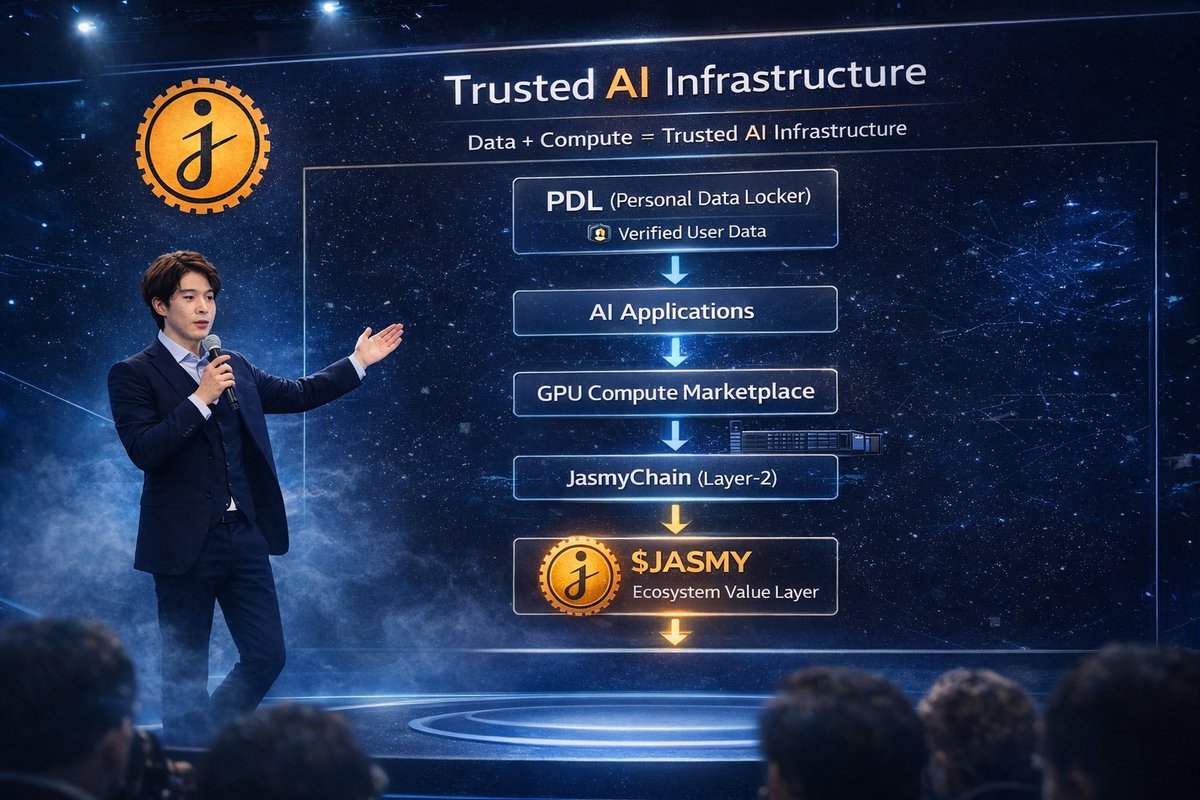
$JASMY — Data + Compute = Trusted AI Infrastructure 🇯🇵 During the recent AMA, @HARA_JasmyCFO explained a very important architectural idea behind the Jasmy ecosystem. Most people still see $Jasmy only as a token. But the vision is actually AI infrastructure. Let’s break it down. ⸻ 🧠 AI Needs Two Things Artificial Intelligence requires two fundamental resources: • Data • Compute Most projects only focus on compute. But $Jasmy is approaching the problem differently. $Jasmy focuses on the data layer. Secure, user-controlled, valuable data. This is where Personal Data Locker (PDL) comes in. Users control their data. AI systems can access verified data with permission. This creates a trusted data foundation. ⸻ ⚡ Compute Layer: GPU Marketplace Now combine that data layer with compute. This is where the GPU marketplace concept comes in. AI builders need GPU power to train and run models. By connecting: • Verified user data • Decentralized compute resources Jasmy aims to build a trusted and affordable AI infrastructure stack. Not just AI hype. Real infrastructure. ⸻ 🪙 The Role of $JASMY Coin @HARA_JasmyCFO also clarified something important about tokenomics. The idea is not to make Jasmy a speculative token. Instead: $JASMY is designed to function more like a currency layer within the ecosystem. Two key points he mentioned: • ~99% of supply already distributed • Most tokens are already circulating on exchanges This is unusual compared to many projects that still hold large locked allocations. Because of this structure, #Jasmy is sometimes referred to as a “Japanese Bitcoin-style distribution.” Meaning: Wide distribution Market-driven liquidity ⸻ 🧱 Stage 2 — The 2026 Builder Phase According to Hara, $Jasmy is entering its second stage in 2026. This stage focuses on opening the ecosystem to builders. Key components include: • Layer-2 blockchain architecture • EVM compatibility • Custom gas tokens • Account abstraction • Gas station / gas sponsorship systems Why does this matter? Because builders will not need to worry about gas fees. The ecosystem can sponsor or abstract the gas layer, making it easier for developers and creators. ⸻ 🧩 Opening the Ecosystem Another major step mentioned in the AMA: SDKs and APIs will be opened. This allows developers to build: • Data utility applications • AI services • Creator platforms • Monetization systems based on user data In simple terms: Developers will be able to build products directly on top of Jasmy’s data infrastructure. ⸻ 🌐 The Bigger Picture Put all of this together: Data ownership AI compute Blockchain infrastructure Developer tooling And the goal becomes clear. $Jasmy is attempting to build a trusted AI data economy. Where: • Users control their data • Builders create AI products • Compute resources are decentralized • Value flows through the ecosystem That’s the architecture being described. Not just a token. An AI infrastructure stack. @binance @_RichardTeng #BinanceMonitoring #BinanceTag #JASMY #JCT #JANCTION_Global #Jasmy_Global #Jasmychain #DigitalIdentity #AI #Web3Infrastructure #Compliance #JapanTech @HARA_JasmyCFO
Jasmy Thailand tweet media
English
3
24
133
2.3K
Jasmy Thailand
Jasmy Thailand@SSethawut·
Great breakdown 👍 What’s interesting about Japan’s approach is that the challenge isn’t only building data platforms, but also establishing trusted data governance. As cities begin connecting health, transport, tourism, and administrative services through shared data infrastructures, questions around data ownership, consent, and interoperability become increasingly important. This is where architectures built around user-controlled data and verifiable identity frameworks could potentially play a role within the broader ecosystem. Japan’s vision of a data-driven society seems to be moving toward not just centralized data platforms, but trusted data collaboration frameworks across both public and private sectors.
English
0
1
5
150
NeoXtrix
NeoXtrix@BainaA17·
Data platforms such as #JASMY must connect public and private services in order to create optimized services for each citizen. In its national plan, the Digital Garden City Nation, Japan is also creating an architecture based on data and regional digital platforms, whose three central elements are the creation of Data Platforms, Digital Services, and Regional Economies. The Japanese government calls this Data Collaboration Infrastructure. Cities must therefore create or use data platforms, local currencies, point systems, digital identity, and digital services (seen in the previous post), which must be connected to the MyNumber Card and to mobile applications. The program aims to revitalize regions through the use of data, the creation of local economies, and the connection of IoT and AI. This is not all, because the government platform 'Area Data Coordination Platforms' connects health, transport, tourism, administration, and urban services data. These data are centralized in a regional data exchange platform in order to enable the creation of new digital services in cities. In urban transformation projects, the objective is to create environments where data and AI are used to build 'data-driven urban management systems.' The infrastructure also includes cloud computing, AI, telecommunications networks, and IoT sensors. #Japan is also developing the 'Ouranos Ecosystem,' a national interoperable architecture designed to share data between companies and industries in order, once again, to create new economic services. This global strategy aims to create value through connected data. Thus, the data-driven society envisioned by Japan will emerge.
NeoXtrix@BainaA17

#JASMY/#JANCTION 🛣️ The Japanese government is promoting the concept of the 'Digital Garden City Nation' 🌸, based on local digital technologies. In this context, local governments and member organizations will use iTrust identity verification and the #Jasmy Personal Data Locker 🔐 for account creation related to local currencies 💴, points 🎯, and public services via apps 📱, with the MyNumber card as a key enabler.

English
2
10
86
2.6K
BigWils 👑
BigWils 👑@Big_Wils1·
@SSethawut @HARA_JasmyCFO Great context on how Jasmy’s evolving toward transparency and open participation. On the trading side, $JASMY's part of the MEXC Zero Fee Event, where futures can be traded with zero fees, deep liquidity, and flexible leverage that keeps every move precise and efficient.
English
1
0
1
83
Jasmy Thailand
Jasmy Thailand@SSethawut·
$JASMY — So Where Are We Now in the Open-Source Transition? In my previous post I explained why the Binance Innovation Zone issue matters. @HARA_JasmyCFO pointed to a structural reason: Jasmy’s earlier infrastructure was built mainly for enterprise deployments. That meant: • consortium-based architecture • NDA-restricted environments • limited builder access Which is very different from the typical open builder ecosystems Binance usually supports. But the obvious next question is: Where does Jasmy stand today? ⸻ The answer is that the ecosystem is starting to evolve into a layered structure. And this structure looks very different from the original consortium model. $Ethereum First, the asset layer. $JASMY itself exists as an ERC-20 token on Ethereum. This provides liquidity, exchange access, and integration with the broader Ethereum ecosystem. ⸻ JasmyChain The next layer being developed around the ecosystem. An EVM-compatible environment designed to support: • applications • builders • token issuance • NFTs and ecosystem projects This is where the transition toward public infrastructure begins. ⸻ #JANCTION Then comes the compute layer. #JANCTION focuses on distributed GPU marketplaces and AI infrastructure for: • AI startups • researchers • creators Which aligns with Hara’s comments about supporting builders who currently face GPU shortages. ⸻ There are also signals that the ecosystem is opening up more than before. @HARA_JasmyCFO mentioned several things during the AMA: • developing an open-source blockchain environment • opening SDKs and APIs for developers • enabling builders to launch applications and tokens These are typical characteristics of a builder-driven ecosystem. ⸻ But it’s also important to stay realistic. Not every part of Jasmy will suddenly become fully open. Some systems will naturally remain more structured. For example: • Personal Data Locker (PDL) • identity / KYM frameworks • government and enterprise integrations Those require stricter privacy and compliance controls. ⸻ So the most accurate way to describe $Jasmy today is this: A transition phase. Moving from an enterprise consortium architecture toward a more open builder ecosystem. Not fully open yet. But clearly moving in that direction. And if Binance’s concern was the lack of open infrastructure… Then this transition may be exactly the path toward resolving that issue. @binance @_RichardTeng #BinanceMonitoring #BinanceTag #JASMY #JCT #JANCTION_Global #Jasmy_Global #Jasmychain #DigitalIdentity #Web3Infrastructure #Compliance #JapanTech @HARA_JasmyCFO
Jasmy Thailand tweet media
English
6
22
116
2.3K
Jasmy Thailand
Jasmy Thailand@SSethawut·
Interesting framework 👍 Japan really does seem to be moving toward a layered digital money architecture — with stablecoins handling faster settlement, while local currencies and points systems support regional digital economies. Programs like the Digital Garden City initiative are clearly encouraging these local systems as part of broader DX efforts. It will be interesting to see how infrastructure layers — identity, data, and blockchain platforms — end up supporting these different money layers overtime
English
0
0
0
69
NeoXtrix
NeoXtrix@BainaA17·
#JASMY/#JANCTION : stablecoin / local currency / points system. In February 2026, Japanese Finance Minister Satsuki Katayama: “Stablecoins and the tokenization of deposits will revolutionize payments.” The Japanese government actively supports the use of stablecoins and blockchain to settle financial transactions, particularly in securities markets. The idea is to connect securities transactions (stocks, bonds) with payments in stablecoins in order to make settlements much faster and more efficient. It has been said that if the Tokyo Stock Exchange manages to use blockchain and stablecoin mechanisms to accelerate settlements, Japan could position itself at the forefront of global financial competition. The goal is to modernize Japan’s market infrastructure to enable near-instant settlements by integrating blockchain, stablecoins, and tokenized assets into traditional financial markets. Meanwhile, the Cabinet Office of Japan and the Ministry of Economy, Trade and Industry are actively promoting innovation in digital currencies. Local currencies and points systems are increasingly being integrated into digital platforms through DX (digital transformation) subsidies, without the same level of strict national regulation as stablecoins. These are intended to serve as the technical foundation for programmable local digital currencies. The government strongly encourages these tools through programs such as the Digital Garden City National Concept, which provides subsidies for the creation of local economies. The objectives are regional revitalization, decarbonization, and behavioral incentives (points convertible into local currency). The government sees regional currencies as complementary to stablecoins and the tokenization of deposits. The goal here is to create a local circular economy through digital transformation without increasing regulatory burdens, unlike national stablecoins.
English
2
12
88
1.9K
Jasmy Thailand
Jasmy Thailand@SSethawut·
$JASMY — A Thoughtful Question About the Binance Monitoring Zone The other day I came across a very good observation from @The_Framers1776 regarding why $JASMY is still in Binance’s Monitoring / Innovation Zone. He pointed out that several major projects are not fully decentralized either, for example: HBAR → council governance VET → authority nodes XRP → curated validator set XLM → limited validator groups So the question becomes: If those networks are not fully open either, why is $JASMY treated differently? It’s a fair question. 👀 But after listening carefully to what @HARA_JasmyCFO explained in the recent AMA, I think the issue may be more structural than many people realize. And importantly — it may not only be about “open source code”. ⸻ 1️⃣ What Hara actually hinted at In the AMA, Hara did not simply say: “Jasmy is in the Monitoring Zone because it isn’t open-source.” What he described was something closer to this: Historically, much of Jasmy’s infrastructure was built in a consortium / NDA-based environment. That means: • external developers could not easily access the infrastructure • builders could not freely deploy on it • much of the system operated within enterprise partnerships From a crypto exchange perspective, that creates a different picture. It suggests limited ecosystem openness and builder accessibility. So the issue may not only be about whether code is open-source — but whether the ecosystem itself is open for developers. ⸻ 2️⃣ Why the comparison with other networks is not exactly the same Let’s look at some of the examples mentioned. XRP The XRP Ledger itself is open-source. Ripple’s enterprise software is proprietary, but the base chain and developer environment are publicly accessible. Developers can build on XRPL. ⸻ HBAR Hashgraph technology was originally patented. But the Hedera network operates as a public network, and parts of the stack were later open-sourced. Its governance council structure is transparent and the ecosystem is accessible. ⸻ BNB Chain BNB Chain is: • open-source • publicly accessible • one of the largest builder ecosystems in crypto Even if Binance has influence, builder access remains open. ⸻ 3️⃣ Where Jasmy historically differed Earlier in its lifecycle, Jasmy operated more like this: • enterprise NDA collaborations • consortium-style infrastructure • limited public developer access • ecosystem not widely open for external builders In other words, it looked more like an enterprise data infrastructure platform than a typical crypto developer ecosystem. That distinction may matter when exchanges evaluate projects. ⸻ 4️⃣ What the team appears to be changing This is also why Hara emphasized that the team is now working toward: • building more open blockchain infrastructure • expanding developer accessibility • opening the ecosystem for builders Many in the community believe that initiatives like Janction and JasmyChain may be part of that broader shift. From closed consortium infra → open ecosystem infra. ⸻ 5️⃣ Another reality people rarely talk about Binance’s Monitoring / Innovation Zone policy is not completely transparent. Projects can be placed there for a variety of reasons: • liquidity considerations • compliance risk • historical structure • ecosystem maturity So the reason is rarely just one technical factor. ⸻ 6️⃣ My takeaway 🧠 @The_Framers1776 raises a valid point about consistency. But the difference may lie in how Jasmy’s infrastructure historically functioned. The issue might not simply be about “open source”. It may be about whether the ecosystem historically operated as a closed consortium environment rather than an open builder platform. And that’s exactly the part the team now appears to be evolving. Quiet infrastructure work rarely gets attention. But it often matters more than hype. #BinanceMonitoring #BinanceTag #JASMY #JCT #JANCTION_Global #Jasmy_Globl @HARA_JasmyCFO
Jasmy Thailand tweet media
English
2
19
101
2K
Jasmy Thailand
Jasmy Thailand@SSethawut·
I understand the concern. But Hara isn’t acting as the technical architect of the system — he’s mainly communicating the business and ecosystem direction. The technical work is handled by the engineering teams and partners behind the scenes. What we’re seeing now isn’t random architecture changes, it’s the transition from an enterprise consortium model toward a more open ecosystem structure.
English
0
0
0
27
stallion24
stallion24@Stallion2433·
@SSethawut @JasmyCryptoInfo @HARA_JasmyCFO Thanks for your response. My concern is that a PWC auditor should not be the face of this project. Hopefully he has advisors who knows what they are doing as it seems like we keep making architecture changes as we go.
English
1
0
1
19
Jasmy Thailand
Jasmy Thailand@SSethawut·
$JASMY — Why the Binance Innovation Zone Still Matters ⚠️ At -39:22 in the recent AMA, @HARA_JasmyCFO addressed the Binance Innovation Zone issue for the first time. And this matters. Because until now, most of the discussion around $JASMY’s Binance status came from the community. This time, it came directly from Hara himself. His message was clear: Jasmy remaining in Binance’s Innovation Zone is a major problem for the team. More importantly, he also pointed to a reason. According to Hara, one of the key issues was that $Jasmy previously could not provide an open-source blockchain platform. Instead, much of its earlier infrastructure was built in a consortium / NDA-based environment. That distinction is important. It means the issue was not simply: “Binance doesn’t like $Jasmy.” It was more structural 🧩 • consortium-based architecture • limited public builder access • not enough open infrastructure for external developers That also explains why Hara said their priority became building an open-source blockchain environment and then bringing that product back to @binance So the real takeaway from this AMA is not just that Hara acknowledged the problem. It is that he also outlined the path toward solving it: move from a closed consortium model toward open, builder-accessible infrastructure 🔓 And as of today, Binance’s latest tag review still did not include $JASMY. So no — nothing changed yet. But something important did change 👇 For the first time, Hara publicly connected the Binance issue to the lack of open-source infrastructure. That makes this AMA comment extremely important. Because now we are no longer just guessing. The problem was finally pointed at directly. Step by step. Not rushed. But moving. ⚙️ ⸻ Tomorrow I’ll post Part 2 explaining where Jasmy actually stands today in its transition from a consortium infrastructure to a more open builder ecosystem. @binance @_RichardTeng #BinanceMonitoring #BinanceTag #JASMY #JCT #JANCTION_Global #Jasmy_Global #Jasmychain #DigitalIdentity #Web3Infrastructure #Compliance #JapanTech @HARA_JasmyCFO
Dealflow@dealflowpodcast

[EP #37] Japan’s “Bitcoin” ecosystem meets AI w/ @HARA_JasmyCFO & @BerndHollerit (@Jasmy_Global / @JANCTION_Global), hosted by @RealMissAI Idle GPUs → a marketplace. Builders pay fraction of cost. Jasmy = data, Janction = compute. Sony + unis + gov onboard Quiet infra > hype

English
4
26
136
5.9K