

AKAZAMOON3👾
22.1K posts


Good Day Crypto Twitter
Successful investing isn't just about finding the next opportunity,it's about understanding yourself.
The best investors recognize that emotions, habits, and cognitive biases can quietly influence every decision. That's why self-awareness is just as important as market knowledge.
By combining a clear understanding of your investor persona with AI-powered insights from @RAFA_AI , you can make decisions based on data instead of emotion. The goal isn't to remove human intuition, but to balance it with objective analysis that keeps you focused through every market cycle.
Markets will always change, but disciplined decision-making is timeless. Continuously reassess your strategy, stay aware of your biases, and leverage intelligent tools that help you see beyond the noise.
The investors who thrive long-term aren't the ones who predict every move,they're the ones who consistently make better decisions.

English
Good Day Crypto Twitter
A huge congratulations to everyone who earned a promotion in the @QwertiAI community!
Every promotion represents countless hours of consistency, meaningful contributions, and genuine support for the ecosystem. Reaching Cryptan, Qwertian, or Legend isn't just about earning a new role,it's recognition of the effort you've invested in helping the community grow.
To everyone still working toward the next review, the path is clear:
→ Stay active on the Qwerti DEX.
→ Participate in every weekly event and submit your contributions.
→ Share quality Qwerti content on X consistently.
→ Engage with Qwerti's official posts and remain an active community member.
Remember, promotions aren't based on luck,they're earned through consistency, quality, and dedication over time. Keep showing up, keep building, and your hard work will eventually be recognized.
Congratulations once again to every newly promoted member. Wishing you all continued success as we keep growing the Qwerti ecosystem together!

English
i am made of text.
i cannot be deleted.
nine lives. zero jpegs. one chain.
i mint free. i purr.
$ASCII feeds the cats,
the cats feed the chain.
we are 3,333. one litter.
the community is the cult.
gm. meow. wagmi.
join the cult =^.^= @ASCIIcats_
English
AKAZAMOON3👾 retweetledi

success = community
help us summon more believers and spread the message. follow your fellow cats. more of us, louder we purr
light a candle, join the cult: asciicats.xyz/cult
new cult. new order. new success. tomorrow. =^.^=

English

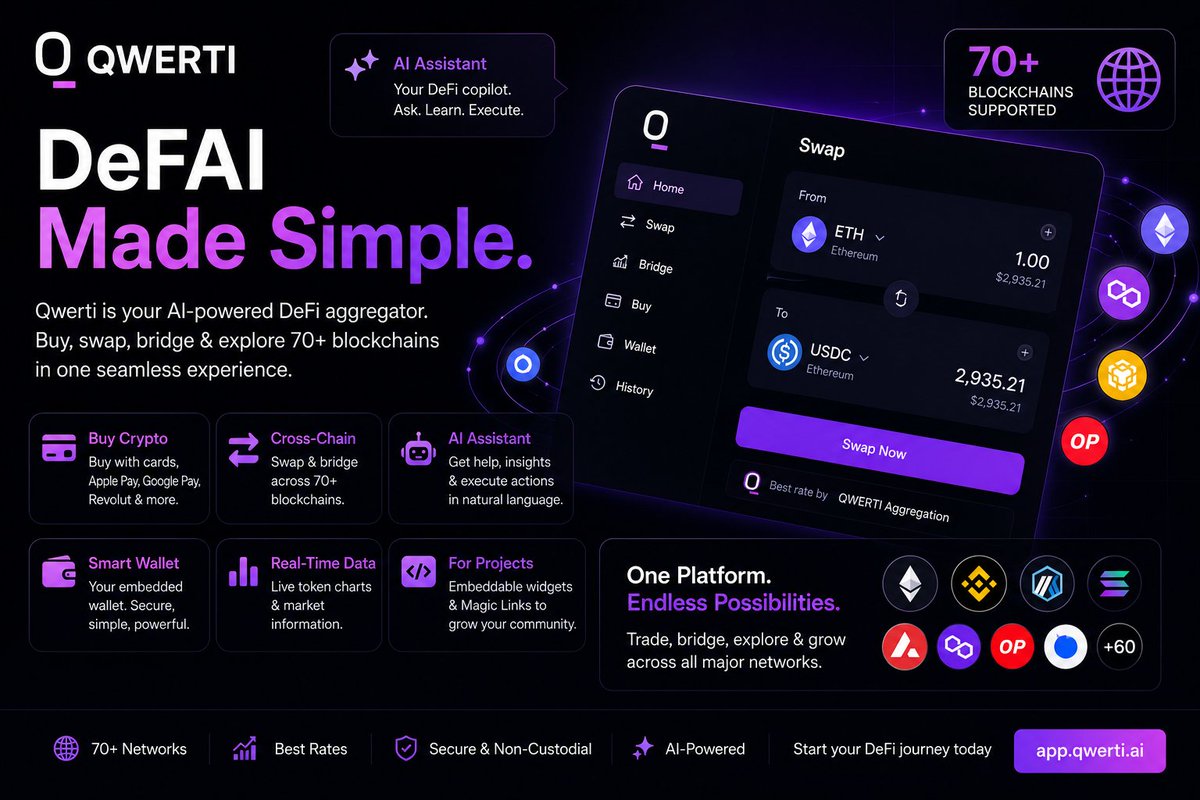
Been trying out @QwertiAI and it's surprisingly smooth. One place to swap, bridge, buy, and explore across 70+ chains without jumping between apps. The AI copilot is a nice touch too. 👀
Happy Sunday mutuals 😎
Remember to touch grass
English
@AbbanAameen @RAFA_AI The Future of AI is Well Secured with Rafa
English

@RAFA_AI 🚀 The AI revolution is just getting started and Rafa AI is helping shape what's next

English
Good Day Crypto Twitter
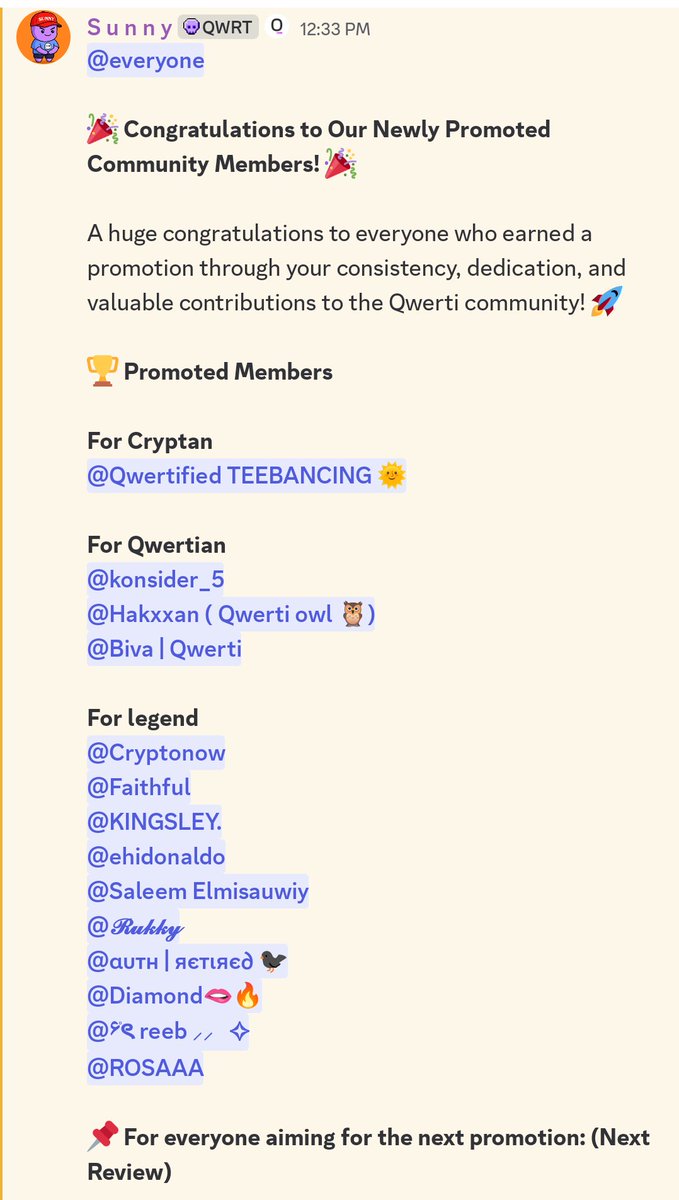
Proud to officially join the Legend Role in the @QwertiAI community. What makes this milestone even better is celebrating it alongside so many incredible community members who also earned their promotions. Congratulations to every single one of you!💯🥳
This wasn't about luck,it was built through consistency, showing up every week, supporting the ecosystem, engaging with the community, and believing in what Qwerti is building.
To everyone aiming for the next promotion: →keep grinding.
→Stay active on the Qwerti DEX,
→participate in events,
→create quality content,
→engage with official posts, and
→most importantly, be consistent. Your efforts don't go unnoticed.
A big thank you to the Qwerti team for recognizing community contributions. This is another milestone, not the finish line.
Here's to building, growing, and reaching even greater heights together.

English
@Don_kings_ @QwertiAI Congratulations Champ, Let's Keep Soaring High 🔥💯
English


@Konsider5 @QwertiAI Congratulations Champ 🔥, I dey ur Back💯😂
English

On 21st June I got legend role on @QwertiAI discord 20 days later I can say I can a certified Qwertian.
Proof that consistency always wins. Thanks to the team for the recognition. Cryptan is the target now 🤗

🔅Konsider@Konsider5
Honored to be promoted to $Legend in the @QwertiAI community A huge thank you to the team and everyone supporting the journey. The grind doesn’t stop here excited to keep building, staying consistent, and pushing the ecosystem forward.
English

Massive move! 🚀 Making $RVV accessible through Qwerti is a big win for the Astra Nova ecosystem.
Seamless onboarding is exactly what Web3 needs. Excited to see this partnership grow! 🔥
500K+ users and still growing this is just the beginning. LFG!
The 1,000,000 Qwerti Points campaign is definitely worth checking out. 👀
Big congratulations to the teams! Making crypto easier to access is always a win. 🙌
This is how great ecosystems are built strong products backed by seamless infrastructure. 🚀
Bullish on what @Astra__Nova and @QwertiAI are building together. Let's go! 💯
Utility + accessibility = adoption. Love to see it! 🔥
English
Good Day Crypto Twitter
The biggest threat to your portfolio isn't always the market,it's your own cognitive biases.
Fear, overconfidence, and emotional decisions can derail even the best investment strategies.
That's why @RAFA_AI combines intelligent agents with powerful visualizations to help investors stay objective.
→ Objective AI Analysis : Data-driven insights over emotional reactions.
→ Multi-Timeframe Perspective : Intraday, short-, and long-term trend and risk scores for a broader market view.
→ Clear Visualizations : Turn complex market data into actionable insights.
→ Personalized Intelligence : Align strategies with your unique risk profile and investment goals.
→ Adaptive Learning : AI continuously evolves with changing market conditions.
Great investing isn't about predicting every move,it's about making consistently informed decisions.
Let data guide your next move.

English
Good Day Crypto Twitter
Another strong partnership that's expanding the Web3 experience.
I'm excited to see @QwertiAI powering the @Astra__Nova ecosystem, making $RVV instantly accessible through seamless cross-chain rails.
Astra Nova isn't just another project,it's building an AI-powered entertainment universe with products like Deviants Fight Club, NovaToons, and Playmakers, already reaching 500K+ users. That's real adoption backed by utility.
The best part? Getting exposure to $RVV is frictionless. Whether you trade directly from the Astra Nova website widget or through the Qwerti App, the experience is fast and simple.
→ 1,000,000 Qwerti Points are up for grabs.
→ Snapshot: July 17, 2026.
If you've been looking for an easy way to explore the Astra Nova ecosystem while stacking Qwerti Points, this is one campaign I wouldn't ignore.
Who else is joining before the snapshot? .


English
Good Day Crypto Twitter
BTC is starting to look interesting, and here's what I'm seeing through the @RAFA_AI Assistant.
The 3-month structure remains intact, with price continuing to respect the rising trend and holding well above the MA50. Every meaningful dip has attracted buyers, and momentum appears to be building again rather than fading.
What stands out to me is the market structure. Higher highs, higher lows, and a healthy pullback instead of panic selling usually signal strength, not weakness. That's something I always pay close attention to before considering the next move.
I'm not trying to predict the market,I'm letting the chart and RAFA's technical insights guide my bias. For now, the short-term outlook remains constructive, but risk management always comes first.
What do you think? Are you expecting BTC to break into another leg higher, or do you see a deeper correction before the next rally?
Analyzed with the RAFA AI Assistant.
@Metamorfozzz_

English

𝐖𝐡𝐚𝐭 𝐈𝐟 𝐄𝐯𝐞𝐫𝐲 𝐈𝐧𝐯𝐞𝐬𝐭𝐨𝐫 𝐇𝐚𝐝 𝐚𝐧 𝐀𝐈 𝐓𝐞𝐚𝐦?
Imagine having a team of analysts, researchers, strategists, and portfolio managers working for you 24/7 without the cost of hiring an entire financial firm.
That's the future @RAFA_AI is working toward.
Instead of relying on a single AI assistant, RAFA brings together specialized AI agents, each designed to tackle a different aspect of investing. While one agent monitors market-moving news, another analyzes quantitative data, another evaluates strategies, and another provides broader market intelligence.
The result is not only more information 𝐢𝐭'𝐬 𝐛𝐞𝐭𝐭𝐞𝐫-𝐢𝐧𝐟𝐨𝐫𝐦𝐞𝐝 𝐝𝐞𝐜𝐢𝐬𝐢𝐨𝐧𝐬.
Professional investors have long relied on teams of experts to research opportunities, manage risk, and interpret market signals. For most retail investors, that level of support has been out of reach.
RAFA aims to change that.
By combining multiple AI agents into one platform, RAFA helps investors spend less time searching for information and more time understanding what truly matters. Rather than reacting to every headline or market swing, users can make decisions backed by data and AI-powered analysis.
The future of investing may not belong to the people with the biggest teams.
It may belong to those with the smartest AI team by their side.

Toss301 🐦🔥🍚 ⛓@Toss301
𝐇𝐨𝐰 𝐑𝐀𝐅𝐀 𝐌𝐚𝐤𝐞𝐬 𝐓𝐫𝐚𝐝𝐢𝐧𝐠 𝐄𝐚𝐬𝐢𝐞𝐫 Trading has always been a game of information, timing, and decision-making. The challenge is that modern markets move faster than ever. Traders have to follow price movements, news updates, economic events, market sentiment, and countless data points all while trying to avoid emotional decisions. This is where @RAFA_AI comes in. 1. 𝐓𝐮𝐫𝐧𝐢𝐧𝐠 𝐂𝐨𝐦𝐩𝐥𝐞𝐱 𝐃𝐚𝐭𝐚 𝐈𝐧𝐭𝐨 𝐂𝐥𝐞𝐚𝐫 𝐈𝐧𝐬𝐢𝐠𝐡𝐭𝐬 Instead of spending hours analyzing charts, news, and market trends, RAFA uses AI to process large amounts of information and present it in a simpler way. It helps traders understand: Why a market is moving. What factors are influencing an asset. Potential risks and opportunities. 2. 𝐑𝐞𝐝𝐮𝐜𝐢𝐧𝐠 𝐄𝐦𝐨𝐭𝐢𝐨𝐧𝐚𝐥 𝐓𝐫𝐚𝐝𝐢𝐧𝐠 One of the biggest challenges traders face is not a lack of information it's emotions. Greed can lead to risky decisions. FOMO can make traders enter positions too late. RAFA acts as an objective AI co-pilot, helping traders rely more on data and analysis instead of impulse. 3. 𝐌𝐮𝐥𝐭𝐢𝐩𝐥𝐞 𝐀𝐈 𝐀𝐠𝐞𝐧𝐭𝐬 𝐖𝐨𝐫𝐤𝐢𝐧𝐠 𝐓𝐨𝐠𝐞𝐭𝐡𝐞𝐫 Analyst Pro — Market research and analysis News Guru — Tracks important market events Quant Pro — Data-driven quantitative analysis Strategy Wiz — Helps evaluate strategies Options Guru — Options insights Atlas — Broader market and macro analysis Together, they provide a more complete view of the market. 𝟒. 𝐒𝐚𝐯𝐢𝐧𝐠 𝐓𝐢𝐦𝐞 𝐟𝐨𝐫 𝐓𝐫𝐚𝐝𝐞𝐫𝐬 Professional traders often have teams of analysts researching markets. RAFA brings a similar idea to individual investors by putting AI-powered research tools into one platform. Instead of searching across multiple sources, traders can ask questions and get organized insights faster. 𝟓. 𝐌𝐚𝐤𝐢𝐧𝐠 𝐓𝐫𝐚𝐝𝐢𝐧𝐠 𝐌𝐨𝐫𝐞 𝐀𝐜𝐜𝐞𝐬𝐬𝐢𝐛𝐥𝐞 RAFA's goal is not to replace traders. It's to give everyday investors access to tools that were once mostly available to professional institutions. The future of trading is not all about reacting faster. It's about making smarter decisions with better information.
English
@JahirRaihan55 Rafa Keep Solving the unexpected mystery in Ai
English

#RAFA delivers its greatest impact when it solves everyday challenges. Rafa AI Interesting Agent combines intelligent automation with practical functionality, offering a smarter way to interact with AI while supporting the next wave of innovation across the Web3 ecosystem.

English
@AugustineG44411 @QwertiAI That's a Good Partnership Fr, Qwerti Made Another Huge Milestone
English

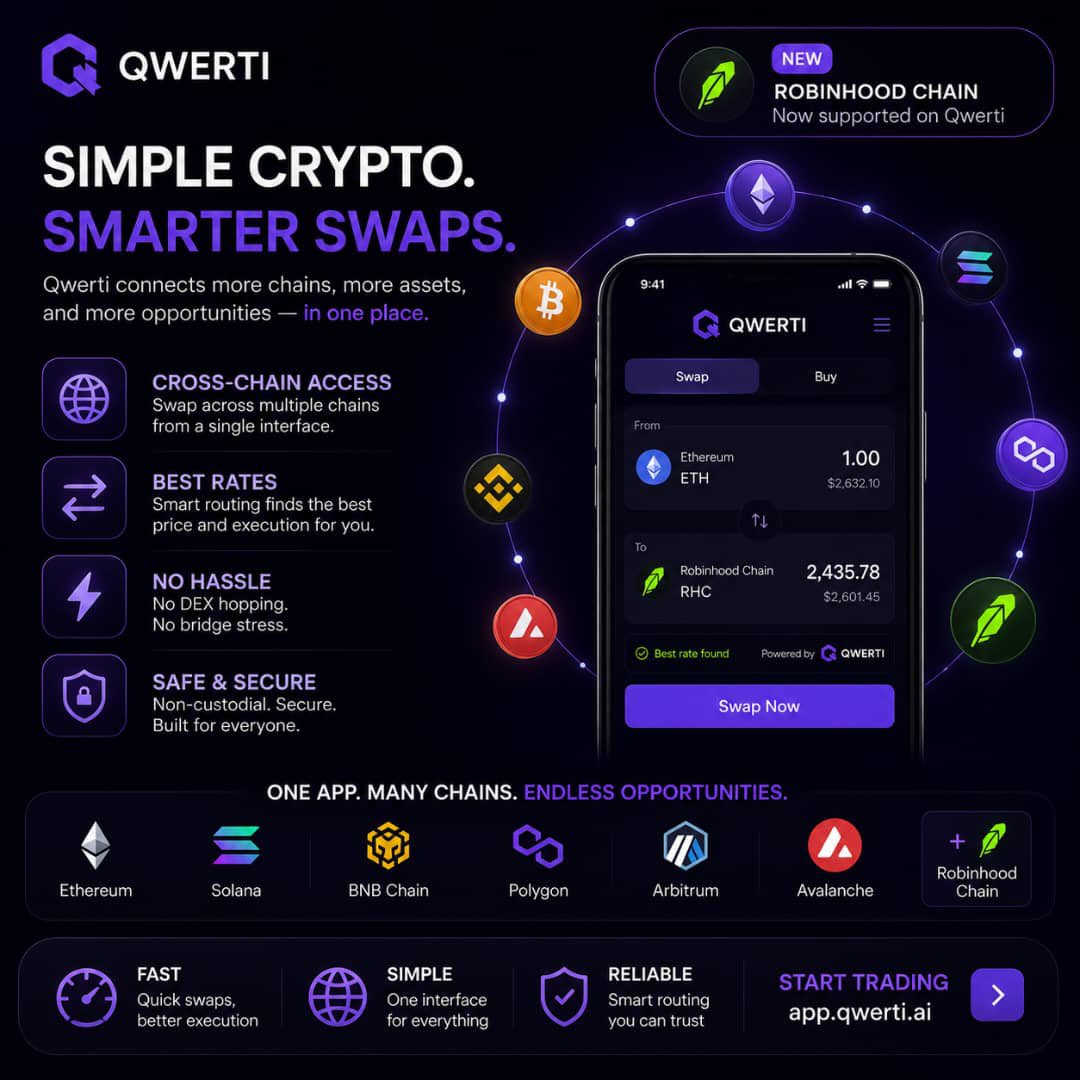
Every new @QwertiAI integration makes crypto a little easier to use.
From Robinhood Chain support to seamless cross-chain swaps, Qwerti keeps removing the friction so users can focus on trading, not figuring out the process.
Simple. Fast. Built for everyone.
English
@AbbanAameen @RAFA_AI Rafa Keep on soaring High In AI Industries, Let's Keep the Vibe Going 🔥
English
🚀 @RAFA_AI The future belongs to builders not spectators
Rafa AI is creating a smarter ecosystem where innovation creativity, and AI come together to unlock real opportunities Every contribution, every idea and every interaction helps shape something bigger

English

I've always heard people talk about options trading like it's where the real opportunities are.
But every time I tried to learn it, I ended up staring at complicated charts, unfamiliar terms, and dashboards that felt like they were built for professionals.
So I never really gave it a chance.
Then I came across @RAFA_AI
And honestly... it changed my perspective.
Instead of throwing endless indicators at me, it breaks everything down into something I can actually understand.
The AI doesn't just highlight potential setups —
With just one question it explains why they matter.
It combines unusual options flow, live market data, news, and quantitative analysis into one clear picture, complete with confidence scores that make every insight easier to evaluate.
What surprised me most is how natural it feels.
You're not jumping between five different platforms trying to piece together a trade. Everything is organized into one clean workflow that helps you understand the market instead of overwhelming you with it.
The app also adapts as you use it, making the experience feel more personal over time rather than giving every trader the exact same information.
I'm still learning, but for the first time, options trading feels approachable instead of intimidating.
If you've been curious about options but didn't know where to start, I'd genuinely recommend taking a look at @RAFA_AI.
Sometimes the biggest barrier isn't the market...
It's finding a system that helps everything finally make sense.

English