Sally Crowe

13.7K posts

Sally Crowe banner
Sally Crowe

Sally Crowe

@sally_crowe

Retired from public involvement in health and social care research, now 1:1 Coaching and Mentoring. Contributing to research, especially in cancer, & dementia.

UK Katılım Haziran 2013
2.7K Takip Edilen3.2K Takipçiler
Sabitlenmiş Tweet
Sally Crowe
Sally Crowe@sally_crowe·
Now retired from 25 years of public involvement in health and social care research - what I am most proud of; * Developing tools for the public to help understand research casp-uk.net * Co-creating a model for prioritising research questions jla.nihr.ac.uk
English

11
10
158
25.2K
Sally Crowe
Sally Crowe@sally_crowe·
@BDevlin1 Goodness - how very sad, I adored working with Brian in person and interacting with him on here. A loss to his family, friends and humanity RIP
English
0
0
1
828
Brian Devlin
Brian Devlin@BDevlin1·
Very sad to share Brian died on 5th March. It was peaceful but sudden. He was an incredible human; warm, wickedly funny, courageous, with a huge sense of morality. His beloved wife, Maggie, family and friends are devastated but very grateful for all the love in his memory
English
127
68
1.7K
142.2K
Sally Crowe
Sally Crowe@sally_crowe·
@DamianLow3 That’s a follow from me for a balanced, thoughtful piece.
English
0
0
1
30
Damian Low
Damian Low@DamianLow3·
The level of personal hostility directed at Keir Starmer over the last week deserves scrutiny in its own right. Not because he should be immune from criticism, but because the tone and intensity of the attacks tell us something unhealthy about the state of democratic politics. 1. Starmer is a conventional political figure. Cautious, legalistic, incremental. He frustrates people precisely because he is managerial rather than messianic. Yet the reaction to him often goes far beyond disagreement, tipping into visceral hatred more commonly reserved for authoritarians or demagogues. 2. Much of this hostility is disconnected from concrete policy. It is not about specific votes, proposals or outcomes, but about projection. A belief that Starmer embodies betrayal, bad faith or hidden malice. That kind of politics runs on suspicion rather than evidence. 3. This matters because democracy depends on the assumption of good faith among opponents. You can think a leader is wrong, timid, or misguided without believing they are fundamentally illegitimate. Once politics becomes moralised to the point of demonisation, compromise is reframed as treachery and pluralism as weakness. 4. The pattern is familiar. In fragmented, polarised systems, anger concentrates not on extremists, whose intentions are clear, but on moderates, who disappoint maximalists on all sides. The centre becomes the lightning rod precisely because it resists totalising narratives. 5. There is also a media and online dynamic at work. Incentives reward outrage, not proportionality. Algorithms favour contempt over analysis. Over time, this creates a political culture in which relentless personal attack feels normal, even virtuous, rather than disgusting. 6. None of this is a defence of Starmer’s decisions, instincts or record. Those should be argued over robustly as you do in a democracy. The problem is the substitution of critique with hostility and the quiet erosion of democratic norms that follows when political opponents are treated as enemies rather than rivals. 7. A democracy cannot function if every election is framed as an existential struggle against internal evil. At some point, the target may change, but the damage to trust, restraint and culture remains.
Damian Low tweet media
English
1.7K
1.4K
4.9K
314.8K
Sally Crowe retweetledi
Afshine Emrani  MD FACC
Afshine Emrani MD FACC@afshineemrani·
In medical school, we are taught a golden rule: "When you hear hoofbeats, think horses, not zebras." It is a reminder to look for the common explanation before the exotic one. But after decades in cardiology, I’ve learned that if a patient is still suffering after the "horses" have been ruled out, a doctor must have the courage—and the curiosity—to go hunting for the zebra. Sarah was a thirty-four-year-old marathon runner and a devoted mother who came to me after six months of being told she was "fine." She had been bounced from one specialist to another, each one pointing to her normal EKG and standard blood tests as proof that her crushing fatigue and racing heart were simply the result of "new mom stress." By the time she reached my office, she didn't just look tired; she looked invisible, as if the medical system had stopped seeing the woman and only saw the data. Instead of re-reading the normal test results that had already failed her, I asked Sarah to walk me through her life. We talked about her training and her family, eventually landing on a backpacking trip she took to the Mendoza province of rural Argentina. She described staying in a charming, rustic cottage made of sun-dried mud bricks. She mentioned waking up one morning with a strangely swollen, purple eyelid that she assumed was a simple spider bite. As she spoke, a memory surfaced from a biography I had read years ago about Charles Darwin. Most people know Darwin for his theories on evolution, but medical historians have long puzzled over the mysterious, debilitating illness that plagued him for decades after he returned from his voyage on the HMS Beagle. Darwin had written in his journals about being bitten by the "great black bug of the Pampas" while sleeping in mud-walled huts in South America. He spent the rest of his life suffering from heart palpitations and exhaustion that the Victorian doctors of his time could never explain. I realized then that Sarah wasn't suffering from stress; she was likely hosting the same "silent killer" that may have haunted Darwin: Chagas Disease. The "Kissing Bug" lives in the cracks of those mud-brick walls. It bites its victims—often near the eyes or mouth—while they sleep, passing a parasite called Trypanosoma cruzi into the blood. The danger of Chagas is that the initial symptoms disappear quickly, but the parasite can hide in the body for years, slowly weaving itself into the muscle and electrical "wiring" of the heart. To confirm this, I moved beyond the standard tests. I ordered a specialized "Strain Rate" ultrasound, which doesn't just look at whether the heart is pumping, but at how the individual muscle fibers are stretching. We saw that while her heart looked strong to the naked eye, the fibers were "stuttering," a sign of early parasite-induced scarring. A specific blood test for the parasite's antibodies confirmed the diagnosis. Treatment required a difficult, sixty-day course of anti-parasitic medication to stop the infection, paired with a protective heart regimen to keep her electrical system stable while the inflammation settled. Because we caught it before her heart was physically damaged or enlarged, the recovery was a success. Months later, Sarah returned to my office, her vibrant energy restored. She brought me a leather-bound copy of The Voyage of the Beagle with a note tucked inside. She wrote that while other doctors had looked at her charts, I had looked at her. This case remains a vital reminder for my memoir: in a world of high-tech scans and AI, the most sophisticated diagnostic tool we possess is still the human story. When we truly listen, we don't just find the disease—we find the patient. Good morning.
English
729
3.5K
26.2K
977.4K
Sally Crowe
Sally Crowe@sally_crowe·
Delighted to have co-authored this account of the early days of the @LindAlliance - too many people to thank here for taking a punt on us - but you know who you are!!
Katherine Cowan@KC_facilitation

The first decade of @LindAlliance has been documented online jla.nihr.ac.uk/news/history-j… Read about the first steps taken, the knowledge gathered, the relationships built and the partnerships formed to nurture and grow this important initiative! @sally_crowe @iainchalmersTTi

English
1
3
2
791
Sally Crowe retweetledi
Eric Feigl-Ding
Eric Feigl-Ding@DrEricDing·
📺 OMG—who made this?! Noah Wyle has a message for all you—vaccine skeptics… Share with a friend who needs to hear it.
English
131
3.6K
12.1K
617.3K
Sally Crowe retweetledi
Rob Percival
Rob Percival@Rob_Percival_·
The new Lancet series on UPF is just great. Especially in its articulation of the core Nova hypothesis, which critics often seem to misunderstand. This is what they're missing... 🧵 thelancet.com/series-do/ultr…
English
4
30
53
26.6K
Dave
Dave@DaveAirCEO·
Dear @AvantiWestCoast You cancelled the 0721 this morning so my 14 yo son was on the 0821 New St to MK. (Already late for school). Before Coventry your train manager “Parmi” ordered him off the train because he was travelling on a child’s ticket and couldn’t prove that he was a child. I bought him the ticket because he is indeed 14. He called me, I spoke with the TM who was plain rude. She insisted that we bought another ticket or I send proof. I sent a message of his birth certificate. Since when does a 14 year old need to carry identification on them? Children do not have a licence, an NI card and certainly can’t travel with their passport. Shameful behaviour from your member of staff.
English
239
1K
12.7K
1.1M
Sally Crowe retweetledi
Josh Fenton-Glynn MP
Josh Fenton-Glynn MP@JoshFG·
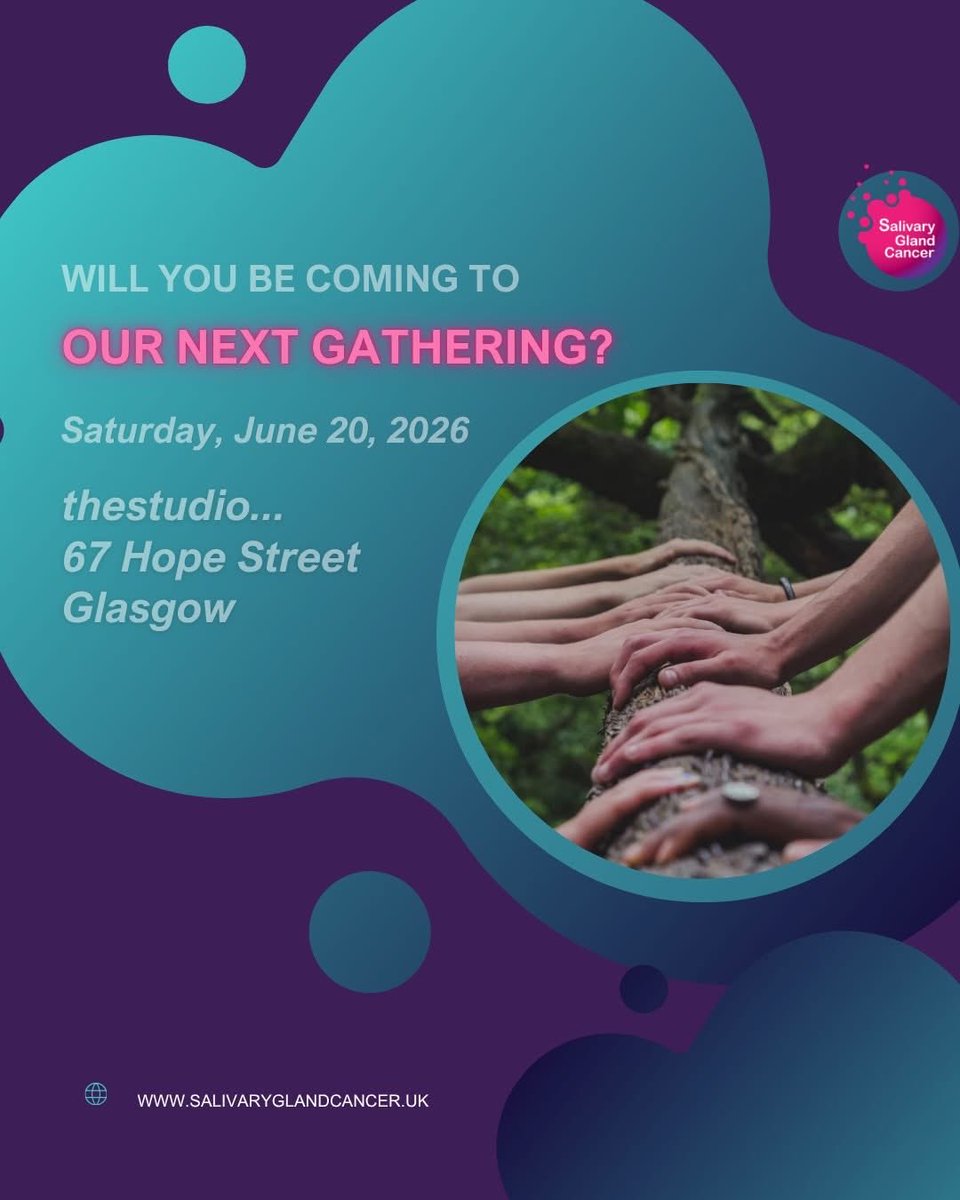
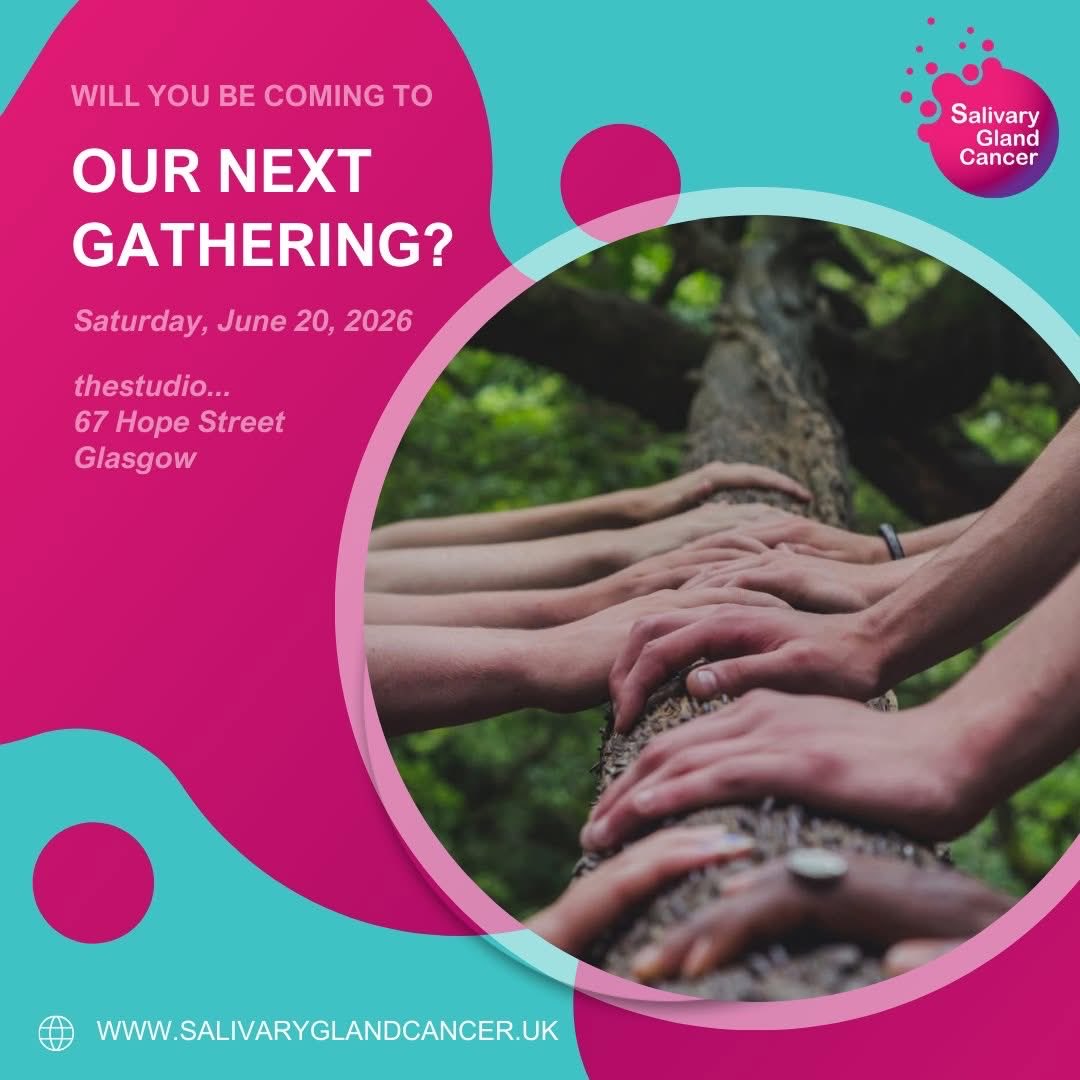
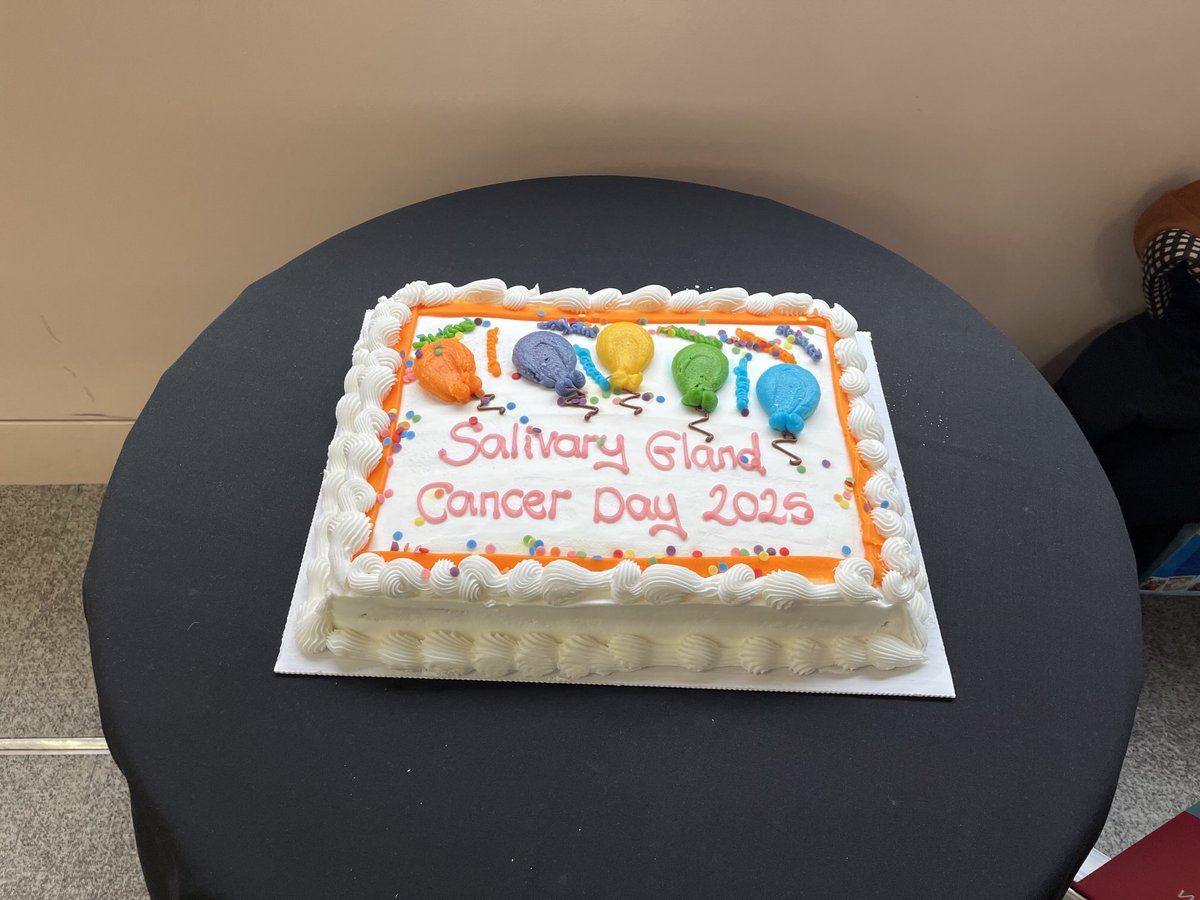
Today I had the honour of opening the Salivary Gland Cancer UK conference in Manchester. I lost my brother to a form of salivary gland cancer earlier this year and have championed the Rare Cancers Bill in Parliament. While cancers that are rare make up only 47% of diagnoses they are responsible for 55% of deaths. However it is often hard to identify treatments that are effective. The Rare Cancers Bill seeks to set up a registry of studies and patients to help match patients to studies and to make it easier to use drugs that are effective on other forms of cancer in treatments for rare cancers. In my job I have the unique opportunity to turn painful experiences in my life into meaningful change. I’m incredibly proud to do so on these forms of cancer. @SGCancerUK
Josh Fenton-Glynn MP tweet mediaJosh Fenton-Glynn MP tweet media
English
9
8
30
7.6K
Sally Crowe retweetledi
Salivary Gland Cancer | Charity
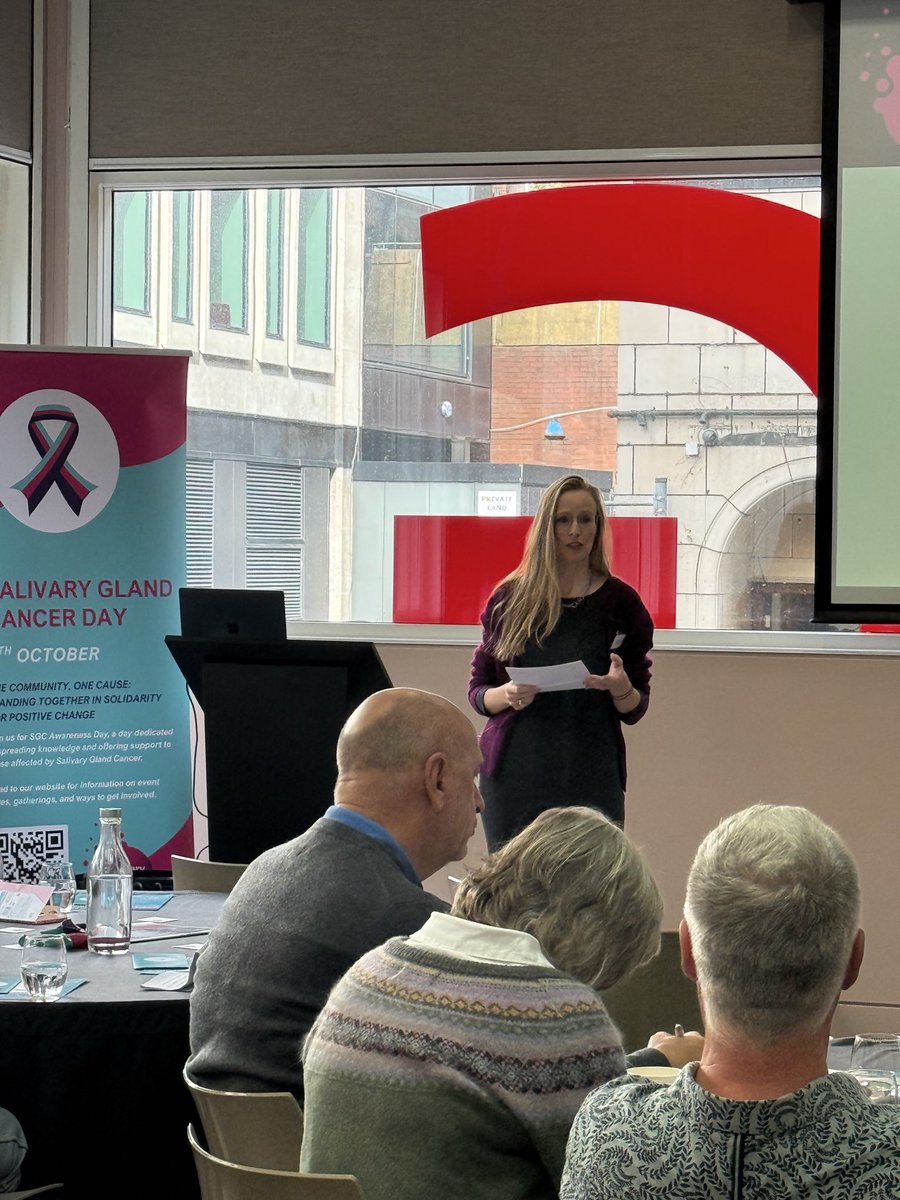
Alex M discusses her personal experience of SGC and the need to develop drug treatments for all the different Salivary Gland Cancers. #SGCDay
Salivary Gland Cancer | Charity tweet media
English
0
2
3
124
Sally Crowe retweetledi
Salivary Gland Cancer | Charity
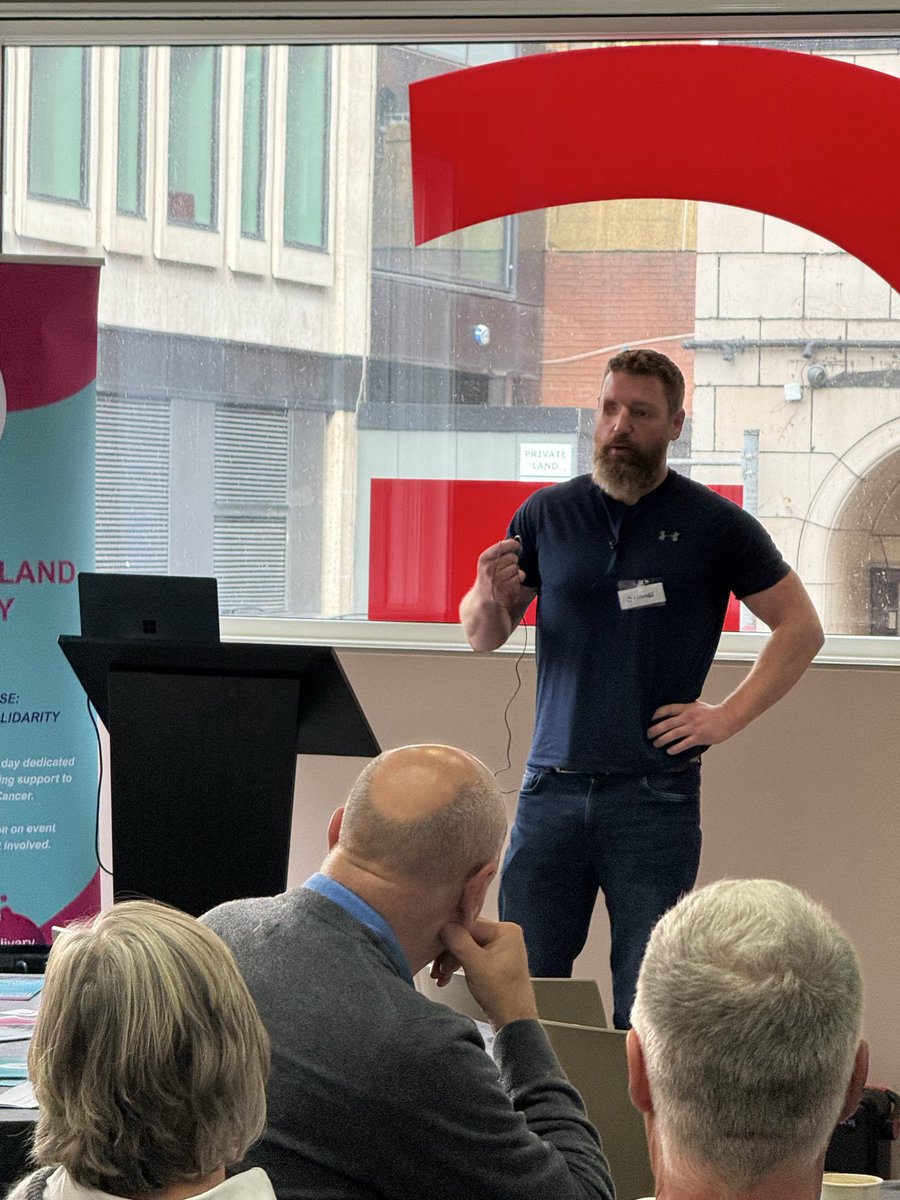
Shane S. talks about his experience with SGC and the importance of connecting with others with the disease and the need for more drug trials internationally #SGCDay
Salivary Gland Cancer | Charity tweet media
English
0
2
4
143
Sally Crowe retweetledi
Salivary Gland Cancer | Charity
Navin Mani discusses margins for tumor removal via surgery and the differences with SGC tumors. #SGCDay
Salivary Gland Cancer | Charity tweet media
English
0
3
3
190