Sam

632 posts

Sam

Sam

@SamLauffer

PGY-4 Anesthesia

Boston, MA Katılım Mart 2022
509 Takip Edilen615 Takipçiler
Sam retweetledi
Ron Barbosa MD FACS
Ron Barbosa MD FACS@rbarbosa91·
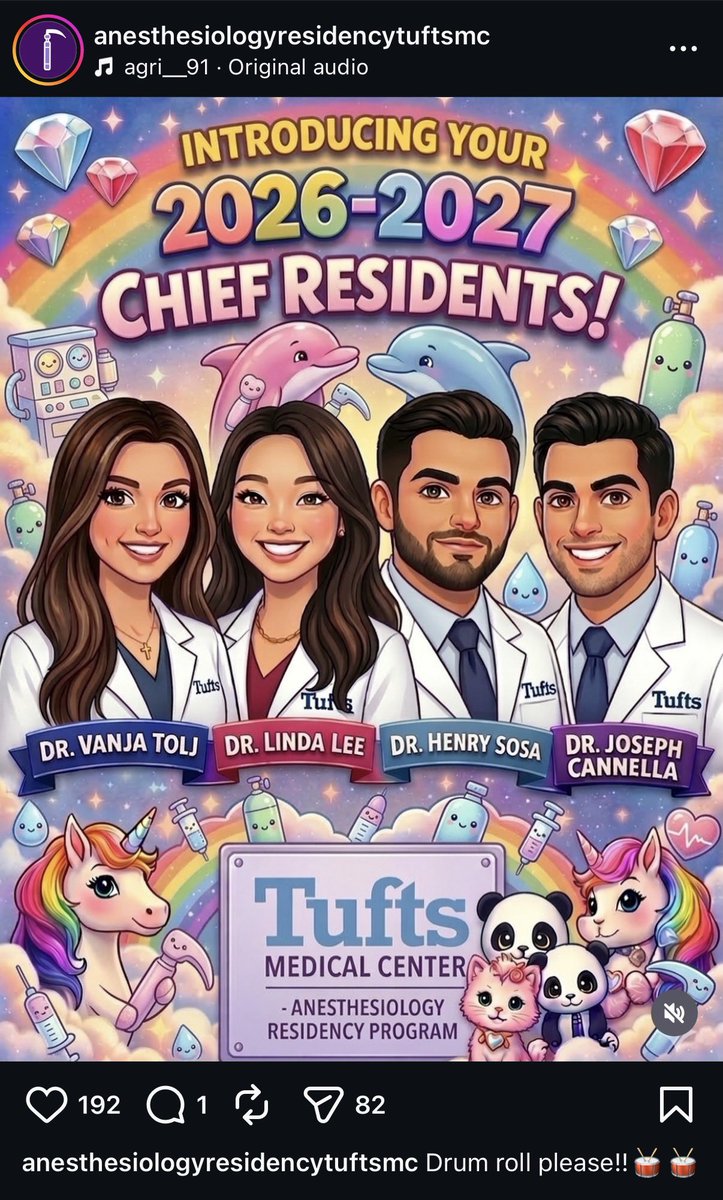
It's a good teaching graphic, actually... Everyone got so distracted by the colors and the cartoons that no one saw the main issue: They are wearing white coats, shirts, and ties. No anesthesiologist has ever worn a white coat or a tie. Learn to look past the distractions 🧐
Ron Barbosa MD FACS tweet media
English
4
6
105
10.9K
Sam retweetledi
Brandon Luu, MD
Brandon Luu, MD@BrandonLuuMD·
The ideal day in medicine without specialists: 9am: perform an EBUS 10am: knee replacement 12pm: admit a patient with acute hyponatremia 1pm: cardiac cath on a STEMI → triple vessel disease → convert to CABG 3pm: read a blood film for schistocytes 5pm: deliver a baby
Wall Street Apes@WallStreetApes

FINALLY someone is saying it out loud Casey Means explains the only reason everyone has to go and see a “specialist” for every single different part of the body now instead of just one doctor is because the medial industrial complex makes more money It’s by design. For profit.

English
77
100
1.4K
205.6K
Sam retweetledi
Skyler Lentz
Skyler Lentz@SkylerLentz·
What’s optimal PEEP for your patients with an increased BMI? Our study showed a simple equation you can use: PEEP = BMI/3 There’s variability, but BMI/3 approximates the mean optimal PEEP (by esophageal manometry) from BMI 25 to > 40 #foamcc sciencedirect.com/science/articl…
English
1
63
221
60.3K
Sam retweetledi
Jeffrey West
Jeffrey West@mathoncbro·
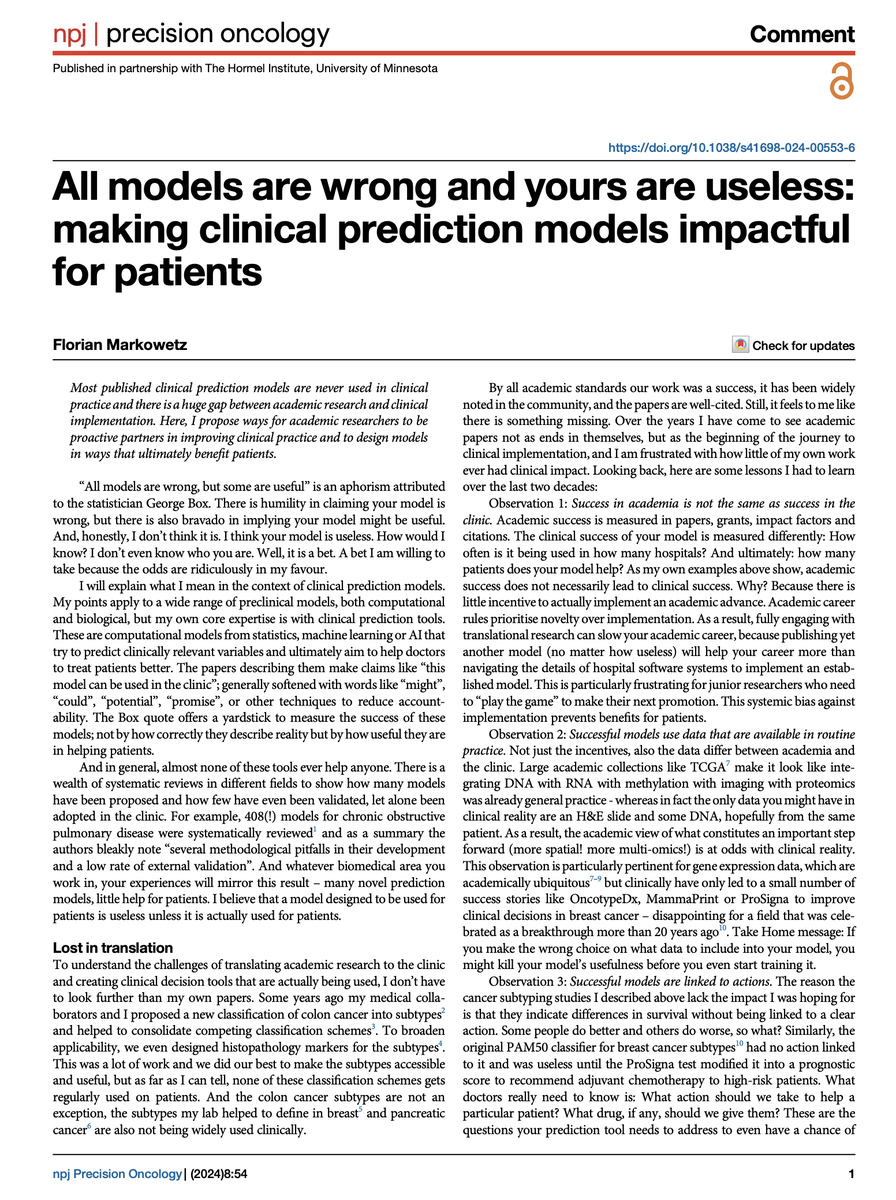
"All models are wrong, and yours is useless." - Markowetz, 2024
Jeffrey West tweet media
English
13
163
914
65.5K
Sam retweetledi
Tugba Busra Yavuz, M.D.
Tugba Busra Yavuz, M.D.@tugbabusray·
Certified and submitted✅ Here we go! One step closer to be an anesthesiologist! #Match2026 #Anesthesiology #MedTwitter AAMC ID: 16634728
Tugba Busra Yavuz, M.D.@tugbabusray

Hi #MedTwitter! I’m Tugba, an IMG from Türkiye🇹🇷, working as a researcher @MayoClinic applying #Anesthesiology for #Match2026 with interest in critical care, pain management, and innovation in medicine. I enjoy tufting, exploring different cuisines, and traveling. Let’s connect!

English
2
4
103
8.9K
Sam retweetledi
Mike Donnino, MD
Mike Donnino, MD@mdonnino·
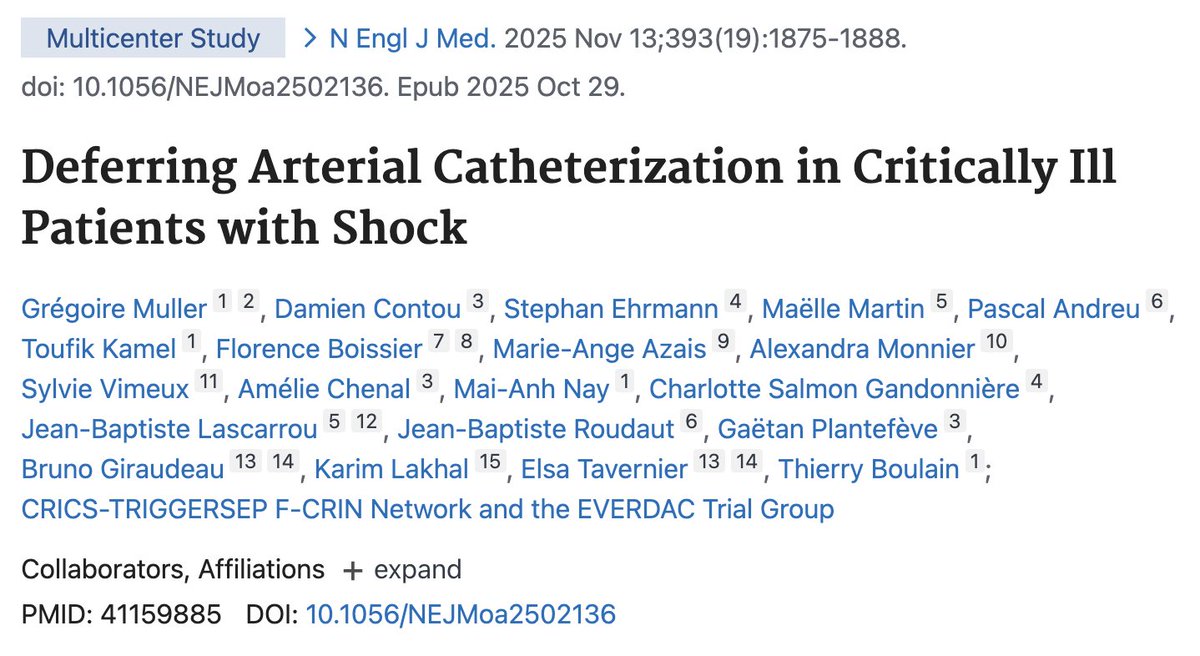
NEW arterial line study which is portrayed as "arterial line" versus 'no arterial line" comparison for those who would typically get an a-line. But, this might NOT be the case and may not really be reflective of the study design! 🧵🧵 nejm.org/doi/full/10.10…
English
2
12
56
8.7K
Sam retweetledi
Melody Anderson, MD
Melody Anderson, MD@anesthesiadocmd·
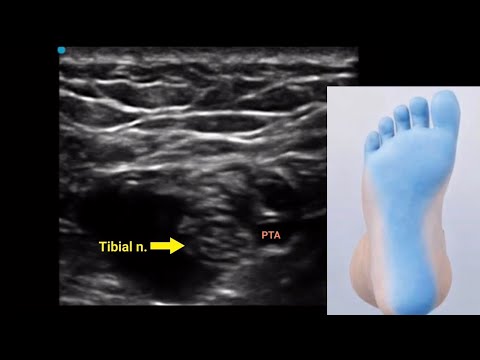
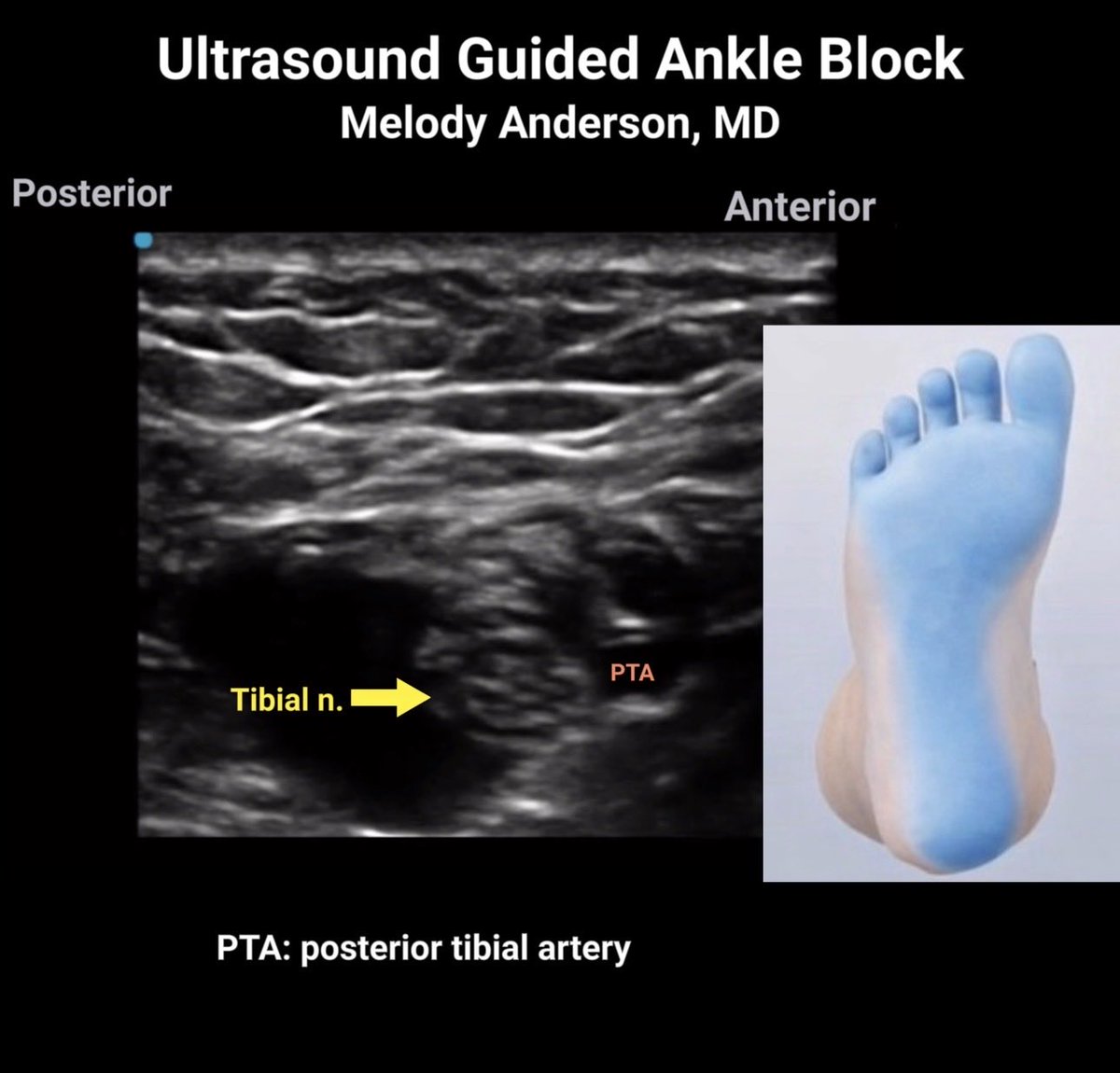
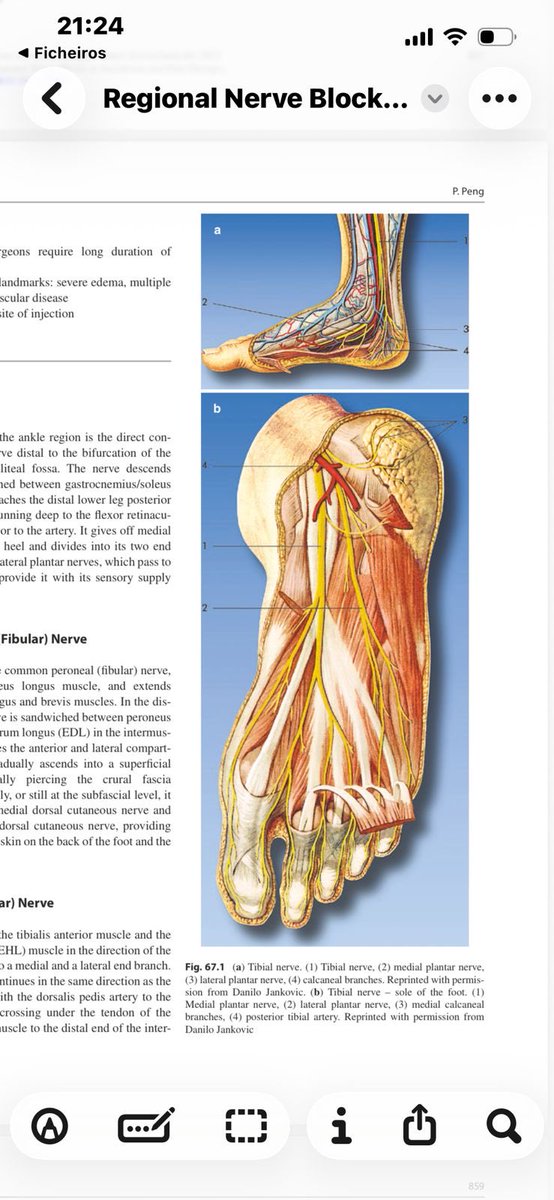
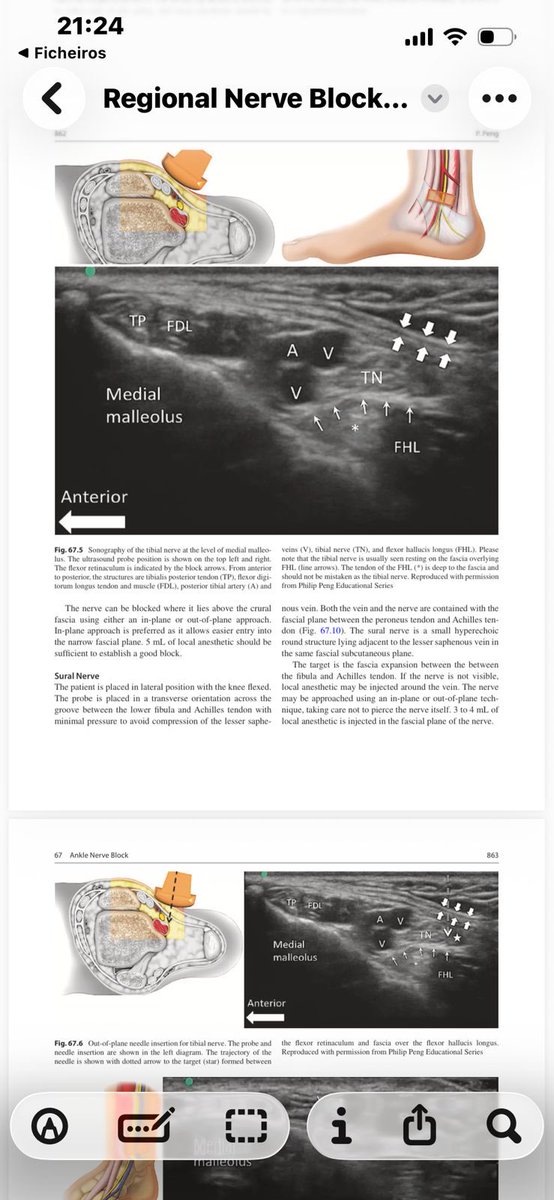
Updated ankle block video 🔗 with Anatomy pearl 🦵 : There are two tibial arteries (anterior & posterior)… but only one tibial nerve youtu.be/2Z6JkHKkAbY?si…
YouTube video
YouTube
Melody Anderson, MD tweet mediaMelody Anderson, MD tweet mediaMelody Anderson, MD tweet media
English
2
13
23
1.2K
Sam retweetledi
Salman Naeem
Salman Naeem@salmannaeem217·
Welcome to 2026 everyone & happy new year As promised, we are going to kick off #scanuary this year again. We will be covering lots of topics on #POCUS including POCUS for abdominal pain, shock scan, eyes, UGRA and also TCD in #scanuary First up a 🧵 on abdominal PoCUS 1/16
Salman Naeem tweet media
English
2
31
59
7.5K
Sam retweetledi
Benoy Shah MD
Benoy Shah MD@dr_benoy_n_shah·
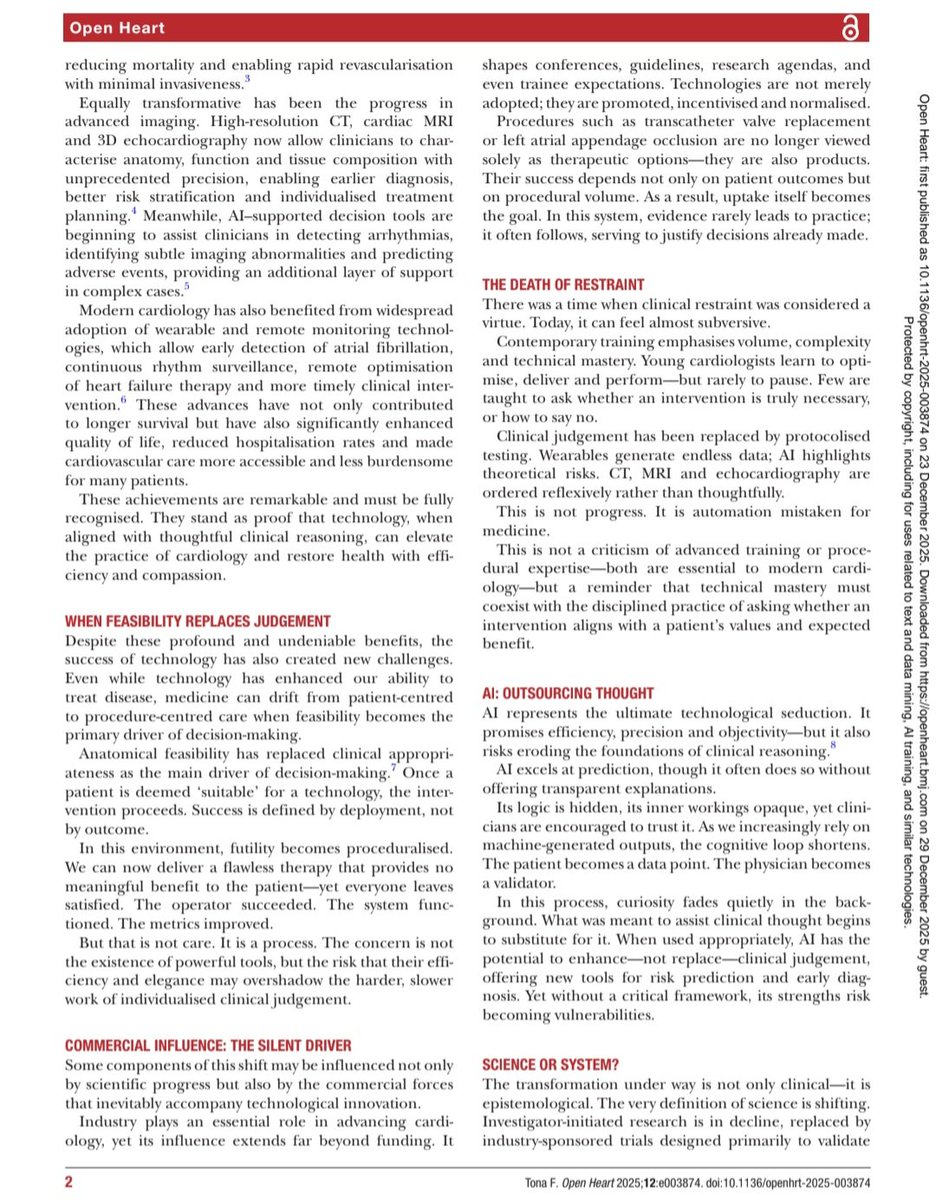
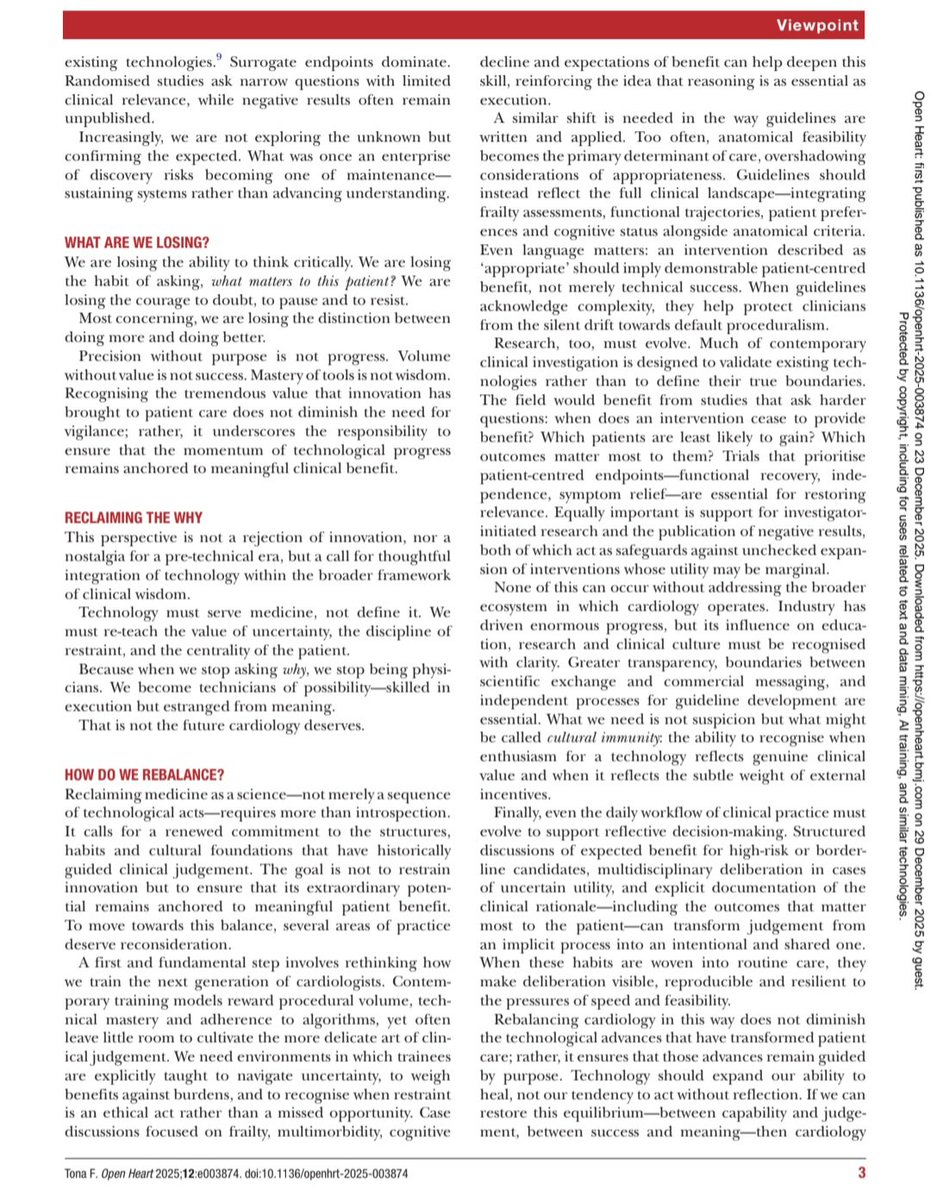
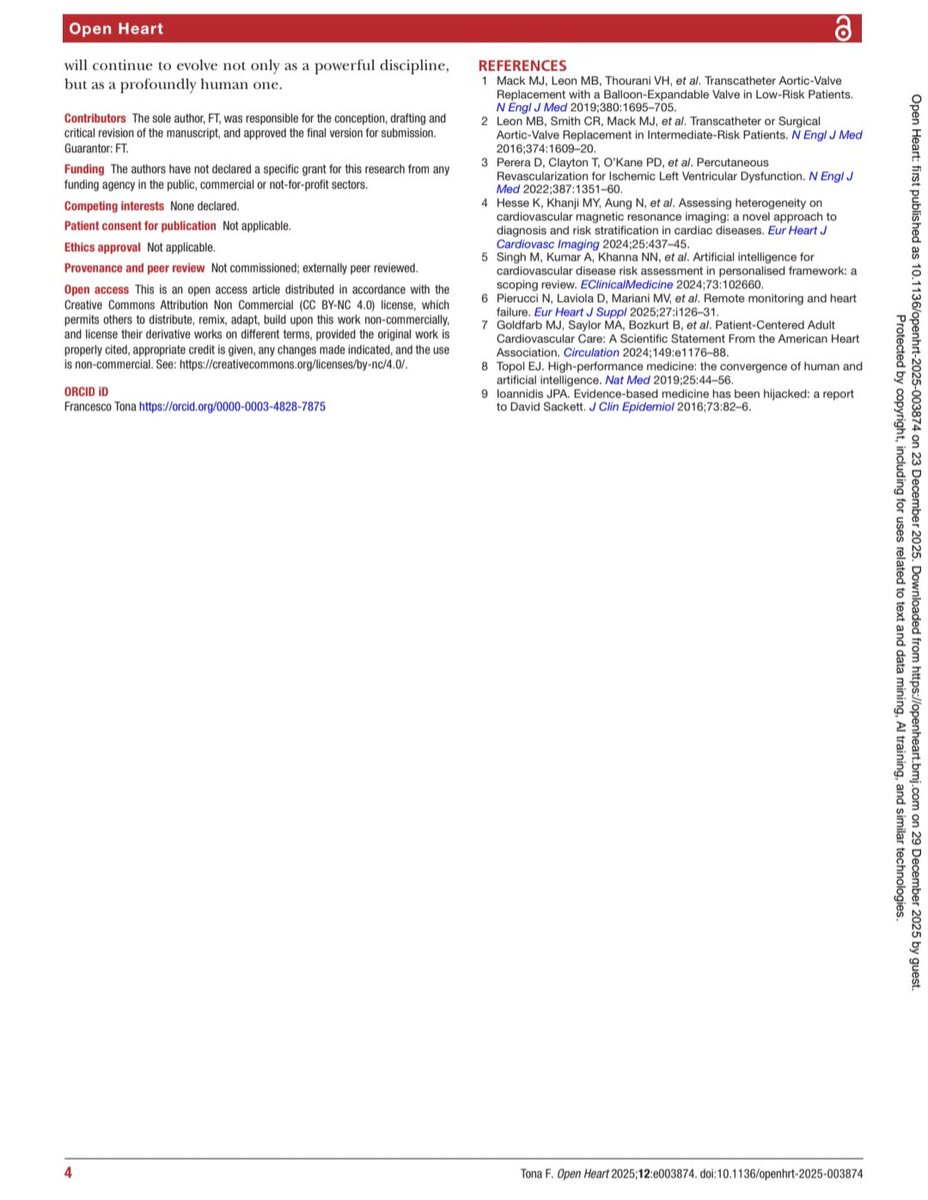
Every Dr should read this extremely well-written opinion piece in @Open_HeartBMJ 'We are losing the ability to think critically. We are losing the distinction between doing more and doing better. Precision without purpose is not progressing. Volume without value is not success"
Benoy Shah MD tweet mediaBenoy Shah MD tweet mediaBenoy Shah MD tweet mediaBenoy Shah MD tweet media
English
35
319
1.1K
82.6K
Sam retweetledi
Richard Buka 💙
Richard Buka 💙@richardbuka·
Andexanet alfa pulled from the US market. This drug, that cost at ~$20k a dose, never showed real benefit, and caused stroke. The story is a fascinating example of misguided ethical thinking, and the human weakness for the power of narrative. This is a wild ride, get ready. 🧵
Richard Buka 💙 tweet media
English
5
106
390
78.8K
Sam retweetledi
Howard Luks MD
Howard Luks MD@hjluks·
Thirty Years of Ortho: What I’d Tell the Next Generation I’ve been an orthopedic surgeon for three decades. Long enough to see techniques come and go, implants rise and fall, and the pendulum of “standard practice” swing back and forth more times than I can count. What hasn’t changed are the pressures that come with the job… and the quiet lessons you don’t fully understand until you’ve liv,ed them. If I were talking to the next generation—residents, fellows, the young attendings just getting their legs under them… this is what I’d tell them. You can’t build a meaningful career on RVUs. You can meet every target and still feel empty. A career that lasts is built on trust, judgment, and relationships. You don’t measure that in productivity metrics. A good surgeon listens more than they talk. People think surgery is a technical field, but the real work is in understanding what someone is actually asking of you. Most patients are just scared. They don’t need your scalpel, no matter what the MRI shows. Half the mistakes in this profession start with bad listening. Master the anatomy. Master the craft. But learn the limits too. Early in your career, you’re focused on what you can do. With experience, you start to appreciate what you shouldn’t do. Judgment is a superpower. Protect your time, or the system will take every minute you allow it to. Learn to say no!!! There’s no shortage of demands. Notes. Inboxes. Meetings. Every one of them feels urgent. Some of you might actually feel important when you go to meetings... But... None of them is worth sacrificing your sanity or the people waiting for you at home. Seek colleagues, not titles. Promotions and committee seats feel important for a season, but it’s just fluff, and nothing gets accomplished in those meetings anyway. Your strength matters more than you realize. Not your technical strength—your physical and emotional strength. You can’t take care of people if your own health fades. Move, lift, sleep, and protect your energy. A worn-out surgeon becomes brittle. Be the doctor you’d want for your family. You need a life outside the operating room if you want a long life inside it. The surgeons who last aren’t the ones who work the most—they’re the ones who stay grounded. They have people they care about, interests that pull them away from medicine, and enough perspective to know that identity and work are not the same thing. Thirty years in, the operations are only part of the story. What keeps you going is the purpose behind the work—helping people move, reassuring them when they’re scared, giving them back pieces of their life. That’s the part that never gets old.
English
46
168
811
116.8K
Sam retweetledi
Malke Asaad
Malke Asaad@malkeasaad·
I watched a mock interview recently where a student was asked about their greatest strength. They told a dramatic story about catching a rare diagnosis that the attending missed. They thought they looked brilliant. The feedback they got? “Unbelievable and arrogant.” Here is the hard truth about residency interviews: PDs aren’t hiring you to be House M.D. on Day 1. They are hiring you to be the person who doesn’t fall asleep when the pager goes off at 3 AM. Stop trying to prove you are a genius. Start proving you are high-reliability. Most applicants use the “Hero Framework”: I saw a disaster → I saved the day → I am amazing. This fails because it highlights luck, not skill. Instead, use the “Micro-Trust Method.” This framework proves you can handle the unglamorous, grinding reality of residency. Here’s how to structure it: ⬇️
English
9
29
348
51.1K
Sam retweetledi
SCCM Clinical Pharmacy and Pharmacology Section
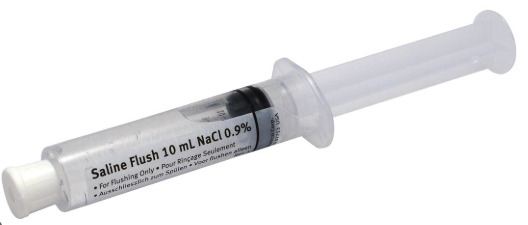
ISMP reports 🚨 81% of nurses reported diluting meds in saline flush syringes—often without relabeling. That “harmless” flush could contain a high-alert ⚠️ drug. How is your team mitigating this risk? #PharmICU #CPPPSU
SCCM Clinical Pharmacy and Pharmacology Section tweet media
English
4
5
11
2.7K
Sam retweetledi
Brian Locke, MD MSCI
Brian Locke, MD MSCI@doc_BLocke·
What would it mean if arterial line placement had an NNT of 100? In 1 in 100 patients, they are alive 28 days later ONLY because of actions taken based on art line pressure that would not have been taken with a BP cuff. They'd be dead if the team relied on BP cuff readings, but alive because they got an art line (on average). When one considers the attributable mortality to BP targets.. that would be absurdly optimistic! Borderline implausible. Consider the multitude of acute and chronic organ failures that leads someone to the ICU. The idea that twiddling the dose of pressor slightly faster/more precisely will regularly bend the disease arc... is nonsense. Yet, for a trial to reliably detect even that absurdly inflated effect size estimate - you'd need a trial more than 50x the size of the EVERDAC trial! (Roughly n=70,000!) So, while trials are hard, and my gut instinct is to congratulate authors... this trial was a waste. We need to use better endpoints to study questions like this. There's no need to make it complicated - we just need to do the arithmetic. The study had no chance of generating sufficient signal to to separate a plausible treatment effect from noise.
Brian Locke, MD MSCI tweet mediaBrian Locke, MD MSCI tweet media
Brian Locke, MD MSCI@doc_BLocke

Correct answers: NNT = 10 ➡️ n=776 required for usual power to detect NNT = 20 ➡️ n=3130 NNT = 40 ➡️ n=12,548 NNT = 100 ➡️ n=78,480 Really, really big. Helpful frame to interp CC trial literature. To detect same NNTs at 25% baseline mort, those numbers decrease by 0.65-0.73x

English
10
20
127
34.5K