Strength gains are surprisingly contraction mode-specific after strength training, as shown here with data from eccentric-only training and isometric training. Similar results have been recorded after concentric-only training in other studies.
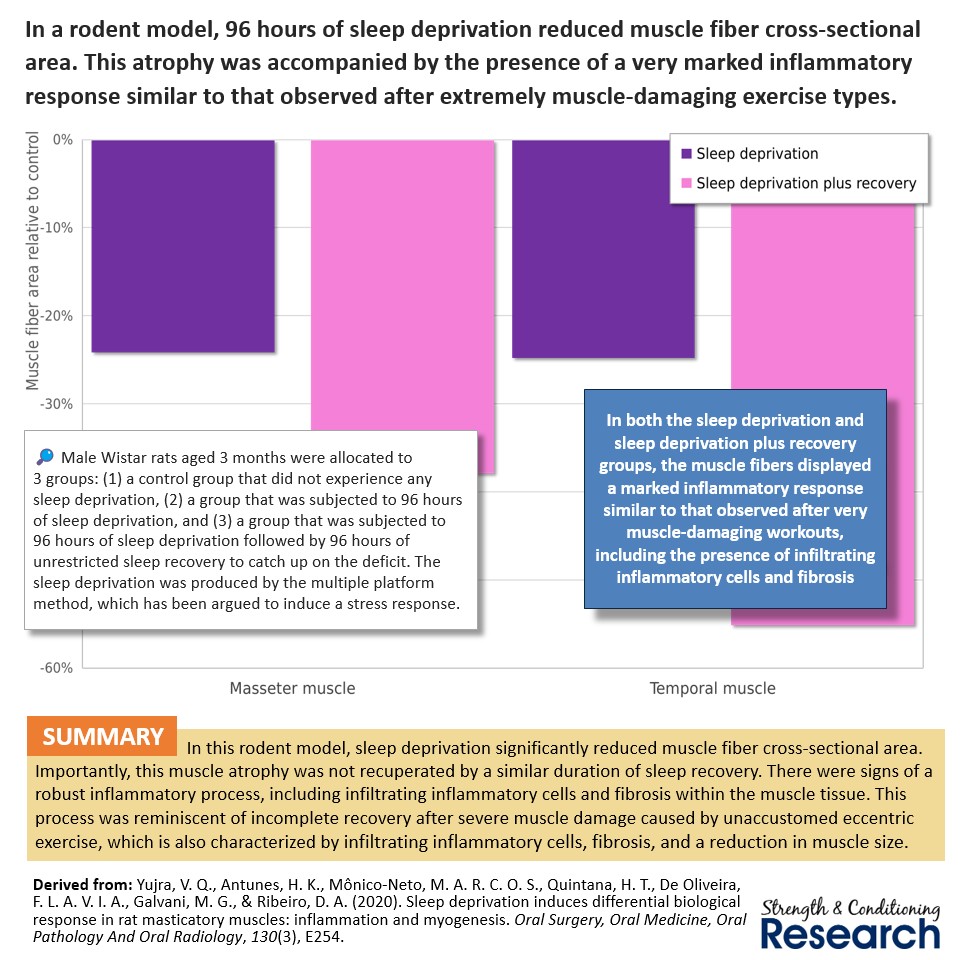
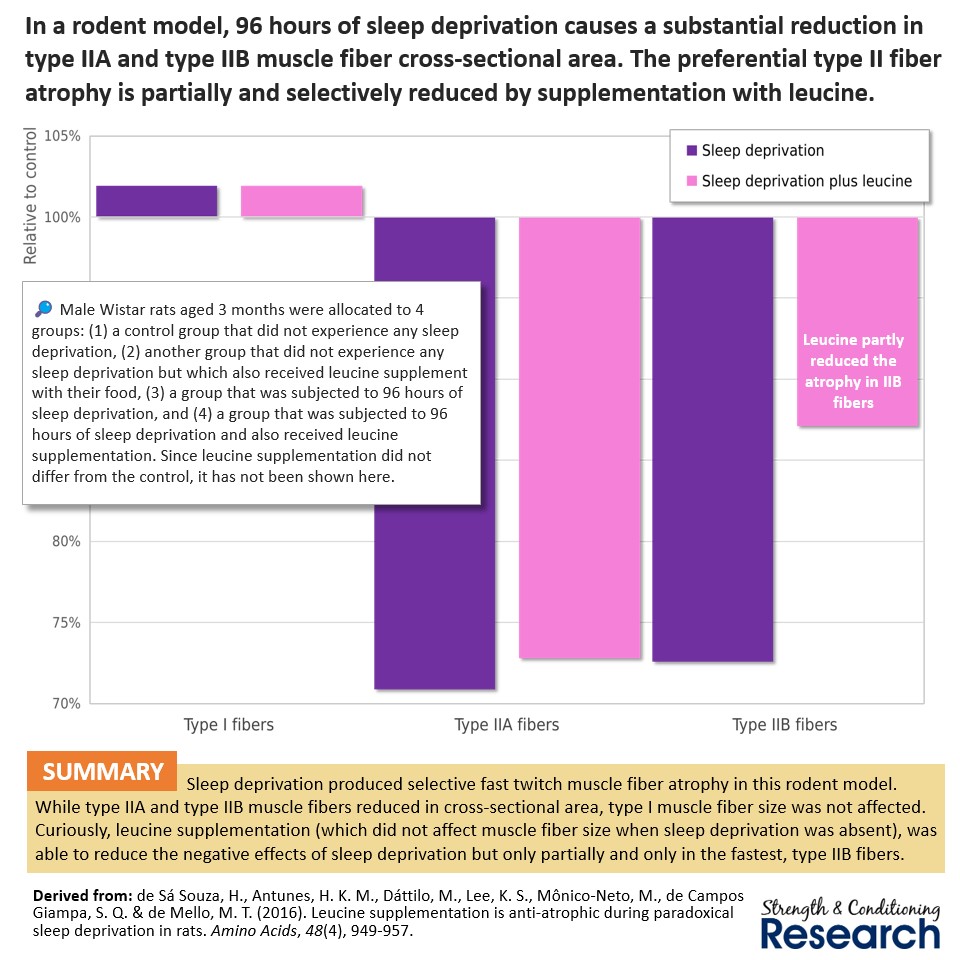
Muscular atrophy occurs when animals and humans experience insufficient sleep. However, muscle damage is also observable, and this may provide insight into how the loss of muscle is stimulated.
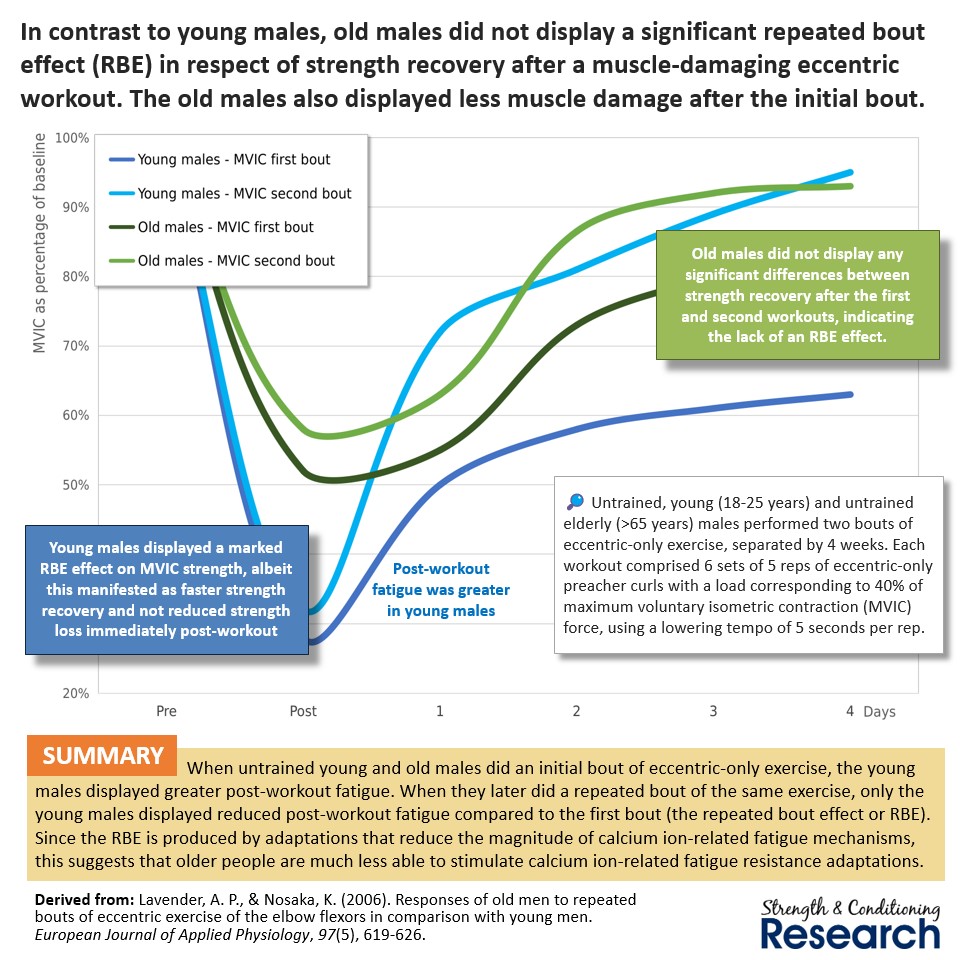
Curiously, old people display a reduced capacity for the repeated bout effect (a group of adaptations that reduces post-workout fatigue after a single workout). This may make them more susceptible to calcium ion-related fatigue in later workouts.
The carbohydrate mouth rinsing literature demonstrates that supraspinal CNS fatigue is a standard feature of strength training workouts. See Patreon for the full article with citations.
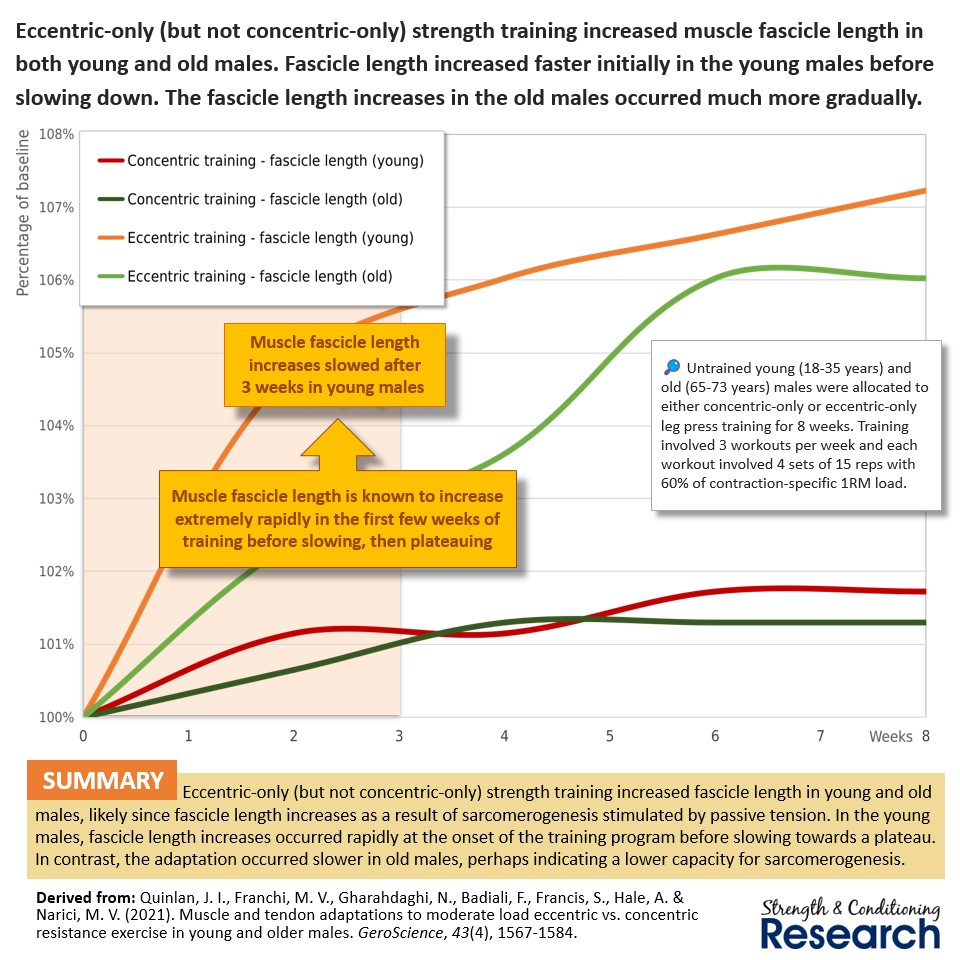
In animal models involving eccentric training, sarcomerogenesis is greatly blunted by age. This more dramatic effect in comparison with the effects of age on fascicle length increases in humans might be explained by the greater muscle damage in the animal models.
Muscle loss must arise by means of either increases in muscle protein breakdown or decreases in muscle protein synthesis. This study found that sleep loss reduces muscle protein synthesis, which may explain how it can cause atrophy.
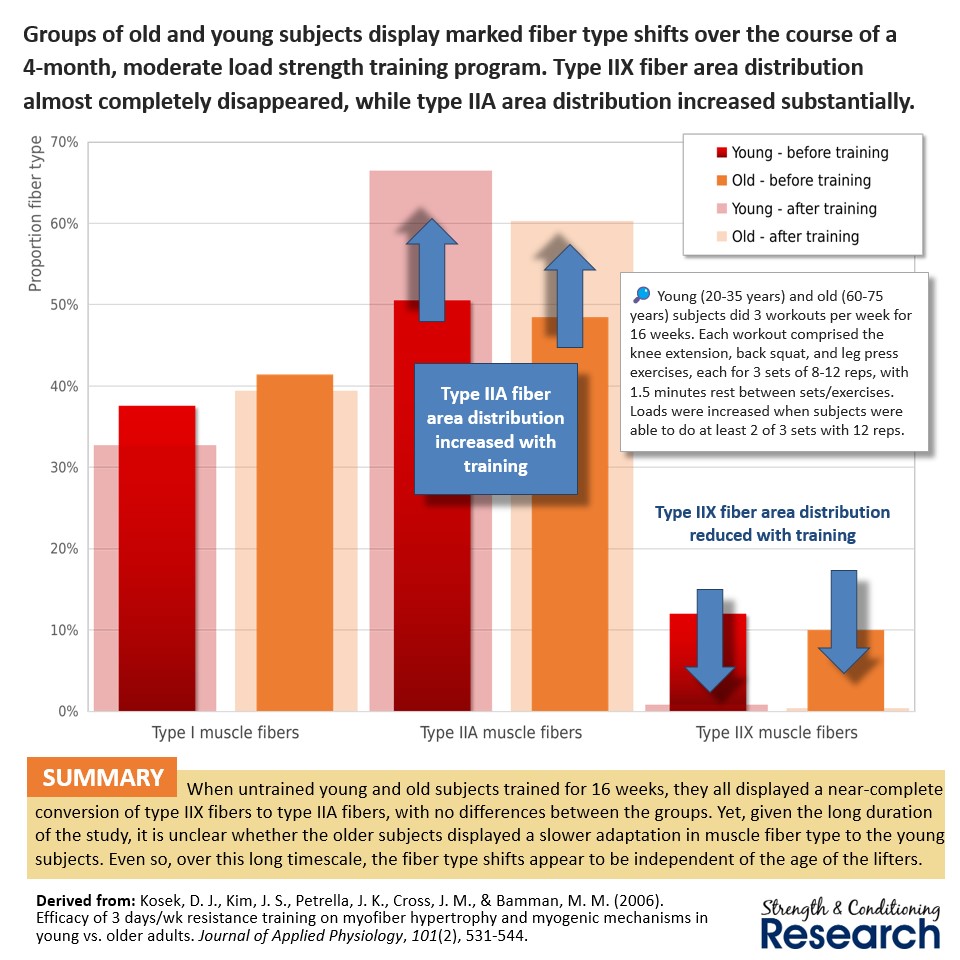
While older people experience less hypertrophy as a result of following a given strength training program compared to younger people, they appear to achieve similar muscle fiber type shifts. This shows that not all strength training adaptations are similarly affected by age.
Does fiber type affect the atrophy rate of a mechanically-unloaded muscle fiber? Probably not, if the starting muscle fiber size is controlled. Read more in the weekly free Patreon article.
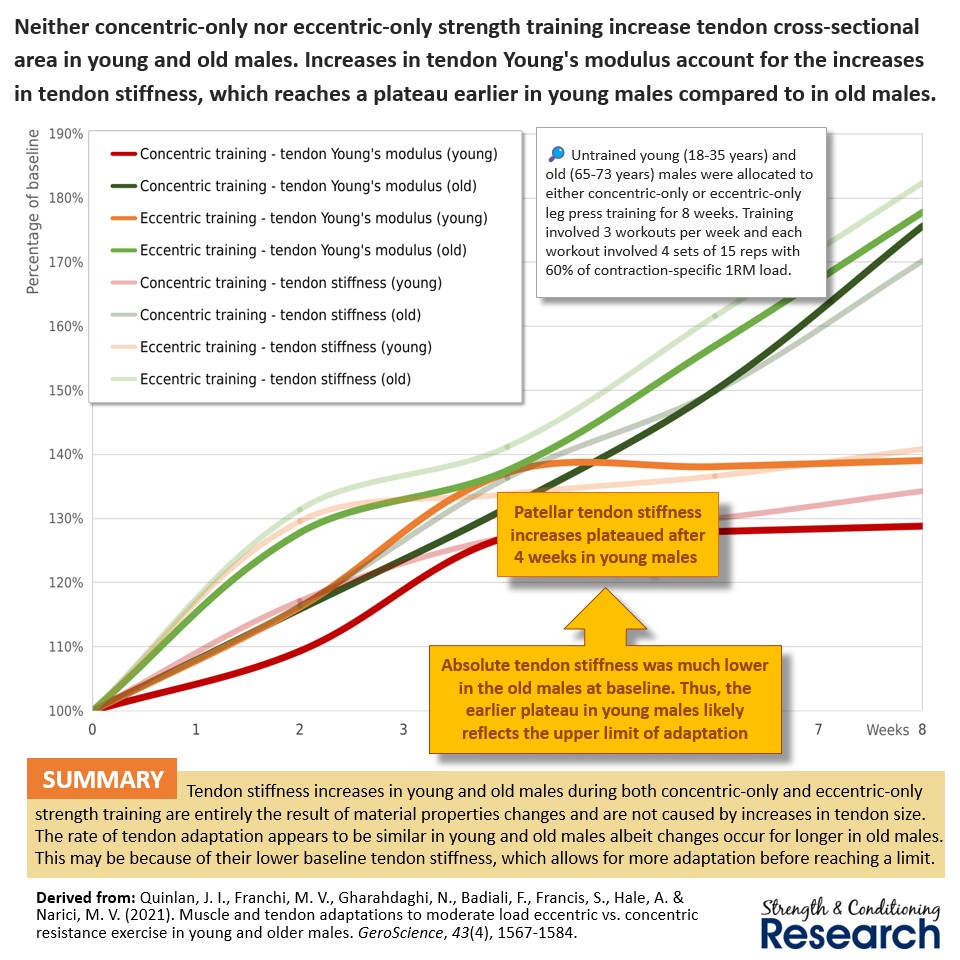
Fascicle length increases are slowed in older people compared to in younger people. Yet, since the sarcomere addition starts to plateau early on in the younger lifters, the older lifters reach a similar point by the end of the training program.
When muscular atrophy is recorded in animal models of sleep loss, the glycolytic fast twitch muscle fibers are preferentially affected. Why this happens is not immediately obvious.
Elderly people display smaller gains in muscle fiber size as a result of following a strength training program in comparison with younger people, but the ratio of type II to type I muscle fiber hypertrophy is still maintained.
Static stretching increases the flexibility of the stretched and unstretched limbs. But how does that work? Read more in the weekly free Patreon article.
While muscle growth is certainly reduced in elderly people compared to young people, increases in tendon stiffness appear to be less markedly affected. This shows that not all strength training adaptations are similarly affected by age.
Lack of sleep directly produces substantial muscular atrophy in rodent models (although it is not always easy to disentangle the effects of stress and sleep loss in such cases).
It is well-known that elderly people experience smaller gains in muscle size as a result of following the same strength training program as younger people. Whether this problem is universal or muscle-specific, however, is less clear.
For at least a decade, S&C coaches argued that "intent to move quickly" was all that was necessary for speed development. That was never physiologically plausible. Read more in the free weekly Patreon article.
The fitness industry persists in claming that muscle damage is caused by "tearing forces" in a workout when it is obvious from the literature that muscle damage is created in the post-workout period. Also, the greater the damage, the longer the delay before it appears.
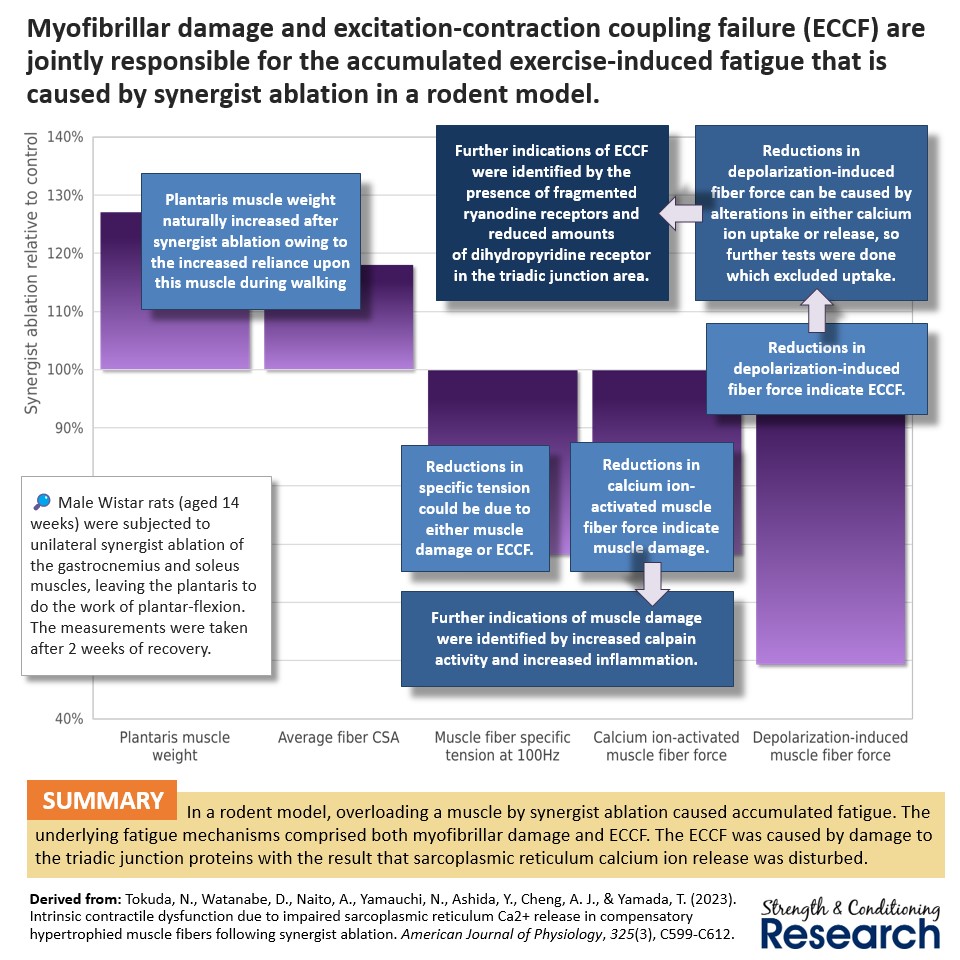
Overreaching is necessarily the result of accumulated post-workout fatigue. But which post-workout fatigue mechanisms accumulate? This study suggests that muscle damage and excitation-contraction coupling failure are jointly responsible.
Long-term static stretching produces improvements in flexibility (by increasing stretch tolerance) but also increases pain tolerance more generally (as measured by pressure-pain thresholds). This shows that stretch tolerance and pain tolerance are very similar in nature.
Pre-workout carbohydrate consumption makes much more sense from a physiological point of view than post-workout carbohydrate consumption. Read more in the weekly free Patreon article.