Dr Sanil Rege FRANZCP | MRCPsych

23.6K posts

Dr Sanil Rege FRANZCP | MRCPsych banner
Dr Sanil Rege FRANZCP | MRCPsych

Dr Sanil Rege FRANZCP | MRCPsych

@sanilrege

Psychiatrist blending neuroscience with real-world practice. Insights beyond the textbooks, made actionable. Follow for clear, practical takes.

Melbourne, Victoria Katılım Ocak 2011
1.3K Takip Edilen11.2K Takipçiler
Dr Sanil Rege FRANZCP | MRCPsych retweetledi

Dr Sanil Rege FRANZCP | MRCPsych
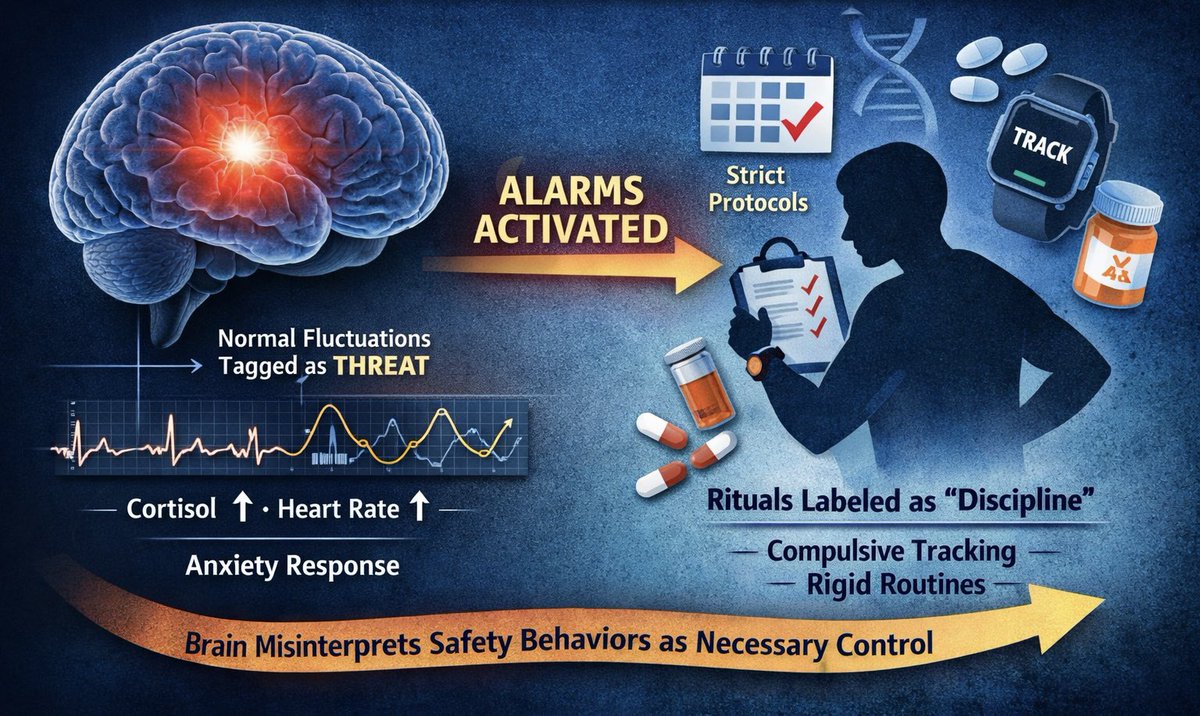
Longevity & Health Optimisation: Fear Wrapped in Protocols 🚨 -What if tracking every metric is really a way to soothe uncertainty? 
-What if “perfect routines” reflect a need to feel safe, not just healthy? 
-What if extreme optimisation is action-mode designed to keep ‘death anxiety’ quiet? -What if extreme health optimisation is just incentive / aberrant salience with the brain tagging normal fluctuations as danger, and calling the resulting rituals ‘discipline’ 
-What if the more we ‘protocolise’ life, the less room there is to live it? The paradox: the very actions meant to help you live longer can pull you away from what living actually asks of you ; presence, flexibility, relationships, and tolerating uncertainty.
Dr Sanil Rege FRANZCP | MRCPsych tweet media
English
2
7
20
1.3K
Dr Sanil Rege FRANZCP | MRCPsych retweetledi
Berker Duman
Berker Duman@berkerduman·
@sanilrege Another great video from genius Sanil Rege; I strongly recommend his YouTube channel and online education platform👍
English
1
2
6
935
Berker Duman
Berker Duman@berkerduman·
Duyguları bastırma, genel sağlık açısından olumsuz sonuçlarla ilişkili📌 Duyguları bastırma; özellikle psikosomatik hastalıklar başta olmak üzere çok sayıda hastalığın ortaya çıkmasında ve olumsuz seyretmesinde rol oynuyor. Duyguları bastırma; sağlık davranışları, immün sistem işlevleri ve ayrıca otonom sinir sistemi ile hormonlar üzerinden etki ediyor olabilir. Duyguları bastırma yerine uygun şekilde ifade etme, bedensel sağlık açısından oldukça yararlı bir davranış değişikliği olacaktır.
Nicholas Fabiano, MD@NTFabiano

Emotional suppression is associated with an earlier death.

Türkçe
6
29
226
67.5K
El Paido ®️
El Paido ®️@ElPaido·
Pobre dopamina, le echamos la culpa de todo: si “sube”, mal; si “baja”, también. Parece que para cualquier problema psicológico de hoy, siempre termina siendo la sospechosa.
El Paido ®️ tweet media
Español
3
5
41
1K
Dr Sanil Rege FRANZCP | MRCPsych retweetledi
Psychiatry Excellence
Psychiatry Excellence@psycheureka·
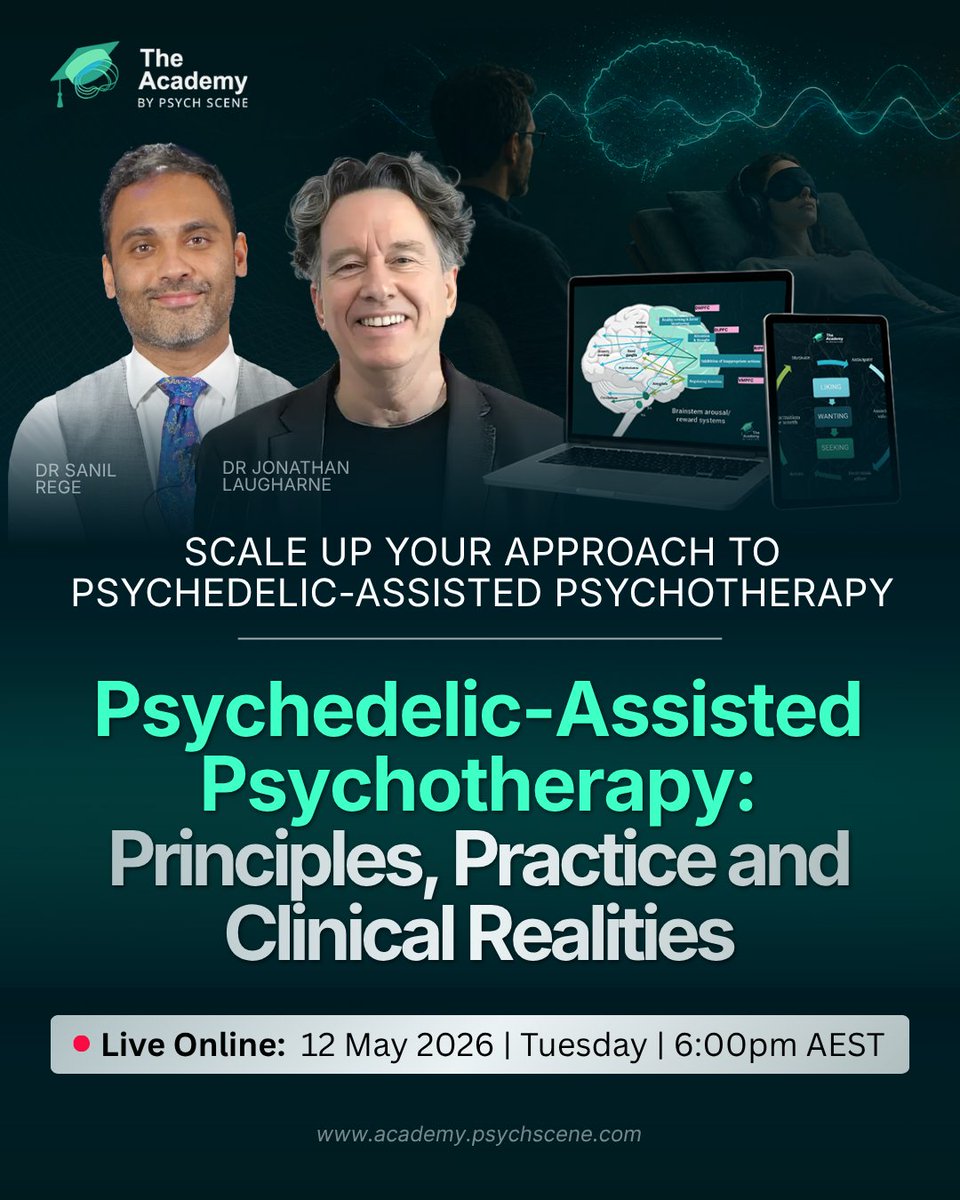
Inside the session, we’ll talk about: - Core principles of psychedelic-assisted psychotherapy - MDMA and psilocybin mechanisms of action - Current research evidence and clinical outcomes - Australian legal and regulatory frameworks - Patient selection, safety, setting, and supervision - Multidisciplinary care in treatment delivery
English
2
1
1
237
Dr Sanil Rege FRANZCP | MRCPsych retweetledi
Psychiatry Excellence
Psychiatry Excellence@psycheureka·
Psychedelic-assisted psychotherapy is seen as a breakthrough and emerging field, but clinicians must navigate evidence, judgement, and safeguards.  Join Dr Jonathan Laugharne for a live webinar on practical, grounded clinical application.
Psychiatry Excellence tweet media
English
2
1
4
517
Brandon Luu, MD
Brandon Luu, MD@BrandonLuuMD·
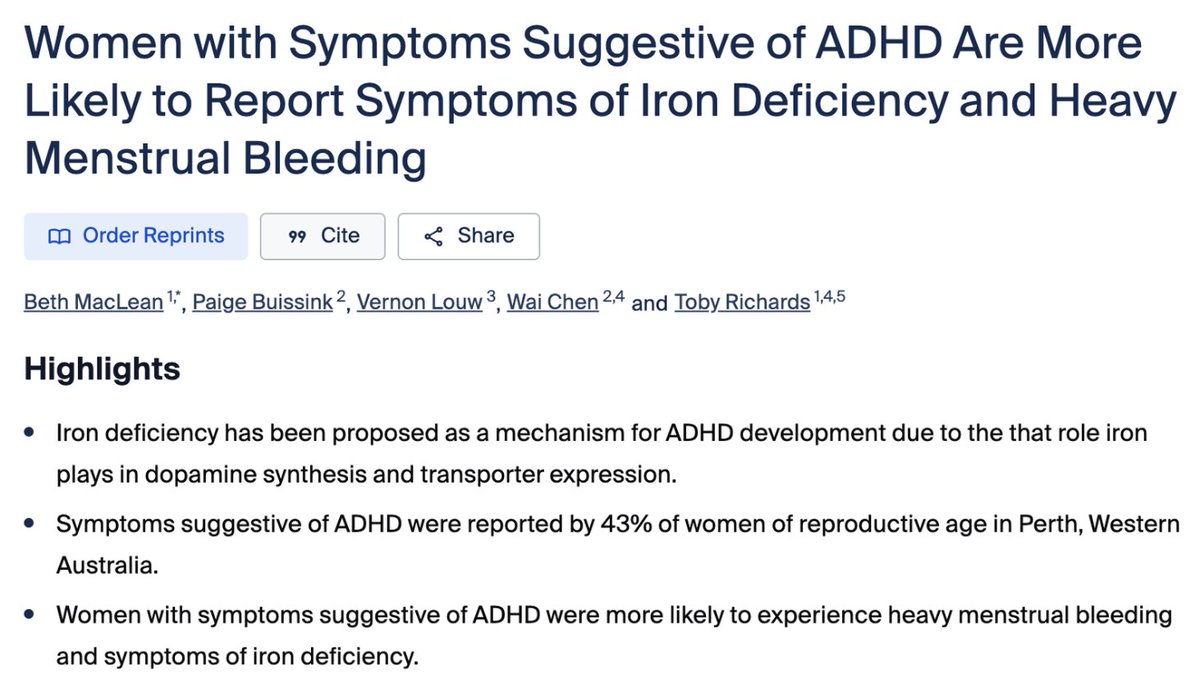
Iron is not just about blood. It also supports dopamine synthesis and transporter expression, both relevant to ADHD development. Interestingly, among 405 women, ADHD-like symptoms were linked to heavy periods and iron-deficiency symptoms.
Brandon Luu, MD tweet media
English
14
63
365
14.9K
Dr Sanil Rege FRANZCP | MRCPsych retweetledi
Psychiatry Excellence
Psychiatry Excellence@psycheureka·
Psychotherapy is often treated as risk-free because it is “only talking.” But that assumption is clinically dangerous. Like any effective treatment, psychotherapy can have adverse effects. And if clinicians do not monitor them, harm can be missed 🧵👇
Psychiatry Excellence tweet media
English
3
16
67
5.7K
Dr Sanil Rege FRANZCP | MRCPsych
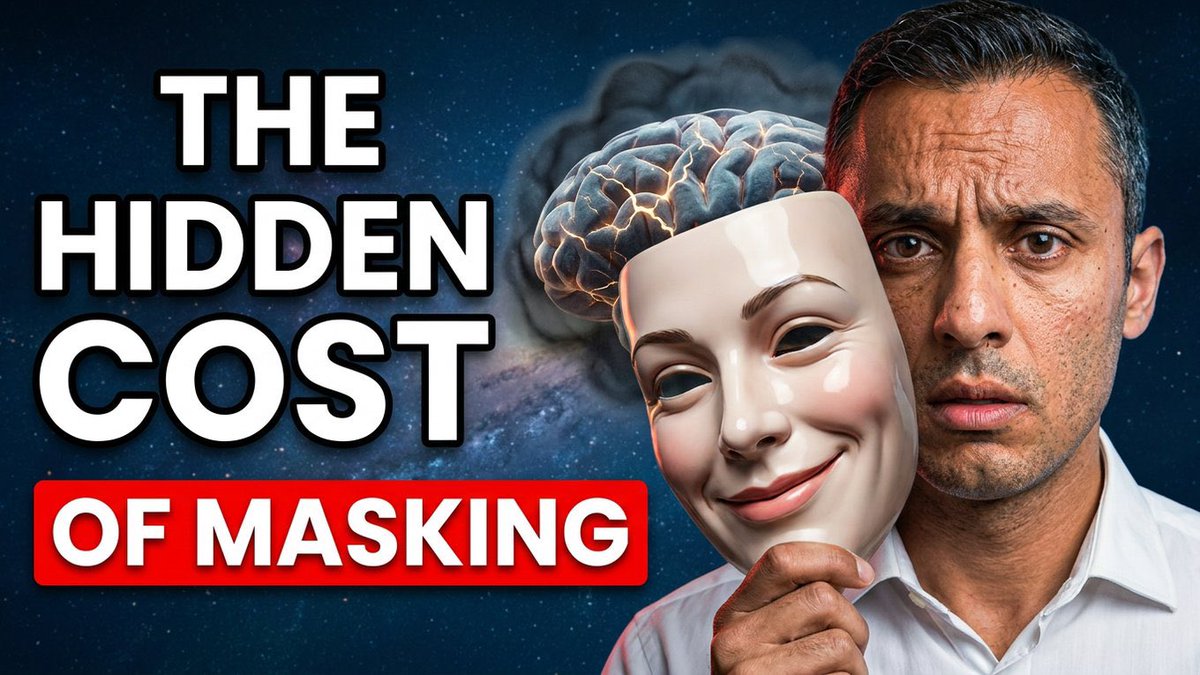
New video on Masking : The Hidden Cost of Looking “Fine” 🚨 In this video, I explore masking in ADHD, autism and clinical practice as an adaptive strategy shaped by arousal, interoception, shame, relational safety and exhaustion. The key question is not whether the mask is real. It is: what job is the mask doing? Now released on the Dr Rege channel. 👉 youtu.be/QKwIw0__a78?si…
YouTube video
YouTube
Dr Sanil Rege FRANZCP | MRCPsych tweet media
English
2
2
21
1.6K
𝓲𝓬𝓮
𝓲𝓬𝓮@be_like_ice·
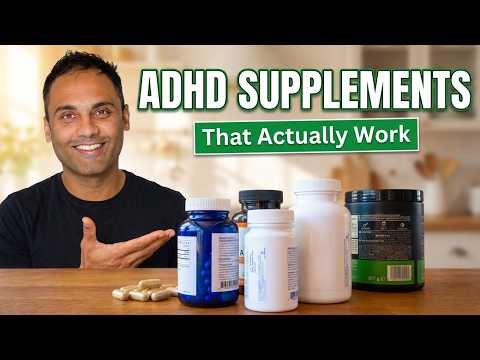
Anyone found any supplements that actually help with ADHD as an alternative to prescription medications.
English
391
124
3.2K
462.6K
Dr Sanil Rege FRANZCP | MRCPsych retweetledi
Dr Matthias Jansen 🇵🇸
@sanilrege 10 is the most important point IMO. I hate the word "adaptogen" as it's been misused by a lot of pseudoscience peddlers but SSRIs can be thought of as an adaptogen by enhancing emotional regulation and cognitive flexibility.
English
0
1
3
434
John
John@DrJohn1·
@sanilrege Using the same framework, why are they so hard to get off?
English
1
0
1
39
Dr Sanil Rege FRANZCP | MRCPsych
Great thread ! Here are some points from the article I wrote in 2021 updated over time How SSRIs act ✅ 1. Serotonin synapses are present brain wide and consist of 14 different receptor types 2. SSRIs do not simply “correct low serotonin.”
 3. The older serotonergic hypothesis of depression has been superseded by a more complex model involving serotonin signalling, receptor adaptation, neuroplasticity, emotional processing, inflammation, and network-level effects. 4. The primary pharmacological action is SERT inhibition.
 As Tyler states clearly 👉This is the initiating mechanism, but not the full explanation for clinical response. 5. Early receptor effects explain both early side effects and delayed benefit.
 6. Increased serotonin initially stimulates postsynaptic 5-HT2A, 5-HT2C and 5-HT3 receptors, contributing to early adverse effects such as gastrointestinal disturbance, anxiety, agitation, sleep disturbance or sexual dysfunction. Some receptor effects attenuate over 1–2 weeks as receptors adapt, although not all side effects resolve. 7. Delayed antidepressant onset relates partly to autoreceptor adaptation. 
5-HT1A autoreceptors initially inhibit serotonergic neuronal firing. With repeated SSRI exposure, these autoreceptors desensitise/downregulate over several weeks, allowing enhanced serotonergic transmission through projection pathways. This helps explain the clinical lag in antidepressant effect. 8. SSRIs influence emotional processing early.
 Before mood visibly improves, SSRIs may shift appraisal of emotionally valenced information for example, reducing negative bias and altering amygdala-related processing. This may be one reason behavioural and cognitive changes emerge before full symptomatic remission. It also explains the prominent anti-anxiety effect 9. SSRIs also modulate noradrenaline and dopamine indirectly. 
Serotonergic projections can inhibit noradrenergic neurons in the locus coeruleus via 5-HT2A effects on GABA interneurons, and can also inhibit dopaminergic neurons in the VTA. This may contribute to anxiolysis in some patients, but also to emotional blunting, apathy, reduced reward sensitivity or poor response in others. 10. Clinical response involves neuroplasticity, not just monoamine levels. 
SSRIs may enhance BDNF signalling and act at the TrkB receptor, facilitating synaptic plasticity, neurogenesis and adaptive circuit remodelling in regions implicated in depression. 11. 5-HT1A signalling appears important for hippocampal neurogenesis. 
Chronic SSRI treatment increases serotonin, activates 5-HT receptors in the dentate gyrus, and may promote downstream growth factors such as BDNF and VEGF, supporting neural precursor cell proliferation and integration. 12. Astrocytes may be part of the SSRI mechanism. 
Depression is increasingly linked with glial dysfunction, excitatory–inhibitory imbalance and altered neurotrophic support. SSRIs may affect astrocytic Kir4.1 channels, influencing neuronal excitability, glutamate regulation and BDNF secretion. 13. SSRIs may have anti-inflammatory effects. 
SSRIs may reduce neuroinflammatory signalling through effects on cytokines, NF-κB, inflammasomes, TLR4 and PPARγ pathways. 14. Serotonin is best understood as a brain-wide modulatory system.
 Serotonin neurons arise from relatively small nuclei but project widely, influencing inhibition, aversive processing, impulsivity, aggression, panic, reward bias and behavioural flexibility. There are multiple serotonin receptor subtypes, each with distinct distributions and functional effects. Key message : 
 -SSRIs act as modulators of emotional salience, threat appraisal, plasticity and network adaptation. -Their benefit is not simply “more serotonin,” but the downstream consequence of receptor adaptation, altered affective processing, improved plasticity, and broader changes across serotonergic, noradrenergic, dopaminergic, glial and inflammatory systems.
Tyler Black, MD@tylerblack32

Quick thread: "How do SSRI's work" 🧵 I've had a few patients ask me how SSRI's work. To be clear, my first answer is "well we know they are supposed to block serotonin reuptake, but it's not that simple and we don't really know." But, if you want the best 2026 science... /1

English
4
10
66
5.5K
Dr Sanil Rege FRANZCP | MRCPsych retweetledi
Psychiatry Excellence
Psychiatry Excellence@psycheureka·
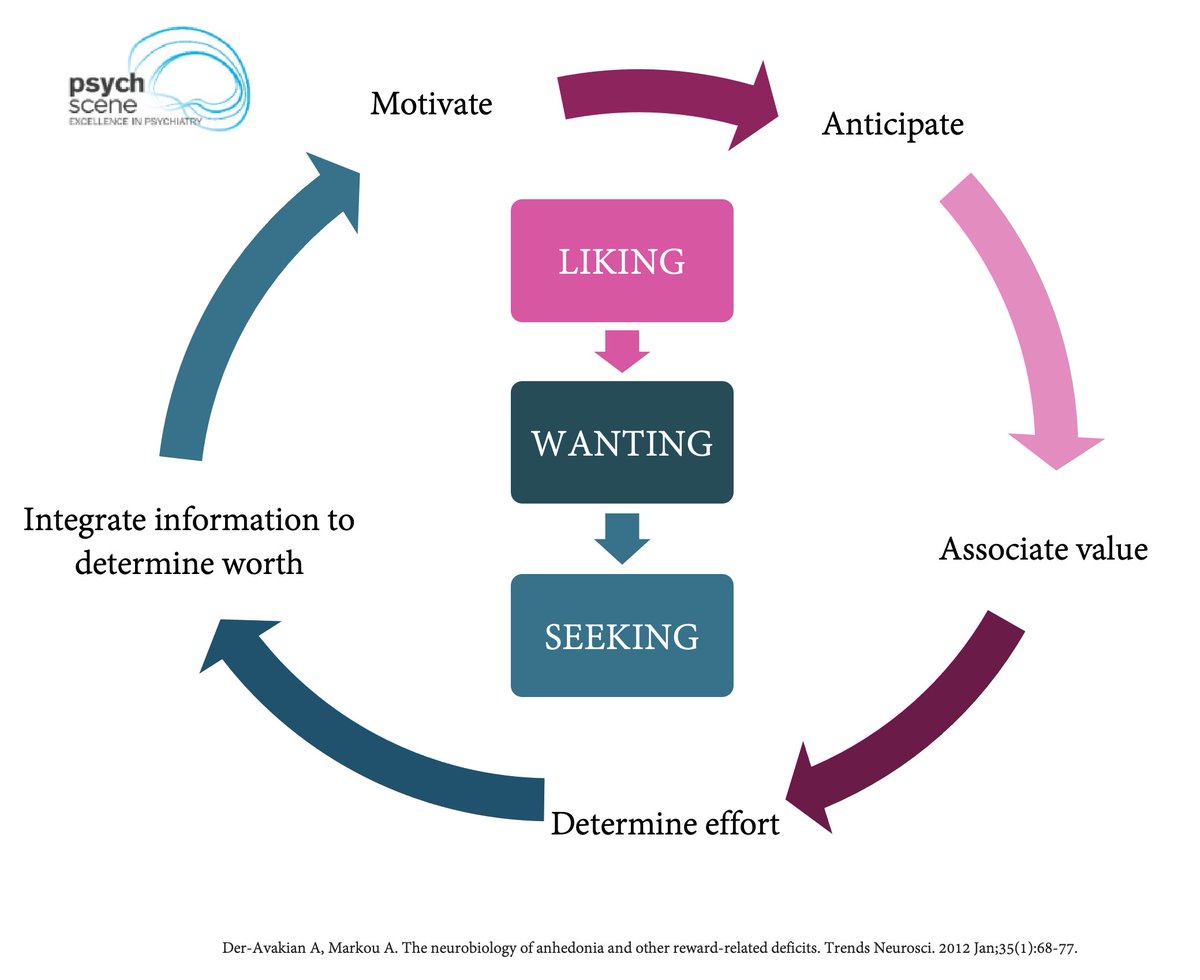
Addiction is not just about pleasure. It may start with "seeking reward." But it does not stop there...🧵👇
Psychiatry Excellence tweet media
English
3
16
80
6K
Tyler Black, MD
Tyler Black, MD@tylerblack32·
"The S in SSRI was never accurate" is the kind of line that sounds smart until you open a binding affinity table. Selective means selective relative to other targets, not specific and never affects anything downstream. By your standard no drug is selective for anything.
Psychiatry Letter@NassirGhaemi

"Selective for serotonin" — except they affect multiple neurotransmitter systems. The S in SSRI was never accurate. Neither was "antidepressant." Both were marketing decisions, not scientific ones.

English
4
0
31
3.8K
Dr Sanil Rege FRANZCP | MRCPsych
My mum told me that as a kid I gave my toys away to other kids every single time . Now as an adult I’ve got other toys to give away YouTube is free. Psych Scene hub - now with 400 articles and videos for Free. BUT As an adult I realised that I can keep giving away toys for free if I create some toys that people find value to pay for 😀 ( the Academy by Psych Scene) . The reality principle . 😀
English
1
0
5
218
Pedro Alvarez, MD 🧠
Pedro Alvarez, MD 🧠@PiterRaskol·
“Resulta que los niños pequeños son diminutos altruistas: son más felices regalando golosinas que recibiéndolas... evidencia sugerente de que el altruismo humano está impulsado por las recompensas emocionales innatas de tender una mano amiga”
Steve Stewart-Williams@SteveStuWill

Toddlers, it turns out, are tiny altruists: They’re happier giving treats away than receiving them... suggestive evidence that human altruism is driven by the inbuilt emotional rewards of lending a helping hand. stevestewartwilliams.com/p/echolocation…

Español
1
0
2
306