
Sabitlenmiş Tweet
SansActus
10.3K posts


SansActus
@SansActus
Human personification of the emotion Meh!!
Katılım Aralık 2009
2.5K Takip Edilen505 Takipçiler

@sumeetmhaskar It was a question asked by an academic at the END of an entire lecture ON Du Bois. Not to mention the the pronunciation of Du Bois' name was extremely important to him. This is very infantilising of the guy who asked the question, to pretend he wasn't in a position to know.
English

It's a pity that Gayatri Chakraborty Spivak made a big deal about the pronunciation of Du Bois name!
The beauty of any language is the unique sounds attached to the alphabets. Those unfamiliar with it are bound to make a "mistake".
"J" is pronounced as "Kha" in Spanish. That's why Jesus is pronounced as "Khesus".
Similarly, "J" is pronounced as "Y" in Dutch and German. That's why most Indias pronounce the name Jan Breman - a known labour scholar - as Jan (जान) and not "Yan".
I learned about these differences during my time at Oxford and later in Göttingen. In my mother tongue Marathi, the sound for ळ alphabet is foreign to most Indians. Most of them rely on the use of the sound ल for ळ. It is precisely for the reason, Gayatri should have focussed on the question - irrespective of the caste status of the one asking it.
Sadly, Gayatri avoided the question by picking on pronunciation. Her recourse to the technicality of the pronunciation only highlights the cheap and snobbish display of caste and class superiority. Such responses are common when the question makes the speaker uncomfortable as it has the potential to expose their privileges.
x.com/subhajit_n/sta…
English
SansActus retweetledi

SansActus retweetledi

🚨 Assessing the Diplomatic Fallout: #Chinese & #Taiwanese Reactions to the #US-#Japan-#Philippines 🇺🇲🇯🇵🇵🇭 Trilateral Summit.
🧵 follows:
Image Courtesy: @Reuters

English
SansActus retweetledi

These clips are taken from the documentary "MLECHCHA SANHAARA: India's Kalki Project," directed and produced by Subrat Kumar Sahu, revealing the severe caste-based discrimination endured by Dalits in Odisha.
1/9 🧵
English
SansActus retweetledi
🚨The Sunflower 🌻Movement: A Decade of Impact on Taiwan's Political Landscape.
Image courtesy: @Reuters
Thread 🧵
👇🏻

English
SansActus retweetledi
Thread 🧵 on EU 🇪🇺 rising concerns with Chinese 🇨🇳 Electric Vehicle (EVs)
👇
English
SansActus retweetledi

Devadasi System - Experience of a IAS officer in Karnataka (Shanta Kumari IAS)
As Director, Women and child welfare in 1980s, I was confronted with what was called a social evil, the Devadasi system prevalent in Karnataka State and debate was going on with demands to do away with that system. I went with a few officers of my department on a fact-finding mission and organized a widely participated, taluk level seminar on the subject and undertook some field study. Very interesting facts emerged.
The place where this tradition is practiced is in Soundatti, a taluka place in the district of Belgaum in Karnataka State. It is some 70 kilometers away from Belgaum town, on top of hillocks there. There in a temple, where the local goddess, Yellamma is worshiped and tradition has that her real name is Renuka. She is worshiped as a Mother goddess, Yellamma. The Devadasi tradition associated with this worship seems to have been strongly established even since 10th century AD. Here on a full moon day, anytime between November to February, young girls are dedicated to the goddess. At least five times during that period such rituals are organized.
The girls are dedicated, mainly as young children around 8 to 12 years old by her parents, seeking the intervention of the goddess in their affairs. It could be a serious sickness in the family, when the parents vow to dedicate a daughter praying the goddess to bring healing; or it could be a prayer wanting a son; or to overcome a financial difficulty or simply to get rid of a superfluous daughter. There could be a ‘call’ by the deity in many cases, with a sign, like the formation of a clump in the hair or a white patch of leprosy, indicating the desire of the goddess to have that child as her devotee. There are male children who are offered similarly.
The girls are taken to the ponds near the temple, given ritual bath, made to wear only neem tree (Margosa tree) leaves as dress and with a pot full of water on their heads, made to climb the hill to the temple. Of course the path is lined by ogling young boys and men. In the temple, the priests amidst rituals tie around the neck of the girl, a thread with beads, taken from the goddess’ neck. Now she has become married to the goddess and enters into the service of the deity, serving her by singing and dancing and worshiping. Such girls are forbidden to marry any mortal.
So far so good; but what happens in reality after this marriage to the deity is sickening. The girl is taken in by the temple poojari (priest) first or by the landlord or a rich man of a village, the highest bidder. The patron pays lump sum money to the parents of the girl, pays for the ceremony and also maintains the girl. She may be kept as his mistress for a year or more, till he is tired of her or finds a new girl. Thereafter the girl really enters into prostitution to eke out her livelihood, with any and every one. These girls are forbidden to claim to be a wife of any one man. The children born out of such unions are given the surname of Basava, the goddess. Virginity of a girl is offered as an offering to the goddess. They become the female prostitutes attached to the temple; there are male prostitutes also.
When the seminar was going on with many experts speaking on the subject and social reformers waxing eloquent, I took a few of my officers and quietly went and visited a few Devadasis in the surrounding villages. In the local temples of the villages I was able to find three to four Devadasis and fell into conversation with them. They were about 40 to 50 years of age and they said that they were married to the goddess, when they were still young and for so many years they have lived as Devadasis. Surprisingly they all belonged to the lower castes of Mahar or Chambahar. They were poor, illiterate and marginalized. The men who visit them are usually from the village itself and mostly the upper caste men. They got paid Rs 5 and 6 for their services in the 1980s. They seemed to be satisfied with their lot, casting the burden on the goddess, saying that type of life was the will of the goddess for them.
It immediately struck me that here was a system devised by the rich and the upper castes men of the area to have a few women to serve as prostitutes in their own villages, sanctified by their religion and traditions. It was so very convenient; they need not go anywhere in search of such services; they had them in their own villages and at a cheap rate. No one can point their fingers at them, because are they not serving the goddess by taking care of her devoted female servants? What a stark exploitation of poor and illiterate women in the name of religion?
I was so angry, I made a detailed report to the government and law was passed in 1982 abolishing the Devadasi system and making such dedications punishable by law. Plans and schemes were drafted for the rehabilitation of the affected women. The worse off were the younger women, who had one or two children and slowly being lured to Bombay red-light area for better prospects. They had to be educated, taught skills and shown other respectable means of earning their livelihood. We did our best to institute these changes in the area.
Well, recently I learnt that the tradition is still strong in the area, though the rituals of dedication are held clandestinely without the knowledge of the authorities. It takes times and constant vigilance from the government and society to root out these social evils of open exploitation in the name of religion.
Such traditions were found in other places too; temple Devadasis of Brihadeeswarar temple in Thanjavur, Tamil Nadu; Jaggannath temple of Odhisha. These girls were experts in Bharatanatyam dance in Tamil Nadu and Odisa dance on Odhisha. They were simply the nautch girls, the dancing girls of the yester years attached to the temples.
They were not unlike the Geisha girls of Japan, who served a similar role, but not attached to any temple, but all the same entertained their male customers serving as courtesans. What makes the exploitation in Devadasi system acute is the religion sanction attached to it, for it becomes a divine prostitution, in the service of the deity, the goddess, but in reality serving the lust of the upper caste men in society. Every attempt must be made to root out such exploitation.
We need a God who says, ‘I hate such practices;’ God of the Bible says, in Deuteronomy 23:17, 18,
“No Israelite man or woman is to become a shrine prostitute.
You must not bring the earnings of a female prostitute or of a male prostitute into the house of the Lord your God to pay any vow, because the Lord your God detests them both.”
Such things are abomination to God of the Bible. Moses wrote these laws around 1500 BC, as commanded by God. He is a holy God, demanding holiness in the life of His children.
“Be thou holy, for I, the Lord your God, am holy.” Leviticus 19:2.
No wonder man-made traditions of exploitation in the name of religion do not hold sway under the banner of Christ, who is the core subject of the Bible. As Christ wins over people, these forms of exploitation will wither and fade away for good. That is the only hope for humanity.
@literose/devadasi-system-another-form-of-sexual-exploitation-de9ae5c945c8" target="_blank" rel="nofollow noopener">medium.com/@literose/deva…

English
SansActus retweetledi

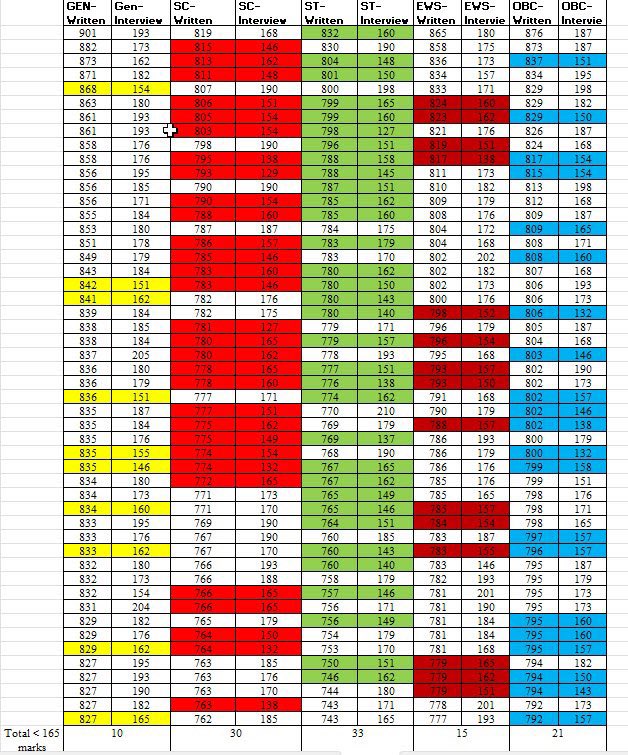
UPSC 2023 के रिजल्ट पर गौर करिये। OBC, SC और ST के ज़्यादातर अभ्यर्थियों को साक्षात्कार में कम अंक मिले है। आख़िर क्या कारण है कि OBC, SC और ST अभ्यर्थी लिखित परीक्षा में अच्छा अंक प्राप्त करते है पर साक्षात्कार में कम नंबर मिलते है। ये OBC, SC और ST अभ्यर्थियों का अनारक्षित सीटो में प्रवेश सीमित करने का एक तरीक़ा है।
हिन्दी
@SwatiPa86978549 @hoopoe_is_here Aunty, please sit down and stop spreading ur casteist filth over sm. Thank you.🙄
English

@hoopoe_is_here 1st of all,old case & they were Sri Lankans.2nd, in d last 3-4 yrs of mine on Twitter,the amount of time I've read about caste here,God,its mindboggling. I was not even conscious of my caste b4.😃Yahan toh brahmins ko bus gali hi padti hai. My roommate was SC.Still a dear friend.
English
@otherwarya Ma'am, stop romanticising the toxic work culture.🙄
Your bosses hired u and didn't fire u, only cuz you have the luxury of your surname.
So, plz stop undermining the people who work in toxic culture day in and day out and who doesn't have the same luxury of caste as u have.🙏
English

I’m grateful for the bosses who pushed me to work harder and saw in me something I couldn’t see in myself. l trusted their instinct and experience. But this is not for everyone. Not everyone wants to be pushed. Some just want to do a job and go home and that’s perfectly okay
English

@DalitWithIphone Typical UC behavior. If you reveal their generational crimes and expose how they do caste discrimination they will start calling you casteist. Typical 'ulta chor kotwal ko daate' scenes.😂
The good thing is now a large number of oppressed are getting aware of their crimes.😇
English
SansActus retweetledi
📣 CATS is India's first research initiative dedicated to the study of contemporary Taiwan & China. Our endeavour is to bring to the people information on the developments in Taiwan 🇹🇼& China 🇨🇳
English
Indeed, so when are you joining a school Madam Finance Minister?
NDTV@ndtv
"Financial Literacy Should Be Taught In Schools": Nirmala Sitharaman ndtv.com/india-news/fin…
English
SansActus retweetledi
Less Than 25% Of HC Judges Belong To SC, ST, OBCs & Minorities; 13.5% Women Judges In Higher Judiciary
livelaw.in/top-stories/le…
English
@KrishnaPillutla @iitmadras Respected Sir, you only got the job there because of your Caste.
Since you are an UC, you got selected.
The level of casteism against SC, ST and OBC at IIT Chennai has reached a level of absurdity.
High time we deal with it or you people will completely destroy it.
English
I’m thrilled to announce that I'll be joining @iitmadras as an Assistant Professor in April 2024!
I’m immensely grateful to my amazing mentors, family, and friends for their unwavering support. (1/4)
English
SansActus retweetledi
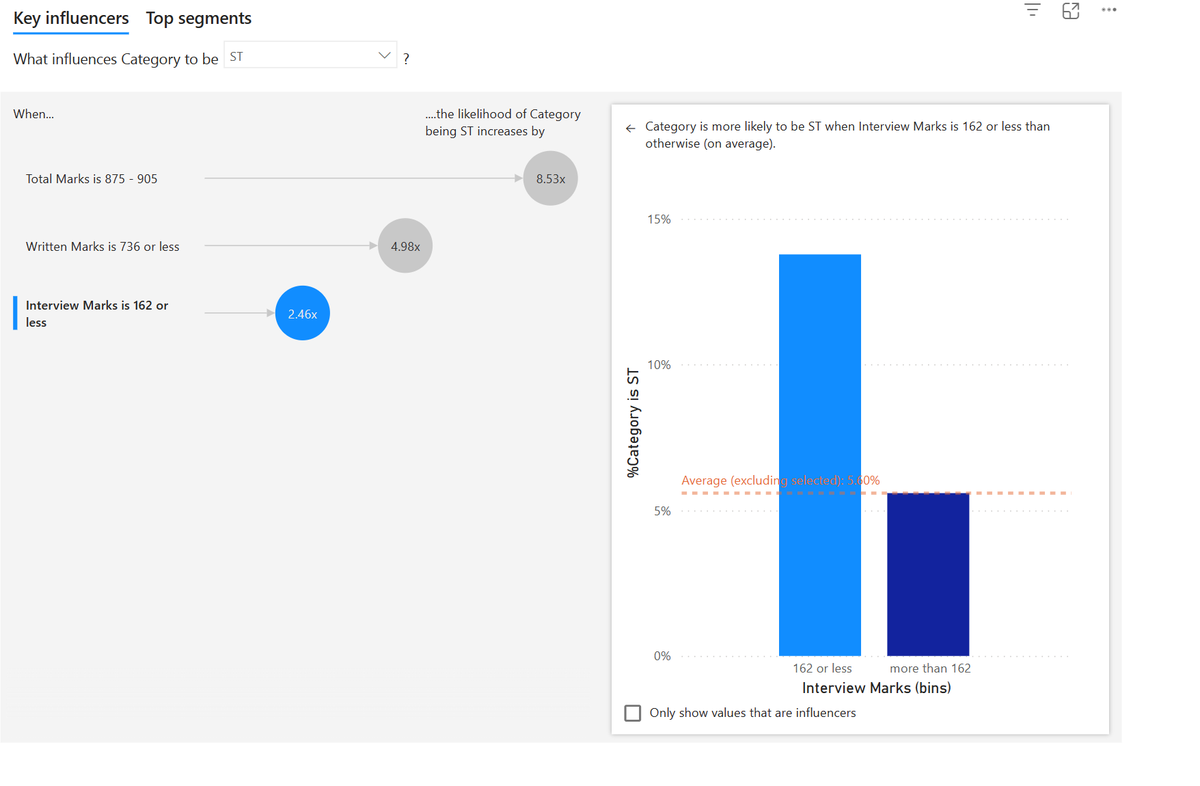
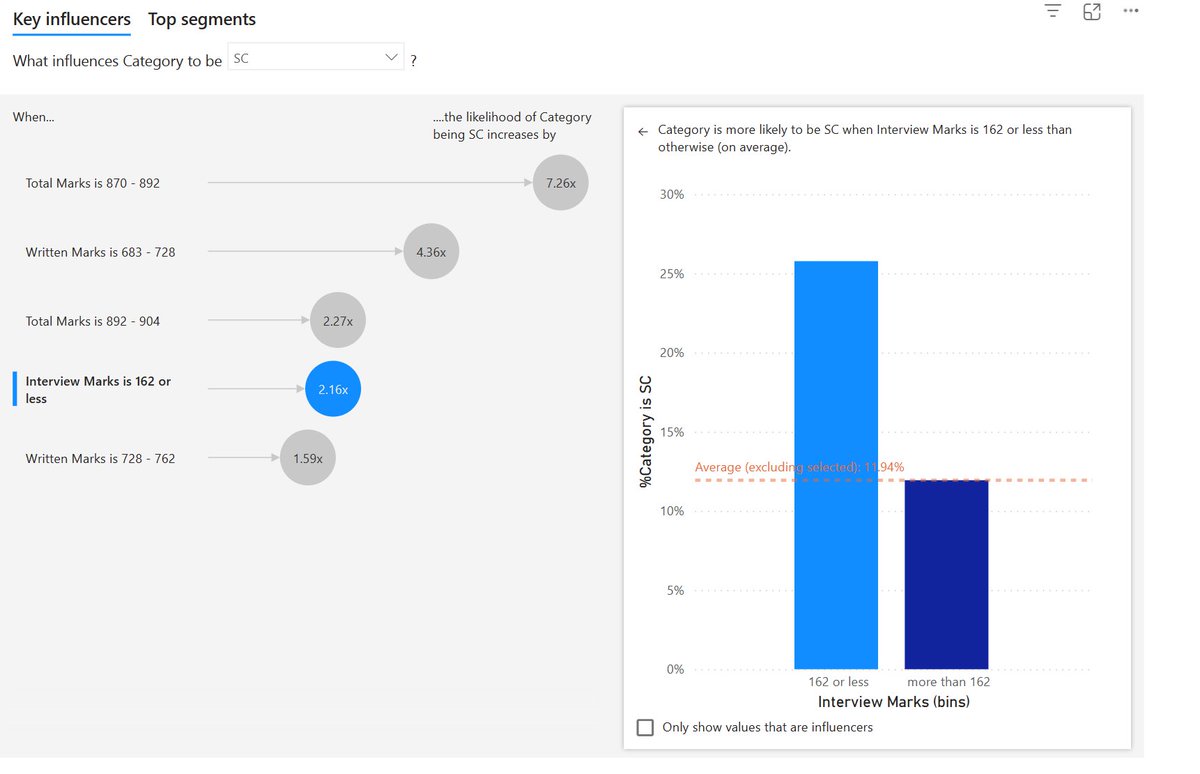
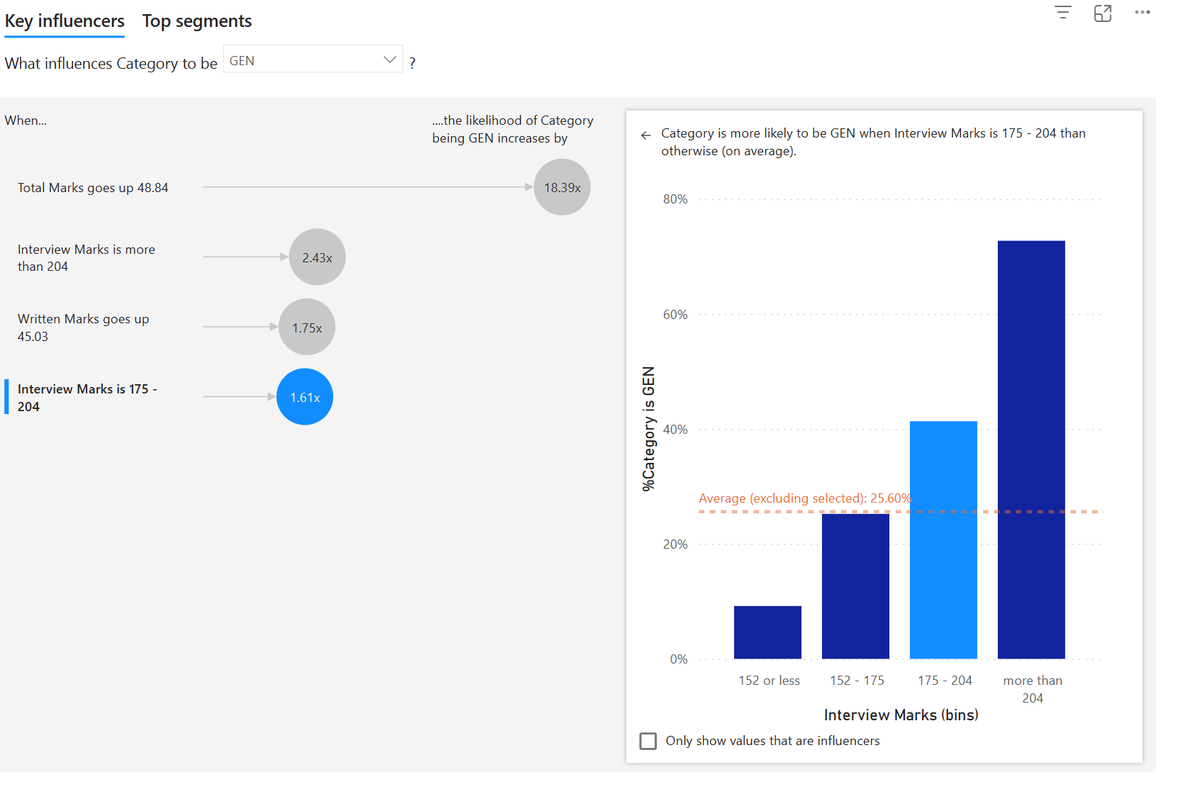
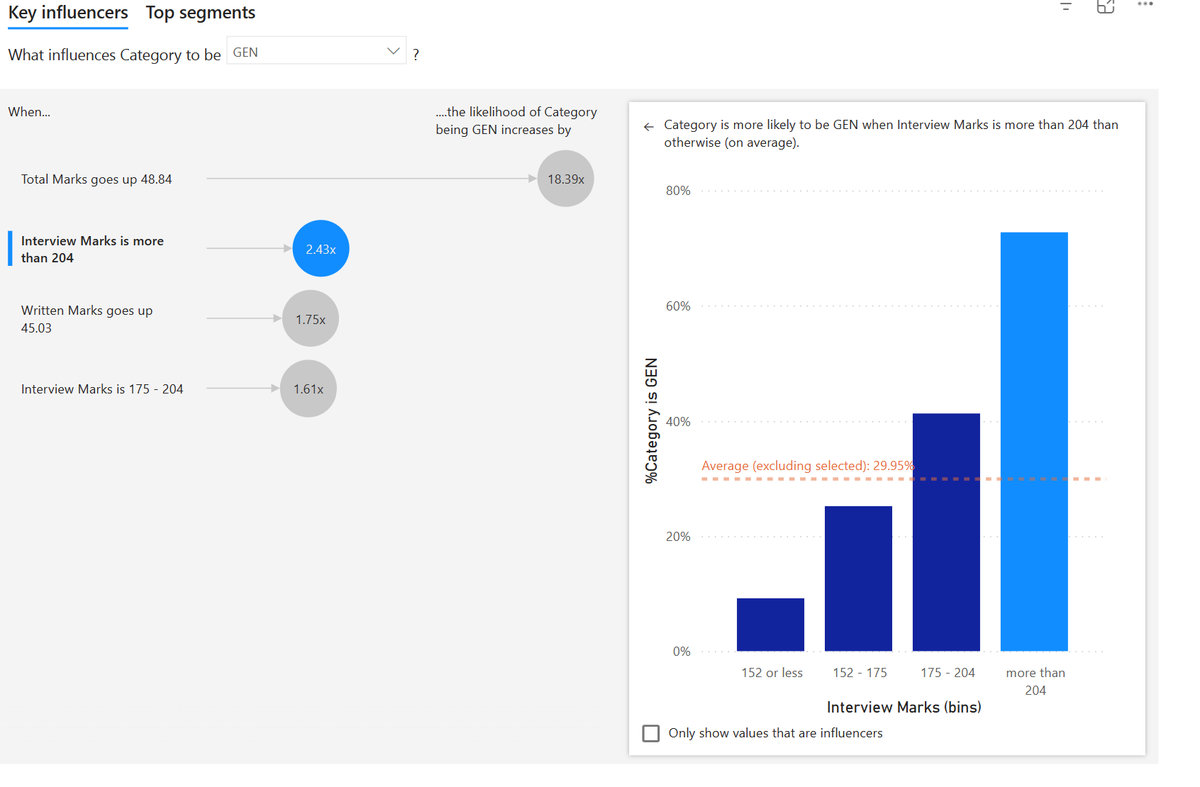
UPSC 2020 Marks and Machine Learning using PowerBI
I fed the UPSC 2020 marks to PowerBI and ran the Key influencers tool.
For the first time, I found out that there was a pattern wherein the majority of SC/ST students got less than 162 marks in the interview.
While in the general category, the majority of the students got more than 175 marks, with many getting as high as 204.
Machines are also figuring out the disadvantage which SC/ST students face at the interview stage.
#Reservation
English