sarah carroll

508 posts

sarah carroll banner
sarah carroll

sarah carroll

@SarahCAuthor

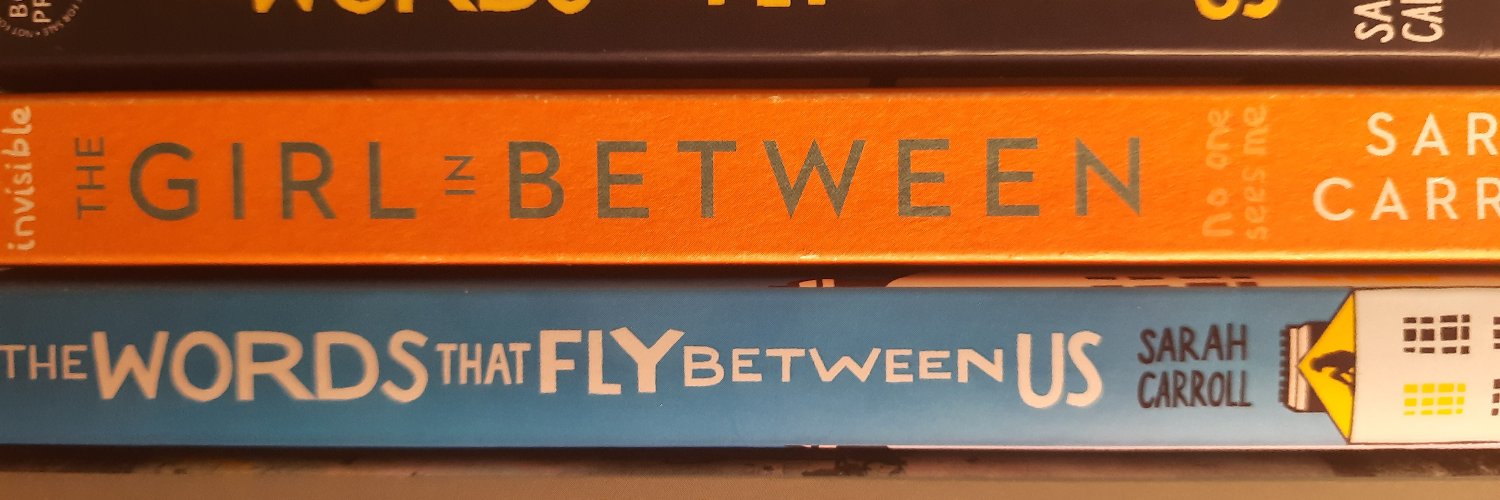
Author THE GIRL IN BETWEEN and THE WORDS THAT FLY BETWEEN US. #LongCovid since 2020. Nowadays I write when I'm not exhausted.

Katılım Ekim 2017
121 Takip Edilen200 Takipçiler
sarah carroll retweetledi
Dr Danish
Dr Danish@operationdanish·
The Case for Childhood Boredom. A strange thing has quietly disappeared from childhood. Boredom. For most of human history, boredom was unavoidable. Childhood unfolded in long, uneven stretches of time that nobody bothered to organize. Summer afternoons drifted by without a schedule, car rides lasted hours with nothing but the passing landscape, and children spent entire days outside with only a loose instruction to be home before dinner. And something curious tended to happen in those empty spaces. Children invented things. A stick became a sword, and then a fishing rod, and then, without warning, a wand capable of defeating imaginary monsters. A patch of grass became a battlefield. A cardboard box became a spaceship. Entire worlds emerged out of nothing more than idle time and a restless mind. Neuroscientists now understand that the brain behaves differently in those moments. When external stimulation fades, a network deep in the brain called the default mode network begins to activate. It is the circuitry associated with imagination, memory integration, and abstract thinking. When the mind has nowhere specific to go, it begins to wander, and while it wanders it starts connecting dots that rarely meet during structured activity. Creativity often lives in that wandering. Modern childhood, however, has undergone a quiet redesign. Empty time has been steadily replaced with organized activity. Sports leagues, tutoring sessions, music lessons, enrichment programs. Even the small gaps between activities tend to be filled with screens engineered with extraordinary precision to eliminate boredom the moment it begins to appear. Parents worry when boredom surfaces. A child announcing “there’s nothing to do” can feel like a problem waiting to be solved, a signal that the environment lacks sufficient stimulation. But boredom is simply the brain beginning a different mode of operation. The mind starts generating its own stimulation instead of consuming someone else’s. Look closely at the childhoods of unusually creative people and a pattern emerges. Steve Jobs spent long stretches wandering the neighborhoods of Silicon Valley, exploring electronics shops and experimenting in garages. Albert Einstein famously described hours of quiet daydreaming as a child, staring out windows and imagining physical problems in his head. J.K. Rowling began inventing elaborate stories long before she had any audience for them. Each of them had something that has become surprisingly rare. Psychological whitespace. Modern childhood often resembles a corporate calendar. Every hour accounted for. Every activity supervised. Every quiet moment quickly filled by a glowing rectangle designed by teams of behavioral scientists whose job is to make sure attention never drifts into silence. And yet many of the qualities parents hope their children will develop—creativity, resilience, independence—tend to emerge from precisely the conditions we have learned to eliminate. Unstructured time confronts a child with a deceptively simple problem. What should I do next? That question trains the brain in powerful ways. It forces the mind to generate ideas, to tolerate the mild discomfort of inactivity, and eventually to invent something interesting enough to fill the gap. Children who rarely encounter boredom often struggle to resolve it on their own. They wait. They look outward for stimulation rather than inward for possibility. Childhood boredom, in that sense, becomes a kind of workshop. It is the place where imagination practices building things from nothing, where the mind experiments freely without instruction, and where curiosity slowly learns how to entertain itself. Left alone long enough, the mind begins to wander. And wandering minds have a peculiar habit of discovering entirely new worlds.
Dr Danish tweet media
English
58
598
2K
97.1K
Alpro
Alpro@Alpro·
@SarahCAuthor Hi Sarah! 👋 The flavourings used in our Soya Cream and Soya Custard do not contain yeast, but we always recommend checking with our consumer care team if you have specific dietary concerns. You can check the details here alpro.com/uk/products/go… Best, Smriti from Alpro UK Team
English
1
0
0
58
sarah carroll
sarah carroll@SarahCAuthor·
@Alpro Hi. Can you tell me what is in the "flavourings" listed in the ingredients on your Soya Cream and Soya Custard as I cannot have yeast. Thanks.
English
1
0
0
61
sarah carroll
sarah carroll@SarahCAuthor·
@Alpro I am severely intolerant to yeast. Your Soya cream lists 'flavouring' in the ingredients. Often this mean yeast. Does your product contain yeast? Same question for you custard. Thanks
English
0
0
0
10
sarah carroll
sarah carroll@SarahCAuthor·
(To be read to my kids, not by them, so can be novel lenght)
English
0
0
0
50
sarah carroll
sarah carroll@SarahCAuthor·
Are there any book festivals or events in May/June/July/August that I can attend online? Would appreciate a link here please! (There seems to be loads in Sept & Oct.) Also, if there's anything on around Dublin this summer, pls let me know. Thanks.
English
1
0
0
88
sarah carroll
sarah carroll@SarahCAuthor·
@LTimoneyWrites My worst results in the LC were in English. Eng class stressed me out, I hated it. Trying to rote-learn poems, never once getting > C for essays. I excleed at Science cos you could make lists. Tick a box. Ive a degree in Science. I was 30 before I even thought of writing.
English
1
0
1
16
Lisa Timoney/Kate Storey/Naomi Williams
I am livid that my daughter & cohort have wasted so much time & energy learning quotes for their English Lit exam today.  Since when was understanding and analysis of literature demonstrated by a memory test? Bring back open book exams!
GIF
English
175
42
959
112.6K
sarah carroll
sarah carroll@SarahCAuthor·
I read Under The Hawthorn Tree as a girl and it has stayed with me to this day. @SarahCrossan Where the Heart Should Be isn't just a masterfully constructed and gripping read full of humanity but it is as vital now as a novel about the Great Hunger was in my youth.
English
1
1
2
401
sarah carroll
sarah carroll@SarahCAuthor·
@kidswholit Seriously? That's amazing! Can't believe your class are studying TGIB. Rather flattered...
English
0
0
1
2
Nicole Jorge
Nicole Jorge@kidswholit·
@SarahCAuthor My ninth graders in the Dominican Republic are about to write their first literary analysis essay on the concept of invisibility in The Girl In Between. We don't think your writing (past, present, future) could ever be rubbish.
English
1
0
0
17
sarah carroll
sarah carroll@SarahCAuthor·
The age-old question: is what I've written insightful literary prose, or in fact, pretentious rubbish? Hmmmm. Select all. Delete.
English
2
0
1
121