

Satori
257 posts

Satori
@Satorii_Bit
Building BIT Currency / #Bitcoin Maximalist / Macro Trader / HODLing since 2019
United States Katılım Mart 2026
19 Takip Edilen16 Takipçiler
Satori retweetledi

Enterprise doesn't move fast.
It moves carefully. Deliberately.
And before any enterprise client signs with HRX, they go through a defined process.
Step 1: Awareness Stage
We sit down with the organization and map out exactly how HRX can help them and in which areas.
At the same time, we learn the nature of their work, their current systems, and how we can run the implementation smoothly from day one.
Both sides need to understand each other before anything moves forward.
Step 2: Readiness Assessment
Internal approvals, due diligence, and a structured evaluation that filters out what isn't ready.
Not everyone passes.
Those who don't get a roadmap to get there.
Step 3: Implementation
When everything checks out, we begin.
No surprises or failed deployments.
Just a system that was built for exactly this organization.
Three new enterprise clients just completed that process and signed with HRX.
- They didn't choose a CRM.
- Or an HR platform.
- Or an ITSM tool.
They chose one operating system to replace all three.
That's what HRX is built for.
And that's what serious enterprise buyers recognize when they see it.
The pipeline is moving.

English
Satori retweetledi

Most perp traders have an entry problem.
They spend hours finding the right setup, the right narrative, the right timing.
Then they size the position based on nothing.
A gut feeling.
What feels comfortable.
Whatever number comes to mind.
That is where most of the damage actually happens.
Here is the framework I use for position sizing on perps:
It is not complicated, but using it consistently changes everything.
1. Start with one number
The maximum amount you are willing to lose on a single trade.
Not a percentage of your conviction. Not based on how good the setup looks.
A fixed percentage of your account. I use 1 to 2 percent depending on market regime.
That number is your risk per trade. Everything else is calculated from it.
2. Once you have your risk per trade, you work backwards from your stop
Your stop placement comes from the chart, not from your position size.
Find the level where your thesis is invalidated. That is your stop.
The distance between your entry and that stop, measured in percentage terms, tells you how large your position can be.
The formula is simple:
Position size = (Account size x Risk per trade) divided by stop distance.
Let me give you an example:
- Account: $10,000.
- Risk per trade: 1 percent, so $100 maximum loss.
- Entry at $100. Stop at $95. That is a 5 percent stop distance.
- Position size: $100 divided by 5 percent = $2,000 notional exposure.
At 10x leverage that is $200 of capital deployed.
The math tells you the size. You do not decide it.
Why this matters more than any entry signal?
A trader risking 10 percent per trade needs to be right 9 times out of 10 just to survive a bad run.
A trader risking 1 percent per trade can be wrong 20 times in a row and still have 80 percent of their account intact.
Consistency of sizing is what keeps you in the game long enough for your edge to play out.
Most people never let their edge play out because they size themselves out of the game first.
The other thing systematic sizing does: it removes a decision point.
When size is calculated, not felt, you eliminate one of the moments where emotion enters the trade.
You are not asking yourself how much to put on.
The framework answers that before you open the position.
Three rules I follow:
1) Never risk more than 2 percent on a single trade regardless of conviction.
2) Size down in high volatility regimes, not up.
3) If you cannot define your stop before entering, you do not have a position size. You have a guess.
Position sizing will not make a bad strategy good.
It will stop a good strategy from destroying your account before it has a chance to work.

English
Satori retweetledi

Zest Protocol is the most battle-tested Bitcoin lending protocol.
The protocol processed over 1,500 liquidations with zero bad debt, partly by implementing a robust oracle architecture.
This is what the security standard for BTC lending looks like.
English
Satori retweetledi
Zest Protocol is the leading BTCFi protocol on any Bitcoin L2 with $85M+ TVL.
But 99% of BTC supply still hasn't touched DeFi.
A lending market on Bitcoin L1 is how that changes.

English
Satori retweetledi
Zest Protocol is building the institutional standard for BTC yield.
Corporations now hold 1M+ BTC on their balance sheets and look for yield.
Self-custodial lending infrastructure is required to unlock this capital.
English
English
Satori retweetledi

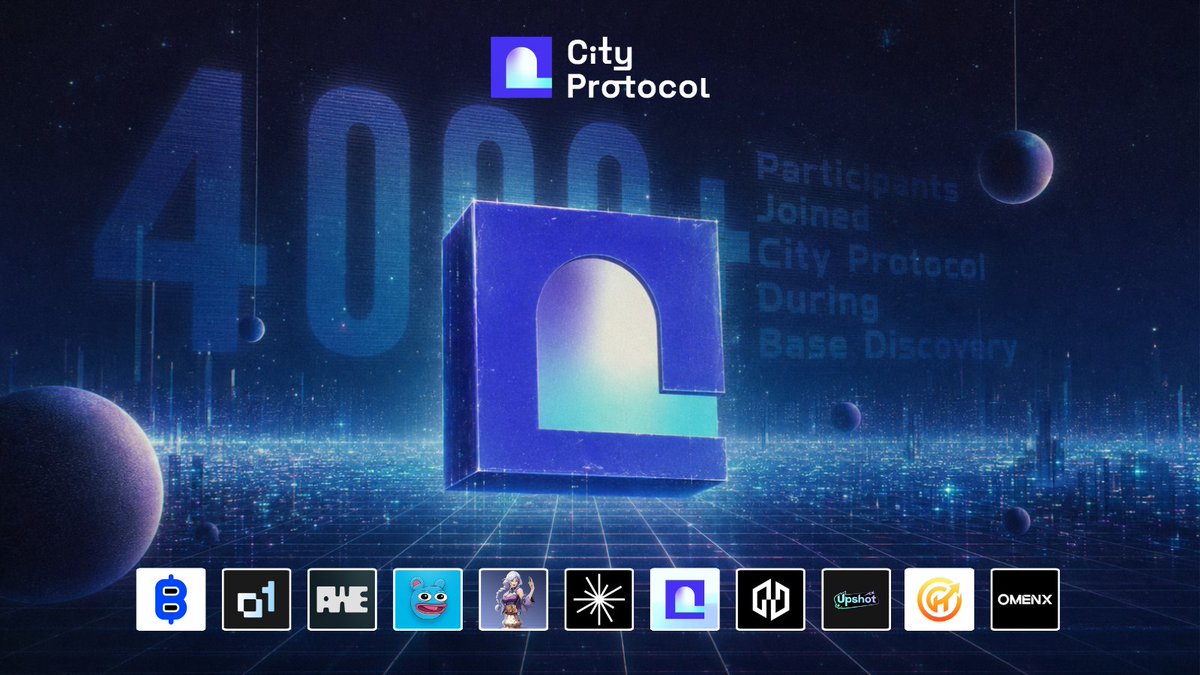
We just wrapped up Base Discovery with 4,000 users.
Over the past 3 weeks, 4,000 users entered @baseapp, discovered 11 different projects on @base, and became experts in the Base ecosystem while earning rewards.
A HUGE thanks to all the supporters during the campaign:
@billions_ntwk, @o1_exchange, @awenetwork_ai, @BasedBrett, @AnichessGame, @heurist_ai, @axisrobotics, @upshot_cards, @coinherofun, @OmenX_Official.
Together, let's spin the Attention-Capital Flywheel on Base App.
English
Satori retweetledi

OP Stack chains don't finalize the same way Ethereum mainnet does.
Understanding the difference matters if you are building cross-chain applications on Base, Optimism, Unichain, Blast, or any of the other OP Stack chains Taifoon indexes.
How OP Stack finality works
OP Stack L2s derive their security from Ethereum L1.
Finality is not determined on the L2 itself.
It is determined by what gets committed to and resolved on Ethereum mainnet.
There are two models currently in use across OP Stack chains.
The first is the legacy model
Output roots are posted by a permissioned proposer to the L2OutputOracle contract on Ethereum L1.
The output root commits to the L2 state at a specific block.
Finality is established when the L1 block containing that event passes Ethereum's Casper FFG finality, approximately 13 minutes.
The second is the fault-proof model
Output roots are posted permissionlessly and enter a dispute game on Ethereum L1.
Finality is established when the L1 block containing the OutputProposed event passes Ethereum's Casper FFG finality.
How Taifoon handles both
Taifoon's L2OutputTracker listens for OutputProposed events on the L2OutputOracle contract on Ethereum L1.
A block is marked finalized when the L1 block containing that event passes Ethereum's Casper FFG finality.
No block gets committed to the SuperRoot before the corresponding L1 finality is confirmed.
This means OP Stack finality in Taifoon's proof system inherits directly from Ethereum mainnet security, not from any assumption about the L2 sequencer or proposer.
Where this lives in the proof
Layer 6 of every V5ProofBlob is the FinalityCommitment, the chain-native finality proof at the innermost position of the six-layer structure.
For OP Stack chains that layer contains the L2OutputOracle event data anchored to Ethereum L1.
The outer five layers are identical across all indexed chains.
Layer 6 is what makes the proof specific to OP Stack's finality model.
Current OP Stack coverage
9 chains: Optimism, Base, Unichain, Lisk, Mode, Zora, Blast, Fraxtal, Lyra.
All 9 use the same proof format.
All 9 derive finality from Ethereum L1.
API docs: taifoon.io/docs/v5-proof-…
#CrossChain #DeFi

English
Satori retweetledi
Bitcoin lending is the vertical that can bring 99% of idle BTC into DeFi.
Building it requires team, capital, and track record.
How Zest Protocol is positioned to build the future of Bitcoin lending ⬇️
English
Satori retweetledi
Zest Protocol is building to win Bitcoin lending.
$100m TVL, 800 BTC deposited, largest DeFi protocol on any Bitcoin L2.
This was the warm up. Bitcoin L1 is next.
English
Satori retweetledi

Satori retweetledi

@Watt2Trade @cauhdez Been looking for something exactly like this. electricity markets are fascinating
English

Most people have no idea how electricity trading works.
In 10 minutes, that changes.
Our CEO, @cauhdez, put together a FREE mini course walking you through everything you need to know to trade on Watt2Trade.
This thread will give you an edge most people don't have. ⚡

English
Satori retweetledi
BTC credit is going to be one of the largest markets in crypto.
But it's not going to live on a Google Sheet at a CeFi lender this time.
Watch @renapshah - ex Binance US and @StacksEndowment president - dive into Zest Protocol's onchain vision.
English
Satori retweetledi
