
S4TRIO
139 posts


S4TRIO
@SatrioMorena
Rasa sakit ini begitu nikmat

At Rayls, we built our own consensus. Today we’re open-sourcing RBFT (Rayls Byzantine Fault Tolerant) - a consensus client designed for fast finality, reliability, and institutional-grade performance on Rayls. RBFT is part of our broader multi-consensus vision, giving the ecosystem more flexibility as Rayls grows.
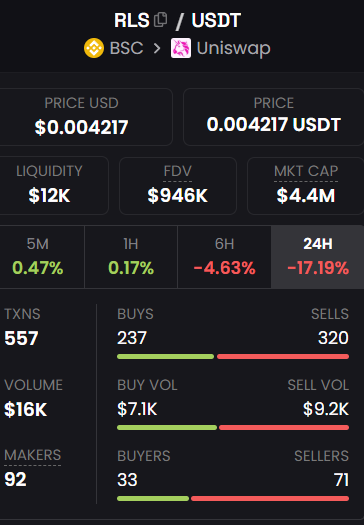
RLS pre-commit staking is officially live. Holders will be able to secure 50% APY with a 100 million total RLS cap.











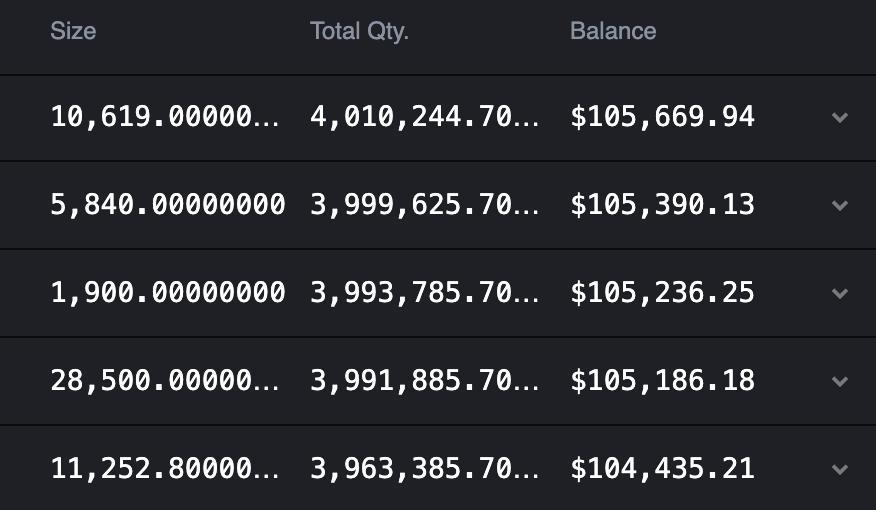
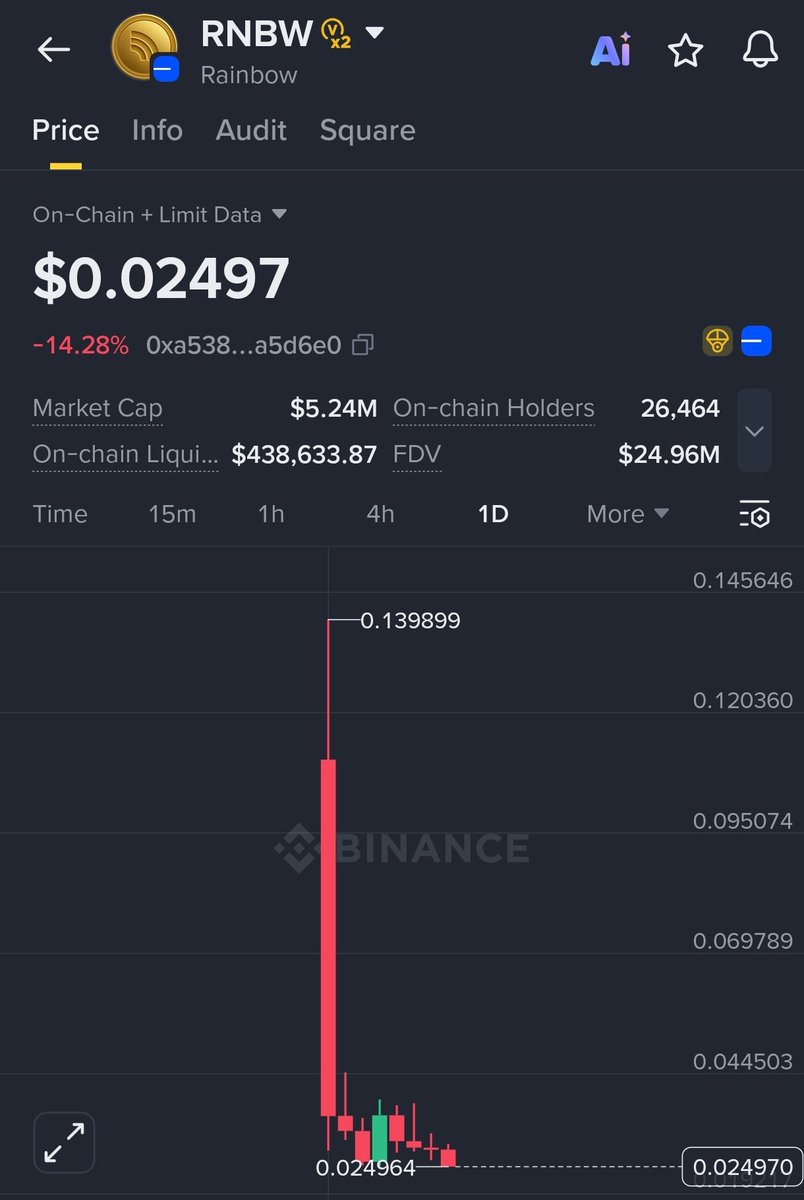
I have market bought ~1.2mm $RNBW in a series of txs over the weekend + yesterday. The funds are held in this wallet 0x156249DC32d6E3Ed0b7C6C611096109a9d741A83. I have moved the ENS alexlaprade.eth to this wallet. I intend to stake the full amount when $RNBW staking goes live.




My first reaction to this was: "And that's why I just got my $2,725 check of fileverse tokens now that fileverse has grown to the point where my dad regularly writes docs in fileverse that he sends to me" My second reaction to this was: "I see how this makes total sense from a crypto perspective, but it makes zero sense from an outside-of-crypto perspective ... hmm, what does this say about crypto?" My more detailed reaction: There are many distinct activities that you can refer to as "incentivizing users". First of all, paying some of your users with coins that your app gets by charging other users is totally fine: that's just a sustainable economic loop, there is nothing wrong with this. The activity that I think people are thinking about more is, paying all your users while the app is early, with the hope of "building network effect" and then making that money back (and much more) later when the app is mature. My general view, if you _really_ have to simplify it and sacrifice some nuances for the sake of brevity, is: * Incentives that compensate for unavoidable temporary costs that come from your thing being immature are good * Incentives that bring in totally new classes of users that would not use even a mature version of your thing without those incentives are bad For example, I have no problem with many types of defi liquidity rewards, because to me they compensate for per-year risk of the project being hacked or the team turning out to be scammers, a risk that is inherently higher for new projects and much lower once a project becomes more mature. Paying people to make tweets that get attention, might be the most "pure" example of the wrong thing to do, because you are going to get people who come to your platform to make tweets, with every incentive to game any mechanisms you have to judge quality and optimize for maximum laziness on their part, and then immediately disappear as soon as the incentives go away. In principle, content incentivization is a valuable and important problem, but it should be done with care, with an eye to quality over quantity, which are not natural goals that designers of "bootstrapping incentives" have by default. If fact, even if users do not disappear after incentives go away, there is a further problem: you succeed from the perspective of growing *quantity of community*, but you fail from the perspective of growing *quality of community*. In the case of defi protocols, you can argue: 1 ETH in an LP pool is 1 ETH doing useful work, regardless of whether it's put there by a cypherpunk or an amoral money maximizer. But, (i) this argument can only be made for defi, not for other areas like social, where esp. in the 2020s, quality matters more than quantity, and (ii) there are always subtle ways in which higher-quality community members help your protocol more in the long term (eg. by writing open-source tools, answering people's questions in online or offline forums, being potential developers on your team). The ideal incentive is an incentive that exactly compensates for temporary downsides of your protocol, those downsides that will disappear once the protocol has more maturity, and attracts zero users who would not be there organically once the protocol is mature. Charging users fees, but paying them back in protocol tokens, I think is also reasonable: it's effectively turning your users into your investors by default, which seems like a good thing to do. A further more cynical take I have is that in the 2021-24 era, the "real product" was creating a speculative bubble, and so the real function of many incentives was to pump up narratives to justify the narrative for the bubble. So any argument that incentives are good for bootstrapping acquisition should be not judged on the question of whether it's plausible, but on the question of whether it's more plausible than the alternative claim that it's all galaxy brain justification ( vitalik.eth.limo/general/2025/1… ) for a "pump and dump wearing a suit". TLDR: the bulk of the effort should be on making an actually-useful app. This was historically ignored, because it's not necessary for narrative engineering to create a speculative bubble. But now it is necessary. And we do see that the successful apps now, the apps that we actually most appreciate and respect, do the bulk of their user acquisition work in that way, not by paying users to come in indiscriminately.



The Internet today is a map of your every move. Despite encrypted apps and VPNs, your metadata is exposed, creating a detailed picture of your life for anyone who tries hard enough to dig. It’s no wonder that global internet freedom declined for the 15th straight year in 2025. Spacecoin is solving for this vulnerability by building privacy into the infrastructure layer. And to celebrate our partnership with @MidnightNtwrk, we’re excited to share with you a behind-the-scenes sit down between our founder @taelimoh and the legend @IOHK_Charles, as they discuss the technical architecture needed for genuinely private communication. Click ▶️
