SaveReisMagos

25 posts

SaveReisMagos banner
SaveReisMagos

SaveReisMagos

@SaveReisMagos

Reis Magos, Goa Tracking ongoing excavation & hill cutting ⬇️ Access visuals, documents, and on-ground updates ⬇️

Katılım Nisan 2026
5 Takip Edilen9 Takipçiler
SaveReisMagos
SaveReisMagos@SaveReisMagos·
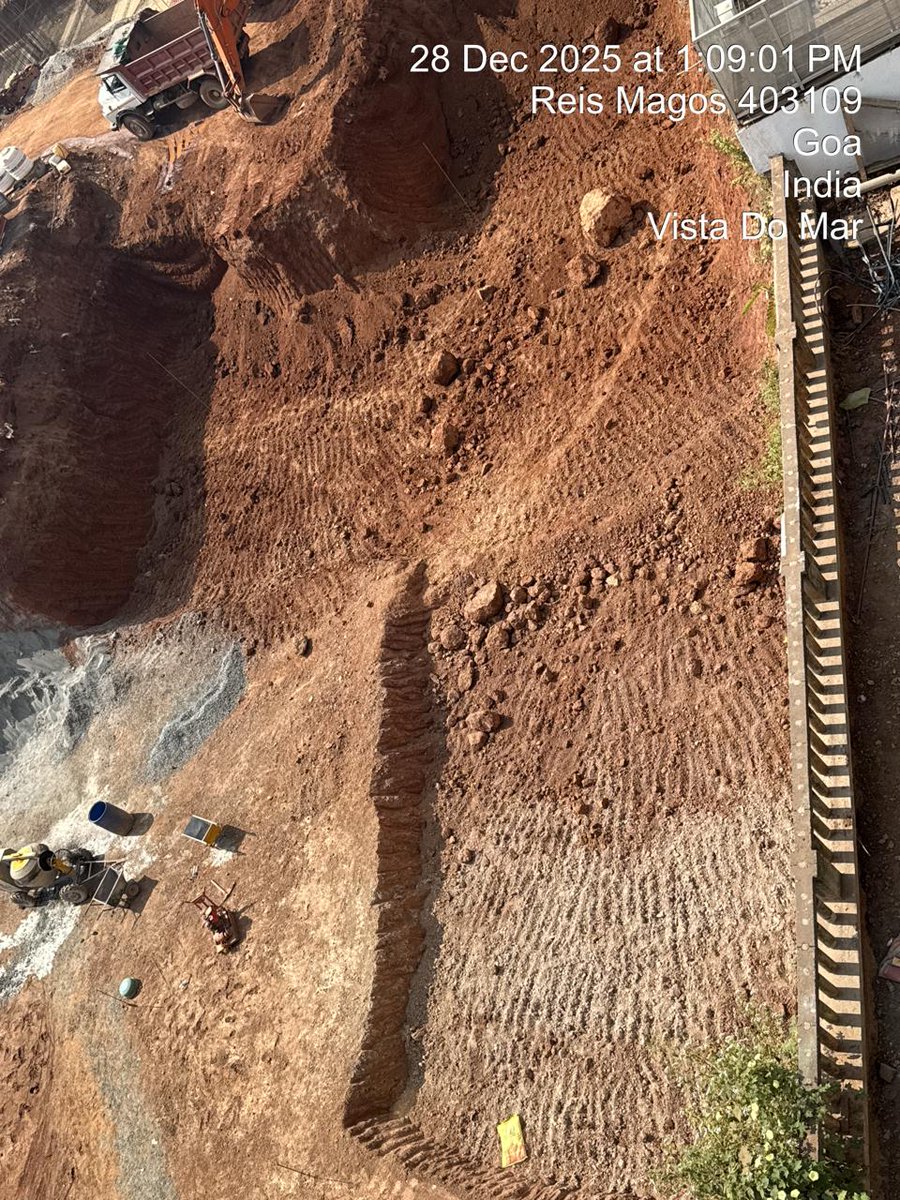
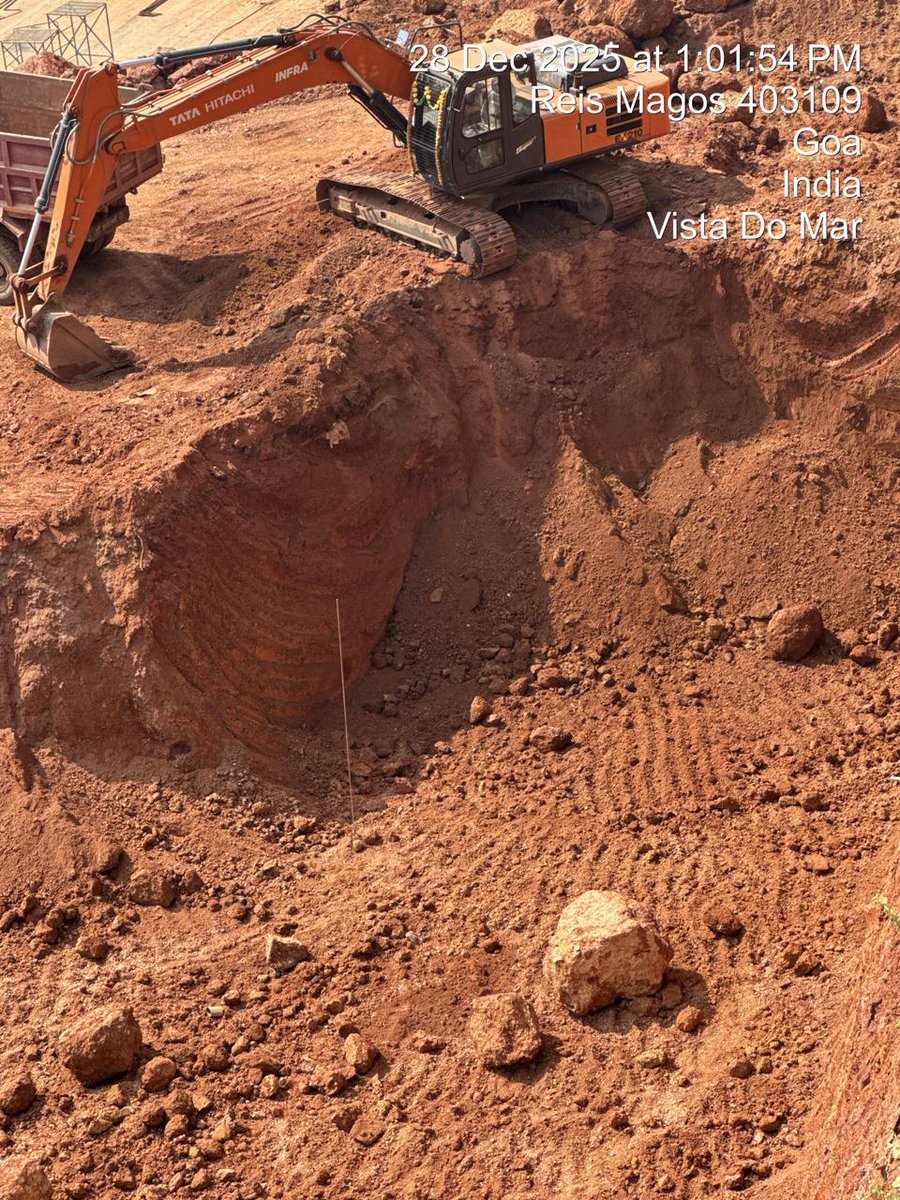
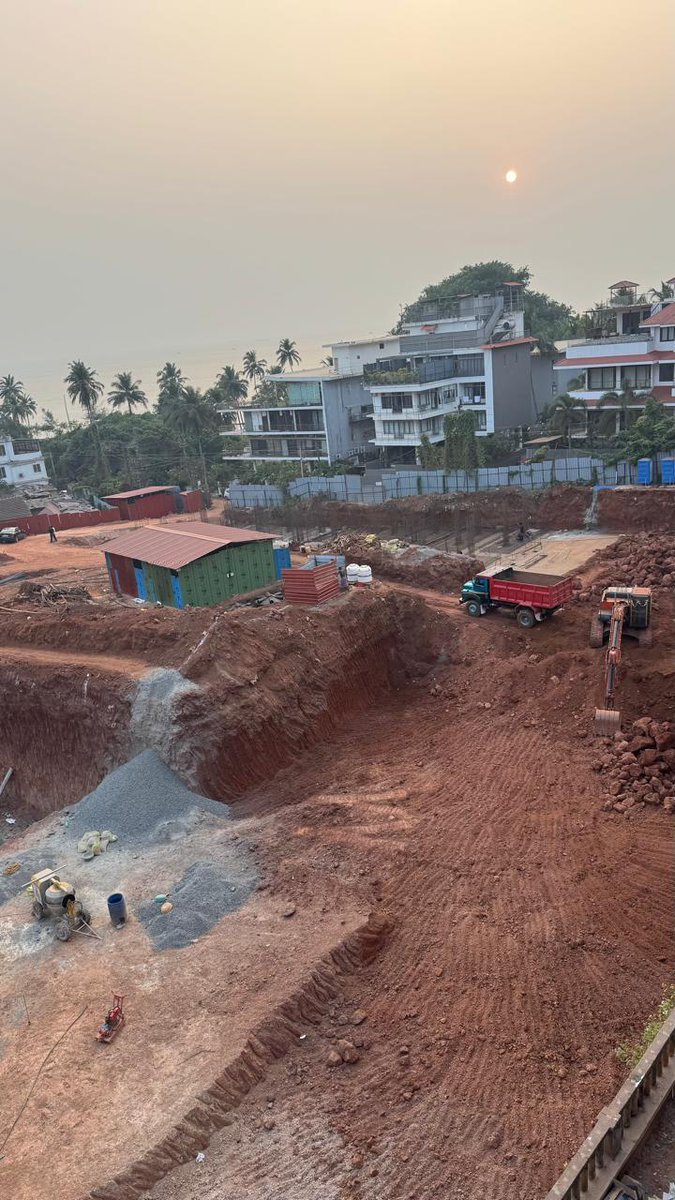
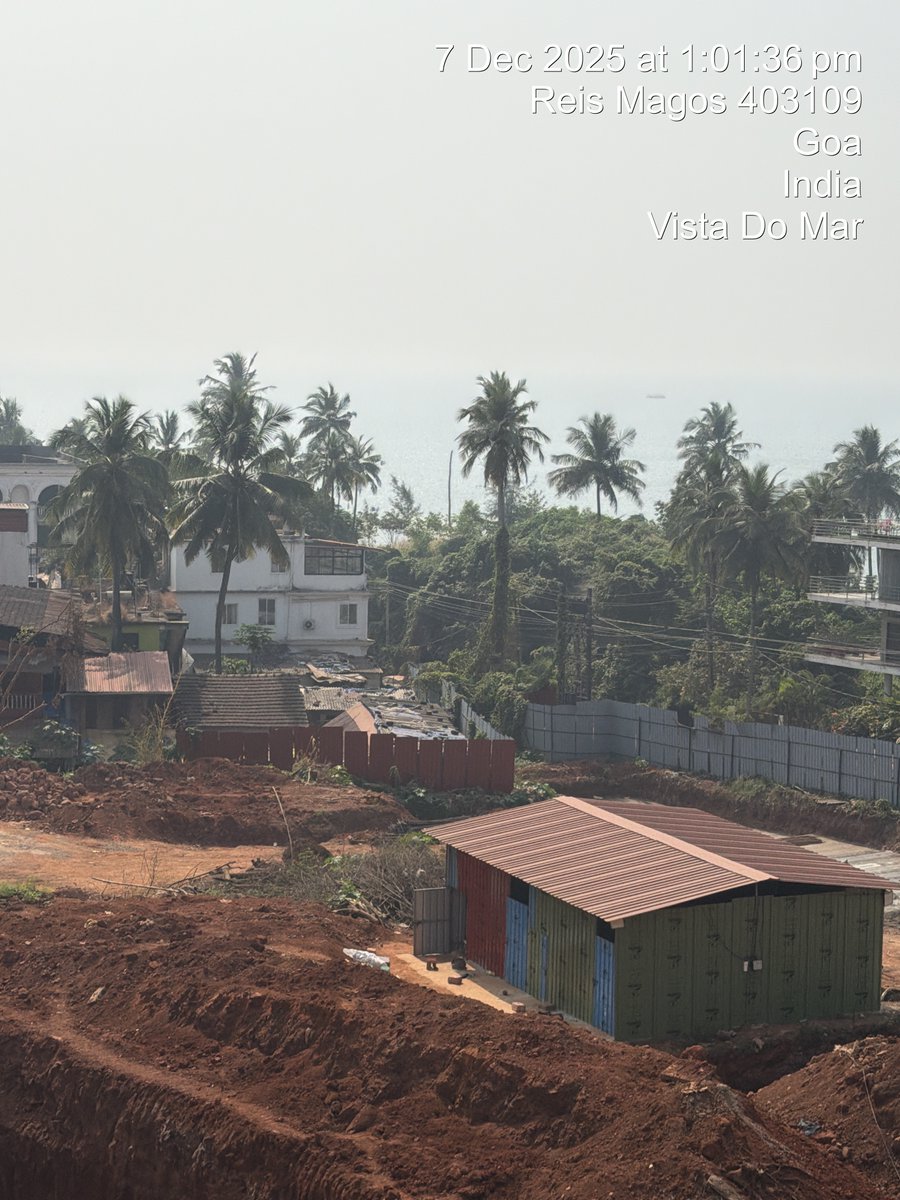
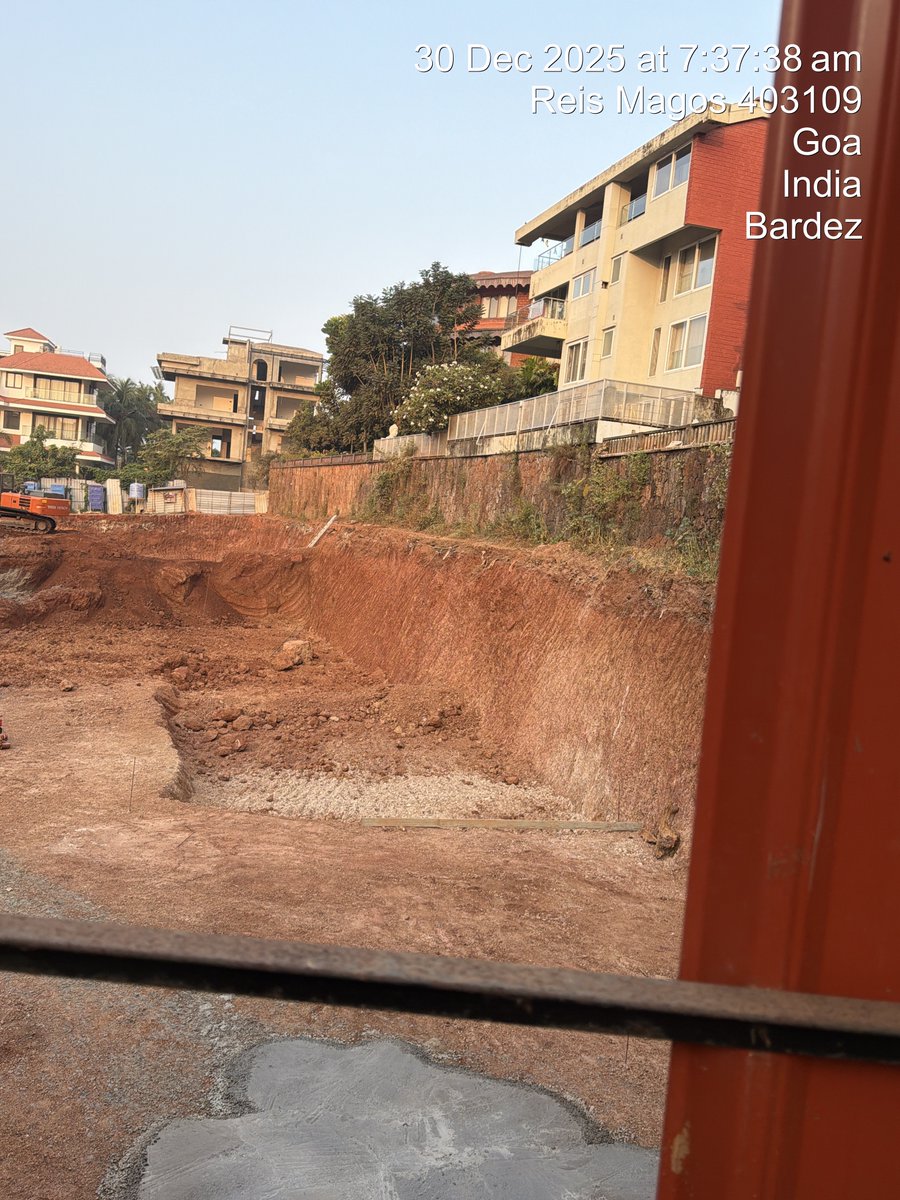
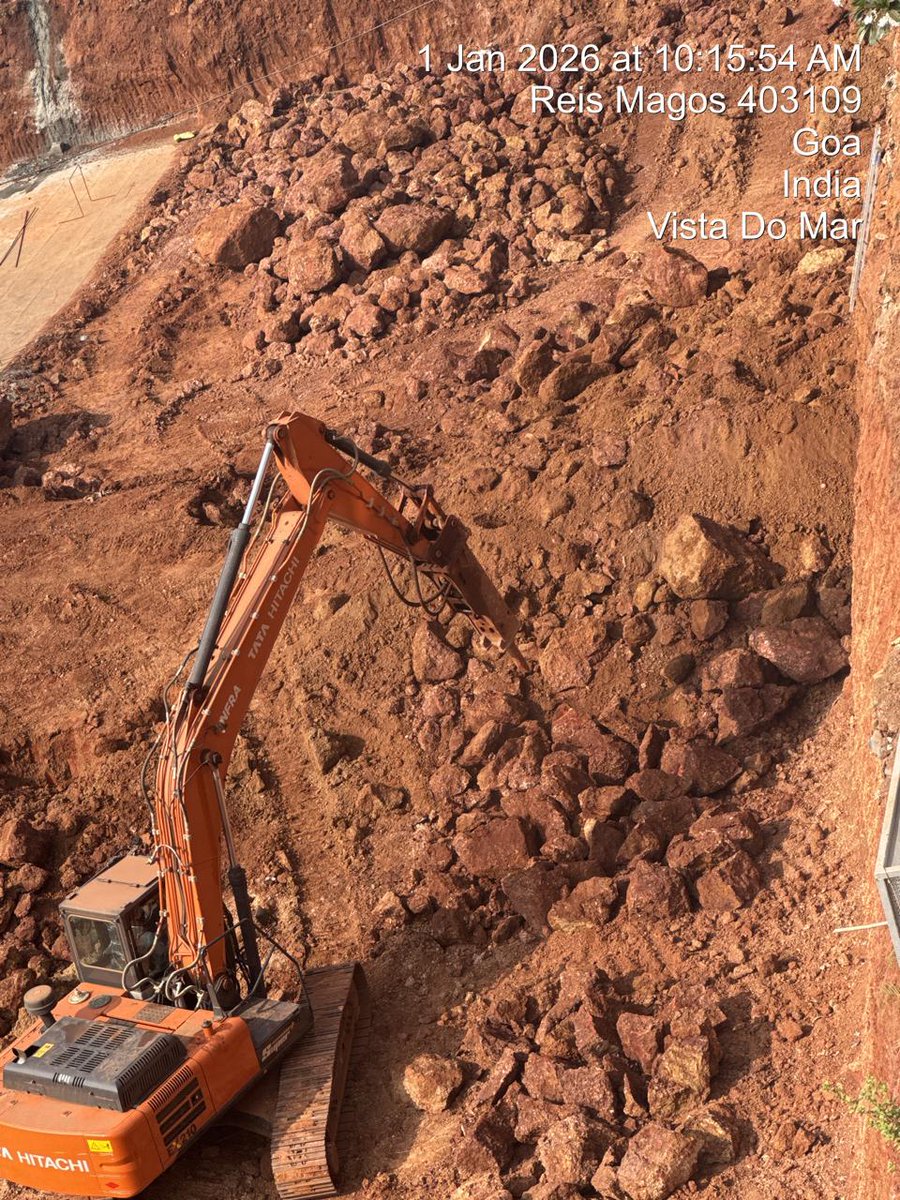
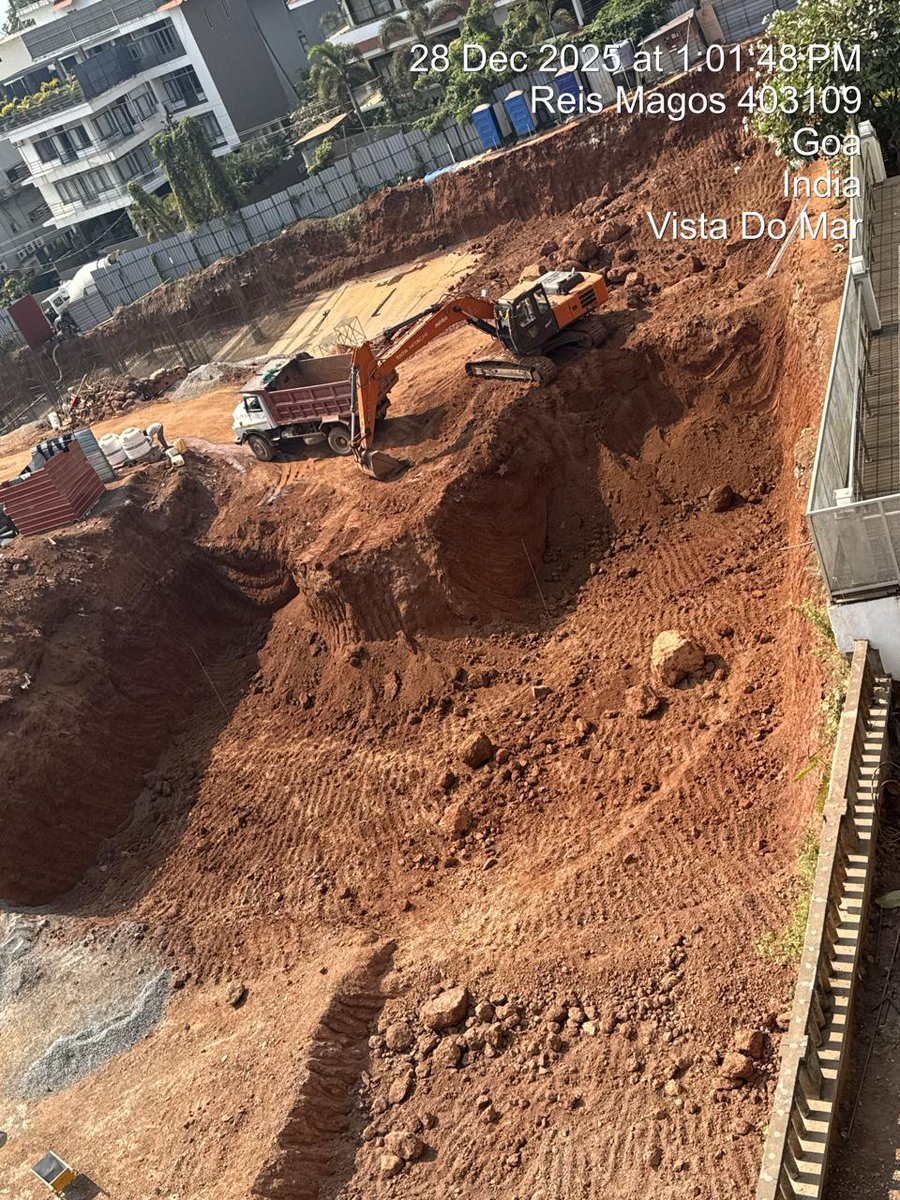
The most critical work on a site like this doesn’t stay visible for long. Cutting into rock, removing boulders, and altering the base of a hill - these are early-stage interventions. Once completed, they are often followed by surface-level activity that makes the site appear more controlled, more routine. That is where the narrative shifts. Today, the claim being made is that no hill cutting took place. But that claim is based only on what can be seen now - after the initial excavation has already been carried out. Because once the base has been cut and material removed, the visible signs reduce. The structural change does not. But the visuals speak for themselves - rock being cut, boulders being removed, and the slope being opened up. So the question is not whether it happened. It is why it is now being denied. Because the current state of the site is not neutral. It is the result of those earlier actions. And as the season changes and external stress on the land increases, what was done earlier becomes more relevant - not less. What may no longer be obvious on the surface still exists in the structure of the land. #SaveReisMagos #SaveGoa #ReisMagosGoa #Conservation @goafoundation @goaspeaksin @amche_goa @GoaWorthAFight
English
0
2
5
5.1K
SaveReisMagos
SaveReisMagos@SaveReisMagos·
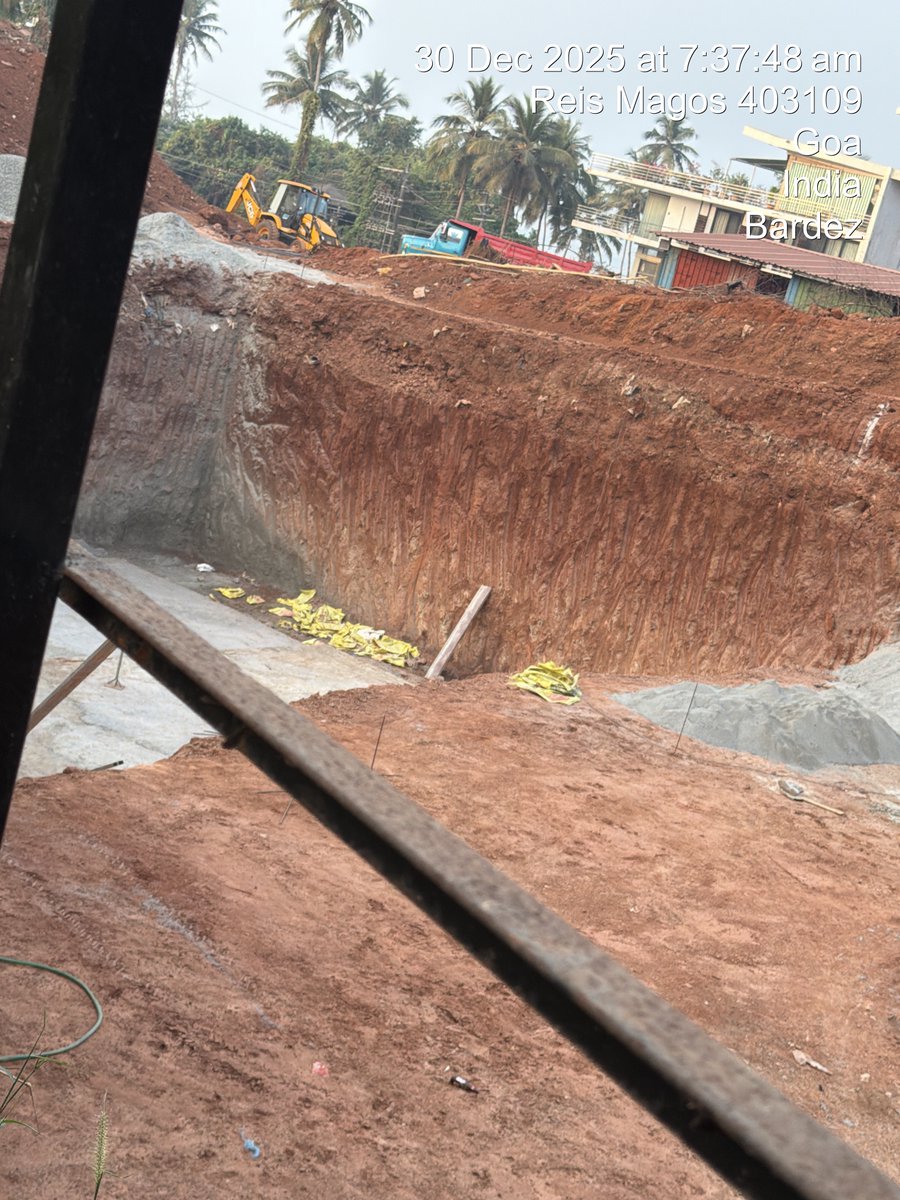
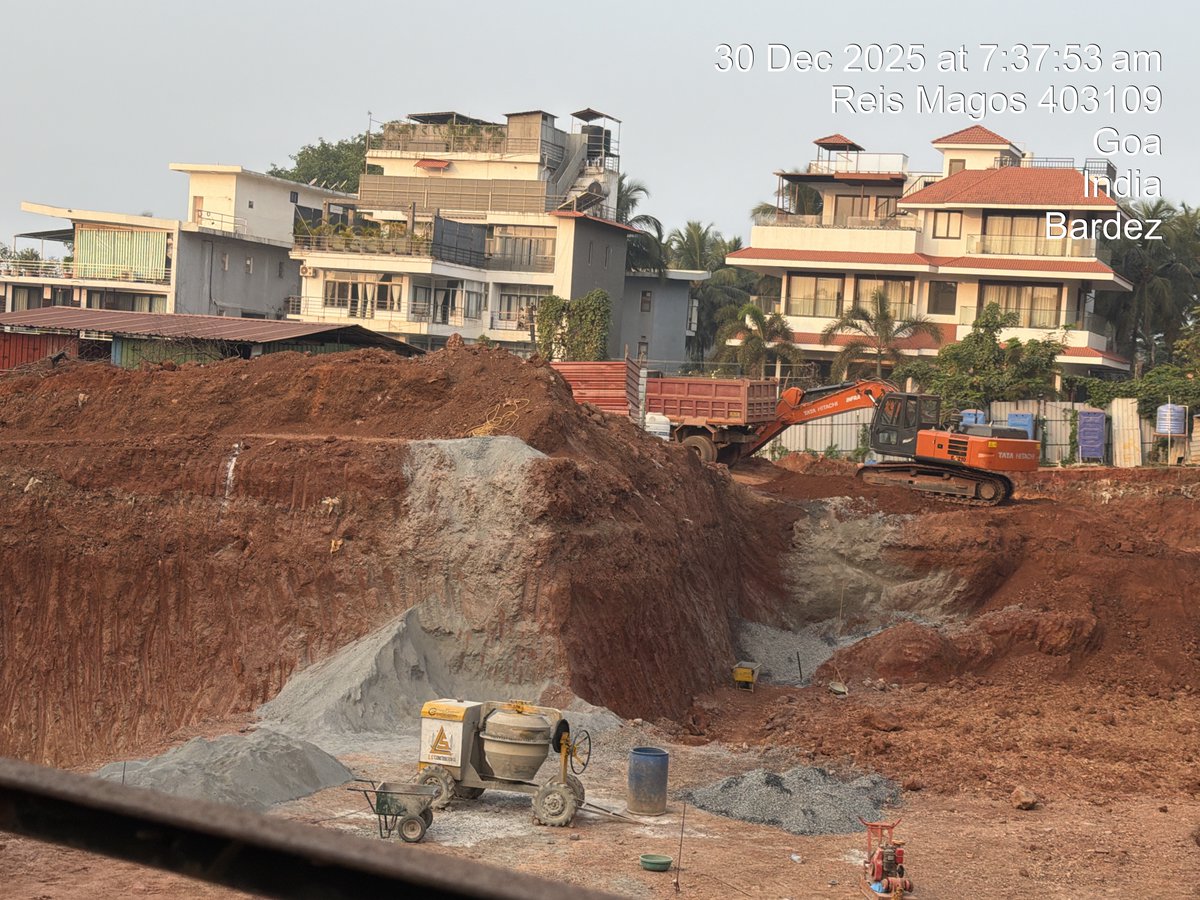
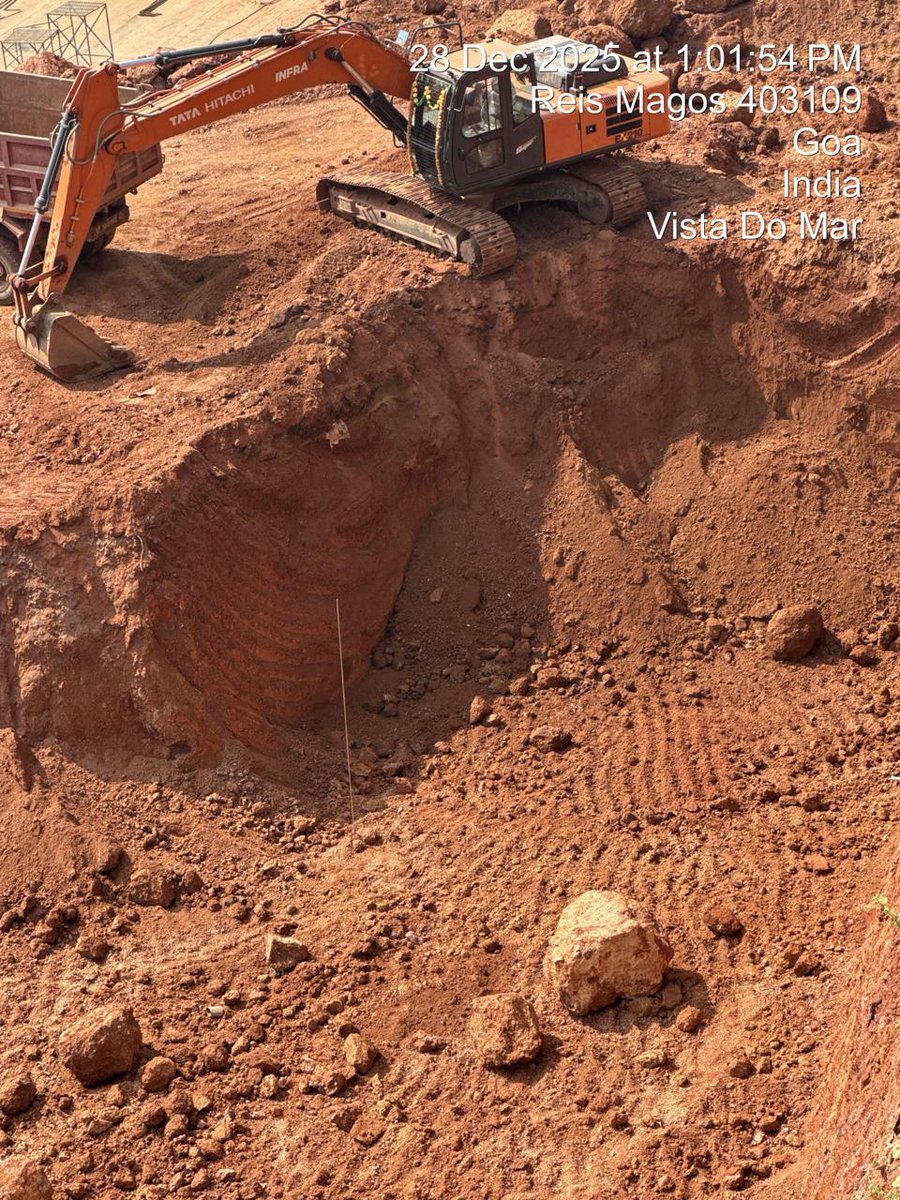
It was claimed that no hill cutting took place here. But the documented footage shows excavation equipment cutting into the hillside, removing rock and boulders, and altering the base of the slope. That matters because once the natural support structure of a hillside is disturbed, the consequences do not disappear simply because construction progresses or the site begins to look different. The risk created by that excavation remains. With the monsoon now almost here, that risk becomes significantly more serious. Heavy rainfall on a disturbed slope increases the likelihood of water infiltration, soil saturation, erosion, and slope instability. In Goa, this is not hypothetical. Landslides, road collapses, and slope failures are a recurring monsoon reality, particularly where terrain has already been weakened. The concern is straightforward: was adequate geotechnical assessment done before this level of excavation? Were the risks to surrounding structures, road access, and public safety properly accounted for? Because once heavy rain begins, the condition of the land will be tested under real pressure. What is frustrating is not just the risk. It is the denial of something that was visibly documented. Because when reality is denied while danger remains, public trust collapses long before the hillside does. #SaveReisMagos
SaveReisMagos tweet mediaSaveReisMagos tweet mediaSaveReisMagos tweet media
English
0
2
6
2.5K
SaveReisMagos
SaveReisMagos@SaveReisMagos·
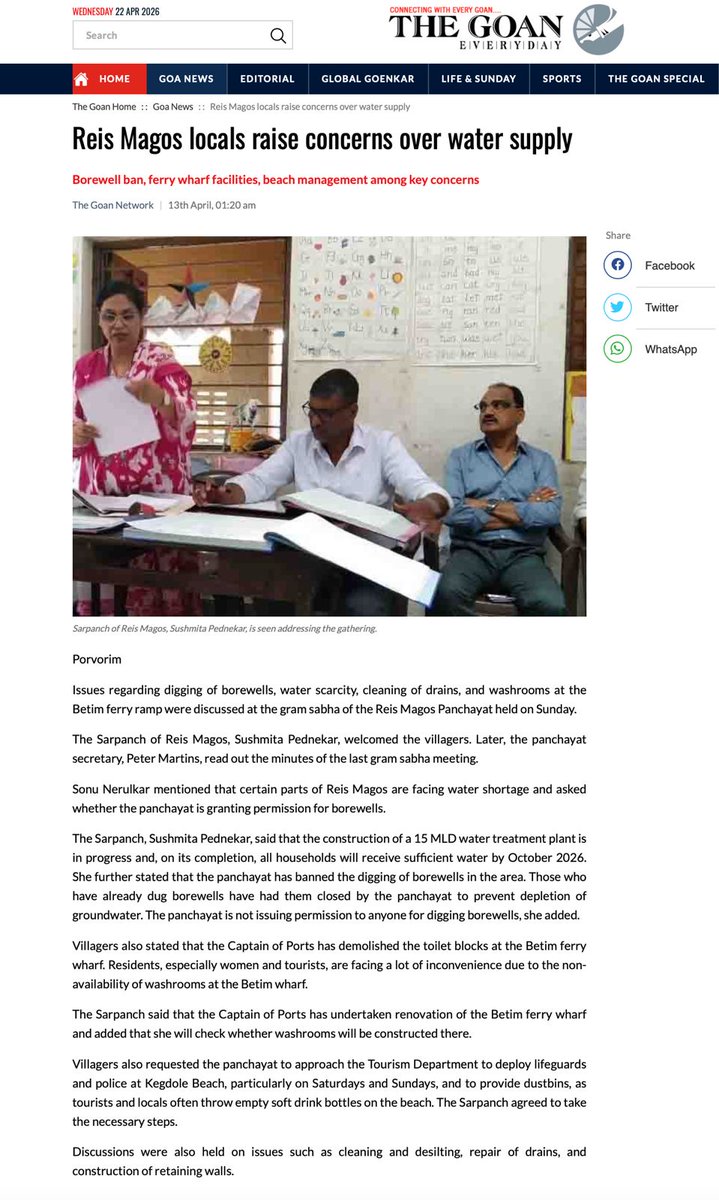
Water demand at this scale is not just a number.  It is a continuous, daily requirement. For residential use alone, planning norms in Goa estimate 135 litres per person per day. For 50+ units, that translates to 13,500 to 27,000+ litres every single day - and that’s before accounting for pools, maintenance, and peak usage. This is not occasional consumption. It is a permanent demand. In locations without stable piped supply, that demand is met through external sourcing - primarily tanker deliveries. Which means water is being extracted from elsewhere, transported continuously, and redistributed to sustain this level of usage. The demand does not stay within the site. The pressure does not stay within the site. It shifts outward. To surrounding areas. To shared infrastructure. To already stressed local systems. Water going in is not an isolated event. It is part of a larger chain - and that chain has limits. #SaveReisMagos
SaveReisMagos tweet mediaSaveReisMagos tweet mediaSaveReisMagos tweet mediaSaveReisMagos tweet media
English
0
0
1
28
SaveReisMagos
SaveReisMagos@SaveReisMagos·
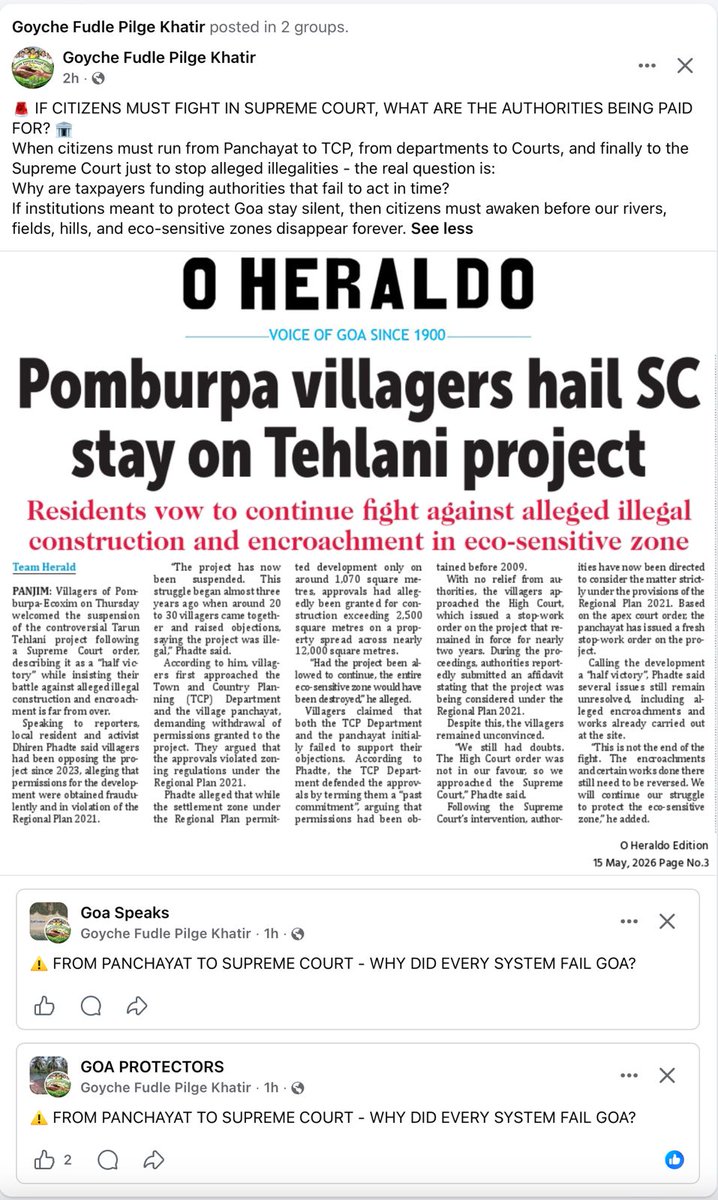
FROM PANCHAYAT TO SUPREME COURT – WHY DID EVERY SYSTEM FAIL GOA? The recent Tehlani project case in Pomburpa is not just one village’s fight. It is a warning for all of Goa. Villagers had to fight for years - from local authorities to the courts, and finally up to the Supreme Court - to stop alleged illegal construction and encroachment in an eco-sensitive zone. But the real question is: Why must ordinary citizens go this far to protect their own villages? If authorities are meant to protect Goa’s land, hills, rivers and eco-sensitive zones, then action should happen before damage begins — not after citizens are forced into long legal battles. This matters for Reis Magos too. When large projects enter fragile village areas, the risks are real: narrow roads, hill cutting, water stress, sewage pressure, monsoon danger and irreversible damage to the natural landscape. Citizens are not against development. Citizens are asking for lawful, safe and responsible development. Goa’s villages should not have to reach the Supreme Court to be protected. If institutions fail to act in time, citizens become the last line of defence. #SafeReisMagos #SaveGoa #GoaVillages #EcoSensitiveZones #HillCutting #GoaDevelopment #GoaEnvironment #ReisMagos #Pomburpa #GoaNeedsAccountability
SaveReisMagos tweet media
English
0
1
1
82
SaveReisMagos
SaveReisMagos@SaveReisMagos·
Slope failure is not random. It follows a pattern. The base is disturbed or cut. Natural soil structure is weakened. Water enters through exposed surfaces. Pressure builds within the slope. The ground begins to shift. At first, the changes are not visible. Then suddenly, they are. This is how landslides develop. And every one of these conditions already exists on a cut hillside heading into the monsoon. #SaveReisMagos
SaveReisMagos tweet mediaSaveReisMagos tweet mediaSaveReisMagos tweet mediaSaveReisMagos tweet media
English
0
0
0
27
SaveReisMagos
SaveReisMagos@SaveReisMagos·
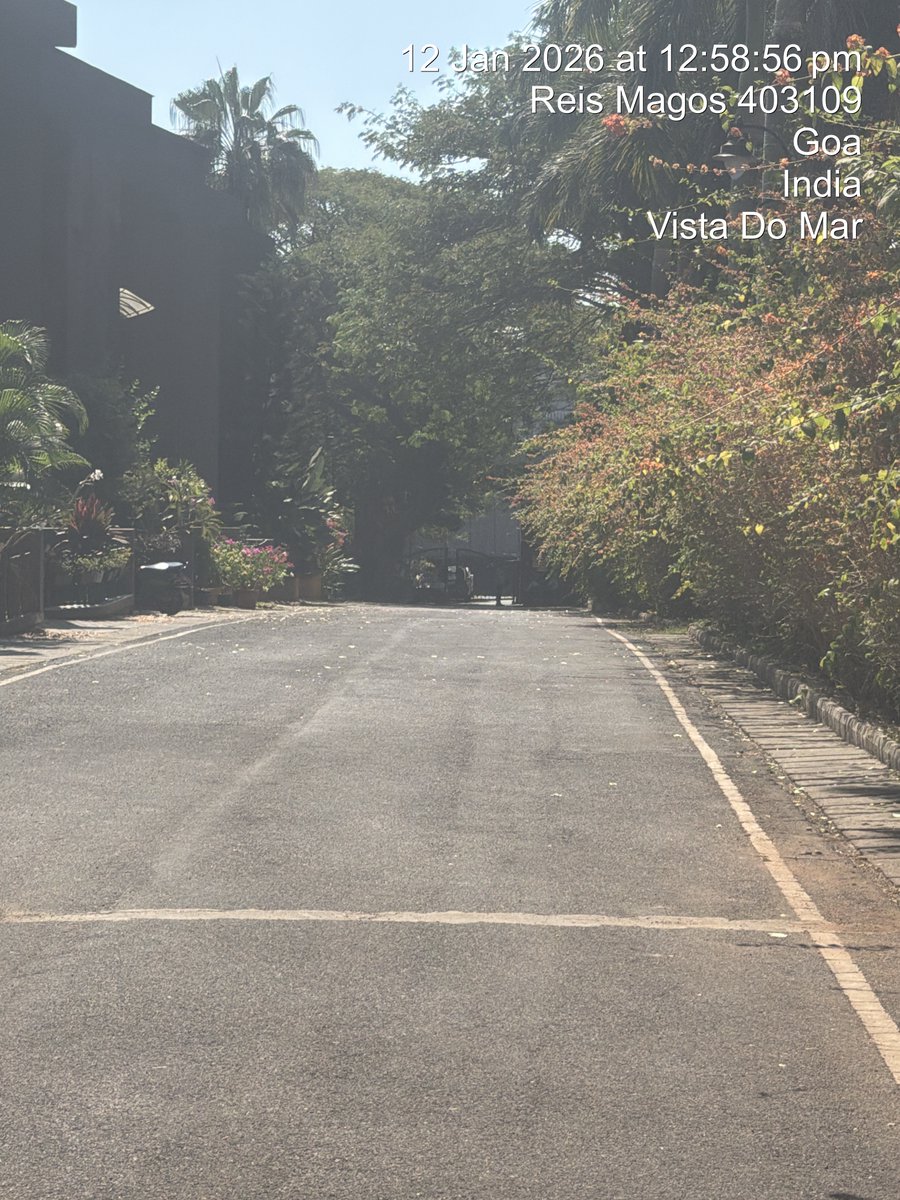
In any emergency, response time matters. Fire services, ambulances, disaster response - all depend on access. Every safety plan begins with one basic assumption - that help can reach you when you need it. Fire services. Ambulances. Emergency response teams. All of them depend on access. Actual, physical, functional access under pressure. Now consider a situation where: the road is narrow, movement is restricted, and conditions are already compromised by rain or debris. What happens when two vehicles need to pass at the same time? What happens when turning space is limited? What happens when seconds matter? Because in an emergency, delay is not just an inconvenience. It changes outcomes. And this is where planning matters. Access is not something you fix later. It is something you design for at the start. Because when things go wrong, you don’t get a second chance to make space. The current approach road is narrow. That may not seem like a problem on a normal day. But in an emergency - when multiple vehicles need to move quickly, When debris or water blocks parts of the road - that limitation becomes critical. Because access is not tested when things are normal. It is tested when things go wrong. And that is exactly when it matters most. #SaveReisMagos
SaveReisMagos tweet media
SaveReisMagos tweet mediaSaveReisMagos tweet media
English
0
0
2
14
SaveReisMagos
SaveReisMagos@SaveReisMagos·
Landslides are often thought of as something that starts at the top. That is not how they work. In many cases, instability begins at the base. When people think of landslides, they imagine a dramatic moment. A sudden collapse. A visible failure. But what actually happens is very different. Failure begins quietly. It starts with small changes - water entering the slope, soil softening, layers shifting ever so slightly. Nothing that looks alarming at first glance. No clear warning sign that something is about to give way. But beneath the surface, pressure builds. The slope holds - until it doesn’t. And when that threshold is crossed, failure is not gradual. It is immediate. That is what makes it dangerous. Because by the time it becomes visible, there is no time left to react. On a disturbed hillside heading into the monsoon, this is not an unlikely scenario. It is a known pattern. When support is removed from below, the entire slope above becomes vulnerable. The load doesn’t disappear. It shifts. And when that load is combined with water infiltration during the monsoon, the slope can begin to move. Not gradually. But suddenly. This is why excavation at the base of a hill is treated as a high-risk activity. Because the consequences don’t stay at the point of cutting. They travel upward - and outward. #SaveReisMagos
SaveReisMagos tweet mediaSaveReisMagos tweet media
English
0
0
0
24
SaveReisMagos
SaveReisMagos@SaveReisMagos·
There is a common misconception about hillsides - that instability starts at the top. In reality, it often begins at the base. Because the base is what holds everything above it in place. When you cut into that base - removing rock, soil, and structural support - you are not just changing one section of land. You are altering the balance of the entire slope. Everything above it - every layer of soil, every structure, every load - depends on that foundation holding firm. Once that support is reduced, the slope begins to behave differently. Load gets redistributed. Stress increases along weakened planes. And the margin for stability becomes smaller. Now add water into that equation. As the monsoon approaches, rain begins to enter the slope through exposed surfaces. That water doesn’t just sit on the outside. It moves inward. It reduces the friction that keeps layers in place. So now you have: less support below, more pressure within, and increasing weight above. This is not a minor change in conditions. This is a system being pushed toward instability. And the critical part is this - when failure happens in such conditions, it does not happen in isolation. It travels. Up the slope. Across the surface. Into whatever lies in its path. #SaveReisMagos
SaveReisMagos tweet mediaSaveReisMagos tweet mediaSaveReisMagos tweet mediaSaveReisMagos tweet media
English
0
1
1
38
SaveReisMagos
SaveReisMagos@SaveReisMagos·
In 2025, Goa recorded over 3,100 mm of rainfall during the monsoon. That number gets quoted often. But rarely understood. Because 3,100 mm is not just “a lot of rain.” It means that over the course of the season, more than 3,100 litres of water fall on every single square meter of land. Now consider what that does to a natural hillside. Under normal conditions, the land has protection - vegetation, root systems, compacted soil layers - all working together to absorb, slow down, and distribute that water. That is what keeps a slope stable. But when that hillside is cut open, when layers of soil and rock are removed, those natural systems no longer exist. What remains is exposed, disturbed ground - far more vulnerable to water entering, collecting, and building pressure beneath the surface. Water does not just sit on top. It seeps in. It fills gaps. It reduces friction between layers. And once that internal resistance drops, the slope does not hold the way it used to. This is not speculation. This is basic slope behaviour under rainfall conditions. So when a monsoon of this intensity arrives, it is not just “rainfall” acting on that hill. It is sustained pressure, acting on a surface that has already been weakened. And that is exactly how landslides begin. Not dramatically. But quietly, beneath the surface - until the point where it doesn’t hold anymore. #SaveReisMagos
SaveReisMagos tweet mediaSaveReisMagos tweet media
English
0
0
1
22
SaveReisMagos
SaveReisMagos@SaveReisMagos·
Monsoon is coming. The warning signs are already here. In Goa, pre-monsoon rain is not harmless. It is the phase where exposed soil softens, water enters cut slopes, and weak structures come under pressure. In 2025 alone, Goa recorded over 3,100 mm of rainfall during the monsoon season. That is over 3,100 litres of water per square meter. This is the force acting on every exposed slope. When hill cutting happens without proper stabilisation, the risk is clear: landslides, erosion, road damage and danger to nearby homes. Goa saw this in 2025: 1. Anmod Ghat: A section of the road slipped after heavy rain when a retaining wall failed. 2. Headland Sada, Vasco: Two landslides after continuous rainfall, with homes at risk. 3. Altinho, Panaji: A landslide raised serious concern among residents. These are not abstract risks. They are real examples from Goa. And this is exactly why ongoing hill cutting for large-scale developments as an upcoming project with 50+ apartments and multiple pools in a sensitive hillside area - raises serious questions. Not pointing fingers. But the scale, the exposure, and the timing before monsoon matter. Because once thousands of litres of water per square meter hit an unstable slope, there is no quick fix. Pre-monsoon is the time to act - not after the hill has moved. #SaveReisMagos #SaveGoa #GoaMonsoon
SaveReisMagos tweet mediaSaveReisMagos tweet media
English
0
0
0
40
SaveReisMagos
SaveReisMagos@SaveReisMagos·
This is being presented as development. But development requires planning. What we are seeing here is scale without context. A large residential project - 50+ units, multiple pools, and high daily resource demand - being introduced into a fragile hillside environment. At that scale, every decision matters: how the land is handled, how the load is distributed, how the systems supporting it are designed. Because this is not flat land. This is a slope. And when pressure is added to a landscape like this without adequate planning, the consequences don’t stay theoretical. They show up in stability, in infrastructure strain, and in long-term risk. This is not just about what is being built. It is about whether it should be built this way, in this place, at this scale. #SaveReisMagos #SaveGoa
SaveReisMagos tweet mediaSaveReisMagos tweet mediaSaveReisMagos tweet media
English
0
0
1
21
SaveReisMagos
SaveReisMagos@SaveReisMagos·
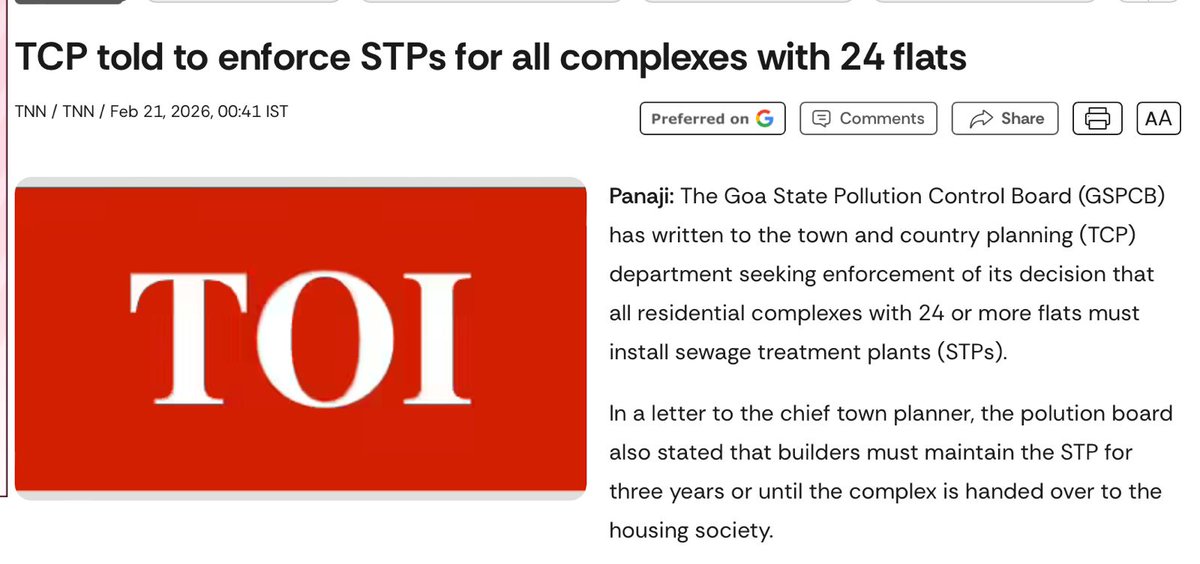
What is happening in Reis Magos is not development. We are looking at mega residential projects being introduced into a fragile hillside environment: 50+ apartments, swimming pools, and even private plunge pools in individual units. At first glance, it may sound like progress. But when you look closer, the questions become unavoidable. •⁠ ⁠Hill Cutting Large sections of the hillside are being excavated. This is not minor grading - this is structural intervention. Removing support at the base of a slope changes how the entire hill behaves. With the monsoon approaching, this is not theoretical risk. It is real. •⁠ ⁠Water Supply 50+ units. Multiple pools. Daily consumption at scale. Where is this water coming from? Local supply is already under pressure. Tanker dependency is not a sustainable solution — it shifts the burden onto existing residents and infrastructure. •⁠ ⁠Sewage & STP Capacity With this level of density, wastewater generation increases dramatically. How is the STP (Sewage Treatment Plant) designed to handle this load? What happens when it fails, overflows, or is under-designed — as we have already seen in multiple developments across Goa? •⁠ ⁠Emergency Access & Safety In any residential project, access is not optional — it is critical. Fire trucks, ambulances, disaster response units — they all rely on adequate road width and turning radius. The current access road is approximately 6 meters wide. For a project of this scale, that is not sufficient. Standard safety planning would require significantly wider access - in many cases double that width — to ensure safe, two-way emergency movement. So what happens in an emergency? What happens when seconds matter? This is not about opposing development. This is about asking whether development is being done responsibly, safely, and sustainably. Because once the hill is cut, once the load is added, once the systems are stressed - there is no easy way back. Reis Magos is not just land. It is a living, coastal, sensitive environment. And the decisions being made today will define its stability, safety, and livability for years to come. #SaveReisMagos
SaveReisMagos tweet mediaSaveReisMagos tweet mediaSaveReisMagos tweet mediaSaveReisMagos tweet media
English
0
0
0
29
SaveReisMagos
SaveReisMagos@SaveReisMagos·
What you’re seeing here is not just poor judgment. It is reckless. This is excavation without visible slope protection - and there is nothing normal or acceptable about that. When the base of a hill is cut open, stabilisation is not optional. Retaining structures, terracing, and other protective measures exist for a reason: to stop the slope from shifting, slipping, or collapsing. None of that is visible here. And this is not small-scale work. Large sections of the hillside are being opened up while structures stand directly above it. That should alarm anyone. Because once material is removed from the base, the hill loses support. Once the natural layers are disturbed, the slope becomes weaker. And every pass of heavy machinery adds more stress, more vibration, and more risk. These are not technicalities. These are warning signs. Safety measures exist to prevent exactly this kind of danger. So when they are absent, it is not a minor lapse. It is a deliberate choice to move ahead without addressing what could go wrong. In a coastal environment, the threat becomes even more serious. Moisture, salt, and the approaching monsoon will not wait. Water can enter exposed cuts, loosen already disturbed ground, and trigger slippage or collapse. And if that happens, the damage will not stop at the excavation line. This is how preventable disasters are created - not by surprise, but by ignoring obvious risk until it is too late. #SaveReisMagos
English
0
1
2
25
SaveReisMagos
SaveReisMagos@SaveReisMagos·
Watch closely. Heavy machinery cutting into the hillside, removing layers of rock and boulders without any visible shoring or structural support. The base of the hill has been exposed. This directly affects the stability of everything above it - including nearby villas and a Naval base. Excavation at this level weakens the slope. The continued movement, weight, and vibration from heavy equipment only increase that risk. Despite this, it has been claimed that no hill cutting has taken place. The monsoon is just weeks away. When heavy rain hits an already disturbed slope, water can seep into the exposed areas, loosen the soil, and trigger movement in the ground. This is how slope failure begins. If that happens here, the impact will not be limited to the construction site. So the question is - who is responsible if the hillside gives way? At this point, it is no longer about interpretation. It is about safety. This has been happening in full view. And once the damage is done, it cannot be undone. #SaveReisMagos #SaveGoa
SaveReisMagos tweet mediaSaveReisMagos tweet mediaSaveReisMagos tweet media
English
1
4
8
1.4K
SaveReisMagos
SaveReisMagos@SaveReisMagos·
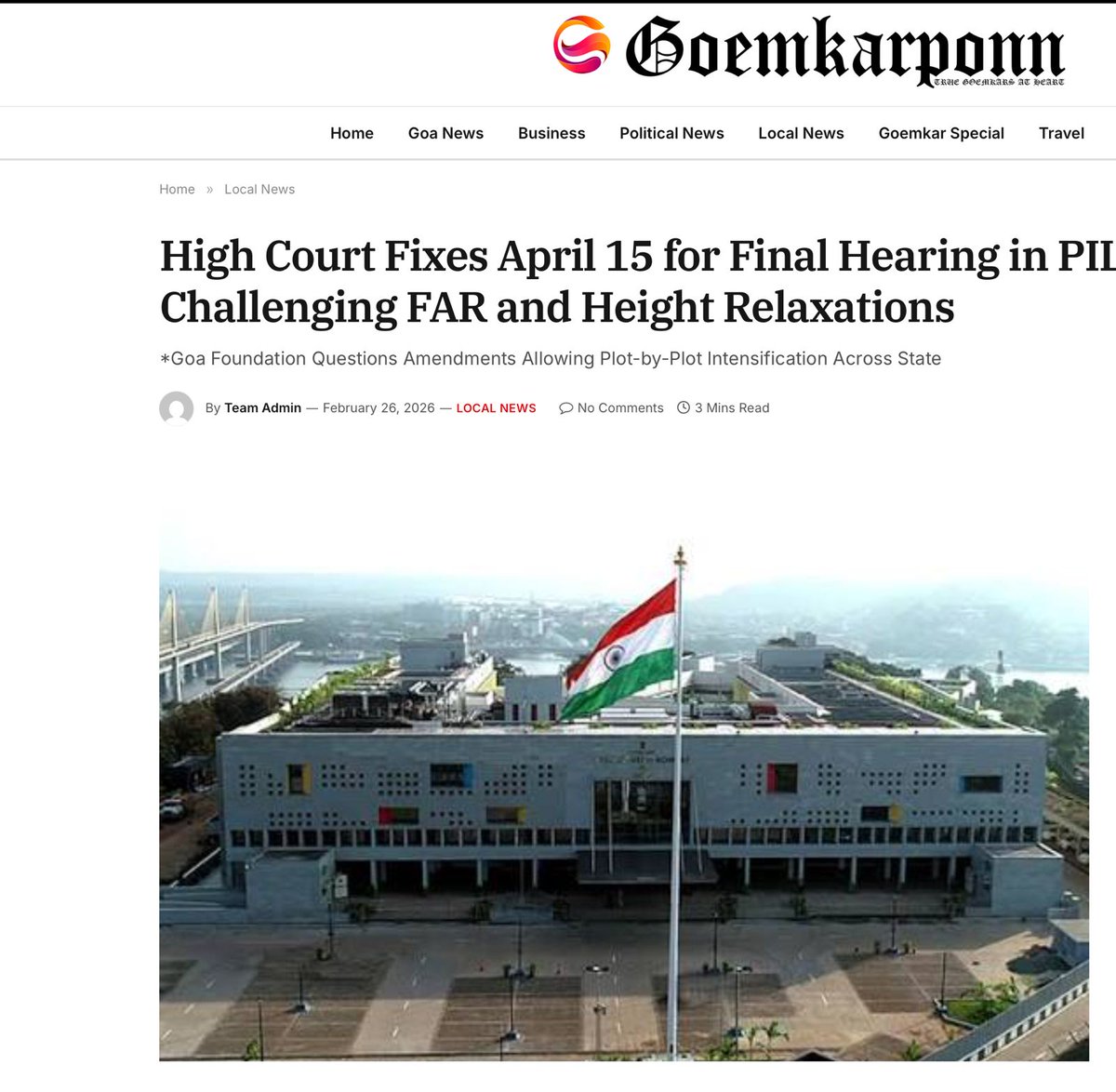
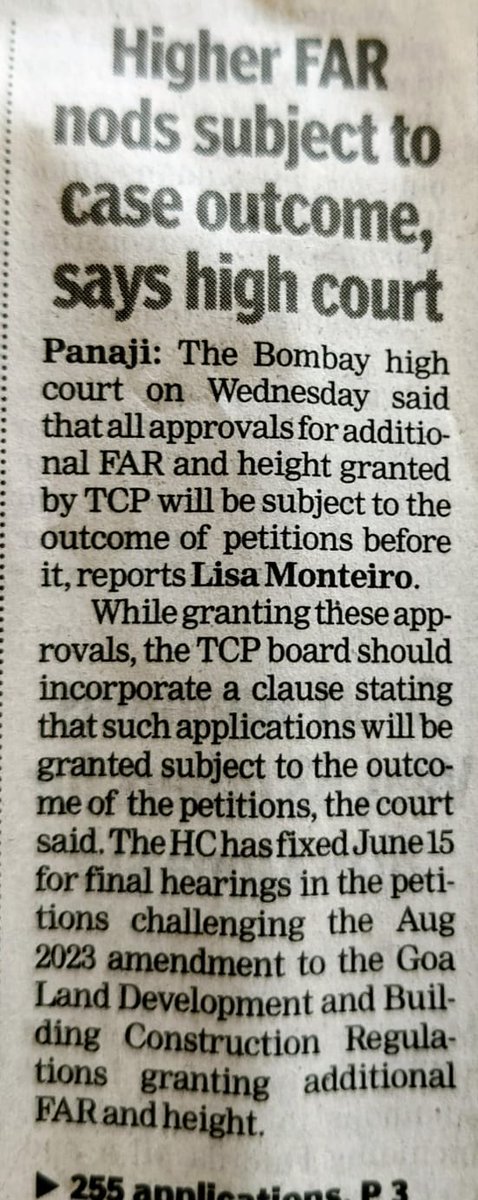
This is not normal development. This is development under legal dispute. And that should concern every resident. Because while the High Court is still examining these changes to Goa’s building rules - increased FAR, height relaxations, and expanded powers of the TCP Board - development is already moving ahead on the ground. That is what makes this so disturbing. In October 2025, the Court issued notice over FAR relaxations affecting hundreds of projects. Between February and April 2026, the case intensified. April 15 was a key hearing date. The next hearing is expected on June 15. And yet, approvals for additional FAR and height are still being granted. But only subject to the outcome of the petitions. That means these permissions are not final. They can still be reversed. They can still be invalidated. So let’s be honest about what this really means: Projects are being allowed to move forward even though the legality behind them is still under challenge. And if those projects cause damage in the meantime, who pays the price? Not the people signing off on the approvals. Not the system that allowed it. The price is paid by residents. By the environment. By the long-term safety of this area. Because once the land is altered, once the damage is done, once the consequences begin to unfold, no future court order can truly undo it. That is why this matters. This is not just about policy. It is not just about paperwork. It is about real places, real lives, and real consequences. Click here for more information: thegoan.net/goa-news/high-… #SaveReisMagos
SaveReisMagos tweet mediaSaveReisMagos tweet mediaSaveReisMagos tweet mediaSaveReisMagos tweet media
English
0
3
6
1.6K
SaveReisMagos
SaveReisMagos@SaveReisMagos·
Former Chief Justice Ferdino Rebello has called for an immediate halt to hill cutting in Goa, saying: “We demand that no hills are allowed to be cut or developed.” Enough is Enough. Ferdino Rebello’s call for action against hill cutting speaks to a larger truth now echoing across Goa. People are no longer reacting out of emotion alone. They are reacting to what they can already see. In Reis Magos, this issue is not distant. It is playing out in front of us. Hills are being cut. Land is being destabilised. Risk is being created by human decision. And residents are expected to simply watch, absorb the consequences, and remain silent. But this is exactly why Enough is Enough matters. Because there comes a point when visible destruction can no longer be passed off as development. There comes a point when silence becomes complicity. And there comes a point when people say clearly: stop. That point has been reached. What is happening in Goa, and what we are seeing in Reis Magos, demands accountability before the monsoon turns risk into disaster. #SaveReisMagos
SaveReisMagos tweet mediaSaveReisMagos tweet media
SaveReisMagos tweet media
English
3
3
12
5.4K