Mars_Base / Heather

9.2K posts

Mars_Base / Heather

Mars_Base / Heather

@SciByte_Heather

Providing you with a treasure trove of the latest in scientific news and the means to further investigate them.

Katılım Ocak 2011
135 Takip Edilen273 Takipçiler
Mars_Base / Heather retweetledi
NASA Mars
NASA Mars@NASAMars·
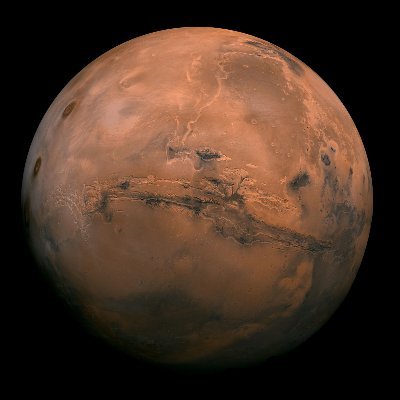
Exploring an area previously only seen from orbit, the Curiosity rover has found dramatic new evidence of ancient groundwater. The rover is using its drill to snag samples of rock that will give geologists new clues to how this area formed. go.nasa.gov/4ljOVa0
English

44
419
2.2K
83.3K
Mars_Base / Heather retweetledi
Science Magazine
Science Magazine@ScienceMagazine·
Leveraging synthetic biology techniques, researchers have engineered a strain of Salmonella that can stimulate mature tertiary lymphoid structures to augment antitumor immunity and shrink colorectal cancer tumors in mice. Learn more in @ScienceTM: scim.ag/4naECqz
Science Magazine tweet media
English
7
31
116
27.4K
Mars_Base / Heather retweetledi
National Air and Space Museum
National Air and Space Museum@airandspace·
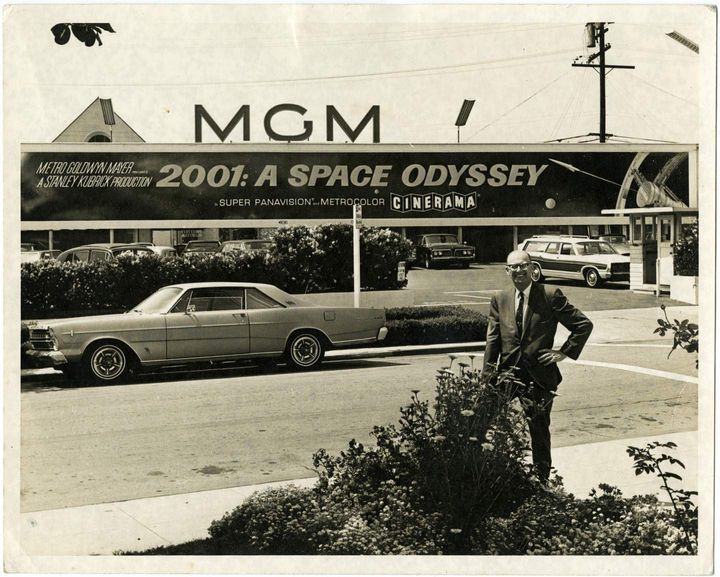
#OTD in 1917, "2001: A Space Odyssey" author Arthur C. Clarke was born. Clarke was a noted futurist and popularizer of science and technology, work that is documented in his papers, which are in our Archives: s.si.edu/3YtD4g6
National Air and Space Museum tweet media
English
4
31
143
5.6K
Mars_Base / Heather retweetledi
Massimo
Massimo@Rainmaker1973·
The Prince Rupert’s Drop
English
66
977
7K
1.2M
Mars_Base / Heather retweetledi
News from Science
News from Science@NewsfromScience·
In hopes of attracting coral larvae to settle on degraded reefs, researchers have developed a new kind of material that can slowly release an algal “healthy reef scent” into the surrounding water. scim.ag/4kmLv64
English
2
4
9
4.4K
Mars_Base / Heather retweetledi
Massimo
Massimo@Rainmaker1973·
When you combine the magic of virtual reality with the thrill of waterslides, an entirely new dimension of fun is unlocked.
English
63
405
3.8K
746.6K
Mars_Base / Heather retweetledi
News from Science
News from Science@NewsfromScience·
In a world first, researchers report easing the symptoms of a baby boy with a rare, life-threatening disease by giving him a version of the #CRISPR gene editor tailored to a mutation he carries. scim.ag/3GU1Twg
English
2
6
19
3.5K
Mars_Base / Heather retweetledi
Massimo
Massimo@Rainmaker1973·
Comet C/2023 A3 (Tsuchinshan–ATLAS) It has a period of 80,000 years. The last time it was this close, Earth was inhabited by Neanderthals. We'll never see it again. x.com/i/status/19013…
English
51
323
1.9K
87.9K
Mars_Base / Heather retweetledi
SPACE.com
SPACE.com@SPACEdotcom·
NASA engineers have miraculously revived the Voyager 1 interstellar probe's backup thrusters — components that hadn't been used since 2004. space.com/space-explorat…
English
42
390
1.6K
65.7K
Mars_Base / Heather retweetledi
Massimo
Massimo@Rainmaker1973·
Until March, Saturn had 146 known moons, then astronomers discovered 128 new ones, bringing the ringed gas giant's total up to 274 moons—far beyond any other planet in our Solar System. This is the coreography of their dance.
English
67
600
2.7K
203.9K
Mars_Base / Heather retweetledi
Astronomy Picture of the Day
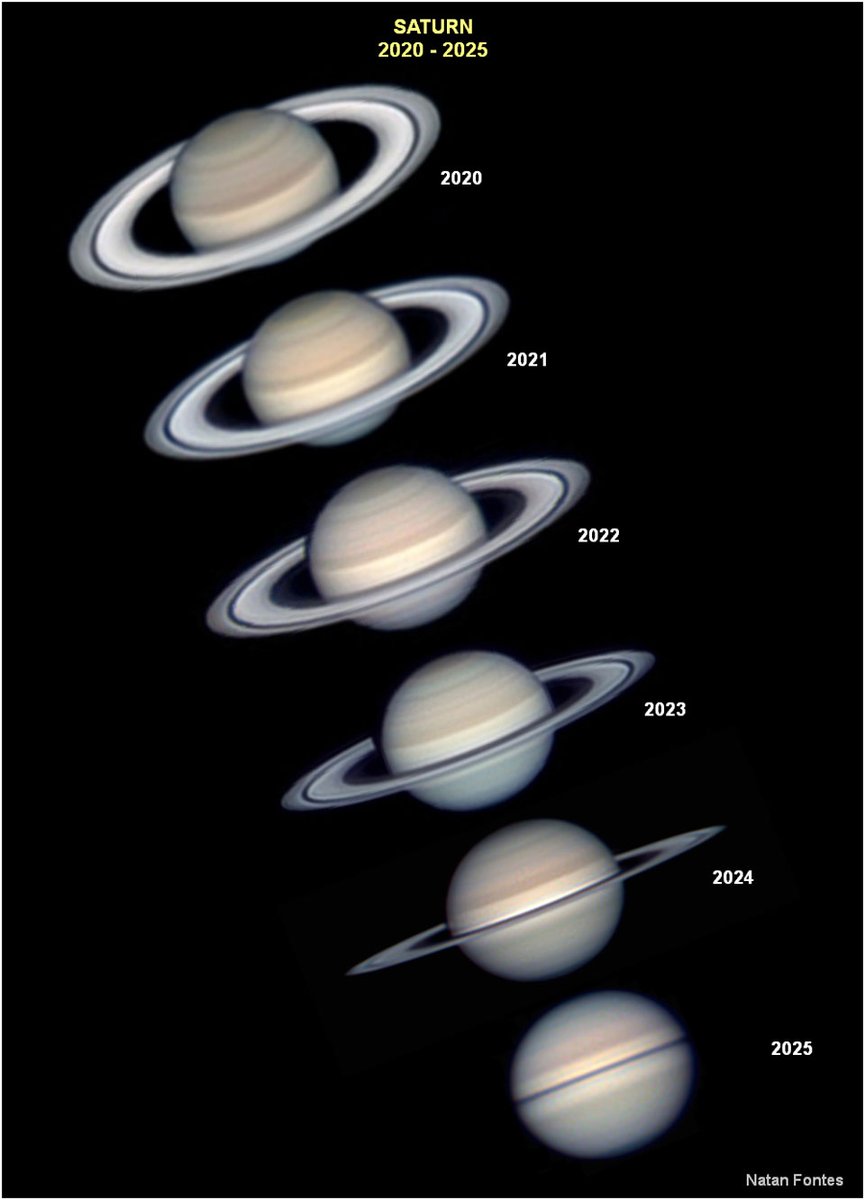
Where are Saturn's ears? Galileo is credited, in 1610, as the first person to see Saturn's rings. Testing out Lipperhey's recently co-invented telescope, Galileo did not know what they were and so called them "ears". The mystery deepened in 1612, when Saturn's ears mysteriously disappeared. Today we know exactly what happened: from the perspective of the Earth, Saturn's rings had become too thin to see. The same drama plays out every 15 years because Saturn, like Earth, undergoes tilt-driven seasons. This means that as Saturn goes around the Sun, its equator and rings can tilt noticeably toward the Sun and inner Solar System, making them easily visible, but from other orbital locations will appear almost not at all. The featured picture from Brasilia, Brazil shows a modern version of this sequence: the top ring-dominated image was taken in 2020, while the bottom ring-obscure image taken earlier in 2025. Image Credit & Copyright: Natan Fontes
Astronomy Picture of the Day tweet media
English
6
100
394
20.4K
Mars_Base / Heather retweetledi
Learn With NASA
Learn With NASA@LearnWithNASA·
Did you know that NASA technology can be found all around you? 🔎 Check out the Search for Spinoffs game to see if you can find all the examples of @NASAspinoff technology. Then see how many are also found in your home! 🏠 nasa.gov/specials/kidsc…
Learn With NASA tweet media
English
0
7
15
1.9K
Mars_Base / Heather retweetledi
Andy Saunders - Apollo Remastered
Andy Saunders - Apollo Remastered@AndySaunders_1·
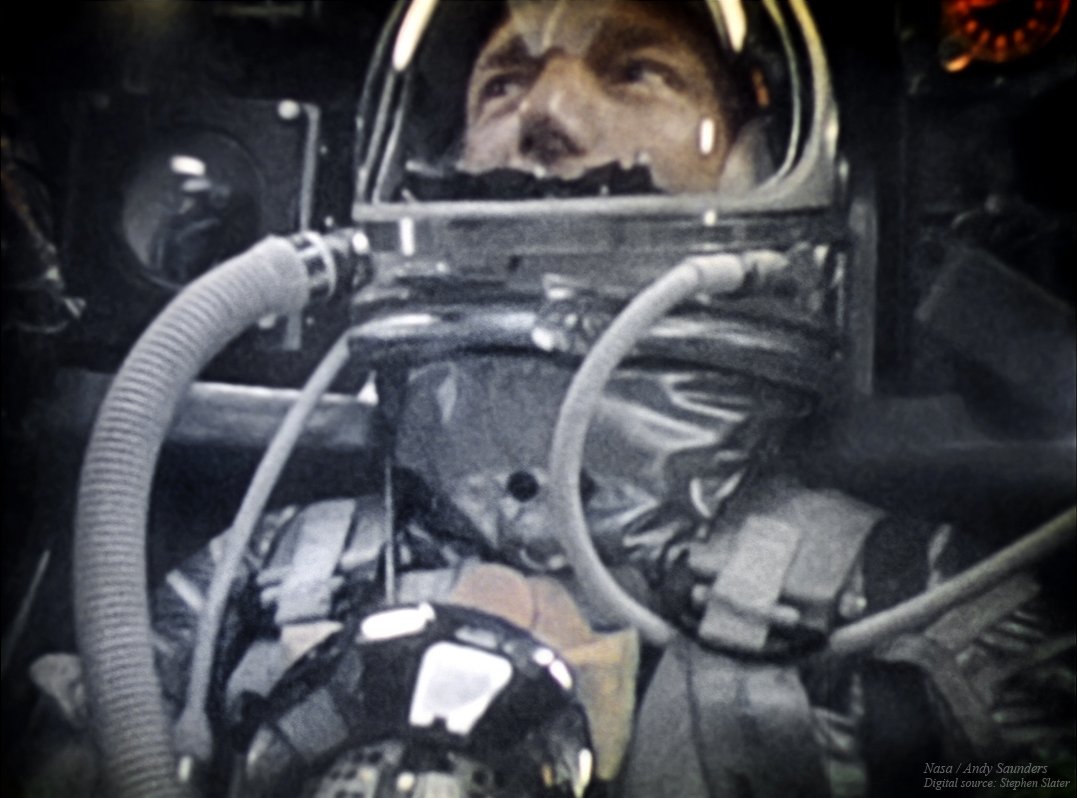
On what would've been Scott Carpenter's 100th birthday! One of the 'Mercury 7', his 16mm film was water damaged at splashdown & couldn't be effectively developed. 63 years on, we can finally see him clearly during flight, after restoring the film for #GeminiAndMercuryRemastered
Andy Saunders - Apollo Remastered tweet mediaAndy Saunders - Apollo Remastered tweet media
English
13
91
601
15.3K
Mars_Base / Heather retweetledi
National Air and Space Museum
On this day in 2021, Mars Helicopter Ingenuity was deployed from the Perseverance rover, where it was stowed during the journey to Mars. Ingenuity touched down on the Martian surface, survived the frigid night, and made a history-making flight soon after.
National Air and Space Museum tweet media
English
7
47
292
7.2K
Mars_Base / Heather retweetledi
Space 360
Space 360@Space360HQ·
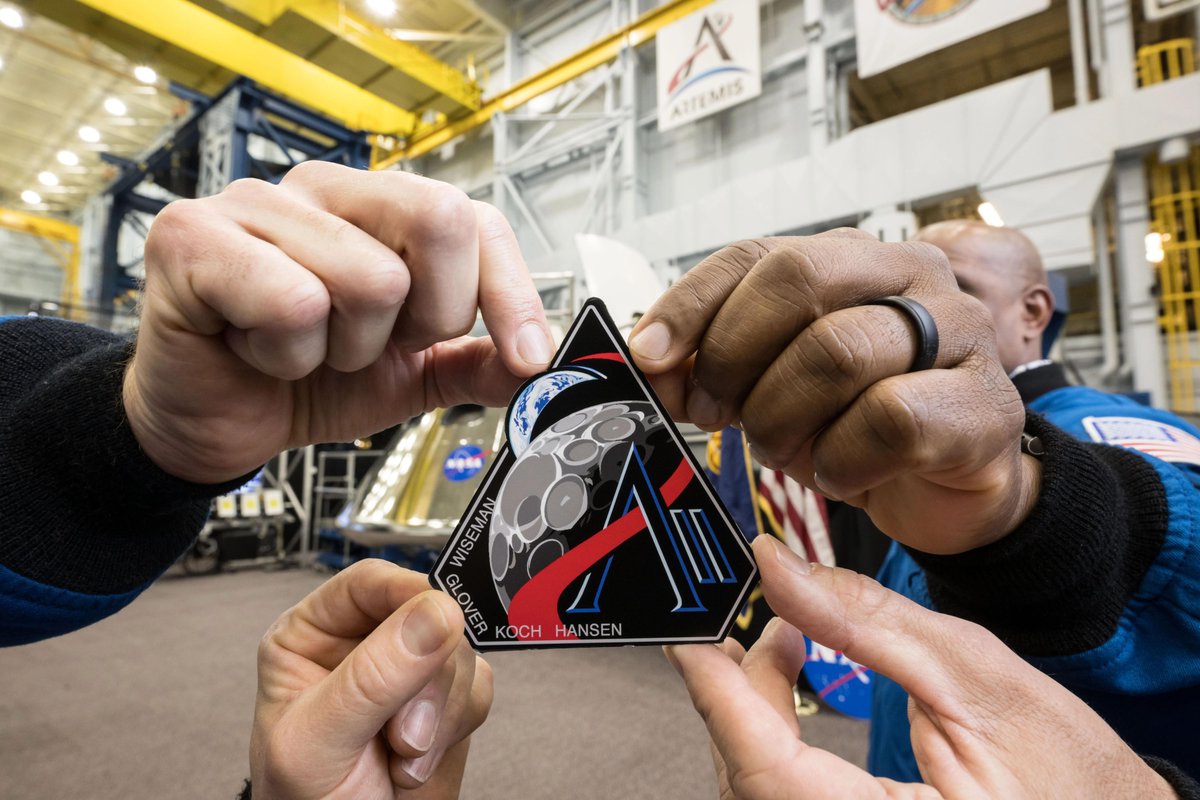
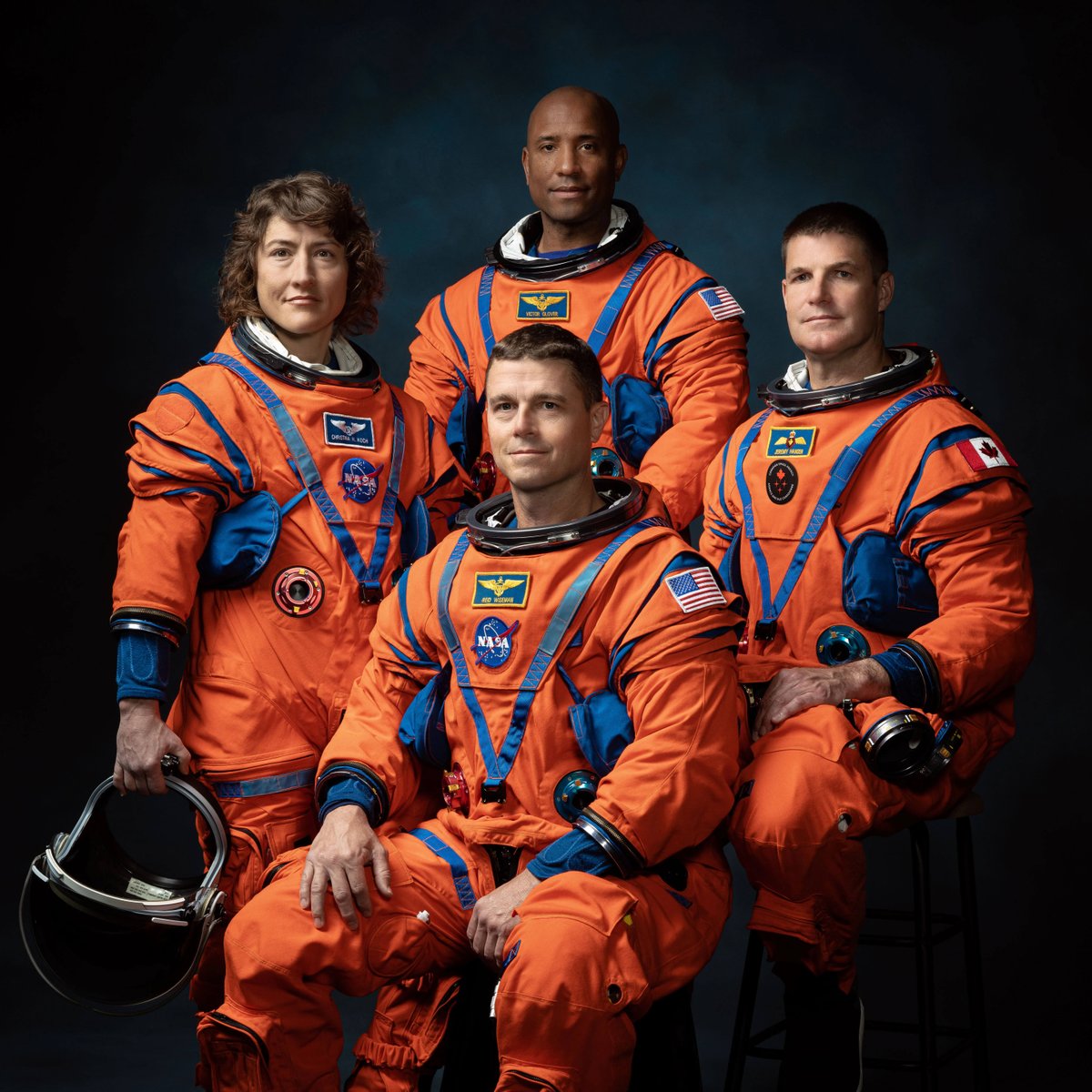
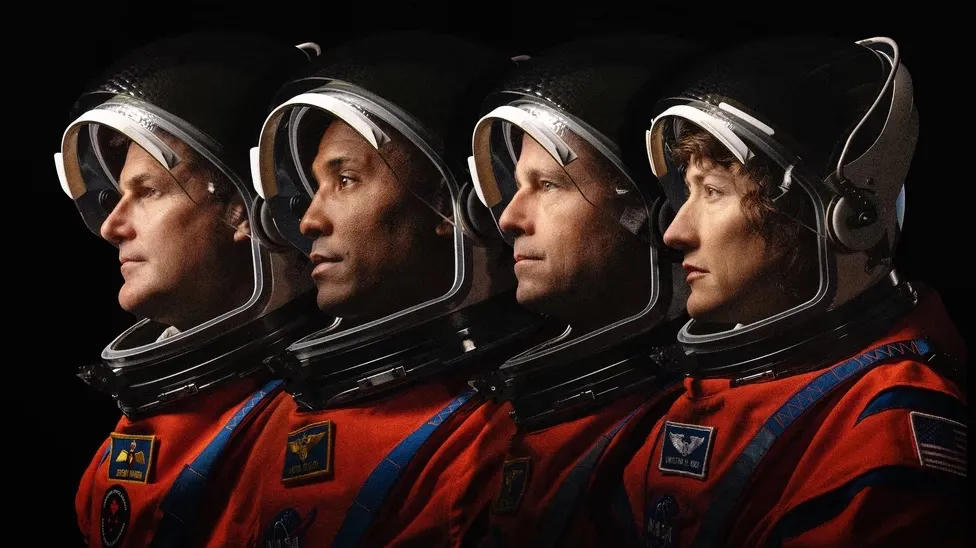
We’re going! 🌖🚀 Meet the astronauts who’ll be the first to fly under NASA’s #Artemis mission! They’ve just unveiled their official mission patch. Check it out and learn more about their historic journey: go.nasa.gov/4cn6hzN
Space 360 tweet mediaSpace 360 tweet mediaSpace 360 tweet media
English
8
88
544
27.6K
Mars_Base / Heather retweetledi
Black Hole
Black Hole@konstructivizm·
The James Webb telescope has discovered Jupiter-sized "planets" in space, free-floating and gravitationally unbound to any star What has astonished scientists is that the planets are moving in pairs. Astronomers are now trying to explain this phenomenon scientifically. They are inclined to believe that the objects were thrown out of their orbits due to gravitational disturbances. NASA
Black Hole tweet media
English
296
1.2K
6.8K
305.2K
Mars_Base / Heather retweetledi
Phil Metzger
Phil Metzger@DrPhiltill·
I saw this yesterday morning and have been thinking about it nonstop. These explosive eruptions are not the way we expected lunar soil to behave. I have heard a couple exotic theories to explain it. Overall, the results from the mission have been phenomenal.
NASA Marshall@NASA_Marshall

Do you know the temp of the Moon? 🌡️ NASA's LISTER is ready to drill into the mystery! Following @fireflyspace's #BGM1 Moon landing on March 2, LISTER began operations. Learn how this drill is determining the heat flow from the interior of the Moon >> go.nasa.gov/3DA4WZb

English
79
179
2.4K
130.6K