Centre for the Sciences of Place and Memory

154 posts

Centre for the Sciences of Place and Memory banner
Centre for the Sciences of Place and Memory

Centre for the Sciences of Place and Memory

@SciPlaceMemory

Led by @SuttonProfessor Research | Events @LeverhulmeTrust funded Follow us on Bluesky → @memoryplace.bsky.social

University of Stirling Katılım Nisan 2025
1.1K Takip Edilen218 Takipçiler
Sabitlenmiş Tweet
Centre for the Sciences of Place and Memory
Place is not passive. Memory is not settled. We work across cognitive science, social science & the arts to examine how people find their way. Understanding place and memory underpins how we locate ourselves—intellectually, socially and historically
Centre for the Sciences of Place and Memory tweet media
English
0
2
7
192
Centre for the Sciences of Place and Memory
Maria Fusco’s experimental opera-film History of the Present explores how built environments shape voice, movement and lived experience in Belfast. Screening and discussion Wed 25 March · 11:00–12:20 Pathfoot Lecture Theatre @StirUni In-person event · no registration required
English
0
0
2
121
Centre for the Sciences of Place and Memory
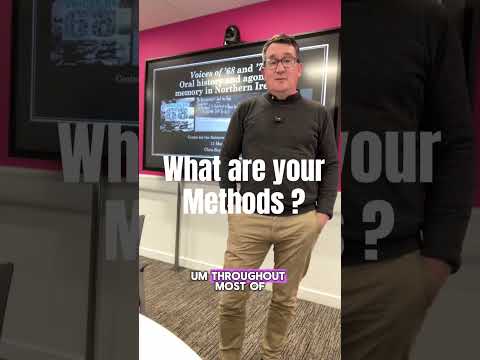
How can oral history engage with Northern Ireland’s difficult past without forcing agreement? Historian Chris Reynolds reflects on agonistic memory and the value of keeping contested perspectives in dialogue - enlivening the academy and public impact. youtube.com/shorts/R5lt07L…
YouTube video
YouTube
English
0
1
3
199
Centre for the Sciences of Place and Memory
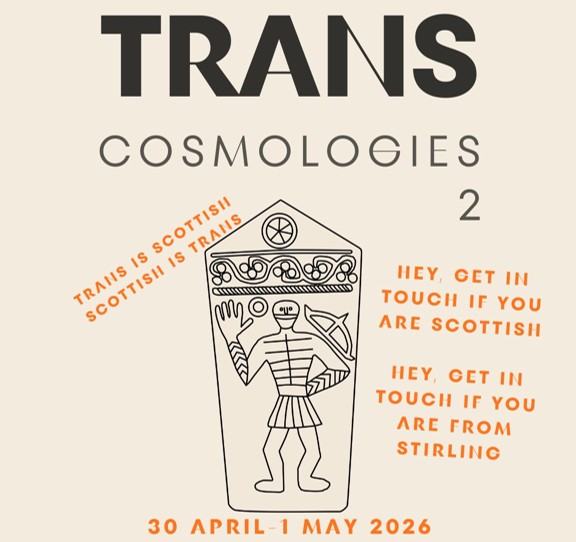
Call for expressions of interest — Trans Cosmologies 2: Art, Ritual & Memory - 30 Apr–1 May Scottish artists, researchers & activists are invited to contribute to this two-day multimedia gathering exploring memory, ritual, cosmology, resistance. CONTACT safet.hm@stir.ac.uk
Centre for the Sciences of Place and Memory tweet media
English
0
0
2
169
Centre for the Sciences of Place and Memory
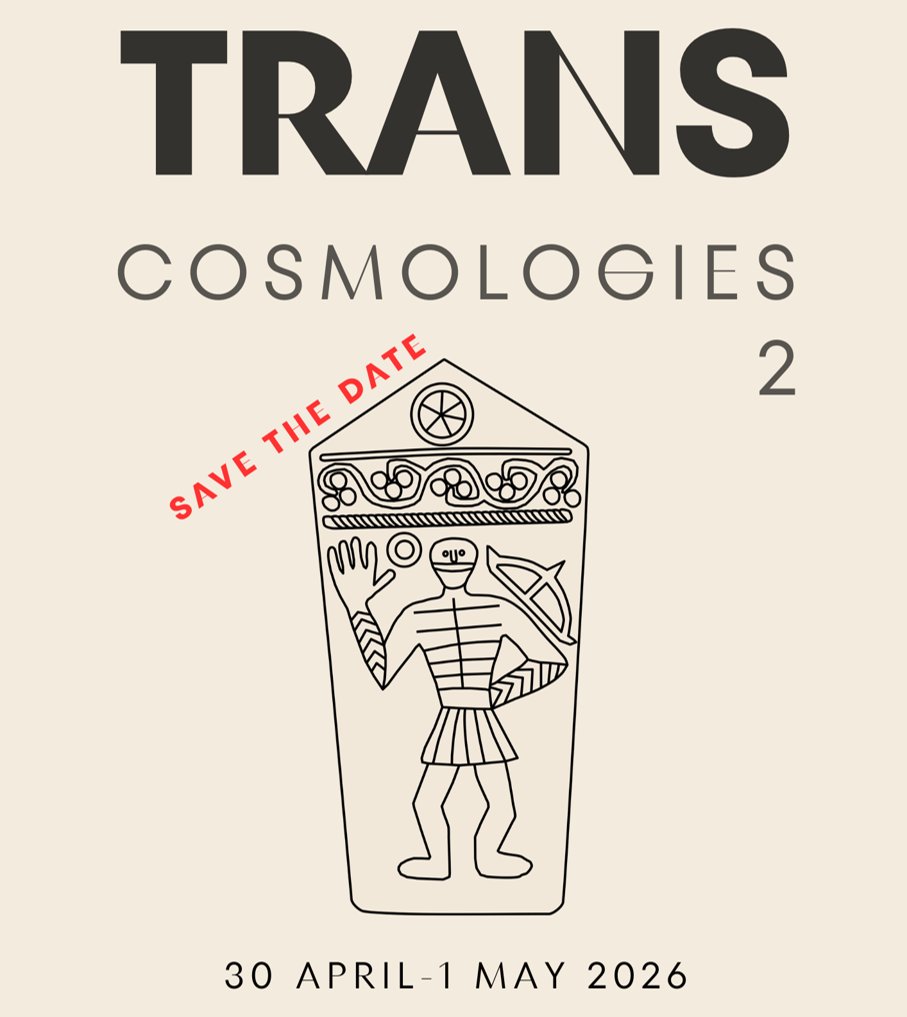
Trans Cosmologies 2: Art, Ritual & Memory 30 Apr–1 May · University of Stirling A two-day gathering of trans, gender-nonconforming and queer artists and thinkers exploring memory, ritual and cosmology through performance, scholarship and dialogue. Registration soon.
Centre for the Sciences of Place and Memory tweet media
English
0
1
1
117
Centre for the Sciences of Place and Memory retweetledi
Prof. Nikolai Slavov
Prof. Nikolai Slavov@slavov_n·
An important reminder: Academia is not about publishing papers. It’s about creating knowledge and teaching it to the world. It’s about asking big bold questions and mentioning the next generation of intellectual leaders. The difference makes a huge difference.
English
17
22
161
9.7K
Centre for the Sciences of Place and Memory retweetledi
Decolonial Conference
Decolonial Conference@decolonialconf·
Registration is filling quickly for the Decolonial Conference! Join us in building coalitions and dialogues across struggles, practicing solidarity, and putting radical thoughts into action. #decolonialconference
Decolonial Conference tweet media
English
0
14
31
2.1K
Centre for the Sciences of Place and Memory retweetledi
Bethlehem Tekola
Bethlehem Tekola@Bethlehemtekola·
Ethically reflexive researchers must be prepared for communities to say, “We do not want research. We want other interventions.” Asking communities what they want requires being ready to accept that research may not be the intervention that is needed.
Bethlehem Tekola@Bethlehemtekola

I have a new preprint on SSRN: “Beyond methodology: the role of reflexivity in ethical research that benefits marginalised participants and communities” If you find it interesting, I would really appreciate it if you could share it with your network.

English
2
46
147
8.9K
Centre for the Sciences of Place and Memory retweetledi
Anna Ciaunica PhD @annaciaunica.bsky.social
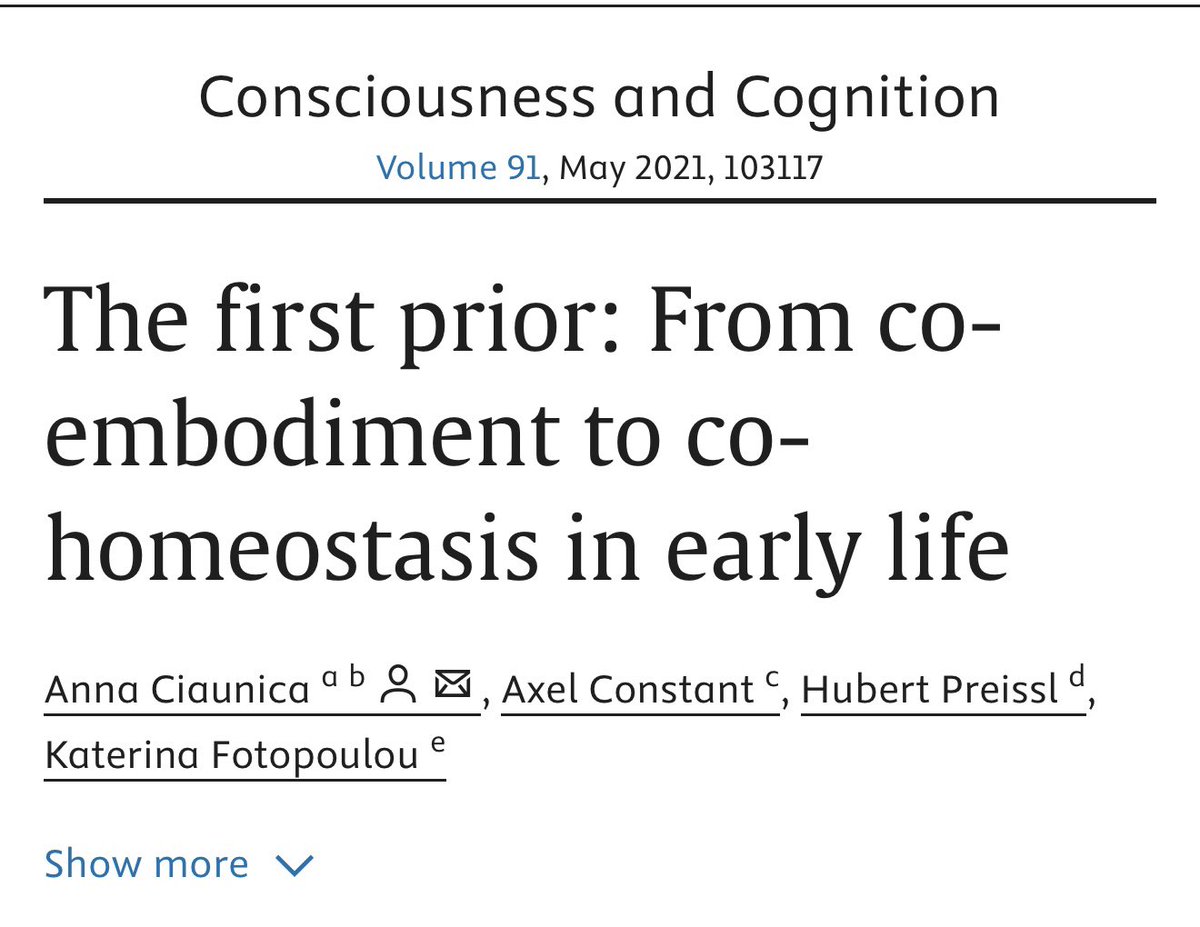
We have been published on co-embodiment and co-homeostasis during pregnancy here 😊 pubmed.ncbi.nlm.nih.gov/33872985/
Anna Ciaunica PhD @annaciaunica.bsky.social tweet media
The Curious Tales@thecurioustales

The science of fetal microchimerism should have broken the internet by now. It hasn’t. When I read about a research I was so curious to know what’s actually happening. Fetal cells — carrying the child’s own DNA — cross into the mother’s bloodstream during pregnancy and never fully leave. They embed into her organs. Her heart muscle. Her brain tissue. Researchers have found a child’s living cells inside mothers in their 90s, from pregnancies six decades old. The child left the womb. The cells didn’t. And they don’t just sit there. They migrate toward damage. Women with heart injuries show fetal cells concentrated at the wound site. Women with thyroid disease show their children’s cells inside the affected tissue. The body that built the child gets tended to, in return, by the child’s own cells. Nobody designed this consciously. Evolution quietly built a repair system out of the mother-child bond itself. The brain side of this is equally staggering. Pregnancy triggers gray matter reorganization — a structural rewiring that sharpens threat detection, deepens empathy, fundamentally alters how a mother processes the world. These changes persist for years after birth. Possibly permanently. A mother’s nervous system doesn’t return to its factory settings. It was updated by the experience of carrying another person, and that update sticks. The part worth sitting with longest — women who experienced pregnancy loss carry fetal cells too. The cellular merging doesn’t require a birth. It doesn’t require years of raising someone. Those cells remain regardless of what happened after. A mother grieving a child she never brought home is grieving someone biologically still present inside her. The world consistently underestimates that grief. The science says we have no business doing that. Mothers always knew the connection didn’t end at birth. Turns out it doesn’t end at the cellular level either.

English
2
19
76
5.8K