ScienceFocus

549 posts

ScienceFocus banner
ScienceFocus

ScienceFocus

@ScienceFocusonX

ScienceFocus

Katılım Kasım 2019
0 Takip Edilen14.3K Takipçiler
ScienceFocus
ScienceFocus@ScienceFocusonX·
Nicotine does more than harm your lungs. It can quietly weaken your bones. Nicotine reduces blood flow to bone tissue. That means less oxygen and fewer nutrients reach your bones. It also slows the activity of bone-building cells. Over time, bones can become weaker and heal more slowly. Smokers have a higher risk of fractures. They also take longer to recover after broken bones or surgery. Quitting smoking can improve bone health and reduce future damage. Your bones are constantly rebuilding themselves. Nicotine makes that job much harder.
ScienceFocus tweet media
English
3
2
2
307
ScienceFocus
ScienceFocus@ScienceFocusonX·
The universe may be hiding the biggest happy hour imaginable. Astronomers discovered a gigantic cloud of alcohol drifting through space. And it’s not small. The amount is so enormous that it could fill an estimated 400 trillion trillion pints of beer. While it’s not the kind of alcohol anyone could drink, the discovery shows just how bizarre and mind-blowing the cosmos can be. Out there among the stars, reality is often stranger than fiction. Space never runs out of surprises.
ScienceFocus tweet media
English
2
2
12
567
ScienceFocus
ScienceFocus@ScienceFocusonX·
Once-in-a-lifetime. The moon caught sitting perfectly inside a rainbow. Most people scroll right past the tiny pale dot. They think it's a flaw in the photo. It's the moon. And it's not floating there by chance. It's locked into the exact center of the arc, like the rainbow was drawn around it on purpose. Here's how something this rare actually happens. Every rainbow you've ever seen is centered on one invisible spot in the sky, directly opposite the sun. Scientists call it the antisolar point. That same spot is where a near-full moon climbs into view as the sun goes down. So when the timing is perfect, the moon and the rainbow aren't sharing the sky by accident. They're aimed at the exact same target. The moon slides into the bullseye, and the colors bend around it in a perfect ring. What you're really looking at is the sun, the Earth, and the moon lined up in a dead-straight row, with the rainbow circling the proof. Blink at the wrong moment, point your camera a second too late, and it's gone. This one didn't get away.
ScienceFocus tweet mediaScienceFocus tweet mediaScienceFocus tweet media
English
1
10
28
567
ScienceFocus
ScienceFocus@ScienceFocusonX·
What if hearing loss could one day be reversed instead of managed? Scientists in South Korea are working on exactly that. They reactivated stem cells in the inner ear. Those cells regenerated the tiny sensory hair cells needed for hearing. In animal studies, hearing function improved significantly. This challenges the long-held belief that damaged inner ear cells cannot regenerate. The research could pave the way for treatments that restore natural hearing. For now, the results are limited to laboratory and animal studies. Human clinical trials are still needed before this becomes a real treatment. If successful, it could change the lives of millions living with hearing loss.
ScienceFocus tweet media
English
5
38
153
12.9K
ScienceFocus
ScienceFocus@ScienceFocusonX·
For years, people around the world reported hearing the same mysterious sound. A faint hum. A low rumble. A noise that seemed to appear out of nowhere. Some heard it only at night. Others said it followed them everywhere. Scientists searched for answers. Factories were blamed. Power lines were blamed. Even secret government projects were blamed. But in many cases, the source may have been much closer. Inside the ear itself. Researchers believe some people may be hearing sounds generated by their own auditory system. A condition known as tinnitus can create buzzing, humming, ringing, or droning noises with no external source. To the person hearing it, the sound is completely real. And for some, it never truly goes away. One of the world's strangest mysteries may have been hiding inside us all along.
ScienceFocus tweet media
English
8
11
51
3.1K
ScienceFocus
ScienceFocus@ScienceFocusonX·
The teeth most people throw away could one day help save lives. Scientists have discovered that wisdom teeth contain powerful stem cells hidden inside their dental pulp. These cells have shown the ability to develop into bone, nerve, cartilage, and other tissue types, making them a promising tool in regenerative medicine. Researchers are exploring how these stem cells could potentially help repair damage linked to the brain, heart, and skeletal system, turning what was once considered medical waste into a valuable biological resource. Your wisdom teeth might be a lot more useful than anyone ever imagined.
ScienceFocus tweet media
English
10
75
211
17K
ScienceFocus
ScienceFocus@ScienceFocusonX·
Doctors thought they were witnessing a tragedy. A young man was trapped by severe OCD. Every day was controlled by obsessive thoughts. Simple tasks became exhausting rituals. Then everything changed in an instant. He survived a self-inflicted head injury. The wound damaged part of his frontal lobe. As he recovered, doctors noticed something remarkable. The obsessions that had dominated his life were fading. Many of his compulsions became far less intense. The improvement wasn't temporary. Years later, the changes remained. The case stunned researchers. It became one of the most unusual examples in neuroscience. Not because it offered a cure. But because it revealed how deeply specific brain regions are connected to obsessive behavior. Sometimes a single patient can reshape what science thinks it knows.
ScienceFocus tweet media
English
2
3
14
833
ScienceFocus
ScienceFocus@ScienceFocusonX·
Your body has a built-in stress switch. Most people have never heard of it. No supplements. No expensive gadgets. No complicated routines. Just one unusual movement. Some neurologists suggest that sticking your tongue out for around 40 seconds may help interrupt stress-related muscle tension and activate relaxation pathways in the body. It sounds strange. Almost too simple. But simple doesn't always mean ineffective. The tongue is connected to a complex network of nerves and muscles. When these patterns are disrupted, your body may shift away from its stressed, guarded state. Many people spend hours searching for the perfect stress solution. Yet sometimes the most unexpected techniques attract the most attention. Whether it's a hidden trick or simply a moment that forces your body to relax, one thing is certain: The human body still has plenty of surprises left to reveal.
ScienceFocus tweet media
English
24
70
357
39.6K
ScienceFocus
ScienceFocus@ScienceFocusonX·
Your teeth may have a secret weapon against sugar. And it isn't fluoride. It isn't a special toothpaste. It starts with an amino acid found naturally in the body. Researchers have been exploring how certain amino acids can interfere with the harmful bacteria that thrive on sugar inside your mouth. Why does that matter? Because those bacteria produce acids. And those acids slowly attack tooth enamel. The result? Cavities. Sensitivity. And expensive dental work. But some amino acids appear to make it harder for harmful bacteria to stick together and build the plaque that fuels tooth decay. In other words, they may help your teeth put up a stronger fight. Scientists are still studying exactly how powerful this effect can be. But the discovery is opening new doors in the battle against one of the biggest threats to dental health. Sometimes the future of healthier teeth isn't found in a dentist's chair. It's already inside the human body.
ScienceFocus tweet media
English
1
12
58
2.7K
ScienceFocus
ScienceFocus@ScienceFocusonX·
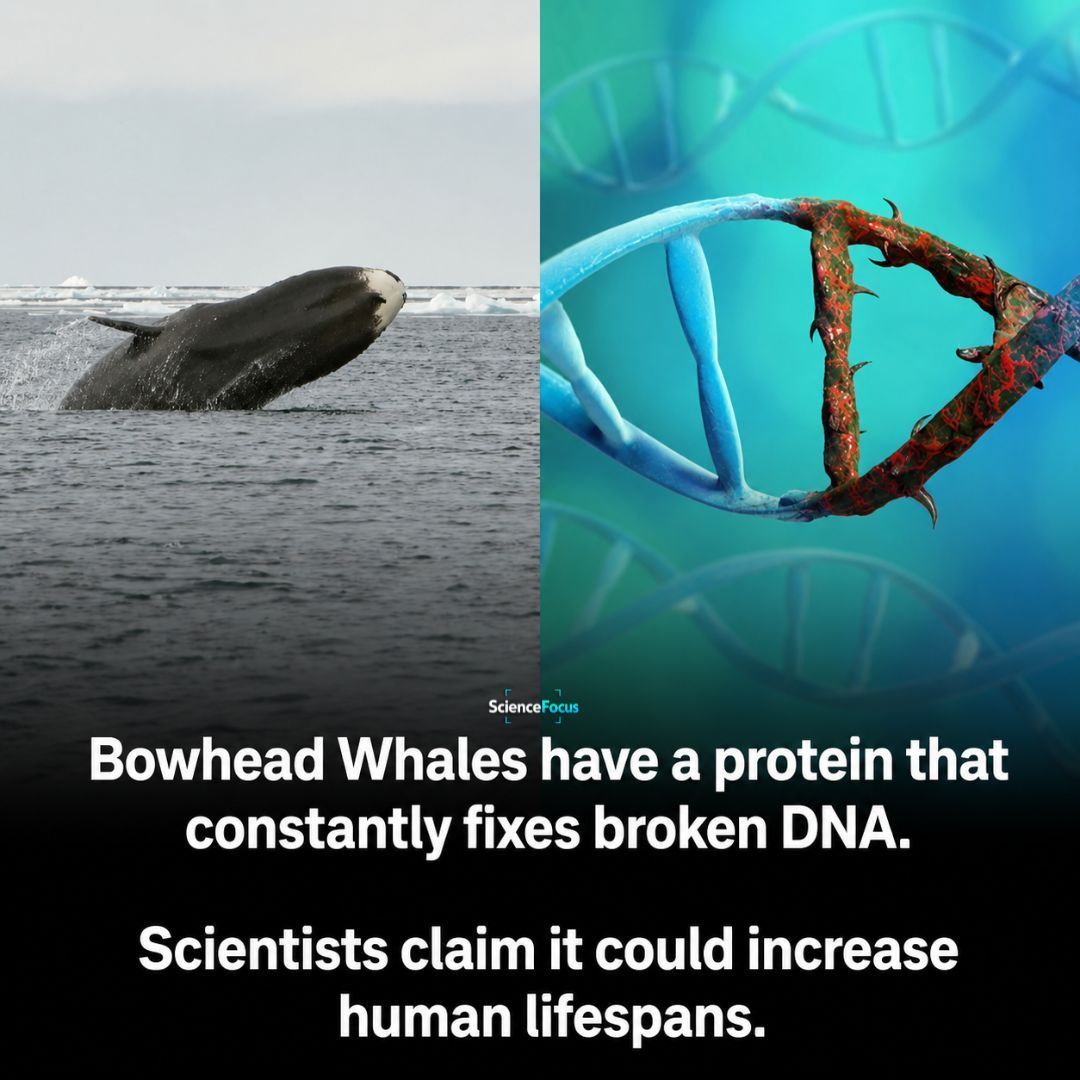
The animal that may hold clues to a longer human life doesn't live on land. It lives beneath Arctic ice. The bowhead whale can live for more than 200 years. That's longer than almost any mammal on Earth. For years, scientists have been trying to understand why. One reason may be hidden deep inside its DNA. Researchers discovered that bowhead whales possess genetic adaptations linked to DNA repair, cell protection, and resistance to age-related damage. Why is that important? Because DNA damage builds up over time. It's one of the major drivers of aging. Every day, your cells are exposed to stress. Radiation. Pollution. Normal metabolism. All of it can leave tiny scars on DNA. Most animals slowly accumulate that damage. Bowhead whales appear to be far better at managing it. That's why scientists are studying these giants so closely. Not because they found an immortality gene. But because understanding how these whales stay healthy for so long could reveal new ways to combat aging and age-related disease in humans. The secret to a longer life may be swimming through the Arctic right now.
ScienceFocus tweet media
English
2
13
56
1.9K
ScienceFocus
ScienceFocus@ScienceFocusonX·
A jellyfish as long as a school bus has stunned scientists. The rare giant phantom jellyfish was spotted off Argentina's coast. It can grow up to 10 meters (33 feet) long. Scientists have recorded only about 118 sightings in over a century. The deep ocean is still full of incredible surprises.
ScienceFocus tweet media
English
3
31
125
3.3K
ScienceFocus
ScienceFocus@ScienceFocusonX·
Mark your calendar. 🌑 A total solar eclipse will occur on August 12, 2026. The path of totality will cross parts of Spain, Iceland, Greenland, and northern Russia. Many other regions will see a partial eclipse. Never look directly at the Sun without certified eclipse glasses.
ScienceFocus tweet media
English
2
13
37
1.3K
ScienceFocus
ScienceFocus@ScienceFocusonX·
Imagine destroying a tumor by turning it into ice. Doctors in Australia are using a breakthrough technique that freezes cancerous tumors into a solid ice ball, causing the damaged cells to die off. No major incisions. No traditional surgery. Just extreme cold targeting the tumor with remarkable precision. A glimpse of what the future of cancer treatment can look like.
ScienceFocus tweet media
English
17
183
569
36.9K
ScienceFocus
ScienceFocus@ScienceFocusonX·
Rainbow clouds spotted over Indonesia
English
20
170
901
38.7K
ScienceFocus
ScienceFocus@ScienceFocusonX·
What if your brain never fully tunes out? Scientists are discovering that even under anesthesia, the brain may continue picking up sounds and signals from the environment. While you're unconscious, certain regions can remain surprisingly active, processing information in ways researchers are only beginning to understand. The body appears asleep, but deep inside, the brain may still be listening. This fascinating discovery is challenging long-held assumptions about consciousness and revealing just how complex the human mind really is. What happens during those silent moments remains one of medicine's most intriguing mysteries.
ScienceFocus tweet media
English
21
27
156
22.4K
ScienceFocus
ScienceFocus@ScienceFocusonX·
What if the future helps shape the past? A controversial idea in quantum physics suggests reality may not be as one-directional as it seems. Some interpretations of famous experiments hint that measurements made in the present can appear connected to events that happened earlier. Not because time is running backward. But because, at the quantum level, reality may only become fully defined when an observation is made. This doesn't mean humans control the universe with their thoughts. It means the act of measuring could play a deeper role in how reality unfolds than scientists once believed. The result is a mind-bending question: Are we simply discovering reality... Or helping determine how it takes shape?
ScienceFocus tweet media
English
3
4
9
851
ScienceFocus
ScienceFocus@ScienceFocusonX·
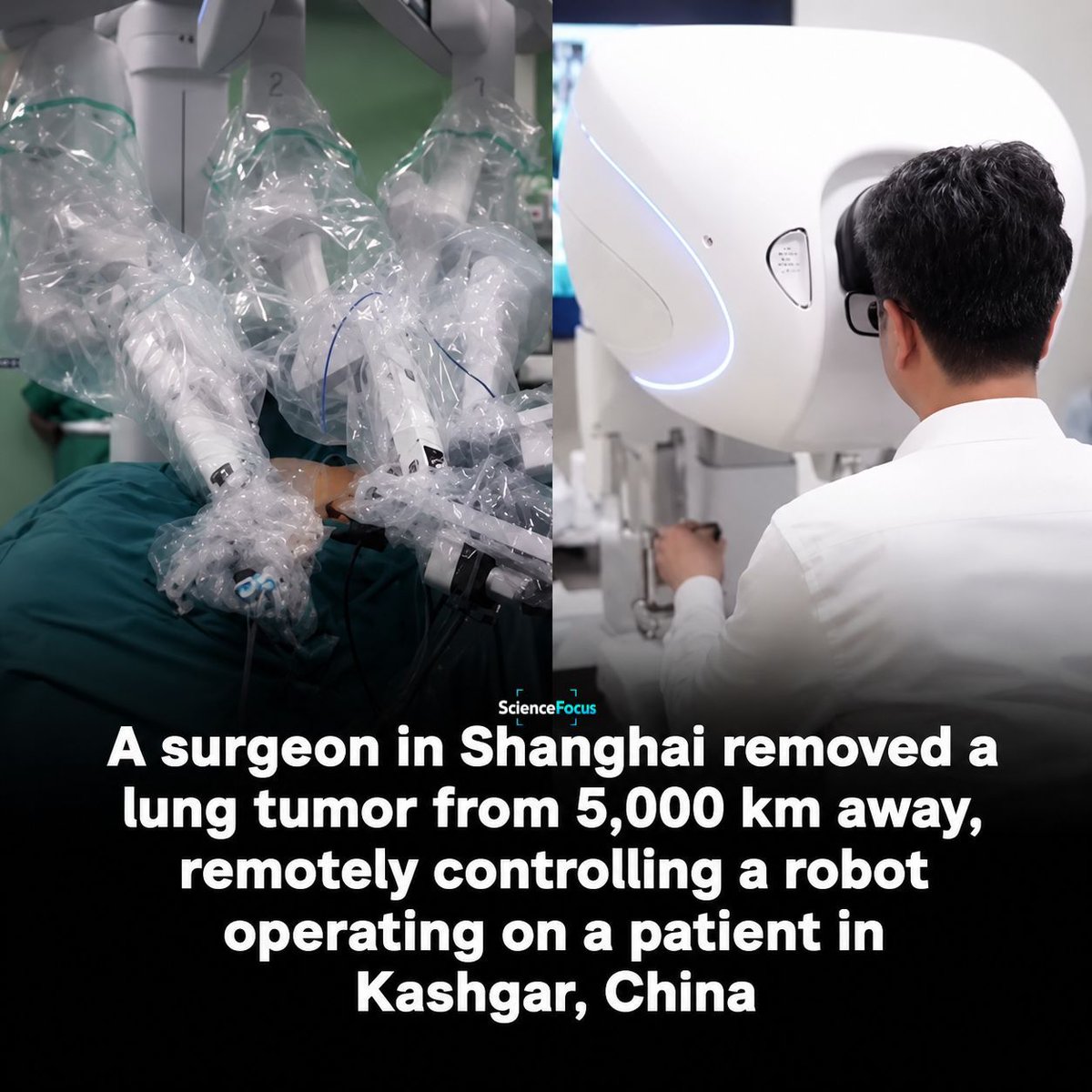
A surgeon operated from 5,000 kilometers away. The patient was in Kashgar. The doctor was in Shanghai. Instead of standing beside the operating table, the surgeon controlled a robotic system remotely, performing a delicate lung tumor procedure across an enormous distance. Every movement of the surgeon's hands was transmitted in real time. The robot mirrored those actions with remarkable precision, allowing the operation to be completed without the surgeon ever entering the same room as the patient. What once sounded like science fiction is quickly becoming reality. As robotic surgery and ultra-fast networks advance, distance is becoming less of a barrier to lifesaving medical care. The future of surgery may not depend on where the doctor is but on how fast technology can connect them.
ScienceFocus tweet media
English
0
7
24
842
ScienceFocus
ScienceFocus@ScienceFocusonX·
Your cat could one day live twice as long as expected. Researchers in Japan are working on a breakthrough treatment that may dramatically extend the lifespan of domestic cats. The goal is astonishing. Instead of the typical lifespan of around 15 years, cats could potentially live close to 30 years. That means more time. More memories. More years with the companions many people consider family. The treatment is still being developed, but scientists believe it could become publicly available as early as 2027. If successful, it could completely change the future of feline health and longevity. A future where saying goodbye to our pets comes much later than we ever imagined.
ScienceFocus tweet media
English
23
31
163
22.8K
ScienceFocus
ScienceFocus@ScienceFocusonX·
You are literally seeing a plant producing oxygen in real-time. This is an aquatic planet showing photosynthesis.
English
27
568
3.8K
88.9K
ScienceFocus
ScienceFocus@ScienceFocusonX·
A breakthrough once thought impossible is becoming reality. Scientists in China have developed a new technology that is helping people with paralysis regain the ability to walk. For decades, paralysis was seen as a life-altering condition with few options. Now that may be changing. Patients who once depended entirely on assistance are taking steps again. Slowly. Carefully. But steps nonetheless. The innovation works by helping restore communication between the brain and the body, allowing movement that was once believed to be permanently lost. While research is still advancing, the early results have captured attention around the world. What seemed like science fiction is starting to happen in real life. And for millions living with paralysis, that possibility changes everything.
ScienceFocus tweet media
English
3
5
15
878