Sean McCafferty, MD FACS

1K posts

Sean McCafferty, MD FACS banner
Sean McCafferty, MD FACS

Sean McCafferty, MD FACS

@SeanJMcCafferty

CEO of @Intuortec & @CATSIOP. Creator of CATS Tonometer Prism™ which significantly enhances glaucoma diagnoses & https://t.co/Gs7isLyxq0, FACS, ophthalmology

Tucson, AZ Katılım Eylül 2016
273 Takip Edilen627 Takipçiler
Sean McCafferty, MD FACS
Sean McCafferty, MD FACS@SeanJMcCafferty·
New theory of IOP regulation: Active transport involves overcoming molecular energy barriers. The probability of molecules having sufficient barrier energy (press/temp) produces a Boltzmann IOP distribution. This implies aqueous dynamics follow ideal-gas-like behavior and are temperature-dependent
Sean McCafferty, MD FACS tweet media
English
1
0
1
36
Sean McCafferty, MD FACS
Sean McCafferty, MD FACS@SeanJMcCafferty·
Uveoscleral outflow (Fu) in humans is calculated indirectly using the modified Goldmann equation with Goldmann IOP. When correcting for this -4.5 mmHg bias, calculated Fu in normal eyes becomes negligible. This suggests that uveoscleral outflow may be clinically much smaller than traditionally reported and is likely, at least in part, an artifact of inaccurate IOP measurement.
English
0
0
1
26
Sean McCafferty, MD FACS
Sean McCafferty, MD FACS@SeanJMcCafferty·
Average Goldmann IOP is 15.5 mmHg. Using standard values (F = 2.75 µL/min, C = 0.25 µL/min/mmHg), the std. Goldmann equation predicts ~20 mmHg. This +4.5 mmHg difference matches the known systematic underestimation of true intracameral pressure by Goldmann tonometry.
Sean McCafferty, MD FACS tweet media
English
1
0
2
59
Sean McCafferty, MD FACS
Sean McCafferty, MD FACS@SeanJMcCafferty·
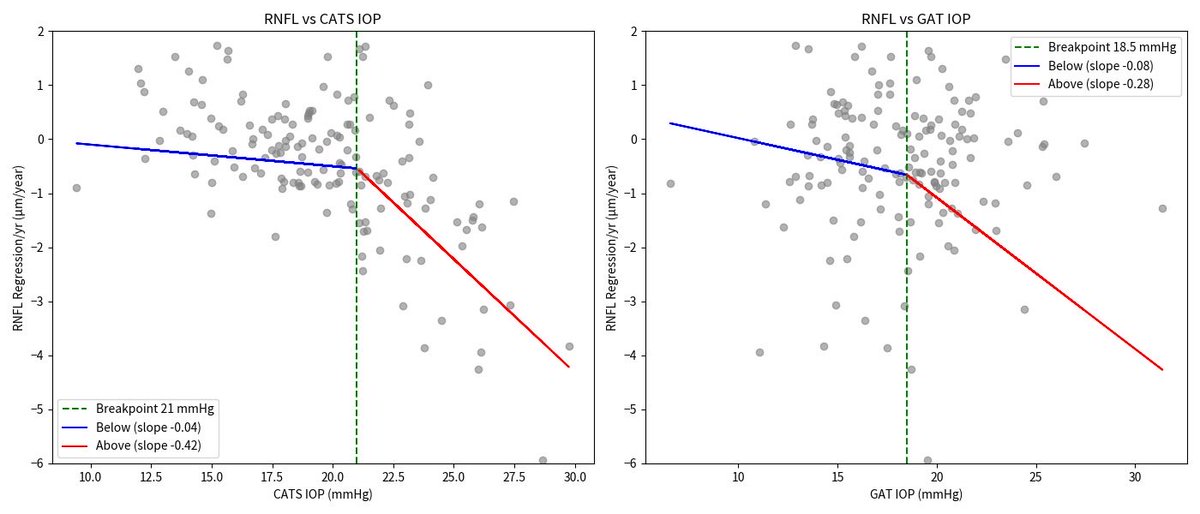
Using AGIS glaucoma progression cutoff @18mmHg, CATS IOP is 83% sensitive to RNFL progression and GAT IOP is 58% sensitive.
Sean McCafferty, MD FACS tweet media
English
0
0
2
54
Rothmus 🏴
Rothmus 🏴@Rothmus·
There is all the difference in the world between takers and makers. Production never even crosses their minds. Like parasites, socialists exist solely to take and consume, never to create or contribute.
Rothmus 🏴 tweet media
English
923
3.6K
12.7K
1.2M
Sean McCafferty, MD FACS
Sean McCafferty, MD FACS@SeanJMcCafferty·
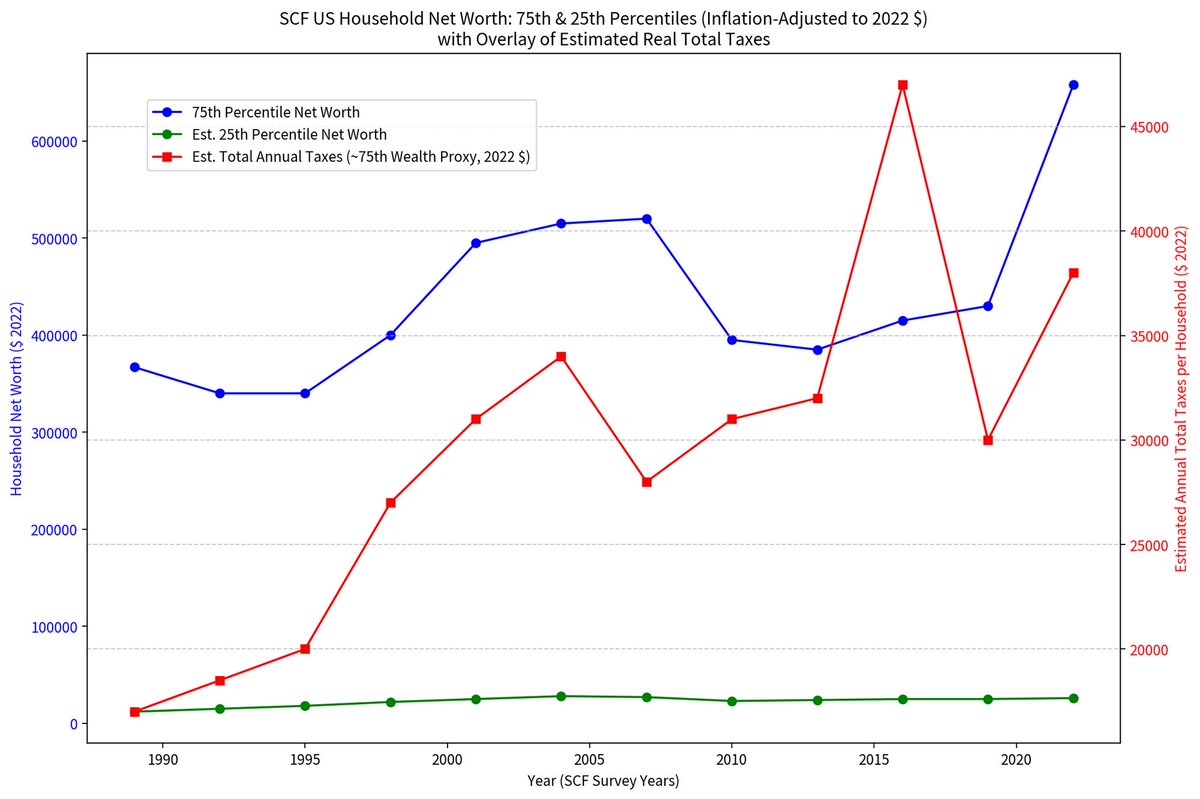
@BobClimko Furthermore, how long do people remain wealthy/poor? What is their mobility as described by the PSID which is somewhat decreased.
Sean McCafferty, MD FACS tweet media
English
0
0
0
16
Sean McCafferty, MD FACS
Sean McCafferty, MD FACS@SeanJMcCafferty·
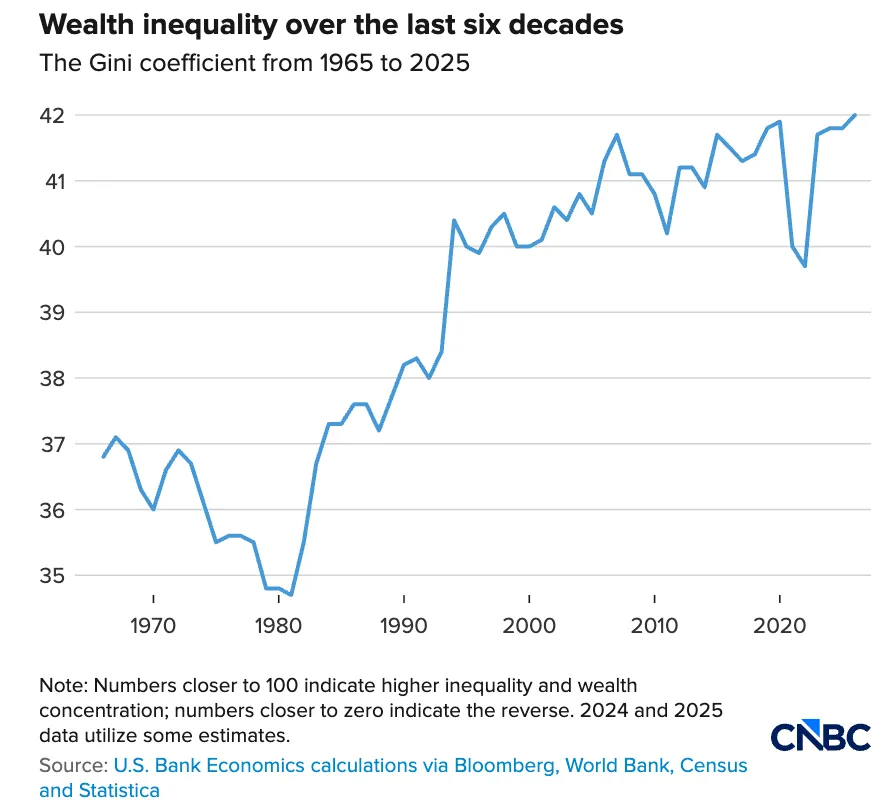
@BobClimko The Gini coefficient is more sensational and less informative. The SCF looks at the gaps between 25%tile and 75%tile as shown. The poor have always been about the same. The 75% have increased and this includes house wealth etc.
Sean McCafferty, MD FACS tweet media
English
0
0
1
24
Sean McCafferty, MD FACS
Sean McCafferty, MD FACS@SeanJMcCafferty·
The retina does employ a mechanism that results in focal suppression of activity in certain ganglion cells around high-intensity (bright) areas, though it’s not a specialized “anti-glare” system but part of the standard center-surround organization and lateral inhibition.3257 This works through the receptive fields of retinal ganglion cells (RGCs), the output neurons of the retina that send visual signals to the brain via the optic nerve. Most RGCs have center-surround receptive fields with antagonistic (opposing) responses: •On-center/off-surround RGCs: Excited by bright light in the center of their receptive field; inhibited by bright light in the surrounding ring. •Off-center/on-surround RGCs: The opposite pattern. This antagonism arises from lateral inhibition, mediated primarily by horizontal cells (in the outer retina) and amacrine cells (in the inner retina). When a high-intensity bright spot or “glared” area stimulates photoreceptors in one region, it strongly activates the centers of RGCs directly under it (boosting their firing if on-center). However, it simultaneously stimulates the surrounds of neighboring RGCs whose centers are just outside the bright area. This causes inhibition/suppression of those adjacent ganglion cells.4653 In effect: •The retina emphasizes contrast and edges around the bright region (e.g., making boundaries sharper, as in Mach bands illusions). •It relatively suppresses responses in the immediate surrounding retinal areas to uniform or diffuse bright light. •This helps the visual system handle wide ranges of luminance without saturation and downplays uniform background illumination.37 Important caveats regarding “glare” specifically: •True glare/halos around bright lights (e.g., headlights at night or high-intensity projected images) are mostly caused by optical scattering of light in the eye’s cornea, lens, or vitreous before it reaches the retina—not by retinal processing itself. •The retina processes whatever light pattern actually arrives on the photoreceptors. Lateral inhibition enhances perceived contrast within that pattern but does not eliminate or actively “cancel” scattered light halos. •Some specialized RGC types (e.g., certain direction-selective or suppressed-by-contrast cells) show additional luminance suppression under specific conditions, but the core center-surround mechanism applies broadly.56 This retinal strategy is highly efficient for edge detection and adaptation but is why we still perceive halos or reduced visibility around intense lights when scatter is high (e.g., cataracts, aging eyes). It is not identical to artificial systems like certain image-processing algorithms or display tech that might explicitly mask or suppress around glare sources, but it achieves a functionally similar local contrast enhancement via biological “focal suppression” of nearby ganglion cell activity. In short, yes—the retina uses this built-in suppression around high-intensity regions as a core part of how it sharpens vision.
English
0
0
0
29
Sean McCafferty, MD FACS
Sean McCafferty, MD FACS@SeanJMcCafferty·
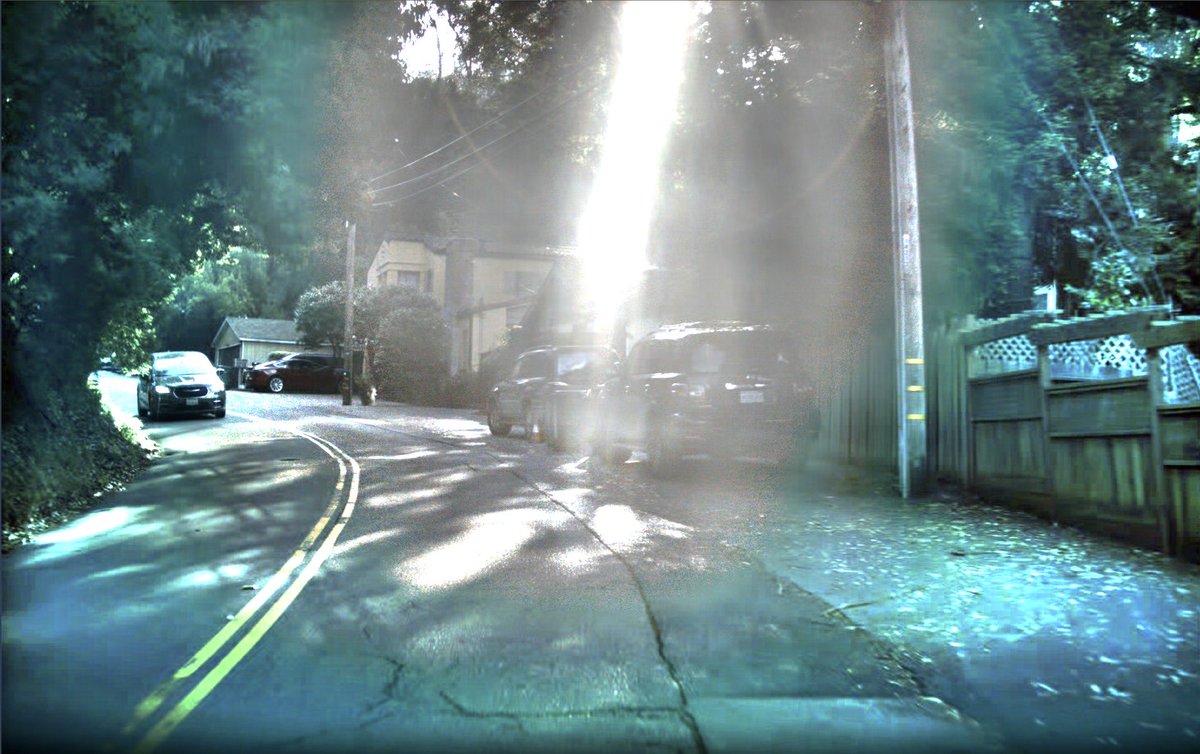
Photon count image reconstruction (as used in Tesla’s FSD context) primarily improves handling of high-dynamic-range (HDR) scenes with intense light sources, such as direct sun or headlights, by bypassing traditional image signal processing (ISP) that exacerbates glare and scatter effects. It does not physically eliminate Mie scattering but enables better recovery of scene details despite it.56 What is Mie Scattering in This Context? Mie scattering occurs when light interacts with particles (e.g., water droplets in fog/haze, dust, or aerosols) roughly the size of the light’s wavelength or larger. It is strongly forward-directed (unlike Rayleigh scattering) and creates: •Haze, veiling glare, or bloom in images. •Scattered photons that mix with direct light from the scene, reducing contrast and washing out details, especially in bright conditions where intense sources amplify the effect.74 In cameras, this combines with optical effects (lens flare, sensor bloom) and ISP artifacts. How Traditional Cameras/Processing Handle (and Worsen) It Standard RGB cameras use: •Fixed or auto exposure over an integration time → Bright sources saturate pixels (clip to maximum value), spreading charge or causing bloom. •Image Signal Processor (ISP) steps: demosaicing, white balance, tone mapping, gamma correction, compression. These often average, clip, or compress dynamic range to fit 8-bit outputs, amplifying scattered light’s veiling effect and losing faint signals in darker areas.37 Result: A “washed-out” image where glare from Mie-scattered light (or direct bright sources) obscures roads, vehicles, etc. How Photon Count Reconstruction Works and Reduces the Impact Tesla’s approach (direct/raw photon counting) feeds high-fidelity raw sensor data to the neural net: 1Raw Photon Detection: Sensors (CMOS photodiodes) convert photons to charge linearly. Instead of long exposures + ISP, the system uses very short integration times or high-frame-rate captures to avoid saturation even in bright sunlight. Each “frame” records precise photon counts per pixel (or near-single-photon sensitivity in aggregate).65 2Bypassing ISP: Raw counts (high dynamic range, often effectively 16+ bits or more via temporal integration) go directly to the NN. No early clipping, tone mapping, or averaging that mixes scattered photons indiscriminately with scene signals.56 3Neural Reconstruction: ◦The NN learns to interpret photon statistics across space and time. ◦It can separate direct (ballistic) photons from scattered ones using patterns, motion, multi-frame fusion, and learned priors about the world (e.g., road geometry, object consistency). ◦Temporal fusion (short exposures summed intelligently) preserves faint details in low-light areas while handling bright ones without global washout. ◦This yields HDR-like reconstruction: clear houses, cars, trees, etc., even when standard RGB looks blown out.10 Key advantage against Mie scatter: Scattered light adds a low-frequency veil or noise. With raw counts and no lossy processing, the NN can model and subtract this veil more effectively (similar to computational dehazing or time-of-flight separation in research, though Tesla relies on vision + learning rather than explicit pulsed lasers). Short exposures also limit the accumulation of scattered photons per frame.8 In essence, it’s not active scatter removal (like anti-scatter grids in CT or coherence gating) but preservation of information so the AI can reconstruct the underlying scene. Traditional processing destroys that info early; photon-to-NN keeps it.81 This aligns with Tesla’s “photon-to-control” philosophy: minimal processing until the end-to-end neural model. Real-world gains are most visible in glare, night, or haze, where human-like (or better) perception emerges from the data. Limitations remain (e.g., extreme fog may still challenge pure vision), but it represents a major edge over standard camera pipelines.
English
2
1
4
235
Elon Musk
Elon Musk@elonmusk·
The human-perceived RGB is image 1 and the Tesla AI photon count reconstruction is image 2. This is why Tesla FSD can see so well at night or through extreme glare.
Elon Musk tweet mediaElon Musk tweet media
English
6.3K
17.7K
208.4K
40.8M
Sean McCafferty, MD FACS
Sean McCafferty, MD FACS@SeanJMcCafferty·
Glaucoma Broken-stick analysis reveals a higher, more actionable IOP threshold with CATS (21 mmHg, ~10× faster RNFL thinning above threshold) compared to Goldmann tonometry (18.5 mmHg, ~3.5× acceleration). Data from same-visit measurements in ~150 eyes.
Sean McCafferty, MD FACS tweet media
English
0
0
1
62
Sean McCafferty, MD FACS
Sean McCafferty, MD FACS@SeanJMcCafferty·
These non-intuitive orbits (L1-L5) are Eigen value solutions to a 5th order polynomial describing 3 body orbits. Shown are the point solutions where stable satellites could be placed. Also their rotation can be in the same plane as the earth-sun or 90 degrees to it.
Sean McCafferty, MD FACS tweet media
English
0
0
2
45
Sean McCafferty, MD FACS
Sean McCafferty, MD FACS@SeanJMcCafferty·
Interesting non-intuitive satellite orbits (we always think of them circling a body). The Webb telescope orbits an ethereal point (L2) about 1.5M km beyond the earth's path and out of the plane of planetary rotation as shown.
Sean McCafferty, MD FACS tweet media
English
1
0
2
61
Sean McCafferty, MD FACS
Sean McCafferty, MD FACS@SeanJMcCafferty·
My understanding is that the oblique shocks increase the pressure on the back-side of the cone actually pulling the engine forward and the variable cone position along with flow vents are used to maintain the shocks which produce about 60% of the thrust. Also a supersonic flow bypass is used to produce a ram jet configuration around the subsonic combustion chamber. Absolutely amazing.
English
0
0
2
370
Habubrats SR-71
Habubrats SR-71@Habubrats71·
The SR-71 Blackbird converts supersonic air to subsonic speeds using a movable, conical "spike" in the engine inlet that generates a series of shock waves, slowing air from over Mach 3 to roughly Mach 0.4 before it reaches the compressor. This process, crucial for the J58 engine, transforms high-speed, low-pressure air into high-pressure air at a manageable speed, generating a majority of the total thrust.  Mechanism for Slowing Air •Inlet Spike Position: The sharp, cone-shaped spike moves up to 26 inches backward as the aircraft accelerates, optimizing shock wave alignment. •Oblique Shock Waves: At supersonic speeds, the spike produces a series of angled oblique shock waves that slow and compress the air. •Normal Shock Wave: A terminal shock wave forms at the inlet mouth, effectively slowing the air to subsonic velocity. •Variable Geometry: The inlet computer automatically manages the spike position and bypass doors to prevent "inlet unstart"—an immediate loss of thrust caused by shock wave misalignment.  Benefits and Components •Pressure Conversion: The inlet acts like a "garden hose in reverse," where the reduction in speed is converted into massive pressure increase. •Subsonic Compression: The engine itself is a turbojet, which can only function on subsonic air. •Bypass Air: Excess air is bled off and reintroduced at the exhaust, adding more efficiency and thrust.  •YouTube
 : How the Lockheed SR-71 Blackbird works by Amimagraffs
English
15
100
815
72K
Peter Lombard MD
Peter Lombard MD@peterlombard·
@SeanJMcCafferty Isn't the table showing overestimation relative to the Goldman, for everything except the CATS?
English
2
0
1
13
Sean McCafferty, MD FACS
Sean McCafferty, MD FACS@SeanJMcCafferty·
The verbiage is somewhat convoluted. The table is correct. The beauty of AI is anyone can now do almost instantly do what literally took a coding consultant. The was done as a test. I plan to crunch 7+ years and probable 5 million lines of data. This tool increases my productivity by 10-100x.
English
1
0
1
28
Peter Lombard MD
Peter Lombard MD@peterlombard·
This is interesting. Your chart doesn't seems to match what you wrote, is there another way you can present your findings? I almost always have lower icare and tonopen readings than Goldman, it's nice to see your data show the same. I wonder if I could pull the same data from my EHR Compulink.
English
1
0
0
24
Sean McCafferty, MD FACS
Sean McCafferty, MD FACS@SeanJMcCafferty·
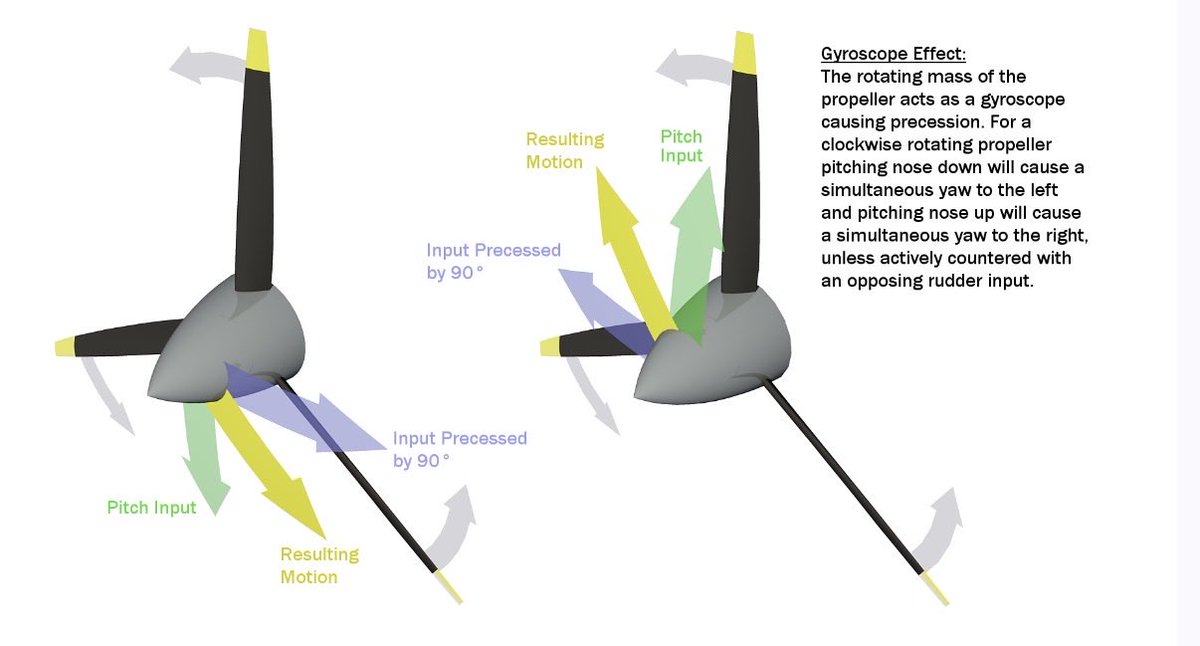
Left yaw behavior in a propeller aircraft upon takeoff is most consistent with propeller gyroscopic precession (and not primarily with the other left-turning tendencies)
Sean McCafferty, MD FACS tweet media
English
0
0
1
32
Sean McCafferty, MD FACS
Sean McCafferty, MD FACS@SeanJMcCafferty·
Core problem simplification often uncovers more practical, effective solutions than complex framings.
English
0
0
1
57