Sebastian

308 posts

Sebastian

Sebastian

@SebastianCygert

Head of AI Safety at NASK-National Research Institute (Poland). Member of Ellis Society.

Gdańsk, Poland Katılım Mart 2020
566 Takip Edilen215 Takipçiler
Sebastian retweetledi

Jack Morris
Jack Morris@jxmnop·
Wondering how to attend an ML conference the right way? ahead of NeurIPS 2025 (30k attendees!) here are ten pro tips: 1. Your main goals: (i) meet people (ii) regain excitement about work (iii) learn things – in that order. 2. Make a list of papers you like and seek them out at poster sessions. Try to talk to the authors– you can learn much more from them than from a PDF. 3. Pick one workshop and one tutorial that sounds most interesting. Skip the rest. 4. Cold email people you want to meet but haven't. Check Twitter and the accepted papers list. PhD students are especially responsive. 5. Practice a concise pitch of unpublished research you're working on for "what are you interested in rn?". Focus on big unanswered questions and exciting new directions, *not* papers. 6. Skip the orals. Posters are a higher-bandwidth, more engaging, more invigorating. Orals are a good time to go for a walk or talk in the hallway. 7. for the love of god, do NOT work on other research in your hotel room. Save mental bandwidth for the conference. (This may seem obvious; you'd be surprised.) 8. Talk to people outside your area. There are many smart people working on niches <10 people understand. Learn about one or two that won't help your own work. 9. Attend one social each night. Don't overthink it or get caught up in status games. They're all fun. 10. Take breaks. You can't go to everything, and conferences consume more energy than a normal workweek. hope this helps, and sad i'm not attending neurips, have fun :)
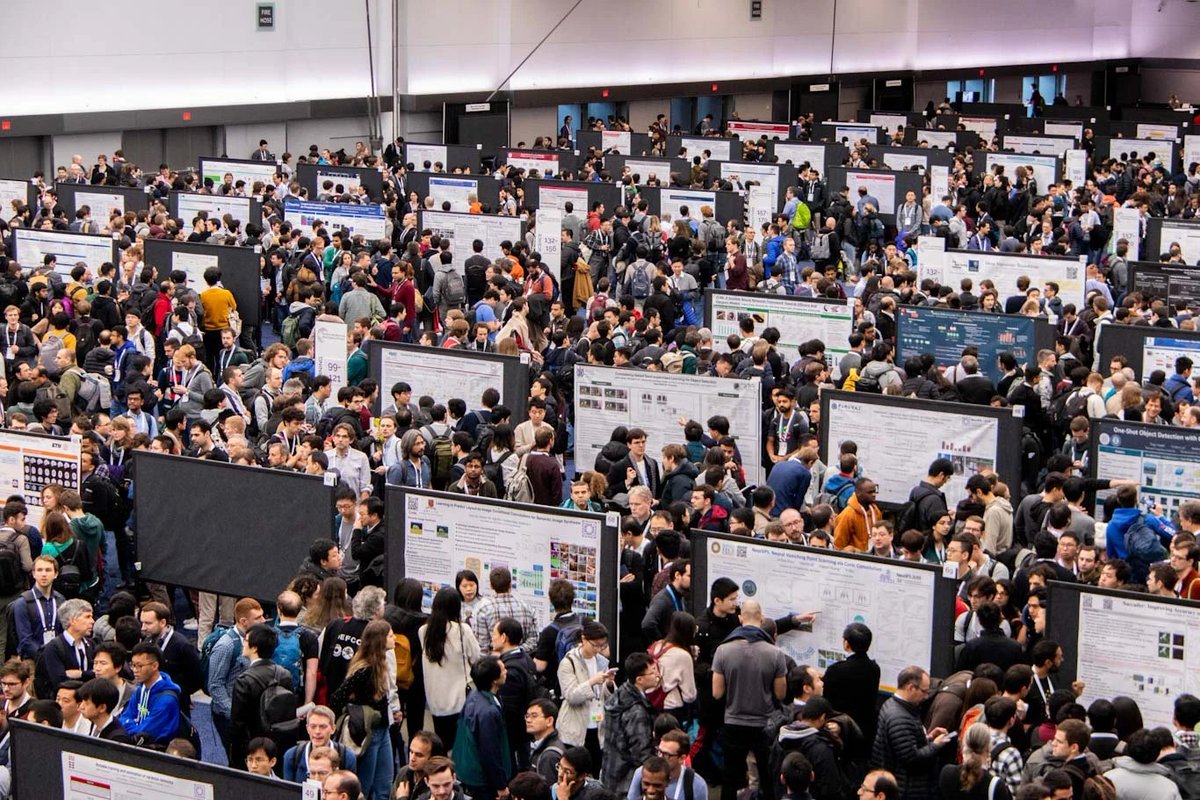
Jack Morris tweet media
English
28
129
1.5K
136.7K
Sebastian retweetledi
Sara Hooker
Sara Hooker@sarahookr·
I'm starting a new project. Working on what I consider to be the most important problem: building thinking machines that adapt and continuously learn. We have incredibly talent dense founding team + are hiring for engineering, ops, design. Join us: adaptionlabs.ai
English
215
189
2.5K
224.8K
Sebastian retweetledi
Gary Marcus
Gary Marcus@GaryMarcus·
the number of people rediscovering what i have been saying for years grows every day.
Rohan Paul@rohanpaul_ai

Fei-Fei Li says language models are extremely limited. This @GoogleDeepMind paper makes almost the same point, just in the world of video. The models are just very advanced pattern matchers. They can recreate what looks like reality because they’ve seen so much data, but they don’t know why the world works the way it does. The models can generate clips that look stunningly real, but when you test whether they actually follow basic physics, they fall apart. The Physics-IQ benchmark shows that visual polish and true understanding are two completely different things. Here, the authors build Physics-IQ, a real-video benchmark spanning solid mechanics, fluids, optics, thermodynamics, and magnetism Each test shows the start of an event, then asks a model to continue the next seconds. They compare the prediction to the real future using motion checks for where, when, and how much things move. Scores then roll into a single Physics-IQ number that caps at what 2 real takes agree on. Across popular models, even the strongest sits far below that cap, while multiframe versions usually beat image-to-video versions. Sora is hardest to tell apart from real videos, yet its physics score stays low, showing realism and physics are uncorrelated. Some cases work, like paint smearing or pouring liquid, but contact and cutting often fail. arxiv. org/abs/2501.09038

English
51
93
929
90.7K
WACV
WACV@wacv_official·
Submission for the #WACV2026 Round 2 will open on OpenReview after reviews and decisions for Round 1 are released. We anticipate releasing Round 1 decisions by end of day anywhere on Earth on September 4th.
English
3
4
26
17.2K
Maria GóRNA
Maria GóRNA@m_gorna·
Ubiegamy się z @MissAgataStar o obliczenia na PLGrid, bardzo sobie cenimy, grant obliczeniowy przyznany, ale - za mało zasobów dyskowych, żeby wykonać obliczenia! nie wykonamy, klaster zapchany. Może dofinansować najpierw to co działa?! @CYFRA_GOV_PL @KGawkowski @MNiSW_GOV__PL
Polski
5
6
44
8.3K
Sebastian
Sebastian@SebastianCygert·
1/2 Paper: "We’re Different, We’re the Same: Creative Homogeneity Across LLMs" by E. Wenger, Y. Kenett. arxiv.org/pdf/2501.19361 On limited creativity of LLMs: "We find that LLM responses are much more similar to other LLM responses than human responses are to each other"
Sebastian tweet media
English
0
0
2
97
Sebastian retweetledi
Anthropic
Anthropic@AnthropicAI·
We’re running another round of the Anthropic Fellows program. If you're an engineer or researcher with a strong coding or technical background, you can apply to receive funding, compute, and mentorship from Anthropic, beginning this October. There'll be around 32 places.
Anthropic tweet media
English
67
227
2.7K
1.7M
Sebastian retweetledi
Jack Morris
Jack Morris@jxmnop·
new blog post "All AI Models Might Be The Same" in which i explain the Platonic Representation Hypothesis, the idea behind universal semantics, and we might use AI to understand whale speech and decrypt ancient texts
Jack Morris tweet media
English
54
153
1.4K
93.8K
Sebastian retweetledi
Daniel Marczak
Daniel Marczak@danie1marczak·
Next week I will be in Vancouver 🇨🇦 for #ICML2025. Together with @SimoneM44644 and @SebastianCygert we will present "No Task Left Behind: Isotropic Model Merging with Common and Task-Specific Subspaces". Visit the poster on Wednesday, 16th July at 11 am.
English
1
3
19
390
Sebastian retweetledi
Itai Yanai
Itai Yanai@ItaiYanai·
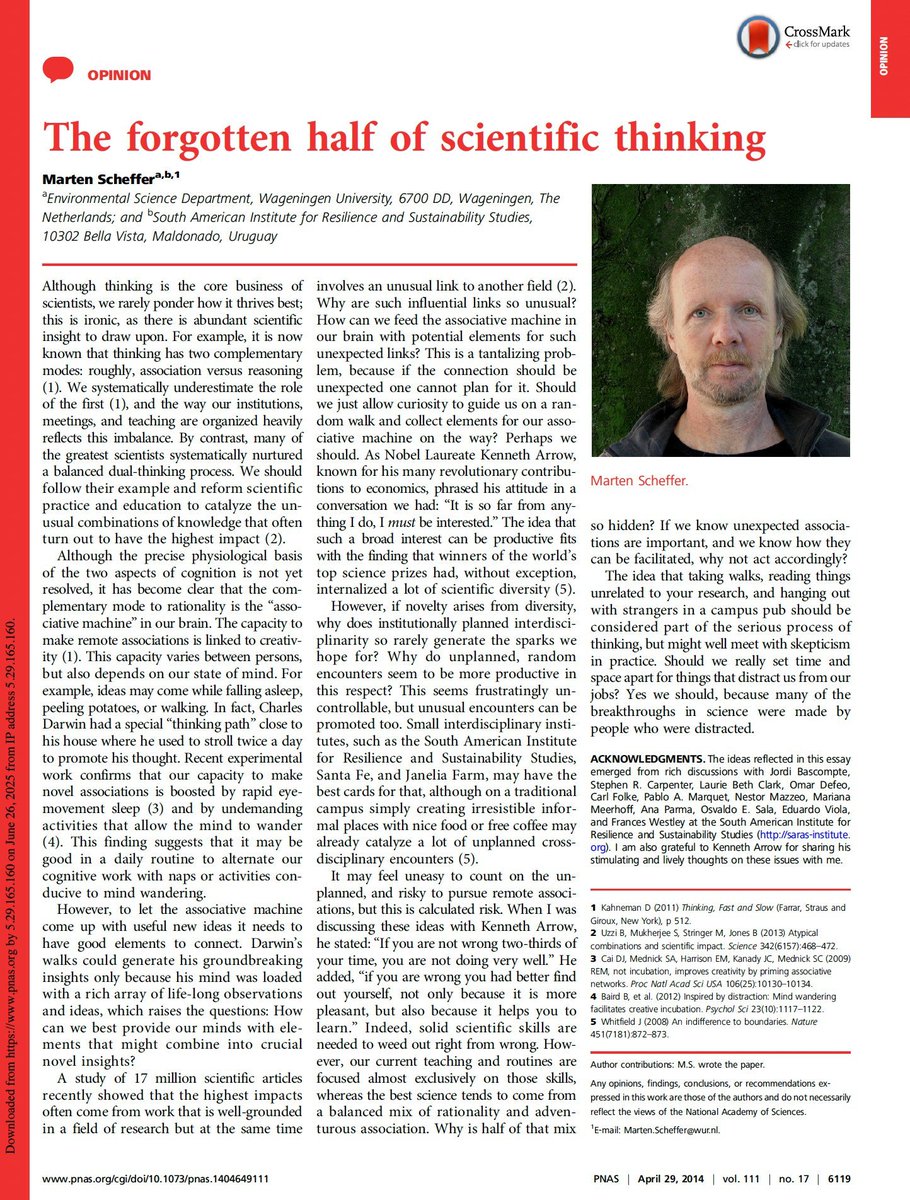
hanging out with strangers in a campus pub should be considered part of the serious process of thinking
Itai Yanai tweet media
English
13
115
725
54.5K
Marcin Uszyński
Marcin Uszyński@MarcinUszynski·
Baltic AI GigaFactory🏭🇵🇱🇪🇪🇱🇹🇱🇻Polska wspólnie z Estonią, Litwą, Łotwą i konsorcjum prywatnych przedsiębiorców oraz czołowych instytutów badawczych złożyła wniosek do Komisji Europejskiej dotyczący budowy GigaFabryki Sztucznej Inteligencji. Brzmi to jak projekt co najmniej przełomowy dla regionu, ale pamiętać należy, że to dopiero wniosek. Złożenie wniosku do Komisji Europejskiej to dopiero pierwszy krok w procesie realizacji projektu. Wniosek jest formalnym zgłoszeniem, które przedstawia koncepcję, budżet i plan działania. Teraz czas na kolejne etapy: Ocena przez Komisję Europejską: KE przeanalizuje wniosek pod kątem zgodności z celami UE, wykonalności technicznej, finansowej i wpływu na gospodarkę. Może to trwać kilka miesięcy. Negocjacje i doprecyzowanie: Jeśli wniosek zostanie wstępnie zaakceptowany, konsorcjum będzie współpracować z KE, aby dopracować szczegóły, np. lokalizację, harmonogram czy model finansowania. Finansowanie i zatwierdzenie: Po uzyskaniu zgody KE, projekt otrzyma dostęp do funduszy UE (35% budżetu UE, a 65% z kasy wnioskujących) oraz zostanie uruchomione finansowanie prywatne, które będzie wymagać szczegółowych umów. Realizacja: Budowa GigaFactory rozpocznie się po zatwierdzeniu i zabezpieczeniu finansowania. Projekt będzie realizowany etapami, co może zająć kilka lat. Miejmy nadzieję, że wniosek nie zostanie odrzucony, nie przepadnie, nie zostanie pobity przez konkurencję i ubity politycznie, bo mamy tutaj do czynienia z naprawdę zorganizowaną i dobrze wyglądającą grupą interesariuszy. Dlaczego to ma szansę się powieść? 1. 🇵🇱🤝🇪🇪 🤝 🇱🇹 🤝 🇱🇻 2. Naprawdę silny prywatny biznes technologiczny który położy na stół pieniądze: Allegro, Beyondpl, Cloudferro, Greenergy Data Centers, Orange Polska S.A., Skeleton Technologies, Synerise, UAB, Wirtualna Polska 3. Wiodące instytucje badawcze: Cyfronet, PCSS, Instytut Badawczy IDEAS oraz NASK PIB, Uniwersytet Techniczny w Rydze, Uniwersytet w Wilnie, Uniwersytat Łotewski oraz Uniwersytet w Tartu, Artificial Intelligence Asosiacion (MILA), LIKTA – Information & Communications Technology Association 4. Projekt wpisuje się w unijną strategię InvestAI Proponowany budżet projektu to 3 mld 💶 Przeszkody? 1. Konkurencyjne wnioski np. z Niemiec, Finlandii i Czech. 2. Napięcia w regionie bałtyckim, w szczególności presja Rosji, mogą wpłynąć na decyzje i priorytety KE, np. w kontekście bezpieczeństwa energetycznego i infrastrukturalnego. Tak czy inaczej, musimy trzymać kciuki za Bałtów i nas w roli lidera regionu!🤞🏻🇵🇱 Let's go @CYFRA_GOV_PL 👏🏻
Marcin Uszyński tweet media
Polski
9
9
32
3K
Sebastian retweetledi
Neel Nanda
Neel Nanda@NeelNanda5·
VLMs are wild. You can glue a vision model to an LLM?! What's up? The key is that both models learn universal representations. Just training a linear projection, is enough! But image embeddings align only with LATE layer language activations as shown by LLM SAEs, causing issues
Constantin Venhoff@cvenhoff00

🔍 New paper: How do vision-language models actually align visual- and language representations? We used sparse autoencoders to peek inside VLMs and found something surprising about when and where cross-modal alignment happens! Presented at XAI4CV Workshop @ CVPR 🧵 (1/6)

English
5
39
409
36.6K
Sebastian retweetledi
Sergey Levine
Sergey Levine@svlevine·
I always found it puzzling how language models learn so much from next-token prediction, while video models learn so little from next frame prediction. Maybe it's because LLMs are actually brain scanners in disguise. Idle musings in my new blog post: sergeylevine.substack.com/p/language-mod…
English
51
170
1.3K
314.6K
Sebastian retweetledi
Josh Wolfe
Josh Wolfe@wolfejosh·
Apple just GaryMarcus'd LLM reasoning ability
Josh Wolfe tweet media
English
217
563
4.9K
3.5M
Sebastian retweetledi
Jack Morris
Jack Morris@jxmnop·
excited to finally share on arxiv what we've known for a while now: All Embedding Models Learn The Same Thing embeddings from different models are SO similar that we can map between them based on structure alone. without *any* paired data feels like magic, but it's real:🧵
Jack Morris@jxmnop

this is sick all i'll say is that these GIFs are proof that the biggest bet of my research career is gonna pay off excited to say more soon

English
124
595
6.2K
908.6K
Sebastian retweetledi
Cohere Labs
Cohere Labs@Cohere_Labs·
“When a measure becomes a target, it ceases to be a good measure.” -Goodhart To enhance the rigour of LM Arena, we propose key recommendations based on our exhaustive study identifying systemic issues distorting the leaderboard.
Cohere Labs tweet media
English
3
15
68
8.6K
Sebastian retweetledi
Ravid Shwartz Ziv
Ravid Shwartz Ziv@ziv_ravid·
The new paper from @Cohere_Labs "The Leaderboard Illusion" perfectly exemplifies Goodhart's Law: "When a measure becomes a target, it ceases to be a good measure."
English
1
11
129
10.6K
Sebastian
Sebastian@SebastianCygert·
@BMVCconf Hi. Just wanted to mention that there is currently no option to send the Supplementary Material. I think there will be such option, right?
English
2
0
0
95
British Machine Vision Conference (BMVC)
🚨 #BMVC2025 submissions are now OPEN! 🚨 🔗Abstract & paper submissions via OpenReview: #tab-recent-activity" target="_blank" rel="nofollow noopener">openreview.net/group?id=bmva.… 📢 All authors must register on OpenReview — don’t wait till the last minute! 📢 Full details of the CFP & topics: bmvc2025.bmva.org/calls/call-for…
British Machine Vision Conference (BMVC)@BMVCconf

We're excited to announce that the BMVC 2025 Call for Papers is now open! 📅 Abstract submission deadline: Friday, 9 May 2025 📅 Paper submission deadline: Friday, 16 May 2025 📅 Notification of acceptance: Friday, 25 July 2025 More info: bmvc2025.bmva.org

English
1
3
11
3.4K