
Shangala Terry
59 posts


@ShangalaTerry Please provide evidence of a single lie I have told since my commentaries are in the public domain. Do not mistake me for our lying president.
English
Miles Sampa says one lie. He is arrested and kept in detention indefinitely. Hakainde Hichilema says a thousand lies. He is made president and kept in his position by more lies from him and his officials such as the promise to pay all farmers by 10 January. RELEASE MILES SAMPA!
Hakainde Hichilema@HHichilema
They have temporarily taken away your freedom of speech and expression through the rushed Cyber Security bill to stop you questioning their incompetence and corruption. Our first task once you elect us this August will be to repeal this bad law!
English
Can GoZ confirm reports that President Hichilema is unwell and has been flown out of the country for medical attention? Or can the President himself appear in public to quell the rumours? It is normal to fall sick but Zambians deserve to know the condition of their President.
English
@ssishuwa Just admit that you are just a noise maker with zero Influence 😂😂😂
English
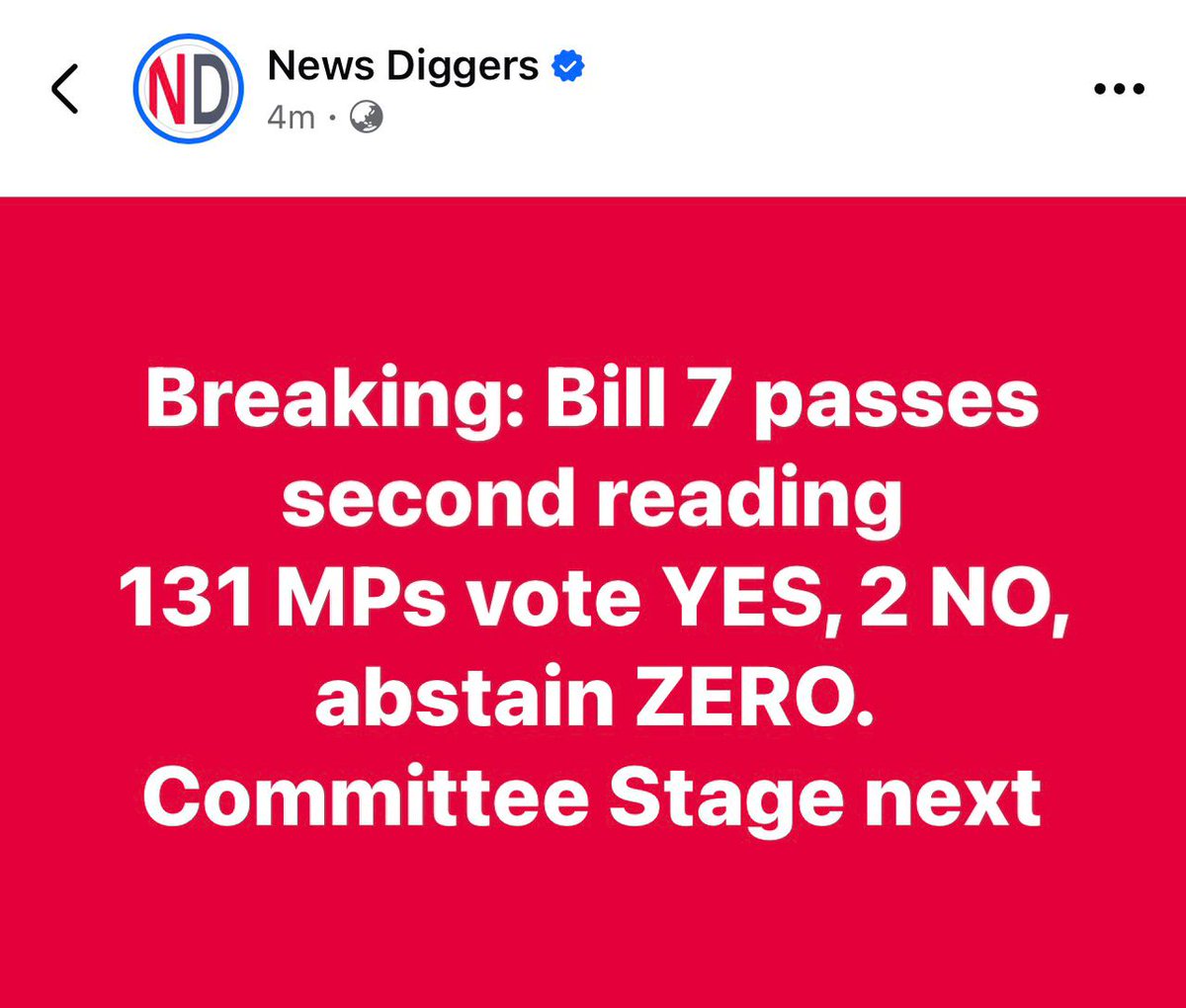
Well, it's now official. The Zambia that we knew is gone. We lost it today. To suicide. The coming era will be a long dark road. You may not understand now, but one day, you will. I'm sorry my efforts were not enough to stop it, but I tried. I have nothing left to give. Goodbye🇿🇲
English
K3 million for each Member of Parliament who supports Bill 7: How Hichilema’s constitutional gamble is ensnaring PF and independent MPs
By Sishuwa Sishuwa
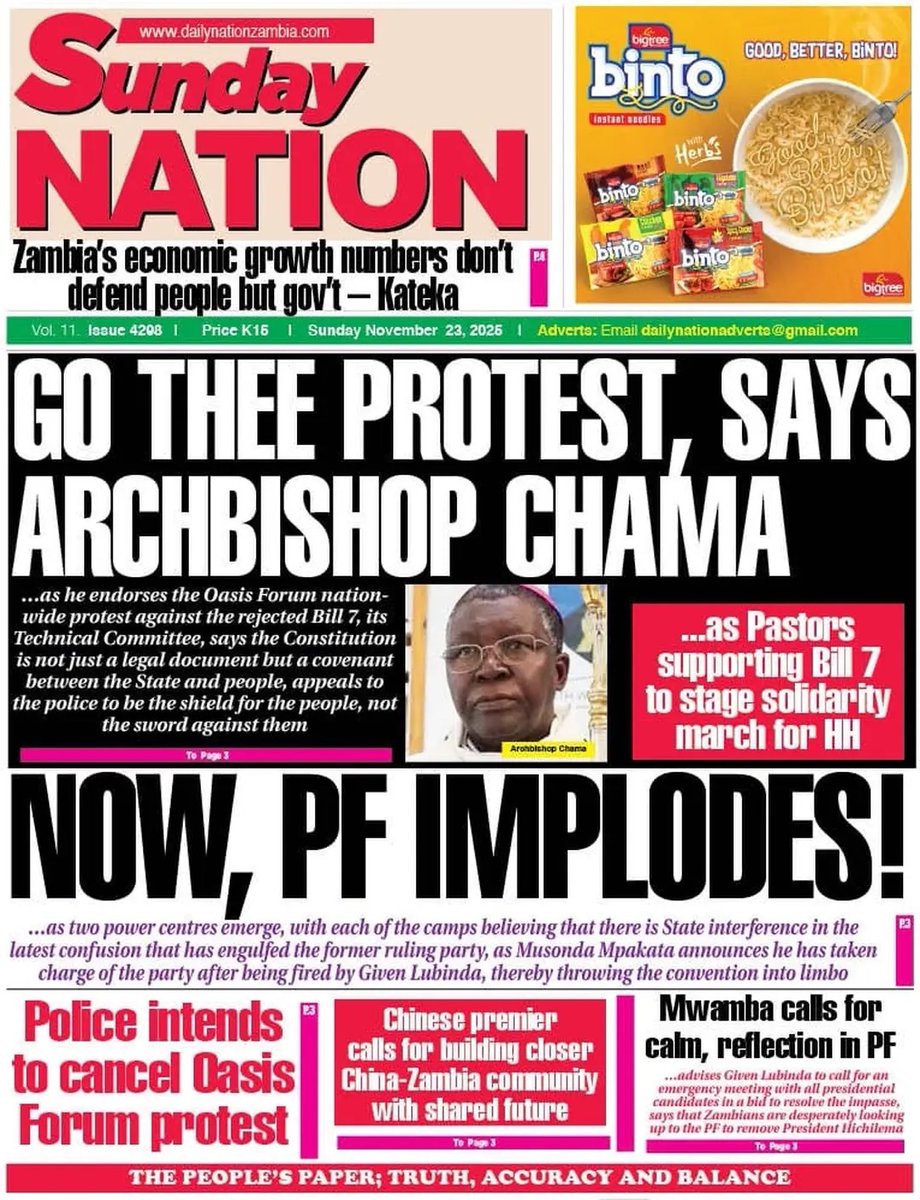
Catholic Bishops will, on 28 November, lead a peaceful public protest march to State House against executive-driven changes to Zambia’s constitution. The protests have been organised by the Oasis Forum, a broad civic alliance of the country’s lawyers (the Law Association of Zambia), three Christian church mother bodies (the Zambia Conference of Catholic Bishops, the Council of Churches in Zambia, and the Evangelical Fellowship of Zambia) and the disparate women’s organisations in the Non-governmental Gender Organisations’ Coordinating Council.
Formed in April 2001 to defend the constitution from the attempts of then President Frederick Chiluba to amend it and seek a third term, the alliance represents what one researcher, Jeremy Gould, has called “an auspicious wedding of the legal authority of the lawyers, the moral authority of the Church, and the popular authority of the women’s movement.” The efforts of the Forum contributed to forcing Chiluba to abandon his plans and helped to preserve the constitutional order. To better understand the role that the Oasis Forum played in defending the constitution in 2001 and generating opposition to Chiluba’s plans within the governing Movement for Multiparty Democracy (MMD) and in the rank and file of the military, read the article below.
tandfonline.com/doi/full/10.10…
The Oasis Forum has since gone on to successfully defend the constitution from unpopular and executive-driven changes on two other occasions.
The first occasion was in early 2011 when then President Rupiah Banda took to parliament a constitutional amendment bill that largely reflected the interests of the ruling party rather than the public and left out popular provisions such as the proposal that a winning presidential candidate should secure a minimum of ’50 per cent + 1’ of the total vote and that the vice-president should be elected alongside the president as a running mate. The Oasis Forum, which had earlier boycotted the constitution making process in protest at the composition of the body that was appointed to spearhead the exercise, successfully lobbied lawmakers to vote against the bill in parliament. To better understand the role that the Oasis Forum played in defending the constitution in 2011, read the book chapter on the link below.
doi.org/10.1163/978900…
The second occasion was in 2019 when then President Edgar Lungu took to parliament the Constitution of Zambia (Amendment) Bill Number 10 which, if passed, would have undermined the key institutions that offer the long-term hope for democratic consolidation such as elections, the constitution, and the judiciary. Among other things, Bill 10 proposed to remove parliament’s oversight of the executive in relation to debt contraction and signing of international treaties; relax the procedure for removing judges in ways that would both make it easier for the president to dismiss them and further undermine the independence and impartiality of the judiciary; remove constitutional provisions on the size of, and qualifications for election to, the National Assembly, transferring the power to decide many of these aspects to parliament; and raise the number of nominations to parliament that the president is allowed to make.
As well as lobbying political actors to reject the Bill, the Oasis Forum formally petitioned Lungu to abandon the constitution making exercise on the grounds that Bill 10 represented a partisan rather than national exercise and was conceived without consensus. The campaign against Bill 10 by civil society organisations led to its defeat in the National Assembly where it failed to garner a two-thirds majority after MPs belonging to Hichilema’s United Party for National Development (UPND) voted against it.
Earlier, in 2016, in a move that demonstrates its flexibility, the Oasis Forum did work with both opposition UPND and ruling party lawmakers to successfully support changes to the constitution that enhanced democracy and were a product of district, provincial and national-level consultations. This reinforces the notion that the way to achieve political outcomes is through mutually agreed democratic processes. To better understand the importance of the role that the Oasis Forum played in defending the constitution in 2019 and 2020, read the article below.
doi.org/10.1080/000839…
Ironically, many of the election-linked changes to the constitution that President Hakainde Hichilema is now seeking to introduce were the same ones he rejected when proposed by his predecessor in Bill 10. Amidst this unprincipled shift, and at a time when several law academics who opposed Bill 10 now happily serve as Hichilema’s apologists, it is most encouraging that the Oasis Forum has remained consistent in its defence of public interest and is now opposing Hichilema's own attempts to rewrite constitutional rules to secure electoral advantage. In addition to organising the forthcoming public protest, the Forum has also dragged the executive to the Constitutional Court, challenging the legality of the process that Hichilema has employed to make changes to the constitution. To download and read the Oasis Forum’s petition, click on the link below.
gofile.io/d/XJsHRF
To recap: in the first quarter of this year, Minister of Justice Princess Kasune Zulu sprung up from nowhere with a set of proposals that she claimed were submissions received from undisclosed people who wanted specific changes to the constitution. These submissions, generally believed to have come from the UPND, became the basis upon which Hichilema’s administration moved in May, and against widespread opposition from civil society, opposition parties and ordinary citizens, to introduce the Constitution of Zambia (Amendment) Bill, No. 7 of 2025.
Among other proposals, Bill 7, as it has become popularly known, seeks to raise the number of nominations to parliament that the president is allowed to make; remove constitutional provisions on the size of the National Assembly, transferring the power to decide this aspect to parliament; and create 55 new constituencies that will mostly be located in ruling party strongholds, a form of gerrymandering that could help the ruling party retain a clear parliamentary majority even if it loses support elsewhere.
The Bil further seeks to allow vacancies in the office of Member of Parliament to be filled by the political party from which the MP was elected rather than through by-elections; legalise the use of public resources for political campaigns and introduce proportional representation for women, youths, and persons with disabilities even when the current constitution requires the president to accommodate these groups in public appointments. The proposed changes, despite the rhetoric of inclusivity, are largely self-serving and mask an authoritarian agenda. If enacted into law, they would erode democratic principles and undermine the integrity of the 2026 general election by tilting the playing field against Hichilema’s political opponents.
In June, following a petition by two people including an independent MP Munir Zulu, who is now serving a jail term for a politically motivated offence, the Constitutional Court declared the process that gave birth to Bill 7 as unconstitutional. By majority decision of four to three, the court ruled that the proposed amendments were “initiated without undertaking wide consultations with the people” and ordered the government to restart the process, this time properly. “We order that the Respondent [i.e. the government] complies with the spirit of the constitution by ensuring a people driven process led by an independent body of experts in conducting wide consultations with the people”, ruled the judges.
In the aftermath, the ruling party’s parliamentary chief whip, Stafford Mulusa, announced that the government would reintroduce Bill 7 before next year’s general election. In the service of this objective, Hichilema then moved to circumvent the judgment of the court in three ways aimed at pushing forward the same changes to Zambia’s constitution whose origin remains unknown.
First, he appointed a 25-member “Technical Committee” largely consisting of his supporters instead of “an independent body of experts” to conduct public consultations and draft amendments to the constitution.
Second, he limited the Committee’s terms of reference to consulting the people on the appeal of the same proposals that were in the outlawed Bill 7. In other words, instead of starting a truly open and people-driven process, the public was only required to indicate whether they supported the constitutional changes proposed in Bill 7.
Third, the president directed the Committee to complete its “wide-ranging public consultations” in all 10 provinces of Zambia within 12 days after which it was to draft and submit an amendment Bill to the government. The Committee has since finished its work and announced that it will submit its final report to the government at the end of this month.
Many ordinary Zambians, several traditional leaders from across the country, and civil society organisations expressed opposition to both the composition of the committee and its terms of reference, boycotted its sittings, and asked Hichilema to abandon the exercise. Some of the civic bodies that monitored the Committee’s public sittings across the country even found evidence of people being paid money to make submissions in support of the government’s proposed changes to the constitution as part of manufacturing evidence of “overwhelming support from the public.” In what has become his trademark response to public concerns, Hichilema simply ignored this overwhelming opposition to the revival of Bill 7.
This, then, is the background to the Oasis Forum’s unparalleled step of engaging in public interest litigation by challenging the legality of the latest constitutional amendment process. The Forum’s legal action came in the wake of disclosure by Solicitor-General Marshall Muchende that the Technical Committee was appointed to do the government’s bidding. To avoid misrepresenting what Muchende said in an interview with Radio Phoenix on 23 October 2025, it is important to quote him:
“The terms of reference must mirror what the government wants to do. It is almost like a pitch… The Zambian people by and of themselves cannot pitch because our democracy is a representative democracy. They have elected a person. They have already elected a government … So, it is the government that has been elected that pitches to the people, amendments to the constitution … So, it is a fallacy for somebody to suggest that the amendments must come from the people. It doesn't work like that. The government of the day must pitch, must propose that we would like to look into these issues”.
As the Forum’s petition discloses, Muchende further stated that the Technical Committee was effectively “validating what the Government already knew.” This serves as the clearest evidence that the process was executive-led and had a predetermined outcome, contradicting the orders that were made in the June judgment of the Constitutional Court.
For some reason, Hichilema appears confident that the court will, this time, rule in his favour. As a result, the president, working closely with the government chief whip, has set his sights on building the supports that he needs in parliament to pass Bill 7 or its successor and spent much of the last few months courting opposition PF and independent MPs. For a constitutional amendment Bill to pass in Zambia’s 167-member National Assembly, it requires at least two-thirds support (or 111 MPs).
Given that the ruling UPND has just 89 MPs, the success of Hichilema’s plan will require the backing of other lawmakers, even when the eight nominations the Constitution allows the president to appoint to parliament are added. The former ruling party, the Patriotic Front (PF), has 55 seats while independent MPs are 11. One smaller party holds a seat, and its MP tends to vote with the UPND. The remaining three seats are held by the Speaker, who does not vote, and the two-ruling party-aligned deputies who can vote. This means Hichilema will need at least 11 MPs to pass Bill 7 or its successor.
The president is so desperate to pass the self-serving changes to the constitution that he is offering up to three million Kwacha to each Member of Parliament to support Bill 7 or its successor when it is presented in parliament. This money is to be paid in two instalments of K1.5m before and after the vote. For perspective, the PF were offering K800, 000 to each MP who agreed to support Bill 10 in 2020. Hichilema’s decision to raise the bribery amount by nearly four times indicates that the president is desperate to succeed where his predecessor failed, or that the cost of buying an MP, like the prices of other commodities in Zambia since then, has gone up considerably, perhaps due to inflation!
So compromised are some of the legislators that at least 10 MPs from the main opposition party have reportedly accepted the first instalment, and more are lining up their pockets for the payment they think can help finance their re-election campaigns. This explains why many PF MPs have not publicly expressed any opposition to Bill 7 nor pledged that they would not support any changes to the Constitution of Zambia before the 2026 election.
In addition to financial inducement, some PF lawmakers with prosecutable offences from the past have been blackmailed by the presidency into supporting the bill to avoid arrest or enable their relatives, where this is relevant, to receive preferential treatment from the courts in some cases. As a result of this elite-level corruption pact, which undermines the capacity of parliament to act as a check or constraint on the executive, the best time to stop Bill 7 or its successor is before it is (re)tabled in the National Assembly for voting.
If Hichilema succeeds in his bid to change the Constitution, he would have passed the first hurdle to his multiple-step goal: winning a second term, removing presidential term limits, and perpetuating himself in power until death or after identifying and installing a pliant successor. The forthcoming protest organised by the Oasis Forum is thus as much about defending the Constitution from executive manipulation as it is about safeguarding Zambia’s democracy. Its critical importance might explain why the highly regarded Archbishop of the Archdiocese of Kasama, Archbishop Ignatius Chama, who is also the President of the Zambia Conference of Catholic Bishops, has publicly endorsed the march to State House.
Addressing the faithful a few days ago on a Catholic radio broadcast ahead of the protest, Archbishop Chama called on Zambians, especially young people, to turn in large numbers to peacefully march in defence of the Constitution. “The Constitution”, he said, “is not a mere legal document; it is the covenant between the state and its people. When the covenant is manipulated, when the rights are quietly stripped away under the guise of reform, it is not only the duty of the citizen but also the faithful to rise in peaceful, orderly protest.”
The Catholic prelate also emphasised that “The Church does not endorse disorder. We reject violence, property destruction, or incitement. But we also reject complicity. When governance moves way from transparency, equity, and accountability, when the dignity of the poor and the protection of the vulnerable are at risk, the faithful must speak, and they must march…. And when constitutional processes appear to bypass public consultation, or to concentrate power rather than expand rights, they must be at the forefront [of protesting against such governance excesses].”
Archbishop Chama further reminded the police of its legal mandate to uphold, defend, and protect the constitution, urging them to facilitate, not to curtail, the expression of the right to peaceful public assembly. “Protesters are not enemies of the state. They are its conscience”, he preached. “The true enemies are those who enrich themselves through corruption, who silence dissent, and who manipulate the institutions to serve private interests, not the public good. Let the police be the shield of the people, not the sword against them. The constitution belongs to the people. When it is threatened, the people must answer not with rage but with resolve. Not with chaos, but with clarity. Not with silence, but with sacred courage.”
The planned 28 November protest is thus a litmus test for the police. Given that no public protest against the government has been sanctioned since Hichilema’s election, it remains to be seen how the authorities will respond to the Oasis Forum’s planned peaceful march to State House in defence of Zambia’s Constitution. Will police facilitate or block it? Will the police arrest the bishops, lawyers, women and possibly traditional leaders expected to grace the protest? Only time will tell.

English
@ssishuwa Crystal clear that you don't understand Zambian politics or perhaps your utterances are based on bitterness
English
Zambia’s president will lose the 2026 election (unless he rigs it), but who will win it? Look out for my in-depth analysis, to be published next week, on why Hakainde Hichilema faces the real prospect of defeat only five years after his election.
English
@diamondtvzambia The only problem is no advert was put prior to recruitment for all interested parties to apply. Only Children of the inner Circle got the opportunity
English

GOVT DEFENDS PRESIDENT HICHILEMA’S SON OVER ZNS COMMISSIONING CLAIMS
By Victoria Kayeye Yambani
The Ministry of Information and Media has clarified that President Hakainde Hichilema’s son, Lt. Habwela Hichilema, earned his place in the Zambia National Service (ZNS) on merit, not privilege.
Speaking at a joint press briefing with ZNS in Lusaka, Permanent Secretary Thabo Kawana said Lt. Hichilema successfully passed the mandatory Officers Selection Board, which includes rigorous medical, physical, oral, and written assessments, before completing the standard training programme.
Mr. Kawana emphasized that Lt. Hichilema received no special treatment. To avoid bias from instructors, he trained under a different name and lived under the same conditions as other cadets, sharing meals, dormitories, and participating fully in bush exercises.
Lt. Hichilema reportedly faced disciplinary measures when warranted, dug his own trench during field training, and only revealed his identity after commissioning.
The PS noted that Lt. Hichilema earned the respect of his peers through humility, resilience, and hard work, exemplifying the ZNS motto: “To Train the Willing and Unwilling.”
#NewsOnTheGo

Zambia 🇿🇲 English
@luchi7 Former Chilanga Member of Parliament Hon.Keith Mukata was serving a life sentence for Murder and was pardoned by ECL
English

@ssishuwa Crystal clear you're now a politician and going forth you must be treated as one.
English
If the president cannot manage a funeral, how can he manage a country?
English
@ssishuwa @daddyhope @HHichilema Electoral defeat from who? At least he'll be keeping you busy writing essays up to 2031
English
The uncomfortable truth is that Edgar Lungu is being buried in a foreign country because of Hichilema. The president does not listen to advice. He is almost always dripping with arrogance and talks even where he should listen. What a pity! Perhaps the only language he will understand is electoral defeat.
It is fair to say that the funeral issue has backfired spectacularly yet it was easily avoidable. Argh! What really happened to the Hichilema we had in opposition? It is remarkable to witness how power slowly slips away from those who wield it and who, quite astonishingly, fail to realise that it is slipping away.
English
This is sad. President @HHichilema could have shown better leadership than fighting over a corpse.
This happened in Zimbabwe, and to his credit, President Mnangagwa allowed Mugabe’s family to bury him where they wanted. The state stayed away.
Why is President Hichilema so obsessed with presiding over this funeral and burial where he is not wanted?
It is petty and a catastrophic failure of leadership to have your predecessor buried in a foreign country because you insist on being part of the programme. It is an embarrassment to Africa.
Sophie Mokoena@Sophie_Mokoena
Breaking News:The Family of the late Zambian President Edgar Lungu has issued a statement announcing that he will be buried in South Africa. It will be the first time a former head of state of another country is buried in South Africa. #sabcnews
English
@daddyhope @HHichilema Iwe stay in your lane, Zambia is not like Zim that is politically primitive and naive. Since independence you only know ZanuPf
English
@ssishuwa @HHichilema You and the other Camp same WhatsApp group
English
Ba @HHichilema,
Mwabuka buti badala?
What exactly was the point of this address? You mean you could not speak on the death of your predecessor for a whole week only to come up with a pre-recorded and robotic-like speech in which you said nothing new?
Next time, if you have nothing sensible to say, please consider keeping quiet. It is bad manners to be wasting people’s time this way.
English
English
First, I come from the same region as the President of Zambia that is receiving preferential treatment from the Hichilema administration. How can any normal or sane person accuse me of promoting tribalism or regionalism in this case given that my ethnic group and region is among the favoured?
Second, I asked if there is a criteria that is followed when deciding which candidates to float or support. If you know the answer, please share it so that I can learn from you. If you don’t know the answer, please keep quiet and join me in waiting for the answer from those who may have it. I am keen to learn from anyone how the Zambian government processes decisions on crucial national issues.
Third, every time I pointed out the regionalism and tribalism of the PF, including the ill-treatment of members of Hichilema’s ethnic group, the Tonga speakers, when Edgar Lungu was in office, supporters of the ruling party refused to see what was so obvious and responded as you are doing: ignore the message and deal with the messenger.
diggers.news/guest-diggers/…
Many will despise me further for pointing out the truth both in regard to the UPND's lack of credibility and respectability by the regional and international community and of course to the regional make up of their nominees. Yet I am only saying what many people would like to say but are either afraid to say or unable to say. We need beacons of truth who state it as it is and are unafraid.
The UPND don't lean. They seem uninterested and frankly I don't think they give damn. I have never seen a more intransigent group of people. Anyway, maybe they are on the same level as the PF when they were in power.
One day, you and your ilk may learn, as Lungu, the PF and their supporters eventually did, that I mean well. Far from encouraging tribalism or regionalism, I am bringing to public attention my concerns — shared by many — about what appears to be the patterns of ethnic-regional favouritism in government decision-making. In doing so, I am seeking to address the underlying causes of societal tension as a way to reduce it. I believe it is both my right and patriotic duty to bring such concerns into the public eye. Article 20 of the Constitution of Zambia guarantees me and all other Zambians freedom of expression, that is to say freedom to hold opinions, receive ideas and impart or communicate ideas and information without interference.
I also consider myself to have a reasonable understanding of Zambia’s politics, having studied and taught it for almost 20 years. My doctoral thesis examined the country’s ethnic and populist politics since the 1950s, including the non-institutional factors that have shaped its political and economic development over the past 60 years. After graduating from the University of Oxford, I was appointed to academic appointments at UNZA, the University of Cape Town and, recently, Stellenbosch University. I have also published widely on Zambian political history, including ethnic politics, in some of the leading African studies journals. For instance, I have shown (see the article on the link below) how the UPND’s founding president Anderson Mazoka was such a genuine Zambian nationalist committed to ethnic inclusion that his decision-making almost always reflected his at effort at avoiding actions that would give rise to any perceptions that he was encouraging tribalism or regionalism.
doi.org/10.1080/000839…
The insights of contemporary Zambian politics that I have acquired through academic training have been complemented by the fact that for all my life, I have lived and breathed much of the history that I comment upon, teach, and research. This is the knowledge and understanding that I always bring to my public political commentaries.
I am not always right and I do not and I will never seek to be. You are welcome to show weakness in what I have said. Although I do not hesitate to share my opinion on subjects where I am well informed, I also possess the intellectual integrity of one who is willing to abandon their position if its weakness can be shown. I am not immune to public criticism. I believe in healthy and open discussion of some of the most salient issues of our time. For me, the idea behind writing in the public domain is to encourage open engagement. In fact, I am disappointed that more people do not criticise what I put out. Readers should freely question my views and positions on any given subject. Their feedback may either broaden my perspectives or cause me to counter in a manner that both raises the quality of public debate and promotes wider understanding of the issues being discussed.
I believe that those who welcome praise must also accept criticism. Having claimed and exercised my freedom of expression, I am only all too aware of the right of others to exercise the same free speech on any matter, including when commenting on my public commentaries. Being human, it is natural that we will have varying lines of thought. I do believe, however, that it is only through many conversations that we can reconsider our positions, challenge our assumptions, question our convictions, and come to appreciate our own ignorance. Of course, the notion of content-based discussion seems like a tall order in today’s polarised Zambia, where any criticism of the government is deemed as support for the opposition, and vice-versa. We must get rid of this binary divide. It is unproductive, curtails meaningful interactions, and draws attention away from the real issues.
English

Zambia’s Dr. Maimbo has lost the AFDB Presidency election to Mauritania's Dr. Tau Sidi Ould who has been elected as the bank’s 9th elected President.
English
@MoffatSamora What about ordinary inmates who are sick, don't you think they deserve the same? What makes politicians Superior.
English

@ZambianObserver Are you going to print your own ballot papers ba pi-yefu.
English

VIDEO: We don’t mind what the court said Edgar Lungu will be on the ballot paper next year- Hon. Given Lubinda zambianobserver.com/video-we-dont-…
English
@km_muty @HHichilema We are not politically primitive like Zim
English

@HHichilema Your sugar daddy Biden is gone and Trump is withdrawing all the gifts 😂😂😂😂
Tough times for puppets
English

Deeply saddened by the passing of Dr. Sam Nujoma - freedom fighter, nationalist, Pan-Africanist, and founding President of Namibia. His legacy will live on forever. #RIPSamNujoma #Namibia

English
@TRamakate @HHichilema We are not politically primitive like you people
English

@ZambianObserver from the look of things you risk having no candidate for 2026 ba tonse
English
Where Does Hon. Cornelius Mweetwa Get the Audacity to Speak Against the Endorsement of Former President Dr. Edgar Chagwa Lungu as the Tonse Alliance Presidential Candidate for 2026? zambianobserver.com/where-does-hon…
English