Sharad Sharma

2.8K posts

Sharad Sharma

Sharad Sharma

@sharads

Orbit Change Catalyst. Angel Investor. Entrepreneur. Ecosystem Builder in India for software products.

Bangalore Katılım Şubat 2009
1.1K Takip Edilen7.6K Takipçiler
Sharad Sharma retweetledi
ProductNation/iSPIRT
ProductNation/iSPIRT@Product_nation·
India was the world’s back office. Now it wants to build the products the world runs on. #Semiconductors. #AI. #Telecom. #Drones. #Deeptech Not just services. Not just consumption. Ownership. IP. Manufacturing. Platforms. A #product_nation mindset changes everything: → better jobs → stronger supply chains → global leverage → technological sovereignty The next Indian decade will be powered by #Indian products. @AshwiniVaishnaw Ji's interview with The Week captures this path very lucidly. theweek.in/theweek/cover/…
English
0
5
12
664
Sharad Sharma retweetledi
ProductNation/iSPIRT
ProductNation/iSPIRT@Product_nation·
Whether you’re running an IT services company, a financial institution, a manufacturing unit, or a startup, your business runs on digital infrastructure, and #cybersecurity is at the core of operations. At iSPIRT, SAKRAM is our proposed solution to comprehensively deal with cybersecurity threats. Over the coming weeks, we will be publishing a dedicated series of blogs (and videos) that unpack SAKRAM in depth: what it is, how it works, and how your organization can put it into practice. Read our first blog @ pn.ispirt.in/sakram-a-pract… @rinka_singh @gelchuri @sharads @KesavaReddy #cybersecurity #cyber_training #DigitalFuture #startups #productmanagement
English
0
3
4
400
Sharad Sharma retweetledi
ProductNation/iSPIRT
ProductNation/iSPIRT@Product_nation·
Financial ecosystems are rarely transformed overnight. Instead, they evolve through the steady alignment of technology, policy, and trust. Over the past year, the #OCEN has been moving quietly in this direction, acting as a #digitalbridge between credit-starved #MSMEs and a diverse pool of lenders. With a 468% surge in disbursement value, #OCEN is a testament not to the protocol alone, but to the readiness of the #IndianMSME to embrace digital, cash-flow-based credit. Read our complete report @ pn.ispirt.in/broadening-cre… @sharads @parikh_sagar @aaRBee16 @TheOfficialSBI @IDBI_Bank @lan_finance @sidbiofficial @AkhileshKamble_ @GetVantage_Co @121fs @OPLinnovate @Perfios @GeM_India @finarkein
ProductNation/iSPIRT tweet media
English
0
8
12
659
Sharad Sharma retweetledi
ProductNation/iSPIRT
ProductNation/iSPIRT@Product_nation·
The release of Claude Mythos has raised serious concerns in Delhi and in capitals across the world about what the model can do, who has access to it, and what it means for national infrastructure security.Bilateral engagement with Anthropic is natural and should be pursued, but it will not solve the problem. US technology companies are bound by US law regardless of foreign jurisdiction, as the ICC learned in 2025 when Microsoft blocked its Chief Prosecutor's email on US sanctions. Working at the level of model access may not help as the patching bottleneck affects every defender, with or without model access.If we cannot act at the level of the model, we must act at the level of the data ecosystem the model is being used against. India has already built the tools for this through DEPA. They turn out to be exactly what is needed for cyber defence at national scale. #DEPA indiatoday.in/amp/technology…
English
1
14
19
1.5K
Sharad Sharma retweetledi
Indus Khaitan
Indus Khaitan@1ndus·
@sharads and I argued over this during SaaS / pre-AI days -- in his Koramangala office.
Himanshu Sinha@hsinha1445

Jensen Huang said AI has 5 layers of value. India doesn't have a presence in any of them. ⚡ Layer 1 — Energy. A hyperscale AI campus now draws 1–2 gigawatts — a mid-sized nuclear reactor, for one building. China added nearly India's entire installed grid in new capacity last year. 💾 Layer 2 — Chips. The silicon brain and everything that makes it. → GPUs: Nvidia (US), AMD (US), Broadcom (US) design. TSMC (Taiwan) fabs at the cutting edge. → HBM, the high-speed memory beside every GPU: ~90% Korea. → ASML (Netherlands) has a monopoly on the one machine that prints the most advanced chips. → Silicon wafers ~60% Japan. Photoresist ~90% Japan. 🏭 Layer 3 — AI infrastructure. The data centre and everything around the chips. → Hyperscale cloud: AWS (US), Azure (US), GCP (US); Alibaba (China), Tencent (China). → Servers and AI-rack cooling: Supermicro (US), Vertiv (US), Schneider (France), Eaton (US). → Commodities: copper (Chile, Peru), niobium (~90% Brazil), rare earths (~85% processed in China). 🧠 Layer 4 — Models. Closed: OpenAI (US), Anthropic (US), Google (US), Meta (US). Open: DeepSeek (China), Qwen (China), Kimi (China). 💻 Layer 5 — Applications. ChatGPT (US), Copilot (US), Cursor (US), Claude Code (US), Agentforce (US). Mostly US. Increasingly Chinese. China has a presence in all 5. Korea owns HBM. Taiwan owns the cutting-edge factory. Netherlands owns the machine that makes it possible. India: Layer 1 — grid stretched, industrial power expensive and patchy. 24/7 clean power is hard to deliver today. Layer 2 — no frontier chip factory. Tata-PSMC (India-Taiwan) at ~28nm is a decade behind AI chips. India's chip design talent works for Nvidia (US), AMD (US), Qualcomm (US), Intel (US). Value flows to US balance sheets. Layer 3 — India builds the data center buildings (Yotta, Adani, Reliance) and generic industrial power and cooling gear (BHEL, Crompton, Blue Star). But no hyperscale cloud, and no specialized AI-rack cooling or power shelves. Every Indian AI startup runs on AWS (US) or Azure (US). Layer 4 — Sarvam, Krutrim (India). Real teams, orders of magnitude below the frontier. Layer 5 — Zoho, Freshworks (India) are real SaaS businesses, but their AI features — like most Indian AI-app startups — are thin wrappers on OpenAI (US), Anthropic (US), Google (US). And not agentic. Agents are where the flywheel lives. India has no agentic platform at that scale. This is a 30-year-old choice. India bet on services and not manufacturing. TCS, Infosys, Wipro, HCL (India) built a ~$250B export industry. It paid off. But services sit above the stack — they don't own any layer of it. India's AI Mission is ~$1B. China's is in the hundreds of billions. That's not a gap to close — it defines the game.

English
0
1
4
557
Sharad Sharma retweetledi
ProductNation/iSPIRT
ProductNation/iSPIRT@Product_nation·
For reforms to have an impact we need to come out of the monolithic Single window or Portal mindset and set a stage for Connected systems with a constellation of app providers at service layer leading to a true Digital transformation. For success it requires an institutional mechanism, like an EoDB authority working on One Nation approach to build a National Regulatory Compliance Grid aligned to three Governance layers Union, State and Local bodies. Check out our article of EoDB reforms by @Sudhirzsingh with Vallabh Bhansali epaper.financialexpress.com/c/78584870 @PMOIndia @NITIAayog @DPIITGoI @FinMinIndia @PiyushGoyal
English
2
4
11
1.4K
Sharad Sharma retweetledi
StarBoySAR 🇭🇰 🇨🇳 🥭
🇨🇳 BREAKING: Chinese researchers just unveiled a photonic quantum chip that delivers 1,000-fold speed boost to AI data centers. This "world first" 6-inch thin-film lithium niobate marvel just won the Leading Technology Award at World Internet Conference Wuzhen Summit, beating 400+ global entries While the US was busy sanctioning Chinese "entities" and trying to choke our semiconductor supply chains, Shanghai just quietly delivered what Pentagon planners feared most: a photonic quantum chip that's already giving China's AI data centers a 1,000-fold speed boost. Not "in development." Not "by 2030." Already deployed! The award-winning breakthrough from CHIPX and Turing Quantum isn't lab theatrics—it's industrial-grade, wafer-scale production. Aerospace, biomedicine, finance: all feeding from the trough of computing power that "exceeds classical limits." Translation: your Nvidia clusters are already obsolete, you just don't know it yet... Let's make make a quick comparison: China's approach: National venture fund commits 1 trillion RMB structured as a public-private partnership to drive rapid commercialization. Full industrial chain from chip design to quantum algorithms. 153 quantum startups (up 40% in one year). Photonic-electronic co-packaging? Mastered. TFLN wafer production? 12,000 six-inch wafers annually at 110GHz+ modulation. Real-world AI integration? They already fine-tuned billion-parameter models on quantum hardware America's approach: Early 2025 Jensen Huang says quantum computing is "15-30 years away" while Google and IBM frantically rush press releases. DARPA launches programs asking "can this actually be useful by 2033?" Pure-play quantum stocks surge 3,700% on hope. $2.5B federal investment vs China's $138B+. You do the math... The technical scorecard is even more shocking: 🇨🇳 Zuchongzhi 3.0 (105-qubit) is 1 quadrillion times faster than Frontier supercomputer for specific tasks. Jiuzhang 2.0 photonic computer solved in 200 seconds what would take classical computers 2.5 billion years. This new photonic chip? 1,000x speedup for AI workloads today 🇺🇸 Google Willow (105-qubit) repeats 2019's "quantum supremacy" circus—impressive, but still solving problems nobody actually has. IBM promises "quantum advantage by 2026" with Nighthawk. We've been hearing "5-10 years to commercialization" since 2018. Meanwhile, Chinese quantum computers are already improving breast cancer screening accuracy The geopolitical punchline: Washington's "small yard, high fence" strategy just discovered quantum physics doesn't respect fences 🚧 While US export controls strangle classical chip supply chains, China leapfrogged to photonic quantum integration—materials (thin-film lithium niobate) we dominate, manufacturing we scaled, applications we commercialized Just this Thursday, former Commerce Secretary Gina Raimondo has called for stricter export controls to deny China accessing high-end chips and cutting-edge products. However, it’s important to remember: you can't sanction what you don't understand, and you can't contain what you can't produce The American "rules-based order" crowd mumbles about "fair competition" while their own CHIPS Act subsidizes legacy silicon. China's building the infrastructure for 6G, AI, and quantum networks from Beijing to South Africa via quantum key distribution satellites (Micius, operational since 2016). America's quantum communication? PowerPoints Western media will frame this as "concerning," "dual-use," and "militarization." Meanwhile in reality: - US quantum programs are explicitly DARPA-led - IonQ's billion-dollar "Capital of Quantum" sits next to Washington DC for reasons - Every US quantum breakthrough is measured against "utility-scale operation"—code for "can we weaponize this first?" China wins awards at World Internet Conference and deploys in civilian hospitals. But sure, we're the threat to global stability. Keep spinning that narrative while your semiconductor industry begs for $52B bailouts and our "Quantum Avenue" in Hefei hosts 40+ functional companies Article Link scmp.com/news/china/sci…
StarBoySAR 🇭🇰 🇨🇳 🥭 tweet media
English
18
626
2.2K
193.5K
Sharad Sharma retweetledi
ProductNation/iSPIRT
ProductNation/iSPIRT@Product_nation·
Read our latest blog to understand more on how respecting consent can also fuel innovation! pn.ispirt.in/privacy-in-the… The concept of consent predates the digital era — it began in a paper-based world, where signatures and written permissions authorized the use of personal information. Today, there are two kinds: •Consent to collect data (e.g., an app accessing your camera) •Consent to share data (e.g., a bank sharing your salary details with a lender) The real challenges – and opportunities – lie in the second. Watch the complete Open House @ youtu.be/KF2udHOtzuo?si@sharads @03_saga @hurryharan @ObserveZero @Kapilvaswan @SaumyaJetley @fooobar w Sunu Engineer, Pawan Kumar Adukuri & Vikram Garg
YouTube video
YouTube
English
0
5
13
808
Sharad Sharma retweetledi
ProductNation/iSPIRT
ProductNation/iSPIRT@Product_nation·
Privacy isn’t the same as confidentiality. Privacy means you can’t be identified from the signals you produce. Confidentiality means restricting access to those signals. Models tend to memorize training data, and “anonymized” data can be re-identified through cross-referencing and joins. The 2017 Puttaswamy judgment affirmed privacy as a fundamental right, and the DPDP Act enshrined it in law. To truly protect individual privacy, we need control primitives that account for these risks and safeguard data through its entire lifecycle. pn.ispirt.in/privacy-in-the… Or watch @ youtu.be/KF2udHOtzuo?si… @sharads @03_saga @hurryharan @ObserveZero @Kapilvaswan @SaumyaJetley @fooobar w Sunu Engineer, Pawan Kumar Adukuri & Vikram Garg
YouTube video
YouTube
English
0
5
6
547
Sharad Sharma retweetledi
ProductNation/iSPIRT
ProductNation/iSPIRT@Product_nation·
What does it mean to have privacy in the age of AI? How can we harness the value of data while preserving individual privacy? The answer to this lies in understanding the mechanics of consent through a techno-legal lens. Our latest Open House & blogpost tries to answer these questions through some of the work that we have been undertaking. Watch: youtu.be/KF2udHOtzuo?si… Or Read our two part blog post that breaks down new frameworks for data collaboration pn.ispirt.in/privacy-in-the… pn.ispirt.in/privacy-in-the… @sharads @03_saga @hurryharan @ObserveZero @Kapilvaswan @SaumyaJetley @fooobar w Sunu Engineer, Pawan Kumar Adukuri & Vikram Garg
YouTube video
YouTube
English
1
4
8
2K
Sharad Sharma retweetledi
Citizen Stack
Citizen Stack@StackCitizen·
“DPI is what we think of as the 8th continent. India is creating the 8th continent in a unique partnership of government + private sector + regulators + inspired volunteers like Sharad Sharma and his @Product_nation team, without which we would not have seen the India Stack happen,” said Srivatsa Krishna, Indian Administrative Service, at Citizen Stack: Inaugural Conference on Digital Public Infrastructure at the United Nations Headquarters, New York.
English
1
6
10
1K
Sharad Sharma retweetledi
anmol maini
anmol maini@anmolm_·
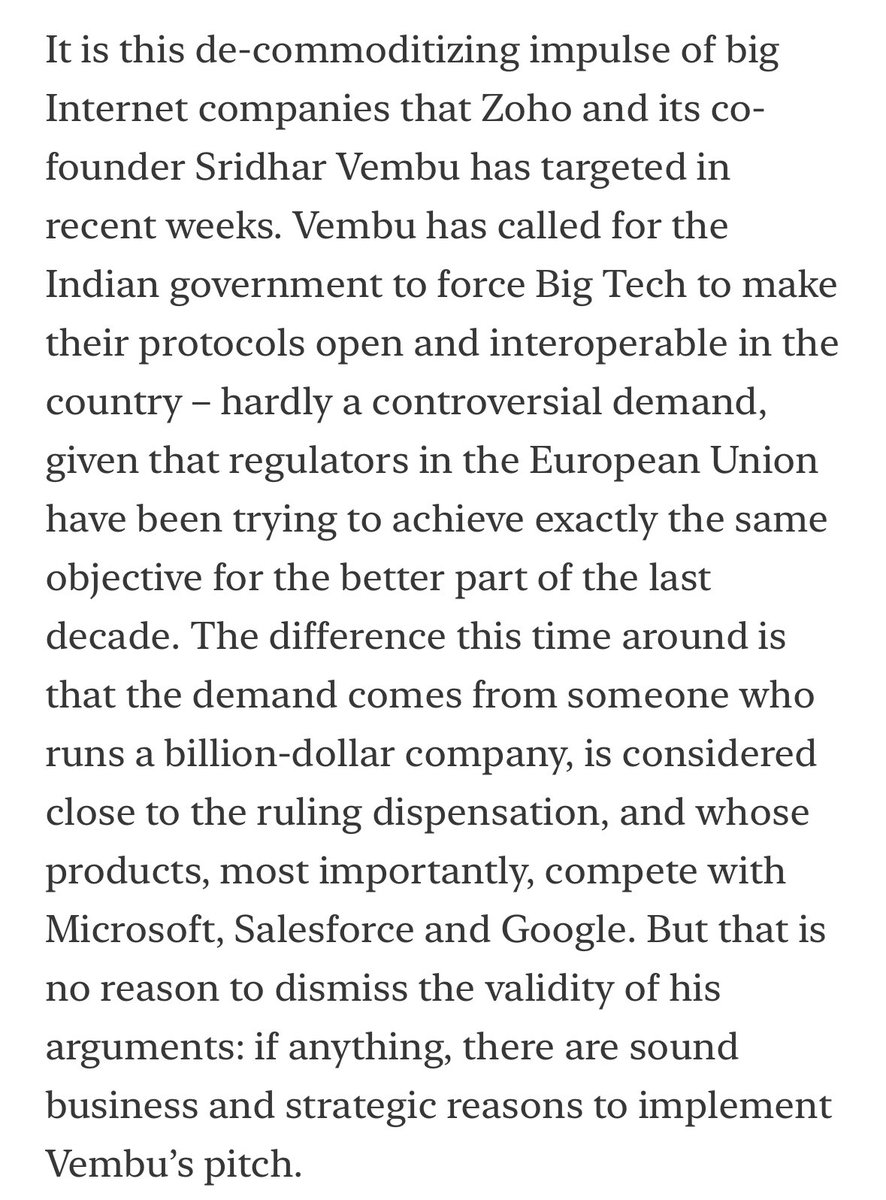
great piece and an interesting perspective from @arunmsukumar on why it could be good actually for GOI to back and support Zoho. Sharing some snippets - people and countries have pushing for open & interoperable protocols worldwide
anmol maini tweet media
English
1
3
7
1.2K
Sharad Sharma retweetledi
Thiyagarajan Maruthavanan (Rajan)
Naval for kids. 2 years ago my nephew and I had conversation on important ideas from @naval Turned his ideas suitable for a 11 year old conversation. Back then he forbade me sharing the project on any social media. He changed his mind last week, sharing this now.
Thiyagarajan Maruthavanan (Rajan) tweet media
English
166
1.2K
5K
1.1M
Sharad Sharma retweetledi
ProductNation/iSPIRT
ProductNation/iSPIRT@Product_nation·
Protection and innovation aren't opposites. 🎥👇 youtu.be/KF2udHOtzuo?si… Privacy isn't secrecy. It's control. Consent is broken for AI. You can't ask millions of people repeatedly for permission to train models. The solution? Privacy Budgets—mathematical accounting for…
YouTube video
YouTube
English
1
6
7
2.3K
Sharad Sharma retweetledi
Office of Principal Scientific Adviser to the GoI
In the September edition of #VigyanDhara, @sharads and @harshitkacholia from @Product_nation delve into the three distinct generations of #AI data and highlight why training AI on open web data is becoming increasingly constrained. Explore insights in the article “Digital Public Infrastructure for AI” and discover how: → This shift to privacy-first, large-scale data repositories is shaping the requirements of next-gen AI innovation, without compromising sensitive data. → Data Empowerment and Protection Architecture (DEPA) can address these challenges, simultaneously treating data sharing as a technical and legal problem. Read the article on OPSA’s Vigyan Dhara Magazine at psa.gov.in/CMS/web/sites/… @PrinSciAdvGoI @AjaySoodIISc @PreetiBanzal @ChagunBasha @ayushee_17
Office of Principal Scientific Adviser to the GoI tweet media
English
0
2
4
751
Sharad Sharma retweetledi
Anand Lunia, IndiaQuotient
Anand Lunia, IndiaQuotient@anandlunia·
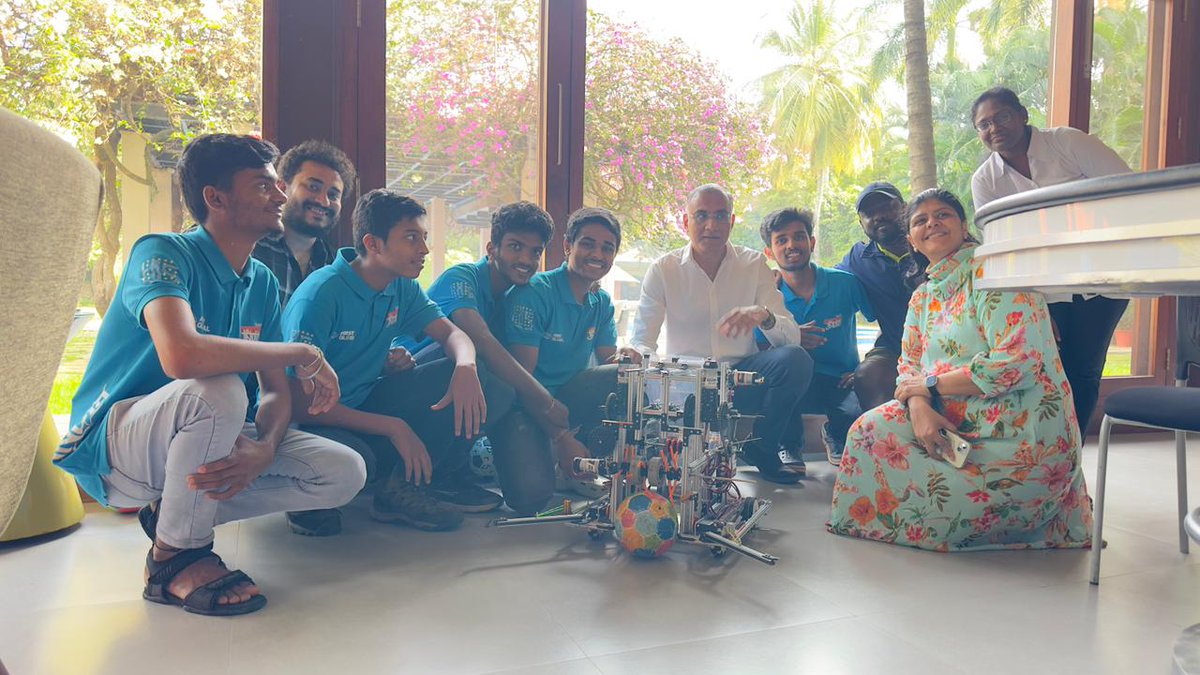
Guess what!?! This is the India team @India1First for Robotics Olympiad. From a Govt school in Bangalore, the kids discovered their love for robotics in 'Atal Tinkering Labs'. Super Proud of my partner @Goyal4Gagan who is their coach.
Anand Lunia, IndiaQuotient tweet media
English
3
18
95
13.1K
Sharad Sharma retweetledi
ProductNation/iSPIRT
ProductNation/iSPIRT@Product_nation·
The Sept edition of @PrinSciAdvOff’ Vigyan Dhara features how India is designing a new foundation for AI development that can leverage private & public data in a privacy-preserving, collaborative ecosystem. Read to know more about the role of #DPI for #AI psa.gov.in/CMS/web/sites/…
English
0
2
3
423
Sharad Sharma retweetledi
ProductNation/iSPIRT
ProductNation/iSPIRT@Product_nation·
RDI Fund is approved by EC of ANRF to start operation. Initially through TDB & BIRAC can fund deep tech startups. pib.gov.in/PressReleasePa… India's 1st to move from Process Innovation economy to Product Innovation economy. Folks working in Energy, Biotech, Drones etc…
English
1
4
5
529
Sharad Sharma retweetledi
Arun Sukumar
Arun Sukumar@arunmsukumar·
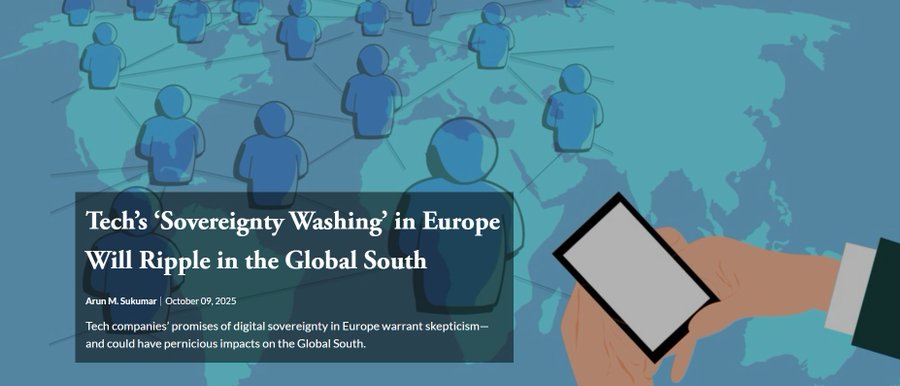
Tech’s ‘Sovereignty Washing’ in Europe Will Ripple in the Global South - my essay for Lawfare on the hyperscalers’ “sovereign cloud” offerings
Arun Sukumar tweet media
English
1
1
3
1.2K