

Sherif Gerges
8.2K posts

Sherif Gerges
@SherifMorris
Coptic PhD @harvard working on single-cell genetics/omics with Mark Daly & Steve McCarroll. @broadinstitute | @harvardmed | @MGH_RI | 🇪🇬🇺🇸
Boston, MA Katılım Nisan 2011
1.4K Takip Edilen807 Takipçiler

This is the Western Wall RIGHT NOW!
The holiest place where Jews can pray. Always crowded.
Right now it is EMPTY.
JEWS ARE NOT ALLOWED to gather there.
It's not because of discrimination.
It is BECAUSE OF WAR.
Jack Posobiec@JackPosobiec
Will @USAmbIsrael get clarity on why Cardinal Pizzaballa was blocked by police from saying mass at the Church of the Holy Sepulchre on Palm Sunday today?
English

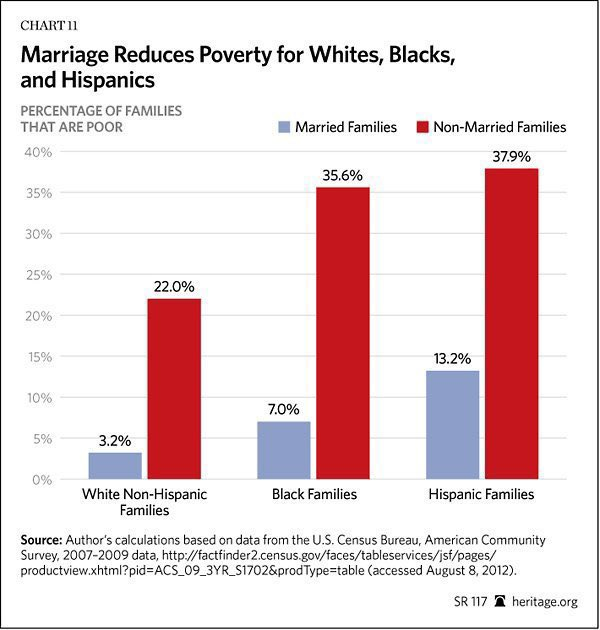
@NancyRPearcey @timurkuran As others have suggested, it might just be that wealthier people are more likely to get married.
English

@bulutuzay_ @Varro_Analytics You forgot to mention the Copts! Among the oldest groups in the region.
English

Arabs are indigenous to the Arabian peninsula only. The only reason why Arabs constitute a demographic majority in the Middle East today is Islamic colonialism and imperialism.
Prior to Islamization, the region was majority-Christian with rich ethnic and linguistic diversity. Most of Levant was part of the eastern Roman/Byzantine Empire and had large Jewish, Yazidi and other ethno-religious communities. Arab armies invaded in the seventh century and through a violent campaign of colonization, transformed the entire region, devastating some of the world’s most advanced civilizations.
Also, many Arabs in the region today are simply Arabized and Islamized locals. They’re not actual ethnic Arabs. And It’s up to them to rediscover and reclaim their pre-Islamic identity and religion.
The Data of Everything@TheDataHubX
Largest Ethnic Groups in the Middle East 1) Arabs ~250,000,000 2) Persians ~65,000,000 3) Turks ~62,000,000 4) Kurds ~35,000,000 5) Azerbaijanis ~20,000,000 6) Jews ~7,000,000 7) Baloch ~6,500,000 8) Lurs ~6,000,000 9) Pashtuns ~5,900,000 10) Turkmen ~5,000,000 11) Armenians ~2,500,000 12) Assyrians ~2,000,000 13) Circassians ~1,500,000 14) Druze ~1,300,000 15) Yazidis ~1,000,000
English
“One proposal to increase the reviewer pool is to pay reviewers. The fact that scientists collectively pay publishing companies as much as $1 billion per year in publishing fees suggests that ample funding is available to be redirected to such efforts”
thetransmitter.org/publishing/lac…
English

Excited to share one of my favorite genetic discoveries made at the Regeneron Genetics Center.
We went looking for genetic clues about why some people smoke more than others and found something in an unexpected place: the genomes of Indigenous Mexicans. 1/

English
Congratulations to @julirsch and all the other authors.
nature.com/articles/s4158…
English
@robkhenderson But couldn’t one say this is true of living in any (ethnically homogenous) city?
English

"diversity correlated with low trust...For instance, only 30% of people in San Francisco, with very high racial diversity, said they trusted their neighbors a lot, but in rural South Dakota, which is racially very homogenous, the comparable figure was 80%" a.co/d/8fynvWa

English
An insane proposal by the current administration. nytimes.com/2025/12/04/hea…
English
Sherif Gerges retweetledi

This is more worrisome for US biotech than all the headlines & stats about China Tx asset licensing.
iGEM was started in the US at MIT in 2003. Fast-forward 22 years and the US places only one team in the top 10 at the premier student international biotech competition.
It’s not as exciting as AI + robotics in bio or FDA regulatory reform, but fixing this will be equally important for US biotech’s future.
My hot-take here is that this is a consequence of what colleges (and thus kids and parents) prioritize in undergrad applications and so STEM extracurriculars are far less common and prioritized than things like Debate Club, Model UN, various community service efforts, etc.
60 Minutes@60Minutes
Lambert High School in Georgia was the only U.S. school to place in the high school top 10 at iGEM, an international synthetic biology competition. The other top teams included one from South Korea, one from Taiwan, and seven from China. cbsn.ws/4rt3a0d
English
@robkhenderson Fascinating article that seems to balance facts (to my eyes anyway).
English
"married mothers are nearly twice as likely to be 'very happy'...married liberal women with children are now a staggering 30 percentage points more likely to say they are 'very happy' or 'pretty happy' than liberal women who are single and childless." ifstudies.org/blog/whats-kil…
English

Open Philanthropy's Forecasting team is launching an RFP for AI for forecasting and sound reasoning! We will be accepting proposals at least until January 30, 2026. Link to full RFP text below! (🧵)
English
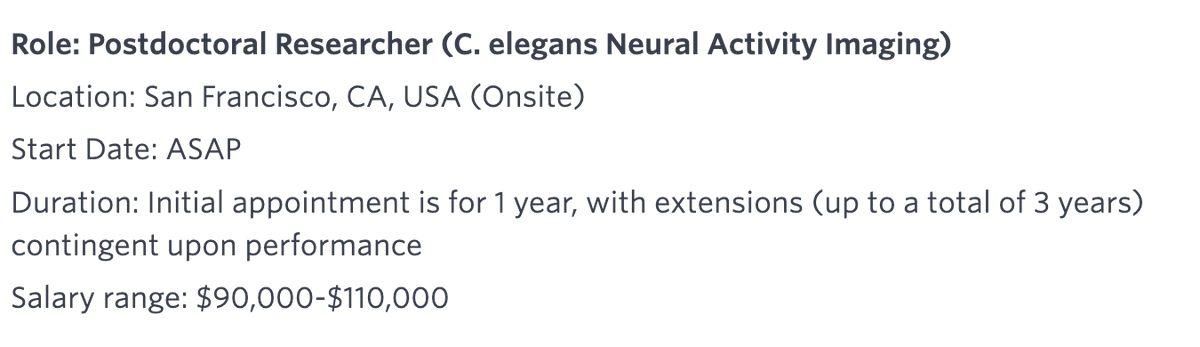
@Sebasti68279168 @louisnandre @episteme that salary is substantially higher than anything harvard or any ivy has for that position.
English


Today, we're announcing @episteme, a new type of R&D company that recruits exceptional scientists to pursue high-impact ideas.
Science isn’t bottlenecked by the availability of talent, but by places where they can do their best work.
Scientific progress has driven human flourishing: extending lifespans, lifting billions from poverty, and expanding our understanding of the universe.
But history is littered with transformational ideas that were overlooked in their time. That problem is still acute today: too much promising talent remains uncultivated, and remarkable ideas die in the lab or are filtered out by misaligned incentives.
Today, scientists face suboptimal paths for translating their research into impact: academia is famously risk-averse and incentivizes publications and winning grants vs. translational research. Industry is too often focused on short‑term incentives. And startups lack the substantial capital, expertise, and complex infrastructure needed to deliver long-term scientific progress.
On top of that, recent funding cuts in the US mean the overall supply of ideas is decreasing. Put together, the global scientific production system is operating at a fraction of its capacity.
How Episteme operates is different: we identify great scientists who can meaningfully benefit humanity, but who aren’t supported efficiently within traditional institutions today. Researcher by researcher, we work with them to determine the bespoke resources, operational support, and environmental conditions to execute on their research. We bring them together in-house, and provide those resources to ensure that their breakthroughs are deployed for real-world impact.
We’ve already assembled an amazing team of operators, ranging from the Gates Foundation, DeepMind, ARPAs, DoE – just to name a few – and researchers who are pursuing important problems across physics, biology, computing, and energy. Our team has spoken to hundreds of researchers across disciplines and geographies to understand the limitations they’re facing and what can be done better, and designed Episteme for them.
We’re backed by individuals like @sama, Masayoshi Son, and other long-term partners who share our mission of enabling ambitious science for tangible human impact.
About me: I started working as a researcher 9 years ago, on problems ranging from AI-driven drug discovery to developing brain-machine interfaces. It was that experience that led me to realize that so many scientists with great potential to change the world don’t have access to opportunities equal to their capacities.
@sama and I believe that much better science should happen for humanity, and that a new engine is needed to support that. We decided to cofound Episteme together, and I am incredibly grateful for Sam’s unwavering support as a thought partner and founding investor.
Our conviction is that by supporting the right people with the right incentives, we're set to generate breakthrough discoveries to benefit humanity. We cannot rely on the course of history to shape scientific progress; we need to proactively shape the system by supporting the most talented people with the right resources and incentives.
English
Very cool method by my former PhD colleague @julirsch to estimate non-linear relationships between effect size and pathogenicity. Particularly intriguing is the contribution of missense variation to heritability and how this method can improve downstream mechanistic studies.
Jacob Ulirsch, PhD@julirsch
Ever wondered how to choose weights for rare variant burden/SKAT tests? @jschwart37 and I did too! Check out our (@illumina) straightforward new approach that improves discovery by ~50% or more than STAAR, Regenie, and DeepRVAT!
English
Sherif Gerges retweetledi

New: Roche is paying $55M upfront, over $2B in pot'l milestones in a research deal with Manifold Bio
The two are working on better brain shuttles, or proteins that can cross the brain-blood barrier.
One of the larger pharma pacts of 2025 for AI bio:
endpoints.news/roche-manifold…
English
Conceptually, this is one of the most impressive papers I’ve read all year. It’s astonishing how AlphaFold is already reshaping our sense of how we can study biology.
cell.com/action/showPdf…

English
Disastrous for the sciences and society. For reasons difficult to fathom, we've become entangled in Trumps effort to uproot academia’s post-structural malaise
thecrimson.com/article/2025/1…
English

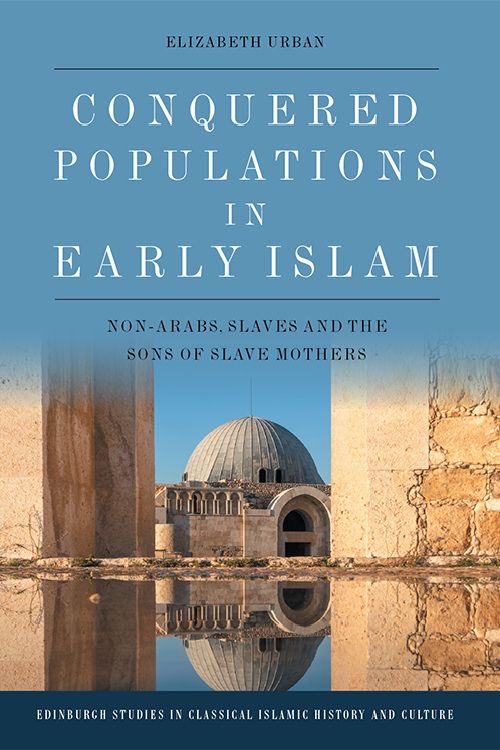
yall are useless (chapter 4 of this in particular)
infj 🇵🇸@floatingwordist
are there any works looking at prostitution in early islam?
English
Very impressive effort. Clearly where all GWAS papers are headed - to go from just genes near loci to characterizing biology all across the causal chain. Haven't seen it done as comprehensively as this tho,
nature.com/articles/s4158…
English