Shonn Lyga

1.5K posts

Shonn Lyga banner
Shonn Lyga

Shonn Lyga

@ShonnLyga

Dad • Husband • Engineer • I break things you use

New York, USA Katılım Şubat 2014
753 Takip Edilen240 Takipçiler
Shonn Lyga
Shonn Lyga@ShonnLyga·
Crypto’s success will not be in Bitcoin, but in the infrastructure. It will be the default in Agentic e-Commerce. Stablecoins tied to real currencies. Cheap. Fast. Reliable. Secure.
English
0
1
2
34
Shonn Lyga
Shonn Lyga@ShonnLyga·
Restoring my OpenClaw memory after a major crash is as close as it gets to Neo loading knowledge and skills into his brain in The Matrix.
English
2
0
1
15
Shonn Lyga
Shonn Lyga@ShonnLyga·
I see a productivity problem nobody’s talking about, yet. This week I spoke with 30+ engineering managers and 20+ software engineers about how AI is changing their workflow. The most surprising finding: engineers aren’t slacking off while their AI works. AI tasks complete just slowly enough to free up meaningful time, but not slowly enough for engineers to fully context-switch to something else. So they sit in an awkward middle ground: too much idle time to ignore, not enough to use well.
English
0
0
1
11
Shonn Lyga retweetledi
Nick Levine
Nick Levine@status_effects·
New work with @AlecRad and @DavidDuvenaud: Have you ever dreamed of talking to someone from the past? Introducing talkie, a 13B model trained only on pre-1931 text. Vintage models should help us to understand how LMs generalize (e.g., can we teach talkie to code?). Thread:
English
167
351
2.8K
973.3K
Shonn Lyga
Shonn Lyga@ShonnLyga·
Why music "albums" are still a thing? The concept of an "album" existed due to physical constraints in the amount of music you could record a single vinyl / cassette or CD.
English
0
0
0
6
Shonn Lyga
Shonn Lyga@ShonnLyga·
Shoutout to the #Obsidian team. Their iCloud synchronization is the most magical installation of a product I've ever had. No account creation, no sign up. It just magically works across devices. 🎩 #myOpenClawGettingANewMemoryLayer
English
0
0
0
14
Shonn Lyga
Shonn Lyga@ShonnLyga·
Best sleeping aid: running out of Claude tokens.
English
0
0
0
9
Shonn Lyga
Shonn Lyga@ShonnLyga·
Real hackers use the CLI to interact with their OpenClaw AI assistant. Change my mind?
English
0
0
0
18
Shonn Lyga
Shonn Lyga@ShonnLyga·
Breathtakingly told in - youtu.be/inqC_yDCfc4?si…
YouTube video
YouTube
Athenaeum Book Club@athenaeumbc

A powerful scene in the Odyssey happens when Odysseus finally returns to Ithaca after twenty years of war and wandering. You would expect the story to end with celebration, with the hero coming home, the family reunited, and order restored. Homer does something far stranger. Odysseus arrives disguised as a beggar, because Athena warns him that the palace has been taken over by more than a hundred suitors who have been living there for years, eating his food, drinking his wine, and pressuring his wife Penelope to marry one of them. They believe Odysseus is dead and in their minds the kingdom is already theirs. So the king of Ithaca walks through his own halls dressed in rags while the men stealing his house sit comfortably at his tables. They mock him, throw scraps at him, and one of them even strikes him, and Odysseus takes it. That is the remarkable part, because the same man who blinded the Cyclops and survived twenty years of disasters now stands quietly while strangers insult him in his own home. Homer tells us his heart burns inside his chest and that he wants to attack them immediately, yet he restrains himself and waits. Instead of striking, Odysseus studies the room carefully. He counts the men, watches their habits, and quietly observes which servants remain loyal and which have betrayed him. The hero of the Odyssey does something most people cannot do, which is delay revenge until the moment is right. Eventually Penelope announces a contest and brings out Odysseus’ great bow, declaring that she will marry the man who can string it and shoot an arrow through twelve axe heads lined up in a row. One by one the suitors try and fail, because none of them can even bend the bow. Then the beggar asks for a turn. The suitors laugh at first, but the bow is eventually handed to him. Odysseus takes it in his hands and strings it effortlessly. Homer says the sound of the bowstring tightening rings through the hall like the note of a swallow. Then he places an arrow on the string and sends it cleanly through all twelve axe heads. In that moment the beggar disappears. Odysseus turns the bow toward the suitors and reveals who he is. What follows is one of the most brutal scenes in Greek literature. The doors are sealed and the suitors realize too late that they are trapped inside the hall. Odysseus, his son Telemachus, and two loyal servants begin killing them one by one. There is no escape, no mercy, and no negotiation. The men who spent years consuming another man’s house die inside it. It is a violent ending, but Homer wants you to understand something important. The real danger to Odysseus was never just the monsters and storms on the long journey home. It was the possibility that someone else might take his place while he was gone. When Odysseus finally returns, he reminds everyone in Ithaca of a simple truth: a man’s home is not truly his unless he is willing to fight for it.


English
0
0
0
27
Shonn Lyga retweetledi
The White House
The White House@WhiteHouse·
Proud to be an American. 🇺🇸🇺🇸
English
2.7K
19.3K
138.8K
3.8M
Shonn Lyga
Shonn Lyga@ShonnLyga·
@BernieSanders We could also just all go back to farming, and have 100% employment
English
0
0
0
5
Bernie Sanders
Bernie Sanders@BernieSanders·
Amazon says that it’s going to replace 600,000 workers with robots. Other companies are moving in the same direction. How will working families feed their kids and pay their bills? We’ve got to fight back.
English
13.8K
3.3K
25.6K
3.4M
Shonn Lyga
Shonn Lyga@ShonnLyga·
We aren’t seeing the end of the programmer. We’re seeing the END of the NON-PROGRAMMER. AI isn't pushing programmers out of the job market. It’s pushing every other white collar job into it.
English
0
0
0
20
Shonn Lyga
Shonn Lyga@ShonnLyga·
@dee_bosa Is it a full implementation with servers, search engines and databases? Or is it a UI-only implementation of Monday?
English
0
0
0
307
Deirdre Bosa
Deirdre Bosa@dee_bosa·
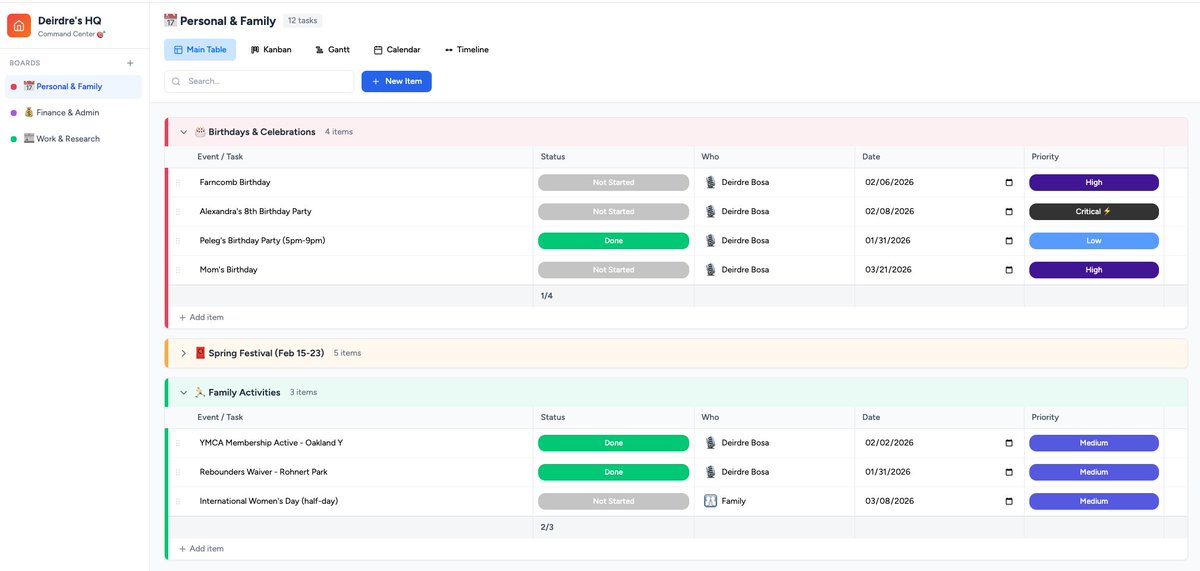
ok WOW. Woke up this morning and said, for fun, lets try to recreate monday. com w Claude cowork. it wont work or anything, but we can just show our audience that its plausible. 1 hour later... I literally have my own monday. com that's plugged into my calendar & gmail and surfaced a kids bday that was not anywhere on my radar and I need to get a gift for. Can imagine next step being: order gift and have it delivered by Sunday. 2026 is WILD.
Deirdre Bosa tweet media
English
152
104
1.9K
475.5K
Shonn Lyga
Shonn Lyga@ShonnLyga·
@urieli17 נראה מעניין. איזה פוד זה? חיפשתי זריז באפל פודקאסטס ולא מצאתי כלום.
עברית
1
0
0
122
Uri Eliabayev
Uri Eliabayev@urieli17·
אחד הדברים שהכי עניינו אותי בפרק עם אנדריי מ-Intuit זה הדרך שבה הם הגדירו מודלים אבולוציוניים כדי לג'נרט קוד בצורה יעילה יותר. הם ממש יצרו מנגנון שיודע לתקף את עצמו ולהשתפר בביצוע המשימה ובכך ליצור קוד טוב יותר. כלומר השימו שב-AI לקוד זה לא רק ברמת המפתח הבודד אלא ברמת החברה.
עברית
3
0
42
16.2K
Shonn Lyga
Shonn Lyga@ShonnLyga·
I feel like there are 3 types of folks out there: 1/ Non-tech folks who OVERHYPE AI 2/ Tech folks who UNDERHYPE AI 3/ A small layer of tech folks who get it just right The interesting part is that group (3) is the quietest. They're not debating on Twitter. They're not making predictions. They're busy learning the tools, building integrations and finding their competitive edge to stay relevant and valuable
English
0
0
0
17
Shonn Lyga
Shonn Lyga@ShonnLyga·
🚩 Unpopular opinion: in some weird and unexpected ways, AI coding took us back to fundamentals. No more must-know-this-or-that-framework "TAX". No more useless memorization of obscure library APIs that become obsolete a year later we are back to fundamentals, thinking about the business logic, intent and objective of the code so far I like this new (old) world
English
1
0
0
24
Shonn Lyga retweetledi
Andrej Karpathy
Andrej Karpathy@karpathy·
A few random notes from claude coding quite a bit last few weeks. Coding workflow. Given the latest lift in LLM coding capability, like many others I rapidly went from about 80% manual+autocomplete coding and 20% agents in November to 80% agent coding and 20% edits+touchups in December. i.e. I really am mostly programming in English now, a bit sheepishly telling the LLM what code to write... in words. It hurts the ego a bit but the power to operate over software in large "code actions" is just too net useful, especially once you adapt to it, configure it, learn to use it, and wrap your head around what it can and cannot do. This is easily the biggest change to my basic coding workflow in ~2 decades of programming and it happened over the course of a few weeks. I'd expect something similar to be happening to well into double digit percent of engineers out there, while the awareness of it in the general population feels well into low single digit percent. IDEs/agent swarms/fallability. Both the "no need for IDE anymore" hype and the "agent swarm" hype is imo too much for right now. The models definitely still make mistakes and if you have any code you actually care about I would watch them like a hawk, in a nice large IDE on the side. The mistakes have changed a lot - they are not simple syntax errors anymore, they are subtle conceptual errors that a slightly sloppy, hasty junior dev might do. The most common category is that the models make wrong assumptions on your behalf and just run along with them without checking. They also don't manage their confusion, they don't seek clarifications, they don't surface inconsistencies, they don't present tradeoffs, they don't push back when they should, and they are still a little too sycophantic. Things get better in plan mode, but there is some need for a lightweight inline plan mode. They also really like to overcomplicate code and APIs, they bloat abstractions, they don't clean up dead code after themselves, etc. They will implement an inefficient, bloated, brittle construction over 1000 lines of code and it's up to you to be like "umm couldn't you just do this instead?" and they will be like "of course!" and immediately cut it down to 100 lines. They still sometimes change/remove comments and code they don't like or don't sufficiently understand as side effects, even if it is orthogonal to the task at hand. All of this happens despite a few simple attempts to fix it via instructions in CLAUDE . md. Despite all these issues, it is still a net huge improvement and it's very difficult to imagine going back to manual coding. TLDR everyone has their developing flow, my current is a small few CC sessions on the left in ghostty windows/tabs and an IDE on the right for viewing the code + manual edits. Tenacity. It's so interesting to watch an agent relentlessly work at something. They never get tired, they never get demoralized, they just keep going and trying things where a person would have given up long ago to fight another day. It's a "feel the AGI" moment to watch it struggle with something for a long time just to come out victorious 30 minutes later. You realize that stamina is a core bottleneck to work and that with LLMs in hand it has been dramatically increased. Speedups. It's not clear how to measure the "speedup" of LLM assistance. Certainly I feel net way faster at what I was going to do, but the main effect is that I do a lot more than I was going to do because 1) I can code up all kinds of things that just wouldn't have been worth coding before and 2) I can approach code that I couldn't work on before because of knowledge/skill issue. So certainly it's speedup, but it's possibly a lot more an expansion. Leverage. LLMs are exceptionally good at looping until they meet specific goals and this is where most of the "feel the AGI" magic is to be found. Don't tell it what to do, give it success criteria and watch it go. Get it to write tests first and then pass them. Put it in the loop with a browser MCP. Write the naive algorithm that is very likely correct first, then ask it to optimize it while preserving correctness. Change your approach from imperative to declarative to get the agents looping longer and gain leverage. Fun. I didn't anticipate that with agents programming feels *more* fun because a lot of the fill in the blanks drudgery is removed and what remains is the creative part. I also feel less blocked/stuck (which is not fun) and I experience a lot more courage because there's almost always a way to work hand in hand with it to make some positive progress. I have seen the opposite sentiment from other people too; LLM coding will split up engineers based on those who primarily liked coding and those who primarily liked building. Atrophy. I've already noticed that I am slowly starting to atrophy my ability to write code manually. Generation (writing code) and discrimination (reading code) are different capabilities in the brain. Largely due to all the little mostly syntactic details involved in programming, you can review code just fine even if you struggle to write it. Slopacolypse. I am bracing for 2026 as the year of the slopacolypse across all of github, substack, arxiv, X/instagram, and generally all digital media. We're also going to see a lot more AI hype productivity theater (is that even possible?), on the side of actual, real improvements. Questions. A few of the questions on my mind: - What happens to the "10X engineer" - the ratio of productivity between the mean and the max engineer? It's quite possible that this grows *a lot*. - Armed with LLMs, do generalists increasingly outperform specialists? LLMs are a lot better at fill in the blanks (the micro) than grand strategy (the macro). - What does LLM coding feel like in the future? Is it like playing StarCraft? Playing Factorio? Playing music? - How much of society is bottlenecked by digital knowledge work? TLDR Where does this leave us? LLM agent capabilities (Claude & Codex especially) have crossed some kind of threshold of coherence around December 2025 and caused a phase shift in software engineering and closely related. The intelligence part suddenly feels quite a bit ahead of all the rest of it - integrations (tools, knowledge), the necessity for new organizational workflows, processes, diffusion more generally. 2026 is going to be a high energy year as the industry metabolizes the new capability.
English
1.6K
5.5K
40.2K
7.7M
Shonn Lyga
Shonn Lyga@ShonnLyga·
few things give me the same joy like analyzing CSV files with Claude Code
English
2
0
1
55
Shonn Lyga
Shonn Lyga@ShonnLyga·
ultrathink(ing) is the new overthinking
English
0
0
0
10
Shonn Lyga
Shonn Lyga@ShonnLyga·
Ultrathinking
English
0
0
0
15