ShriyaWealth

1.6K posts

ShriyaWealth banner
ShriyaWealth

ShriyaWealth

@ShriyaWealth

📈 SEBI Registered MFD| 20 yrs banking | 🚀Simplifying stocks & mutual funds 📈 Wealth | SIP | Long-term investing ⚠️ Not financial advice | DMs open

Katılım Eylül 2025
44 Takip Edilen119 Takipçiler
ShriyaWealth
ShriyaWealth@ShriyaWealth·
@deepakshenoy High duties aren’t just revenue—they’re macro tools. They help curb CAD pressure and manage rupee stability when gold demand spikes. Smuggling is a challenge, but lowering duty isn’t a free lunch either—it risks widening external imbalances.
English
0
0
0
183
ShriyaWealth
ShriyaWealth@ShriyaWealth·
@dmuthuk ₹40 cr isn’t a requirement—it’s based on extreme assumptions (low real returns, very long life, high inflation). A better thumb rule: 3–4% withdrawal. ₹2L/month needs ~₹6–8 cr. Context > big round numbers.
English
0
0
0
6
Muthukrishnan Dhandapani
Muthukrishnan Dhandapani@dmuthuk·
I don't know why people are so disconnected from reality. Saw a post saying Rs 40 crores must for retirement in India. Do you know how big is Rs.40 crores? In India, only 0.04% of households have it In the richest country of the world, USA, only 4% of households have it If you take the entire world consisting of both rich and poor countries, just 0.13% of households have it. Even Rs 4 crores is difficult for 99% of the population. Saying Rs.40 crores is required for retirement only demotivate people because they can never reach there. These kind of posts at best serve as irritants.
English
341
497
4.7K
305.6K
ShriyaWealth
ShriyaWealth@ShriyaWealth·
@FinAspiration Most miss the elastic variable: savings rate. 20% → 30% savings can double outcomes over time—far more than chasing +2% returns. Income growth + discipline > fund selection. Alpha matters only after scale.
English
0
0
0
7
FinAspiration
FinAspiration@FinAspiration·
👉Most investors are solving the wrong problem. They spend hours chasing 12% vs 14% returns. Meanwhile, their corpus is ₹8 lakhs. Here's what actually moves the needle: 1 A 2% extra return on ₹10L corpus = ₹20,000/year extra. 2 The same 2% on ₹1 Crore = ₹2,00,000/year extra. Same effort. 10x the result. 3 The corpus is the multiplier. Not the return. 👉There are only 3 things that determine your wealth: 1 Investment amount 2 Holding period 3 Returns 👉Returns are the product's job. Your job is to build the corpus. Once you have ₹1 Crore working for you even 10% does ₹10L/year. That's a salary. From doing nothing. PS : Stop asking which fund gives the best returns? Start asking how do I grow my SIP amount faster? That question will change your financial life. #sip #mutualfunds #finanacialplanning
English
2
1
10
878
ShriyaWealth
ShriyaWealth@ShriyaWealth·
@ETMONEY Early SIP years look “bad” because you’re judging a rupee-cost averaging strategy before compounding kicks in. Most investors quit too early—that’s where real wealth is lost, not in returns.
English
0
0
0
46
ShriyaWealth
ShriyaWealth@ShriyaWealth·
@LifeOfAPunekar @InvestorOfJAMMU Bandhan Small Cap Fund is among our preferred picks. If you’re new to investing, having a financial advisor can help you stay disciplined and avoid costly mistakes.
English
0
0
0
11
Margin of Safety🇮🇳
Margin of Safety🇮🇳@InvestorOfJAMMU·
Best Mutual Funds for long term investment✅ HDFC Flexicap Junior Bees (Nifty Next 50 ETF) Nippon Smallcap fund Can add GoldBees or SilverBees for diversification (Not more than 10% of portfolio) These funds have long term track record and are from reputed fund houses. Try to avoid funds which are in fashion from last 1-2 years for outperformance. These funds are more than enough to gain Financial Freedom in 15 years provided you invest significant amount. I like HDFC Midcap opportunities fund too.
English
12
22
244
18.6K
ShriyaWealth
ShriyaWealth@ShriyaWealth·
@Iamsamirarora Agree. Cheap AI will boost usage, but not necessarily profits for incumbents—telecom déjà vu. Demand exploded, returns didn’t. Value is more likely to shift to infra layers and new-age apps than today’s players. Selectivity matters.
English
0
0
1
26
Samir Arora
Samir Arora@Iamsamirarora·
One argument given is that low cost of AI will trigger higher usage and create volume growth- like lower telecoms cost has done for spread of telephony and lower electronics cost ( say for TVs) has deepened penetration beyond imagination. Someone remind me of successful telecom companies or TV companies( even in India only 1 of 8 original mobile companies survived and obviously no tv company) in the world. Separately, growth due to usage did not go to the incumbent companies but to companies like netflix ( who benefited from both low WiFi and high tv penetration) and others who started new businesses with new business models.
English
51
15
295
43.3K
ShriyaWealth
ShriyaWealth@ShriyaWealth·
@dmuthuk Fully agree on the “landmines” point. ~60% of SME IPOs (2024–25) are below issue price, and even Securities and Exchange Board of India has flagged misuse. For most, this is VC-type risk without diversification—position sizing is everything.
English
0
0
0
76
Muthukrishnan Dhandapani
Muthukrishnan Dhandapani@dmuthuk·
You know I invest significantly in SME stocks. You know my views on this for retail investors. I would like to repeat the same again. People only think about fortunes made in SME stocks. This is the space where most market manipulation and unethical issues happen. It's like walking on landmines. If something goes wrong, there is no exit. This is an extremely illiquid space. Not easy to get in or out. Most SME companies by their very design are extremely fragile in nature. Small companies in general fail. Very few succeed. You should invest only money which you can afford to lose 100% in SME stocks. 100% kind of loses are not theoretical but reality. I'm not exaggerating. Why I invest in SME companies? That's because I've reached a stage in life where exponential growth in wealth is not possible except through such bets. I can either remain contented or try getting into top. I've chosen the later knowing fully well the failure rate is very high. Why I'm able to take this risk because my safe money itself would put me in top fraction of the population. This means if my stock portfolio becomes zero too, I would still be wealthy. Not out of arrogance I'm saying this. SME investing is not for all. Some make fortunes. Many lose wealth entirely. For retail investors, this is not the risk worth taking.
English
14
9
179
20.2K
ShriyaWealth
ShriyaWealth@ShriyaWealth·
@LifeOfAPunekar @InvestorOfJAMMU It is genuine small-cap, growth-focused fund with a diversified portfolio, backed by credible investor Samir Arora Sir. Tht said, it’s very new with no full-cycle track record and valuations r on the higher side—so better as small satellite bet, not core allocation for right nw
English
1
0
1
18
ShriyaWealth
ShriyaWealth@ShriyaWealth·
@VijayKedia1 India’s nuclear push still lags—~7GW now, targeting ~14–15GW by 2030 vs China’s ~100GW+. Capex gap is massive. If we want clean baseload at scale, we’ll need smarter financing—think infra/REIT-like structures to bring in private capital, not just govt spend.
English
0
0
0
386
Vijay Kedia
Vijay Kedia@VijayKedia1·
"Nuclear : Energy of the Future " China is rapidly expanding its nuclear power capacity and is currently the fastest builder of nuclear energy in the world. It has approx 55 - 60 GW installed and is adding another 25 -30 GW through 25-30 reactors. (A reactor is a single power generating unit, while a plant can have multiple reactors . Which is why saying “30 plants” can be misleading.) China is approving 8 to 10 new reactors every year, far ahead of any other country. At this pace, its total nuclear capacity could reach around 100- 120 GW by 2030. Nuclear power is capital intensive, costing around $5- 7 billion (Rs 45,000 to 65,000 crore) per GW - significantly higher than thermal and hydro. This implies a total investment of $125–200 billion ( Rs 10–16 lakh crore) by 2030. However nuclear also offers continuous (baseload) power unlike solar and wind, requires far less land, produces near-zero emissions unlike thermal, and is more scalable than hydro. Despite the high cost, nuclear provides stable, clean electricity for 60+ years and helps reduce coal dependence, strengthen energy security, power EVs and industry.
English
59
110
1.2K
132.3K
ShriyaWealth
ShriyaWealth@ShriyaWealth·
@KalpenParekh Brevity is overrated in high-stakes domains like investing. When fear is high, investors don’t want fewer words—they want clearer thinking. This ad didn’t try to be short. It tried to be useful. That’s why it worked.
English
0
0
1
30
Kalpen Parekh
Kalpen Parekh@KalpenParekh·
I have learnt these 2 principles about marketing & value them the most 1. Brevity ( in today’s times) 2. Authenticity - honesty - make it about the consumer (our investors) more than us I lost this bet with my marketing head, when we released a message about uncertainty in investing along with our inability to predict short term trends, that however much I love the message, the length will be the enemy & it won’t work A breakdown of the whole process of debate with @WitheringLows & team
DSP Mutual Fund@dspmf

The story of that ad. A bet that 700+ words of raw honesty would work. He said it was too long. Too dense. No visuals. Didn't cover the "So what?" "Intent accha hai, par koi farak nahi padega, log nahi padhenge." He wasn't wrong. But Rational Ghost turned out to be less wrong. What happened? Read the story: tinyurl.com/viraladblog
English
1
1
34
5.7K
ShriyaWealth
ShriyaWealth@ShriyaWealth·
@oldschoolinvest Inflation + lifestyle creep, not just finfluencers. What felt enough at ₹3cr earlier won’t cut it now. But chasing ₹10cr blindly isn’t the answer either—base it on your expenses (25–30x rule). FI is personal, not a trending number.
English
0
0
0
72
Value | Compounding
Value | Compounding@oldschoolinvest·
Finfluencers in 2020: ₹2–3 crore is considered a good corpus for financial independence. Finfluencers in 2026: ₹8–10 crore is considered a good corpus for financial independence.
English
44
19
436
38.2K
ShriyaWealth
ShriyaWealth@ShriyaWealth·
@AmitabhaDash Age alone isn’t enough. Plenty of 30-year-olds panic in small-cap drawdowns, while some 50+ investors handle equity just fine. Real fit = goals, liquidity needs, and risk behaviour. Risk is personal, not just age-based.
English
2
0
2
41
Amitabha Dash
Amitabha Dash@AmitabhaDash·
Which type of mutual fund should I invest in? is a fundamentally flawed question. The right question is: Which fund suits my age & risk profile? Young investors → Mid & Small caps 50+ investors → Hybrid / Balanced funds
English
7
0
13
1.4K
ShriyaWealth
ShriyaWealth@ShriyaWealth·
@RamTeluguTrader 2–3 solid flexi/multi-cap funds as core, 10–20% mid/small for extra growth, ~20% multi-asset for stability. Avoid clutter—overlap hurts more than fewer funds. Real edge is in allocation discipline and staying invested through cycles.
English
0
0
1
50
Ram Telugu Trader
Ram Telugu Trader@RamTeluguTrader·
When I started investing in mutual funds, I thought it was simple: • 1 Small Cap • 1 Mid Cap • 1 Flexi Cap • 1 Index Fund Now I see ETFs(which I usually play for swing), Multi-Asset Funds, Debt Funds, sector specific ETFS, etc,etc Too many options. Too much confusion. What actually makes a good MF portfolio? 🤔 @sarang_contra @KrishAlpha7 @Prouspering @vini546 @valueclarity @anupkhamkar @atul1602 @Equity_investr @growth_edge_
English
24
4
75
11.7K
ShriyaWealth
ShriyaWealth@ShriyaWealth·
Investing is not about predicting markets. It is about staying invested despite uncertainty.
English
0
0
1
29
ShriyaWealth
ShriyaWealth@ShriyaWealth·
@Atulsingh_asan A fund’s edge isn’t “finding” them; it’s capital allocation + risk control across 30–50 large caps, which is harder than any single stock purchase. Direct buying is fine if you’re okay with concentrated risk and no rebalancing.
English
0
0
0
9
ASAN
ASAN@Atulsingh_asan·
I can’t understand the logic of large cap mutual funds, When you have to buy Tata motors/hdfc/infosys then you can it directly. No need to give someone to buy these stocks for mutual funds. Research needed in small cap undiscovered companies, large cap are already discovered and don’t need any research.
English
108
33
809
77.8K
ShriyaWealth
ShriyaWealth@ShriyaWealth·
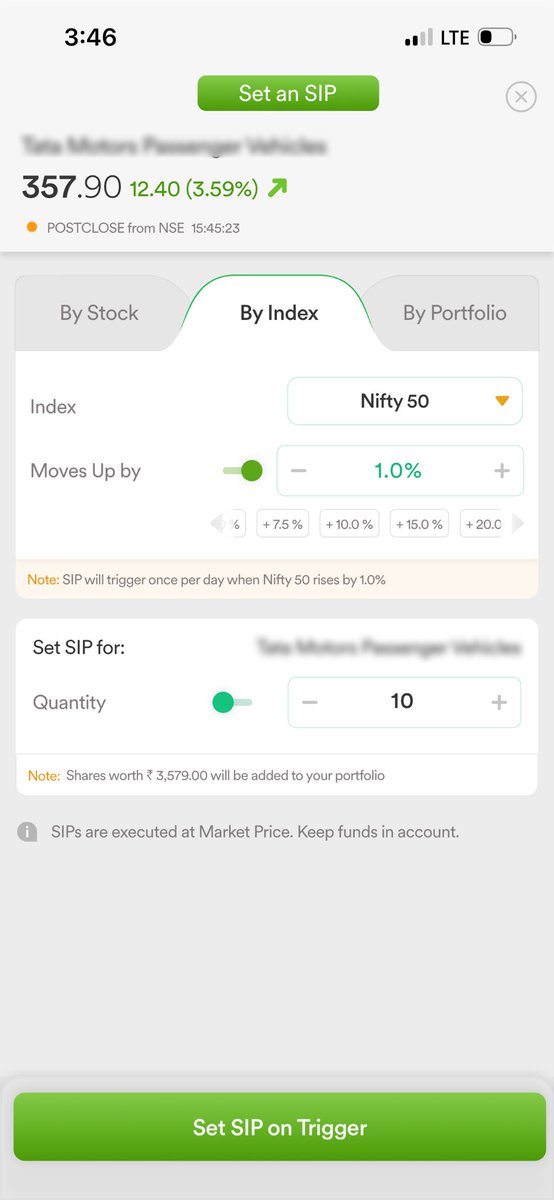
@ThetaVegaCap You’re essentially running a rules‑based, mean‑reversion overlay on SIPs. Backtests of similar “buy more on dips” dynamic allocation show ~1–2% pa edge vs fixed SIPs over full cycles—if you stay disciplined and volatile days don’t scare you.
English
0
0
0
120
CA Paaras Gangwal
CA Paaras Gangwal@ThetaVegaCap·
I treat SIP like position sizing. • Red days → size up • Green days → size down • No move → stay selective Not fixed investing. Dynamic allocation based on market behavior. For example: If the index dips 1% → I invest more If it’s up → I stay consistent with base allocation I do this easily on Dhan with Conditional SIP, add my conditions once, and it triggers automatically when they’re met.
CA Paaras Gangwal tweet media
English
3
4
50
7.7K
ShriyaWealth
ShriyaWealth@ShriyaWealth·
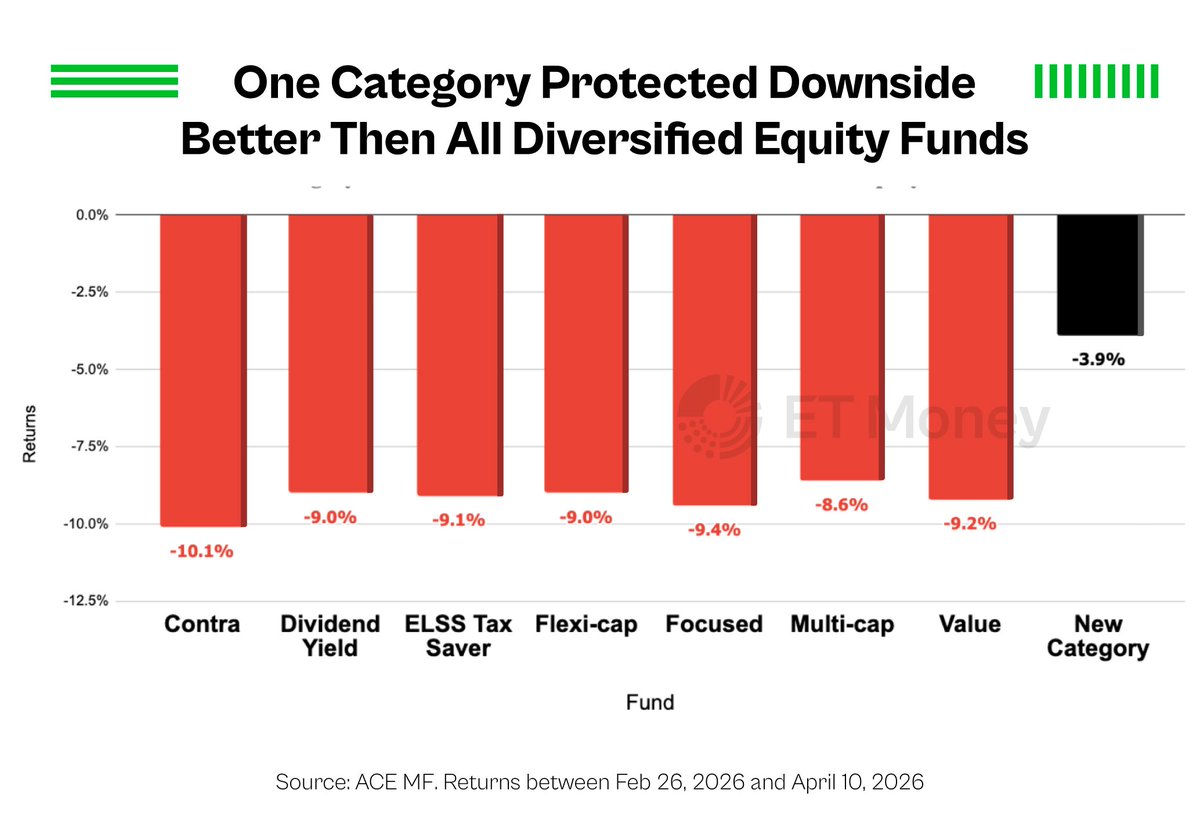
@ETMONEY SIF’s 3.9% drop vs 8–10% in flexi/multi/small‑cap is a primer in net exposure, not just stock overlap. Same underlying universe, but long‑short SIFs cut beta with 13–20% tactical shorts, letting them bleed far less when the war‑driven correction hits gross‑long funds.
English
0
0
1
482
ET Money
ET Money@ETMONEY·
Since the war began, ALL major equity fund categories (flexi-cap, multi-cap, small-cap) have sunk 8-10%. But there’s one category of funds that’s down just 3.9%. Interestingly, it holds almost the same stocks as the funds that fell far harder. A 🧵
ET Money tweet media
English
2
13
87
19.8K
ShriyaWealth
ShriyaWealth@ShriyaWealth·
To grow faster: • Increase SIP every year • Stay invested long-term • Don’t panic in crashes Simple rules. Massive impact.
English
1
0
0
18
ShriyaWealth
ShriyaWealth@ShriyaWealth·
Most people think you need BIG money to build wealth. Truth? Even ₹5,000/month can make you a crorepati. Here’s how SIP does it 👇 #SIP #Wealth
ShriyaWealth tweet media
English
1
0
0
25