Simbarashe Mazorodze

2K posts

Simbarashe Mazorodze banner
Simbarashe Mazorodze

Simbarashe Mazorodze

@SimbaMazorodze

Cloud & Security Architect | 20+ yrs transforming enterprises across Africa 🌍 | CISSP · Microsoft Expert

Zimbabwe Katılım Ekim 2009
2.7K Takip Edilen799 Takipçiler
Sabitlenmiş Tweet
Simbarashe Mazorodze
Simbarashe Mazorodze@SimbaMazorodze·
I help African businesses: • Secure their systems • Cut IT chaos • Use Cloud & AI properly If you want your business to scale without stress, DM me “CLOUD”.
English
0
0
2
101
Hon. Takudzwa Titus Nyanhanga
Let’s do a thread of industries that can be started for the cost of 12 Brand new Toyota Fortuner GD6s ($75000 x 12 =$900 000) and the approximate employment created.
Hon. Takudzwa Titus Nyanhanga tweet mediaHon. Takudzwa Titus Nyanhanga tweet mediaHon. Takudzwa Titus Nyanhanga tweet mediaHon. Takudzwa Titus Nyanhanga tweet media
English
27
30
261
50.2K
Tommi Pedruzzi
Tommi Pedruzzi@TommiPedruzzi·
A simple 120 page PDF can make you $8,400 per month. All you need is Claude, internet connection and 1 hour a day. Comment “PDF” and I’ll send you a FREE training breaking the entire system down. (With all the AI prompts) ⏳ Taking this down in 24 hours.
Tommi Pedruzzi tweet media
English
2.4K
182
912
151.1K
Manu Sisti
Manu Sisti@Manu_Sisti·
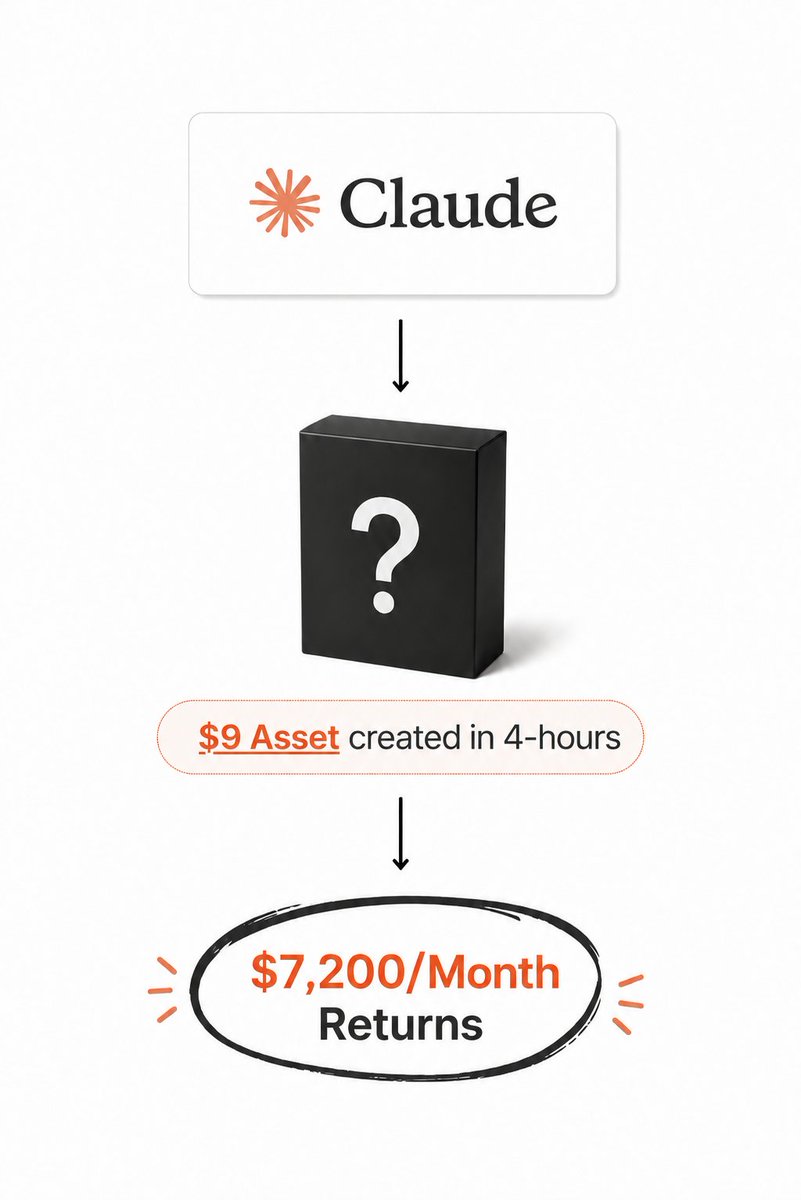
Claude + laptop + internet connection + 60 minutes daily = $7,200 per month. Usually, I charge $97 for this killer guide, but today you get it 100% FREE. Inside: • The asset revealed • The full workflow • My exact Claude prompts • How you can scale it to $10K/month working 1 hour/day Like + comment 'AI' and I'll send you my detailed guide for FREE. Must follow me to get this guide in your DM. FREE for 48 hours only.
Manu Sisti tweet media
English
1.7K
208
1.9K
185.9K
Nora Ennis
Nora Ennis@EnnisNora21309·
Claude is a money-making machine if you know how to use it. Here's the ultimate guide in English. Prompts, skills, Claude Code, monetization… it has everything. FREE for 24 hours only! To get it: 1. Like this post 2. Comment "4.6" 3. Follow me to receive a DM
Nora Ennis tweet media
English
635
121
786
50.3K
Nicolas Boucher
Nicolas Boucher@BoucherNicolas·
I just mass-released 2 Claude resources for Finance. Comment "CLAUDE" and I'll send them to you for free. Companies pay me $10,000+ for workshops where I teach AI for Finance. I've seen finance teams spend weeks trying to figure out Claude on their own. Watching tutorials. Testing random prompts. Getting mediocre results. No one gave them a structured way to use Claude for real finance work. That's what this bundle is: The exact playbook and cheat sheet I wish every finance team had from day one. Here's what's inside: 📘 Claude Finance Playbook → How to use Claude in Excel to build financial models faster → How to use Claude Voice Mode to work on finance from your phone → How to create an interactive scenario planner for faster decision-making → Security, compliance, and quality control standards for finance teams → Step-by-step prompts you can copy and use today 📋 100 Claude Tips (cheat sheet) → 25 Claude in Excel tips (formulas, variance analysis, scenario modeling) → 25 Claude Cowork tips (batch automation, research synthesis, file management) → 25 Dashboard tips (KPI scorecards, board-ready P&Ls, interactive dashboards) → 25 best practices (CSI+FBI prompting, extended thinking, web search) Why Claude specifically? Most finance teams I train are using ChatGPT or Copilot. But Claude is quietly becoming the tool of choice for serious financial analysis: → Cell-level citations in Excel → Projects that keep your context clean per client → Cowork mode for long-running automation tasks → Extended thinking for complex scenario planning I built these resources because I kept getting the same question: "Nicolas, how do I actually get started with Claude for Finance?" Now you have the answer. Comment "CLAUDE" below and I'll send you both resources. 🔁 Repost if your finance team needs to see this!
Nicolas Boucher tweet media
English
1K
123
544
66.9K
Yann
Yann@yanndine·
My team built 16 AI agents for GTM ops. You can have them for FREE - Comment "AGENTS", and I'll send it to you. Most GTM agencies misuse AI in their stack. They bolt on tools, run one-off automations, and hope the output is good enough to send. Even strong operators end up with outreach that looks personalised but isn't actually built on any real signal. So I documented what actually works. I took every manual task that slows down a GTM team - qualifying lists, writing first lines, scoring accounts, detecting intent - and turned each one into a deployable AI agent. Here's what I found: ✅ Most ICP filtering is done by a human who doesn't have consistent criteria ✅ Personalisation at scale breaks down because copy agents aren't given structured inputs ✅ Lead scoring is either missing entirely or stuck in a spreadsheet nobody trusts ✅ Teams have no system for detecting where a lead is in their buying journey - so every message gets the same CTA Now, I want to share the exact library with you. This won't guarantee you a full pipeline overnight... But it will make your GTM ops faster, more consistent, and actually scalable. Inside, you'll get 16 agents across 4 categories: ✅ Setup guides for n8n, Relevance AI, and Make - so you can deploy without starting from scratch ✅ Copy agents - first line writer, voice note script generator, case study matcher, industry personaliser, pain point identifier ✅ List building agents - ICP qualifier, SaaS validator, tech stack detector, company name cleaner, TAM account scorer ✅ Lead scoring agents - account fit scorer, intent signal ranker, tier assigner, champion identifier, buying stage detector ✅ Every prompt includes structured JSON outputs - ready to connect straight into your CRM or sequencer ✅ Every agent includes the exact variables to fill in - no prompt engineering required ✅ One Notion doc, zero opt-in, use it today Your GTM operation is either running on systems... Or running on people doing repetitive work nobody should be doing manually. There's no in-between. These 16 agents turn the manual parts into something that runs on autopilot. If you want to stop rebuilding the same workflows from scratch: Reply "AGENTS", and I'll send you the link.
English
112
3
49
5.3K
Yann
Yann@yanndine·
Most people use Claude like a search engine. So I documented the most complete prompt library for SaaS GTM you can use today. Inside: → 200 prompts for positioning, messaging, and landing pages that convert → 200 prompts for cold outreach across LinkedIn and email → 200 prompts for product marketing and sales enablement → 200 prompts for customer retention and expansion → 200 prompts for AI integration and founder strategy → 200 prompts for SEO, organic growth, onboarding, and activation → 115 prompts for founder-led content and LinkedIn lead generation → A full Claude for SaaS operator's playbook with frameworks and reusable workflows If you run GTM at a SaaS company, manage RevOps, or build with Claude daily - this is the only prompt library you will need. Comment CLAUDE and I will send it straight to your DMs.
Yann tweet media
English
1.2K
124
1.1K
104.1K
Simbarashe Mazorodze
Simbarashe Mazorodze@SimbaMazorodze·
The Econet example matters, but not because the CEO is an engineer. The real lesson is structural, not biographical. Econet is systems-led, growth-driven, and treats technology as strategic infrastructure, not a cost. Its success comes from how decisions are framed and capital is allocated not from degrees. The deeper leadership problem in Zimbabwe isn’t CEOs, it’s boards. Politically entangled, risk-averse boards focused on survival tend to neutralize innovation. In that setup, engineers get boxed into operations and CEOs, whatever their background, become compliance buffers. We also lack a leadership pipeline. Engineers aren’t deliberately transitioned into general management, while CAs become executives by default. That’s not a professional failure, it’s an institutional one. Bottom line: Zimbabwe doesn’t have “too many CAs.” It has too few systems thinkers with real capital allocation authority. The fix isn’t swapping professions it’s redesigning governance, leadership development, and incentives for growth.
English
0
0
4
476
Simbarashe Mazorodze
Simbarashe Mazorodze@SimbaMazorodze·
Cloud Migration Is Not Digital Transformation One of the most common misconceptions I encounter is the belief that moving to the cloud automatically means an organization has transformed digitally. It hasn’t. Cloud migration is a technical event. Digital transformation is a behavioral and operational shift. I’ve seen organizations proudly say they’re “in the cloud” while still operating with the same habits they had on-premises — shared passwords, unclear ownership, siloed teams, manual approvals, and security treated as an afterthought. In those cases, the cloud simply becomes a more expensive place to host old problems. True digital transformation changes how decisions are made, how people collaborate, how data flows, and how risk is managed. It requires intentional design, clear governance, and leadership alignment — not just a migration checklist. Microsoft Cloud enables transformation, but it doesn’t enforce it. The platform provides the tools: identity, security, collaboration, automation, and now AI. What matters is how organizations choose to use them. Transformation happens when: Identity becomes the control plane, not an afterthought Security is built into daily work, not bolted on later Data is structured, owned, and trusted Automation replaces friction, not people Leadership models the behaviors they expect Without these shifts, cloud adoption stalls. Productivity gains remain marginal. Risk quietly accumulates. As we move through 2026, successful organizations won’t be defined by how fast they migrated to the cloud — but by how deeply they changed the way they work because of it. Cloud migration moves systems. Digital transformation moves organizations. That difference matters.
English
0
0
0
23
Simbarashe Mazorodze
Simbarashe Mazorodze@SimbaMazorodze·
Building Strong Foundations in the Microsoft Cloud (Part 5): AI Adoption & Change Management By the time AI is technically ready, people often aren’t. After identity, security, data governance, and leadership alignment are in place, many organizations assume AI adoption will happen naturally. In reality, this is where most initiatives slow down or quietly fail. AI adoption is not a technology rollout. It is a change management exercise. I’ve seen well-designed Copilot deployments struggle because employees didn’t understand why AI was being introduced, how it would help them, or what was expected of them. Without that clarity, AI feels imposed rather than empowering. Successful adoption starts with intentional communication. Leaders must clearly explain what AI is meant to do — and just as importantly, what it is not meant to do. Addressing fear early matters. People worry about relevance, job security, and trust. Silence creates speculation. The next step is practical enablement. Not generic training, but real scenarios aligned to how people actually work. Showing a finance team, a legal team, or an operations team how Copilot helps their daily tasks builds confidence quickly. Small wins matter more than grand launches. Equally important is permission to learn. AI adoption improves when employees are encouraged to experiment safely, make mistakes, and share lessons. When people feel monitored instead of supported, usage drops — even if the tools are powerful. Microsoft Cloud helps here by embedding AI directly into familiar tools like Outlook, Teams, Word, and Excel. That lowers friction. But leadership still sets the tone. Adoption follows example. The organizations that succeed with AI don’t force usage. They invite participation, reinforce trust, and evolve continuously. AI changes how people work. Change management determines whether that change is embraced — or resisted. And that final step makes all the difference.
English
0
0
0
20
Simbarashe Mazorodze
Simbarashe Mazorodze@SimbaMazorodze·
Building Strong Foundations in the Microsoft Cloud (Part 3): AI & Copilot Readiness In the first two parts of this series, I spoke about why Microsoft Cloud works best when it’s designed with intention, and why strong foundations matter more than tools. Today, I want to talk about the next question many leaders are asking me: “Are we ready for AI and Copilot?” The honest answer in most cases is: not yet. AI doesn’t fix weak foundations. It exposes them. I’ve seen organizations excited about Copilot, only to realize their data is scattered, permissions are unclear, and sensitive information is accessible far beyond where it should be. In those environments, AI becomes a risk instead of an advantage. Copilot works best when three things are already in place. First, identity and access discipline. If you don’t clearly know who can see what, AI will surface more than you intended. Copilot respects permissions — but it also amplifies whatever permissions already exist. Second, clean data and governance. AI is only as helpful as the data it can reach. Well-structured SharePoint sites, disciplined Teams usage, and clear document ownership make an enormous difference. Chaos in equals confusion out. Third, security by default. Sensitivity labels, conditional access, device trust, and audit visibility are no longer “advanced features.” They are prerequisites for safe AI adoption. What I appreciate about Microsoft’s approach is that Copilot wasn’t bolted on. It sits inside the same ecosystem that already handles identity, security, compliance, and productivity. That’s not accidental — it’s years of groundwork. As we move through 2026, the organizations that benefit most from AI won’t be the loudest adopters. They’ll be the most prepared. AI rewards clarity. It punishes shortcuts. And once the foundation is right, Copilot stops being something to fear — and starts becoming a genuine force multiplier for how people work.
English
0
0
0
13
Simbarashe Mazorodze
Simbarashe Mazorodze@SimbaMazorodze·
Yesterday, I shared some reflections on why Microsoft Cloud has quietly become the backbone of how modern businesses operate. Today, I want to go a step further and talk about what actually makes it work. In my experience, most cloud challenges don’t come from the platform itself. They come from how it’s designed, governed, and adopted. I’ve walked into environments where companies had Microsoft 365, Azure, and even advanced security licenses — yet still struggled with data sprawl, shared passwords, unclear access, and constant firefighting. On paper, they were “in the cloud.” In reality, they were still operating with on-premise thinking. The turning point is always the same: intentional architecture. When you start with identity at the center, apply security by default, and clearly define how data, devices, and users interact, the noise reduces. Technology stops being something people fight against. It becomes something they trust. One of the biggest misconceptions I see is the belief that buying more licenses equals maturity. It doesn’t. Maturity comes from: Clear governance Practical security controls Simple, well-communicated standards Adoption that matches how people actually work This is where Microsoft Cloud shines. Its strength isn’t just in individual products, but in how identity, productivity, security, and now AI are designed to work together. As we move deeper into 2026, I believe the most successful organizations won’t be the ones chasing every new tool. They’ll be the ones investing in strong, boring, reliable foundations — and then layering innovation on top with purpose. Good cloud architecture isn’t loud. It’s calm. Predictable. Secure. And that’s exactly what most businesses need.
English
0
0
0
5
Simbarashe Mazorodze
Simbarashe Mazorodze@SimbaMazorodze·
I’ll be sharing practical insights on Microsoft Cloud in 2026: – Security-first design – Smart licensing – AI readiness – Real-world lessons Follow if you’re building for scale.
English
0
0
0
10
Simbarashe Mazorodze
Simbarashe Mazorodze@SimbaMazorodze·
Think of Microsoft Cloud like this: Microsoft 365 = productivity Azure = infrastructure Entra ID = identity Defender = security Copilot = intelligence One ecosystem. One strategy.
English
1
0
0
8
Simbarashe Mazorodze
Simbarashe Mazorodze@SimbaMazorodze·
Microsoft isn’t just software anymore. It’s an operating system for modern business. Cloud. Security. AI. Identity. Compliance. All integrated. All enterprise-grade.
English
1
0
0
15