

Simple
11K posts

Simple
@SimplysciHQ
Science 🔭, Myths, Stories, Entertainment, Memes And Psychological Debates 💯
Katılım Ağustos 2023
846 Takip Edilen1.5K Takipçiler

🧠 Two perspectives
1️⃣ Earth from the Moon 🌝
The Earth appears much larger than the Moon does to us.
Depending on where you are on the lunar surface, Earth can seem almost fixed in the sky, barely moving.
You’d see weather patterns, continents, oceans, and cloud movements living, dynamic, and full of color.
No atmosphere on the Moon means the Earth looks sharp, vivid, and unobstructed.
Moon from Earth 🌍
The Moon looks smaller but closer.
We see it go through phases new, crescent, full, waning, caused by the relative positions of Sun, Earth, and Moon.
Its surface details (craters, maria, mountains) are visible through telescopes.
The Moon reflects sunlight; it doesn’t produce its own light.
Fun contrast:
From Earth, the Moon rises and sets; from the Moon, the Earth barely moves.
Earth’s color contrasts with the gray lunar surface, while the Moon looks monochrome against Earth’s blue sky.
💡 Seeing Earth from the Moon reminds us how fragile and vibrant our planet is. Seeing the Moon from Earth shows how motion, light, and perspective shape our view of the universe.
Black Hole@konstructivizm
What the Earth looks like from the Moon, and what the Moon looks like from the Earth during the month...
English
@stats_feed Sydney topping the air quality charts today is impressive, clean air isn’t just about visibility, it supports health, wellbeing, and a more sustainable city life. A reminder of how environmental efforts can make a real difference in urban living
English
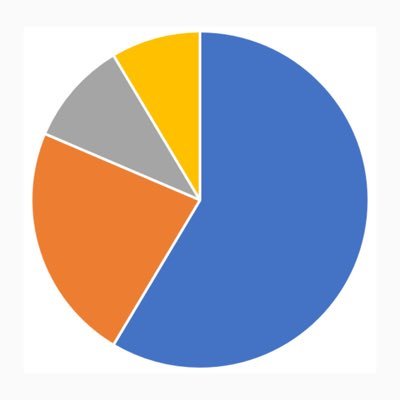
🇦🇺 Sydney, Australia has the best air quality among the major cities in the world today!
Source: IQAir

English
@sciencegirl Solar panels aren’t just for rooftops anymore — vertical installations on fences turn otherwise unused space into clean energy generators. It’s a clever way to harness sunlight while integrating renewable power into everyday structures
English
Solar technology designed for vertical installation on fences
English
Over a century ago, the 1900 Paris Exposition Universelle wowed visitors with a 3.5 km wooden moving walkway, an early glimpse at innovation in motion. It was Captured by the Lumière brothers, it reminds us how pioneers of film and engineering were already documenting and shaping the future of technology.
English

This is Another breathtaking glimpse from Webb shows how much we still have to learn about the early universe...From ancient galaxies stretched across billions of light-years to a tiny galaxy hosting a supermassive black hole just 570 million years after the Big Bang, these discoveries challenge our understanding of how quickly cosmic giants can form and evolve.
English
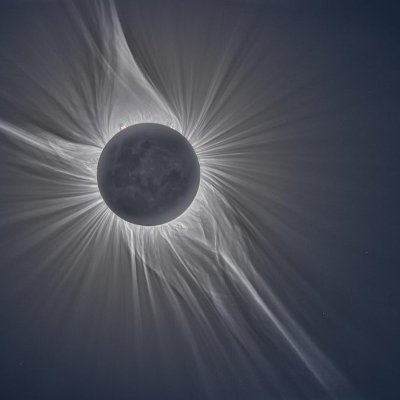
The James Webb Space Telescope has delivered another jaw-dropping view of the early universe, peering deep into the galaxy cluster MACS J1149.5+2223 and unveiling a dazzling cosmic landscape teeming with thousands of ancient galaxies.Captured in exquisite detail by Webb's Near-Infrared Camera (NIRCam) as part of the CANUCS survey, this infrared masterpiece reveals a vibrant tapestry of galaxies stretching across billions of light-years. Many glow in intense red hues—their light dramatically stretched (redshifted) by the universe's relentless expansion over cosmic time.Lying about 5 billion light-years away in the constellation Leo, the cluster MACS J1149.5+2223 serves as a powerful natural telescope. Its immense gravity bends and magnifies light from far more distant objects behind it, like a giant lens amplifying the faintest whispers from the universe's infancy.But the true showstopper hides in plain sight: a tiny, enigmatic "Little Red Dot" dubbed CANUCS-LRD-z8.6. This ultra-distant galaxy appears to us as it existed a mere 570 million years after the Big Bang—barely a cosmic blink after the universe began.What makes this discovery electrifying? Hidden at its heart is an actively feeding supermassive black hole that's growing at a ferocious pace—and it's far larger than any current theory predicts for such a young era. This pint-sized galaxy already hosts a monster black hole that's ballooned to an unexpectedly massive size, defying models of how quickly these cosmic giants could form and evolve in the infant universe.This "greedy" black hole hints that supermassive black holes may have ramped up much faster than expected, possibly outpacing even their host galaxies in the race to grow. It bridges the gap between these early beasts and the brilliant quasars that blaze across the modern cosmos.The CANUCS program, harnessing Webb's NIRCam, NIRISS, and NIRSpec instruments, is relentlessly hunting these early-universe enigmas. With each new revelation, it's rewriting the story of galaxy formation, the epoch of reionization, and the rapid rise of the universe's most formidable black holes—proving once again that the deeper we look, the more astonishing the cosmos becomes.

English
A glimpse into history, Einstein alongside engineers at the Marconi RCA station in 1921 shows how curiosity and collaboration drive innovation. Moments like this remind us that even the greatest minds often worked hand-in-hand with teams to explore and expand the frontiers of science.
English
Albert Einstein, with other engineers and scientists, at the Marconi RCA radio station in 1921.

English
Here’s a fun fact: Baby elephants sleep a lot up to 16–18 hours a day in their first few months! And they often nap leaning on their mothers, siblings, or even humans they trust. Their incredible size doesn’t stop them from being the ultimate cuddlers when it comes to comfort and warmth!
English
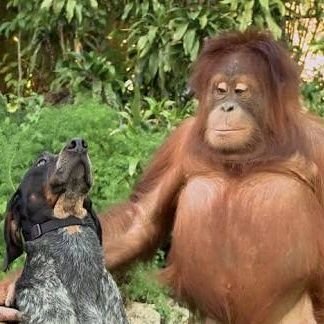
When you're so tired you become a human pillow for a baby elephant 😴🐘
English
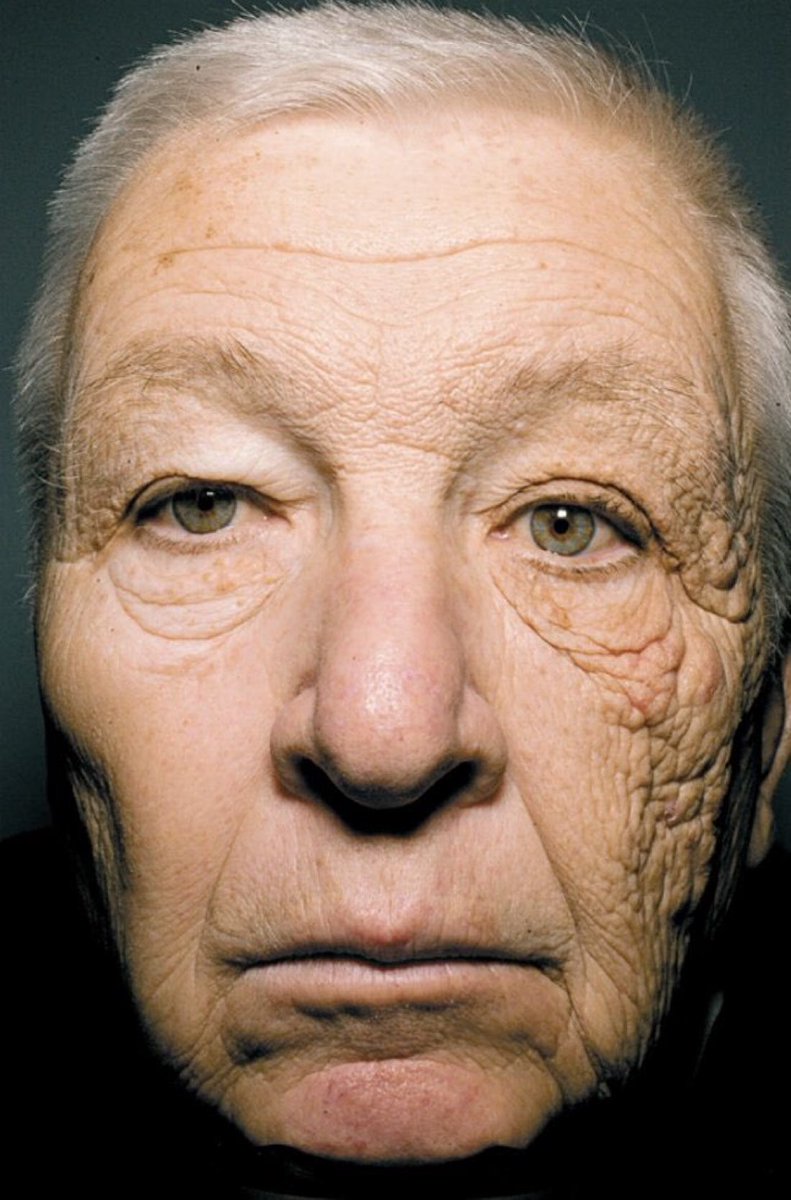
This is a striking example of how persistent sun exposure can silently impact our skin even through glass...This case reminds us that UVA(Ultraviolet A) rays penetrate windows, accelerating aging and DNA damage, and underscores the importance of consistent sun protection, especially for drivers or those near sunlight for long periods.
English
A 69-year-old truck driver developed severe one-sided facial aging, known as unilateral dermatoheliosis, after more than 25 years of sun exposure while driving.
The left side of his face, consistently exposed to UVA rays through the vehicle window, showed significant thickening, wrinkling, and skin damage. The case, published in the New England Journal of Medicine, gained global attention. It highlights how UVA rays can penetrate glass, accelerate skin aging, damage DNA, and increase cancer risk, highlighting the importance of sun protection even while indoors or driving.
English
@konstructivizm Earth from the Moon… and the Moon from Earth, two familiar sights, but each tells a very different story about our place in the cosmos...Read More here;
x.com/i/status/20356…
Simple@SimplysciHQ
🧠 Two perspectives 1️⃣ Earth from the Moon 🌝 The Earth appears much larger than the Moon does to us. Depending on where you are on the lunar surface, Earth can seem almost fixed in the sky, barely moving. You’d see weather patterns, continents, oceans, and cloud movements living, dynamic, and full of color. No atmosphere on the Moon means the Earth looks sharp, vivid, and unobstructed. Moon from Earth 🌍 The Moon looks smaller but closer. We see it go through phases new, crescent, full, waning, caused by the relative positions of Sun, Earth, and Moon. Its surface details (craters, maria, mountains) are visible through telescopes. The Moon reflects sunlight; it doesn’t produce its own light. Fun contrast: From Earth, the Moon rises and sets; from the Moon, the Earth barely moves. Earth’s color contrasts with the gray lunar surface, while the Moon looks monochrome against Earth’s blue sky. 💡 Seeing Earth from the Moon reminds us how fragile and vibrant our planet is. Seeing the Moon from Earth shows how motion, light, and perspective shape our view of the universe.
English
What the Earth looks like from the Moon, and what the Moon looks like from the Earth during the month...
English
Paul Alexander’s life is a remarkable story of resilience. Paralyzed by polio in 1952 and dependent on an iron lung for 72 years, he didn’t let that define him — he graduated from Southern Methodist University and UT Law, then practiced as a civil litigator for over 40 years. A testament to determination and the human spirit.
English
Paul Alexander contracted polio in 1952 and lived for 72 years using an iron lung
He went on to graduate from Southern Methodist University and University of Texas School of Law, working as a civil litigator for over 40 year
English
Simple retweetledi
A single coconut can travel thousands of kilometers across the ocean…
…and still grow into a tree.
Here’s how that works:
First, a coconut isn’t just a seed.
It’s a multi-layered survival system.
The outer husk is thick and fibrous.
This does two things:
Helps it float
Protects it from physical damage
Inside that is a hard shell.
This acts like armor, keeping the seed safe from saltwater and impact. Then comes the secret weapon:
Coconut water.
It keeps the seed hydrated and alive during long journeys.
Even more interesting:
Saltwater doesn’t easily penetrate the shell.
So the seed inside stays viable for months.
And here’s why it doesn’t sprout at sea:
Coconuts need the right conditions:
Fresh water
Warm soil
Stable ground
The ocean provides none of that.
So the seed stays dormant.
Once it finally reaches a tropical shore:
It absorbs fresh water
Conditions trigger germination
A new coconut tree begins to grow
Coconuts aren’t just seeds,
they’re designed for global travel and delayed growth
Nature solved long-distance migration long before humans did.

English
Simple retweetledi
Redwoods aren’t just massive, they’re among the tallest living organisms on Earth. Beyond their size, they play a huge role in storing carbon, helping fight climate change. Their ecosystems support diverse wildlife, and their wood has historically been valued for being durable and resistant to decay.
World's Amazing Things@Hana_b30
This is how big a redwood is.
English
Simple retweetledi
I think We’re getting closer to robots that don’t just automate tasks, but replicate human movement. The real breakthrough here is balance and coordination, once robots can move like us, they can work in the same environments without redesign.
Over time, this is how they start taking over repetitive and risky tasks like cleaning, maintenance, and industrial work not by replacing humans instantly, but by gradually becoming more efficient, consistent, and scalable!
Massimo@Rainmaker1973
Humanoid robot performs surface cleaning with human-like movements and balance
English
Simple retweetledi
This pie chart is a humorous yet insightful way to visualize the vastness of human ignorance, dividing "all possible knowledge" into three main categories:
What you know (small blue slice) — your actual personal knowledge, skills, facts, and experiences. It's tiny compared to everything else.
What you don't know (yellow slice) — things you're aware exist or could exist, but you haven't learned yet (known unknowns). This includes topics you know you're ignorant about, like quantum field theory details or obscure historical events.
What you don't know you don't know (large green slice)-- the unknown unknowns. These are entire domains, concepts, risks, opportunities, or phenomena that haven't even entered your awareness. You can't search for them because you don't realize they exist.
World of Statistics@stats_feed
You don’t know what you don’t know
English
Simple retweetledi
Earthrise’ is one of the most iconic views from space, seeing our planet hanging above the Moon’s horizon. At 384,400 km away, the Moon reminds us how vast space is; if you could fly there by plane, it would take around 20 days nonstop to get there....Moments like this put our place in the cosmos into perspective.
Black Hole@konstructivizm
Earthrise over the Moon Our satellite is 384,400 kilometers from our planet. If airplanes flew to the Moon, the journey would take about 20 days.
English
Simple retweetledi
The pink fairy armadillo (Chlamyphorus truncatus) is the smallest species of armadillo.
Only about 12–15 cm long
Lives underground in central Argentina
Nicknamed the “pocket armadillo”
Its most striking feature?
Soft, pink armor-like shell
Helps protect it while burrowing
Lightweight for moving through sand easily
Adaptations:
Large, specialized claws for digging
Furry underside to stay insulated underground
Can bury itself in seconds to escape predators
Conservation status:
Endangered due to habitat loss, farming, and pet trade
Population is fragmented and declining
Why it matters:
A unique evolutionary branch of mammals
Indicator of ecosystem health in its arid habitat
It Reminds us how delicate biodiversity can be
Small, rare, and extraordinary, the pink fairy armadillo shows how evolution can create beauty and function in miniature form.
Massimo@Rainmaker1973
Pink fairy armadillo (Chlamyphorus truncatus) 𔒏 One of the most exotic mammals in the world. Endangered.
English
This swallowable capsule is like having a tiny camera explore your stomach from the inside. It moves naturally through the digestive tract, capturing images and data without invasive procedures. Innovations like this could revolutionize early detection of ulcers, cancers, and other gastrointestinal issues, making diagnostics safer and more comfortable for patients
English
Simple retweetledi
🧠 TIGER VISION EXPLAINED
Tigers’ eyesight is specially adapted for hunting:
Low-light advantage
Tigers are crepuscular (active at dawn/dusk)
Their eyes have more rod cells, letting them see in very dim light
Motion detection
Tigers detect movement extremely well, Even slight rustles in grass can catch their attention
Depth perception;
Forward-facing eyes give tigers excellent depth perception
Helps them accurately pounce on prey
Color perception;
Tigers see some colors, but less vividly than humans
Contrast matters more movement and shapes stand out
Surprise factor;
Combined senses + camouflage = “You’d see it once, it sees you 100 times”
P-621 resting by the riverbank demonstrates patience + stealth
Tigers aren’t just powerful, they’re engineered for precision, patience, and survival. Their vision is one of nature’s finest hunting tools.
Massimo@Rainmaker1973
A Tiger would see you 100 times before you see it once”. P-621 aka Goluram resting on a riverbank in Panna National Park, India.
English