Sinfan

2.4K posts

Sinfan banner
Sinfan

Sinfan

@Sinfan_

Business 💡, Stock market 📈, thoughts 💭

Bangalore Katılım Ekim 2023
169 Takip Edilen186 Takipçiler
Sabitlenmiş Tweet
Sinfan
Sinfan@Sinfan_·
Why isn’t petrol brought under GST? The base cost of petrol is around ₹53 as of November 2025. Even if it is placed under a 40% GST slab, the final price would be only around ₹74–75, whereas the current price is ₹96–110, GST was brought to overcome other taxes and uniform tax
English
1
1
2
151
Dr. Rajeev Tanwar
Dr. Rajeev Tanwar@rajatan27·
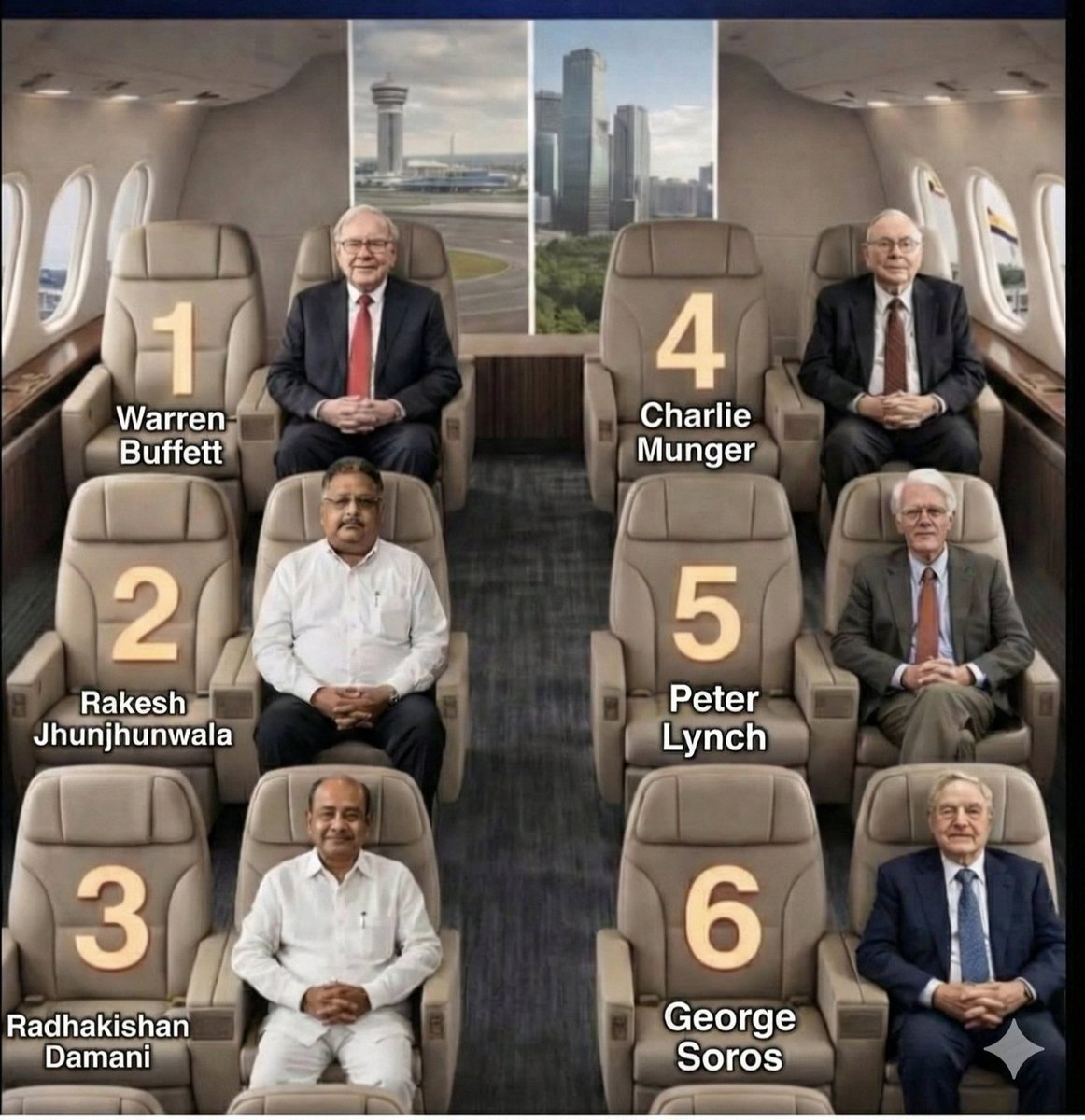
@Vivek_Investor I have read most of Buffet, Peter Lynch and Benjamin Graham. In Indian context many things can't be applied straight away from their teachings. Their concepts are good, but people like Radhakrishnan Damani know much more about application in Indian context and can guide better.
English
1
0
4
127
Vivek
Vivek@Vivek_Investor·
Which one would you choose?
Vivek tweet media
English
172
4
143
48K
Sinfan
Sinfan@Sinfan_·
Don't talk to any stranger it may be dangerous But That stranger may become your- Best friend Life partner Business partner Every thing is dangerous unless in control
English
0
1
1
34
Sinfan
Sinfan@Sinfan_·
Think this for second, -No days -No week - No months - No Years Nothing to measure or calculate Time , How will the world 🌎 be ? #Welcome2026
English
0
1
1
149
Sinfan
Sinfan@Sinfan_·
@Arden_2210 = 13 13+11 = 24 24+11*2= 46 46+11*2*2=90 90+11*2*2*2= 178 This the correct answer
English
0
0
1
22
Indian Tech & Infra
Indian Tech & Infra@IndianTechGuide·
🚨 Telegram, valued at $30 billion, operates with just 30 remote employees and no physical office. Pavel Durov 🙏
Indian Tech & Infra tweet media
English
148
403
7.9K
174.8K
Sinfan
Sinfan@Sinfan_·
Waare renewables looks fairly valued or may be undervalued at this price , having an order book of 3.4 GW unexecuted for comparison FY25 1.5 GW was executed projects . NOT A BUYING RECOMMENDATION
English
0
0
1
112
Sinfan
Sinfan@Sinfan_·
Sinfan tweet media
ZXX
0
0
1
31
Sinfan
Sinfan@Sinfan_·
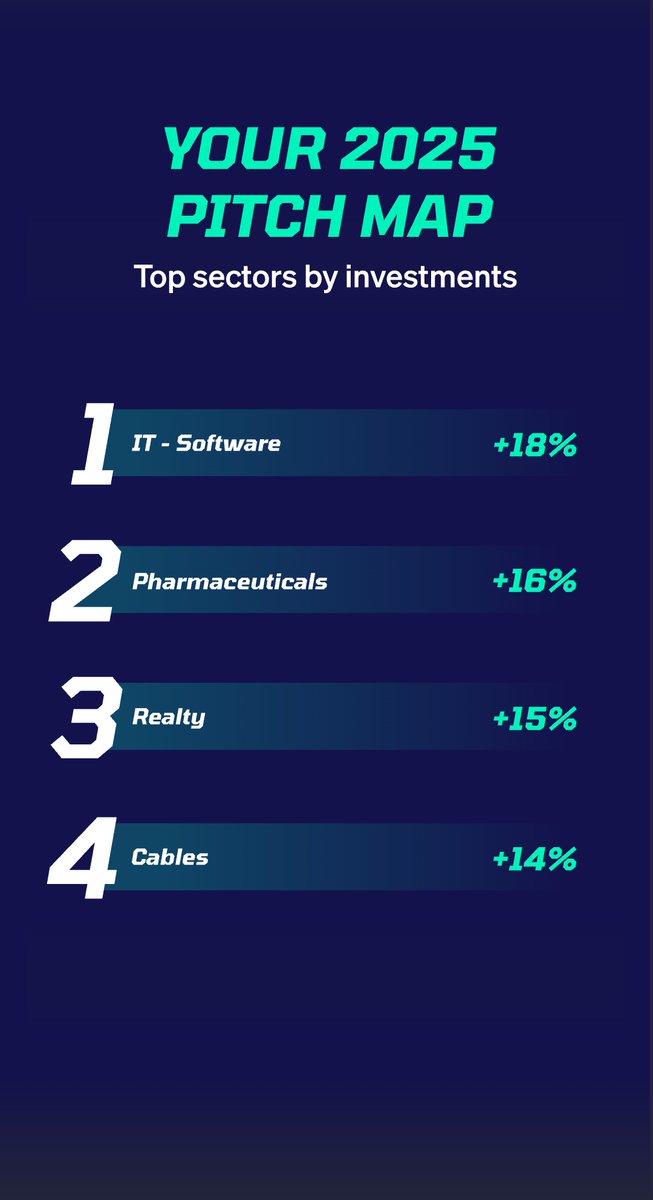
2025 Stock Portfolio Review
Sinfan tweet media
English
0
0
1
19
Jigar B Desai
Jigar B Desai@JigarBDesaiBjp·
"🇮🇳 Proud to be #2! With over 900 million internet users now (closing in on 1 billion by end of 2025), India is powering the global digital boom. Rural growth + Indic languages are the real MVPs here 🌾📱 China leads, but we're catching up fast—together we make up ~40% of the world's online population! What's next for India's digital revolution? #DigitalIndia"
English
1
0
2
1.2K
World of Statistics
World of Statistics@stats_feed·
Internet users: 1. 🇨🇳 China: 1,296,394,000 2. 🇮🇳 India: 1,026,954,000 3. 🇺🇸 U.S.: 323,888,000 4. 🇮🇩 Indonesia: 230,448,000 5. 🇧🇷 Brazil: 184,997,000 6. 🇷🇺 Russia: 135,676,000 7. 🇵🇰 Pakistan: 116,839,000 8. 🇲🇽 Mexico: 110,345,000 9. 🇳🇬 Nigeria: 108,700,000 10. 🇯🇵 Japan: 106,933,000 11. 🇪🇬 Egypt: 98,211,000 12. 🇵🇭 Philippines: 98,025,000 13. 🇻🇳 Vietnam: 85,621,000 14. 🇧🇩 Bangladesh: 82,806,000 15. 🇩🇪 Germany: 78,454,000 16. 🇹🇷 Turkey: 77,466,000 17. 🇮🇷 Iran: 73,751,000 18. 🇬🇧 United kingdom: 68,090,000 19. 🇹🇭 Thailand: 67,826,000 20. 🇫🇷 France: 63,449,000 Source: Datareportal, as of 2025. Figures rounded.
Indonesia
81
55
651
124.5K
Sinfan
Sinfan@Sinfan_·
@Wisdom_HQ Isn't time management the best, you can go back to make things right and eternal life
English
0
0
0
2
Nalini Unagar
Nalini Unagar@NalinisKitchen·
A tree takes 7-10 years to grow, used for 10 days, and then dumped as waste. Around 120 million trees are cut every year for Christmas. After Christmas, trees end up in open garbage areas, releasing methane and polluting the land. Initially, people used only branches to decorate homes, but later the world adopted cutting whole trees for decoration. This is not eco-friendly. Plant a real tree and celebrate without destroying.
Nalini Unagar tweet mediaNalini Unagar tweet media
English
118
910
2.5K
55.5K
Sidra
Sidra@kakarPathan_·
Delete one thing.
Sidra tweet media
English
3K
102
451
325.5K
Sinfan
Sinfan@Sinfan_·
@Akshat_World The problem is China can burn lot of money in initial day to achieve economic of scale and build monopoly, and China has fewer players in each of the industry, but powerful ones and greatest part in long term company share price reflects the fundamentals let it be India or China
English
0
0
1
116
Akshat Shrivastava
Akshat Shrivastava@Akshat_World·
In India, there is too much focus on stock/MF investing. And, too less on building a sound economy. It is high time-- that this game gets killed. Not kidding: writing this would personally hurt me. As I am a finance "influencer" But, someone needs to tell you the truth. Here are some key points:- 1) Countries like India & the US have stock-ified their Economy. Game here is: want to retire? How about you go and invest? If you don't invest and chase growth--- see your money lose value at a rapid pace. China on the other end does not want their junta to put too much money into stocks. Or make money via "investing" in general. They focus on building economic competitive strengths. World class manufacturing, world class tech, world class education -- you name it. 2) China's viewpoint is: you want to retire? Cool. Go work hard, get competitive, export, bring money, build wealth. This helps them build a stronger economy. 3) We have sitting ministers in India and the US, who keep pumping stocks. Their viewpoint is stock market strong= strong economy. That isn't true. China is a great case study. Where the stock market returns have been dismal. But, the economic progress has been strong. If innovation needs to be funded: the Chinese government builds out PPPs. Some of its most innovative crown jewels like Huawei or DeepSeek are private firms, not listed companies. In the last 5 years: Chinese Tech has done exceptionally well. So it is not as if an economy needs a thriving equity market for its companies to do well. 4) Now: like India, the US too is stocki-fied. But, there is a key difference:- - In the US: the risk is taken by the public. But, the public gets an upside. - This has to do with the nature of the firms. US firms chase innovation. Indian firms chase scale. - There is a massive difference between the two. 5) Let's work through some examples: - Autonomous vehicles (who is building): Waymo, Tesla, Rivian etc. All american (& chinese) - What about AI stacks (America + China) - Let's check Healthcare? GLP‑1 and related incretin drugs such as Ozempic/Wegovy (semaglutide, Novo Nordisk’s major US presence) and Zepbound/Mounjaro (tirzepatide, Eli Lilly) - What about CRISPER/Organ Transplant? etc. Again you'd see US/Europe 6) Research is risky. And, it needs capital. Most of this can't be raised via debt (loans). So the venture/private capital needs to come, in the form of equity. In simple words: while Chinese government steps in to absorb the risk. This model can't be done in most countries. In the US, this is done by venture firms/private capital via stock markets. 7) What about India? What really is the private capital funding here? Ans) scale. Consider Zomato. One of the top firms to come out of India. What does it do really? Why does it need so much equity capital? Well to build more dark stores? Put more delivery boys on roads? No one steps back to think: why do we NEED (truly need this) in the first place. But, more importantly: why so much "risk capital" needs to be thrown at Zomato? I am not against Zomato's growth. I am against its artificial and urgent growth. It is common sense: that if such firms were left alone to scale at their natural pace, humanity would not miss much. Fine, we would have reached 10 mins delivery after 20 years. What's really the problem? 8) In this game, investors miss a critical point: to chase "scale", we lose "control" Let's go back to China's example: who controls their banks, telecomm, FinTech? Now, ask the same question in context of India? Who owns our banks, our fintech etc? So what did we sacrifice to accelerate this hypothetical innovation? We gave up a lot of control. 9) Step back and ask: why stocki-fy the Indian economy? What purpose does it serve? From an innovation & control point of view: we don't achieve much. But, when "savings" are directed to MF houses, government can get a say: where can these be directed. That's control and power. 10) Now, you might say: BUT, this is the same case with Banks? true. But, here is the key difference:- When you lend to a bank via deposits, that's a liability on a bank. That's not risk capital. But, when a MF house/PMS destroys your portfolio, it is the "risk capital" not working out for you. You see the difference? Indian firms trading a record valuations (with Foreign Investors pulling out) is not a validation of the market. It simply tells us that the risk capital the retail junta put, simply got riskier.
English
61
59
546
53.1K
Sinfan
Sinfan@Sinfan_·
Why isn’t petrol brought under GST? The base cost of petrol is around ₹53 as of November 2025. Even if it is placed under a 40% GST slab, the final price would be only around ₹74–75, whereas the current price is ₹96–110, GST was brought to overcome other taxes and uniform tax
English
1
1
2
151
👑Beno10
👑Beno10@Beno10_MFC·
If you can find ONE difference, you are a genius. 🤓
👑Beno10 tweet media
English
20.1K
519
7K
3.4M
Sinfan
Sinfan@Sinfan_·
@WealthEnrich Yes, Vaseline, Lipton , pears ,Horlicks, boost - HUL Maggi - Nestle Tang,Oreo - Mondelez Kurkure , 7UP - Pepsi Sprite - cocacola Dettol - Reckitt
Eesti
0
0
1
185
Advait Arora
Advait Arora@WealthEnrich·
Most people knowFevicol = Pidilite & Jockey = Page ! But do you know who owns THESE super popular brands? 🤔 Maggi Tang Dettol Vaseline Lipton 7UP Sprite Horlicks Boost Oreo Kurkure RedBull Pears Some answers will shock you 🔥
English
11
5
123
46.5K
Sinfan
Sinfan@Sinfan_·
If petrol comes under GST, prices would become uniform and many commodities would get cheaper. The government avoids this because it would lose major tax revenue, though higher GST collections from other items could partly offset the loss.
English
0
0
1
41