RavenAstrology

857 posts

RavenAstrology banner
RavenAstrology

RavenAstrology

@SingingStarLady

Astrologer for over 25 years: Personal chart readings, & relationships - in the home, the family, & at work. And I tell a Starry Story of a Life, through song!

The Universe Katılım Temmuz 2015
836 Takip Edilen230 Takipçiler
RavenAstrology retweetledi
Rogelio Galván ll 🇩🇪🇲🇽
“Books only have two smells. The smell of a new book, which is good, and the smell of an old book, which is even better.” -Ray Bradbury- #SundayVibes
Rogelio Galván ll 🇩🇪🇲🇽 tweet media
English
38
479
2.5K
43K
RavenAstrology retweetledi
🧬Maxpein🧬
🧬Maxpein🧬@maximumpain333·
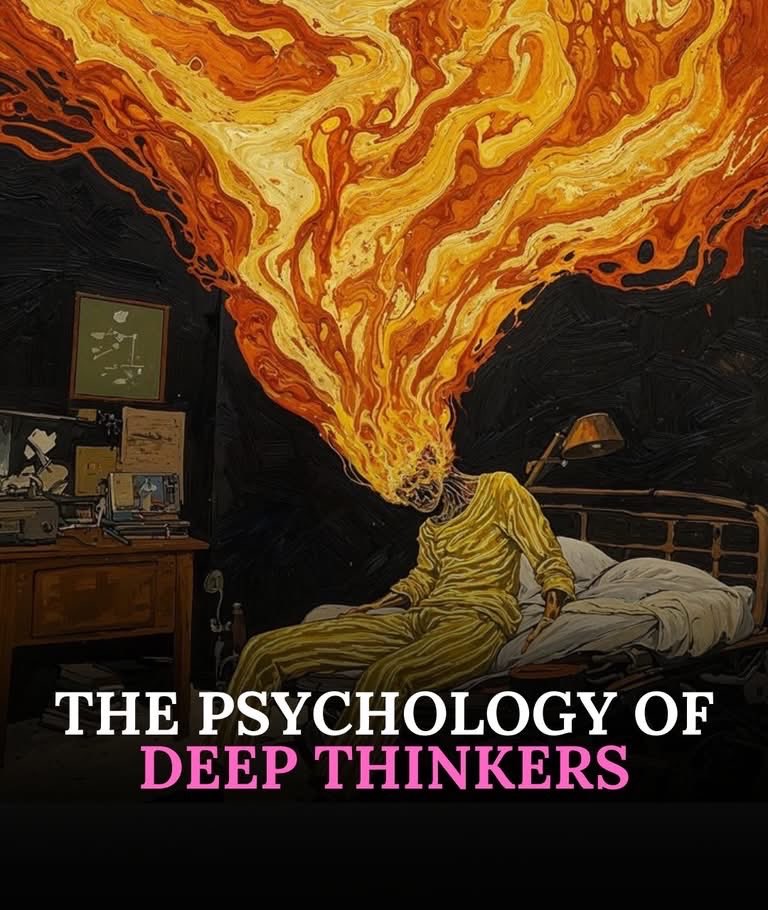
Carl Jung wrote: "The more intelligent and self-aware a person is, the more they suffer from the general unconsciousness of society." This is not a badge of honor. It is a recognition of the weight carried by those who cannot unsee what they have already seen. This is the psychology of the deep thinker and if you recognize yourself here, this one is for you: The architecture of alienation. It starts early. The child who asks why adults say one thing and do another. The one whose questions are always labeled as "overthinking." Nietzsche described these people as "free spirits" — essential for progress, but wandering in a wilderness everyone else refuses to enter. Research by Dr. Elaine Aron suggests approximately 20% of the population processes information more deeply and notices subtleties others completely miss. In a world that rewards speed, this depth can feel like a disability. The frequency of truth. Deep thinkers operate on a different wavelength, the frequency of truth rather than the frequency of comfort. Most people live without ever questioning the fundamental assumptions of their own existence. But the deep thinker has glimpsed behind the veil. Like Plato's prisoner who escapes the cave and returns to share what he saw only to be rejected and called a troublemaker—the deep thinker carries the burden of the witness. They see the masks, the exploitation, and the pain that everyone else has agreed to ignore. The emotional sponge. Deep thinkers do not just observe emotions, they absorb them. They feel the anxiety of a stranger as if it were their own. They perform enormous amounts of invisible emotional labor — checking in on people, listening, supporting, acting as the unofficial therapist of every room they enter. And yet the relationship is almost always asymmetric. They give at a depth most people cannot match. They live with the quiet loneliness of being the strong one, the one everyone leans on, but no one thinks to ask: "Are you okay?" The mask of normalcy. To survive, many deep thinkers learn to wear a mask, laughing at jokes they do not find funny, feigning interest in conversations that feel hollow, modulating their intensity to avoid being too much. This is not deception. It is survival. But the cost is enormous. Maintaining the split between the complex private self and the simple public self is exhausting. And the mask, while protective, makes true connection nearly impossible. You cannot be fully known while hiding. The wounded healer. Jung wrote about this archetype; the person who transforms their own brokenness into a source of healing for others. The wounds of rejection and misunderstanding become sources of deep compassion. The person who has felt most unseen becomes the most gifted at seeing others. But the challenge is learning to give without emptying yourself completely, to love others without losing yourself in the process. The alchemy of solitude. For deep thinkers, there is a crucial distinction between loneliness and solitude. Loneliness is the pain of disconnection from others. Solitude is the joy of connection with yourself. In solitude, the deep thinker finally breathes. The noise of the world falls away. The internal landscape becomes clear. Isolation transforms into introspection and that is where the real work happens. The revolutionary act of authenticity. In a world that profits from insecurity, choosing to be genuinely yourself is a radical act. When a deep thinker chooses authenticity over performance, it creates space for others to do the same. It gives people permission to be real in a culture that rewards shallow. If you recognize yourself in any of this, stop apologizing for your depth. You are not broken. You are not too much. You are not too sensitive. You are awake in a world that prefers to stay asleep. Your sensitivity is a superpower. Your intensity is a strength. ✨🙌🏾💫
🧬Maxpein🧬 tweet media
English
417
3K
11.6K
469.8K
RavenAstrology retweetledi
love drops
love drops@lovedropx·
love drops tweet media
ZXX
15
2.2K
6.7K
108.3K
RavenAstrology retweetledi
CALL TO ACTIVISM
CALL TO ACTIVISM@CalltoActivism·
Wow. The Pope was just asked his stance on migration. His answer is amazing: “I would change the question: what is the global North doing to help the global South in its situation that forces them to migrate.”
English
4K
12.5K
62.8K
2.1M
RavenAstrology
RavenAstrology@SingingStarLady·
@aliciaandrz My father used to read aloud to us in the winter evenings, from when I was 7, up until I was 12 or 13. We started with The Hobbit, then The Lord of the Rings [2x], and then various other books, the last one was Katherine by Anya Seton I remember those evenings with so much love
English
0
0
0
13
dr. alicia andrzejewski (she/her)
my daughter still wants to spend time with me so I decided that along with our daily walks we’re going to do thirty minutes of reading together. I’m taking her to a bookstore today to pick out some books. I’ve been wanting to read more, too. family reading time sounds good.
English
20
5
597
4.7K
RavenAstrology retweetledi
Ihtesham Ali
Ihtesham Ali@ihtesham2005·
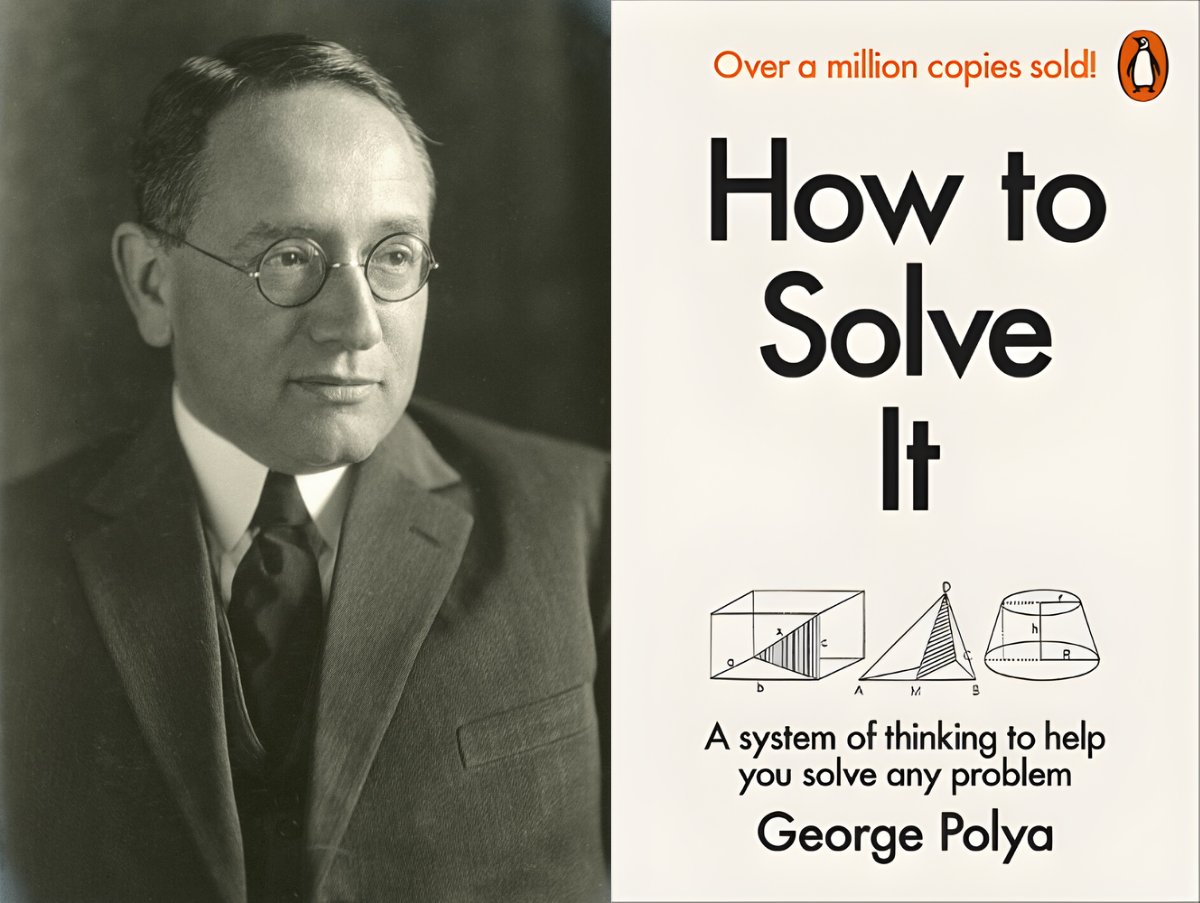
A Stanford mathematician spent 40 years watching brilliant students freeze in front of hard problems. Not because they lacked intelligence. Because nobody had ever taught them what to do before they started solving. His name is George Pólya, and the book he wrote in 1945 has never gone out of print. It has sold over a million copies. Marvin Minsky, the man who built the first neural network machine at MIT, said publicly that everyone should know this work. Engineers, mathematicians, and computer scientists treat it as scripture. Most people have never heard of it. Here is the framework buried inside it that changed how I think about every hard problem I face. Pólya watched the same failure repeat itself across decades of students. A problem would be presented. The student would stare at it for a moment, feel the first wave of anxiety, and immediately start calculating. Not because calculating was the right next step. Because calculating felt like doing something, and doing something felt better than sitting with the discomfort of not knowing what to do. The calculation was almost always wrong. Not because the student lacked the skill to execute it. Because they had not yet understood what they were being asked. Pólya called this the most neglected step in all of problem solving, and he spent the rest of his career trying to make people take it seriously. Step one is to understand the problem. Not skim it. Not assume you know what it is asking because you have seen something similar before. Understand it. Completely. He gave students a specific set of questions to force this: What is the unknown? What are the given conditions? Can you draw a figure? Can you restate the problem in your own words without looking at it? That last one is the filter. If you cannot restate a problem in your own words, you do not understand it. You have only read it. Most people skip this entirely and wonder why they get stuck. Step two is to make a plan. Not to execute. To plan. Pólya documented every heuristic he could observe in successful problem solvers, and one pattern appeared more than any other. When a problem feels impossible, find a simpler version of it and solve that first. Not because the simpler version is the goal. Because solving it gives you a foothold, a method, a partial structure you can carry back to the original problem and build from. He phrased it with precision: if you cannot solve the proposed problem, try first to solve some related problem. Could you imagine a more accessible related problem? That question alone is worth more than most problem-solving courses. Step three is to carry out the plan. This is the step everyone thinks is the whole game. It is not. It is the third of four. And Pólya spent the least time on it because it is the most obvious. Once you understand the problem and have a plan, execution is mostly patience. Step four is the one almost nobody does. Look back. Not to check the arithmetic. To ask a different set of questions entirely. Can you verify the result by a different method? Can you use this result or this method to solve a different problem? What would you do differently next time? This is where the real learning lives and almost no one goes there. The look-back step is not about the problem you just solved. It is about building a library of methods that transfers to the next problem, and the one after that. Every expert problem solver Pólya studied had this habit. Every struggling student skipped directly from the answer to the next question on the page, carrying nothing forward, starting from zero every time. Pólya's deepest insight was not a technique. It was a diagnosis. The reason most intelligent people feel bad at problem solving is not that they lack the ability to reason. It is that they conflate understanding a problem with having read it. They conflate having a method with starting to work. They conflate getting an answer with having learned anything. These are not the same things. They never were. The students who get genuinely good at hard problems are not the ones who practice more. They are the ones who slow down at the beginning and the end, at the two moments every instinct tells them to rush. The problem is almost always not as hard as it looks at the start. You just haven't understood it yet.
Ihtesham Ali tweet media
English
75
1.2K
5.9K
294.4K
RavenAstrology retweetledi
🧬Maxpein🧬
🧬Maxpein🧬@maximumpain333·
Maybe what your body needs most… isn’t more productivity. It’s more nature. Your nervous system wasn’t designed for constant alerts, fluorescent lights, screens, rushing, and overstimulation. It was shaped by: sunlight, fresh air, movement, stillness, music, firelight, connection. For most of human history, regulation wasn’t something people had to “learn.” It was built into daily life. People: walked more, rested with the sun, shared meals, sat in silence, sang together, looked at the stars. Their bodies had more chances to exhale. Today, many people feel: wired but tired, tense for no clear reason, overstimulated, disconnected from themselves. Not because they’re failing, but because modern life often pulls us away from the things that help us feel human. Sometimes healing looks less like doing more… and more like returning to what your body has always known. A slow walk. Morning light. Bare feet on grass. A deep breath. A quiet sunset. A real conversation. Simple things. But simple doesn’t mean small. Your body remembers what safety feels like. Sometimes it just needs the chance to feel it again. What’s one simple thing that always helps your body exhale? ✨🙌🏾💫
🧬Maxpein🧬 tweet media
English
8
80
288
4.8K
RavenAstrology retweetledi
Gianl1974
Gianl1974@Gianl1974·
SHOCKING CLASH: Donald Trump CALLS POPE LEO XIV “AN INSULT TO JESUS” — THE POPE’S RESPONSE STUNS THE WORLD Donald Trump believed he could score easy political points by calling Pope Leo XIV “an insult to Jesus,” after the spiritual leader once again spoke out in defense of peace, compassion, and human dignity. However, he was challenging a voice rooted not in politics, but in moral authority. Standing before a solemn gathering at the Vatican, Pope Leo XIV did not respond with anger. Instead, he delivered a powerful and deeply moving message grounded in faith, responsibility, and truth. “The President of the United States has said that I insult Jesus,” Pope Leo XIV began, his voice calm yet firm. “But let us reflect honestly — what truly insults the teachings of Christ?” Then, with quiet intensity, he answered: “You want to know what truly insults Jesus? It is when we turn away from those who suffer, when we close our hearts to the poor, and when we choose power over compassion while others cry out for mercy.” He continued: “You know what insults Jesus? It is forgetting the dignity of every human being, ignoring the pain of families in crisis, and refusing to hear the voices of the most vulnerable among us.” His message then deepened, becoming not just a response, but a moral call that reached far beyond the moment: “You know what insults Jesus? It is creating division where there should be unity, spreading fear where there should be hope, and turning away from justice when we have the responsibility to uphold it.” This was not merely a political rebuttal — it was something far more profound. Pope Leo XIV, known for his humility and steadfast commitment to peace, transformed the confrontation into a reflection on conscience rather than conflict. Instead of escalating tensions, he elevated the conversation to a universal moral level. “I do not claim to be perfect,” he admitted. “But I strive each day to walk the path of compassion — to serve, to listen, and to love as we are all called to do.” Then came the line that resonated far beyond the walls of the Vatican: “If we truly believe in a world shaped by peace and mercy… then why do we not work harder to bring that reality into our lives — here and now, for one another?” That was his response. Not with anger. Not with division. But with conviction — and grace. Trump sought to challenge him. Instead, Pope Leo XIV delivered a message now echoing across millions, reminding the world that true strength is found not in power alone, but in conscience, humility, and love.
Gianl1974 tweet media
English
1.1K
7.9K
18.1K
584.7K
dr. alicia andrzejewski (she/her)
there’s nothing more humbling than when a cat is doing something they aren’t supposed to & you yell at them & they don’t even flinch. nothing in their body registers they were just yelled at. they carry on.
English
21
1
346
3K
RavenAstrology retweetledi
Steven Isserlis
Steven Isserlis@StevenIsserlis·
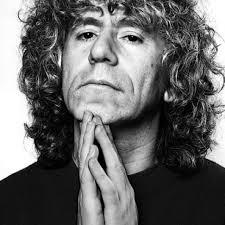
A very happy - and healthy - 75th to Julian Lloyd Webber. A dear friend (even if we rarely see each other) - and a wise man: "You never hear anybody say 'I wish I didn't play a musical instrument!'" "All children deserve access to music." "Why make war when you can make music?"
Steven Isserlis tweet media
English
10
39
257
4.7K
RavenAstrology retweetledi
Pope Leo XIV
Pope Leo XIV@Pontifex·
God’s heart is torn apart by wars, violence, injustice and lies. But our Father’s heart is not with the wicked, the arrogant, or the proud. God’s heart is with the little ones and the humble, and with them He builds up His Kingdom of love and peace day by day. Wherever there is love and service, God is there. #ApostolicJourney #Algeria
English
11.1K
26.2K
169.3K
4M
RavenAstrology retweetledi
Steven Isserlis
Steven Isserlis@StevenIsserlis·
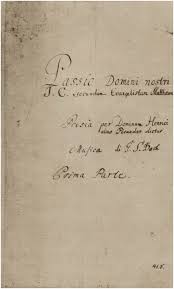
JS Bach's St Matthew Passion premiered otd 1729 - how overwhelming that must have been! The breathtaking emotional power of the first and last choruses, with seemingly every shade of sorrow in between; and the almost unbearably moving compassion of Ebarme dich. Life-changing...
Steven Isserlis tweet mediaSteven Isserlis tweet media
English
24
101
448
9.3K
RavenAstrology retweetledi
Volodymyr Zelenskyy / Володимир Зеленський
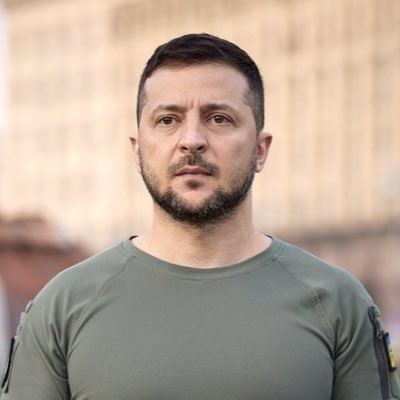
I sincerely congratulate everyone in Ukraine and around the world who is celebrating Easter today. In these very difficult times for our people and for all humanity, hope grows stronger than ever – the hope for the triumph of life over death, good over evil, and truth over lies. All that is symbolized by the Resurrection of the Lord. May the strength of every one of our people, their spirit, and everything that is best in humanity – may all of it inevitably overcome evil and darkness, “shaheds” and missiles, injustice and occupation. I wish everyone God’s grace and a peaceful life on our land and under Ukrainian skies, protected by our brave warriors. May all prayers for protection from evil be heard today. May faith unite kind hearts and strengthen those who defend their home. May every nation come closer to true security. We believe in peace! We believe in Ukraine! Happy Easter!
Volodymyr Zelenskyy / Володимир Зеленський tweet media
English
723
4.4K
28.3K
296.2K
RavenAstrology retweetledi
TS Eliot Society UK
TS Eliot Society UK@TSEliotSocUK·
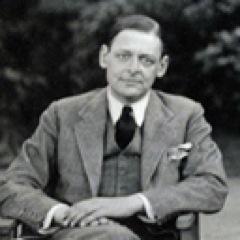
Easter Greetings from T.S. Eliot
TS Eliot Society UK tweet media
English
2
134
613
13.5K
RavenAstrology retweetledi
Volodymyr Zelenskyy / Володимир Зеленський
I spoke with His Holiness Pope Leo XIV @Pontifex today. At the very moment of our conversation, the Russians attacked Ukraine yet again – hundreds of “shaheds” and dozens of missiles against our cities and communities. In fact, the attack has been ongoing in waves since last night, and at least five regions have already been targeted. Not a single hour of peace for our people, and this is Russia’s response to our proposal for an Easter ceasefire. Essentially, the Russians have only intensified their strikes, turning what should have been silence in the skies into an Easter escalation. This certainly cannot be ignored, and I am grateful to everyone in the world who does not remain quiet about it. I spoke about the negotiation process and our work with the American team. I also expressed gratitude for the assistance in returning our abducted children and for all the humanitarian aid the Vatican has provided to our people, particularly during this difficult winter. We also discussed the situation in the Middle East and the Gulf region. I wished His Holiness and all those celebrating Easter this Sunday a blessed holiday and peace. Of course, we would be glad to welcome His Holiness to Ukraine on an apostolic visit. And I am especially grateful that the Pope remembers Ukraine, the Ukrainian people, and prays for peace for our nation.
Volodymyr Zelenskyy / Володимир Зеленський tweet media
English
668
4.7K
18.7K
252.4K
RavenAstrology retweetledi
🤠
🤠@heavensbvnny·
My therapist told me, “When a woman grows up feeling unseen, she learns to love by overgiving. She pours into everyone else, hoping that one day someone will finally pour back into her. She becomes the caretaker, the fixer, the one who shows up even when no one shows up for her. And the hardest part? Deep down, she’s not trying to be strong. She’s just waiting for someone to do for her what she’s spent her whole life doing for everyone else.”
English
152
1.3K
7.2K
221K