SIDS-CDF_hypothesis_P Siren

73 posts

SIDS-CDF_hypothesis_P Siren banner
SIDS-CDF_hypothesis_P Siren

SIDS-CDF_hypothesis_P Siren

@SirenPontus

Independent Researcher. SIDS-Critical Diaphragm Failure hypothesis, 2011. NO formal training in medical sciences or associated fields.

Katılım Şubat 2026
0 Takip Edilen360 Takipçiler
Sabitlenmiş Tweet
SIDS-CDF_hypothesis_P Siren
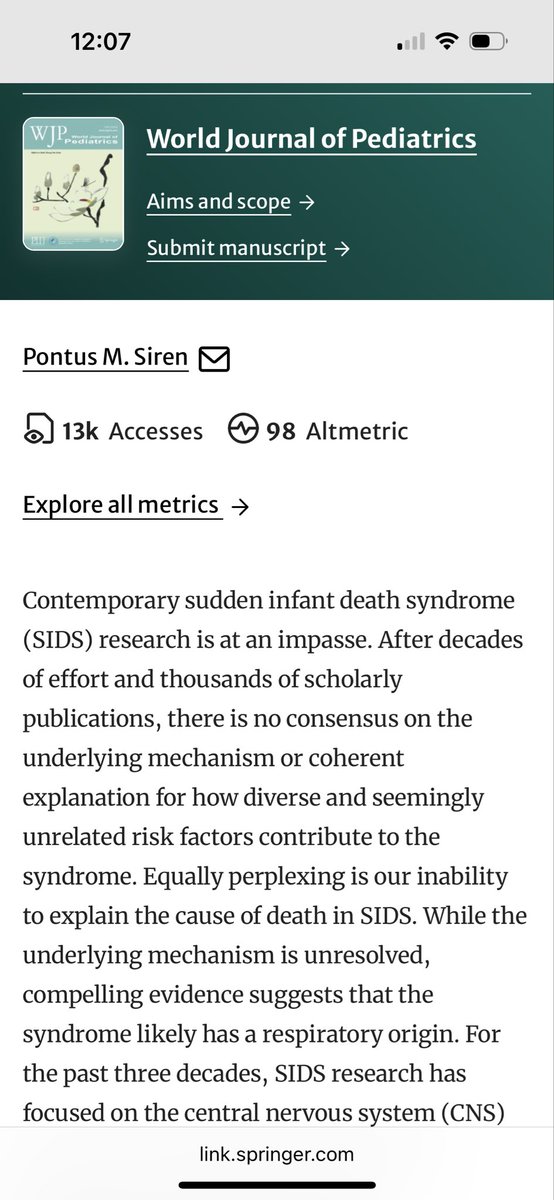
Holding two contradictory thoughts in your head for 15 years is unsettling. On the one hand, I know that SIDS&diaphragm is a blind spot and firmly believe the SIDS-Critical Diaphragm Failure (CDF) hypothesis explains SIDS. On the other hand, I know I might be WRONG, and that the only way to settle the question is through new clinical/pathological data. However, humans are mimetic creatures (we copy each other), and scientists research what others research and read what others are reading. To raise its mimetic potential, consider sending the editorial to medical professionals (doctors, pediatricians, respiratory experts, pathologists, etc) and other researchers. The more people read it, the more people will read it. . .and this will reveal its flaws and merits. . . link.springer.com/article/10.100…
English
91
152
1.6K
9.3M
SIDS-CDF_hypothesis_P Siren
A good and (very) technical question. I would have to defer to diaphragm focused researchers such as Dassios and colleagues. I believe that modern diagnostic and analytical tools & techniques can resolve this question. But they have to be used….. “Dassios and colleagues provide a comprehensive and current review of the methods for the assessment of respiratory muscle function [69]. These include EMG, respiratory pressure and composite indices, maximal respiratory pressures, phrenic nerve stimulation, the tension time index of the diaphragm, thoracoabdominal asynchrony, the relaxation rate of the respiratory muscles, and diaphragmatic ultrasound. Each has strengths, limitations, and specific clinical applications that the authors discuss in detail. Point-of-care ultrasound is emerging as a popular non-invasive clinical tool that enables real-time evaluation of diaphragmatic function.” (Forgotten muscle, 2026)
English
1
0
3
883
SIDS-CDF_hypothesis_P Siren
Holding two contradictory thoughts in your head for 15 years is unsettling. On the one hand, I know that SIDS&diaphragm is a blind spot and firmly believe the SIDS-Critical Diaphragm Failure (CDF) hypothesis explains SIDS. On the other hand, I know I might be WRONG, and that the only way to settle the question is through new clinical/pathological data. However, humans are mimetic creatures (we copy each other), and scientists research what others research and read what others are reading. To raise its mimetic potential, consider sending the editorial to medical professionals (doctors, pediatricians, respiratory experts, pathologists, etc) and other researchers. The more people read it, the more people will read it. . .and this will reveal its flaws and merits. . . link.springer.com/article/10.100…
English
91
152
1.6K
9.3M
SIDS-CDF_hypothesis_P Siren
@JohnSmi39624798 See Fresh Look at the History of SIDS, 2017, Acad Forensic Pathol. 2017. First report in medical journal of likely SIDS case: Dr S Fern, Lancet, 1834.
English
0
0
3
677
SIDS-CDF_hypothesis_P Siren
In the first 3 weeks post publication, the Forgotten Muscle editorial has been read over 11,000 times on the Springer Nature website and a prominent European pathologist just informed me that he will write an expert commentary / critique on the piece. Big thanks to all X users who shared the link w medical professionals and researchers. Novel ideas need sunlight!
English
0
0
0
195
SIDS-CDF_hypothesis_P Siren
The Forgotten Muscle & SIDS editorial has been read on the Springer Nature website almost 10,000 times in the first two weeks. For comparison, the average pediatric article receives 1000-2000 reads in a year. Considering I don’t have any formal training in the medical sciences or associated fields and SIDS is a significant topic, it’s important that medical professionals, researchers and subject matter experts throughly critique the piece and highlight its potential flaws and shortcomings. To that end, please consider sharing the linked editorial w interested medical professionals, researchers and others. X can build awareness! link.springer.com/article/10.100…
English

31
58
754
4.4M
SIDS-CDF_hypothesis_P Siren
SIDS-CDF_hypothesis_P Siren@SirenPontus·
A quote from the forgotten muscle, 2026, “Diaphragm failure is uncommon in healthy adults and children alike. However, muscle strength and endurance are functions of mass, fiber composition, and contractile properties [72], and infants aged ≤ 6 months are vulnerable to clinically significant diaphragm fatigue absent serious disease. Dassios and colleagues emphasize that several physiological factors increase the risk of diaphragm fatigue and ventilatory pump impairment in young, and especially in premature and low-birth-weight (LBW), infants [69].”
English
1
1
2
353
Nauman Farooq
Nauman Farooq@NaumanF41863·
@SirenPontus Hypoxia triggers a dangerous feedback loop, weakening the diaphragm's force-generating capacity by up to 30%. Ruling out respiratory muscle failure is critical for understanding SIDS pathology.
English
1
0
0
370
SIDS-CDF_hypothesis_P Siren
SIDS-CDF_hypothesis_P Siren@SirenPontus·
Hypoxia= low level of oxygen in tissue. Quote from Forgotten Muscle (Siren PM, 2026): “hypoxia is strongly associated with SIDS [1]. The diaphragm is highly oxidative and vulnerable to hypoxic insults [122]. Hypoxia can initiate a negative feedback loop in which impaired oxygenation reduces diaphragm performance, which further compromises muscle oxygenation and function [45]. The hallmarks of sustained hypoxia are reduced force-generating capacity and compromised ability to cope with increased workloads [123]. Studies in humans and animals have shown that hypoxia reduces the peak force-generating capacity of the diaphragm by 20%–25% and 30%, respectively [124, 125]. The diaphragm should be investigated, if only to rule it out as a contributing / causative factor in SIDS.
English
11
60
712
1.8M
Olaide Mayowa
Olaide Mayowa@OmoKadupe05·
This is a thought-provoking contribution to research on Sudden Infant Death Syndrome. Even if the hypothesis is unconventional, science progresses by testing new ideas and identifying gaps in existing explanations. Suggesting a possible role for the diaphragm is something that can be examined but it would need strong clinical and experimental evidence to be validated. Engaging medical and scientific experts to critically assess it is important, not to accept it at face value, but to properly test, challenge, and either support or rule it out. The key question remains: what evidence would actually be enough to confirm or dismiss this proposed link?
English
1
1
2
1.3K
SIDS-CDF_hypothesis_P Siren
SIDS-CDF_hypothesis_P Siren@SirenPontus·
To anyone interested in the Sudden Infant Death Syndrome (SIDS) & Diaphragm hypothesis, please read the article, Forgotten muscle: diaphragm and sudden infant death syndrome (Siren PM, 2026). It was written by an amateur without any formal medical or scientific training. If I can write it, you can understand it. Consider sharing link w medical & science professionals to raise awareness of this blind spot in SIDS research, and so they can critique the hypothesis and highlight its flaws and shortcomings. The diaphragm should be investigated, if only to rule it out as a contributing / causal factor in SIDS! link.springer.com/article/10.100…
English
147
409
3.9K
19.3M
0xSiftod
0xSiftod@0xSiftod·
@SirenPontus Respect for diving into something this heavy solo. not sure it’s a blind spot but pushing scientists to double‑check the diaphragm angle is fair. outsider curiosity keeps the field honest
English
1
0
3
383
Kavinja
Kavinja@cucheems123·
@SirenPontus sending this to a neonatologist. diaphragm angle actually clicksworth proper stress-testing
English
1
0
0
124
MOHAMMAD KAIF
MOHAMMAD KAIF@immohammadkaif·
SIDS research already has a large body of peer-reviewed work pointing to multifactorial causes (sleep environment, brainstem regulation, etc.). An “amateur-written” hypothesis can be interesting as a thought exercise, but it shouldn’t be framed as a blind spot without evidence or validation. If the diaphragm hypothesis has merit, it needs rigorous study and replication in established medical research settings before being promoted to clinicians.
English
1
0
3
247
Zippy
Zippy@zippy257·
@SirenPontus respect for chasing a new angle, but calling it a “blind spot” might be what loses the experts you wanna reach
English
1
0
1
337
A®️𝓍on
A®️𝓍on@PharmXOAB·
@SirenPontus It’s a sharp angle most people overlook. Even if the hypothesis doesn’t fully hold, rigorously testing it could close an important gap rather than leave it as an assumption.
English
1
0
1
427
SIDS-CDF_hypothesis_P Siren
SIDS-CDF_hypothesis_P Siren@SirenPontus·
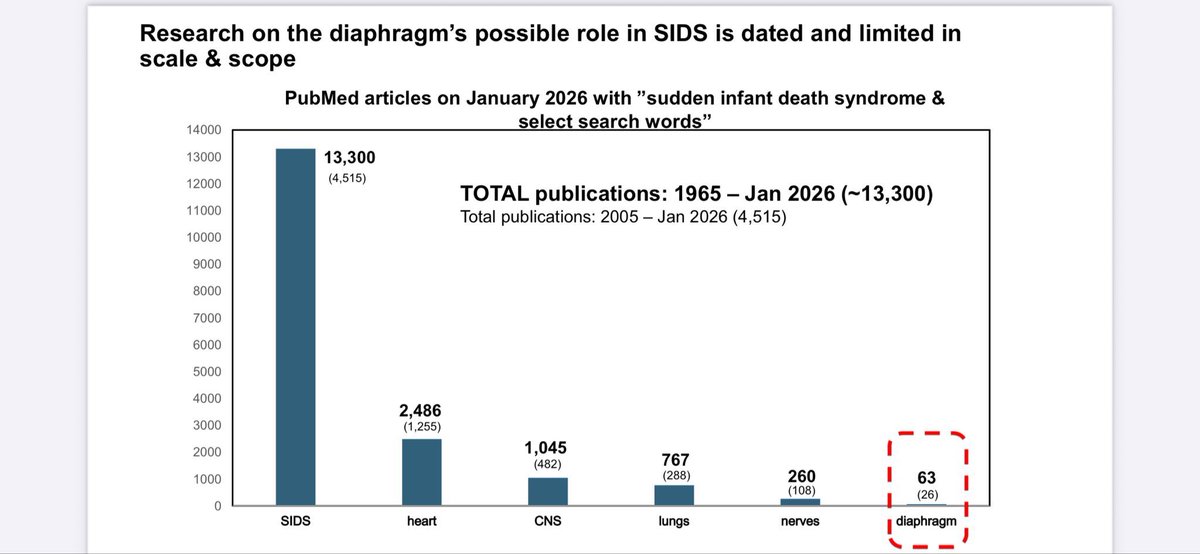
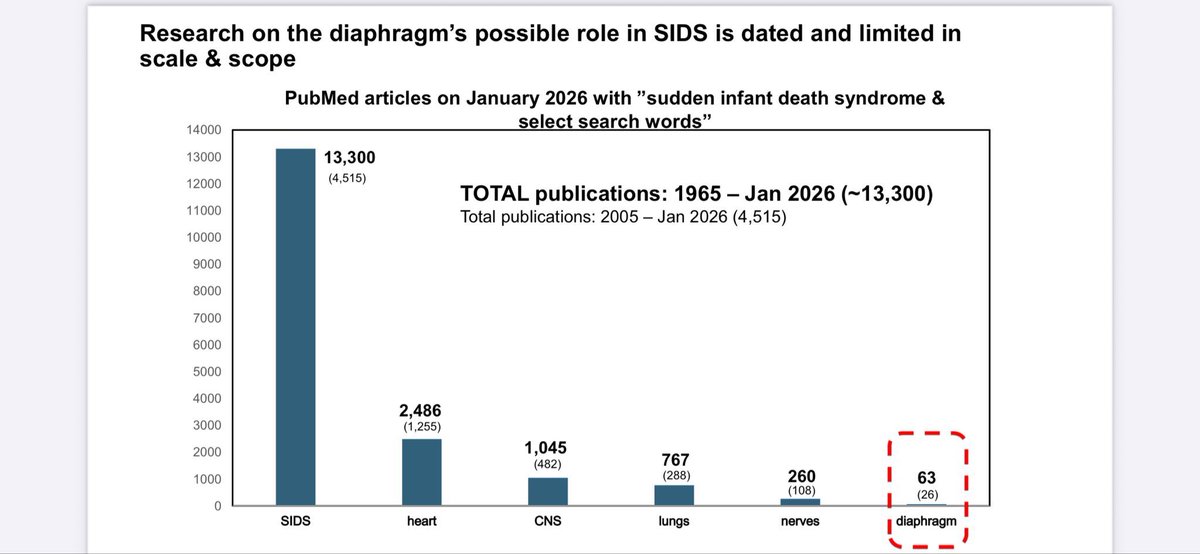
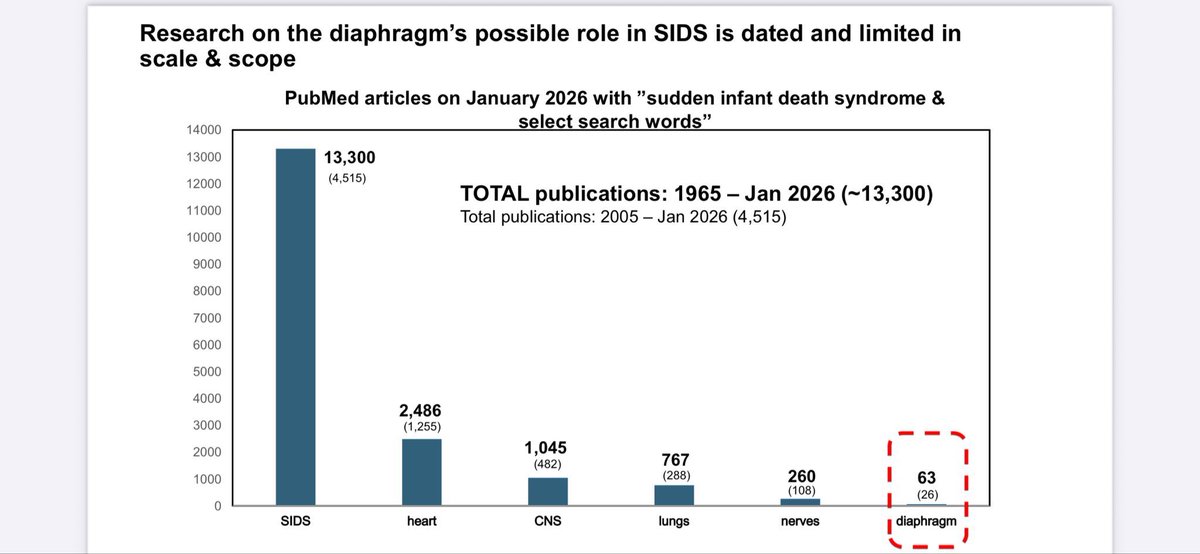
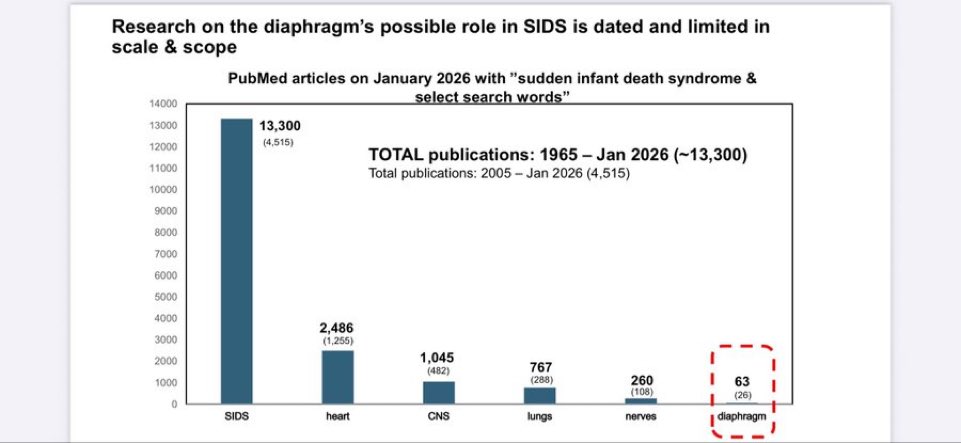
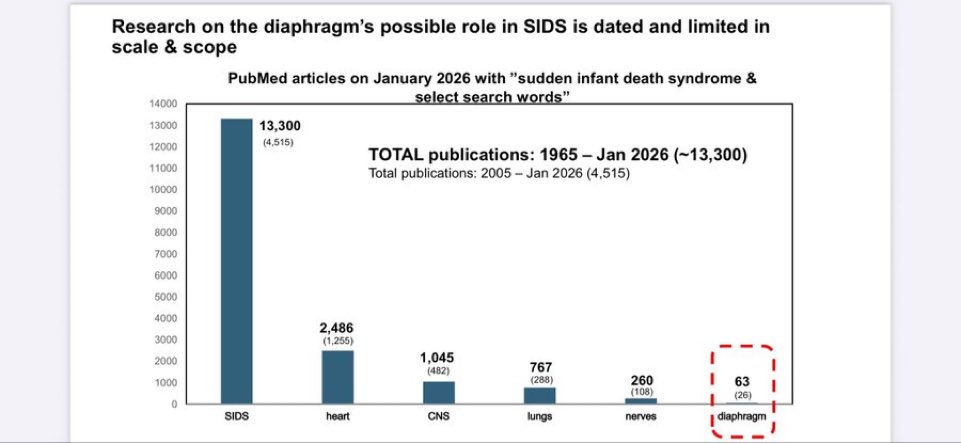
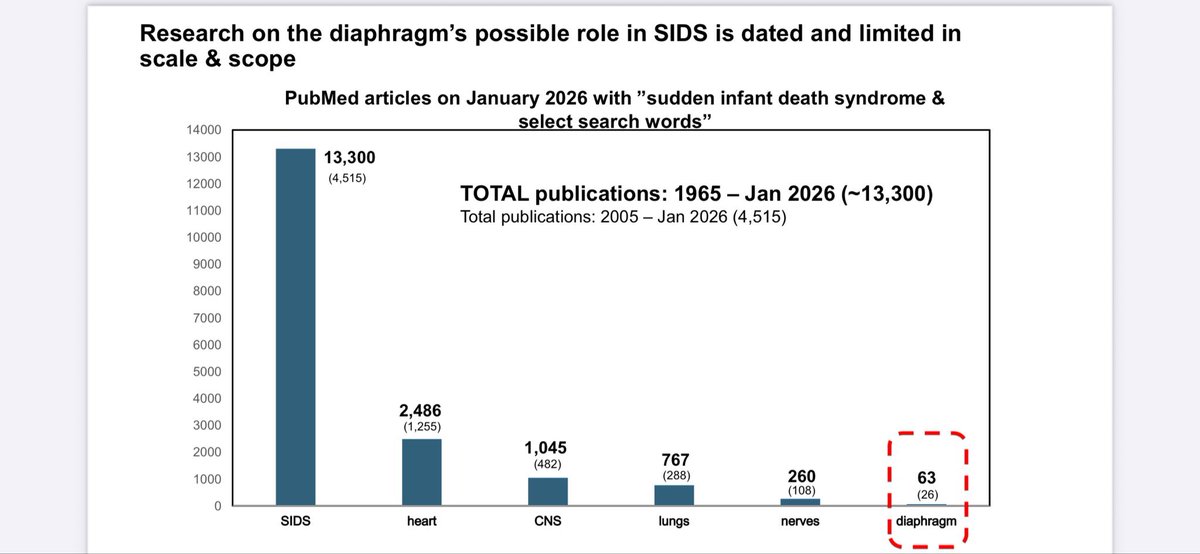
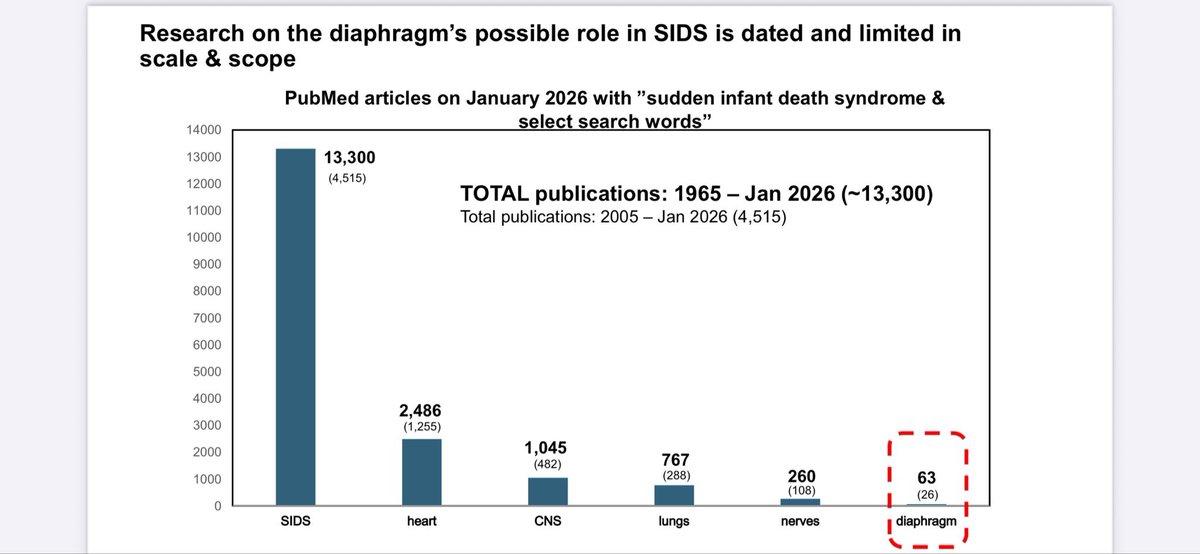
Publications since 2011 (see Siren PM, & SIDS, PubMed) have examined the effects of 15 diverse SIDS risk factors on diaphragm function. These risk factors can increase the risk of diaphragm fatigue, either by increasing its workload or by reducing the force generation capacity (See Siren PM, 2011, 2013, 2016, 2017, 2022, 2026). The combined effect of multiple concurrently arising risk factors on diaphragm function has not been modeled or clinically investigated. The SIDS-Critical Diaphragm Failure hypothesis argues that the diaphragm should be investigated, if only to rule it out as a contributing/ causative factor in SIDS. As an amateur without formal training in medicine or associated fields, for the past 15 years I have focused on raising awareness of this potentially consequential blind spot with medical&associated professionals. . .
English
27
48
631
2.1M
Nauman Farooq
Nauman Farooq@NaumanF41863·
@SirenPontus Interesting idea, but extraordinary medical claims need strong evidence, not enthusiasm. Real progress comes from rigorous research and peer review, not crowdsourced validation or bypassing scientific standards.
English
2
0
20
3.7K
Eval VX
Eval VX@richpeaceEO·
@SirenPontus fair take, at least opens a new angle worth stress testing
English
1
0
3
1.3K
♡Jess°•
♡Jess°•@jessikinha2021·
@SirenPontus Interesting hypothesis. The diaphragm’s role in SIDS is definitely worth exploring, but it would need strong clinical evidence and modeling to establish causation. Raising awareness is valuable—hopefully it encourages more rigorous research into this possible blind spot.
English
1
0
0
523