Siton Mining

51 posts

Siton Mining banner
Siton Mining

Siton Mining

@SitonMining

As an innovative leader in the global cryptocurrency mining industry, Siton Mining has continuously increased its technological innovation and research and dev

95 High Road, Benfleet, Englan Katılım Mayıs 2017
27 Takip Edilen15 Takipçiler
Siton Mining
Siton Mining@SitonMining·
Bitcoin in 2026: From $10K to $250K — where crypto bulls see BTC heading Remember when billionaire venture capitalist Chamath Palihapitiya made his $500,000 Bitcoin-by-October-2025 prediction on the All-In Podcast? Swing and a miss! After a string of high-profile forecasts proved inaccurate in 2025, confidence in Bitcoin “target-price narratives” has faded. Analysts now frame projections as scenario ranges, not promises. Still, that hasn’t stopped banks, CEOs, and veteran traders from publishing bold outlooks for Bitcoin’s next act. Wu Blockchain compiled the core conclusions behind these forecasts, revealing just how wide the disagreement is — from six-figure upside driven by ETFs and institutional demand to catastrophic downside tied to macro tightening and technical breakdowns. Below is a breakdown of where major voices think Bitcoin could land by 2026, and why. Tom Lee: $200,000–$250,000 BitMine chair Tom Lee has repeatedly argued that Bitcoin could reach $200,000–$250,000 by the end of 2026, driven by expanding institutional allocations and structural inflows from spot ETFs. He believes institutional participation may fundamentally alter Bitcoin’s traditional market cycles. That said, Fundstrat, which Lee co-founded, isn’t monolithic. Sean Farrell: $60,000–$65,000 Fundstrat’s Head of Digital Asset Strategy warned clients that a sharp pullback could occur in early 2026, with BTC potentially falling to $60,000–$65,000 before resuming higher. Farrell emphasized the difference in time horizons: Lee speaks to long-term, low-allocation institutional investors, while Farrell focuses on active, higher-risk crypto portfolios. Brad Garlinghouse: $180,000 and $100,000+ At Binance Blockchain Week in December 2025, Ripple CEO Brad Garlinghouse predicted Bitcoin could hit $180,000 by end-2026. Sharing the stage, Solana Foundation President Lily Liu offered a more conservative view, saying Bitcoin could trade above $100,000, while Binance CEO Richard Teng declined to give a number but said prices would be “higher than today.” JPMorgan: $170,000 (Model-Implied Ceiling) JPMorgan’s digital-assets team, led by Nikolaos Panigirtzoglou, pegs Bitcoin’s volatility-adjusted fair value near $170,000, using a BTC-to-gold relative valuation model. The New York-based investment bank frames this as a theoretical upper bound, not a year-end target, signaling upside potential over the next six to 12 months rather than a guaranteed destination. Standard Chartered: $150,000 (Down from $300K) Once among Bitcoin’s loudest bulls, Standard Chartered has dramatically cut its forecasts. The bank now expects BTC to reach $150,000 in 2026, roughly half its prior projection. The revision reflects slowing ETF inflows, fading demand catalysts, and broader market weakness. While the bank remains bullish long-term, it believes Bitcoin’s timeline has stretched. Bernstein: $150,000 Bernstein sees Bitcoin reaching $150,000 in 2026, driven by institutional capital and spot-ETF inflows. The firm believes Bitcoin is no longer bound by the traditional four-year halving cycle, instead entering an extended institutional bull phase. Longer-term, it maintains far more aggressive targets — including $1 million by 2033. BSTR President Katherine Dowling: $150,000 Katherine Dowling, president of Bitcoin reserve firm BSTR, expects BTC to climb to $150,000 by end-2026, citing three tailwinds: Clearer U.S. crypto regulation A shift toward looser monetary policy (rate cuts, end of QT) Growing Wall Street adoption of Bitcoin ETFs (1%–4% allocations) Citigroup: $143,000 (Base Case) Citi outlines three scenarios for a 62% upside from current levels near $88,000: Base case: $143,000 Bear case: ~$78,500 Bull case: ~$189,000 if institutional and retail demand accelerate The bank flags $70,000 as a key support level. Arthur Hayes: $124,000 to $200,000 Crypto trader Arthur Hayes, in his December 19 essay “Love Language,” says Bitcoin could break above roughly $124,000 in 2026 and further challenge the ~$200,000 level.

Siton Mining tweet media
English
0
0
0
53
Siton Mining
Siton Mining@SitonMining·
Top 4 reasons a crypto market bull run could be near A crypto market bull run may be on the way as Bitcoin and most altcoins continue their uptrend today, Nov. 27.  Bitcoin btc-0.2%Bitcoin price held steady, reaching a high of $91,345, its highest point since Nov. 20, and ~14% above the lowest point this month. Other altcoins, such as Ethereum eth-1.49%Ethereum and Dash dash-14.09%Dash, were also rising. Here are the top reasons why a new crypto market rally may be starting.  Fear and Greed Index rises One key reason why the crypto bull run may be around the corner is that the Fear and Greed Index has likely bottomed. It dropped to 8 on Saturday and has since rebounded to 18. A closer look at the chart below shows that most crypto market rallies begin in periods of panic. A good example of this is the panic that spread through the market after President Trump announced his reciprocal tariffs in April. These tariffs were a black swan event that led to a major panic among stock and crypto market traders, pushing the Fear and Greed Index to 17. The coin then rebounded and moved to a record high a month later. Wall Street analysts are bullish Another sign that a crypto market rally is about to happen is that top Wall Street analysts are highly bullish on the stock market. In a note on Wednesday, analysts at JPMorgan Private Bank boosted their S&P 500 Index forecast. They now expect that the index will jump by 20% by 2027. Other Wall Street analysts from companies like ING, Bank of America, Morgan Stanley, and Deutsche Bank are also optimistic about the stock market. A strong stock market bull run will likely spill over into the crypto industry, as both are often classified as risky assets. Futures open interest could bottom Another potential signal that a crypto market rally is about to happen is that futures open interest have plunged in the past few weeks. This crash is now about to end, a move that will boost crypto prices when it starts to rise. One reason for this is, as the chart below shows, is that the interest always rebounds after falling. For example, it dropped from $141 billion in December last year to $92 billion in March and then rebounded to over $225 billion in October. Federal Reserve interest rate cuts Meanwhile, the crypto market bull run will likely be boosted by the Federal Reserve, which is expected to maintain a highly dovish tone in the coming year. Polymarket odds of a rate cut in December have soared to 84%, while President Trump is considering Kevin Hassett as the next Federal Reserve chair. Odds of Hassett becoming the chair have jumped in the past few days. Hassett, unlike Jerome Powell, is more aligned with Trump and has expressed hopes that the bank should cut interest rates much more. As such, it will not be a surprise if rates move from the current 3.75% to 1%. This explains why US bond yields have dropped recently.
Siton Mining tweet media
English
2
0
0
71
Siton Mining
Siton Mining@SitonMining·
Crypto market perks up as Fed officials hint it’s cutting season A crypto market rally could be coming as a senior Federal Reserve official made the case for more interest rate cuts in the December meeting. Waller calls for more interest rate cuts A potential catalyst for the crypto market rally is the growing liklihood that the Federal Reserve will cut interest rates in the December meeting. These odds jumped to 70% on Polymarket after New York Fed’s John Williams supported a cut in a statement on Friday. In another statement on Monday, Federal Reserve Governor Christopher Waller indicated that he was advocating for a cut due to the ongoing labor market crisis and where the unemployment rate has risen recently: “My concern is mainly labor market, in terms of our dual mandate. So I’m advocating for a rate cut at the next meeting. You may see a more of a meeting-by-meeting approach once you get to January.” Another rate cut, combined with the end of quantitative tightening, will be bullish for the stock and crypto markets. Historically, these assets tend to do well during periods of easy monetary policy. However, the upcoming meeting will be notable as the rate decision will be determined by two officials. Already, some members, like Beth Hammack and Michael Barr, have voiced concerns about cuts, noting that inflation remains elevated. More catalysts for a crypto market rally There are some more bullish catalysts for a crypto market rally. First, the Crypto Fear and Greed Index has slumped to the extreme fear zone of 12, its lowest level this year. This view is also reflected in the negative headlines about crypto in mainstream publications like the New York Times and Bloomberg. Historically, this negative sentiment happens before a bull run starts, as the Fear and Greed chart below shows. Second, top whales have used this dip to accumulate. A good example of this is BitMine, which has continued to buy Bitcoin. Michael Saylor’s Strategy has also continued buying and now holds nearly 650k Bitcoins. Additionally, the crypto market rally could happen once leverage starts flowing back into the industry. One reason for the crypto crash has been the decline in open interest, which fell from $225 billion in September to $123 billion today. History shows that open interest usually rebounds after crashing.
Siton Mining tweet media
English
0
0
0
40
Siton Mining
Siton Mining@SitonMining·
Crypto Prices Rise as Trump Announces ‘At Least’ $2K Tariff Dividend Per American Cryptocurrency prices nudged higher after U.S. President Donald Trump said a direct tariff dividend of “at least” $2,000 will be paid out to most Americans. In a Truth Social post, Trump said the U.S. is generating “trillions of dollars” in tariffs and said the funds would both reduce the country’s $37 trillion national debt and finance the dividend. “A dividend of at least $2000 a person (not including high income people!) will be paid to everyone,” Trump wrote. The announcement helped cryptocurrency prices rise. Bitcoin  climbed 1.93% over the past 24 hours to trade above $103,000. Ether rose 4.75% to surpass $3,500, while solana gained 2.49% to top $160. The CoinDesk 20 (CD20) index rose more than 1.5%. The modest rally comes amid a broader weekly slump that saw the CD20 index plunge nearly 15% before it started to recover. Bitcoin is still down 5.7% for the week, while ETH s down 7.5%. Still, the reaction suggests traders may be pricing in the potential for higher consumer spending and crypto market inflows if and when these funds reach recipients. Key considerations While the news of the tariff dividend has generated excitement in the market, it is important to note that the payment is unlikely to happen immediately. The President alone cannot authorize or execute this payment, as federal spending decisions rest with the legislative branch and any plan to distribute funds collected from tariffs requires approval and appropriation by Congress, as Andy Constan, CEO and CIO of Damped Spring Advisors, pointed out X. To the dismay of the bulls, given the ongoing debates and legal challenges surrounding Trump’s tariffs, the prospect of swift Congressional action appears uncertain. Meanwhile, tax and budget experts have pointed out that the total amount of revenue generated from tariffs so far falls short of the funds needed to cover payments to the large number of eligible recipients. "The President just proposed a $2,000 tariff “dividend” for each person, excluding high-income earners. If the cutoff is $100,000, 150M adults would qualify, for a cost near $300 billion. If kids qualify, that grows. Only problem, new tariffs have raised $120 billion so far," Erica York, vice president of Federal Tax Policy, noted on X. She added that after accounting for the full budget impact of tariffs, the financial picture becomes less favorable. Every dollar raised through tariff revenue effectively offsets approximately 24 cents of income and payroll tax collections due to the broader economic effects on taxable income. After adjusting for this interaction, the net revenue generated by tariffs stands at around $90 billion—significantly less than the $300 billion proposed for the rebate program, York explained. This gap means Trump could face challenges in funding the $2,000 dividend solely from tariff revenues.
Siton Mining tweet media
English
0
0
1
69
Siton Mining
Siton Mining@SitonMining·
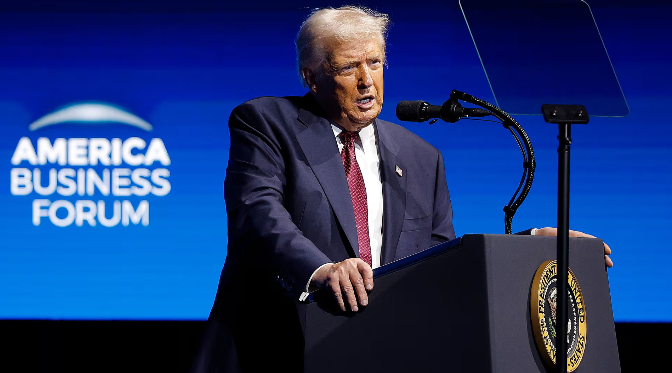
Trump Says He Wants U.S. to Be ‘The Bitcoin Superpower,’ Cites Competition From China In a Miami speech, the U.S. president said his orders ended a “war on crypto,” mentioned that crypto helps the dollar and warned China could gain if Washington stumbles. Speaking at 1 p.m. ET on Wednesday, day one of the two-day America Business Forum in Miami, Florida, President Donald J. Trump urged the United States to embrace crypto and sketched an ambition for U.S. leadership. “We are here … to embrace a vital industry here in Miami,” he said. Trump cast his administration as reversing hostility in Washington: “I’ve also signed historic executive orders to end the federal government’s war on crypto. Crypto was under siege. It’s not under siege anymore.” He argued the sector is sizable and backed by business leaders: “Because it’s a big industry. It’s a big industry, and I have a lot of people that are great people, great business people. They’re in other businesses, but they’re in crypto too.” He linked digital assets to the U.S. currency: “And it takes a lot of the pressure off the dollar. It does a lot of good things, but we’re into it.” He contrasted his stance with the prior administration: “Biden was vicious on crypto. They were going after these crypto guys. It was terrible. They were under indictment.” (Trump then digressed to his own legal battles, which were not about crypto.) Trump framed the goal as national leadership: “We’re making the United States the Bitcoin superpower, the crypto capital of the world,” and tied his tech message to AI by calling the U.S. “the undisputed leader in artificial intelligence.” Looking abroad, he warned of competitive pressure: “And don’t forget, if we don’t do the crypto properly, China … China wants to do it. They’re starting it, but they want to do it. Other countries want to do it. If we don’t do it properly — it’s a big industry.” His Miami remarks emphasized positioning over new specifics; he did not announce fresh timelines or agency directives. This year, the White House took steps consistent with that posture, including creating a Strategic Bitcoin Reserve and a U.S. Digital Asset Stockpile using coins obtained through federal seizures and forfeitures; however, there have been no government bitcoin purchases. A stablecoin framework advanced via the GENIUS Act, signed into law on July 18, while broader market-structure legislation continues to progress. Trump’s team has also rejected a U.S. central bank digital currency, presenting crypto policy as compatible with dollar primacy.
Siton Mining tweet media
English
0
0
0
44
Siton Mining
Siton Mining@SitonMining·
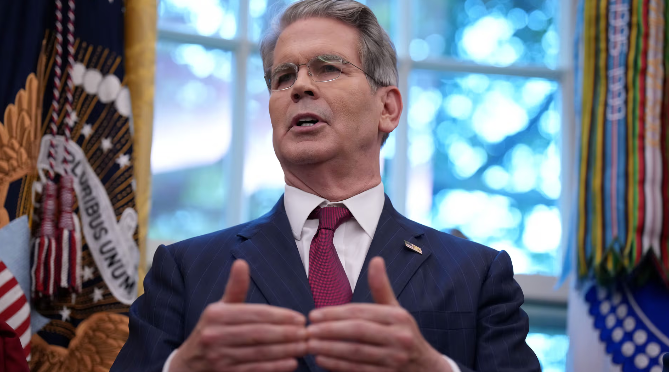
‘Bitcoin Never Shuts Down’: U.S. Treasury Secretary Marks Anniversary, Needles Democrats Scott Bessent marked the white paper’s anniversary by lauding bitcoin’s resilience and contrasting it with Washington gridlock, rekindling debate over Treasury’s crypto stance. U.S. Treasury Secretary Scott Bessent marked the 17th anniversary of the Bitcoin white paper on Friday with a post on X praising the network’s resilience and adding a jab at Senate Democrats, saying the system “never shuts down” and implying lawmakers could “learn something from that.” The comment doubled as a policy signal and a partisan elbow. Oct. 31 carries special weight in crypto. It is the date Satoshi Nakamoto released the nine-page Bitcoin white paper in 2008, the document that sketched a peer-to-peer electronic cash system and set the stage for a network that has run continuously since January 2009. Supporters use the anniversary to highlight bitcoin’s always-on design and its independence from any single operator. In July, following President Trump’s signature on the GENIUS Act, Bessent called stablecoins “a revolution in digital finance” and argued that an internet-native dollar rail could reinforce reserve-currency status while expanding access to dollar payments. Treasury published that statement on its website. In August, Bessent said on X that bitcoin forfeited to the U.S. would seed a Strategic Bitcoin Reserve and that Treasury would explore budget-neutral ways to add more, signaling interest in building holdings without new appropriations. Reaction to Friday’s post exposed familiar rifts inside crypto. Long-time Bitcoin Core developer Luke Dashjr pushed back, saying bitcoin is “weaker than ever,” a nod to disputes over recent software releases and what they mean for network purity. Researcher Eric Wall replied with sarcasm that “bitcoin died after the core v30 release,” poking at recurrent doom takes after upgrades. Investor Simon Dixon reframed Bessent’s line as a critique of currency policy, arguing that bitcoin’s point is protection from political debasement. Others pressed for policy action: trader Fred Krueger quipped that Treasury should buy for the Strategic Bitcoin Reserve, and digital-asset strategist Gabor Gurbacs urged putting bitcoin “on the balance sheet.” The replies split roughly into two camps — technical purists contesting blanket claims of resilience, and market participants pressing Treasury to turn rhetoric into acquisition policy. The political edge was sharpened by timing. The federal government has been in a partial shutdown since Oct. 1 after Congress missed fiscal 2026 appropriations, resulting in roughly 900,000 furloughs, about 2 million employees working without pay, and curtailed operations at agencies including the NIH and CDC. The episode is the 11th shutdown to curtail services and is described as the longest full shutdown on record. Read narrowly, Bessent’s post saluted a network that runs on weekends and holidays. Read politically, it contrasted bitcoin’s uptime with a Congress stuck on funding bills — another sign that the Treasury chief intends to keep digital assets in the policy conversation on Washington’s busiest days.
Siton Mining tweet media
English
0
0
0
52
Siton Mining
Siton Mining@SitonMining·
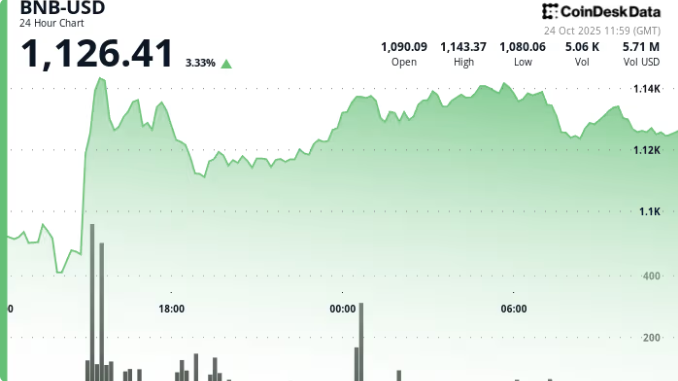
BNB Jumps, Sees 35% Volume Spike After Trump Pardons Binance Founder CZ Trading volume for BNB increased nearly 35% above its seven-day average, with market analysts suggesting the price movement reflects long-term accumulation. Binance Coin BNB$1,109.14 gained 3.3% in the last 24-hour period to trade at $1,126, outpacing broader crypto markets afterU.S. President Donald Trump issued a pardon for Changpeng Zhao, co-founder and former CEO of Binance. Zhao pleaded guilty in November 2023 to violating the Bank Secrecy Act and agreed to step down from the exchange he founded. The attempt to imprison him for three years drew criticism across the crypto industry, and ultimately Zhao served four months. In a statement, White House Press Secretary Karoline Leavitt characterized the prosecution under President Biden as a “war on cryptocurrency.” “We believe CZ’s pardon is more than an inflection point for him personally, but also for BNB and potentially for Binance, paving the way for greater access to the US market,” said David Namdar, the CEO of CEA Industries, the largest publicly traded BNB treasury firm. “The fundamentals for BNB have never looked better in our opinion: a vast global user base, deep real-world adoption, and consistent utility across DeFi and CeFi alike,” he added. BNB’s rally was fueled by a spike in trading volume that jumped nearly 35% above its seven-day average, according to CoinDesk Research's technical analysis data model. In the rally, the token surged from $1,085.96 to $1,130.25 before meeting resistance between $1,140 and $1,143. Market data suggest the buying pressure was more likely accumulation than short-term speculation. Technically, the token appears to be consolidating. Short-term resistance at $1,128 has capped several intraday rallies, while support at $1,124 has held up despite multiple tests. Traders are watching to see whether BNB can break higher toward $1,150, or if a failure at current levels will send it back toward $1,078.
Siton Mining tweet media
English
0
0
0
34
Siton Mining
Siton Mining@SitonMining·
BTC, ETH, XRP rebound amid signs of easing U.S.-China trade tensions Crypto prices today are stabilizing after a volatile weekend marked by a significant decline and shifting macro sentiment. The global cryptocurrency market added 3% in the past 24 hours to reach $3.8 trillion, recovering from last weekend’s flash crash that caused over $20 billion in liquidations. Bitcoin climbed 1.2% to trade above $110,000, while Ethereum gained 2% to $4,041 after dipping to near $3,700. BNB, XRP, and Solana each rose between 1% and 2%. Despite the rebound, sentiment remains cautious. The Crypto Fear & Greed Index is unchanged at 29, signaling “fear.” According to CoinGlass data, liquidations surged to $440 million,up 209% from the previous day, as leveraged traders faced renewed volatility. Total open interest rose 3% to $152 billion, and the Altcoin Season Index sits at 39, reflecting a neutral trend. Easing trade tensions spark market recovery A key reason behind today’s market rebound is confirmation that senior Chinese officials will meet with U.S. representatives this week to resolve trade issues ahead of the APEC Summit in South Korea. The meeting was confirmed by Treasury Secretary Scott Bessent and Chinese state media. It comes as both countries exchange trade threats, raising fears of another round of tariffs. China has recently suggested it could restrict shipments of rare earth minerals to the U.S., a move that could disrupt key manufacturing sectors. The country also hinted it could retaliate against any new tariffs and said it no longer relies heavily on American chips. If the upcoming talks produce progress, analysts believe it could ease global uncertainty and renew demand for risk assets like Bitcoin and Ethereum. Short-term catalysts driving optimism Several near-term developments could sustain the recovery. The Federal Reserve’s Oct. 28–29 FOMC meeting is expected to deliver a 25 bps rate cut, already 95% priced in by futures markets. Lower rates typically weaken the dollar and support risk assets such as Bitcoin. Meanwhile, new spot and altcoin ETF filings, such as Solana and XRP proposals, whose approval dates are drawing near, are generating optimism. Analysts anticipate that approval will increase institutional capital and further strengthen the market. Three major trends are influencing the year’s last quarter, according to a recent Coinbase Institutional report. The company highlights growing stablecoin adoption, increased global liquidity, and a more defined policy direction. According to the report, stablecoin trading and issuance are at their highest levels this year, while the global money supply continues to expand. Together, these developments suggest a steadier outlook for crypto markets as monetary conditions loosen and institutional participation grows.
Siton Mining tweet media
English
0
0
0
46
Siton Mining
Siton Mining@SitonMining·
UK Lifts Retail Ban on Crypto ETNs, Paving Way for Investments From Pensions, ISAs The U.K. has ended its ban on crypto exchange-traded notes, letting retail investors hold bitcoin and ether ETNs tax-free in pension and ISA accounts. The U.K. officially lifted its multi-year retail ban on crypto exchange-traded notes (ETNs), saying the digital asset market has matured enough for individuals to invest through regulated products, even if investors will have to wait a little longer to add them to their portfolios. In a policy update Wednesday, the Financial Conduct Authority (FCA) confirmed that retail investors can now buy crypto ETNs (cETNs) listed on FCA-recognized exchanges, such as the London Stock Exchange (LSE). Crypto ETNs are exchange-traded debt notes that track bitcoin or ether prices without giving investors direct coin ownership. They fall under the umbrella of exchange-traded products (ETPs) that also includes exchange-traded funds (ETFs.) While global ETNs typically do not require physical backing, on the London Stock Exchange, crypto ETNs must be fully physically backed by underlying assets held by regulated custodians and cannot use leverage. While the ban officially lifted on Wednesday, there is a delay before retail investors will be able to add cETNs to their portfolios, which reports say is down to the FCA only starting to accept prospectuses for prospective products on Sept. 25. Crypto ETNs in ISAs and pensions The U.K. tax authority, HM Revenue & Customs, said in a policy paper published Wednesday that crypto ETNs can be held in stocks and shares Individual Savings Accounts (ISAs) and registered pension schemes — allowing investors to earn tax-free returns within those accounts. From April 6, 2026, cETNs will be reclassified as Innovative Finance ISA (IFISA) investments, though their tax advantages will remain unchanged. Officials said the shift reflects the government’s commitment to diversifying long-term savings options and integrating digital finance into mainstream investment structures. London Stock Exchange already lists crypto ETNs The London Stock Exchange already lists several crypto ETNs from issuers such as 21Shares, WisdomTree and ETC Group, previously available only to professional investors. These products can now be accessed by retail investors through regulated platforms. However, popular U.S.-listed spot crypto ETFs like BlackRock’s IBIT remain ineligible, as they trade in dollars on non-U.K. exchanges and are not recognized under FCA rules. Major ISA providers — including IG, AJ Bell, and Hargreaves Lansdown — are expected to review the policy before enabling cETNs on their platforms. The rollout is expected to be gradual as providers adapt compliance systems and custody arrangements.
Siton Mining tweet media
English
0
0
0
54
Siton Mining
Siton Mining@SitonMining·
Bitcoin Surges to Record High Above $125K After $3.2B in Spot BTC Inflows Bitcoin prices surged to a record high of over $125,000 on Sunday, extending weekly gains to 11%. The rally followed a massive demand for U.S.-listed spot exchange-traded funds (ETFs). which collectively registering a net inflow of $3.24 billion last week. This marks the second-largest weekly inflow on record, according to data provider SoSoValue. Other tokens such as XRP, ETH, SOL, DOGE followed BTC's lead, gaining 1% to 3% during the Asian hours. Haven demand BTC's rally arrives against the backdrop of a continued U.S. government shutdown, which analysts say has heightened safe-haven demand for the top cryptocurrency.Jeff Dorman, Chief Investment Officer of Arca, noted just before the shutdown began, "The only time I buy BTC is when society loses faith in governments and local banks. $BTC likely a good buy here ahead of yet another U.S. government shutdown." Beyond political uncertainty, experts point to significant macroeconomic factors driving the rally. Noelle Acheson, author of Crypto Is Macro Now newsletter, explained, "beyond the escalating risk of new conflicts, US inflation is more likely to increase than decrease, increased borrowing around the world will intensify currency concerns, and what’s good for gold is also good for BTC, especially since it is still woefully under-allocated." "Plus, the incoming rush of market support – lower rates, yield curve control and lots and lots of “money printing” – will boost global liquidity, which will seep into the riskier corners of institutional portfolios," she added. In short, BTC looks set to chalk up impressive gains during the seasonally bullish month of October. At the time of writing, the cryptocurrency was trading around $124,080, according to CoinDesk data.
Siton Mining tweet media
English
0
0
0
34
Siton Mining
Siton Mining@SitonMining·
Bitcoin Surges Above $123K, Nearing New Record as Bullish Q4 Sentiment Fuels Weeklong Rally This recent run has been fueled by institutional demand and a shifting macro environment. Bitcoin climbed to within close sight of new record high above $124,500, capping off a five-day rally that marks one of its strongest starts to October on record. Trading well below $110,000 last weekend, the crypto has climbed nearly 15% this week, including about 3% over the past 24 hours to the current $123,300. October has historically been a strong month for bitcoin, and this year appears to be no different as bullish sentiment returned in force heading into the fourth quarter. From July through September, bitcoin’s price largely stalled, trading in a narrow range and underperforming stocks and gold, which seemingly hit new records on a daily basis. But momentum has shifted. “This moment is different from previous ones,” said economist Noelle Acheson, author of the Crypto is Macro Now newsletter. In a post on X, Acheson pointed to a mix of strong institutional participation and broader macroeconomic drivers as new forces shaping this cycle. “In previous cycles we didn’t have this level of sustained global debasement,” she said, referencing the erosion of fiat currency value across major economies. Alongside that, she noted growing geopolitical uncertainty is encouraging a “gradual pivot away from the U.S. dollar towards global, hard assets,” with bitcoin positioned as a key beneficiary. While speculative enthusiasm is often part of crypto rallies, Acheson suggested this surge is being driven by deeper structural shifts — and could have staying power. This would be notably different from recent records in July and again in August, both of which were met violent selloffs. “FOMO is a strong force in the crypto asset world,” she said. “What looks like the beginning of a new momentum wave will be driven by factors new and old. And it will be boosted by a larger potential pool of investors.”
Siton Mining tweet media
English
0
0
1
31
Siton Mining
Siton Mining@SitonMining·
SEC's Bow to DoubleZero Carries Major Weight for Decentralized Infrastructure: Peirce The U.S. regulator's decision to give the project's token distributions a pass represents the right get-out-of-the-way approach, Commissioner Hester Peirce said. Even before the arrival of President Donald Trump and his crypto-friendly regulators, the U.S. Securities and Exchange Commission had a crypto advocate, Commissioner Hester Peirce, who contends that a decision this week to grant DoubleZero a so-called no-action letter represents the kind of space she's long been wanting to offer blockchain pursuits. The SEC staff agreed to the startup's request that the agency wouldn't pursue any registration complaints for tokens issued for the specific aims of DoubleZero's decentralized physical infrastructure network (DePIN). Commissioner Peirce suggested this open door for DePIN efforts keeps the SEC out of business it shouldn't be in. "Rather than relying on centralized corporate structures to coordinate activity, DePIN projects enlist participants to provide real-world capabilities, such as storage, telecommunications bandwidth, mapping, or energy, through open and distributed peer-to-peer networks," she said in a statement. The activity doesn't trigger the Supreme Court's Howey Test — the test that decides what falls within the SEC's jurisdiction — because such projects "allocate tokens as compensation for work performed or services rendered, rather than as investments with an expectation of profit from the entrepreneurial or managerial efforts of others." The SEC uses no-action letters to make it clear what activities it doesn't intend to pursue with enforcement actions, so a letter to a single firm can signal to an entire space what the agency's current posture is. But to reap the benefits, the activity has to stay strictly within the boundaries outlined in the SEC's letter. "The line between tokens and securities law is getting clearer," said Austin Federa, DoubleZero co-founder, in a statement to CoinDesk. "Founders who once spent countless hours (and legal dollars) on this question can now focus on building." DoubleZero sought to incentivize providers of infrastructure for network connectivity, such as large technology companies that control surplus fiber networks, by compensating them with tokens — in this case, the protocol's native 2Z. "Treating such tokens as securities would suppress the growth of networks of distributed providers of services," Peirce said. "Blockchain technology cannot reach its full potential if we force all activities into existing financial market regulatory frameworks." The agency's action drew praise from advocates of decentralized finance (DeFi)."No-Action Letters are one of the most pragmatic tools for navigating regulatory uncertainty in crypto, and the SEC's issuance of No-Action Letters shows that constructive engagement with regulators is possible,” said Amanda Tuminelli, executive director of the DeFi Education Fund, in a blog posting by the DoubleZero Foundation. The SEC has been pursuing an aggressive course of pro-crypto policy actions under Chairman Paul Atkins. Earlier this week, he said at a roundtable event in the agency's Washington headquarters that establishing clear rules for the digital assets sector is "job one" for the SEC. Before Atkins arrived, Peirce led the agency's crypto task force and was already working on policy statements to clarify the regulator's expectations for the industry.
Siton Mining tweet media
English
1
0
0
47
Siton Mining
Siton Mining@SitonMining·
Fed cuts rates, markets cheer — Bitcoin hedges the uncertainty The Federal Reserve cut rates by 25 basis points, lowering the target range to 4.0–4.25%. Powell said it was ‘another step toward a more neutral policy stance’ and that policy was ‘not on a preset course’ — framing the move as a temporary adjustment to shifting conditions rather than the start of a full pivot. But the move came with inflation running above target for more than four years straight — the longest stretch since the late 1990s. And according to the Fed’s own September 2025 projections, PCE inflation is expected to remain above 2% until 2028, while the federal funds rate is forecast to decline from 3.6% in 2025 to 3.1% in 2027. Normally, higher rates are used to tame persistent inflation, but the Fed is charting a path of loosening policy instead. From hawkish pledges to capitulation Only weeks earlier at Jackson Hole, Powell wrapped himself in hawkish feathers, pledging: “Come what may, we will not allow a one-time increase in the price level to become an ongoing inflation problem.” That was supposed to be a red line, yet Powell has erased it himself with this cut. He called it risk management, but in reality, it looks more like surrender. Of course, Powell defended the move, but the markets interpreted it as dovish, and risk assets surged. Excess liquidity masks real risk The credit market makes the absurdity blindingly obvious — junk debt trades like blue chips, as if risk had vanished. The U.S. high-yield spread — the extra yield investors demand to hold risky corporate debt instead of safe Treasuries — has collapsed to just 2.9%, near cycle lows, while CCC-rated junk debt, the riskiest tier, has fallen from 11.4% in April to only 7.9% today. Equity volatility remains muted: the Cboe Volatility Index (VIX) — Wall Street’s ‘fear gauge’ that tracks expected 30-day volatility in U.S. equities — is hovering near 16, well below its long-term average. Even the Fed’s own gauge confirms it: the Chicago Fed’s National Financial Conditions Index (NFCI) stands at –0.56, signaling liquidity conditions looser than historical norms. Institutions choose the Fed-independent hedge Since March 2021, when inflation first breached the Fed’s 2% target, U.S. equities have soared. The Wilshire 5000 — the index that tracks the entire stock market — currently carries a market capitalization of about $66 trillion, up nearly 65% over the period. But while equities have floated higher on Fed-supplied liquidity, Bitcoin has done even better, more than doubling in price over the same stretch — and unlike equities, Bitcoin’s appeal is anchored precisely in being outside the Fed’s orbit. Bitcoin jumped to $117,000 on Sep 18, immediately after the Fed’s cut, but then retraced, weighed down by profit-taking, futures liquidations, and heavy options positioning. According to Glassnode, Bitcoin options open interest has surged to a record 500,000 BTC, with the September 26 expiry set to be the largest in history, amplifying short-term volatility. Even as prices pulled back post-cut, institutional demand appeared resilient. Between September 18 and 22, Glassnode data shows that U.S. spot Bitcoin ETFs absorbed more than 7,000 BTC (nearly $850 million at prevailing prices). The result is that Fed’s uncertainty fuels more institutional activity — strengthening, not weakening, Bitcoin’s foothold. A house divided against itself Inside the Fed, the scene evokes the old warning — a house divided against itself cannot stand. September’s vote was the second meeting in a row without unanimous support, with seven of nineteen policymakers penciling in fewer cuts. The arrival of Stephen Miran on the Fed Board only added to the discord. A former strategist at Hudson Bay, an investment firm that traded FTX bankruptcy claims, Miran was the only governor who pushed for a sharper 0.5% cut. Although he failed to sway colleagues and Powell emphasized the committee acted with ‘a high degree of unity,’ the arrival of a policymaker with digital-asset experience and a bias toward looser liquidity conditions is unlikely to be without consequence. Powell himself admitted: “There are no risk-free paths now. It’s not incredibly obvious what to do.” This lack of clarity is a risk on its own — one market wouldn’t hesitate to read as uncertainty and exploit. In this light, decentralized alternatives appear far more credible, and Bitcoin offers the hedge investors need against both inflation and the politicization of monetary policy. And while Powell calibrates, investors are shifting toward assets that don’t live or die with every wobble of Fed policy choices.
Siton Mining tweet media
English
0
0
0
35
Siton Mining
Siton Mining@SitonMining·
XRP and DOGE ETFs Smash Records With $54.7M Combined Day-One Volume Spot exchange-traded funds (ETFs) tied to the payments-focused XRP and the top meme token, dogecoin , debuted in the U.S. on Thursday with a bang, drawing significant trading volume. The REX-Osprey XRP ETF, listed on Cboe under the ticker XRPR, registered a trading volume of $37.7 million, marking the largest debut volume of any ETF launch this year, according to data shared by Bloomberg senior ETF analyst Eric Balchunas. This first-day tally outpaced the previous record holder, Dan Ives’ Wedbush AI Revolution ETF (IVES), signaling strong investor appetite for alternative investment vehicles linked to coins beyond bitcoin BTC$116,927.16 and ether (ETH). XRP’s market capitalization recently surpassed that of traditional banking giant Citigroup. Furthermore, Ripple, the company behind XRP, which facilitates cross-border transactions, has applied for a banking license in the U.S. Traders also embraced the REX-Osprey Dogecoin ETF, ticker DOJE, which generated a first-day volume of $17 million. This placed DOJE among the top five ETF debuts of the year. DOJE’s strong performance is notable given Dogecoin’s reputation as a non-serious memecoin. The successful start to these two ETFs follows the Securities and Exchange Commission's decision to approve a new, streamlined listing standard for crypto ETFs, reducing approval times to about 75 days from 240 days.
Siton Mining tweet media
English
0
0
0
61
Siton Mining
Siton Mining@SitonMining·
‘Crypto’s Time Has Come’: SEC Chair Outlines Vision for On-Chain Markets and Agentic Finance U.S. SEC Chair Paul Atkins used an OECD speech in Paris to outline Project Crypto, promising clear rules for digital assets and urging global cooperation. U.S. SEC Chair Paul Atkins said crypto’s time has come, pledging to modernize the U.S. securities rulebook and expand “Project Crypto” to bring markets on-chain. Speaking in Paris on Sept. 10 at the OECD’s inaugural Roundtable on Global Financial Markets, Atkins said the SEC is shifting away from enforcement-driven policymaking and will provide clear rules for tokens, custody, and trading platforms. “Policy will no longer be set by ad hoc enforcement actions,” he said, calling the new approach “a golden age of financial innovation on U.S. soil.” ​Atkins said most tokens are not securities and promised bright-line rules for determining when crypto assets fall under SEC oversight. He said entrepreneurs must be able to raise capital on-chain without “endless legal uncertainty” and pledged a framework for platforms that integrate trading, lending, and staking under one license. Custody rules will also be updated to allow investors and intermediaries multiple options. The SEC chair said Project Crypto would clear the way for tokenized securities, new on-chain asset classes, and decentralized finance software, while ensuring investor protections. He also highlighted the potential for “super-app” trading platforms and stressed the importance of keeping innovation in the United States. Atkins first unveiled Project Crypto on July 31, 2025, in Washington, framing it as the SEC’s “north star” in supporting President Trump’s goal of making the U.S. the world’s crypto hub. His Paris remarks expanded on that agenda, outlining more details on custody, capital formation, and platform rules. Atkins’ remarks came two days after Nasdaq President Tal Cohen posted on LinkedIn that tokenization is an “extraordinary opportunity” for global markets. Cohen said Nasdaq had filed with the SEC to enable trading of tokenized securities, underscoring how major institutions are moving toward blockchain adoption. Beyond crypto, Atkins addressed foreign company listings, accounting standards, and European regulation. He raised concerns over “double materiality” in EU reporting laws, urged stable funding for the IASB, and said the SEC may revisit its 2007 decision to allow IFRS without reconciliation to U.S. GAAP if funding issues persist. The SEC chair also highlighted artificial intelligence as a force that could fundamentally reshape financial markets. He described a shift toward “agentic finance,” where autonomous AI systems could execute trades, allocate capital, and manage risk at speeds no human can match, with compliance embedded directly into their code. Such systems, he said, could deliver faster and cheaper markets while opening advanced strategies to a broader set of investors. Coupled with blockchain infrastructure, these tools could empower individuals, increase competition, and unlock new growth. Atkins cautioned, however, that regulators must provide “commonsense guardrails” without overreacting out of fear. He argued that on-chain capital markets and AI-driven finance are on the horizon, and that America must choose leadership to ensure the next generation of financial innovation takes root at home. Atkins concluded by saying regulators must strike a balance between innovation and investor protection. “Crypto’s time has come,” he said, adding that U.S. markets should lead the next wave of financial innovation rather than watching it unfold overseas.
Siton Mining tweet media
English
0
0
0
34
Siton Mining
Siton Mining@SitonMining·
‘Crypto’s Time Has Come’: SEC Chair Outlines Vision for On-Chain Markets and Agentic Finance U.S. SEC Chair Paul Atkins used an OECD speech in Paris to outline Project Crypto, promising clear rules for digital assets and urging global cooperation. U.S. SEC Chair Paul Atkins said crypto’s time has come, pledging to modernize the U.S. securities rulebook and expand “Project Crypto” to bring markets on-chain. Speaking in Paris on Sept. 10 at the OECD’s inaugural Roundtable on Global Financial Markets, Atkins said the SEC is shifting away from enforcement-driven policymaking and will provide clear rules for tokens, custody, and trading platforms. “Policy will no longer be set by ad hoc enforcement actions,” he said, calling the new approach “a golden age of financial innovation on U.S. soil.” ​Atkins said most tokens are not securities and promised bright-line rules for determining when crypto assets fall under SEC oversight. He said entrepreneurs must be able to raise capital on-chain without “endless legal uncertainty” and pledged a framework for platforms that integrate trading, lending, and staking under one license. Custody rules will also be updated to allow investors and intermediaries multiple options. The SEC chair said Project Crypto would clear the way for tokenized securities, new on-chain asset classes, and decentralized finance software, while ensuring investor protections. He also highlighted the potential for “super-app” trading platforms and stressed the importance of keeping innovation in the United States. Atkins first unveiled Project Crypto on July 31, 2025, in Washington, framing it as the SEC’s “north star” in supporting President Trump’s goal of making the U.S. the world’s crypto hub. His Paris remarks expanded on that agenda, outlining more details on custody, capital formation, and platform rules. Atkins’ remarks came two days after Nasdaq President Tal Cohen posted on LinkedIn that tokenization is an “extraordinary opportunity” for global markets. Cohen said Nasdaq had filed with the SEC to enable trading of tokenized securities, underscoring how major institutions are moving toward blockchain adoption. Beyond crypto, Atkins addressed foreign company listings, accounting standards, and European regulation. He raised concerns over “double materiality” in EU reporting laws, urged stable funding for the IASB, and said the SEC may revisit its 2007 decision to allow IFRS without reconciliation to U.S. GAAP if funding issues persist. The SEC chair also highlighted artificial intelligence as a force that could fundamentally reshape financial markets. He described a shift toward “agentic finance,” where autonomous AI systems could execute trades, allocate capital, and manage risk at speeds no human can match, with compliance embedded directly into their code. Such systems, he said, could deliver faster and cheaper markets while opening advanced strategies to a broader set of investors. Coupled with blockchain infrastructure, these tools could empower individuals, increase competition, and unlock new growth. Atkins cautioned, however, that regulators must provide “commonsense guardrails” without overreacting out of fear. He argued that on-chain capital markets and AI-driven finance are on the horizon, and that America must choose leadership to ensure the next generation of financial innovation takes root at home. Atkins concluded by saying regulators must strike a balance between innovation and investor protection. “Crypto’s time has come,” he said, adding that U.S. markets should lead the next wave of financial innovation rather than watching it unfold overseas.
Siton Mining tweet media
English
1
0
0
36
Siton Mining
Siton Mining@SitonMining·
DOGE Rallies 6% Ahead of Anticipated ETF Launch Analysts are watching if DOGE can maintain closes above $0.26 and approach the $0.29 resistance zone. Dogecoin surged nearly 6% to $0.261 in the past 24 hours as traders positioned for the scheduled debut of the first U.S. Dogecoin ETF on September 12. Anticipation of the “DOJE” product, coupled with whale accumulation exceeding 280 million DOGE, fueled heavy late-session flows with volume topping 1.1 billion. Analysts now focus on whether the token can sustain closes above $0.26 and build toward the $0.29–$0.30 resistance zone. News Background • The first U.S. Dogecoin ETF (ticker: DOJE) is scheduled to begin trading on September 12, representing the first exchange-traded product linked to a memecoin. • Large holders accumulated more than 280 million DOGE in the days leading up to the listing, signaling growing institutional participation. • Market technicians highlight a bullish pennant breakout on hourly charts, with upside targets extending to $0.28–$0.50 if momentum continues. Price Action Summary • DOGE gained 5.8% during the 24-hour period from September 11 at 03:00 to September 12 at 02:00, advancing from $0.246 to $0.261. • The session traded within a $0.019 band (7.6%), hitting a low of $0.245 and a high of $0.264. • Breakout momentum developed between 22:00–00:00, when DOGE cleared $0.253 resistance on volume exceeding 1.1 billion. • The final 60 minutes showed volatility, with a pullback from $0.264 to $0.261 (-0.76%), but support held near $0.260 after repeated tests. Technical Analysis • Support Levels: Firm base at $0.245–$0.246; renewed support observed at $0.260 during late-session retracements. • Resistance Zones: First rejection at $0.264 intraday, with broader targets identified at $0.29 and $0.50. • Volume Profile: Breakout volume surpassed 1.1 billion, nearly triple average levels, indicating institutional flows ahead of ETF debut. • Momentum Signals: Pennant breakout confirmed by higher lows and expanding volume; late dip reads as corrective rather than trend reversal. What Traders Are Watching • Can DOGE sustain closes above $0.26 and build toward the $0.29 resistance zone? • ETF launch on September 12 and whether secondary flows from brokers/institutional desks accelerate volatility. • Whale positioning after 280 million DOGE accumulated in the past week. • Options activity around $0.30 strikes that could drive gamma volatility into expiries.
Siton Mining tweet media
English
0
0
0
114
Siton Mining
Siton Mining@SitonMining·
Bitcoin Illiquid Supply Hits Record 14.3M as Long-Term Holders Continue to Accumulate Despite a 15% decline from August’s all-time high, illiquid holdings continue to grow. Bitcoin’s illiquid supply—the portion of coins held by entities with little history of spending—has climbed to a new record high, surpassing 14.3 million BTC in late August, according to Glassnode. ​With 19.9 million BTC currently in circulation, around 72% of the total supply is now illiquid, held by entities such as long-term holders and cold storage investors. This growth highlights a sustained accumulation trend, even during recent market volatility. In mid-August, bitcoin hit an all-time high of $124,000 before retreating roughly 15%. Despite the price pullback, the illiquid supply continued to rise, showing that holders remain undeterred by short-term corrections. Over the past 30 days alone, the net change in illiquid supply has increased by 20,000 BTC, underscoring persistent investor conviction. The ongoing increase in this category suggests tightening supply dynamics that could set the stage for renewed momentum once sentiment recovers. For now, the trend reflects growing confidence in bitcoin as a long-term store of value.
Siton Mining tweet media
English
0
0
0
29
Siton Mining
Siton Mining@SitonMining·
SEC, CFTC Chiefs Say Crypto Turf Wars Over as Agencies Move Ahead on Joint Work Paul Atkins and Caroline Pham presented a united front when discussing future regulatory moves by their two agencies during a call on Friday. The U.S. Securities and Exchange Commission (SEC) and Commodity Futures Trading Commission (CFTC) plan to hold a joint roundtable as a next step in their efforts to make the U.S. markets friendlier to financial firms, including crypto businesses. The heads of the agencies — SEC Chair Paul Atkins and Acting CFTC Chair Caroline Pham — announced a joint roundtable for later this month to discuss prediction markets, decentralized finance and 24/7 trading in traditional financial markets, among other issues. The agencies also published a joint statement outlining their push for "greater harmonization" between the two agencies. "It's time to leave turf aside and really collaborate," Atkins said during a press call on Friday morning. During the previous administration, the two agencies were sometimes at odds over the policing of crypto, even though their leaders were both Democrats appointed by former President Joe Biden. Gary Gensler, the ex-chief of the SEC, set himself up as a crypto antagonist, taking companies to court and refusing to move forward on comprehensive crypto regulations, while then-CFTC Chairman Rostin Behnam was marginally more open to conversations with the industry. For instance, the two agencies adopted distinct positions on which crypto assets were securities and which were commodities, including Ethereum's ETH, which both seemed to claim under their jurisdictions at different times. In the Friday call, Atkins and Pham presented a new united front, as the two said they're trying to bring innovators back from overseas jurisdictions and get set to oversee modern, round-the-clock markets. 'Maximum productivity' Asked by CoinDesk whether the regulator had the resources to police 24/7 trading, as the agencies suggested in their joint statement, Atkins pointed to self-regulatory organizations as the entities that would take on the bulk of the work. "It's the markets themselves, the SROs that are charged with looking at the trading on their own platforms," he said. "And so obviously, then we have other ways that we track what's going on and [we] depend on their alerting us." Atkins threw a follow-up question about a possible SRO for the crypto industry to Congress, saying the agency was involved in the market structure legislation currently advancing through the legislature. Pham, who's overseen the CFTC while the Senate mulls President Donald Trump's nominee Brian Quintenz, said the agency did not need additional staffing to continue its mandate of overseeing non-securities markets. ​"By consolidating many of the activities at the agency, we're actually better able to have the maximum productivity and capacity available," she said. "We are doing great with all of our initiatives, and we look forward to continuing to work on this together with the SEC."
Siton Mining tweet media
English
1
0
0
57
Siton Mining
Siton Mining@SitonMining·
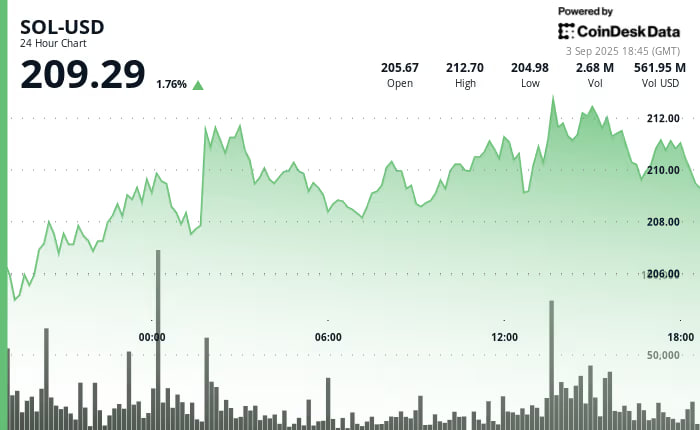
Solana Outperforms Bitcoin; Possibly Poised to Follow Ether's Recent 200% Rally, Says Analyst SOL is the "most obvious long right now," fueled by up to $2.6 billion demand from crypto vehicles in the next month, Arca CIO Jeff Dorman said. With bitcoin stuck just above $110,000 and ether (ETH) consolidating after hitting fresh records, Solana has emerged as a standout performer in the crypto market recently. The token traded around $211 on Monday, up 33% from early August lows, making it one of the best performers in the CoinDesk 20 Index in the past month. Against bitcoin, SOL has gained 34% over the past month, and it has strengthened 14% versus ETH since mid-August. The rally reflects a broader rotation into altcoins, analysts said. "The season of profit redistribution among holders of cryptocurrencies continues,” Sergei Gorev, head of risk at YouHodler, said in a market note shared with CoinDesk. He said liquidity has been moving out of BTC into second-tier tokens, with "a noticeable increase in the positive dynamics in capital flows to SOL." Such flows could be long-term as corporate investors look for large, liquid projects to hold, Gorev added, naming SOL alongside with XRP as the "next interesting market ideas." Jeff Dorman, chief investment officer at Arca, tipped SOL to replicate ether’s turnaround earlier this year. He pointed to Ethereum’s resurgence after stablecoin adoption, strong ETF inflows and the relentless bid from digital asset treasuries, or DATs, helped ETH rally nearly 200% since April. "SOL appears poised to repeat the exact same playbook that ETH just executed in the coming months," Dorman wrote in a fresh report. The first U.S.-listed Solana ETF launched in July, but it was futures-based. Several asset managers, including VanEck and Fidelity, have filed for spot products with decisions due later this year, Dorman said. Meanwhile, at least three Solana-focused DATs are raising funds that could channel up to $2.65 billion into SOL over the next month, he added. At only one-fifth of ETH's market capitalization, SOL's price could be even more reactive to the flows if they materialize. "SOL might be the most obvious long right now," Dorman said. "If the price of ETH rose almost 200% on roughly $20 billion of new demand, what do you think happens to SOL on $2.5 billion or more of new demand?" Recent news could also add to the momentum. Nasdaq-listed digital asset conglomerate Galaxy Digital tokenized its shares on Solana, while the approval of the Alpenglow upgrade promises to improve transaction speed and finality.
Siton Mining tweet media
English
1
0
0
43