@RutgersAltRoute A:5. The teacher/school must provide students with the resources needed such as counseling and administrative assistance to help. If that isn’t enough, teachers must encourage parents and family to reach outside the school for support
Students can bully others, they can be bullied, or they may witness bullying. For our final question, think about the social and emotional needs of those involved in bullying #TeacherEd#SafeSchools
@RutgersAltRoute A:4 Two major impacts of HIB are threats to physical safety and a major disruption of the learning environment. Lesser impacts are the legality hassles and the impact on job satisfaction for the teacher burdened with HIB issues.
Reflect on your knowledge and understanding of harassment, intimidation, and bullying (HIB) from course readings and your experience to respond to Question 4 #TeacherEd#SafeSchools
@RutgersAltRoute You can build community with your families, you can adapt each class to fit the needs of a diverse class. The teacher can develop a culture where students feel supported and respected. Also, the teachers can collaborate with each other during meetings to discuss what is working
During last Saturday's #EdTech chat, it was noted that technology can foster collaboration. For Question 3, share your practices (high-tech and low-tech) for collaborating with families and colleagues to create a safe learning environment for all students #TeacherEd#SafeSchools
@RutgersAltRoute Again, I think setting clear expectations for not only the work being done, but also the behavior of each and every student is important in mitigating all forms of bullying. When incidents do occur, the teacher is responsible for quickly putting an end to the behavior and mettti
For Question 2, reflect on the materials you’ve read and your professional experience. Consider sharing factors that may be specific to your content area and grade level #TeacherEd#SafeSchools
@RutgersAltRoute Mutual respect amongst all students and the teacher is paramount. Also, setting clear expectations for each and every day help ensure whatever you are "practicing" will be much easier.
To start us off, here's Question 1! When considering your "practices", you can think about your classroom management, curriculum, instructional practices, the academic/social/emotional skills you teach, and the physical/virtual space of your classroom #TeacherEd#SafeSchools
@RutgersAltRoute A5: Allowing students the opportunity to get it right is an important step. Students can be redirected to get it right, but in the long run it's the learning, not necessarily the score on the test
This morning's 5th and final Q is on assessment #TeacherEd#GrowthMindset
“You can enhance or destroy students’ desire to succeed in school more quickly and permanently through your use of assessment than with any other tool you have at your disposal.” – Dr. Rick Stiggins
@RutgersAltRoute Set the students up for success. If a teacher can direct the questions tailored to the "sweet spot" of a student, then the student will be have greater success. And, at the very least, even if the questions aren't answered perfectly, the student will feel better about the class
For Q2, consider the expectations you communicate to students (verbal and nonverbal) through your classroom climate, course material & response opportunities #TeacherEd#GrowthMindset
Tip: Be specific to your content & connect with others using a # like #ArtsEd#litchat#scichat
Teachers have the power to influence the mindset of students.
As you answer #TeacherEd#GrowthMindset Question 1, consider your own experience, readings, and what Carol Dweck refers to as the power of “yet” (youtu.be/hiiEeMN7vbQ?si…)
Good morning!
⚠️This is a friendly warning about our upcoming high tweet volume. We're hosting a chat at 10AM (EST). You're welcome to join us #TeacherEd#GrowthMindset
@RutgersAltRoute A5: one of my colleagues here (Victor I think)used the word "collaboration" in terms of Admin, guidance, staff etc. I think the more collaboration takes place the better the program. Often, the right hand doesn't know what the left is doing in terms of special ed. There has t
Teachers play a role in helping students learn and practice self-awareness skills and communicate their understanding.
For Q4 think about what you’ve done or ideas you’d like to implement to help students be self-advocates, agents of their own success #TeacherEd#SpecialEd
@RutgersAltRoute A3: Personally getting to know each of your students (provided the class size allows) will allow the teacher to better tailor the assignments and/or assessments to each student.
For Q3 be specific content area & how you support student success, for example, your classroom environment, assignments, and assessments #TeacherEd#SpecialEd
Tip: To connect with our teachers in your subject area, use the # for your content area, i.e #arted#mathchat#scichat
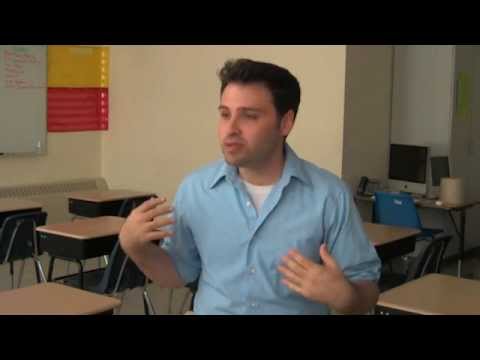
Dr. Jonas Bromberg & teacher Jon Weinberger discuss classroom strategies to support students with ADHD (youtube.com/watch?v=Dd62-e…) like providing fidget tools and offering checklists.
For Question 2 (Q2) consider what's worked or ideas you want to try #TeacherEd#SpecialEd
For Question 1 (Q1), reflect on your experience and current practices for creating an inclusive learning environment for students with learning disabilities. #TeacherEd#SpecialEd
@RutgersAltRoute A1. Students are grouped based on grade level, not learning disability. A challenge is meeting the diverse learning needs of a group with different learners.