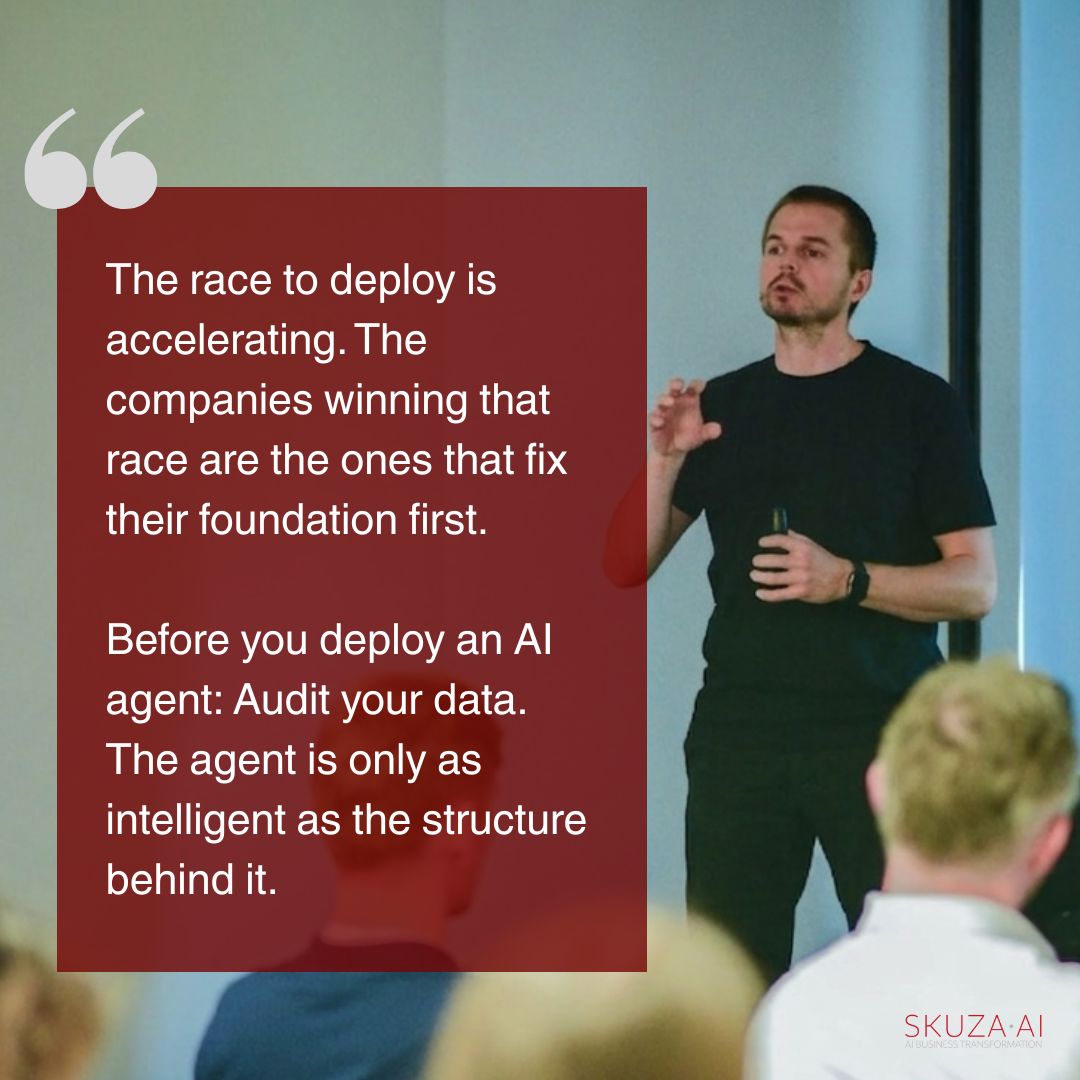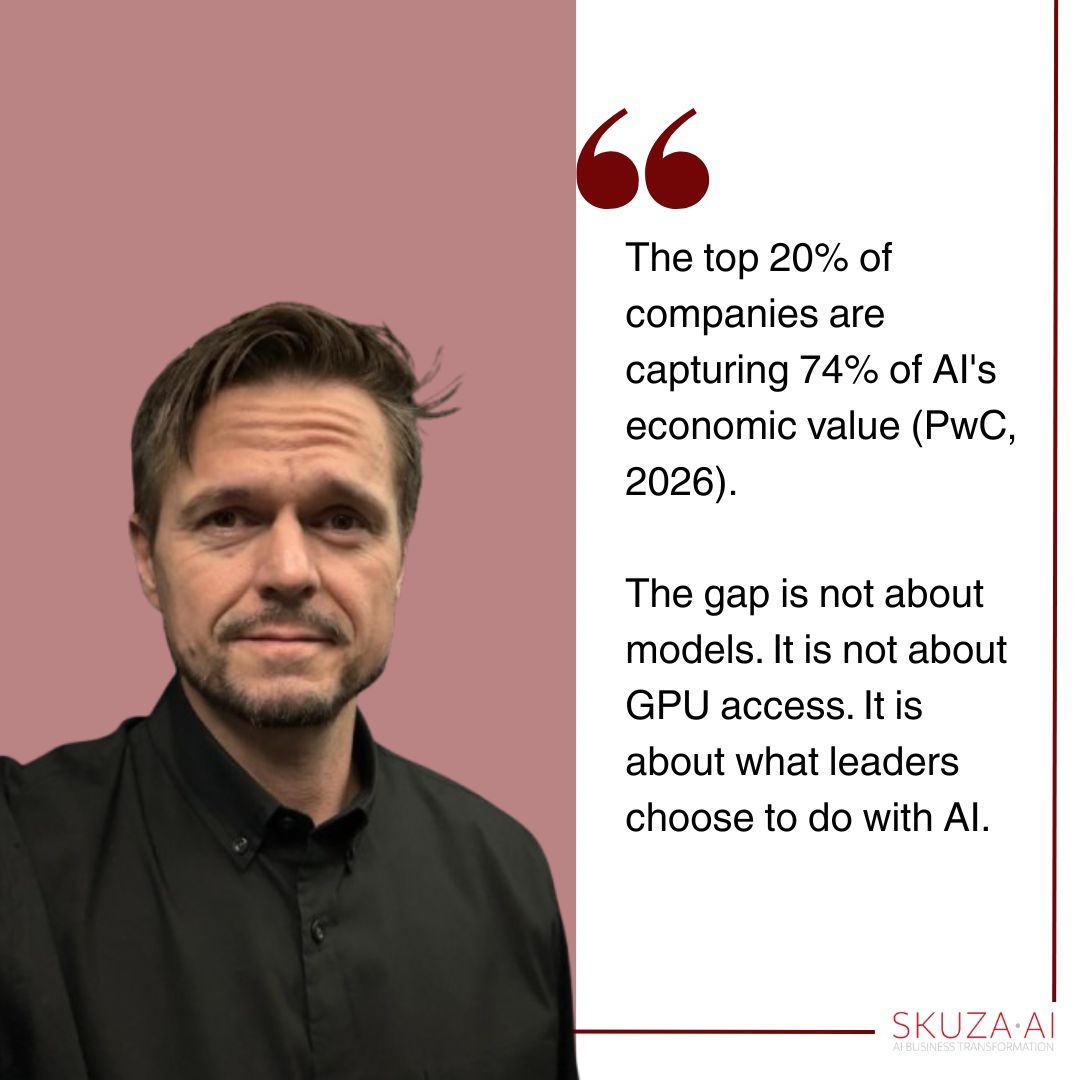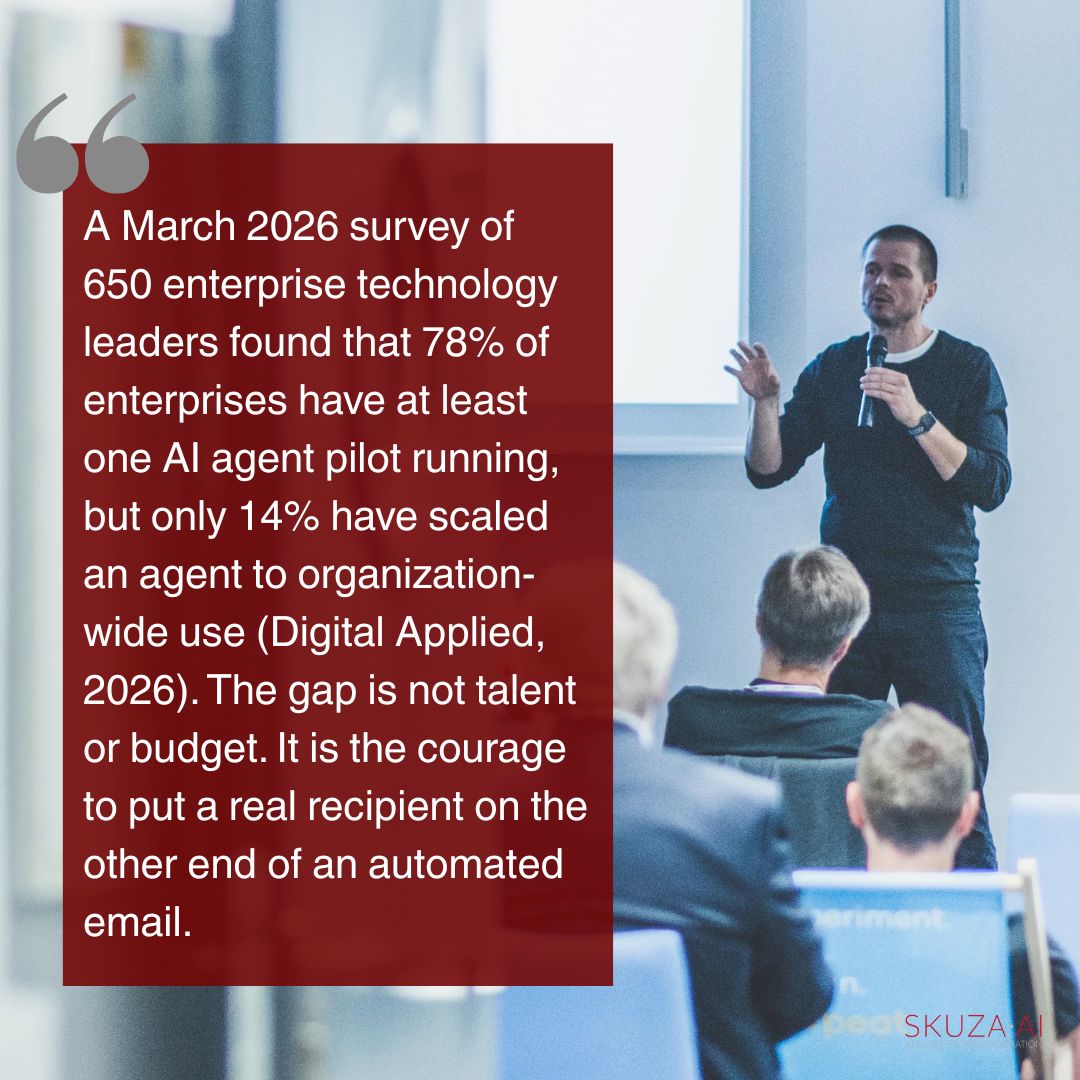

Most companies are running AI pilots that will never grow to scale.
In McKinsey's "The State of AI in 2025" report, 88% of organizations now use AI in at least one business function (McKinsey, 2025).
Yet, according to McKinsey's "Superagency in the Workplace" report, while most leaders report that their companies are investing in AI, only 1% say their development is "mature," meaning that AI is fully integrated into workflows and delivering measurable business impact (McKinsey, 2025).
The rest are stuck in "pilot purgatory." They're running demos, have proof of concepts, and ChatGPT licenses, without moving the needle on real business outcomes.
According to McKinsey’s "The State of AI in 2025" report, less than 40% have scaled AI beyond a single department or experiment (McKinsey, 2025).
And with Gartner predicting that 40% of enterprise apps will feature task-specific AI agents by the end of 2026, the pressure to get this right is only increasing (Gartner, 2025).
However, Gartner also warns that more than 40% of agentic AI projects are expected to be canceled by 2027 — not because the technology failed, but because of unclear business value propositions, increasing costs, and inadequate risk controls (Gartner, 2025).
What separates the 1% who actually reach maturity from the rest is that they first tackle the process, not the technology. They measure ROI within 30-90 days with real numbers, not theoretical efficiency gains. They redesign workflows around AI, rather than dropping a tool into a broken process.
Closing the gap doesn't require access to better tools. It's about strategy, workflow design, and knowing what you're actually trying to achieve.
English