SlashData

2.1K posts

SlashData banner
SlashData

SlashData

@SlashDataHQ

AI Analysts & Developer Research We look at the data to uncover trends and insights, so Tech leaders can navigate tech decisions with confidence & clarity.

Online Katılım Temmuz 2008
3K Takip Edilen8.1K Takipçiler
SlashData
SlashData@SlashDataHQ·
DevOps: Lack of standardisation is connected to less security What we found: Organisations without DevOps standardisation show between two and three times lower rates of integrating security practices into their CI/CD pipelines Source: Impact of Platform Strategies on Security Practices in Software Development - slashdata.co/devops-dei/imp… This report examines the security practices that developers integrate into their CI/CD pipelines, with a particular focus on how platform standardisation approaches influence which security tools see adoption and success. In this report, platform standardisation refers to organisation-wide standardisation strategies for DevOps practices, and we categorise platform configurations into five distinct groups: specialised internal developer platforms (IDPs), dedicated teams or individuals responsible for developer experience, unified systems for managing DevOps processes, curated lists of approved tools, and organisations engaging in none of these approaches. The findings are based on data from SlashData’s 30th edition of the Developer Nation survey and represents the adoption patterns of more than 4,700 professional developers using CI/CD pipelines. #DevOps #CICD
English
0
0
1
41
SlashData
SlashData@SlashDataHQ·
Agentic AI in software projects (full report free to access) What we found: Agentic AI is moving beyond the experimental stage. Of those integrating AI into their applications, half have already deployed agentic AI architectures to production Source: The state of agentic AI adoption in software projects - slashdata.co/free-industry-… Agentic AI is emerging as one of the most transformative shifts in how companies design and deploy intelligent systems. This mini-report analyses insights from over 8,400 professional developers to help CTOs and engineering leaders navigate the rapidly evolving agentic AI landscape and make informed architecture and use case decisions. We’ll explore how the implementation of agentic AI varies by company size and project type as well as looking at the types of agentic architectures that are being deployed to production, along with the use cases developers are targeting.
SlashData tweet media
English
0
0
0
30
SlashData
SlashData@SlashDataHQ·
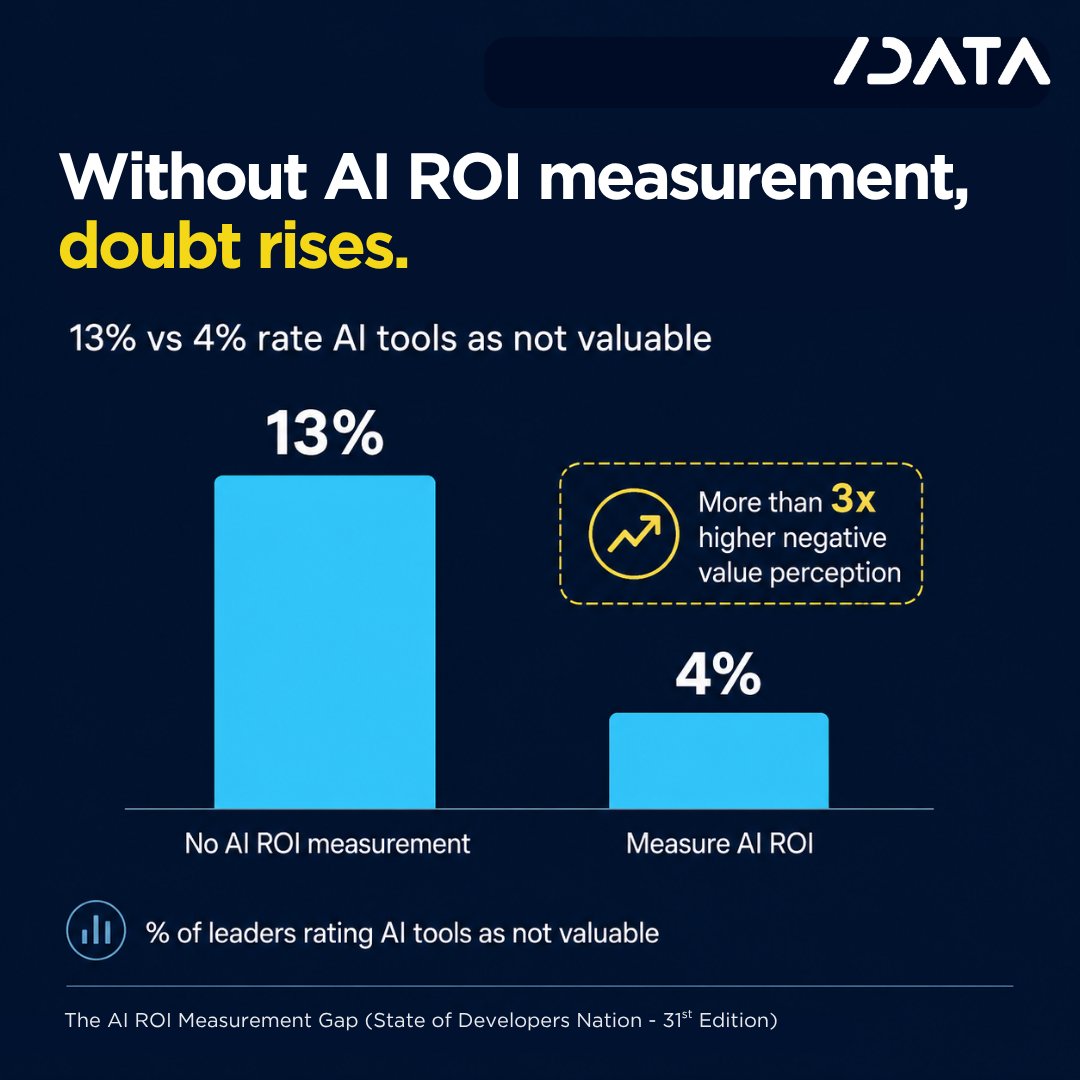
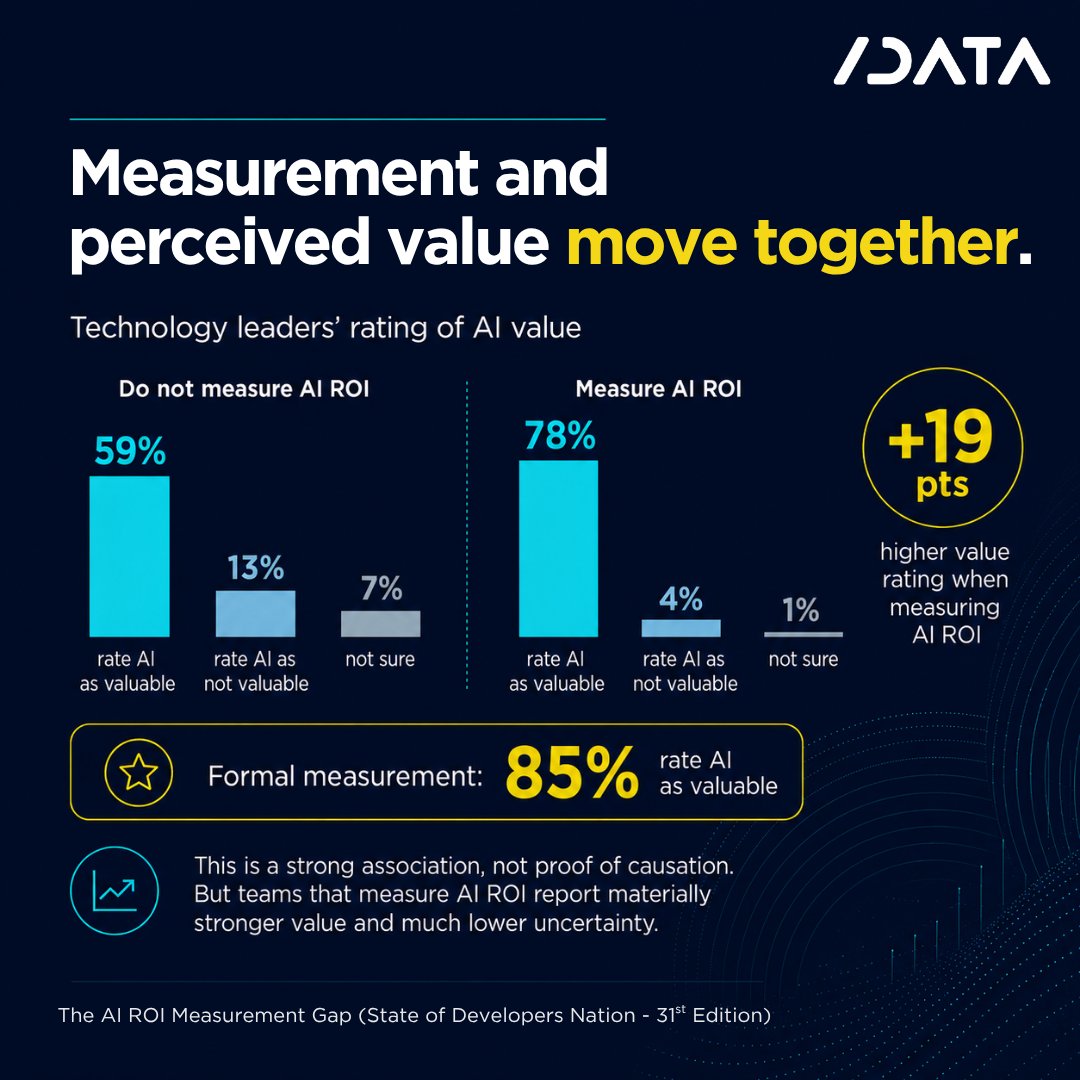
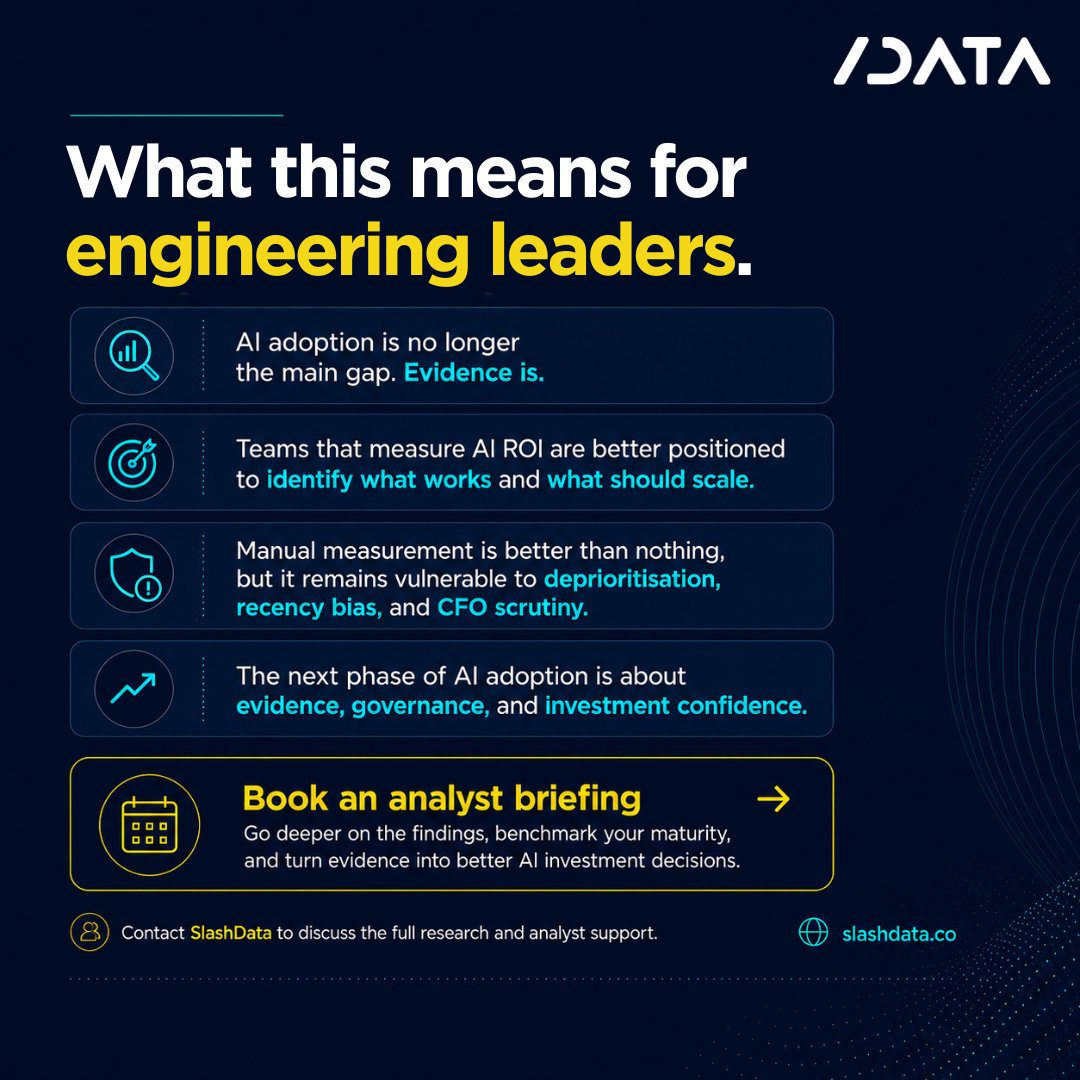
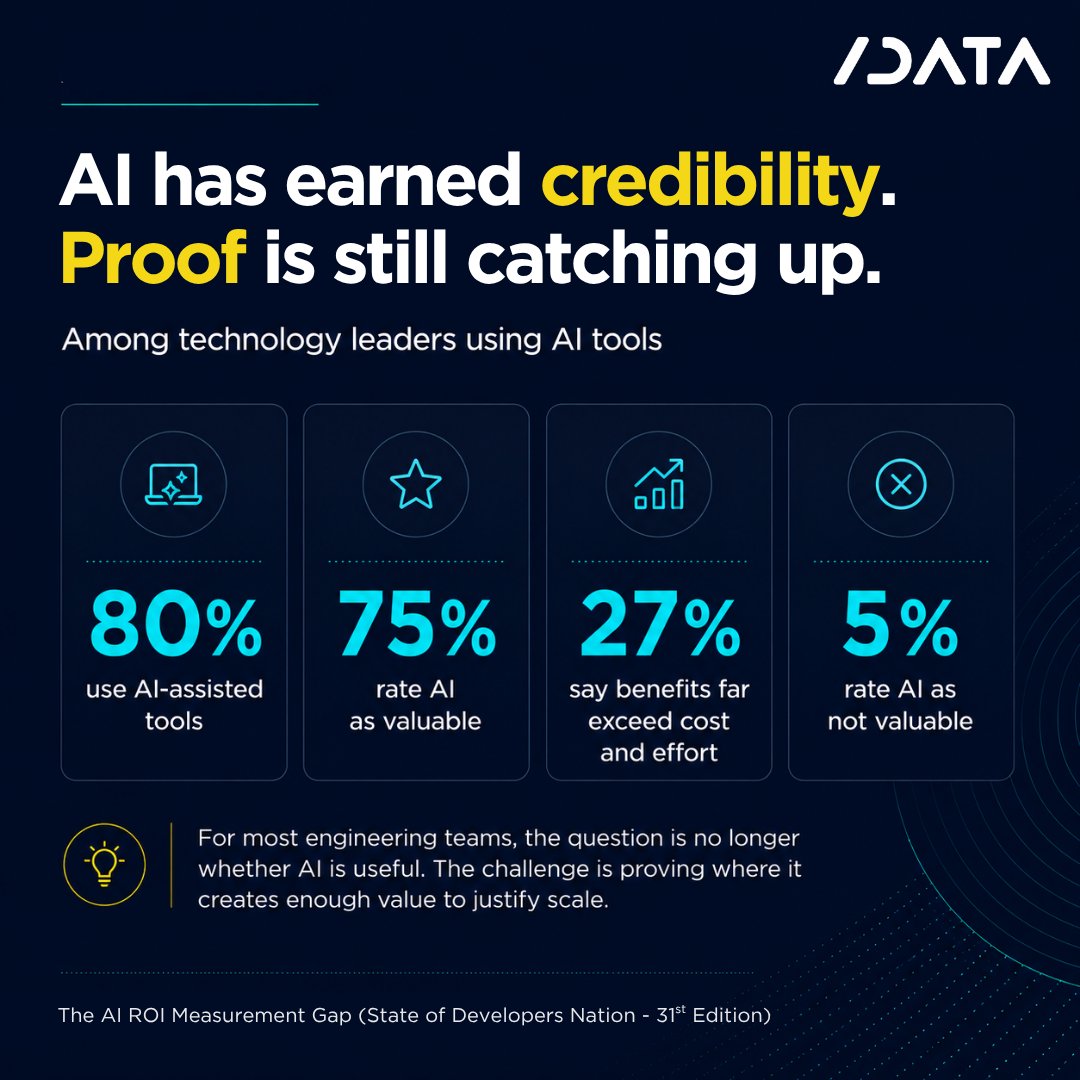
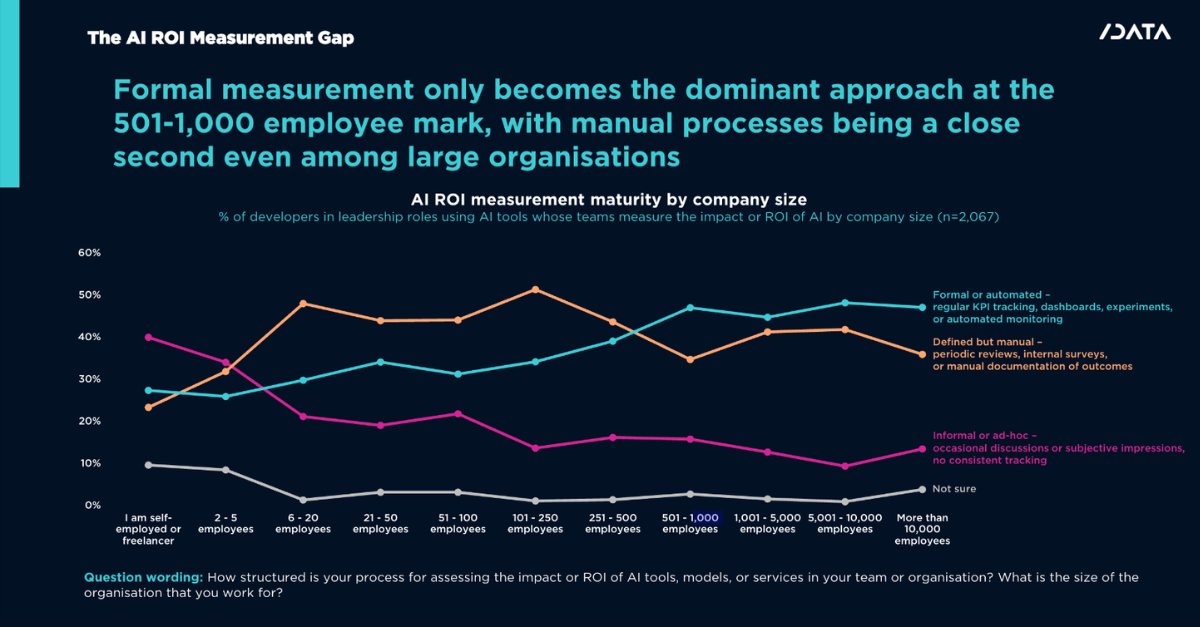
Updated because we have NEW data! Join us on March 31st to view our new Q2 2026 data on AI usage and measuring AI ROI. + Live Q&A Save your seat: luma.com/u7sm5z8j Sourced through an independent, global survey on 2,000+ and 8,000+ professional developer responses. What Bleona Bicaj will present: What we will cover in this webinar session: 1. AI usage - How developers are interacting with AI technologies in Q1 2026 - Trends on developers' interaction with AI technologies 2. AI ROI - Do senior engineering leaders believe AI coding tools are worth the investment? - Are organisations actually tracking whether AI tools deliver, or relying on instinct? - Among measurers, how structured is that process – and does "we measure it" mean anything consistent across the market? - How does measurement maturity differ between different company sizes? 3. Introducing: AI Developer Tools Benchmark We know that choosing the right AI developer tool, or making the case for one internally, is harder than it should be. There's a lot of noise, a lot of vendor claims, and not enough independent signal. That's exactly why we built the AI Developer Tools Benchmark. It is a rigorous, survey-based study that gives engineering leaders and product teams a clear, comparable view of how today's leading AI coding tools actually perform: across productivity, trust, quality, and value. Real data from real developers so that you can make decisions with confidence.
SlashData tweet media
English
0
0
1
43
SlashData
SlashData@SlashDataHQ·
The games industry is not unaffected by AI. But the game software developer signals are clearer than many teams think. Dive into The State of Game Development 2025, to look at who game developers are, the tools and engines they use, the platforms they target, and how they see AI reshaping the industry. A few findings stand out: 🎮 Game development remains heavily concentrated in North America and Western Europe 📈 China is emerging fast as a growing force in the global game development landscape 🤖 More than half of game developers fear AI could further reduce job opportunities in an industry already shaken by layoffs For product, marketing, and strategy teams, this is the real value of market evidence: credible third-party proof points for exec conversations, planning, or sales narratives. This is the grounded view of where game development stands in 2025 and where it's heading. Read the report: research.slashdata.co/reports/692478… #GameDevelopment #DeveloperResearch #AI #GamingIndustry #DeveloperNation #MarketIntelligence #ProductMarketing #DevRel
SlashData tweet media
English
0
0
1
42
SlashData
SlashData@SlashDataHQ·
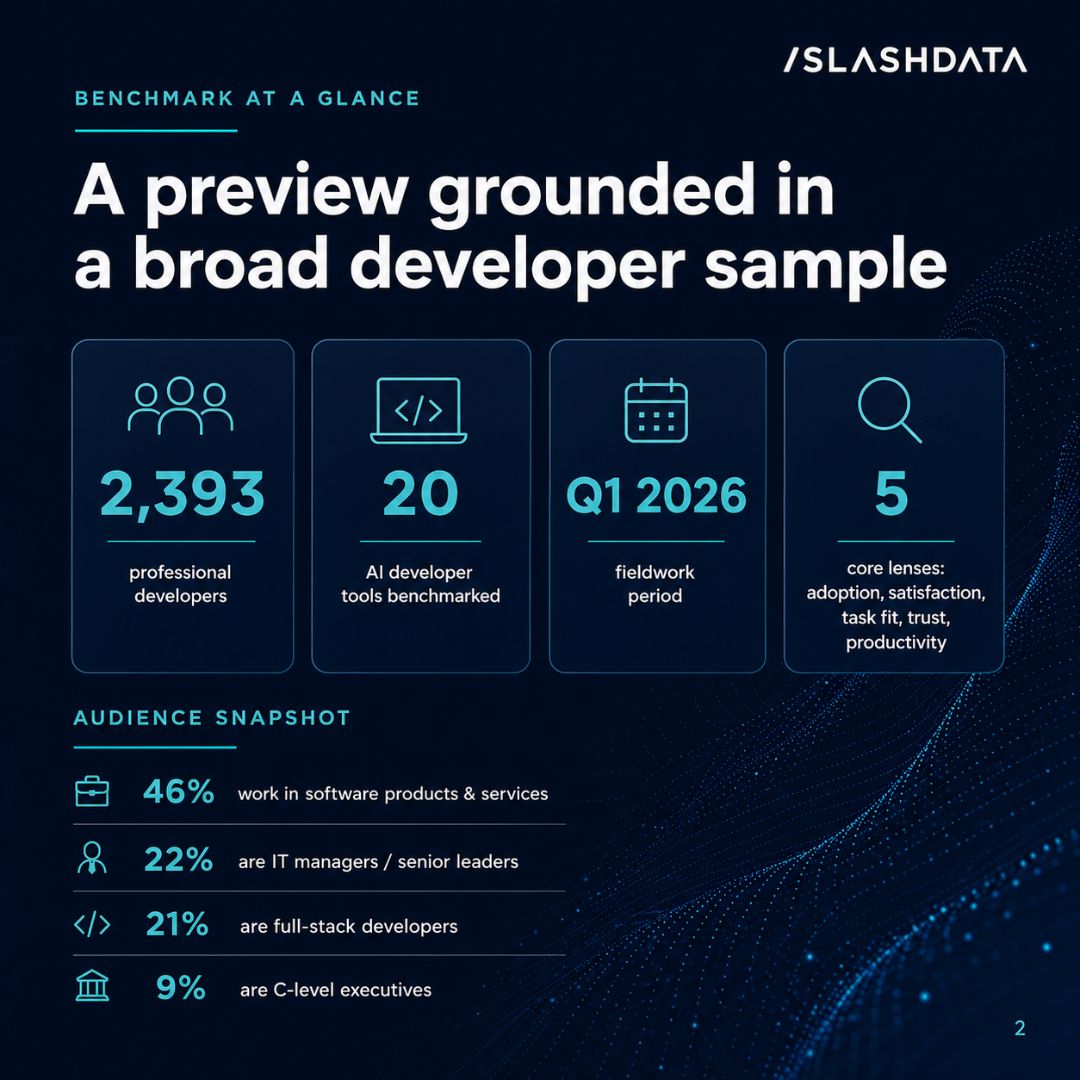
AI developer tools adoption is rising fast. YET - Heavy usage doesn’t necessarily lead to productivity gains. - Market reach doesn’t always reflect developer value - Satisfaction doesn’t guarantee retention. - Developers’ expectations are shifting faster than positioning strategies. Join us on our upcoming webinar, and this is what you will get (based on 800+ professional developers across 20+ countries): 1. How embedded are AI coding tools now? 2. The market landscape: how tools cluster and what that means 3. Where AI actually delivers 4. The performance reality: where AI feels strong vs where it still struggles 5. Productivity signals: how teams think about impact in practice 6. What this means for vendors 7. 2026-onwards: The next wave Register for the live session + Q&A with Bleona Bicaj luma.com/u7sm5z8j?utm_s… 📅 March 31, 2026 ⌚️ 9am PST \ 5pm BST #DeveloperTools #ProductMarketing #DevRel #AI #DeveloperExperience #Research
SlashData tweet media
English
1
0
0
41
SlashData
SlashData@SlashDataHQ·
What game developers actually think about AI Most developers (68%) say AI accelerates production, from debugging and boilerplate code to faster prototyping. And 62% believe it could help smaller studios compete with large publishers, though indie developers are more cautious (58% agree, versus 70%+ in larger studios). At the same time, 55% think AI will reduce career opportunities, echoing broader trends where early-career roles are shrinking as automation absorbs structured, entry-level tasks. Developers also see AI as a double-edged sword for player experience. While 62% believe AI integration improves gameplay, 52% worry it threatens creative originality, rising to 59% among those in creative roles. Technical concerns are real too: 53% say AI increases the risk of bugs or unpredictable behaviour. The message is clear: AI can accelerate output and enhance immersion, but without strong creative direction and oversight, it risks homogenised content, fewer entry points for junior talent, and more complex QA challenges. Read the full deep dive by Álvaro Ruiz Cubero at the SlashData blog: slashdata.co/post/what-game… /games #gamesdevelopment #gamedevelopers #gamesai
SlashData tweet media
English
0
0
0
53
SlashData
SlashData@SlashDataHQ·
Briefing Room #145 TL;DR: - 66% of game developers are using AI to assist with coding or creative assets, rising to 76% among professionals. - Google still leads for adoption and engagement but is trailing many smaller developer programs on satisfaction - OpenAI Massively Cuts Spending Plan as Reality Closes In - OpenClaw creator Peter Steinberger is joining OpenAI Read it 👇 linkedin.com/pulse/briefing…
SlashData tweet media
English
0
0
0
62
SlashData
SlashData@SlashDataHQ·
Who is embracing FinOps? 2 in 3 developers report that their teams engage in FinOps activities Cloud costs can be among the most unpredictable and significant expenses for technology organisations. FinOps promises to bring structure, accountability, and balance between cost, speed, and performance. But how many developer teams are actually embracing these practices? FinOps practices have become widely adopted across the industry. As of Q3 2025, 66% of developers report that their teams engage in FinOps activities, with a further 10% being unsure. This leaves us with only 24% who state with certainty that their teams are not implementing FinOps practices in their development workflows. However, engagement in FinOps activities varies considerably by company size, with mid-size organisations leading while small businesses and large enterprises lag behind. Lower engagement in small companies may reflect their prioritisation of growth over efficiency, smaller cloud bills, simpler infrastructures where FinOps practices may feel unnecessary (such as operating with a single cloud account), and limited budgets or roles for formal implementation. At the other end of the spectrum, large enterprises often rely on procurement controls such as enterprise agreements, annual budgets, or negotiated discounts that may reduce the need for developer-led FinOps. Additionally, the organisational complexity and siloed nature of large companies may create blind spots where developers are unaware of existing FinOps initiatives. In contrast, mid-sized organisations begin to face cloud bills that are large enough to demand attention, alongside increasing billing complexity as their infrastructure scales. Organisations of this size have sufficient resources to implement new processes and technologies while remaining agile enough to experiment with new approaches, which might explain the higher engagement with FinOps practices. Additionally, leaders in mid-sized organisations may also face growing pressure from finance teams and investors to ensure predictable and efficient cloud spending as the company continues to grow, highlighting the importance of introducing FinOps activities early, before cloud complexity becomes unmanageable. See the full analysis: slashdata.co/free-industry-… #finops #cloud #finopsadoption
SlashData tweet media
English
0
0
0
60
SlashData
SlashData@SlashDataHQ·
See how leading programmes compare and where opportunity lies for you: research.slashdata.co/reports/68c990… Our Developer Program Benchmarking report compares 22 leading developer programmes across awareness, usage and satisfaction, based on insights from 12,000+ developers in 127 countries.
English
0
0
0
25
SlashData
SlashData@SlashDataHQ·
- North American developers expect a broader “deep bench”, signaling that documentation alone isn’t enough. If you’re allocating budget across DevRel, certifications, documentation and content, acting on those insights can be the difference that moves the needle.
English
1
0
0
39
SlashData
SlashData@SlashDataHQ·
Competition for developer engagement goes well beyond features. It’s shaped by how developers experience your ecosystem: from documentation and sample code to certifications and community support. Signals worth your attention:
SlashData tweet media
English
1
0
0
51
SlashData
SlashData@SlashDataHQ·
and Africa and South Asia each have 800 thousand edge AI developers, with potential to reach 1.4 million, while South America remains smaller but shows increasing activity and long-term growth potential. Overall, edge AI...
English
1
0
0
22
SlashData
SlashData@SlashDataHQ·
There are an estimated 38.4 million professional developers worldwide, of whom 29% (11 million) are building or integrating AI functionality into edge devices. This makes edge AI a substantial and established segment of the developer ecosystem rather than a niche area.
SlashData tweet media
English
1
0
0
43
SlashData
SlashData@SlashDataHQ·
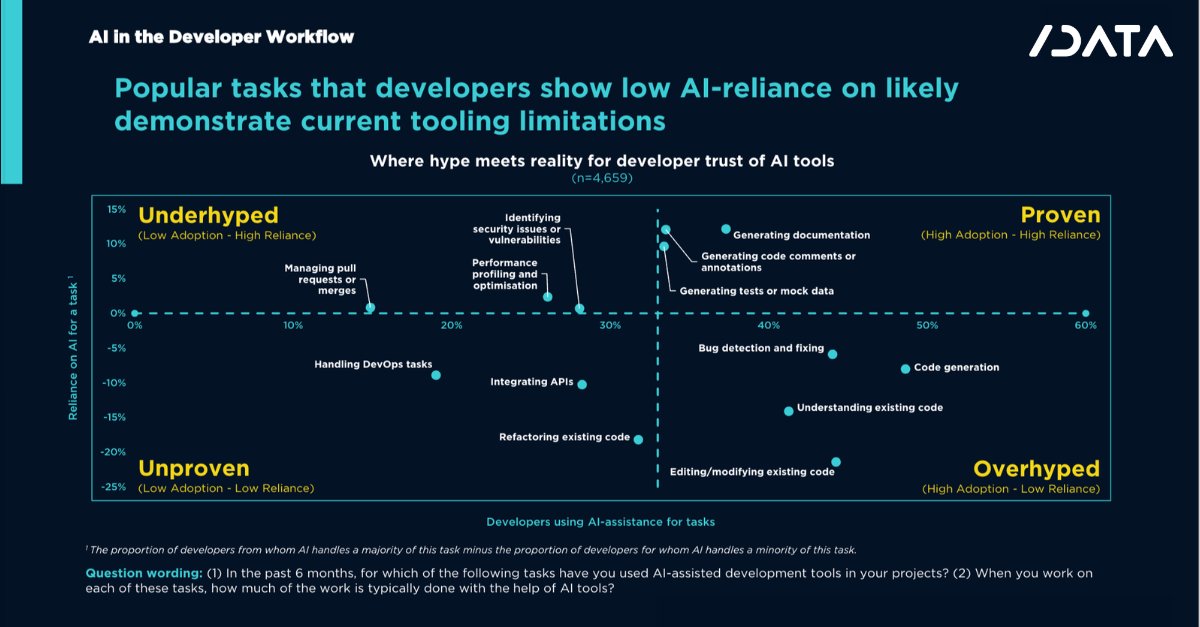
Debugging is the single most underserved task by AI tools, with high importance for developers but low satisfaction. The only outlier here is OpenAI Codex, delivering higher satisfaction scores compared to other vendors. See the full preview here: slashdata.co/ai-tech-tools-…
SlashData tweet media
English
0
0
1
98