

SlayingRama
286 posts

SlayingRama
@SlayingRama
I know I know nothing. Hindu’ite. #politics #IR #FP #booknerd. political science major, UGC NET
Katılım Kasım 2025
168 Takip Edilen7 Takipçiler

To everyone having a meltdown over a recent article grieving the loss of adult friendship - your problem isn't that it's AI generated, it's that you didn't write it or have the mind to AI generate it yourselves!
The reason why it's a good piece of work is because it has resonated with a huge audience, because we all feel the loss of friendships in adulthood. The article invoked a feeling that's real and true to almost every adult.
Even if AI is used to polish sentences / structures - ultimately it's the thought behind the prompt that will count, as has been proven by this piece.
I don't personally think it's entirely AI generated. I think there will always be people who write beautifully, and we will have more and more scrutiny simply because we will in an AI-engined world.
♡s♡@sun_girlxo
What kills me more than someone publishing an AI-written article is how many people genuinely consider it the best writing they’ve ever encountered
English
@joybhattacharj That link of the print isn’t working sir. What was it? Could you plz add it in comment section!
English

Caution long read alert. Read this profoundly moving piece and then I will tell you something. If you already have, you can move on to after the quoted text
"A few weeks ago, a friend called me at 01:40 AM. Not texted. Called. For a brief second, my body prepared itself for bad news. Adulthood has conditioned most of us to believe that late-night calls only arrive carrying catastrophe. Someone in the hospital. Someone stranded. Someone dead. But nothing had happened.
She had just finished work, was driving home through near-empty roads in London, heard a song we both used to jam on together, and suddenly missed me. So she called. We spent thirty minutes talking about things that would sound painfully unremarkable on paper. Work fatigue. Bollywood gossip. How she was enjoying every bit of her married life. The indignity of back pain as soon as you touch thirty. A professor we once hated but now miss with alarming frequency. Nothing profound.
And yet after the call ended, I sat awake for a long time with the strange ache of having briefly encountered an earlier version of myself. Not younger exactly. Just…more reachable.
There was once upon a time when friendship did not require elaborate planning. We spoke for hours without checking calendars. Entire evenings disappeared on hostel terraces and tea stalls and long walks taken for absolutely no reason. Friendship in youth thrived on excess time – loose, unstructured, and gloriously wasteful.
However, somewhere between “Let’s catch up soon” and “Sorry, life has been hectic”, adult friendship became one of the most emotionally significant and least discussed losses of modern life.
The invisible funeral
Romantic heartbreak has an elaborate infrastructure. There are films for it. Songs for it. Poetry, rituals, sympathy, advice columns, entire industries dedicated to helping people metabolise romantic loss.
Friendship grief, however, remains oddly invisible. Nobody teaches you how painful it feels to slowly lose access to someone who once knew your inner life intimately. Someone who understood the silences before your sentences. Someone who could identify your mood from the way you said ‘okay’. Someone who knew everything about your crushes and petty insecurities.
And unlike romance, friendships don’t end dramatically. No final conversation. No clean rupture. No cinematic closure. Most friendships dissolve through unattended accumulation – postponed calls, exhausting jobs, geographic distance, emotional fatigue, different sleep schedules, different priorities, and different lives unfolding at different speeds. One day you realise the person who once knew your thoughts now only knows what you accidentally reveal on Instagram stories.
And because ‘nothing happened’, we often deny ourselves the right to grieve it.
We were never meant to live like this
Part of the problem is structural, not personal. Friendships in school and college survived because institutions did most of the work for us. Proximity created intimacy. Repetition created familiarity. We saw each other daily without effort.
Sociologists have long argued that human relationships are sustained less by intensity and more by regularity. Simply encountering the same people repeatedly builds
closeness over time. Youth offers this naturally. Adulthood dismantles it completely. Especially in urban life.
Today’s young professionals live inside systems that quietly erode friendship while pretending to celebrate connection. Work consumes emotional bandwidth. Cities stretch distances cruelly. Weekends become recovery periods rather than social spaces. Ambition transforms everyone into project managers of their own lives. Even rest now feels predicted on being productive.
And so friendship – the one relationship built almost entirely on voluntary presence – begins slipping through the cracks.
The tragedy is that this loneliness often coexists with constant digital interaction. We are perhaps the first generation to possess uninterrupted access to each other while simultaneously becoming emotionally inaccessible. We maintain ambient awareness of one another’s existence without participating meaningfully in each other’s lives. I know what my friends eat. Which cafés they visit. Which things they complain about. I know when they get promoted because LinkedIn informs me before they do. And yet sometimes I hesitate before calling because I no longer know the emotional weather of their lives.
The sanitised version of ourselves
Adulthood rewards self-containment. Everybody is tired. Everybody is working on themselves. Everybody is ‘going through a lot’.
A while ago, I met one of my closest friends after almost two years. We had both changed in ways difficult to articulate immediately.
He had become more efficient with language, as though corporate life had trained his thoughts into bullet points. I had become permanently tired in the peculiar way where exhaustion no longer feels temporary enough to complain about. For the first twenty minutes, conversation moved awkwardly through adult updates. Job. Parents. Health. Mutual acquaintances getting engaged with frightening regularity. And then suddenly he laughed – fully, loudly, head thrown back exactly like he used to – and time collapsed for a second. There he was again.
The brother who never split auto fares with me. The brother who sat beside me during lectures drawing nonsense in notebook margins. The brother who knew who I was before adulthood turned all of us into slightly polished versions of our résumés.
The emotional economy of modern life
Modern adulthood encourages optimisation in almost every sphere. Be productive. Be efficient. Heal yourself. Monetise your hobbies. Curate your identity.
Somewhere along the way, friendships too began absorbing the language of management. We now discuss emotional bandwidth like data plans. Even affection sometimes feels evaluated through invisible cost-benefit analysis: Who texts first? Who makes more effort? Who is emotionally available? Who drains energy?
Friendship, however, has always depended on a certain irrational generosity. A willingness to waste time together magnificently. To listen to the same anxiety for the fifth time. To sit through silence. To remain available without agenda.
And perhaps this is why adult friendship feels increasingly radical. It resists the transactional logic modern life rewards everywhere else. Because a real friend offers something profoundly rare: unoptimised presence. Family is structured by blood. Marriage by institution. Work relationships by utility. Friendship survives purely through mutual choosing. Nobody has to stay. And yet some people do.
Despite impossible schedules and emotional fatigue, some friends continue returning. They send memes during meetings. They remember your important dates. They call you out-of-the-blue. Not because it is convenient. But because somewhere, beneath all the exhaustion adulthood imposes, they still consider your inner life important. Sometimes it is simply the stubborn decision to keep returning to people despite the world constantly training you to prioritise everything else."
This was written by a serving IPs officer on his website, and it was so thoughtful and perceptive that I decided to look him up and check what else he had written.
And this popped up
theprint.in/.../youre-wron…
Clearly very very dissonant from the previous piece. I was quite disappointed, given the previous piece. And then today, social media went absolutely crazy as the first piece was almost definitely written by AI.
I confess I had no idea, was drawn into the narrative early and left my rational judgement and narrative far behind.
It is unsettling when you realize how easily you can be taken in, and how easy it is to get past your scepticism. See less
English


Yeh Rajasthan royals ko aadhe IPL ke baad kya ho jata h. Har baar vahi shuruaat me acha khelo baad me har match me hag dete h.
Aur bhai yeh non bowler se death over me kon over dalwata h.
@rajasthanroyals #ipl2026
#RRvsDC
हिन्दी
SlayingRama retweetledi

I admit, this one made me emotional.
The line - “Nobody teaches you how painful it feels to slowly lose access to someone who once knew your inner life intimately. Someone who understood the silences before your sentences.” Hits very hard.
Amazing article.
Civil Irony : The quiet grief of adult friendship timesofindia.indiatimes.com/blogs/civil-ir…
English
SlayingRama retweetledi

A banknote doesn’t lose its value just because it has been crumpled, stepped on, or thrown in the dirt. You are no different. Your true worth is independent of your circumstances
English
@phoenixiasbyNS Can’t agree more. This should be across all the exam which involves interview in it. Very nice initiative by BPSC. Hope the other boards will learn from it.
English

Absolutely brilliant. This should be practiced across all PSC including UPSC.
Interview board must not know the name; caste; religion; region or attempts ( more than 6 attempts reveal fact that student belongs to reserve category).
Our country,still follows caste/religion; region prejudices/stereotypes.
Check the merit of candidates on his knowledge & communication skills, Nothing else.
Mohit |🇮🇳@RajBoundaries
@phoenixiasbyNS How do you look at this, Sir ?
English

SlayingRama retweetledi

सर @TexMinIndia क्या आपको पता है कि यार्न की कीमतों में भारी बढ़ोतरी वाराणसी, सूरत, मालेगांव, मुबारकपुर आदि के MSMEs और माइक्रो पावरलूम बुनकरों को बुरी तरह प्रभावित कर रही है। इसके कारण यूनिट्स बंद हो रही हैं और बेरोज़गारी बढ़ रही है।
क्या आप एक मंत्री के रूप में कॉटन यार्न के निर्यात पर रोक लगा सकते हैं और रॉ कॉटन पर इम्पोर्ट ड्यूटी खत्म कर सकते हैं? फैब्रिक्स और RMG एक्सपोर्ट्स के लिए इस सेक्टर को incentives की आवश्यकता है।
क्या @narendramodi सरकार चीन पर एंटी-डंपिंग ड्यूटी लगा सकती है?
आप सरकार में हैं, पावरलूम सेक्टर को बचाइए।
अपने शपथ ग्रहण को याद रखिए, और “शुद्ध अंतःकरण” शब्द को भी याद रखिए।
Giriraj Singh@girirajsinghbjp
आज नहीं तो कल, ओवैसी भी यह स्वीकार करेंगे कि वे हिंदू हैं।
हिन्दी
Brazil is only country which shares border with almost all the countries of the continent except Ecuador and Peru.
#wondersofnature #nature
English

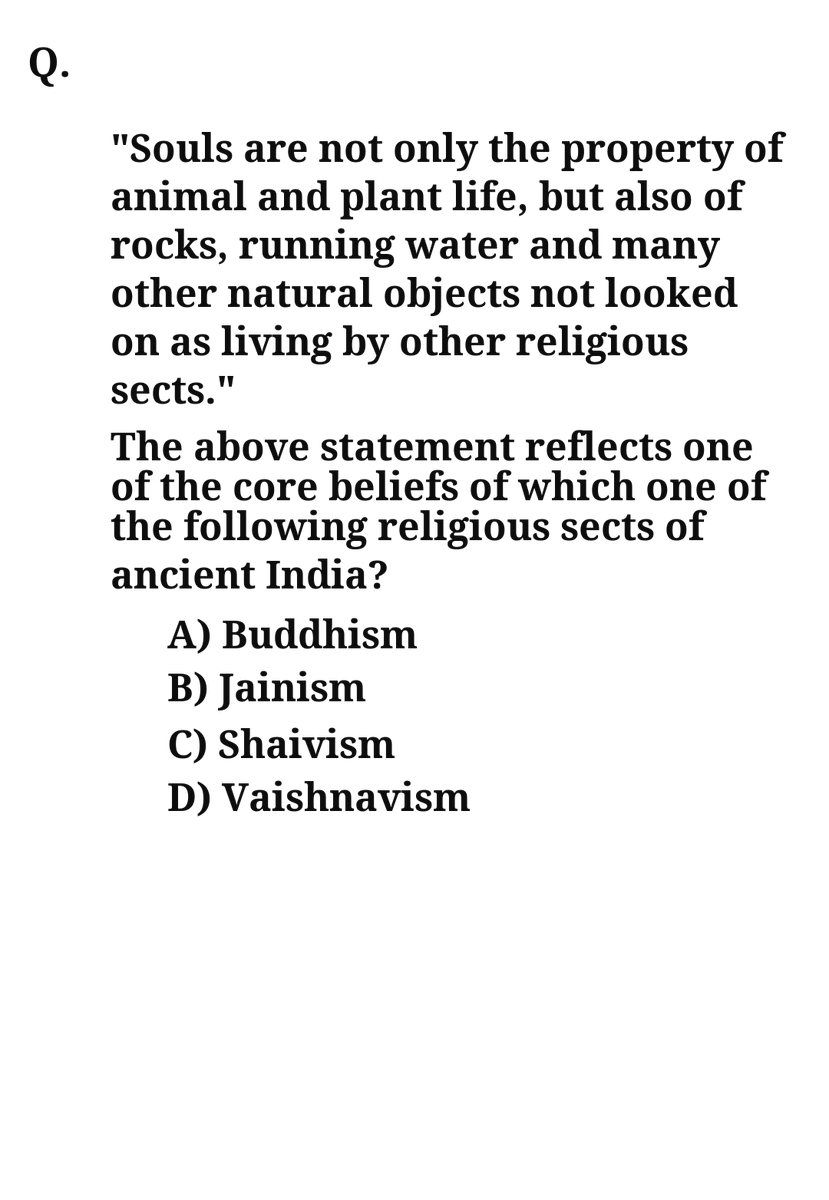
Souls are not only the property of animal and plant life...... Consider the statement
English
@loveena_joshi06 These centres walas would make more money via let someone else sit underground and solve paper and the real candidate has to just scroll the cursor of mouse nothing else.
English
@loveena_joshi06 Haan haan vhi. Itna cringe sound Kart’a h literally but his notes are top notch. Just opposite of his personality. 😂
English

@loveena_joshi06 Hmm. Let’s see what happens till the website work fine.
English
@dhaikilokatweet Balotra nhi Phalodi. Bro asli wala place yhi h
Filipino

@loveena_joshi06 Itni OTP toh aaj tak life me nhi aayi hogi jitni iske liye aa gyi h aaj but admit card tab bhi nhi aaya 😂🥲.
हिन्दी