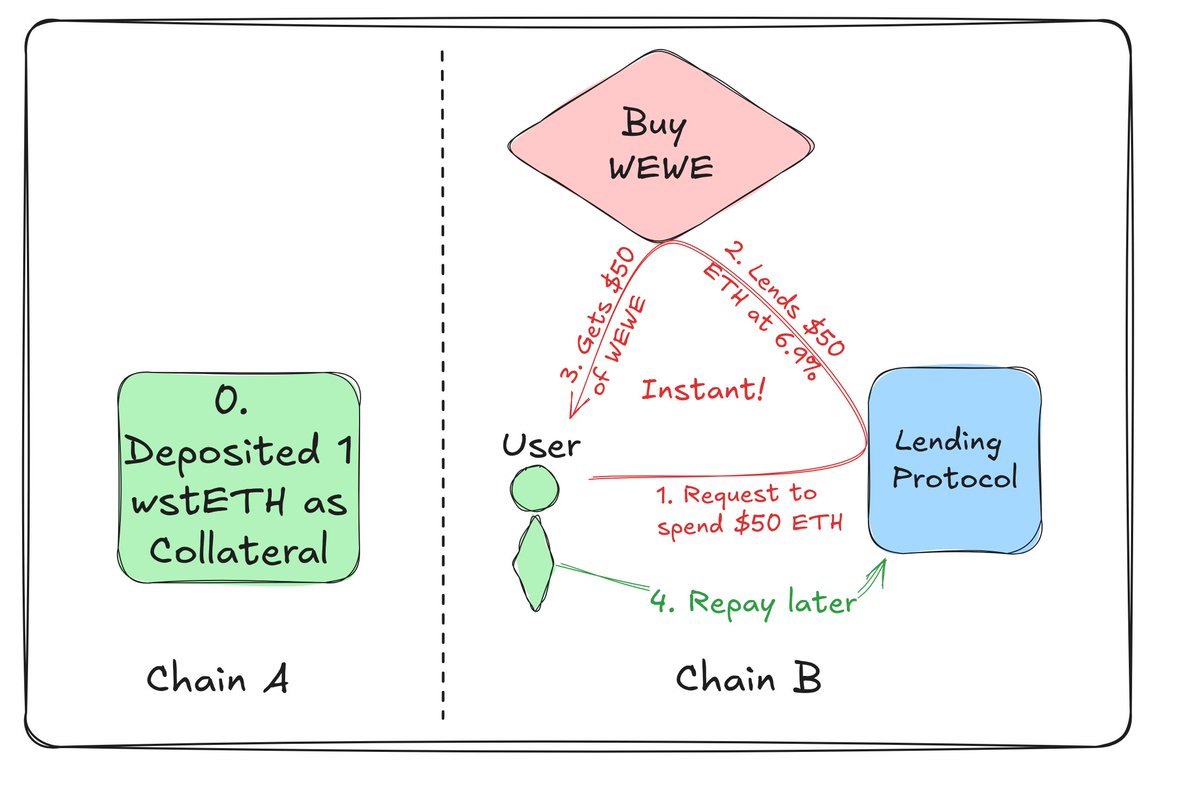
Smoke is Shutting Down Yep. It’s been several months since I stopped working on Smoke. I thought I’d get back into it naturally if it pulled me back, but I don’t think I want to anymore. A few weeks ago the domain quietly expired, and that was proof enough. Time to take it behind the barn once and for all. What Happened? I think this was the fate shared by many companies that were trying to solve the cross-chain problem. Many of them ran out of juice to continue solving this problem that became less pressing than other problems. The biggest lesson for me was that I got the timing wrong. I was late to the party and the pie didn’t get as big as we all predicted. I needed a lot of pieces to click into place for Smoke to work. Let me unpack this in a few sections. - Why did I start working on this problem? - What were the biggest hurdles? - And what made me finally pull the plug? The Motivation to Start When I started working on this problem, innovative apps were still being built on the periphery. Although I wasn’t big on Blast, I thought it would succeed. I even took Fantasy Top as one of the main examples in my pitch. My belief was that we would see an explosion of chains with thousands of apps built on hundreds of chains. I believed that the scaling problem was the only bottleneck; since we had solved it via the modular architecture, we’d see all these apps being built on many different chains, and we needed something like @SmokeDotMoney to connect them in the best way possible. Smoke is still one of the best solutions to this problem, with a few caveats (Smoke required a change in user behaviour), but the problem isn’t the biggest one anymore. I thought we were right to build all these chains with custom execution, custom sequencing, custom consensus layers, etc. All of this was probably just marketing by the modular mafia. Maybe all the apps could fit into a single chain like Solana or Arbitrum because there aren't many apps anyway. Does that mean we’ll never see hundreds of chains? I don’t know. But right now it doesn’t seem like we have demand for hundreds of chains. Another reason I started working on this problem was probably that I was not brave enough to leave the cross-chain space I was an expert in. In hindsight, I shouldn’t have been so scared of switching fields, especially now that AI makes it so easy to learn so many new things in such a short period of time. It is a fast learner’s world right now. These were the reasons why I started working on the problem. But what are the challenges I faced? The Biggest Hurdles I’d say the biggest hurdle was the lack of conviction: should I really keep spending my valuable time on a problem that might become more relevant sometime in the future, something I’m not even certain about? It’s a good practice to work on problems that might become big, but I lacked the conviction that this one would. Other hurdles included the absence of a clear path to distribution. Smoke required a significant change in user behaviour, similar to how the resource-lock-based chain-abstraction solutions that were making noise last year. Account Abstraction companies struggled for similar reasons, adoption stalled because the product demanded too significant a change in user (and wallet) behaviour. Finally, there was a shortage of people willing to rally behind the idea. I continue to believe this design is the most effective way to solve the problem, but this isn’t a school competition where the academically perfect solution wins. It’s a market that only accepts the solution good enough to satisfy ease of use, timing, and incumbency advantages. The Nail in the Coffin What made everything so clear was Unichain reaching only $15 M in TVL months after launch. Enough to convince me that an MEV-focused rollup built by two highly reputable teams still couldn’t pull users or builders to a new chain. Uniswap was already there; people could deploy tokens and migrate existing apps from other EVM chains to take advantage of Rollup Boost, its advanced MEV-mitigation system. Yet no one seemed to care. Solana stole the spotlight. Most builders I could see, possibly just riding hype the way the modular mafia once hyped “hundreds of chains”, are now shipping on Solana. If Solana can scale to hundreds of apps, do we still need hundreds of chains? And do people still care about the decentralization and security Ethereum offers? It doesn’t look like it. The Ethereum Foundation now says it wants L1 to become a “gigagas” chain. What that means for L2s and other rollups is anyone’s guess. The one certainty is that nothing here is certain, should be expected from frontier tech like web3. That, perhaps, is where I was wrong too. We will still have a need for interop between major L1s like Ethereum, Solana, Hyperliquid, and a few L2s like Base, Arbitrum, etc. But I doubt we’ll see thousands of chains. That’s why I was building Smoke. To seamlessly connect hundreds of chains. A lot of you found me when I was complaining about LayerZero and Hyperlane’s multisig setups for cross-chain security, maybe they were right. Maybe multisigs are enough. Nobody cares about security in the space. That’s not wrong, that’s just the reality. What’s next for me? I’m exploring another small project right now. Will keep you all updated. In the meantime, if you are working on something, I’d love to take look at it and learn more about why you’re solving that problem. I really appreciate everyone who supported me during my Smoke arc. Thank you all for connecting me to people, giving me feedback, and keeping me motivated. You will be remembered and I owe all of you. Hit me up. Anytime.