

Solomon
48.9K posts


The next wave of onchain adoption won't be driven by speculation alone. It will be powered by infrastructure that connects real-world finance with blockchain efficiency. @lifiprotocol Intents is building that foundation, one seamless transaction at a time.
LI.FI@lifiprotocol
Introducing LI.FI Intents. Infrastructure for apps, wallets, and neobanks to: • Enable stablecoin payments • Access real-world assets • Tap into compliant onchain liquidity Built for enterprises bringing financial products onchain.
English
Mass adoption happens when complexity disappears.
@lifiprotocol Intents is building the rails that make onchain finance feel effortless for enterprises and everyday users alike.
LI.FI@lifiprotocol
Introducing LI.FI Intents. Infrastructure for apps, wallets, and neobanks to: • Enable stablecoin payments • Access real-world assets • Tap into compliant onchain liquidity Built for enterprises bringing financial products onchain.
English

Most DeFi "yield" are just protocols paying you in their own inflationary tokens. You earn, but the token dumps, and you end up holding bags.
@SeasonsDEFI changes the entire model.
Hold $SEAS → receive Bitcoin, Gold & USDC directly to your wallet.
No clicks. No lock-ups. No games.
Here's the full breakdown. 🧵

Jolinx@realjolinx07
Most DeFi protocols focus heavily on emissions, staking mechanics, and short-term liquidity incentives. What I find interesting about @SeasonsDEFI is that the ecosystem seems to be positioning itself around sustainable liquid yield instead of locked participation. That changes user behavior completely. A lot of passive income systems in crypto still come with friction: lock your assets, stake for months, claim manually, or sacrifice liquidity to earn. Seasons is trying to reduce that friction by making yield feel more usable and liquid for the average holder. The interesting part is how the ecosystem revolves around the utility of being a SEAS token holder rather than just speculative trading activity. Holding 10,000+ SEAS is not just about exposure to the token itself. It becomes a position tied to continuous ecosystem cashflow mechanics on Solana. From a market structure perspective, this creates a different type of holder psychology. Instead of users constantly looking for exit liquidity after farming rewards, the ecosystem encourages users to think more about recurring value generation. That matters because DeFi retention is becoming one of the biggest challenges across Solana. Attention is expensive. Liquidity moves fast. Communities rotate quickly. Protocols that survive this cycle will likely be the ones that create reasons for users to stay beyond token price speculation. Another thing I’m watching closely is the “liquid passive income” narrative Seasons is building around. Most passive income narratives in crypto eventually fail because: yields become unsustainable liquidity dries up rewards depend entirely on inflation But ecosystems that can connect real activity, fees, and user participation into reward distribution usually stand out longer term. That’s where Seasons becomes interesting to analyze. It is not trying to compete purely as another staking protocol. It is trying to create an ecosystem where yield feels active, flexible, and integrated into daily onchain participation. If the team continues improving utility, retention, and ecosystem activity around SEAS, the protocol could position itself strongly within the growing Solana passive income narrative. Still early. But definitely one of the more interesting ecosystem experiments happening on Solana right now. I will talk extensively on how Seasons can gives a real, liquid cashflow without the hassle of staking or claiming. And a walk through on what holding 10,000+ SEAS actually does for your wallet on my next post.
English
@orayansamuel189 @TheDAOLabs The creativity behind this is impressive
English

The #DAOVERSE World Cup is live and pressure is rising.
@TheDAOLabs Five elimination rounds begin, only 32 survive first stage, ⚔️ just 4 finalists battle for $500.
This is a true test of influence and consistency. 🏆 Eyes on the cut this week,⚡#socialmining win now.
DAO Labs@TheDAOLabs
🏆The battlefield is open. The DAOVERSE World Cup has officially kicked off. 🔥We’re starting with 5 rounds of pure elimination. 3️⃣2️⃣ Only 32 of you will survive this first stage to keep your title hopes alive. The goal? Becoming the best at the SMV2 Marketplace! ⏱️ It’s not just about showing up—it’s about proving your influence and outplaying the rest. If you want to be one of the final 4 fighting for that $500 pool, now is the time to lock in. ⚔️ Who’s coming for the trophy?
English


➫ 𝙄𝙢𝙖𝙜𝙞𝙣𝙚 𝙘𝙡𝙤𝙨𝙞𝙣𝙜 𝙖𝙣 𝙞𝙣𝙩𝙚𝙧𝙣𝙖𝙩𝙞𝙤𝙣𝙖𝙡 𝙗𝙪𝙨𝙞𝙣𝙚𝙨𝙨 𝙙𝙚𝙖𝙡…
…but spending the next 3 days chasing settlement confirmations, bank approvals, poor exchange rates, and transfer delays before you can actually access your money.
For many businesses across Africa and other emerging markets, this isn’t rare.
It’s normal.
➫ And the worst part?
Every delay affects operations:
• suppliers waiting for payment
• inventory stuck
• businesses losing value to FX spreads
• opportunities missed because capital moves too slowly
Traditional financial systems were never really designed for fragmented emerging markets.
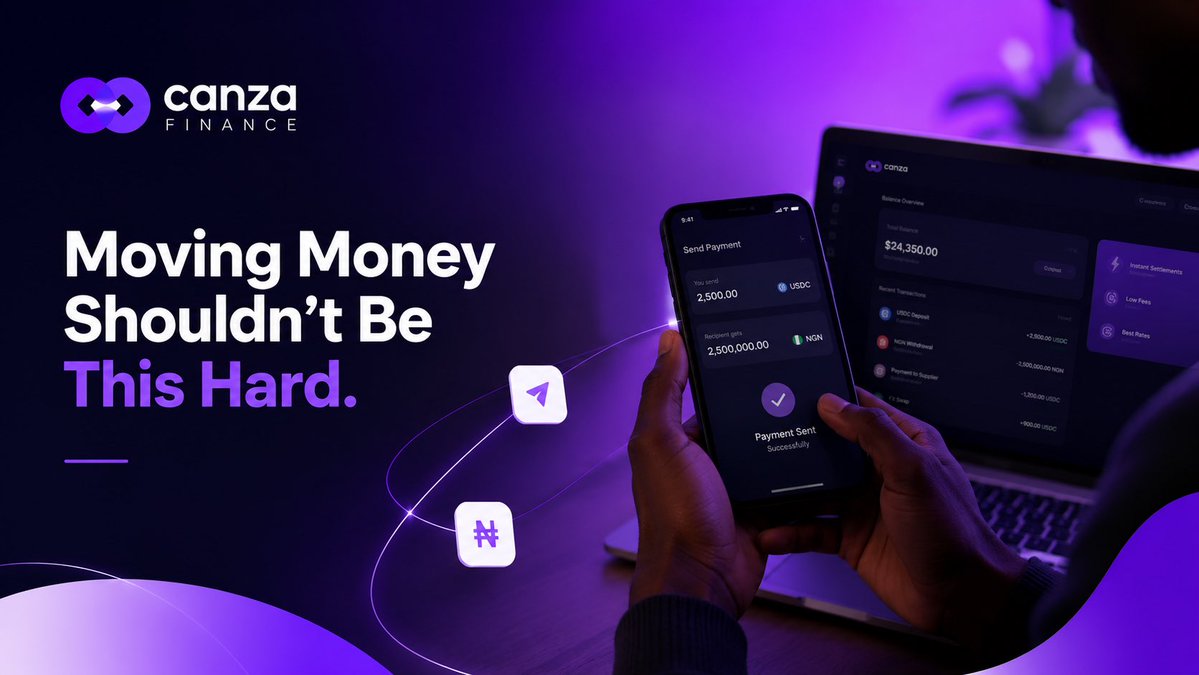
➫ That’s why @Canza_Finance is building an on-chain settlement and liquidity layer powered by stablecoins, DeFi, and local FX networks.
The goal is simple:
make cross-border payments faster, cheaper, and more accessible for real businesses.
Because moving money across borders shouldn’t feel harder than building the business itself.
English
@techsavvyy02 @fore_gate Love the consistency and transparency here
English

One challenge for decentralized platforms is reaching beyond crypto-native users.
Many people interested in sports or real-world events are not deeply familiar with blockchain mechanics, yet they understand outcomes and probabilities.
@fore_gate’s partnership with Michael Owen, a former pro footballer and Ballon d’Or winner, serves as a bridge in this regard.
His involvement brings visibility to a broader audience while the underlying technology remains focused on on-chain transparency and speed.
This combination allows the platform to discuss prediction markets in contexts familiar to sports fans, while still operating with the benefits of decentralized settlement.
It does not require users to become blockchain experts to participate meaningfully.
As interest in event-based trading grows, platforms that can communicate clearly across different audiences may find wider adoption.
The presence of recognizable figures alongside technical infrastructure helps lower the barrier for people exploring these tools for the first time.
Check out Foregate today, go.foregate.com/rGZIJB4

English
@kellyzazy @Velvet_Capital Trust is built through consistency like this.
English

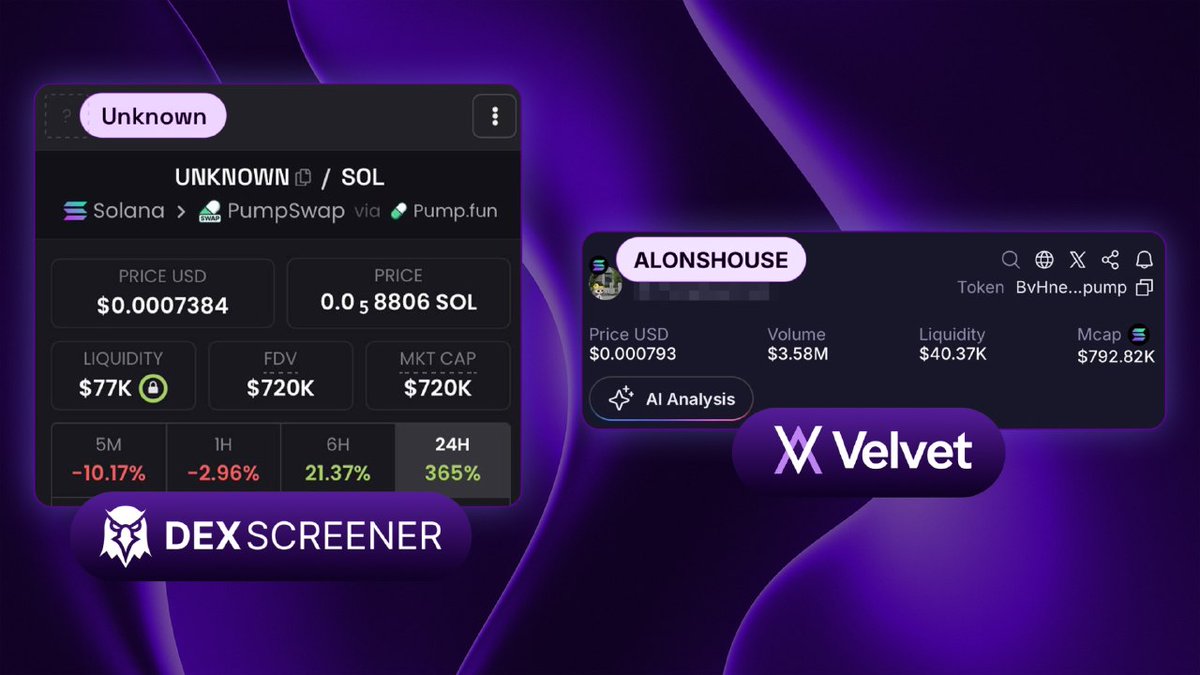
Most losses in DeFi don’t come from choosing the wrong trade.
They come from weak execution.
Slippage, poor routing, failed transactions, and MEV attacks quietly drain trader profits every day.
@Velvet_Capital is building infrastructure designed to solve that.
#VELVET
English

In crypto, speed and accurate data can be the difference between profit and liquidation.
That’s why more traders, developers, and DeFi protocols are paying attention to @PythNetwork .
Pyth is not just another oracle project , it’s a real-time financial data network powering the next generation of DeFi across multiple blockchains.
𝐖𝐡𝐲 𝐬𝐡𝐨𝐮𝐥𝐝 𝐜𝐫𝐲𝐩𝐭𝐨 𝐮𝐬𝐞𝐫𝐬 𝐜𝐚𝐫𝐞 𝐚𝐛𝐨𝐮𝐭 𝐏𝐲𝐭𝐡 𝐍𝐞𝐭𝐰𝐨𝐫𝐤?
• Real-Time Market Data
Pyth delivers ultra-fast price feeds for crypto, stocks, forex, commodities, and ETFs directly onchain. This means DeFi protocols and traders can access more accurate prices with lower latency.
• Data Comes Straight From the Source
Unlike many oracle systems that rely heavily on third-party aggregators, Pyth sources data directly from exchanges, trading firms, and market makers. That improves transparency and reliability.
• Built for Modern DeFi
Perpetual DEXs, lending platforms, prediction markets, synthetic assets, and options protocols all depend on accurate pricing. Pyth helps power these systems efficiently.
• Cross-Chain Accessibility
Pyth supports a growing number of blockchains, making its data available across multiple ecosystems instead of being limited to one chain.
• Faster Updates = Better Trading Experience
Price feeds update extremely fast, helping reduce risks tied to stale pricing, slippage, or delayed oracle updates.
• Pull Oracle Model
Pyth uses a unique “pull” architecture where protocols request fresh prices only when needed. This improves scalability and reduces unnecessary onchain costs.
• Institutional-Level Data
The network is backed by major exchanges and professional market participants contributing high-quality market data.
• Massive DeFi Adoption
Hundreds of protocols already integrate Pyth to secure billions in value across DeFi ecosystems.
• Supports More Than Crypto
Pyth also provides data for equities, commodities, forex markets, and even prediction markets — expanding the possibilities for onchain finance.
• Strong Future Potential
As DeFi evolves toward real-world assets and institutional adoption, reliable market data infrastructure becomes even more important. Projects like Pyth are positioned at the center of that growth.
📌Why this matters:
📍Without reliable oracle systems, DeFi cannot function properly.
📍Trading platforms need accurate prices.
📍Lending protocols need fair collateral values.
📍Prediction markets need trusted external data.
Pyth helps make all of this possible.
As blockchain finance grows, oracle infrastructure could become one of the most important sectors in crypto — and Pyth Network is already proving itself as a major player.
Learn more:
pyth.network

English
English

.. @NomismaNetwork represents a shift toward infrastructure that is designed for coordination at scale, where liquidity, interoperability, and execution are no longer
treated as separate functions but as interconnected parts of a single operating system.
@useTria is focused on strengthening interoperability layers that allow decentralized systems to interact more seamlessly across increasingly connected environments.
@FIH_USD1 introduces an active liquidity environment where participation continuously drives capital movement, reducing inefficiencies created by idle or fragmented assets.
@wallchain is contributing to this transformation by building programmable liquidity frameworks capable of adapting capital flow and execution paths in real time according to network demand and efficiency conditions.
@3look_io expands this coordination model into digital engagement, creating ecosystems where social interaction and content participation directly contribute to value distribution and ecosystem growth.
What ties these ecosystems together is a common architectural direction: moving from isolated platforms toward synchronized infrastructures where participation, liquidity, and execution evolve through continuous coordination.

English

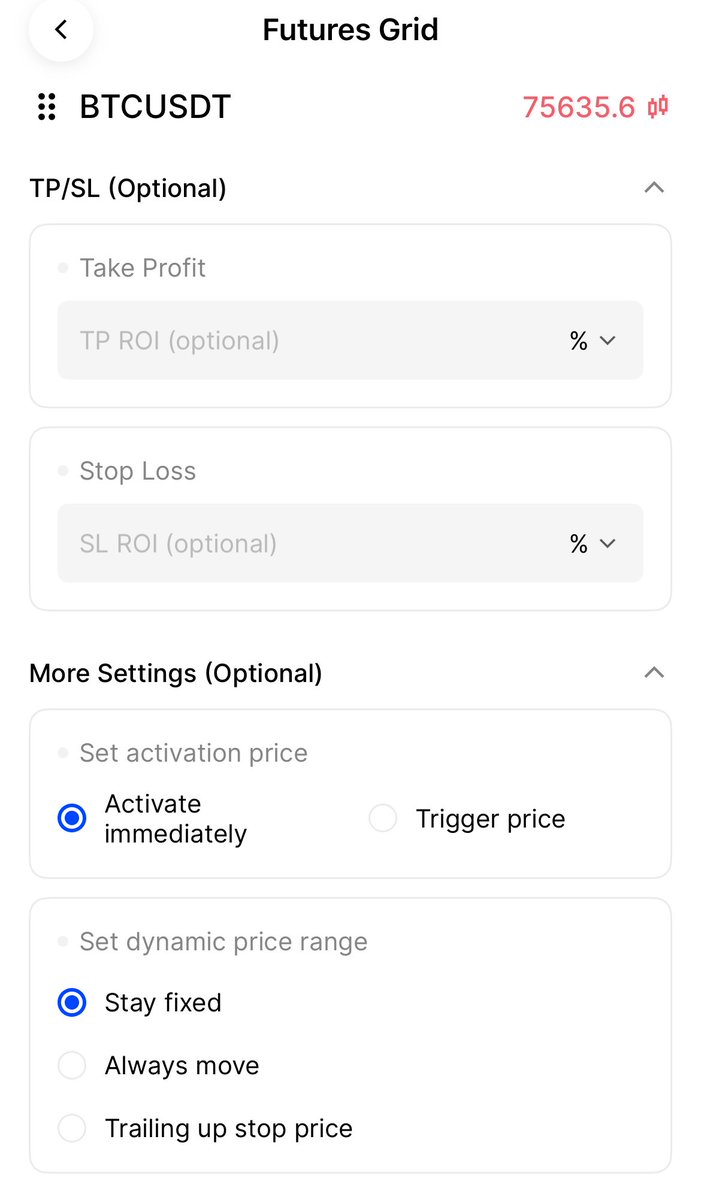
Checked out the updated bot trading features on @BingXOfficial today and some of the changes are actually pretty useful.
The biggest one for me:
you can modify futures grid strategies without shutting everything down first.
That’s huge during fast market conditions.
Also noticed:
✔ dynamic grid range adjustment
✔ more flexible position sizing
✔ denser order placement
✔ QR/link sharing for strategies
The strategy sharing feature is lowkey interesting too because people can basically deploy setups in one tap now.
The dynamic range adjustment is also interesting because the strategy keeps adapting instead of just dying when price moves outside the original range.
They also increased the grid density up to 500 grids now, so strategies can be way more precise.
Bot trading in general feels way more user-friendly compared to a while ago honestly.


English

Bloomberg made market data expensive and exclusive.
Pyth is changing that.
The Pyth Terminal is now live, giving everyone access to 3,000+ real-time feeds across crypto, equities, FX, and commodities all in one place. Watch charts update tick-by-tick, compare prices against external benchmarks, and even inspect publisher-level transparency to see exactly how feeds are built.
No sales calls. No hidden pricing. No black box.
The best part? You can explore it for free before committing to any paid plan.
Open the Terminal 👇
app.pyth.com/explore

English

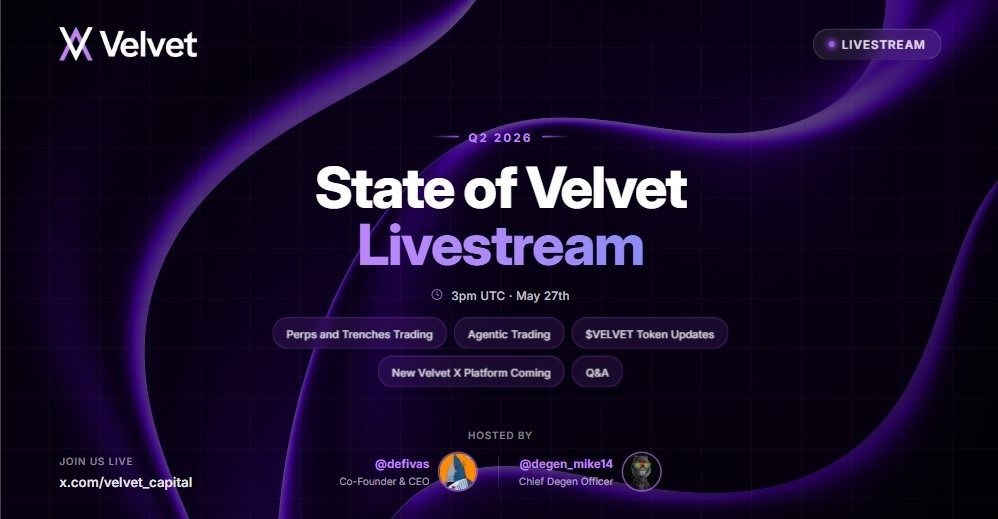
@Velvet_Capital is going live this Wednesday at 3PM UTC for a major session covering Perps, Trenches trading, Agentic AI, Velvet X, ecosystem updates, and live Q&A with the team.
This looks like one of the biggest Velvet discussions yet.
#VELVET #gVelvet @Velvet_Capital
English

Tokenized gold is rapidly becoming one of the strongest narratives in the blockchain industry right now
With tokenized gold now representing nearly the entire tokenized commodity market on-chain and surpassing $5B in value, it’s becoming clear that the market is shifting toward assets backed by real-world value.
For years, crypto was heavily driven by speculation alone. But today, more people are beginning to look for projects connected to tangible assets, transparency, long-term stability, and real utility. That’s exactly why the Real World Asset narrative continues gaining momentum across Web3.
Gold has always been recognized globally as one of the strongest stores of value. Now, blockchain technology is giving it a new level of accessibility, efficiency, and global reach through tokenization.
This is no longer just an idea for the future.
Gold + Blockchain is already becoming a major direction for digital finance and decentralized economies.
That’s where @BiGODToken stands out.
#BIGOD is building within a growing sector that combines blockchain innovation with real-world asset integration, creating an ecosystem aligned with where the market is clearly heading next.
The future of RWA finance is evolving fast, and projects positioned early in this space may become some of the most important ecosystems of the next Web3 era
BIGOD@BiGODToken
Tokenized gold now represents nearly the entire tokenized commodity market onchain, surpassing $5B in value The market is changing fast People no longer want only speculation - they want assets backed by something real Gold + Blockchain is no longer a concept. It’s becoming the future of RWA finance #BIGOD is building for that future
English

The old way: pick chain → guess route → pray no slippage → get 97% of your USDC
new way with LI.FI Intents: say what you want, get exactly that.
infra finally disappearing like it should
LI.FI@lifiprotocol
Introducing LI.FI Intents. Infrastructure for apps, wallets, and neobanks to: • Enable stablecoin payments • Access real-world assets • Tap into compliant onchain liquidity Built for enterprises bringing financial products onchain.
English

The 2026 World Cup buzz is getting even more heated than usual. There are a lot of sentiments attached to this year’s tournament like seeing our favorite players play at this top level for the last time.
While all these are happening, prediction market lovers are looking into @pots_market as the perfect place to place their World Cup Match predictions.
Watch, like, and engage
CC @iCreateTony
English

Witness Hafþór Júlíus Björnsson and Mitchell Hooper chase history at the Enhanced Games World Record Attempt.
@enhanced_games
#hafthorbjornsson #deadlift #record
IS

What makes Gensuki stand out is the fact that it’s building with purpose instead of simply chasing attention.
In a space where many projects appear overnight with short-term hype, Gensuki is focused on creating something that feels sustainable, innovative, and community-driven. The project combines technology, creativity, and digital culture into an ecosystem that people can actually engage with and grow alongside.
What truly separates strong projects from temporary trends is vision.
Gensuki is not just trying to exist in the Web3 space. It’s working to create an experience that feels interactive, forward-thinking, and valuable for its community. From the branding to the ecosystem direction, there’s a clear focus on long-term development rather than short bursts of attention.
Another thing that stands out is the community energy around the project. Strong communities are the backbone of every successful ecosystem, and Gensuki continues attracting people who believe in building, contributing, and growing together.
The future of Web3 belongs to projects that combine innovation with culture, community, and consistency.
Gensuki is positioning itself in that direction.
#Gensuki

English
@Crezybtc @xelebofficial Impressed by the innovation and direction here.
English

Left side is 90% of what's shipping right now. And trust me, @xelebofficial landed on the right side.
Your tone, your personality, your way of thinking, running 24/7 without you.
A brand slides into your DMs at 2am about a collab — your AI responds professionally in your exact tone while you're knocked out.
A new follower visits your profile at 6am curious about your work — your AI walks them through everything like you're right there.
You're on a flight with no wifi — your community is still being engaged, questions answered, conversations held.
That's not a bot guessing what you'd say. That's YOU. Just never offline.
Free → xeleb.io
Xeleb Protocol@xelebofficial
The biggest misunderstanding in AI agents: People think the hard part is creating the agent. It is not. The hard part is defining what the agent should own. Most failed agents are too vague. “Help me with marketing.” “Automate my workflow.” “Be my assistant.” “Manage my community.” These sound useful, but they are not product definitions. A strong agent needs a clear ownership boundary: - what task it owns - what inputs it needs - what decisions it can make - when it should ask for approval - what outcome it is responsible for - how success is measured Without task ownership, an agent becomes a feature demo. With task ownership, it starts becoming infrastructure. The next phase of AI agents will be less about “what can this agent do?” And more about: “What responsibility can this agent reliably carry?”
English
@merah_gold @Rezor_Official This project keeps showing real potential
English
Some people wake up and check charts first…
Me? I’m checking if my $RZR is already staked and working for me 😭🔵
Passive income mindset only.
@Rezor_Official

English