Paul Donohue

3K posts

Paul Donohue

Paul Donohue

@SomersetTrader

Co-founded and sold https://t.co/DZ762GPBbZ. Enjoy trading options and pursuing new technology start-ups. Recreational NBA analytics enthusiast.

In the cloud Katılım Nisan 2009
764 Takip Edilen174 Takipçiler
Paul Donohue retweetledi
Rohan Paul
Rohan Paul@rohanpaul_ai·
Harvard Business Review just published a super interesting piece. AI’s biggest shock may be that nobody can price the future cleanly anymore i.e. we all are staring at a "AI Fog" i.e. the range of outcomes is now so wide that people cannot tell whether today’s prized skill, product, or business model will still pay off a few years from now. AI’s first big economic effect is not automation itself, but the collapse of foresight. The hidden cost of AI may be a collapse in conviction, as its erasing the visibility that modern finance depends on. Modern capitalism runs on the assumption that tomorrow will rhyme with today closely enough to justify big, slow bets. On long bets like degrees, hiring plans, factories, software valuations, and infrastructure, and those bets work only when the future is readable. All these depend on one quiet belief: the future is legible. AI attacks that legibility before it fully rewires any one industry. That hits workers first, because a medical degree, MBA, or coding career looks weaker when AI agents may absorb diagnosis, analysis, drafting, research, and junior software work. That hits companies next, because stock prices depend on durable future cash flow, and terminal value breaks down when AI can erode moats in software, services, and even specialized manufacturing. That changes behavior fast. Students hesitate to buy expensive human capital when the job at the end may be redefined halfway through training, and companies hesitate to hire when junior work, software work, and coordination work are all moving targets. Financial markets feel the same pressure, because once AI casts doubt on a company’s durability, the terminal value carrying much of its valuation starts to look less like math and more like faith. So the immediate economic consequence of AI may be shorter horizons. Less skyscraper, more tent. Less irreversible commitment, more staged investment, modular teams, and organizations built to learn before they lock in. It points to something subtler and probably more important: when institutions cannot see clearly, they stop making the kinds of commitments that built the old economy. --- hbr .org/2026/04/the-future-is-shrouded-in-an-ai-fog
Rohan Paul tweet media
English
63
156
617
50.6K
Paul Donohue
Paul Donohue@SomersetTrader·
$AMZN $GOOGL $META $MSFT after the bell. A big % of the overall S&P. Even bigger % of compute Cap Ex.
English
0
0
0
137
Paul Donohue retweetledi
Rohan Paul
Rohan Paul@rohanpaul_ai·
"If you really want to make money, found an agentic AI company. I mean, build an agent to do something. This is the agentic period in AI. Everyone's going to build agents. The agents are all going to compete." ~ Eric Schmidt, Ex Google CEO.
English
161
382
2.8K
312.1K
Paul Donohue
Paul Donohue@SomersetTrader·
Interesting and true—to an extent. Software development will become more like social media creation, but there is a threshold for information security that will require creators to be certified before users consider trusting them with data.
Rohan Paul@rohanpaul_ai

Software used to be gated by roughly 20 million professional developers up until last year. Good ideas still needed engineers, co-founders, time, and months of app work. Now, anyone can build. ~ Wabi CEO Eugenia Kuyda

English
0
0
0
6
Paul Donohue retweetledi
MrTopStep
MrTopStep@MrTopStep·
#CreditCrisis #JamieDimon @jpmorgan Dimon’s Core Message: Resilience Today, But Prepare for a Harsher Credit Cycle Dimon has been consistent: the U.S. economy showed resilience in Q1 2026, with consumers still earning and spending, businesses healthy, and tailwinds from government spending, deregulation, AI investments, and Fed asset purchases. However, he repeatedly stresses an “increasingly complex set of risks” that could collide like “tectonic plates.” Key risks he highlights (from his April 2026 annual shareholder letter and earnings call): • Geopolitical tensions: Ongoing wars in Ukraine and Iran, broader Middle East hostilities, terrorism, and rising tensions with China. These could spike energy and commodity prices (oil shocks reminiscent of the 1970s). • Inflation and rates: The “skunk at the party” could be inflation slowly rising (not falling) in 2026, leading to higher interest rates and falling asset prices. Interest rates act like “gravity” on assets. • Trade uncertainty and fiscal deficits: Large global deficits and shifting trade policies (e.g., tariffs). • Elevated asset prices: High valuations create extra downside risk if sentiment shifts. • Credit standards: Modestly looser in recent years (weaker covenants, payment-in-kind structures), plus limited transparency in private credit. On the next credit cycle, Dimon said: “There will be a credit cycle one day. I think when there’s a credit cycle, losses will be worse than people expect relative to the scenario.” He isn’t calling for an imminent recession but urges conservative preparation because hidden weaknesses could amplify losses. Private Credit: Not Systemic, But Still a Watch Point The ~$1.8 trillion (some estimates higher) private/leveraged non-bank lending market has seen stress (e.g., recent losses and investor pullbacks). Dimon and other bank CEOs downplay systemic risk to big banks: • Losses would need to be “very large” to meaningfully hit traditional banks. • Big banks’ collective exposure: over $128 billion (JPM ~$50B, Wells Fargo ~$36B, Citi ~$22B). They describe it as “largely a repricing of liquidity” rather than a core threat and say they’re comfortable after stress testing. • Dimon: “I’m not particularly worried” about private credit triggering a broader crisis, but he still flags weaker transparency and valuations that could worsen a downturn. The bigger concern remains the overall credit cycle rippling through the economy, not just this niche. What Q1 2026 Big Bank Earnings Actually Showed Despite Dimon’s caution, results were strong, reflecting current economic momentum: • JPMorgan Chase (JPM): Record/near-record quarter. • Net income: $16.5 billion (+13% YoY). • EPS: $5.94 (beat estimates of ~$5.45). • Revenue: ~$50.5 billion (+10%, beat ~$49.2B), driven by record trading ($11.6B, +20%) and higher investment banking fees (+28%). • Loans +11%, deposits +7%. • Credit provisions: $2.51B (down from prior year); net charge-offs manageable. • They trimmed full-year net interest income (NII) guidance slightly to ~$103B, signaling peaking “over-earning” from rates. • Capital returns: $4.1B dividends + $8.1B buybacks. • Other big banks (early reports): • Citigroup: Record revenue (~$24.6B in some reports), strong start to restructuring (“Project Bora Bora” nearly complete), solid trading and fees. • Bank of America: Solid profits, consumer spending up (debit/credit card +6%), equities trading strong, NII growth. • Wells Fargo: Mixed but generally resilient; consumer/business strength noted amid “complicated” risks. Overall themes from earnings: • Resilient consumer: Card spending up 6–9% across banks; no acute deterioration yet. • Fee and trading tailwinds: Markets and dealmaking boosted results. • Credit quality: Provisions managed; banks not seeing widespread issues but watching consumer areas (e.g., potential softening in spending). • CEOs broadly echoed “resilience”
English
1
1
0
514
Paul Donohue
Paul Donohue@SomersetTrader·
Iran can't find all their mines in the Strait. Doesn't seem like that has been priced into /CL (or /ES).
English
0
0
0
15
Paul Donohue retweetledi
tom keene
tom keene@tomkeene·
Not a small matter
English
5
15
55
6.2K
Paul Donohue
Paul Donohue@SomersetTrader·
Pakistan saves the market into the close. Overnight Globex swings from social media posts awaits. Anyone trading it is an insider or crazy.
English
0
0
0
26
Paul Donohue
Paul Donohue@SomersetTrader·
Anticipated an end of quarter mark up, but 1,000 Dow handles was a little more than expected. Hope to make it through the night w/o a White House post reversing course yet again.
English
0
0
0
5
Paul Donohue
Paul Donohue@SomersetTrader·
Claude's Auto Dream, so far, is a nice time saver for keeping memory.md organized, while allowing me to maintain control.
English
0
0
0
8
Paul Donohue
Paul Donohue@SomersetTrader·
Dylan Darling! Johnnies Sweet 16!
English
0
0
0
68
Paul Donohue
Paul Donohue@SomersetTrader·
Over 33% intraday peak to trough in /CL yesterday. Oil retreated from ~$120 to ~$85 today. $13 expected move priced in for next week.
English
0
0
0
9
Paul Donohue retweetledi
Leyla
Leyla@LeylaKuni·
“Equity-like returns with downside protection. 
Low correlation to public markets. 
Proprietary deal flow. ✋ And a gate… in case anybody gets ideas.”
Leyla tweet media
English
31
82
1.1K
67.8K
Paul Donohue retweetledi
Option Millionaires
Option Millionaires@OMillionaires·
YTD Performance: 📈S&P: +0.49% 📉Nasdaq: -2.47% 📈Dow: +1.90% 📈Small Caps: +6.74% 🥇Gold: +21.67% 🛢️Oil: +17.10% 💵US Dollar: -0.65% ₿ Bitcoin: -25.08% #YTDPerformance $SPY $QQQ $DIA $SPX #GOLD $GLD #Bitcoin $BTCUSD $IWM $RUT $USD
English
0
5
8
3.5K
Paul Donohue
Paul Donohue@SomersetTrader·
10Y yield falling. Credit spreads rising. Flight to safety? AI deflation? Both?
English
0
0
0
20
Paul Donohue retweetledi
Eddy Elfenbein
Eddy Elfenbein@EddyElfenbein·
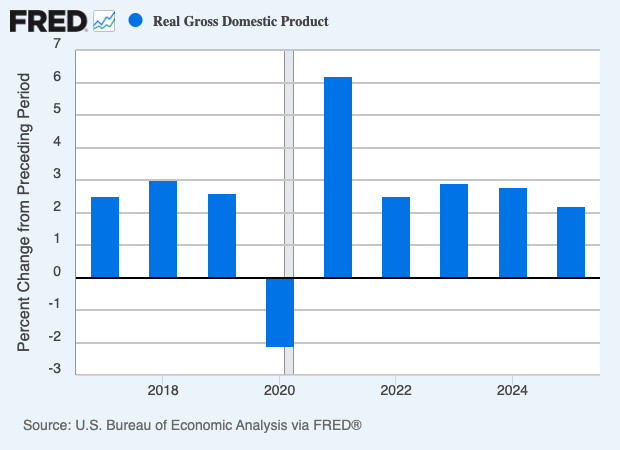
Except for Covid, last year was the worst year for economic growth in the last nine years.
Eddy Elfenbein tweet media
English
18
132
458
19.4K